Format: Hardcover

Maddaddam by Margret Atwood

Posted December 23, 2013 by Michael @ Knowledge Lost in Speculative Fiction / 2 Comments

Maddaddam by Margret AtwoodTitle: Maddaddam (Goodreads)
Author: Margaret Atwood
Series: Maddaddam #3
Published: Bloomsbury, 2013
Pages: 416
Genres: Speculative Fiction
My Copy: ARC from Publisher

Buy: AmazonBook DepositoryKindle (or visit your local Indie bookstore)

A man-made plague has swept across the earth and wiped out most of humanity. Few survived, along with the Crakers (a new bio-engineered species). There may not be much hope for humans to survive but the Crakers have a chance. Toby and Zeb tell the story of just what happens next, in the conclusion of this great epic post-apocalyptic trilogy.

This is the final instalment in the Maddaddam story; a trilogy that I binge read over the past few months. Just a quick recap; Oryx and Crake tell the story of these two as well as Snowman, the destruction of the world and the creation of the Crakers. At the same time The Year of the Flood tells the story of Toby and The Gardeners (a religious cult). Those two books run in parallel and lead us to Maddaddam, where the two stories meet.

I’m not too sure how I feel about the final novel in this trilogy. On one hand this is a rather upbeat finale that ties everything up into a nice little bow and on the other, I much prefer bleak and I feel this novel was unnecessary. Not to say it was bad but both Oryx and Crake and The Year of the Flood worked well as standalone novels, they both interconnect but you could probably read one or the other without confusion. When it comes to Maddaddam you really do need to have read the first two books, there is a “previously on the Maddaddam trilogy” moment at the start of the book but this is a novel to fill in the gaps. I don’t mind gaps, I like leaving questions unanswered but I can understand why Margret Atwood would choose to wrap things up.

Maddaddam is a novel about renewal Oryx and Crake focuses on the destructive nature of science, and The Year of the Flood looked at religious fanaticism; I’m a little surprised this book was more positive. Atwood writes really thought provoking novels and Maddaddam is no different, though this does feel more optimistic. This novel focuses heavily on science and politics, two of Margret Atwood’s favourite topics and she does leave the reader with plenty to think about.

One thing I found in this novel that surprised me was the dark humour; I don’t remember Oryx and Crake or The Year of the Flood being this funny. The dark post-apocalyptic themes were evident within this book, I was just thrown by the outlook and ending; it felt almost joyous. In the end it did wrap up the series in a nice way, despite my feelings toward this novel, it was a great read and the whole series is worth checking out.


The Explorer by James Smythe

Posted December 18, 2013 by Michael @ Knowledge Lost in Literary Fiction, Science Fiction / 3 Comments

The Explorer by James SmytheTitle: The Explorer (Goodreads)
Author: James Smythe
Series: The Anomaly Quartet #1
Published: Harper Voyager, 2013
Pages: 260
Genres: Literary Fiction, Science Fiction
My Copy: Library Book

Buy: AmazonBook DepositoryKindle (or visit your local Indie bookstore)

Cormac Easton has been selected to be the first journalist in space, sent to document the flight of Ishiguro into deep space. When the crew wakes up from hypersleep they discover their captain died in his allegedly fail-proof safety pod. One by one the rest of the crew died and Cormac was left alone; or so he thinks.

This is going to be difficult to review this book without giving spoilers; there are some big reveals within this novel that need to be left unmentioned. For those people that don’t read much science fiction don’t let the fact this is set in space put you off. This is literary sci-fi, the novel explores humanity. Also for those that think this sounds similar to my recent review of The Martian, they are completely different, while they both have a protagonist isolated in space that is pretty much the only thing they have in common.

I can’t really talk much about the plot, you just have to go out and read it; I want to talk a little about Cormac Easton. Whether you like him or not (I didn’t) there is something I found really interesting about this protagonist. James Smythe shows the reader just how to write an unreliable narrator. You spend most of this book trying to work out if Cormac is leaving things out because he is human and forgot or if it is on purpose, you also question everything he says, what is true and what is a lie. This works really well and I found it added to the tension and thrill of the novel.

Similar to The Martian I can’t help but comparing this to the movie Moon but when you get further into the book you can see some similarities to science fiction movies from the 80’s and 90’s (the one I’m thinking of might be too much of a spoiler). In the world of books, I’m reminded of classic science fiction; those books that have so much to say about humanity. I would probably compare Smythe to an author like Robert A. Heinlein; In fact I think I made a similar comparison to classic sci-fi in my review of The Machine.

James Smythe has been a great discovery for me, I love how he explores humanity in his novels. It might be weird but I think both The Machine and The Explorer may end up in my Best of 2013 list. I want to read more books by this author and have in fact started the sequel to this one (The Echo) already. I’m also looking forward to trying his first novel The Testimony and eagerly anticipating his currently untitled book that comes out mid-2014. Smythe seems to be a machine, two books released in 2013 and two being released in 2014, at this rate I’m never going to run out of his books to read.

I hope I didn’t reveal anything important in this novel; it is hard to write a review and say nothing. I also hope I’ve said enough to make people want to read The Explorer (and all of James Smythe’s novels). It is always great when you discover an author that writes the perfect books for your taste and I think I’ve found that here, I will try a few more novels but I feel confident. The Echo is the next book in this series, I believe there will be another two more as well but I felt like this worked well as a standalone novel. Highly recommend both The Explorer and The Machine and hope more people check out this great author.


Eyrie by Tim Winton

Posted December 16, 2013 by Michael @ Knowledge Lost in Contemporary / 0 Comments

Eyrie by Tim WintonTitle: Eyrie (Goodreads)
Author: Tim Winton
Published: Penguin, 2013
Pages: 424
Genres: Contemporary
My Copy: Hardcover

Buy: AmazonBook DepositoryKindle (or visit your local Indie bookstore)

Tom Keely lives a life in solitude, away from the world. Somehow he has lost his bearings in his middle age and is held up in his high-rise apartment, where he can look down on the world. One day he runs into a neighbour and her introverted son. The woman recognises him from back in the day. This encounter shakes him up in a way he really doesn’t understand and he soon finds himself letting them into his life.

I’ve only read Breath by Tim Winton in the past, which I didn’t think too highly of, so I wasn’t sure what to expect with Eyrie. I know well enough to never judge an author by one book and Winton is acclaimed enough to make me think there is really something in his writing. While I wouldn’t say this book is amazing, I think I can see why people like Tim Winton as an author.

The plot is incredibly simple; there is nothing special about it and it has all been done before. This does however in fact open Tim Winton up to what he seems to do really well and that is exploring characters. He has this ability of taking these characters that seem to make sense on the surface but underneath they are complex. Humans are complex characters, not inheritable good or bad and I think Winton knows how to write this.

In the end I think the fact that the plot was very basic was my biggest problem with this novel, which is strange I’ve read and enjoyed some great novels that have virtually no plot but Eyrie didn’t work as I hoped. I think the fact that everything felt a little predictable (plot wise) made me feel detached. Apart from the plot, everything seemed to work. I know I shouldn’t get so hung up about the plot, maybe if it wasn’t so obvious I might have gotten more enjoyment from Eyrie.

Tim Winton is a decent writer, I’m sure I will find a book of his that I can connect with. I will keep looking; still have Cloudstreet, Dirt Music and others to try. The urban location of Eyrie meant that this book felt less like an Australian novel, luckily the slang saved it there. Anyone know which one will work best for me? I’m making an effort to read more Australian novels and am also looking for recommendations as well.


If on a Winter’s Night a Traveler by Italo Calvino

Posted October 27, 2013 by Michael @ Knowledge Lost in Classic / 4 Comments

If on a Winter’s Night a Traveler by Italo CalvinoTitle: If on a Winter's Night a Traveler (Goodreads)
Author: Italo Calvino
Translator: William Weaver
Published: Everyman's Library, 1979
Pages: 254
Genres: Classic
My Copy: Library Book

Buy: AmazonBook DepositoryKindle (or visit your local Indie bookstore)

If on a Winter’s Night a Traveler is an experimental classic that follows two protagonists, the Reader and the Other Reader. The Reader buys a fashionable new book that opens with those famous lines “You are about to begin reading Italo Calvino’s new novel, If on a Winter’s Night a Traveler. Relax. Concentrate. Dispel every other thought.” Thirty pages or so into the book he realises his copy is corrupt and consists of the same thing over and over again. Returning to the book store he discovers that what he thought was Calvino was a book by a Polish writer Bazakbal. Given the choice between the two he goes for the Polish book, as does the Other Reader, but his book turns out to be yet another novel by a different writer, as does the next, and the next.

Trying to write a synopsis for this book is tricky, there is no way I can do the novel justice in a paragraph.  This Italian surrealist novel (1979) was translated in 1981 to critical acclaim. The novel is best known for its structure. The odd number chapters are written in second person, but you have to ask yourself is it possible to have a novel in second person. As you read along eventually the narrator “you” does something that will take the reader out of the equation and turning them into a character called You. For instance, in this novel You is male, this will rule out about 50% of the readers in one hit.  This doesn’t take away from the enjoyment of this novel but is something I was deeply aware of throughout this book. There were times where I felt like the novel was in first and third person as well, so you end up with characters called You, I and He/She.

This whole book is subjective, I’m sure some people get different things out of If on a Winter’s Night a Traveler than I did but that is just what makes for a great novel. I want to talk a little about post-structuralism as I believe this novel is a great example of this literary theory. Firstly you need to understand structuralism, which is a theory that states that in order to understand a piece of literature you need to understand its relationship with the bigger picture, the overarching system or structure. You need to look into its influences, the genre, narrative and any other elements that might be relevant. The problem with this is you going further and further back eventually you might lose sight of the original text. Basically this is a set of specific rules that govern literature. Post-structuralism is basically taking those rules (they often study and analyse the rules) then setting out to critique the premises. It isn’t really throwing out the rules, more demonstrating how the rules don’t always apply.

Italo Calvino doesn’t stop at narrative modes and post-structuralism, the novel explores many more literary themes; the most obvious is the use of metafiction; a book within a book. You won’t find Outside the Town of Malbork by Tazio Bazakbal on Goodreads, I’ve checked. Then you have intertextuality, pastiche, post-modernism and so on. If you are interested in exploring literary theories this novel might be a good way to experience a whole range of different concepts in one hit. I don’t know much about literary theory so I hope my understanding on these concepts have come across as accurate and I haven’t missed it completely. I would love to attend a series of lectures where this book is deconstructed and looked at in real detail; I think that would be incredibly interesting.

Don’t worry, this isn’t a dense or hard-to-read book and I’m aware that talking about literary theory might turn people off this novel but please reconsider. This book is not only devilishly clever but it is beautifully executed. I took my time with this novel because I wanted to re-read sections, write done quotes and just talk about the book to anyone that would listen. If I didn’t borrow this from the library I would have highlighted the entire books (seriously, every line is just that great). I have brought my own copy now (yes, I broke my book buying ban) and I hope to be able to re-read this again. I’m not sure if reading this with others will help but the whole experience of reading this novel is worth sharing.

I’ve heard Italo Calvino is heavily influenced by Vladimir Nabokov which makes a lot of sense to me, the writing style does feel similar, even the humour and wit. A literary labyrinth that is so masterfully executed that the novel needs to be read again and again. I won’t go into any more details as there are a few things you just need to experience. I’m jealous of anyone that gets to read this novel for the first time as that is an experience I will never have again.

 I have to wonder why the Vintage classics cover of the word “Traveller” written correctly but throughout the book it is written in the American (wrong) spelling. I have to wonder if there is anything in that. I wonder if there is a reading companion to If on a Winter’s Night a Traveler that you can read alongside this book (similar to Infinite Jest) to discover the brilliance of this novel. I really enjoy Post-Modern literature but there is so much that I’m probably missing.

All book lovers should experience If on a Winter’s Night a Traveler, there is nothing like that feeling of pure joy when you read a beautifully clever novel. You never want it to end, that ecstasy is like a drug and you immediately want to read it again only to find that feeling is just not the same. This is a masterpiece, I know I didn’t talk much about the plot but this was so I don’t give anything away. Go read it.


Snapper by Brian Kimberling

Posted October 23, 2013 by Michael @ Knowledge Lost in Contemporary / 0 Comments

Snapper by Brian KimberlingTitle: Snapper (Goodreads)
Author: Brian Kimberling
Published: Tinder Press, 2013
Pages: 240
Genres: Contemporary
My Copy: Hardcover

Buy: AmazonBook Depository (or visit your local Indie bookstore)

Nathan Lochmueller is a birdwatcher; it is not every day you can build a career around doing something you love. Snapper charts the love affair that Nathan has with bird watching and the seamlessly unobtainable Lola. This is a coming of age, and quite possibly a semi-autobiographical, novel set in rural Indiana, ‘the bastard son of the Midwest’.

This is a bookclub book so it will be a little tricky reviewing this without some of the others’ insights being mixed in with mine. Normally I write a review before attending book club but I seemed to have run out of time. This is a coming of age story that explores life in Indiana as well as the life of a biologist.

Apparently the biology is right and this was important to one of the book club members, who is in fact a biologist as well. For me this felt more like a combination of little stories; just as I start getting into one story the chapter ends and we are on another story. Non-linear groups and the only thing that seems to hold the threads together is the relationship between Nathan and Lola.

I hate to use someone else’s thoughts but one group member hit the nail on the head when she called Lola a manic pixie dream girl. Nathan seems bitter and cynical about everything except when it comes to Lola. He seems blinded about this unobtainable girl, she was never leading him on but he still lived in hope.

I really enjoyed this novel, almost experimental in the style but I felt like the chapters were so disconnected it really took me out of the novel. My major problems with this novel were the editing. I don’t know how this got published with such inconsistencies in the formatting; some chapters have quotation marks, others don’t (I really don’t know why books choose not to have them) and this really annoyed me. If you want to print a book, at least have a standardised format for the entire book. It feels like some chapters were formatted by a different editor to the others and no one compared notes. Even the major mistake where the city Canberra is found in the country Canberra instead of Australia.

Apart from all of this, I enjoyed reading Snapper in all its nuances and will probably read more from this debut author. I’m sure if Brian Kimberling writes another novel it will be autobiographical and to do with biology which are not really my thing but this pretentious, semi-experimental novel is definitely my thing.


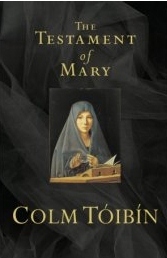
The Testament of Mary by Colm Tóibín

Posted September 22, 2013 by Michael @ Knowledge Lost in Literary Fiction / 0 Comments

The Testament of Mary by Colm TóibínTitle: The Testament of Mary (Goodreads)
Author: Colm Tóibín
Published: Picador, 2013
Pages: 104
Genres: Literary Fiction
My Copy: Library Book

Buy: AmazonBook Depository (or visit your local Indie bookstore)

In the town of Ephesus, Mary lived alone. She had no interest in collaborating with the authors of the gospels. For her, the crucifixion of her son years ago has left her indifferent to the rest of the world. Whether or not she believes that his death was worth it, he was still her son and witnessing the events that lead to him dying have been very emotional. This is The Testament of Mary.

I read this book on the Nativity of Mary (September 8th); while I’m not Catholic it felt like the perfect day to read this novella. The book is both bitter sweet and full of rage; not for or against Catholicism. While the author Colm Tóibín is born Irish Catholic but now identifies as an atheist. While this book isn’t theologically sound, it was an interesting look into what it might have been like to watch Jesus’s journey on earth.

I never really thought about what it might have been like to witness miracles, resurrections and the crucifixion of Jesus. I couldn’t imagine what it would be like to be the mother of Jesus, let alone experiencing all these unexpected events involving her son. The rage, the compassion, the isolation and pride that Mary must of experience all comes into play in this novella.

The Testament of Mary is a tender and heart breaking book, not really religious or anti religious. The balance is just right. The only problem I have is the theology but I have to let this go and remind myself that this was a work a fiction. Being raised as a Pentecostal, I never really cared too much about the life of Mary apart from her giving birth to Jesus but then going onto marry a Catholic my views have changed a little. My views towards Mary may not be in line with my wife’s but that is beside the point.

A quick and interesting work of fiction into the life of Mary; I loved the way this book was written. It really had a way of sweeping me into a story and expressing the emotions she faced in an affectionate and sour way. We have no idea what Mary would have felt but I can only imagine the fixed emotions that went through her mind. While this novella is haunting and stubborn in it’s approach, it is a compassionate and provocative read; this doesn’t work to counteract each other but only highlights the beauty of the mixed emotions.


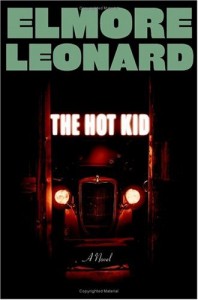
The Hot Kid by Elmore Leonard

Posted September 12, 2013 by Michael @ Knowledge Lost in Crime / 0 Comments

The Hot Kid by Elmore LeonardTitle: The Hot Kid (Goodreads)
Author: Elmore Leonard
Series: Carl Webster #1
Published: Harper Collins, 2005
Pages: 320
Genres: Crime
My Copy: Library Book

Buy: AmazonBook DepositoryKindle (or visit your local Indie bookstore)

Carl Webster was fifteen when he witnessed his first murder. Now he is the hot kid in the Marshall services; polite, respectful and can shoot a man driving away from 400 yards. He is on his way to being the most famous lawman of the 1930s. Jack Belmont wants to rob banks, become the most notorious outlaw and show his millionaire father he can live his own life. In the time of the Volstead Act comes The Hot Kid, a fast paced crime novel from a master of his craft; Elmore Leonard.

I love the Volstead Act; without it there may never have been organised crime in America and that makes for some interesting reading. Of course, love is the wrong word to describe the Volstead Act but I do have a huge interest in the era. For those who don’t know about the Volstead Act, it was the National Prohibition Act that became the Eighteenth Amendment, which established prohibition in the United States in 1919. This led to a surge in bootlegging and organised crime and made for some great stories for me to enjoy, from Boardwalk Empire (wonder if there are books that are like this show) to The Hot Kid.

I was saddened to hear about the recent loss of Elmore Leonard; though I hadn’t read anything by this crime master it really affected me. The very next day I reserved The Hot Kid from the library. I didn’t know where to start with this legend; he has written so many novels and they all looked good but a book set in the 1930s was right up my alley. Researching Elmore Leonard I realised that he was more successful that I thought. If you measure a writer’s success in adaptations (which I really don’t want to do) then you can’t go past some of his best adaptions like Jackie Brown, 3:10 to Yuma, Get Shorty, Killshot, Out of Sight and the TV show Justified.

The Hot Kid was a fast paced crime novel that I ended up reading in two sittings which is a big surprise because I feel like I’m a slow reader. I really enjoyed the way Leonard writes; it was so well plotted that he makes writing look so easy which I’m sure is very difficult to do. He is a prolific author with novels set in western times all the way up to the modern era. But I enjoy a time when organised crime reigns and tend to enjoy crime novels set there.

The only major issue I had with this book was that it never really felt like it was set in the time of speakeasies, tommy guns and organised crime. Every now and then I get a reference to the Volstead or a Thompson that pulls me back into the correct era. For the majority of the book I felt like Carl Webster was far too similar to Raylan Givens (from the TV show Justified) and that threw me off a little but didn’t really effect the overall enjoyment of the book.

Maybe this wasn’t the best place to start when exploring Elmore Leonard’s craft but I have no regrets. I will read the next book in the Carl Webster series but I think I might like to try something else by this crime master first. The problem I often face is the fact that I want to continue with an author but have so many other books I want to read and more often than not I never return to a writer I enjoy. But I’ve only been reading for a short time and I’m sure Elmore Leonard and the Carl Webster series will be read sometime in the near future.


The Machine by James Smythe

Posted September 11, 2013 by Michael @ Knowledge Lost in Literary Fiction, Speculative Fiction / 6 Comments

The Machine by James SmytheTitle: The Machine (Goodreads)
Author: James Smythe
Published: Blue Door, 2013
Pages: 328
Genres: Literary Fiction, Speculative Fiction
My Copy: Hardcover

Buy: AmazonBook Depository (or visit your local Indie bookstore)

Beth lives in a remote village by the sea, a desolate place where she can rebuild her life following the return of her husband after the war. Vic is haunted by his memories and turns to a machine to take his nightmares away, but it takes everything away; now Beth is determined to rebuild him.

Dubbed as Frankenstein for the 21st century, The Machine is a wonderfully dark and complex novel that really deserves more attention. I normally get annoyed when novels are compared to Frankenstein; how can any novel truly compare? The Machine was a different story; I wasn’t expecting it to compare to Frankenstein, I was more interested with the dark and complex nature of this book. The novel reminds me more of the British TV show Black Mirror; there are two episodes in particular, the episode where all memories are recorded for instant playback (1×3) and the one where a woman loses her husband and turns to a service that continues his online life (2×1). The show is considered “a hybrid of The Twilight Zone and Tales of the Unexpected which taps into our contemporary unease about our modern world” and is designed to be thought provoking. In fact The Machine feels right at home with the style of that show.

Imagine if you can record all your memories and then wipe the ones that cause pain?  Would removing some memories change a person completely? What if that machine wipes every memory and leaves the person catatonic? What are the moral implications of playing with someone’s memories? How should the government regulate scientific advances like this? If you could, would you try to rebuild a loved one? There are just so many questions to answer and The Machine does a great job of creating more. Don’t expect answers, this book is all about giving you questions.

I love a novel that gets you questioning life and philosophy. James Smythe masterfully does what so many try to do, it’s so refreshing to read something like this but it makes me sad that this book isn’t getting more attention. I feel the need to read every James Smythe book I can get my hands on in the desire to experience this feeling again. Science Fiction is a genre that really can explore humanity and morality and Smythe reminds the readers that it’s possible. In the 60s and 70s it felt like all Sci-Fi novels had a message and we have exchanged that for entertainment. Not that there is anything wrong with entertaining the reader but you can do that while exploring philosophical ideas.

There is so much I want to say about this book and the majority of it is positive but I won’t, I think everyone should read this book and experience it for themselves. The plot is compelling and James Smythe writes like a master of his craft. The Machine has already secured a place in my “best books of 2013” list and I want to read more of his books, just to have this experience again. Go out now and get your copy of The Machine.


Oryx and Crake by Margaret Atwood

Posted September 9, 2013 by Michael @ Knowledge Lost in Dystopia, Speculative Fiction / 12 Comments

Oryx and Crake by Margaret AtwoodTitle: Oryx and Crake (Goodreads)
Author: Margaret Atwood
Series: Maddaddam #1
Published: Bloomsbury, 2003
Pages: 378
Genres: Dystopia, Speculative Fiction
My Copy: Audiobook

Buy: AmazonBook DepositoryKindle (or visit your local Indie bookstore)

Jimmy was a member of a scientific elite, living in isolation, suffering through bitter loneliness. Then an unnamed apocalypse came along, now he is known as Snowman and he may be one of the few survivors. This post-apocalyptic hermit resides near; what he refers to as Crakers—strange human-like creatures. In flashbacks the story develops, the Crakers, Wolvogs, Pigoons and Rakunks are assorted life forms that are the products of genetic engineering.

Oryx and Crake are the symbols of a fractured society, which Jimmy was once a part of. This is where trying to explain this novel can get complex. There are two different worlds within this book the post-apocalyptic world but then there are the flashbacks. The dystopian world was far more interesting for me. Much like Super Sad True Love Story. this is a dystopian world that I can see coming, corporation’s rule the world and pornography has become mainstream. It is normal to watch live executions and surgeries, nudie news (apparently watching the news when they are fully clothed is just weird), even child pornography.

I love novels that deal with the dangers of corporations having too much power; Super Sad True Love Story is a prime example of it (I should re-read that novel) and Oryx and Crake is another example of this (need more examples). Science and marketing techniques leave the public as powerless consumers and there is nothing to stop the unprecedented corporate greed.

Genetic engineering is a slippery slope; I seem to find myself attracted to novels that deal with science going too far. Oryx and Crake is a great example of this; Crake is a scientist working in the biotech project that created the Crakers. Genetic engineering progress continued to advance and eventually lead to a complex and sinister project called Paradice, but when that collapsed it caused this global devastation.

Oryx was a girl Jimmy and Crake found on a child pornography site that eventually was hired by Crake as a prostitute and to teach the Crakers. Oryx obviously had a difficult past, and Oryx and Crake attempts to deal with this issue as well. This is not an easy issue to deal with, the majority of the world would say they are against child pornography and yet it continues to happen and we see no signs of it ever being truly dealt with. Margaret Atwood doesn’t have a problem with trying to deal with difficult issues and this novel has plenty to say.

Moving away from the dystopian world and into the post-apocalyptic one, we have a whole new set of themes and issues. While this is a direct result of the corporate destruction, now we have to deal with survival. The Crakers are like little helpless children that Snowman tries to help; so now we have parental responsibilities as a major theme as well as our social responsibilities. He also has to protect them from the Wolvogs, Pigoons, Rakunks and whatever might disrupt their civilisation.

This is the second Margaret Atwood novel I’ve read and I’m starting to see a familiar theme coming through in her novels. I believe she wants the reader to have a look at civilisation and what we are doing that is beneficial or harmful. I’m sure the rest of the Maddaddam trilogy will deal with this; I’m not sure if all her books have a similar theme but I suspect they might.

I love a novel that tells a great story but is also loaded with different themes and symbolism. I feel so fulfilled reading a book like Oryx and Crake and spending time digesting the words and examining what Atwood wants to tell us. I was meaning to read this novel for so long and now I’m left with intense desire to read the next two in the series. Thanks you Bloomsbury Australia for pressuring me into reading this book, I have no regrets.


The Unknowns by Gabriel Roth

Posted September 2, 2013 by Michael @ Knowledge Lost in Contemporary / 2 Comments

The Unknowns by Gabriel RothTitle: The Unknowns (Goodreads)
Author: Gabriel Roth
Published: Picador, 2013
Pages: 227
Genres: Contemporary
My Copy: Library Book

Buy: AmazonBook DepositoryKindle (or visit your local Indie bookstore)

Eric survived high school in the mid 80’s; the nerd that spent way too much time with computers and never really having any friends. Now he has millions from selling his dot com and lives in a beautiful apartment and living the life everyone dreams of. Except he never quite found love, that was until the glamorous Maya came into his life. It’s not easy trying to get the most alluring woman in the world to pay any attention to you at all.

When I was in high school I really wanted to be a writer, this is the type of story I tried to write. Not as well as Gabriel Roth, I don’t know how to be a writer. they always ended up too short and descriptive, I never knew how to write long form and tended to rush to the end. Don’t get me wrong, The Unknowns is not a typical nerdy love story; Roth showed me just what can be done with this type of novel.

If you think this is not the type of novel I would normally pick up and enjoy then let me tell you why I picked this book up. I consider Megan Abbott the queen of contempory noir and when she blurbs and tweets about a novel, I tend to pay attention. The Unknowns starts out as a nerd falling in love but then deals with the complexity of a relationship, in a slight noirish manner.

Maya may be the most beautiful woman Eric has ever seen but she comes with her own issues she has to deal with. Humans can be fragile creatures and sometimes it is hard to know just how deep the pain runs. When Eric learns about his lover and her emotional scars he is left wondering about the truth. Life is more complex than computer code.

I really enjoyed the way this book tackled relationships; from the start you have a geeky romance and then by the end you are reading about the complex human beings. Roth blends wit with a unique view of the world and human interactions and nails home a magnificent exploration into relationships. I like the way this book is a budding romance/coming of age novel but you look a little deeper and there is so much more to discover.

While Eric isn’t too similar to me, I remember life as an outsider (I still feel that way) and the feeling of trying to navigate the social waters. As you get older, it doesn’t get any easier and you are bound to make mistakes. I’m lucky to have found my own Maya and had to learn about relationships and trying to understand all the pain from their past can be a lot to deal with when you are socially awkward. I really identified with this novel and felt inspired to write again but then I realise I can’t write anything like this and never end up trying.

The Unknowns is a witty humorous contemporary novel full of so many human truths, when Megan Abbott tweeted me to tell me that this novel won’t disappoint she wasn’t lying. I’m not trying to name drop, Abbott is fantastic on Twitter and will happily answer any questions you might have and proves Twitter is the place to be. If you are socially awkward or are interested in the exploration of relationships then this book is for you.