Format: Hardcover

Mini Review – Books About Books

Posted September 17, 2015 by Michael @ Knowledge Lost in Non-Fiction / 4 Comments

As most people are aware, I am a big fan about books about books. I am fascinated about people’s journeys and relationships with books. As a big fan of books, I like to learn about how people view and write about books; I use this as a way to inspire me to improve as well as give me some new ideas on how to approach this topic. Sadly I am so far behind in my book reviewing so I need to resort to some mini reviews. However it is a good chance to talk about four very different books about books in one hit.
Mini Review – Books About BooksTitle: How To Be a Heroine (Goodreads)
Author: Samantha Ellis
Published: Chatto & Windus, 2014
Pages: 272
Genres: Non-Fiction
My Copy: Library Book

Buy: AmazonBook DepositoryKindle (or visit your local Indie bookstore)

Samantha Ellis is a playwright and journalist who decided to write about the woman in fiction that have influenced her life. The subtitle to How to be a Heroine is “…What I’ve Learned from Reading too Much” and this really encapsulates what Ellis is doing within the book. This is less of a bookish memoir or literary criticism and more of a revisit to some of her favourite books throughout her life and talking about it through the lens of feminism. This book includes references to The Little Mermaid, Anne of Green Gables, Pride and Prejudice, The Bell Jar and Wuthering Heights.

While this is a very important topic to discuss, I felt a bit of a disconnect to the book in general. There was times where I felt that Samantha Ellis was being dismissive and cynical towards literary criticism. Because I am fascinated and passionate about learning literary theory, I felt that her feelings towards the topic really took me away from truly enjoying the book. I did however enjoy the way Ellis analysed the good and bad qualities about each story and told the story about her relationship with the books mentioned. I think if it was not for that one thing that bugged me about How to be a Heroine I might have had a completely different experience while reading this book.

Mini Review – Books About BooksTitle: Where I'm Reading From: The Changing World of Books (Goodreads)
Author: Tim Parks
Published: Harvill Secker, 2014
Pages: 244
Genres: Non-Fiction
My Copy: Library Book

Buy: AmazonBook DepositoryKindle (or visit your local Indie bookstore)

Tim Parks is a translator, critic and even a professor of literature, so when I discovered his book Where I’m Reading From, I was excited to see what he had to say on the topic. I went into this book thinking it was a bookish memoir but found out this was a collection of essays he had written for The New York Review of Books. Some of the topics discussed in this book include, Why we read, Should you finish every book you start?, How is the Nobel Prize like the World Cup?, Why do you hate the book your friend likes? and so many more topics. I was very interested in what he had to say about translations, and the concept of how we are reading a second-hand story.

There is so much within Where I’m Reading From that I did not agree with, but I still found it interesting to read someone else’s perspective on the topics. It really got more thinking about the state of literature and the bureaucracy behind the industry and awards in far greater detail. In a lot of ways this book reminded me of What Is Literature? by Jean-Paul Sartre, although Tim Parks’ book was a lot more accessible and did not make me feel stupid. I also did a video review for this book on my YouTube channel.

Mini Review – Books About BooksTitle: Postmodernism: A Very Short Introduction (Goodreads)
Author: Christopher Butler
Series: A Very Short Introduction #74
Published: Oxford University Press, 2003
Pages: 144
Genres: Non-Fiction
My Copy: Audiobook

Buy: AmazonBook DepositoryKindle (or visit your local Indie bookstore)

I like to think I am a fan of post-modern literature, but ask me to explain it, I will have a hard time. Post-modernism is often referred to when talking about art, films, architecture, music and literature but what does it actually mean? I picked up Postmodernism: A Very Short Introduction in the hopes of understand it a little more but I still do not think I can explain it. For me, I view post-modernism, as a reaction to modernism which seemed to reject past thinking in favour of innovations like stream-of-consciousness. Post-modernism still found value in the past techniques and theories and found interesting ways to use them in new and exciting ways. Post-modernism wanted to invoke thought and criticism; within its literature you might find something bizarre or weird that you just need to talk about.

I know my view on the topic is very broad and it is far more complex but that is what I love about post-modern literature. I want books that force me to think critically about what I am reading and post-modernism forces you to do just that. In Postmodernism: A Very Short Introduction, Christopher Butler tries to equip us with the basic ideas behind post-modernism to allow us to recognise and understand the theories more easily. This is still a very complex movement but I am starting to understand why I love it. This is a good starting point, if you are actually interested in the critical thinking side of this movement.


Mini Review – Books About BooksTitle: My Reading Life (Goodreads)
Author: Bob Carr
Published: Penguin, 2008
Pages: 432
Genres: Non-Fiction
My Copy: Library Book

Buy: AmazonBook Depository (or visit your local Indie bookstore)

Bob Carr is a former Australian politician and member of the Labour Party; during his career he was a Senator, Premier of New South Wales and the Minister for Foreign Affairs. My Reading Life is a literary memoir about the books he has read and have influenced him; this was written during a period where he was not in politics. Carr divides the book into topics, focusing mainly on the political, which is obviously a reflection of his interests.

One of the things I did not like about this book was the way Bob Carr kept his political face on throughout the entire thing. I would have liked him to drop his public persona and just have a more real conversation about books. I understand that he was still political and he became the Minister of Foreign Affairs after publishing this but I would have preferred a more honest look at literature. I do hope that no Russian’s read this book after he become the Minister of Foreign Affairs, because to me it felt like Carr liked Russian lit but hated everything else about this country. There was some interesting insights made within the book and overall a decent memoir, just a little too guarded.


What You See in the Dark by Manuel Muñoz

Posted June 26, 2015 by Michael @ Knowledge Lost in Crime / 0 Comments

What You See in the Dark by Manuel MuñozTitle: What You See in the Dark (Goodreads)
Author: Manuel Muñoz
Published: Algonquin Books, 2011
Pages: 272
Genres: Crime
My Copy: Library Book

Buy: AmazonBook Depository (or visit your local Indie bookstore)

When a famous actor and director arrives in Bakersfield, California (1959) scouting film locations for an upcoming movie about madness, the local gossip columns begin to speculate why they are here. However, when a murder at a roadside motel is discovered, this dusty, quiet town is turned on its head. Unfolding the same way the Hitchcock’s movie Psycho, almost frame for frame. No one ever predicted that life would rival anything that this director could capture on the screen.

Manuel Muñoz has been dazzling the world with his short story collections for a while now, often been compared to Junot Díaz or Daniel Alarcón. What You See in the Dark is his debut novel and it explodes onto the scene to explore the deliciously sinister side of desire. Heavily influenced by Psycho, Muñoz tries to capture that iconic feel of this classic movie.

What I found fascinating about this novel is the way it did try to mimic Hitchcock’s Psycho, trying to capture the feel and style. While it does not always work I was very impressed with just how much did translate to the page. Manuel Muñoz is a very impressive writer and I went into this book expecting something light and fluffy but ended up being captivated by the style.

What You See in the Dark is a very stylistic novel that tried and often succeeded in playing with the imagery, however it often did stick to what novels do far better than movies, and that is the internal monologues. The book is not without its flaws, there are times where it tries too hard at mimicking Hitchcock and there are other times where it feels flat or dry. In the end, this was an enjoyable book with a perfect title. What do you see in the dark? Hitchcock knows and he has the answer.


Something Coming Through by Paul McAuley

Posted May 13, 2015 by Michael @ Knowledge Lost in Science Fiction / 0 Comments

Something Coming Through by Paul McAuleyTitle: Something Coming Through (Goodreads)
Author: Paul McAuley
Published: Orion, 2015
Pages: 384
Genres: Science Fiction
My Copy: Library Book

Buy: AmazonBook DepositoryKindle (or visit your local Indie bookstore)

Aliens exist, and now they need our help. After Earth is ruined by nuclear and environmental disasters, it is puzzling that humanity has been given fifteen habitable planets to start a fresh. The Jackaroo assist with the move to the new planets, infrastructure is built and humanity is saved. Chloe Millar is mapping out the changes caused by importing alien technology when she stumbles upon a pair of orphaned children that appear to be possessed by an ancient ghost. On one of the new planets, Vic Gayle is investigating a murder in a remote excavation site that could lead to a war between rival gangs. Something is Coming Through is a new novel by prolific science fiction novelist Paul McAuley.

Something is Coming Through interlinks the story of Chloe Millar and Vic Gayle, all the while trying to understand why the Jackaroo are helping humanity. The premise of this book sounded too intriguing to pass up; think a science fiction crime novel that explores the concept of first contact. Unfortunately, nothing seemed to work within the book; it tries to do so much but everything moves too slowly to make it enjoyable. Even the Jackaroo sound like they are an interesting race but there is no real exploration into their motivations which really hurt the novel.

I am not sure if I am no longer into reading science fiction; it has been a while since I enjoyed this genre (with the exception of Russian sci-fi). Or maybe I just need to stick to the classics, those novels from the 60s and 70s that explore sociology and philosophy. I just found Something is Coming Through to be a very bland novel that relied too heavily on dialogue. I have to accept the fact that I enjoy novels with substance that explore themes or ideas over plot; this is why Russian sci-fi is still great.

 I struggle to find anything positive to say about Something is Coming Through; it is one of those occasions where I should have abandoned the book. I honestly cannot even remember why I decided to pick this book up but I was intrigued by the premise. Sadly I found nothing enjoyable about this novel and I do not know if I will try Paul McAuley again. I would like to think I was willing to try authors again but at the moment, there is no way.


The Unamericans by Molly Antopol

Posted April 21, 2015 by Michael @ Knowledge Lost in Short Stories / 4 Comments

The Unamericans by Molly AntopolTitle: The Unamericans (Goodreads)
Author: Molly Antopol
Published: Atlantic Books, 2014
Pages: 261
Genres: Short Stories
My Copy: Library Book

Buy: AmazonBook DepositoryKindle (or visit your local Indie bookstore)

The world of short stories has had a rocky history, but every now and then there are authors that make you excited about a collection of stories again. When I think about great short story collections, I think Raymond Carver with his book What We Talk About When We Talk about Love, George Sanders (especially his recent collection Tenth of December) and now Molly Antopol with her debut collection The UnAmericans. Even I have to admit that I have often struggled with short stories but then something like The UnAmericans comes along and I feel ready to take on more collections.

Molly Antopol is a lecturer at Stanford University where she teaches as part of their writing program. In 2013, she was one of the recipients of the “5 Under 35” award from the National Book Foundation, which highlights five young writers to watch and she has been someone well worth watching. Her debut, The UnAmericans was nominated for countless awards including the National Jewish Book Award and the National Book Award. Though her collection of short stories did not take home any major awards, this is the start of a very promising career for Molly Antopol and is someone I plan to follow closely.

The UnAmericans is a collection full of stories about families, heritage, identity and all the things that define us as humans. With a strong focus on immigration this book is a post 9/11 exploration into America. Exploring the lives of all those people that might have felt excluded as American due to difference in heritage, skin colour, religion, and political or moral beliefs. While it does not typically focus on America or events post 9/11, it is the kind of story that could have only been told after a tragedy like that day.

Each character is richly developed, coming from places like Kiev, Prague, Tel Avid and Soviet Moscow, the stories all explore the same similar themes but in away that never feels repetitive or preachy. Antopol appears to be interested in exploring peoples differences and similarities and trying to get the message across that we are all the same. All the different places these people live in and they all want the very same things, love and acceptance. While their heritage often plays a big part in their identity it doesn’t make them UnAmerican; we are all humans.

I was extremely impressed and it made me want to read more short stories; if Molly Antopol can give so much depth into her characters as she did in The UnAmericans then it makes me excited for the rest of the genre. I did go on to read another collection of short stories right after this one, this time it was by Charlotte Perkins Gilman. I hate to say it; The UnAmericans was great but then going on to read The Yellow Wallpaper and Other Stories, changed everything yet again.


The Severed Streets by Paul Cornell

Posted March 27, 2015 by Michael @ Knowledge Lost in Fantasy / 0 Comments

The Severed Streets by Paul CornellTitle: The Severed Streets (Goodreads)
Author: Paul Cornell
Series: Shadow Police #2
Published: Tor, 2014
Pages: 400
Genres: Fantasy
My Copy: Library Book

Buy: AmazonBook Depository (or visit your local Indie bookstore)

Detective Inspector James Quill is a member of the Shadow Police, a squad dedicated to solving supernatural crimes. When an invisible murderer kills a high profile cabinet minister in an unusual way, the Shadow Police are called to solve it. Things take a turn when the lead detective from the squad goes missing. Things start to fall apart; can Quill solve this mystery and bring the team back together?

I was really enjoying the Peter Grant series by Ben Aaronovitch lately and I thought I would look for more urban fantasy novels that centred around a detective, when I remembered London Falling. I loved this book which was the first in the Shadow Police series; it was dark gritty and blended police procedural with urban fantasy really well. I read it a while ago and thought it was time to try book two, The Severed Streets. Unfortunately this book did not hold up and suffered the same fate as Happy Hour in Hell by Tad Williams (book two in the Bobby Dollar series).

While London Falling went for a dark and gritty, noir feel to it, The Severed Streets seemed to go in a different direction. It felt too gimmicky and I felt like Paul Cornell was offered a book deal based on this series but had already run out of ideas. First of all, the book is set in London, so it obviously had to reference the 1800s Whitechapel murders. Jack the Ripper has been done to death, especially in urban fantasy; I was immediately reminded of The Name of the Star by Maureen Johnson. Also this book has Neil Gaiman as a character and I never enjoy it when they use living people as characters. It is a little hit and miss when a book includes a famous person who is deceased but when it comes to living people, it is normally always a miss.

I feel so angry about this book but mainly because I went in thinking it would be like London Falling. I would have been better off not reading this book and just letting the first novel remain a standalone. Take out Jack the Ripper and Neil Gaiman or replace these characters, and it might have been a decent book. However, for me, it was just a gimmick that did not work. I will not be continuing with the Shadow Police and I have to start my search for a new dark, gritty urban fantasy series to enjoy.


Measuring the World by Daniel Kehlmann

Posted December 28, 2014 by Michael @ Knowledge Lost in Historical Fiction / 4 Comments

Measuring the World by Daniel KehlmannTitle: Measuring the World (Goodreads)
Author: Daniel Kehlmann
Translator: Carol Brown Janeway
Published: Quercus, 2005
Pages: 259
Genres: Historical Fiction
My Copy: Library Book

Buy: AmazonBook Depository (or visit your local Indie bookstore)

Measuring the World reimagines the life of German mathematician Carl Friedrich Gauss and geographer Alexander von Humboldt. The book follows a fictionalised account of their journey, along with Aimé Bonpland as they measure the world. Their methods where ground-breaking and this novel entangles their lives to explore their effects on science today.

This is not a book of science, this is historical fiction that explores the lives of two German scientists. While the subject matter may sound dull and fact heavy, Daniel Kehlmann handles the topic with skill. It is an impressive feat to make a subject that sounds boring come across exciting and interesting. Kehlmann’s writing skills turns the subject of science into a novel of elegance and beauty.

The two plots revolving around Carl Friedrich Gauss and Alexander von Humboldt worked well together and I found myself fully immersed in the whole experience. Having said that this is a book of science and German history so I feel hesitant in going into more details because I worry I will get the information wrong. That does make for short review but all I can really say is; read it.

Published in German in 2005 under the title Die Vermessung der Welt, Measuring the World turned into a huge literary sensation for the country. This book knocked bestsellers like Harry Potter and Dan Brown off the list. The only other German book that has achieved that (that I know of) was Perfume by Patrick Süskind.

This was a wonderful book and I learned a little about German and Prussian history. Carl Friedrich Gauss has sometimes been referred to as one of the greatest mathematicians of all time and Alexander von Humboldt as the second Columbus. Two great people of history I knew nothing about and I think the opportunity to learn something new while reading beautiful prose made for a wonderful experience.


My Life in Middlemarch by Rebecca Mead

Posted December 27, 2014 by Michael @ Knowledge Lost in Non-Fiction / 6 Comments

My Life in Middlemarch by Rebecca MeadTitle: My Life in Middlemarch (Goodreads)
Author: Rebecca Mead
Published: Crown, 2014
Pages: 293
Genres: Non-Fiction
My Copy: Library Book

Buy: AmazonBook DepositoryKindle (or visit your local Indie bookstore)

Rebecca Mead grew up in a coastal town in England and often dreamed of escaping to somewhere more exciting. She gained admission to Oxford and later become a journalist in the United States. When she was young Middlemarch was a favourite of hers and now as she re-reads this classic she is sharing her story along with it. My Life in Middlemarch is told partly as a bookish memoir, but also explores the life of George Eliot and her novel Middlemarch.

This book started off really well; in the prelude the reader gets to discover a bit about the life of Rebecca Mead. Beginning like a bookish memoir this insight into the author gave a fascinating look into her relationships with books, especially with Middlemarch. However as I progressed with My Life in Middlemarch, the memoir elements became fragmented and I found myself yearning to return to this style. I love bookish memoirs, I have been reading so many of them lately and this had the potential to be great but it had two other strands to weave into this book.

My Life in Middlemarch also looks at the life of George Eliot, which allows some perspective about this author. Though I had already done some extensive research. I know that the life of Eliot played a big part in understanding Middlemarch so my autodidactic nature kicked in and I learned a bit about her. I was reading Middlemarch with a reading guide as well, so I had the added advantage of gaining some insight as I read. Apart from access to George Eliot’s journals, I didn’t gain much information; it was a very broad strokes look at her life and I would have gained that information from Wikipedia. I would have been better off reading a biography or her journals instead.

Finally we come to the literary criticism within this book and yet again I felt a little disappointed. I would have liked to know what Rebecca Mead got from the book but instead she just referenced others people’s criticisms on the novel. Having smarter people’s insight into Middlemarch is useful but I would enjoy a personal opinion mixed in with all the references. It reminds me on how I write a research paper for university; I pack it with quotes and references that say what I want it to say but don’t offer much in the way of personal opinion

Combine these three parts and you have an accessible look at Rebecca Mead and her life with Middlemarch but it felt like a huge generalisation. There are some interesting elements worth exploring in this book and I feel like it could have done so much more. We have three interwoven strands within the book but nothing of substance from any of them. This would be an enjoyable book for someone that has not read Middlemarch but for me, I had just finished the classic and I picked this book up because I was not ready to move on.


Middlemarch by George Eliot

Posted December 17, 2014 by Michael @ Knowledge Lost in Classic / 4 Comments

Middlemarch by George EliotTitle: Middlemarch: A Study of Provincial Life (Goodreads)
Author: George Eliot
Published: Penguin, 1872
Pages: 880
Genres: Classic
My Copy: Hardcover

Buy: AmazonBook DepositoryKindle (or visit your local Indie bookstore)

Middlemarch: A Study of Provincial Life was George Eliot’s seventh novel and was originally published in a serial from 1871-72. Set in a fictional town, this novel follows a wide range of characters in interlocking narratives that really do allow the reader to study the provincial life of Middlemarch. As this is broken into eight “books” it would be difficult to summarise the plot and even write a review that could do this book justice. Instead I am going to write down some thoughts and observations I found while reading Middlemarch.

First of all, I think it is beneficial to know a little about George Eliot; an understanding of her life helps put a lot of this novel into perspective. Most people know George Eliot is a pen name for Mary Ann Evans, she used the pseudonym to keep her private life from public scrutiny, as she was in a relationship with a married man, George Henry Lewes with whom she was living with. She picked a male nom de plume to escape the stereotypes placed on woman writers, this allowed her to offer a social critic without being judged on her gender. Raised as an Anglican, Mary Ann struggled with religious doubts and eventually became an atheist. As a young woman (before her relationship with George Henry Lewes), her father threatened to throw her out of the house due to her non-belief, but they seemed to come to a compromise. Mary Ann continued to attend church with her father until he passed away to keep him happy, even if she didn’t believe in a God anymore.

This is a very tiny glimpse at Mary Ann Evans but I wanted to share that information about her as it ties into common themes found throughout Middlemarch. The themes I am talking about here are gossip, marriage, femininity and religion. Living in Victorian England may not be too different to now (people like to gossip), Mary Ann would have been the subject of plenty of gossip and in a small town like Middlemarch it feels like the primary source of information. Throughout this novel, information is continuously being conveyed from an indirect party. George Eliot satirises the idea of gossip by continuously having other characters speak on someone else’s behalf to avoid direct communication. While others will avoid conversations believing that any relevant information will eventually make its way to them. These ideas of gossip feel like Eliot is poking fun at how gossip is used, however as a social commentary it is spot on.

I love what George Eliot has to say on the ideas of courtship and marriage and this is one of the most important parts of the novel. In Middlemarch marriage is never an end result, the happily ever after ending literary trope. While some people do end up being happy, there are plenty of unhappy marriages within the novel. Mary Ann’s lover George Henry Lewes was trapped in an unhappy marriage which he couldn’t get out of and this seems to be the basis of relationships within Middlemarch. There is this exploration of the idea of courtship, and it begs the reader to question these ideas. There are a lot of thoughts on how well we can really know someone before marriage; playing with ideas on being an outsider, deception and even intimacy. Each marriage within Middlemarch is different and it allows the reader to explore these unions as part of a social construct.

While there was a huge focus on marriage within Middlemarch there still were a few unwed woman within the novel. There are well educated women with the book that sometimes appear to be happier than the woman trapped in marriage. Eliot wanted to depict woman as strong individuals who have something to offer the world other than just being wives and mothers. The women in the book are often great and complex personalities but then Eliot plays with the ideas of suppressing themselves for men and the role they play in society. There is some social conditioning within the book but ultimately I kept seeing this idea of women having the ability to make social change.

Finally I want to talk about religion and spirituality; this is an interesting theme that steams from Mary Ann’s own life. I suspect sitting in a church listening to someone talk about a God she didn’t believe in made her think a lot about spirituality and organised religion. I haven’t used any examples but in this case I want to compare Dorothea with Mr Bulstrode. Dorothea has this internal and private spiritual life, the depiction of this is somewhat vague in the novel. This is because as an outsider she doesn’t come across as a spiritual person but internally it is an intimate part of her life. While Mr Bulstrode is portrayed as someone who is more public about his religious beliefs. While not always hypocritical he has a warped opinion; he believes his previous transgressions are part of the providential plan but will openly condemn others for their past misdeeds. Throughout Middlemarch, religion and spirituality is explored in different way and it is interesting to compare it with the ideas of morality within the novel.

There are so many different themes I can talk about, including money, education, vocations, social classes and even self-delusion but that would drag this on too much. I read Middlemarch with the aid of a reading guide called Eliot’s Middlemarch by Josie Billington and I did this because there is so much to offer within this novel I wanted to get as much as I could from the book. This is a smart and intelligent social commentary and I got the sense that there was no wasted moments within the book despite the fact it was 880 pages long. I dipped in and out of this novel for six months and I am glad I choose to read it in this way; it allowed me to ponder what I read before moving on. It is the type of book you need to spend a lot of time with and written in a way that allows you to dip in and out.

I haven’t even talked about the writing or style of Middlemarch and that is probably the most important part. There is a slight detachment within the style, this is probably because the novel is a form of social criticism; a study of provincial life. Having said that, I found Middlemarch very funny; the satirical irony and wit played a big part for me, but you could also say this is a morbid book. The style of the book is psychological, erudite and extremely elegant; I often felt myself being swept away with the writing but still fascinated by the insightfulness.

It is hard to explain how much I loved this book; this a realistic depiction of Victorian life and George Eliot displays a real mastery on human nature. However, even though it sounds like it is nothing but a psychological look at society, Eliot is able to make you feel like you are a part of the story. I am sure you can read this book as just a beautiful Victorian classic but I picked up this book for the social criticism. If you do want to get more out of this book then I recommend Josie Billington’s reading guide Eliot’s Middlemarch. This is the type of book I will need to frequently return to throughout my life and see what I get out of it with a re-read.


Why I Read by Wendy Lesser

Posted December 10, 2014 by Michael @ Knowledge Lost in Non-Fiction / 2 Comments

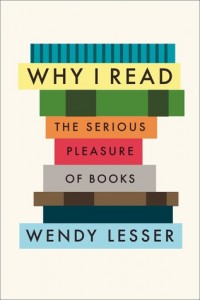
Why I Read by Wendy LesserTitle: Why I Read: The Serious Pleasure of Books (Goodreads)
Author: Wendy Lesser
Published: Farrar, Straus and Giroux, 2014
Pages: 240
Genres: Non-Fiction
My Copy: Library Book

Buy: AmazonBook DepositoryKindle (or visit your local Indie bookstore)

Wendy Lesser is the founding editor for the American literary magazine The Threepenny Review; she is lucky enough to spend her days with books. She is a bibliophile with a lifetime of reading experience to offer as well as an eclectic taste. Why I Read is a collection of essays that explores Lesser’s thoughts and ideas on literature in through the lens of different topics like character and plot.

This sounds like the type of book I should love and it ticked all the right boxes for what I look for in a book about books; eclectic taste, part memoir and offering some literary criticism. However I felt a huge disconnection with this book and I spend a lot of time just trying to pin-point what wasn’t working. Clearly Wendy Lesser is passionate about books and is well read, though I felt like that passion didn’t translation into her writing. This felt more like academic writing, so all emotion felt removed from Why I Read, but this is the type of book that needs that emotion and passion.

I enjoyed the fact that Wendy Lesser jumped from Henry James or Fyodor Dostoevsky, to Jim Thompson, Ross MacDonald, Patricia Highsmith and other crime novelists. It was fascinating to see crime novels used as examples in literary criticism, I was happy to see examples of science fiction, and fantasy also included rather than sticking to just literary fiction or classics. It is a real shame that the writing was so flat; the concepts and ideas were great and with some polishing this could have made for a wonderful book.

I am disappointed that this book never grabbed me and the writing held the book back. There are plenty of interesting ideas and literary criticism worth exploring but the dull nature really made that difficult. I sounds like Wendy Lesser is passionate about books and would have a lot ideas worth listening to if only that passion was visible in the writing.


Ariel by Sylvia Plath

Posted December 5, 2014 by Michael @ Knowledge Lost in Poetry / 0 Comments

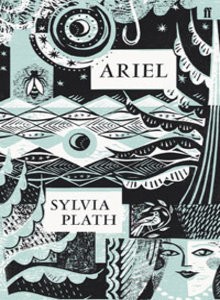
Ariel by Sylvia PlathTitle: Ariel (Goodreads)
Author: Sylvia Plath
Published: Faber & Faber, 1965
Pages: 81
Genres: Poetry
My Copy: Library Book

Buy: AmazonBook Depository (or visit your local Indie bookstore)

It feels like Sylvia Plath’s life overshadowed her literary value; her autobiographical novel The Bell Jar was like a confessional and people tend to read it for all the juicy bits. Ariel is a collection of poems published posthumously, just a few years after her suicide. It is true that we have Plath to think for advancing the confessional poetry form and exploring topics previously taboo like suicide, mental illness and domestic abuse.

I would like to thank Meg Wolitzer’s book Belzhar for pushing me into reading more of Sylvia Plath. The book explores a struggling student that was sent to a private school that put her in a special English class. This class spent the semester journaling and reading Plath, most importantly The Bell Jar but also Ariel. That book made me want to re-read The Bell Jar which I loved but instead decided it was time to give her poetry a go.

However I am very aware that I don’t know how to review poetry let alone a whole collection, so this is more about my experience with this book. I feel like I am becoming a better reader but if you ask me to read out loud I am going to struggle. So I decided this is an issue I needed to work on and I read Ariel to my wife (she read some of it to me as well). This may seem like a romantic and intimate thing to do with your partner but Plath has a way of killing any sexy moods.

I loved the experience but I am struck with a sense that Sylvia Plath might have been a poor choice to begin with. She has a very strong sense of imagery and plays a lot with metaphors; some of which I picked up on but there was some stuff that went over my head. Poetry is meant to be read out aloud and I thought this would help with my understanding as well as develop my skills. However I found it extremely difficult to work out punctuation in these poems. Some sentences span over a few stanzas but my natural impulse was to pause after ever line.

Having said that, this was a wonderful experience and while the poems are often dark and depressing I am glad I shared this moment with my wife. Ariel kind of reminds me of those people on the internet that overshare about their lives and you can’t help but be glued to what they write even if it annoys you. Sometimes I think, that is too much information but Sylvia Plath seems to get to the heart of that raw emotion.

Sylvia Plath was an incredibly intelligent and complex woman; I can’t help being fascinated by her. I want to learn more about her life, and understand the emotion behind her writing. Take for example her poem “Daddy”; there is this anger toward her father as well as some holocaust imagery that I just want to understand. I am going to have to find a biography on Plath’s life because I think this places a big part in her writing. Can anyone recommend me a good biography?