Format: Hardcover

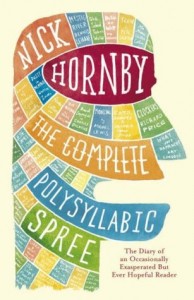
The Complete Polysyllabic Spree by Nick Hornby

Posted November 27, 2014 by Michael @ Knowledge Lost in Non-Fiction / 0 Comments

The Complete Polysyllabic Spree by Nick HornbyTitle: The Complete Polysyllabic Spree (Goodreads)
Author: Nick Hornby
Published: Viking, 2005
Pages: 278
Genres: Non-Fiction
My Copy: Library Book

Buy: AmazonBook Depository (or visit your local Indie bookstore)

While Nick Hornby is best known for his fiction that includes books like High Fidelity and About a Boy, some maybe familiar with his column in The Believer called Stuff I’ve Been Reading. The Complete Polysyllabic Spree is the combination of two U.S. titles from his column, The Polysyllabic Spree and Housekeeping vs. the Dirt. The title is a reference to the Dallas choral rock band The Polyphonic Spree, a group with over twenty members in it. Hornby often describes the works of The Believer in this way; “all dressed in white robes and smiling maniacally, sort of like a literary equivalent of The Polyphonic Spree.”

In fact, The Believer is a literary magazine created by Dave Eggers and part of the McSweeney’s company; it also focuses on other forms of the arts and general culture. It started in 2003 and releases nine issues a year; this book takes Hornsby’s column from September 2003 to mid-2006. Each article follows the same basic format, first listing books he bought that month, and then the books he read. However due to The Believers guidelines all books he hated must be listed as untitled. This is followed by an essay talking about these books and future reading plans, often between 500 to 2000 words.

What I thought was interesting is the fact that Nick Hornby took a very simple formula and worked within the confines of it successfully. As stated in a previous What I Think about When I’m Not Blogging post, this has inspired me to write more personal essays. However I have to say, I was a little disappointed by this book, simply because he kept to the same formula and never grew or evolved as a reader or writer. I like the idea but I would have liked to see some growth or experimentation; I also think if you don’t mention the books you don’t like can’t really give a true representation of your reading life, but I do understand their policy.

I have to also mention that Nick Hornby has a strong aversion to literary fiction and will actively poke at it. The idea that people only read literary fiction to become literary snobs felt a little off colour; I embrace my pretentious nature but I read literary fiction because I love the proses. His reading tastes are very narrow and focus mainly on popular fiction; this type of article would be far more interesting if the writer was interested in exploring all types of literature. I am fascinated by books about books and learning about someone’s reading journey but this was like watching someone run in the same spot. There was no risk-taking and no changes from article to article; to make matters worse I did not add a single book to my TBR as a result of reading this.


Batman: Cacophony by Kevin Smith

Posted November 23, 2014 by Michael @ Knowledge Lost in Graphic Novel / 0 Comments

Batman: Cacophony by Kevin SmithTitle: Batman: Cacophony (Goodreads)
Author: Kevin Smith
Artist: Walter Flanagan
Published: DC Comics, 2009
Pages: 144
Genres: Graphic Novel
My Copy: Hardcover

Buy: AmazonBook DepositoryKindle (or visit your local Indie bookstore)

Batman finds himself trying to understand a strange relationship between The Joker and Onomatopoeia. The Cape Crusader soon has to choose between chasing down The Joker and this puzzling villain Onomatopoeia. Writer/Director Kevin Smith puts his love of comic books and Batman to a practical use and wrote the series Batman: Cacophony.

I picked this graphic novel on my honeymoon because I was curious to see what Kevin Smith would do with Batman. I wanted to see what Smith would do with this superhero and I was a little curious about the super villain he created. Onomatopoeia is an enigma and I wasn’t sure how to take him; he works well as a super villain but for the most part I am still not sure what to make of him.

I am a fan of Batman and have often enjoyed Kevin Smith’s movies (except Jersey Girl) but I found this collection to be a little juvenile. Smith’s humour is often childish but that is never a defining factor in his movies with the exception of Clerks 2, so I was expecting so much more. There wasn’t much in the way of a storyline in Batman: Cacophony and I ended with so many unanswered questions. This is only a three issue series and I have to wonder if there were plans for more.

Walt Flanagan’s illustrations were a lot better than the writing; while not great it was far more entertaining. Flanagan uses a lot of vibrant colours that help distract the reader from the rest of the series. I had to enjoy the small homages Walt Flanagan made to other artists; one that particularly stood out to me was The Joker dress from The Killing Zone. Flanagan adopts a very busy style and while I wanted to rush through the story, it was hard to do this with the art.

There are a lot of great Batman series out there and I am struggling to work out which ones to try and which ones to look over. I am sad to say that Batman: Cacophony is one that should have been overlooked but that won’t stop me from trying to explore the rest. I hope people will help me with recommending me some good Batman series to read.


Colorless Tsukuru Tazaki and His Years of Pilgrimage by Haruki Murakami

Posted November 13, 2014 by Michael @ Knowledge Lost in Contemporary / 13 Comments

Colorless Tsukuru Tazaki and His Years of Pilgrimage by Haruki MurakamiTitle: Colorless Tsukuru Tazaki and His Years of Pilgrimage (Goodreads)
Author: Haruki Murakami
Translator: Philip Gabriel
Published: Harvill Secker, 2014
Pages: 298
Genres: Contemporary
My Copy: Hardcover

Buy: AmazonBook DepositoryKindle (or visit your local Indie bookstore)

Tsukuru Tazaki was lucky enough to have four close friends in high school. They were a tight knit group and they all shared their hopes and dreams with each other. When it came to college Tsukuru went off to Tokyo to pursue his dream career while the others remained in Nagoya at various schools. They vowed to remain close and Tsukuru made an effort to visit as much as possible. That was until one day Tsukuru was told that the other four wanted nothing to do with him anymore.

I am not going to go too much into the plot; I think this is something that needs to be discovered within the book. However I do need to talk a little about it. Tsukuru Tazaki had always felt like an outsider, even though he was accepted into the group for a while. He was always colourless in a group of colours; Akamatsu (which means red pine), Oumi (blue sea), Shirane (white root), and Kurono (black field), while his name means ‘to build’. Essentially this is a novel about friendship, rejection, isolation and the psychological scars that can be caused by others who never took that into account. There is a whole other side that can be explored but that would involve spoilers.

I had a rocky start with Haruki Murakami; the first book I read was 1Q84 and lets face it, this is the worst place to begin. I was exposed to the world of Murakami with the awkward fetishes and magical realism but 1Q84 was ultimately a little clunky and way too big. Luckily I am a bit of a hipster and picked up What I Talk About When I Talk About Running and while I’m not a runner, I found it to be an interesting read. It wasn’t till I read Hard-Boiled Wonderland and the End of the World that I truly understood his brilliance. I still have a lot more to read but Colorless Tsukuru Tazaki and His Years of Pilgrimage was a perfect next choice.

I have often heard people recommending beginning with Norwegian Wood because it is rooted in realism and I would like to think Colorless Tsukuru Tazaki and His Years of Pilgrimage would work as well. I obviously haven’t read Norwegian Wood yet but the idea of beginning with some of his realistic novels before getting into the magical realism and exploring the weirdness of Murakami’s brain is probably a good idea. His style is a little unusual but once you get an understanding of how his mind works you should be readying do dive into something fantastical.

What I have found reading Haruki Murakami is that he has a strong interest in both the conscious and the subconscious. His books explore the complexities of the mind and how different situations have a psychological impact on a person. This is a really interesting theme and one that I am particularly interested in; if I knew that a long time ago, I am sure I would have been more willing to explore his works.  Even What I Talk About When I Talk About Running explored this theme and it was a memoir.

I do wish I didn’t begin with 1Q84 but after a few other books, I finally can say that Haruki Murakami has another fan. I am keen to read all his other books; both fiction and non-fiction. There is something enthralling about the way a mind works and I really like the way that Murakami explores that. While Colorless Tsukuru Tazaki and His Years of Pilgrimage was far from perfect, there are some weird and awkward moments in the writing that I believe is synonymous with his writing style but I found this a captivating read. I have reserved Norwegian Wood at the library and I am hoping to read that one very soon.


Zone One by Colson Whitehead

Posted November 9, 2014 by Michael @ Knowledge Lost in Horror / 0 Comments

Zone One by Colson WhiteheadTitle: Zone One (Goodreads)
Author: Colson Whitehead
Published: Harvill Secker, 2010
Pages: 259
Genres: Horror
My Copy: Library Book

Buy: AmazonBook DepositoryKindle (or visit your local Indie bookstore)

Colson Whitehead was known as a novelist of literary fiction with books like The Intuitionist and John Henry Days. However in 2010 all that faded into the background with his new novel Zone One. Whitehead attempts to join the list of literary novelists who take on genre fiction; what Glen Duncan did for werewolves and Justin Cronin did for vampire, when he tries to write a literary zombie novel.

Pandemic has devastated the planet and most of the population is infected by a plague that has turned them into zombies. The uninfected Americans are trying to rebuild civilisation, create order and establish a provisional government. In a settlement of Manhattan, armed forces have successfully regained most of the island. There is a small section known as Zone One that still needs to be reclaimed, and they are working hard to clear it from the dangerous infected.

I picked up this book thinking a literary genre novel would be nice. Zone One is supposed to be about zombies but what I got was a long drawn out stream of conscious about the life of a man named Mark Spitz. This would have been alright if it was executed a little better; tacking the word ‘literary’ on to this novel isn’t an excuse to forgo a plot.

By all accounts this novel could have worked really well, even without a plot. Whitehead had created a decent world with its own idiom and logic; there are even moments of mayhem. The problem was it started as a slow burn and failed to pick up the pace. When it comes to the zombie genre it should be about survival, horror and suspense but all this felt absent from the novel. It tried to go for the slow pace that is found in The Walking Dead, which can allow for self-reflection and character development but forgot to build tension.

The narrator spends so much time on the chronology of Mark Spitz, I often felt like it forgot about the present day situations he was facing. The novel was too heavy on the memories and trying to develop this character, when it should have been adding in a plot. I think the biggest downfall for this novel is the fact it was marketed as a literary zombie novel. If I picked this book up as a retrospective of Mark Spitz’s life; a man who happens to be in the middle of a zombie apocalypse, I might have been more forgiving.

I am reluctant to just point out all the flaws in this novel because in all honesty, the last 50 pages were pretty decent. I went in expecting a zombie novel and that isn’t what I was given. I think in the hands of someone else, a literary zombie novel can be pulled off but this is not a good example. I found myself wanting to skim through the pages just so I could get to the end and move onto something better.


Seconds by Bryan Lee O’Malley

Posted November 5, 2014 by Michael @ Knowledge Lost in Graphic Novel, Magical Realism / 0 Comments

Seconds by Bryan Lee O’MalleyTitle: Seconds (Goodreads)
Author: Bryan Lee O'Malley
Artist: Bryan Lee O'Malley
Published: Ballantine Books, 2014
Pages: 336
Genres: Graphic Novel, Magical Realism
My Copy: Hardcover

Buy: AmazonBook DepositoryKindle (or visit your local Indie bookstore)

Katie is a talented young chef running a successful restaurant. However her dreams are to open her own restaurant, a place where she can have more freedom and creativity. She has found the location for this restaurant has a backer (silent partner) and is working on fulfilling her dream. The problem is, everything is moving so slowly and she is starting to get impatient. What she really needs is a second chance, to fix the mistakes she has made and get her new restaurant on track. For Katie, she has the opportunity; a mysterious girl appeared in the middle of the night with some simple instructions for a second chance.

  1. Write your mistake
  2. Ingest one mushroom
  3. Go to sleep
  4. Wake anew

I’ve been a big fan of Bryan Lee O’Malley’s Scott Pilgrim series so I’ve been looking forward to see what will happen with Seconds. Luckily, the same humour and whimsical adventure is present within this new graphic novel. What I like about O’Malley is the way he takes a look at everyday situations in a fun and comical way. The added magical realism thread really helps explore the issues present within this book.

Seconds is full of existential angst and it explores the idea of making mistakes and he does it in a new and unique way. Unlike the Sliding Doors style where life is explored in two different situations, Bryan Lee O’Malley plays with the idea of correcting mistakes while Katie sleeps. Of course this has some humorous effects; Katie isn’t aware what has changed and this leads into a madcap scenario.

Bryan Lee O’Malley returns as the artist for his own books again and he has an interesting art style. There is an Asian influence in his art work; the big eyes and hair are not the only thing he takes from this comic book style. This influence can be found throughout his graphic novels in the characteristics, style and storytelling. What I like about Seconds is that he took his art style as seen in the Scott Pilgrim series and added colour to it. There are not a lot of colours used; the shading is often very simple and one shade but it works really well. The colour is just used to make the art pop; Bryan Lee O’Malley does great artwork, almost simplistic but it remains very expressive.

I am glad to have more Bryan Lee O’Malley graphic novels to experience but I am also reminded that he had another book before the Scott Pilgrim series that I need to check out. I do have Lost at Sea on my phone thanks to comixology; I just haven’t gotten around to reading it yet. I wouldn’t mind checking out The Wonderful World of Kim Pine as well but I know it is short. Bryan Lee O’Malley has become a favourite of mine and I hope he does something new soon.


A Death in the Family by Karl Ove Knausgård

Posted October 9, 2014 by Michael @ Knowledge Lost in Contemporary / 0 Comments

A Death in the Family by Karl Ove KnausgårdTitle: A Death in the Family (Goodreads)
Author: Karl Ove Knausgård
Translator: Don Bartlett
Series: Min Kamp #1
Published: Harvill Secker, 2009
Pages: 400
Genres: Contemporary
My Copy: Library Book

Buy: AmazonBook DepositoryKindle (or visit your local Indie bookstore)

A Death in the Family is the first book in the controversial six volume series by Norwegian author Karl Ove Knausgård. The controversy started with the title of the book Min Kamp, which is the same title as Hitler’s Mein Kampf as both translate to My Struggle. Secondly, while these are marketed as autobiographical novels, Knausgård has come under fire from friends and families for exposing their private lives. Karl Ove Knausgård has been often been called a Proustian and Min Kamp often compared to In Search of Lost Time. That is just enough pretention to make me want to pick up these novels and read them.

A Death in the Family (or My Struggle Book 1 in America) tells the story of Karl Ove Knausgård, a family man living in Sweden, trying to find the balance between his writing and his family. He reflects on his childhood and teenage years, as well as the loss of his father in what feels like a brutally honest portrayal of his life. What is interesting is the idea of this being an autobiographical novel rather than a memoir; as a reader I had to continuously remind myself of this fact. I had to question what is real and were liberties were taken. Honestly, I don’t think I could write about my childhood with such clarity and I suspect that the fiction was used to fill in the gaps and tell a better story.

Karl Ove Knausgård is approaching middle age, and with a young family I suspect that this six volume series is just a way for him to make sense of his life. Allowing him to work through issues and mistakes and explore different ideas he might have towards life. This is both an effective and fascinating insight of the life of a writer and I suspect it would have been very therapeutic for Knausgård, even if it caused friends or family members to hate him. As a novel, it is a roller coaster of emotions; sometimes it might come across as slow or even dull but that is life.

This first volume is even divided into two parts, one exploring the childhood/teenage years of Karl Ove and the other the death of his father. To understand the death of his father, obviously his childhood played a big part; his mother was almost invisible, always at work or somewhere and his father was distant and unpredictable. We often have a rose-coloured memory of our childhood but as Knausgård reflects on his past, you can recognise a similar distorted view in your own life. Karl Ove has a dark view on the world and death; it is interesting read this book in the context as he tries to understand his father and his death at such a young age.

While I can’t compare Karl Ove Knausgård to Marcel Proust (I really need to read him) or Min Kamp with In Search of Lost Time, I’m glad to have read this novel. I have reserved A Man in Love (Book 2) and I plan to read all six books. I like Knausgård’s view on the world and find it fascinating to read his books as he works through his own issues. His writing style obviously helps, I found great beauty in the dark and macabre views and credit has to go to Don Bartlett for the translation.

My only problem is going to be the fact that only the first three books of My Struggle have been translated and published. I suspect I will be caught up on this series very soon and I will have begin the year long waits between volumes. Book Four is expected in April 2015 and I am never going to learn Norwegian to avoid the wait. I have always shyed away from a series that is incomplete because of the wait but this sounded right up my alley and thought I had to try at least the first book; that was a mistake.

This was a pleasant balance between literary fiction and self-reflection. Karl Ove Knausgård even threw in some of his philosophical views; I remember some references to Danish philosopher Søren Kierkegaard in the text. This was so much more than an autobiographical novel of bewilderment, grief, relationship, love, loss and rock music; hard to explain but I recommend you experience it. Even if you just wish to increase your book snobbery levels, Karl Ove Knausgård’s My Struggle series is going to be something to watch. I suspect this will become a literary sensation, if it has not become one yet.


The Year of Reading Dangerously by Andy Miller

Posted September 28, 2014 by Michael @ Knowledge Lost in Non-Fiction / 0 Comments

The Year of Reading Dangerously by Andy MillerTitle: The Year of Reading Dangerously (Goodreads)
Author: Andy Miller
Published: Harper Collins, 2012
Pages: 252
Genres: Non-Fiction
My Copy: Hardcover

Buy: AmazonBook DepositoryKindle (or visit your local Indie bookstore)

It is no secret that I am a fan of books about books; I especially enjoy a bookish memoir. The idea of reading and learning about someone’s bookish life is fascinating to me. Let’s be honest, I blog about books because I think I have an interesting bookish journey to talk about and I want to capture that for posterity sake. I would love to learn how to write a bookish memoir, so I read anything I can get my hands on. I have even written a post asking for recommendations for books about books and I am always on the look out for more.

I am not sure how I discovered Andy Miller’s memoir The Year of Reading Dangerously: How Fifty Great Books Saved My Life but I do remember being really excited about it. I ordered the book and it sat on my shelf for a little too long. With a holiday to America planned, I packed the book in my suitcase and was determined to read it. Turned out Simon Savidge from Savidge Reads started talking about this book about the same time and now I look like I was just following him in an effort to be as cool as he is.

Andy Miller worked as an editor at the time of writing this book (I assume he still does) and found himself only reading for work. On impulse he picked up a copy of The Master and Margarita by Mikhail Bulgakov and something just clicked for him. He set out to read ten books, which he called The List of Betterment, which consisted of books he has once lied about reading or felt he should read. This list obviously expanded over the course of the year but it was his starting point into rediscovering a passion for reading.

My discovery for reading was not unlike Andy Miller’s except mine involved Frankenstein by Mary Shelley, the 1001 Books Before You Must Read Before You Die list and it wasn’t a lost passion. I loved this book, I was so happy to read about all the awesome books Miller was reading in the course of the year. While this memoir is not healthy for my TBR and judging by Andy Miller’s glowing praises for Absolute Beginners by Colin MacInnes, I really need to get onto this novel first.

My only problem with this memoir is that Miller didn’t spend enough time talking about my favourite novels, like Frankenstein by Mary Shelley and Crime and Punishment by Fyodor Dostoevsky. Iwas happy to see that The List of Betterment not only includes canon but also involves books like The Essential Silver Surfer Vol. 1 by Stan Lee. It is just good to see a memoir that doesn’t just involve highbrow literature. He even considered calling this book How Fifty Great Books (and Two Not-So-Great Ones) Saved My Life referring to Dan Brown.

There is so much to talk about within this memoir, especially when talking about the fifty books mentioned in the book. I’m hoping that I can find some more great bookish memoirs to follow this one. The Year of Reading Dangerously is essentially a book about connecting with great books and the positive effects reading has on a reader. I highly recommend the book and I hope the Andy Miller will write a follow up about his continuing bookish journey.


The Ways of the World by Robert Goddard

Posted September 20, 2014 by Michael @ Knowledge Lost in Historical Fiction / 14 Comments

The Ways of the World by Robert GoddardTitle: The Ways of the World (Goodreads)
Author: Robert Goddard
Series: The Wide World Trilogy #1
Published: Bantam Press, 2013
Pages: 404
Genres: Historical Fiction
My Copy: Library Book

Buy: AmazonBook Depository (or visit your local Indie bookstore)

Set in Paris just after World War I, The Ways of the World takes a look at the battle for peace. James ‘Max’ Maxted was a Royal Flying Corps ace during the war but now finds himself in a completely new situation. While the world looks to Paris as diplomats and politicians try to negotiate peace, Max is trying to work out what happened to his father. Sir Henry Maxted was a British diplomatic who mysteriously died from a fall off the roof of his mistress’s apartment building. The authorities rule the death as a suicide but Max suspects there is something far more suspicious going on.

The Ways of the World is everything I expect from an espionage novel; nothing like the popular spy thrillers. I view the intelligence game as one of diplomacy and manipulation, not high tech weapons and action. Robert Goddard uses the murder mystery as a device to manipulate the story and keep up the pace. This is a successful tactic as the majority of the novel is told in conversations and the novel could have easily fallen into the realm of boring and tedious.

The Paris Peace Conference allowed the game of espionage to play out. France, Britain, America and Italy all have representatives there and inter-country politics feature heavily here. Each country has their own agenda and I really enjoyed watching this play out. As the host country, France also wanted to quash any notion of a diplomat being murdered and keep their image. This perfectly sets up the story that Robert Goddard wanted to tell.

However there is something terribly wrong with this book. There are three words that took me from loving this book to throwing it across the room. I actually didn’t physically throw this book across the room because it was a library book but I was very tempted. Those three words at the end of the novel that ruined everything were ‘To be continued’.

I am normally ok with a story continuing into a series, but when you end a book without a sense of closure, it really doesn’t work. When I was getting close to the end of the book, I wondered to myself how to possibly conclude the novel that quickly, and then I found out. This works well in a television show when people only have to wait a week for the next episode but in a book there is normally a year between them. This situation makes me so mad that I don’t think I can continue the series.


By Blood We Live by Glen Duncan

Posted March 26, 2014 by Michael @ Knowledge Lost in Horror, Literary Fiction / 4 Comments

By Blood We Live by Glen DuncanTitle: By Blood We Live (Goodreads)
Author: Glen Duncan
Series: Bloodlines #3
Published: Knopf Doubleday, 2014
Pages: 368
Genres: Horror, Literary Fiction
My Copy: Hardcover

Buy: AmazonBook Depository (or visit your local Indie bookstore)

It’s a sad day for me; Glen Duncan’s Bloodlines trilogy has finally come to an end. This series has been a favourite of mine and I have been desperate to get my hands on By Blood We Live. If you don’t know, this trilogy started off as a bit of a joke for Glen Duncan. One New Year’s Eve party he jokingly claimed that he would write a page-turner with werewolves, and “none of my usual philosophical angst or moral inquiry.” Having recently been dumped from a publisher (he had no best sellers and had won no awards) the move towards literary genre fiction was a recipe for success for Duncan.

In the early planning stages, Glen Duncan had planned to write a “clever narrative with a memorable antihero at its feral, furry heart”. Being disappointed by the recent wave of popular paranormal novels (Twilight, etc) Duncan drew from the horror novels he loved (Frankenstein and Dracula) as well as his favourite werewolf movie (An American Werewolf in London); the end result was The Last Werewolf. It was Duncan’s take on the werewolf novel; remaining true to the mythology, unlike other paranormal novel The Last Werewolf was gritty, violent and over sexed. Jake Marlowe is the last werewolf alive, with the pending extinction of his new race, will he give up? The novel was nothing like other horror novels I read, this was dark and literary.

Then came Talulla Rising, which continued the story, this time from the point of view of Talulla Demetriou; a strong female protagonist that both kick-assed and was full of inner torment (my catnip). Where The Last Werewolf looked at life and loneliness, Talulla Rising forced more on love and family. It has been a two year wait but finally By Blood We Live was finally released to conclude this fantastic trilogy.

In By Blood We Live we follow both Remshi, 20,000-year-old vampire that has been haunted by Talulla in his dreams. Having half the novel from a vampires perspective is an interesting change for fans of the series. This novel focuses on survival and humanity, which are both common elements in a paranormal novel but a nice way to tie this trilogy together. Talulla is been pursued by a Vatican-based Militi Christian group of monster hunters who have taking the place of the now defunct WOCOP (World Organisation for the Control of Occult Phenomena).  Remshi tries to uncover why Talulla haunts him as well as trying to stop the recklessness of a newly turned vampire.

While I wasn’t disappointed by By Blood We Live, I felt like this book wasn’t as great as its predecessors. It did conclude the trilogy and there were some great moments within the novel, I just felt like it had less to say than the first two. The literary wasn’t as prominent, almost like Glen Duncan is moving into the realm of best-selling author. While he does deserve the success, I would hate to see Duncan throw away any sign of the literary in his future novels. Rest assured that the dark and gritty feel to this series is still there. Something I must have looked in the first two novels was the amount of literary and pop culture references have been made; I know they were always in this series but I noticed them so much more in this novel.

I loved this series and I plan to reread them sometime in the near future; I know I’ll need to return to these witty and dark novels. I also have to try some of his other books, I know he said he wasn’t going to add his “usual philosophical angst or moral inquiry”, but I’m so glad he did, it really works for him. I hope Glen Duncan continues on his literary genre fiction journey and I’m eagerly awaiting what he does next. Has anyone else read this series? Or does anyone want to try to predict what genres his next book will cover?


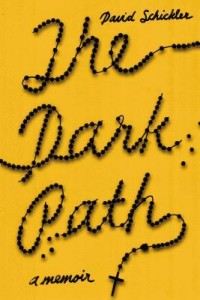
The Dark Path by David Schickler

Posted March 13, 2014 by Michael @ Knowledge Lost in Non-Fiction / 2 Comments

The Dark Path by David SchicklerTitle: The Dark Path (Goodreads)
Author: David Schickler
Published: Riverhead Trade, 2013
Pages: 336
Genres: Non-Fiction
My Copy: Hardcover

Buy: AmazonBook DepositoryKindle (or visit your local Indie bookstore)

If I was Catholic, I would want to be a Jesuit; they seem to be the most pretentious of all the Catholic congregations. Not that I would want to be a priest as I’m married but for David Schickler the desire to be a priest was a driving force in his life. The Dark Path is a memoir of Schickler’s struggle between a call to priesthood and his attraction to women. A memoir that explores his faith, sex and the internal conflict, The Dark Path is a funny and boldly honest look at his struggle.

I grew up in a strict religious home, though not Catholic, but I really connected with The Dark Path. Growing up, my parents were ministers and I often felt the pressure to join the ministry. Though it isn’t as daunting as becoming a priest, it made this book relatable. I’m often drawn to books with an internal struggle and when I first heard about this book, I knew it was something I had to read. The whole idea of choosing a life in service to God or giving into your sexual urges is an interesting topic and Schickler tackled it in a way that remained respectful to both choices.

While this is a book about religion and Catholicism in general, I think of this book as a struggle to decide what path to take. In our high school and college years we all face choices that will affect the rest of our lives and The Dark Path is essentially about those decisions. As I’ve had a strong religious upbringing there was just so much in the book that I could relate to and enjoy, this does make my review very biased but I can’t help it. I also married a Catholic so I had the opportunity to learn more about Catholicism while also having someone to answer all my questions I had in the book.

David Schickler has written one novel which is mentioned in this memoir called Kissing in Manhattan and also co-created the TV show Banshee, which I haven’t had an opportunity to watch. I have to wonder if both the novel and show portray a similar element of struggle in the characters as well as maybe a hint of religious politics because I think he captured this really well in this book. I get a sense that his writing style is dark, gritty and transgressive. You can see hints of this in his writing but he still managed to make this memoir hilarious and heart-warming.

There is so much I want to say about this book but I don’t want to give too much of the book away.  The Dark Path is the first book to receive a 5 star rating for 2014 and I hope to find many people to talk to about this memoir. If you have a religious background and want to read about a struggle of faith then I highly recommend The Dark Path. I plan to go read Kissing in Manhattan soon and maybe even try and get a hold of Banshee.