Format: Paperback

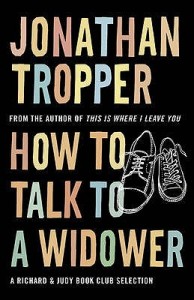
How to Talk to a Widower by Jonathan Tropper

Posted June 7, 2014 by Michael @ Knowledge Lost in Contemporary / 4 Comments

How to Talk to a Widower by Jonathan TropperTitle: How to Talk to a Widower (Goodreads)
Author: Jonathan Tropper
Published: Orion, 2007
Pages: 341
Genres: Contemporary
My Copy: Library Book

Buy: AmazonBook Depository (or visit your local Indie bookstore)

“I had a wife. Her name was Hailey. Now she’s gone. And so am I.”

This one reoccurring line not only serves as a mantra for Doug Parker, it also sums up the essence of How to Talk to a Widower. A year ago Doug lost his with in a plane crash and he has been grieving ever since. The people around him tend to think that it is time for him to move on, he is only twenty-nine, and he still has a whole life ahead of him. For Doug, that is not the case, his wife is gone, and so is he. On the surface this novel feels like it has the makings of a bad sitcom, with a blend of humour and melodrama; however there is so much going on the under the surface worth exploring.

Essentially How to Talk to a Widower is a study into grief and the emotions behind losing someone close. However I feel like this novel explores the idea of holding onto grief. How long can we hold on? At some point the grief becomes a part of us and it not only controls us but it defines us. We can fall into an endless spiral without any hope of escape; it felt like Doug was trapped in this endless spiral at time but then we get these little glimpses of hope. Not sure if he is healing or it is just false hope.

Doug Parker is an interesting character; he is so flawed and there is something so genuine about him. Grief has defined him and he often uses it as an excuse for his self-destructive ways. Doug loves women, to an extent where it felt like he has an attraction to every woman he meets; they were all beautiful. “Sometimes you walk past a pretty girl on the street there’s something beyond beauty in her face, something warm and smart and inviting, and in the three seconds you have to look at her, you actually fall in love, and in those moments, you can actually know the taste of her kiss, the feel of her skin against yours, the sound of her laugh, how she’ll look at you and make you whole. And then she’s gone, and in the five seconds afterwards, you mourn her loss with more sadness than you’ll ever admit to.” While we know that Doug loves and misses his wife, Jonathan Tropper has the ability to strip his characters bare and expose every part for their personality.

When Doug lost his wife he was only 29; Hailey was eleven years older and had a teenage son from a previous family. Her son, Russ is suffering just as much as Doug; he feels he not only lost his mother but his stepfather has also abandoned him. He was shipped off to live with his father who is bad news. He acts up and does everything to get some attention. Like I’ve said before, this novel is so melodramatic but it is all bittersweet.

I love the complexity that is found in this novel, not just with Doug and Russ, but even Doug’s sister Claire and his family are all so complicated that reading the drama in this book is both enjoyable and often sad. Even the woman Doug starts sleeping comes with her own set of flaws and complexities. “She was smart and funny and vulnerable and just so goddamned beautiful, the kind of beautiful that was worth being shot down over.” She is such a mystery; I wanted to know what is her motivation? Why is she attracted to Doug? She is just a sexual output for the protagonist and there doesn’t seem to be any reason behind her motivation. This mystery is what I’m drawn to; I want to know more. I like how she is described as voluptuous and she seems to have an air about her I can’t help but want to explore.

Even though there is so much drama in the novel, there is humour that runs throughout How to Talk to a Widower. I can’t help but get a sense of irony from this novel. The title alone makes the book sound like a self-help book and then he is writing a column in M magazine with the same title. One suspects that the column is an advice column as well but it is just an output for his grief. The humour that is tangled up in the grief and melodrama really brought this novel together, like the glue that holds it all together.

Think of this novel like dick-lit (chick-lit from a male perspective), think of it as something the Nick Hornsby may write, however I think this was better. The drama was touching, intense and executed beautifully. All the relationship dilemmas, his off kilter family, and the grief all was balanced wonderfully in How to Talk to a Widower. I laughed, cried and wanted to reread read all the wonderful lines. I know this novel isn’t going to be for everyone but I’m so glad I read it. I will be reading more Jonathan Tropper’s books and I must check out Banshee, which he co-created with David Schickler (who wrote an amazing memoir).
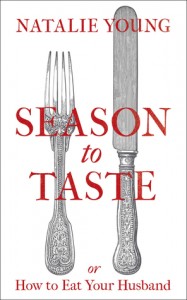

Season to Taste by Natalie Young

Posted May 22, 2014 by Michael @ Knowledge Lost in Contemporary / 6 Comments

Season to Taste by Natalie YoungTitle: Season to Taste (Goodreads)
Author: Natalie Young
Published: Tinder Press, 2014
Pages: 288
Genres: Contemporary
My Copy: Paperback

Buy: AmazonBook DepositoryKindle (or visit your local Indie bookstore)

As most people know, I love a good transgressive novel and Season to Taste or How to Eat Your Husband sounds like the type of book I was going to enjoy. The premise is simple; after thirty years of marriage Lizzie Prain has had enough.  A single blow with the shovel caves his head in and now she is free but she also has to dispose of his body. Her method appealed to her practical side; she was going to eat him.

The book sounds deliciously macabre and to some extent there are some dark moments but there was something incredibly wrong with this novel. Season to Taste is writing in two styles. Firstly you have the overall story but playing alongside of the plot is little notes Lizzie writes to herself, to remind her of what needs to be done. This serves as a psychological insight into her life as well as a shopping list and possible recipe ideas.

The major problem I had with this novel was with the protagonist. I could not tell if she was a sociopath that showed no remorse or her psyche was over looked. She felt rather flat overall; I wanted to believe that Lizzie was dead inside from a crippling marriage but every part of her felt fake and emotionless. This made the book rather dull and I found myself losing interest in the character and the novel really quickly.

Putting aside the dark nature of Season to Taste, I want to quickly touch on what this book was trying to explore. Lizzie Prain is fifty-three years old and had married for thirty years; she would not have known much of a life outside of childhood and marriage. This novel tries to explore the concept of new beginnings, life after marriage and finding yourself. This might have been effective if my interest was held. I feel like the remorse of killing her husband could have played a part in the novel; it would have been an interesting avenue to explore. The ideal of freedom, life after a bad marriage but the guilt that eats away at her; I feel like this would have made for a better read.

Killing her husband and eating him served more of a metaphor but it really didn’t work. New beginnings can be a good topic to write about and if you took out the killing and eating of her husband it might have worked. Granted I might not have picked up the book in that case; I think the author was on the right track but her attempt to go for the shock value didn’t pay off. Going for a light and humorous story doesn’t work when you are also try to be gruesome and dark at the same time. There are plenty of other novels that explore the psychology of a killer or sociopath but this isn’t one of them.


Sir Gawain and the Green Knight by Anonymous

Posted May 18, 2014 by Michael @ Knowledge Lost in Classic / 4 Comments

Sir Gawain and the Green Knight by AnonymousTitle: Sir Gawain and the Green Knight (Goodreads)
Author: Anonymous
Translator: Brian Stone
Published: Penguin, 1390
Pages: 176
Genres: Classic
My Copy: Personal Copy

Buy: AmazonBook Depository (or visit your local Indie bookstore)

When I found out we had to read Sir Gawain and the Green Knight for a current university subject, I was a little worried. I often struggle with analysing poetry and something written in Middle English was not going to be easy. Thankfully we had to read the Brian Stone translation, which only hints at being Middle English. This is a famous 14th century Arthurian romance that is often known for the beheading game.

This is a typical quest narrative; The Green Knight exposes the Knights of the Round Table as timid and cowards when he challenges them to the beheading game. The rules are simple, one knight tries to behead the Green Knight and in a year and a day he will meet them for the returning blow.  The Arthurian world is governed by a well-established code of behaviour. This code is one of chivalry, a romantic notion that is deeply rooted in Christian morality, being a beacon of spiritual ideals in a fallen world.

The beheading game is a plot device used as a test in the quest narrative, Sir Gawain is thrown into participating in the game and he is left with a choice, to be a man that lives by his code or not. A game that is meant to measure the inner worth of the knights and it does it in a big way, it exposes the Knights as cowards but Gawain steps up, sort of.

There is a whole lot of humour in this story that often gets over looked when trying to analyse this difficult text. The idea of beheading someone and them returning for a reciprocating blow should have given that away. However the supernatural elements might have made this difficult to pick up on the comedic value. The Green Knight can be interpreted as an allusion of Christ and the strong religious overtones might lead you to think that but I saw him more as a plot device to represent life’s challenges.

Sir Gawain and the Green Knight was a rather beautiful and interesting exploration for me. The translation I read did make it easier to understand, I don’t think I could handle learning Middle English. I had to do an assignment on this text and the quest narrative so I feel like I’ve already said plenty about this poem before sitting down to writing this review. I hope there is plenty of information here and gives the reader an idea of what to expect when reading this poem. It isn’t hard to understand if you have the right translation and is well worth reading.


The Collected Works of A.J. Fikry by Gabrielle Zevin

Posted May 14, 2014 by Michael @ Knowledge Lost in Contemporary / 6 Comments

The Collected Works of A.J. Fikry by Gabrielle ZevinTitle: The Collected Works of A.J. Fikry (Goodreads)
Author: Gabrielle Zevin
Published: Little Brown and Company, 2014
Pages: 243
Genres: Contemporary
My Copy: Paperback

Buy: AmazonBook DepositoryKindle (or visit your local Indie bookstore)

Who doesn’t love a story about a bookshop or books? The Collected Works of A.J. Fikry (or in the US, it’s weirdly named The Storied Life of A.J. Fikry) tells the story of Island Books and its quirky owner, A.J. Fikry. Following the death of his wife, the angry, middle aged loner is finding out just how much he relied on his wife, the people person. The novel starts off with Amelia, a newly employed book rep for Knightley Press, she is passionate about the books she is offering but one of her new clients is Island Books.

This independent book shop on Alice Island just off the coast of Massachusetts sports the motto “No Man Is an Island; Every Book Is a World.” While the bookshop sounds like a quaint little indie store, Her first impression of A.J shook Amelia. He’s an old fashioned man set in his ways;

“I do not like postmodernism, post­apocalyptic settings, postmortem narrators, or magic realism. I rarely respond to supposedly clever formal devices, multiple fonts, pictures where they shouldn’t be — basically gimmicks of any kind. .?.?. I do not like genre mash-ups à la the literary detective novel or the literary fantasy. Literary should be literary, and genre should be genre, and crossbreeding rarely results in anything satisfying. I do not like children’s books, especially ones with orphans, and I prefer not to clutter my shelves with young adult. I do not like anything over four hundred pages or under one hundred fifty pages. I am repulsed by ghostwritten novels by reality television stars, celebrity picture books, sports memoirs, movie tie-in editions, novelty items, and — I imagine this goes without saying — vampires.”

I have to love A.J. Finky; he is a cranky literary snob and he reminds me of Richard Anger from Books or maybe he reminds me of myself. That is until he finds a two year old abandoned in his bookshop and his life changes completely. The story is a cute and quirky, but fairly predictable story but in all honesty, who really cares? The Collected Works of A.J. Fikry is a fun and bittersweet novel, it is hard to criticise a book that you enjoy reading from start to finish.

Everything you expect to happen happens and in the end all loose ends are wrapped up in a nice neat bow. While I think it is a little too neat, the tone of the entire novel is light and I can’t measure The Collected Works of A.J. Fikry any other way, no matter how much I might want to. A straightforward novel about love, family, loss, joy and more importantly books. I love all the little inscriptions that Fikry leaves for Maya in all those books. While I’m a little annoyed that the book that bring Fikry and Amelia closer together is the only fictional book in this novel.

Gabrielle Zevin did a great job here; all the characters are great, in particular Fikry and Maya. I have to admit, if I were to have a child I would want them to be like Maya. She is so smart, unrealistically smart, but I don’t care, I had fun with the novel. Zevin has written a fun novel and a winning formula for her, I must admit I’ve never heard of her and this is her seventh novel. She seems to be more known as a YA author, which explains why I’ve never heard of her.

The Collected Works of A.J. Fikry is an optimistic love letter to the independent bookstore, as a book lover I hope they remain strong for a very long time. I’ve always been a fan of the indie bookstore and books about books so this was a real thrill for me to read. I admit that Books was a better novel but two great books about books so far this year is a good effort. Especially when both books have a great independent bookstore at the centre of their plots. All book lovers should pick up both novels.


Ransom by David Malouf

Posted May 8, 2014 by Michael @ Knowledge Lost in Historical Fiction / 0 Comments

Ransom by David MaloufTitle: Ransom (Goodreads)
Author: David Malouf
Published: Vintage, 2009
Pages: 240
Genres: Historical Fiction
My Copy: Paperback

Buy: AmazonBook Depository (or visit your local Indie bookstore)

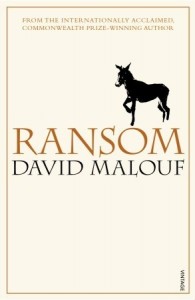
While Ransom is a retelling of Homer’s Iliad, this doesn’t mean this is just a bite-sized simplification of the epic poem. I will admit that I’ve not read Iliad or The Odyssey by Homer; for some reason I’m scared to do so, even though I’ve managed epic poems that some may consider hard to read (The Divine Comedy and Paradise Lost). I’ve heard it said that you don’t really need to read Iliad to enjoy Ransom but I would have to disagree, I think David Malouf’s novel is inviting the reader to look at the poem in the way he interprets it. There are gaps that Malouf expects the reader to know and understand and without any prior knowledge to The Iliad and the war on Troy they can feel lost and confused.

Ransom starts at the point where Priam’s son Hector is slayed by Achilles and mainly focuses on the two characters. I’m not sure about Iliad and I’m not going to speculate on what Homer was trying to say in the poem but I will look at what Malouf is saying. Ransom is a novel on human grief, love and even revenue in an intimate and rather tender approach to the subject matter. The emphasis is on the human emotions behind the story that plays out during the Trojan War. Although the novel explores the emotions of both Achilles and Priam, not really caring about any of the other characters so we only really get to experience the ideas of grief and revenge.

The main point on reading this novel was to explore the idea of intertextuality or the relationship between two interconnecting pieces of text. While I can’t say I’ve had much experience with intertextuality, the only novel that springs to mind is The Amazing Adventures of Kavalier and Clay; I suspect there is a little interconnectivity in all novels. Intertextuality covers everything from modernisations, parodies, reimaginings and anything that borrows from a different text.

This often makes me wonder, at what point do we stop studying intertextuality and more a look at plagiarism? The concept of intertextuality and plagiarism feels like a very thin line. Ransom for example is a retelling of Iliad where David Malouf wants the reader to explore this classic poem the way he sees it. This is his interpretation of what he feels Homer was trying to say. Doesn’t mean it is the only interpretation, Malouf is just taking his ideas and exploring it further.

One day I will get around to reading Iliad and The Odyssey; I’m saving them for when I have some time to read critically and take the time to full understand the two epic poems. Once I’ve done that, I think I might revisit Ransom, see if I get something out of it. I did enjoy Malouf’s style and it was an interesting novel to read but I really need to read the original first.


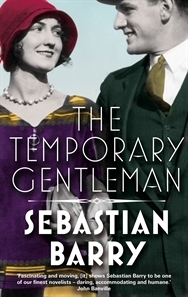
The Temporary Gentleman by Sebastian Barry

Posted May 4, 2014 by Michael @ Knowledge Lost in Historical Fiction / 2 Comments

The Temporary Gentleman by Sebastian BarryTitle: The Temporary Gentleman (Goodreads)
Author: Sebastian Barry
Published: Faber & Faber, 2014
Pages: 270
Genres: Historical Fiction
My Copy: Paperback

Buy: AmazonBook DepositoryKindle (or visit your local Indie bookstore)

Sebastian Barry is often credited for the way he captures the quintessential Irish life, especially with the McNulty family. The Temporary Gentleman tells the story of Jack McNulty, an Irish engineer that gets commissioned into the British Army in the Second World War. I will admit that this is my first Sebastian Barry novel but I had a fair idea on what I was getting myself into. The title alone gave me an idea of the type of man this is following, only temporarily a refined gentleman. It was also the idea that Jack wanted to be a gentleman but thought his social-economical background prohibited that.

The Temporary Gentleman serves are a retrospective of Jack’s life as he reflects on the choices he made along the way. But unlike similar stories like this, Jack wasn’t a nice person; in fact he was a real bastard. A drunk and a degenerate gambler, he not only ruined he own life but that of his wife, Mai. He joined the army to escape, not a honourable thing to do but I get a sense that Jack may of felt like this was the only time he was a gentleman.  Leaving Africa would mean he would have to return to his past, but is this what makes he such a bastard?

I will admit that I went into The Temporary Gentleman with the idea that this was a post-colonial novel; I expected it to explore the effects of empiricism of Kenya as they were working toward their independence. I only guess that from the synopsis and I guess you can say there was some glimpses of this, the way the Kenyans treated Jack as an ex Major. In hindsight, if I was to look at this novel as post-colonial, I should have been focusing on the imperial effects England had over Ireland. Considering this took place after the Irish War of Independence (1919-1921) and the Irish Civil War (1922-1923).

However I decided to look at this novel through the lens of psychoanalytical theory. I’m no expert at literary theories but I do try and this was a very in-depth and psychological look at Jack McNulty and the way he sees himself. A look at his mistakes and narcissism and how damaging his choose are for him and the people close to him. The Temporary Gentleman almost serves as a psychological profile and if I knew more about psychology I would try to analyse it.

I have to except that my literary criticism skills are still very lacking, I might have been able to handle this novel through the lens of post-colonialism but it was too focused on Jake McNulty to get much out of it. Psychoanalytical theory is something I’m very interested in and possibly my next focus in the world of literary criticism. All I can really say is that Barry makes it impossible to sympathise with Jack at all.

Sebastian Barry appears to know his craft; his approach to the novel was expertly executed. The prose in The Temporary Gentleman makes the whole experience bearable; you can help but enjoy the writing while grinding your teeth at Jack McNulty. I don’t feel like I can truly recommend this novel, there are plenty of unlikeable characters that are more thrilling to read about but I will be returning Sebastian Barry in the future.


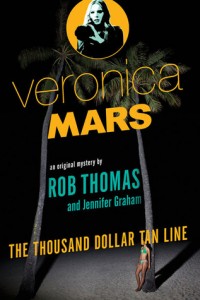
The Thousand-Dollar Tan Line by Rob Thomas & Jennifer Graham

Posted May 2, 2014 by Michael @ Knowledge Lost in Crime / 2 Comments

The Thousand-Dollar Tan Line by Rob Thomas & Jennifer GrahamTitle: The Thousand-Dollar Tan Line (Goodreads)
Series: Veronica Mars #1
, 2014
Pages: 324
Buy: AmazonBook DepositoryKindle (or visit your local Indie bookstore)

Veronica Mars is quite possibly one of the most interesting characters on TV. She’s intelligent, witty and snarky; think Philip Marlowe meets Nancy Drew. First of all, if you haven’t seen the TV show, I highly recommend you do so first. Watch the show then the movie and then you’ll be ready to read this novel. This new series takes place after the events of the movie, which means not only do I have to avoid spoiling the novel, but I must also try and avoid any major spoilers of the movie. I’m sure there will be spoilers from the TV show (mild spoilers from the movie as well) but that really can’t be helped.

Veronica Mars is back in the land of sun, sand, rich entitled kids, crime and corruption otherwise known as Neptune, California. A town that has no middle class, you are either rich or you are considered low class, and the Sheriff, he comes down hard but only on those below the poverty line. When a girl goes missing at spring break, a media frenzy follows but the Sheriff’s department are not being helpful. Veronica is hired to find the girl but this leads her into a dangerous underground of drug and organised crime.

All your characters are back, with one surprise. I’m pleased to report that everyone and everything in Neptune felt authentic and I’m so happy to see that Mac had a bigger role as Veronica’s sidekick. There is one major flaw in this movie, it changed perspectives; the TV show and movie are all told in a first person narrative but the book is in third person. Which is strange, Veronica Mars’ first person narration is iconic to the brand and also a vital part of the neo-noir style. While that noir style is still evident in the novel it just didn’t feel the same.

Another major flaw in the novel is the missing ‘bigger’ mystery. It was what made the TV show so great; ‘who killed Lilly Kane’ is what got me addicted to the show and each season had a new mystery to solve. I would have liked to see this return in the new book series but much to my disappointment it didn’t. These books are marketed to fans of the Veronica Mars brand and taking away pieces that make the show/movie great really does not do this novel or the others any justice.

I am a marshmallow (if you don’t know what that is then maybe this book isn’t for you) so I obviously loved this novel and enjoyed being back in Neptune. I will be reading any Veronica Mars novel that gets released and backing any kickstarters for any more possible movies. It was fun to stay in Veronica Mars’ world but I would like to know what happened in the ten years between the TV show ending and the movie. I’m hoping this series will tell me more about Veronica’s university and FBI years.


The Magicians by Lev Grossman

Posted April 29, 2014 by Michael @ Knowledge Lost in Book of the Month, Fantasy / 4 Comments

The Magicians by Lev GrossmanTitle: The Magicians (Goodreads)
Author: Lev Grossman
Series: The Magicians #1
Published: Thorndike Press, 2009
Pages: 691
Genres: Fantasy
My Copy: Library Book

Buy: AmazonBook DepositoryKindle (or visit your local Indie bookstore)

Quentin Coldwater is about to graduate high school; his future is catching up with him.  Suddenly an offer to a very exclusive private college has become a real possibility, but this is no ordinary university, this is a school of magic. Not only will Quentin have the normal college experience of sex, love, booze and friendship, he will also discover his magical abilities. Not just a coming-of-age novel, Quentin will also discover that the world of Fillory from a children’s fantasy series he obsesses over is very real.

Lev Grossman’s The Magicians on the surface reads like a cliché fantasy novel but there is something deeper here. If you think of The Magicians as a homage to series like Harry Potter, The Golden Compass and Narnia, you can focus on the coming-of-age element of the novel. I found similarities to The Neverending Story but if I looked deeper I would say this is more of a magical version of The Catcher in the Rye. Quentin Coldwater follows the Holden Caulfield archetype, full of angst, self-loathing and all the normal teenage boy awkwardness, almost to the point where he could be considered an antihero.

Quentin not only has to work through his new found magical abilities, this only takes a side plot to what is really happening in The Magicians. The novel depicts and often amplifies the prototypical teenage boy experience, the depression, angst and emotional carelessness. The idea of magic being a gift turns out to be more a curse for Quentin. Unlike Harry Potter this novel looks at the magic being a curse, choosing Brakebills to get an education was possibly a downfall in his adolescent life, or at least that would be how Quentin will view it.

This is not an escapist novel; in many cases The Magicians is anti-fantasy. Viewing magic as a curse was an interesting way to view life and the fantasy genre. While it does this in a very interesting way, the homage to children’s fantasy novels was a bit over the top, while trying to avoid being a cliché; it ended up falling face first into the formulaic. I would have liked to explore the ideas of education and growing up with a gift/curse more than the actual fantasy elements but that might have risked alienating the target audience.

The Magicians is not without its flaws; in fact this novel could have been so much better if it took a more focused approach. The coming of age elements were interesting, the homage and Fillory parts of the novel were annoying and I think it would have worked out better without them. If the next books in the series continue to explore magic as a curse, I will gladly read it but I’m not interested in the Fillory story arch.


Big Bad Wolf by Nele Neuhaus

Posted April 17, 2014 by Michael @ Knowledge Lost in Crime / 0 Comments

Big Bad Wolf by Nele NeuhausTitle: Big Bad Wolf (Goodreads)
Series: Bodenstein & Kirchhoff #6
, 2014
Pages: 404
Buy: Book Depository (or visit your local Indie bookstore)

After finishing The New York Trilogy I needed something light, something I didn’t have to analyse. I picked up Big Bad Wolf because I enjoyed Snow White Must Die so much. I’m not saying that I can’t analyse a novel like this one (you can analyse every text), I just think at times some light reading is needed. Big Bad Wolf tells the story of a crime that happened on the river Main near Frankfurt. Investigators Pia Kirchhoff and Oliver von Bodenstein are back to investigate the crime, as the case progresses they find it taking them into a pit of evil and cruelty in the midst of a middle class utopia.

I am trying to make an effort to read more translated fiction; I loved Snow White Must Die which is book four in the series but only the first one to be translated into English. This is book six in the same series and I have to wonder why a publisher would publish books in such a weird order; this was a similar issue that happened with Jo Nesbø. I understand that a publisher would want to translate the novels that will sell the best but if Nele Neuhaus’ popularity continues to grow at this rate we will have another Nesbø situation.

Everything I loved about Snow White Must Die is absent in Big Bad Wolf; I think the problem is that Pia Kirchhoff and Oliver von Bodenstein are considered the main protagonists while Snow White Must Die focused more on the life of a man who served ten years for a crime he didn’t commit. That is what fascinated me but Big Bad Wolf is just another crime novel.

I’ve read so many great crime novels now that I find most of them clichéd and formulaic, Big Bad Wolf isn’t that bad but I’m looking for books that do something different and fresh with the genre. There are some decent moments in Big Bad Wolf, some unexpected twists but I wanted more. The novel is darker than most popular crime novels but keeps to the standard formula. One thing I did find difficult about this novel was the amount of view points, making it difficult at times to understand what was going on but this is an acceptable method for building suspense.

I highly recommend Snow White Must Die, if you haven’t tried some German translated crime before then this might be a good starting point. As for Big Bad Wolf, I’m disappointed with the end result but others might enjoy it more than I do. I hope Nele Neuhaus’ other novels are more like Snow White Must Die but I won’t be in a hurry to try her works again.


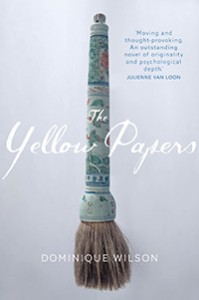
The Yellow Papers by Dominique Wilson

Posted April 10, 2014 by Michael @ Knowledge Lost in Historical Fiction / 0 Comments

The Yellow Papers by Dominique WilsonTitle: The Yellow Papers (Goodreads)
Author: Dominique Wilson
Published: Transit Lounge, 2014
Pages: 348
Genres: Historical Fiction
My Copy: Paperback

Buy: AmazonBook DepositoryKindle (or visit your local Indie bookstore)

In an effort to learn the secrets of the West, China sent a group of boys to America to be educated. This was following their defeat in the two Opium Wars in 1872. Seven-year-old Chen Mu was one of the boys sent to America; but at nine he fled to Umberumberka, a mining town in outback Australia. The Yellow Papers is a story of love, obsession and friendship set against a backdrop of war and racial prejudice.

The title refers to a Chinese tradition of determining a soul is at rest; this involves a priest determining if the death fell on a lucky day or not as well as performing some rituals. I couldn’t find much information about this process but the book suggests that the family is given yellow papers to indicate the soul is at rest. Also it may be interesting to note that the colour yellow is considered lucky in Chinese culture but Westerners use it as a racial slur. You might think this information would be useful and paid a big part in the novel, especially when it comes to tackling racism, but it doesn’t.

One of my major gripes with the novel is the fact that it attempts to look at a subject but ends up just glossing over it. The Yellow Papers tries to be a big sweeping historical epic but compact into 300 pages. This means that there are huge gaps that we have to fill in for ourselves and while this isn’t necessarily a bad thing it does detach the reader from the novel. The novel could go into detail about racism, culture clashing, even the Opium Wars but this book avoids dealing with these subjects in great detail.

While The Yellow Papers is essentially the story of Chen Mu, this book is broken into three parts that shifts into different focalisation.  Chen Mu, Edward and Ming Li are the primary focus on the three parts. While Chen Mu is not a well-developed character by any count, Edward and Ming Li’s development fell flat. Both characters are two dimensional with no real indication on personality or motivation. This causes The Yellow Papers to start off well but plateaued out a third of the way through the novel.

There is some beauty within the text; some of the syntax reviews great imagery. While Dominique Wilson never really gives us much to do with scenery, the discourse is often very revealing. “Since that evening the thought that she could not love him had festered like a cancer in his belly.” This sentence hit me pretty hard; the idea of not being love and cancer being used in the same sentence, an idea that suggests being unloved is both unwanted and weighed heavily on him. Sentences like this are found throughout the novel and what saved this book from abandonment.

I wasn’t happy with The Yellow Papers at all and while I see some beauty in Dominique Wilson’s writing, I think she needed to flesh this one out a lot more. It is her first novel and I’m sure she learnt from writing it; her next novel will really determine my opinion of her style. As I’ve said, I found beauty in the syntax, enough to try her again.