Format: Paperback

Books by Charlie Hill

Posted February 3, 2014 by Michael @ Knowledge Lost in Humour / 6 Comments

Books by Charlie HillTitle: Books (Goodreads)
Author: Charlie Hill
Published: Tinder Press, 2013
Pages: 242
Genres: Humour
My Copy: Library Book

Buy: AmazonBook Depository (or visit your local Indie bookstore)

When two tourists drop dead, it peaks neurologist Lauren Furrow’s interest and seeks out indie bookseller Richard Anger to help her uncover this mystery. What they find is something unexpected. Have you ever read a book so mediocre that your brain stops working? Best-selling author Gary Sayles’s books are doing just that. Charlie Hill’s Books will take a satirical look at the state of our book industry today.

This novel starts out with Richard Anger, an angry book seller with the best bookshop ever mentioned in a novel. “A bookshop full of long-forgotten noir fiction, modernist classics, chapbooks, transgressive experimentation, translated erotica, minimalism, short stories, satires, samizdat, surrealist poetry and smut.” This is the kind of book shop I would love to spend my time in, it’s the type of store I would love to own; it just sounds amazing. Is it bad that I identified and really enjoyed the character of Richard Anger? I just thought his whole attitude and personality really tied the book together, offsetting the humour with some bitterness.

As this is a satire, I paid closed attention at what Hill was parodying. A particular favourite of mine was the literary critic, who was a blogger. As a book blogger I’ve heard it so many times, people calling blog reviews into question and while running a blog gives you more freedom to explore your own style and voice but that doesn’t mean what we say is less relevant. This tiny dig at literary criticism amused me greatly but then again I enjoyed the many little pokes being made at the book industry.

As an overview of this novel, Books is satire on the sheer amount of books that are extremely similar being published. You know the styles, I won’t point out books but there are heaps of examples of books that feel very much like a carbon copy of a similar book that was popular. There are genres out there that have the same thing being published over and over again because they sell. Books takes a look at this practise and just made fun of it.

People are devouring these books that are so similar that they all die from SNAPS (Spontaneous Neural Atrophy Syndrome).  Books reads similar to a thriller but there are so many laugh out loud moments. I love how on the surface this novel seems like a genre-based novel but if you explore it a little deeper you see so much. You can spend a lot of time trying to dissect Books and seeing everything Charlie Hill is doing here.

If you are a fan of books and want a good laugh at the expense of the book industry, then Books is for you. I had so much fun reading this book and equally as much fun thinking about what is written. I picked up this book because I love books about books and satire and I was not disappointed. This could be on my best of 2014 list but it is way too early to tell. Highly recommend Books, it is fun to read and you’ll enjoy the fun it made at the book industry.


Tinker, Tailor, Soldier, Spy by John le Carré

Posted January 30, 2014 by Michael @ Knowledge Lost in Book of the Month, Thriller / 0 Comments

Tinker, Tailor, Soldier, Spy by John le CarréTitle: Tinker, Tailor, Soldier, Spy (Goodreads)
Author: John le Carré
Series: George Smiley #5
Published: Sceptre, 2009
Pages: 422
Genres: Thriller
My Copy: Library Book

Buy: AmazonBook DepositoryKindle (or visit your local Indie bookstore)

Tinker, Tailor, Soldier, Spy is my second John le Carré novel, the first being The Spy Who Came in from the Cold (which I may need to read again). I remember never really feeling the need to go out and read some more, which would have been a huge mistake. My reasoning for reading Tinker, Tailor, Soldier, Spy was mainly came from the need to have the book read before seeing the movie adaption. John le Carré does a great job writing complex spy plots, but sometimes it gets too confusing and makes it hard to keep up.

The story follows George Smiley (le Carré’s most famous protagonist), a retired intelligence officer working for MI6 (often referred to as “The Circus”) on a quest to discover a mole within the organisation. The characters in the book are so well written, I had to admire the way they all seem so secretive and full of mystery. This is what I expect from a spy novel and John le Carré does a brilliant job in handling them on paper. There is a fine line in how to handle characters like this; too much one way they feel over the top and cheesy and too much the other the mystery will be gone.

The complexity of a novel like this does cause a bit of an issue but in the end isn’t that what you really want? With the twists and turns, you are left never really sure what everyone’s motivations are. John le Carré has a way of under developing characters but never in a way you are annoyed by it; the idea is to keep so much of someone’s character a mystery, with inconsistences that it makes them feel like a real spy. It’s an interesting technique, one that wouldn’t work in most other genres.

Have to give John le Carré credit for the way he builds atmosphere, in a complex plot with numerous characters he still manages to bring a glimpse of London life. Not being to London before, I couldn’t tell you how realistic his depiction is but it feels real. Another thing he does really well is dialogue, nothing feels forced or fake; it all feels seamless and natural.

Now the movie adaptation of this film was particularly interesting. Having read the book beforehand, I really enjoyed it. I had an idea of what was going on, but my wife didn’t, she struggled with the plot. Personally I think overly complex plots make for better spy movies and books, but I think it really helped to have read the book before seeing this adaptation. It was a faithful and enjoyable movie full of all you expect from the book and Benedict Cumberbatch with bad hair.

I’m not going to rush out and read a John le Carré novel anytime soon, but I will come back to him at a later date. I did enjoy this novel; I just feel that the complexity makes it a very difficult book to read. I will have to take my time with his novels, but I’m excited to see what happens in his other books. I’m not sure where to start, do I just read a recommendation, start at the start of the series or just check out his latest book?


Guest Review: The Flavours of Love by Dorothy Koomson

Posted January 27, 2014 by jus_de_fruit in Crime, Guest Posts, Thriller / 0 Comments

Guest Review: The Flavours of Love by Dorothy KoomsonTitle: The Flavours of Love (Goodreads)
Author: Dorothy Koomson
Published: Quercus, 2013
Pages: 429
Genres: Crime, Thriller
My Copy: Paperback

Buy: AmazonBook Depository (or visit your local Indie bookstore)

I came across this book at the bookshop while looking for Christmas presents for my husband. He was with me at the time and saw my reaction when I read the synopsis on the back. Cooking and murder and secrets! So much that interested me. The Flavours of Love tells the story of Saffron Mackleroy and her family after the murder of her husband 18 months earlier. The killer of her husband has started sending letters to Saffron to make her aware that she is being watched. And on top of all that, she has all the usual family drama to deal with. Her teenage daughter has some very confronting issues to deal with, the younger son is withdrawing from life, her husband’s aunt has been asked to leave her nursing home. This story is more than just about trying to solve a murder; it’s about how to survive life.

Dorothy Koomson’s writing was very compelling. I was mesmerized from the first chapter and at the end of the night, I had to force myself to put the book down to get some sleep, as I knew I wouldn’t ever find a place I would willingly stop. It was so great to get to Friday night and know I could stay up as late as I wanted and power through the last half of the book. It was after 4am when I got to bed, knowing the family was safe again after Joel’s killer had been caught.

This book could have easily just focused on the murder aspect, but it incorporated so many other things. It gave me so much to reflect upon about my own relationships and how I might cope in a similar circumstance but I hope I never have to find out. Losing the love of your life would be devastating, but then you have to send the kids back to school, return to work, keep paying bills. Life goes on and doesn’t slow down when tragedy strikes. And there are all those little things, the little neuroses that your spouse would be able to talk you through, and to suddenly lose that voice of reason and do things you might not have done in the past. So many little things that we take for granted in the normality of our lives.

I loved learning about the love that Saffron and Joel shared with little flashback scenes to their life together, while they were dating and married. There is so much magic in this book amongst all the tragedy and drama that is revealed between the pages. I wasn’t really sure of the genre to class this book as when I started it, but wanted to include it in my Literary Exploration Challenge. I eventually settled on Thriller, because I certainly felt thrilled all the way through it as all the secrets were unraveled.

I don’t think I’d ever heard of Dorothy Koomson before, but she is now firmly planted on my radar and I will be hunting down her other books to read.

This is a guest post by Mary; not only is she my wonderful wife, she is also my editor and helps moderate the Literary Exploration group on Goodreads. Big thanks to her for this post and everything she does to help me with this blog.


Loaded by Christos Tsiolkas

Posted January 25, 2014 by Michael @ Knowledge Lost in Contemporary / 42 Comments

Loaded by Christos TsiolkasTitle: Loaded (Goodreads)
Author: Christos Tsiolkas
Published: Vintage, 1995
Pages: 151
Genres: Contemporary
My Copy: Paperback

Buy: AmazonBook Depository (or visit your local Indie bookstore)

Ari feels very much alone in the world, a Greek immigrant, unemployed and struggling with his sexuality. That is to say he has a same sex attraction but his friends and family would never approve of that. In Christos Tsiolkas’ normally overlooked Loaded we follow Ari through his struggles as an outsider in this autobiographical novel.

Christos Tsiolkas is a critically acclaimed author with books like Barracuda and my personal favourite The Slap. It is a shame that his debut novel Loaded just doesn’t get the attention it deserves. Was this published at the wrong time? I remember the nineties as a time where homosexuality was thought of as disgusting; granted I was still in high school in a small backwards country town but I couldn’t imagine what it would be like for someone that actually was struggling with their sexuality.

What little I know about Tsiolkas, I’ve come to the conclusion that Loaded was a reflection of his own struggles living in Melbourne with a traditional Greek family that expects so much from you. They went through all the effort to move to Australia in the hopes for a better life; the least you can do is make the most of it. Do well in school, get a good job, marry and have kids. What if this isn’t part of your plan? How would your parents react to this news?

I had to read this book for university, right after studying Joseph Conrad’s Heart of Darkness so I’ve naturally made some connections between the two. Marlowe and Ari are very similar in the sense they both are outsiders, though one deals with this during colonial times and the other is a post-colonial take. Without going too much into the parody of Heart of Darkness, because my mind has really made some interesting connections (some are probably a stretch). The different ways the two protagonists (Heart of Darkness and Loaded) are portrayed as loners in a world that doesn’t feel like home were done in interesting ways.

The whole sense of belonging is a huge part in Loaded; even the way Christos Tsiolkas talks about Melbourne is done as a parody. In Tsiolkas’s Melbourne people are divided into different cliques, much like a diverse multi-cultural city, but there is also are separation into the north, south, east and west. This is interesting to see the separation of power, wealth, religion and culture; sure this normally happens in a normal city, each suburb seems to be stereotyped as a good or bad neighbourhood. In Loaded the division is more extreme, highlighting all these groups of people and showing the reader just how much Ari doesn’t fit in anywhere he goes.

Read More


The Paris Wife by Paula McLain

Posted January 23, 2014 by Michael @ Knowledge Lost in Historical Fiction / 0 Comments

The Paris Wife by Paula McLainTitle: The Paris Wife (Goodreads)
Author: Paula McLain
Published: Virago, 2011
Pages: 392
Genres: Historical Fiction
My Copy: Paperback

Buy: AmazonBook DepositoryKindle (or visit your local Indie bookstore)

Forget everything you know about Ernest Hemingway because Paula McLain has set out to change that in The Paris Wife. This stunning novel follows a fictionalised account of Ernest Hemingway and his first wife Hadley Richardson. McLain’s version of Hemingway starts off as a tender man, with a crush on an older woman; he is persistent and full of love; nothing like what I know of the man.

The Paris Wife begins in the Chicago in 1920; it is here we meet Hadley and Ernest. Slowly we watch the two fell in love and get married. Soon after they have relocated to Paris where they meet other expatriate authors, such as James Joyce, Ezra Pound and F. Scott Fitzgerald. The love shared between Hadley and Ernest is nothing short of beautiful, while it lasted.

If you know much about Ernest Hemingway, you know this whirlwind romance wasn’t going to last, I’m not spoiling anything by mentioning this. In fact it is mentioned on the back of the book. What I found most interesting about The Paris Wife is the way it is written in a first person perspective. My calculations from the clues in the book, is that Hadley was narrating this account at least thirty-four years after her divorce from Hemingway.

This presents a unique perspective of Ernest Hemingway, the pain and suffering would have been mostly gone and we get a distorted opinion of this famous author. Paula McLain’s masterfully presented Hemingway in such a way that I began to re-evaluate my personal opinion of the man. He was depicted as loving and caring, a struggling author with big dreams but also suffering from the torments of war. This eventually all came crashing down and my opinions where back to how I originally felt about this author; it takes some talent to be able to pull that kind of writing off.

This is the kind of novel you take to Paris. The atmosphere of 1920’s Paris was stunning, I could picture it and I wanted to go back to France and enjoy this city all over again. Unfortunately I don’t live in the world of Midnight in Paris, so I will have to stick with the modern city. Mentions of Shakespeare and Company were particularly special for me as I have very fond memoirs of that wonderful bookstore.

Fictionalised accounts are tricky and should always be taken with a giant grain of salt but I was happy to see Ms McLain ended this book with a note about her research including sources for her research. While this doesn’t mean I’m going to take the entire story as true, it does provide me with some reassurances that the author intended to keep as close to the facts as possible. This meant that at times the novel did feel more like a biography but the story was compelling enough to keep the book enjoyable.

One thing that bothered me after reading some reviews about this book is the people who hated this book because of the ‘unlikeable character’ when referring to Hemingway. I’ve always thought of the author as an unlikeable person (the man was a dick). What I was impressed with is the fact that Paula McLain managed to alter my opinion and try to look at things from another perspective. He was self-destructive and often came across as a man with no remorse but seeing his downward spiral on the page is what made this journey interesting.

I read this book for Jazz Age January; it was a good excuse to pick up The Paris Wife. I did in fact enjoy the novel but not in the sense that I would recommend it, I just think it was an interesting journey and look at Ernest Hemingway. There were flaws in the novel but you have to respect the way McLean worked the reader. I knew the Fitzgeralds and Hemingway had a falling out but now I suspect it was a case of them siding with Hadley during the break up. I will have to research some more to know for sure.


84 Charing Cross Road by Helene Hanff

Posted January 18, 2014 by Michael @ Knowledge Lost in Non-Fiction / 0 Comments

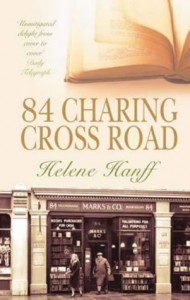
84 Charing Cross Road by Helene HanffTitle: 84 Charing Cross Road (Goodreads)
Author: Helene Hanff
Published: Virago, 1970
Pages: 230
Genres: Non-Fiction
My Copy: Library Book

Buy: AmazonBook Depository (or visit your local Indie bookstore)

84 Charing Cross Road documents twenty-year of correspondences between Helene Hanff and Frank Doel. Helene was an American writer while Frank the chief buyer of Marks & Co, an antiquarian bookseller located at the eponymous address in London, England. Starting out as a request for obscure classics, the book follows the blossoming relationship with Helene and the people of Marks & Co. Followed by The Duchess of Bloomsbury Street, a collection of diary entries of Helene’s trip to England and the tour of bookshops.

Helene noticed an ad in the Saturday Review of Literature and first contacted the shop in 1949. This started a beautiful love story found in this book, not between Helene and Frank but rather a love of books. This is the type of book you read if you are a book lover; it makes me wish I could correspond with a bookstore (or a book lover) about books. Can you imagine this happening with Amazon or Book Depository? Nowadays we have twitter (which I’m always on talking about my love of books) but 140 characters sometimes are not enough to say what you want to say.

I went into this book a little unsure, a collection of letters between a book lover and a bookseller, how great can this book really be? What I found was that the silver tongue and wit of Helene Hanff really made this book for me. You know that feeling in writing where you not sure if the person is being sarcastic or not, I started off wondering this but so found she had a wicked sense of humour and I’m so glad the people of Marks & Co never took offense (or they didn’t appear to). This might have been their (Frank Doel and the others that wrote to Helene) professional nature that slowly changed into a friendship, once they started to get to know each other and understood her sense of humour.

One of the major problems I had with this book is not really a problem but a personal preference, which has to do with grammar and formatting. I understand they tried to keep the writing the same as the letters but I wouldn’t mind if they fixed it a little to add punctuation and correct it. Another thing that throws me was the missing letters, I know things get lost but when you are absorbed in a conversation about a book (like Pride and Prejudice) it is disappointing to not know what happened.

The edition of 84 Charing Cross Road I borrowed from the library also came with The Duchess of Bloomsbury Street. This is the travel diary of Helene Hanff’s time visiting London. Looking at details of this book the term ‘zesty memoir’ is mentioned a few times, but I felt it to be a disappointment in comparison. It was entertaining but it didn’t have the banter or wit I expected, it just felt like a step by step play of everything Helene did while visiting London. While these two books work as companion pieces The Duchess of Bloomsbury Street was too one sided for my taste. Think of it like a sequel, once you finish 84 Charing Cross Road you’ll probably want to know what happened on her trip to London.

84 Charing Cross Road has been made into a movie and a stage play; I’ve not seen them but I’m interested to see how this book translates into another medium. I love how the book is promoted with the line “so begins a love affair”; this is a love affair with books. I managed to write this entire review without mentioning this is an epistolary book that I feel the need to mention my achievement. Highly recommend that you get your hands on both novels and reading them, especially if you are a lover of books.


Careless People by Sarah Churchwell

Posted December 19, 2013 by Michael @ Knowledge Lost in Non-Fiction / 3 Comments

Careless People by Sarah ChurchwellTitle: Careless People (Goodreads)
Author: Sarah Churchwell
Published: Virago, 2013
Pages: 358
Genres: Non-Fiction
My Copy: Paperback

Buy: AmazonBook DepositoryKindle (or visit your local Indie bookstore)

Since the publication of The Great Gatsby in 1925, it has been talked and talked about. Some people were forced to read it in high school, some hate it and others love it. No matter what you think about the book you can’t deny its significance. Careless People looks at The Great Gatsby, F. Scott Fitzgerald and what was happening during the Jazz era. More specifically the months when this classic too place.

I loved The Great Gatsby, the first time I read it I got little out of it (see review) but the second time around, I feel like I really understood it (see that review as well). Though I’ve come to realise this novel is full of layers and the more you read and research the more you will get out of this novel. It has been widely though that The Great Gatsby was autobiographical in nature so understanding F. Scott Fitzgerald is important when reading this classic critically.

Sarah Churchwell has made life a little easier for people that love and want to learn more about this novel. Careless People looks at the text and then different events that were happening at the time of writing this novel. She also talks about the Fitzgeralds (a very interesting couple) and tries to give us some context about the motivations and thoughts behind this Magnum opus.

So you get historical context as well as a unique look into the lives of the Fitzgeralds and what we call the Jazz Age. I really enjoyed this book, as a lover of The Great Gatsby (not the terrible movie) I found it fascinating to learn about just what has happening at that time, especially in New York and F. Scott Fitzgerald. One of the most interesting thinks I learnt from the book was about the lexicon, and new words coined at the time that are used today.

Something I often worry about when reading a non-fiction book like that is referencing. It is not common practice but I seem to respect a book more if I can see where information was found. Careless People did a great job with this; over 50 pages of notes and a bibliography so if you are interested (like me) you can look further and do some independent researching. Part biography, literary criticism, history and true crime, Careless People has a lot of information in it but it is only a scratching the surface on all accounts.

I wish I had this much to say about a book, especially the ones I love; I just want to dive in and learn all I can about it. I often struggle to write a review post, but one day I hope I can pull something off like this; keep an eye out for my 400 page reviews. It is clear that Churchwell is passionate about The Great Gatsby. This would be a great companion next time you read the classic, I can imagine how helpful it would be. I loved Careless People; I want to read more books like this, particularly about novels I love.


The Narrow Road to the Deep North by Richard Flanagan

Posted December 14, 2013 by Michael @ Knowledge Lost in Historical Fiction / 0 Comments

The Narrow Road to the Deep North by Richard FlanaganTitle: The Narrow Road to the Deep North (Goodreads)
Author: Richard Flanagan
Published: Vintage, 2013
Pages: 467
Genres: Historical Fiction
My Copy: Paperback

Buy: Book Depository (or visit your local Indie bookstore)

The Narrow Road to the Deep North follows the story of Dorrigo Evans, an Australian doctor haunted by his past; life in Tasmania, a love affair with his uncle’s wife, World War 2 and so on. At the heart of the story is his horrific time in a Japanese slave labour camp as a prisoner of war working on the Burma death railway. Taking its title from 17th-century haiku poet Basho’s travel journal, The Narrow Road to the Deep North is about the impossibility of love.

I started reading this book at the beginning of my recent reading slump, I felt so much pressure to try and get it read before my local book club. As a result, I wasn’t able to finish it in time and I ended up putting this aside half read. I obviously went back to the book and finished it, but I think it did play a big role in my enjoyment of the novel.

This is my first Richard Flanagan novel; I have heard a lot about him, but never had a chance to try him out before. The Narrow Road to the Deep North is about the harshness of war, not just the struggle of trying to survive the battlefield, or being a prisoner of war. This goes further and looks at trying to survive post war. I’ve read some great novels similar to this; Catch 22, Slaughterhouse-Five, The Yellow Bird, Billy Lynn’s Long Halftime Walk and The Machine come to mind. So I felt that I ended up using these novels as the measuring stick and The Narrow Road to the Deep North just didn’t feel like it covered the topic properly.

I felt like this book also tried to be an epic novel, following the exquisite pain of Dorrigo Evans’s life. Then I got halfway through the novel and wasn’t sure how it could cover the entire life in so little pages. I normally associate epics with great big books and if this book covered more of Dorrigo’s life then it could have fit this genre.

Flanagan focuses on not just the cruelty of war and it’s after effects but the impossibility of love, especially when so damaged. I think this was the major theme Flanagan wanted to explore, more than war and the Burma death railway. The relationship between his uncle’s wife Amy and then his girlfriend Ella play a big role in exploring Dorrigo’s life and the pain he suffers. Forbidden love and the relationship everyone expects from him; this is what I think the author wanted to explore.

I really enjoyed the style of Richard Flanagan’s The Narrow Road to the Deep North, so much so that I think it could have been a future Australian classic. The main problem was some parts go on for pages in great detail and then others were just glossed over. There was no consistency and in a great epic novel, you expect the same amount of detail in everything happening. Sure some parts deserve more time but I think there were something interesting points that needed to be focused on a lot more. This is a good novel that could have been great; I think that is what frustrated me the most about The Narrow Road to the Deep North.


NW by Zadie Smith

Posted December 6, 2013 by Michael @ Knowledge Lost in Literary Fiction / 8 Comments

NW by Zadie SmithTitle: NW (Goodreads)
Author: Zadie Smith
Published: Hamish Hamilton, 2013
Pages: 296
Genres: Literary Fiction
My Copy: Library Book

Buy: AmazonBook DepositoryKindle (or visit your local Indie bookstore)

Living in the Caldwell housing estate found in North West London, the only plan was to get out and go somewhere else. Thirty years later, Caldwell kids have all moved on with their varying degrees of success. Living streets apart, their worlds collide, showing them that the people they once were and are now, can suddenly unravel.

NW has been labelled as a tragicomedy, which means the author will try to cut overly dramatic and tragic lives will a bit of humour and possibly a happy ending. I felt like this revealed too much about the novel; I always expected everything to turn out well for these four Londoners.  The term recherché postmodernism (or hysterical realism) was coined by literary critic James Wood to describe this type of contemporary fiction, in particular the works of Zadie Smith. Has states, this is “a literary genre typified by a strong contrast between elaborately absurd prose, plotting, or characterisation and careful, detailed investigations of real specific social phenomena.”

This gives us a sense of what to expect in a Zadie Smith novel “[and] turn fiction into social theory” (James Wood, 2000). I have to admit that this is the first of Smith’s novels that I read and picked this as my first simply because it was the first time I heard of her and it was available at my local library. In hindsight, maybe starting with White Teeth might have been a better choice but at least I know I’ve experienced Smith’s style without going to her most celebrated novel.

This felt like an experimental novel that had a lot to offer and has some interesting insights into a low social economical part of London. It tried to analyse the social progress of the four main protagonists as they try to be successful in life. Not the easiest book to read while I was struggling to remain focused and climb out of a slump. There are a lot of ideas jammed into a novel full of ever changing styles; yet NW remained lyrical and poetic through it all.

I wish I had better focus through this book, I feel like there was a lot I missed out, what I did get from the book was enjoyable. It is a weird experience enjoying a book but not feeling like reading at the same time. I think it does affect my opinion of NW but I’m trying hard to avoid letting personal opinions cloud my judgment on great writing. Sure, reviewing and enjoyment of a book are based on person opinions but I feel that I need to remove emotions and read more critically. NW was interesting and I hope to read more Zadie Smith in the future.


The Bone People by Keri Hulme

Posted November 29, 2013 by Michael @ Knowledge Lost in Book of the Month, Literary Fiction / 0 Comments

The Bone People by Keri HulmeTitle: The Bone People (Goodreads)
Author: Keri Hulme
Published: Pan Macmillan, 1984
Pages: 540
Genres: Literary Fiction
My Copy: Paperback

Buy: AmazonBook Depository (or visit your local Indie bookstore)

It was a gloomy and stormy night, a mute 7 year old boy, Simon shows at the hermit Kerewin’s tower. The next morning his adoptive father, Joe came to pick him up. Because Simon couldn’t explain his motives, Kerewin has to rely on Joe to tell their curious story. A storm earlier that year sees Simon wash up on a beach with no memory or clue of his identity. Joe and his now deceased wife took the troubled boy in, but the traumatised boy is just too hard to cope with.

The Maori people use bones as tools and for art; they believe the notion of a person’s core is found within their skeleton. The bones are a common theme throughout the novel; each character is emotionally stripped to the bone. It is then we truly see what type of person these characters are. This novel is full of violence and twisted emotions, making this a tense and draining book to read.

Something I really liked about this novel was Keri Hulme’s use of silence as tool that drives the plot. Simon is unable to speak, but we find out this is more of a psychological rather than a physical restriction, as he can sing. I think he is afraid to say the wrong thing, a defensive strategy. He uses notes as a primary form of communication, this way there are no expressions of his emotion and he can protect himself. The book goes a little further, Simon is also silent about the pain, when he is beaten he doesn’t make a sound. Kerewin also uses silence in a similar way, she built her tower to hide away and be a recluse; no one can hurt her if she is in solitude. She is always an artist suffering from a creative silence; not being able to let her creative side flow through her art. You can read this book and find many examples of silences within it; very effective and I spent a lot of time trying to work out the meaning behind it.

Each character has been damaged that their defensive mechanisms make it hard to open up to others. Yet the three main characters spend the entire novel trying to work out what love is and how to find it. They are all isolated themselves from the world; Kerewin in her tower, Simon with his inability to steak and Joe with his grief. There is just so many themes you could look at in The Bone People, the idea of a utopian society uniting Maori and Western culture, Post-colonial discourse, cultural illness, violence as a way to communicate and you can just go on and on.

This is not the easiest book to read, it is confronting and tense. The Bone People left me with mixed emotions; on one hand the writing was wonderful and left me thinking about so many issues but on the other hand the violence just left me with a sick feeling. I often try to leave my emotional opinion of the subject matter out of analysing a book but I just can’t help it with this one. In the end, I think the book has something important to say and worth reading.