Format: Paperback

At Dusk by Hwang Sok-yong

Posted April 12, 2019 by Michael @ Knowledge Lost in Contemporary / 0 Comments

At Dusk by Hwang Sok-yongTitle: At Dusk (Goodreads)
Author: Hwang Sok-yong
Translator: Sora Kim-Russell
Published: Scribe, 2018
Pages: 192
Genres: Contemporary
My Copy: Library Book

Buy: AmazonBook DepositoryKindleWordery (or visit your local Indie bookstore)

Longlisted for the Man Booker International Prize 2019

On the outside, Park Minwoo was the poster boy for success. Born into poverty, his parents owned a small fishcake store. He worked hard and now he is the director of one of Korea’s biggest architectural firms. However, Park thinks maybe he have missed the point of life. He has followed the ideal path to become wealthy but at the cost of his childhood love Cha Soona.

At Dusk is a quiet exploration into the life of a modern Korean businessman and his success, but it also reflects on the modernisation of Seoul. It is an obvious allegory; while Park doubts his success is the true meaning of a well lived life, the author begins to question the modernisation of Korea. The cost of progress really is the driving force behind the novella. As a Westerner, I feel like we are led to believe that all progress is good. The US goes to war with many countries because their values are different. We are forcing westernisation onto the rest of the world, and we are led to believe this is for the good of the country.  However, it is books like At Dusk that often help me explore a different argument.

Park Minwoo’s family lived a simple life running a small business, while Cha Soona’s parents were noodle makers. Modernisation means the end of these small businesses. Mass production and making money is the only thing of value. Noodle houses quickly become franchised coffee houses. The Korean culture is dying, leaving only Taekwondo and K-Pop behind.

This was a simple little novel, just a quiet yet urgent meditation on the effects progress has on its people and their culture. I feel the author could have done more but I have heard that Park Minwoo appears in other Hwang Sok-yong books. While it is longlisted for the Man Booker International Prize, I cannot see it making the shortlist. This feels more like a quick read the judges put into the list to get people to think more about the topic of westernisation and progress, what it means to the people, the country and also their culture.


How To Talk About Books You Haven’t Read by Pierre Bayard

Posted December 28, 2018 by Michael @ Knowledge Lost in Non-Fiction / 2 Comments

How To Talk About Books You Haven’t Read by Pierre BayardTitle: How To Talk About Books You Haven't Read (Goodreads)
Author: Pierre Bayard
Translator: Jeffrey Mehlman
Published: Granta, 2009
Pages: 176
Genres: Non-Fiction
My Copy: Library Book

Buy: AmazonBook DepositoryWordery (or visit your local Indie bookstore)

Recommended for lovers of Translated Non-Fiction, or Books about Books

There are many books out there about how to be a better reader. The whole books-about-books sub genre is filled with both reading journeys and strategies to improve the way we read. There is only one book I know of that focuses on how to talk about books without having read them. Pierre Bayard’s How to Talk About Books You Haven’t Read teaches us the art form of not reading.

“Because I teach literature at the university level, there is, in fact, no way to avoid commenting on books that most of the time I haven’t even opened. It’s true that this is also the case for the majority of my students, but if even one of them has read the text I’m discussing, there is a risk that at any moment my class will be disrupted and I will find myself humiliated.”

Pierre Bayard adopts the persona of a literature professor who is not interested in reading. While I do believe it as a persona, you must wonder how close the truth it might be; he is in fact a professor. He breaks up the books we have not read into four categories. Books You Don’t Know, Books You Have Skimmed, Books You Have Heard of and Books You Have Forgotten, taking the time to give the reader tips on how to talk about books, whether you have read them or not.

 “When we talk about books…we are talking about our approximate recollections of books… What we preserve of the books we read—whether we take notes or not, and even if we sincerely believe we remember them faithfully—is in truth no more than a few fragments afloat, like so many islands, on an ocean of oblivion…We do not retain in memory complete books identical to the books remembered by everyone else, but rather fragments surviving from partial readings, frequently fused together and further recast by our private fantasies. … What we take to be the books we have read is in fact an anomalous accumulation of fragments of texts, reworked by our imagination and unrelated to the books of others, even if these books are materially identical to ones we have held in our hands.”

While Bayard has adopted a tongue in cheek approach to this book, there is a lot of useful information to be found within the pages. The key here is to develop the confidence to talk about books in general. Look at the BookTube community, one of the staples of that is the book haul. Here people discuss the books they have brought recently, most of which have not read been read yet. The idea is to develop the skills and the confidence to talk about these books. For example, if we talk about a book we have not heard of, we can make assumptions about the text based on the author, cover and many other aspects; we do this all the time when in a bookstore. We see a book and determine if it is something we want to read without knowing anything about the content. Books we have skimmed or forgotten about still mean we have valuable things to say, why did we skim? Why was it so forgettable?

While this was a lot of fun to read, the true message of the book really spoke to me. This idea that we need to develop the confidence to talk about books even when we have not read them or forget major points. I read a novel recently and I somehow skipped a very important event, while talking to my wife it became clear I missed it. Embarrassing? Yes, but it proves just how easy it is to forget or skim over an important part of the book. I know I need to develop more confidence to talk about books, and How to Talk About Books You Haven’t Read served as a reminder of this fact. I joined a book club, started a BookTube channel, and even a podcast because I want to talk about books, but I know I still have a long way to go in building my confidence in talking about books in general, not just the ones I have read.


Disoriental by Négar Djavadi

Posted October 19, 2018 by Michael @ Knowledge Lost in Literary Fiction / 8 Comments

Disoriental by Négar DjavadiTitle: Disoriental (Goodreads)
Author: Négar Djavadi
Translator: Tina Kover
Published: Europa Edition, 2018
Pages: 338
Genres: Literary Fiction
My Copy: Paperback

Buy: AmazonBook DepositoryKindleWordery (or visit your local Indie bookstore)

Shortlisted for the National Book Award for Translated Literature 2018
Longlisted for the BTBA 2019

Normally I am not a fan of multi-generational stories but there is always an exception to the rule and Disoriental is just that. My major problem is that there is never enough time spent with the characters. In this novel we follow Kimiâ Sadr who fled Iran with her mother and sisters at the age of ten. They join their father in France in the hopes for a better life. Now fifteen years later Kimiâ is overwhelmed with the memories of her ancestors.

What I loved about this novel is the way Négar Djavadi focuses specifically on one person but uses her as the foundation to look at the ancestry of her family. The constant waves of memories and stories are the driving force of Disoriental which allows the reader to explore the cultural history of Iran. From her great-grandfather Montazemolmolk, who had a harem of fifty-two wives, to Kimiâ, a queer woman sitting in a Parisian fertility clinic.

The inner flap refers to this novel as a kaleidoscopic story and I cannot think of a better way to describe Disoriental. We experience many key moments in Iranian history from the perspective of the Sadr family. We look at the cultural changes, the politics and the family throughout. The difference between Kimiâ and her great-grandfather are vastly different. A key element I found fascinating was the treatment of the LGBTQI community. A place where losing your virginity before marriage, having an affair, or abortion, or even a drug addiction is better than being a homosexual. I was surprised to learn that sex changes are legal in Iran, it is better to change your entire gender identity than be same sex attracted.

This whole history makes up the struggle for Kimiâ in the fertility clinic. She is torn between family traditions and her own ‘disorientalisation’ as a modern woman. While this might sound like a bleak novel and in many ways it really is, Négar Djavadi offers so much tenderness to the whole experience as well. We look at the history, we see the family dramas but we also see the triumphs as well. Living in Paris where Kimiâ has more freedom than she may have had in an alternate life. There is so much more to explore within Disoriental but for me this was a novel of identity. Her family’s past defines Kimiâ Sadr as much as her own identity.

I found so much tenderness within such an important book. It was the little moments in their lives that really helped along the way. For example at the beginning of the novel Kimiâ’s father Dirius never took the elevator. He say they were for ‘them’ and by ‘them’ he meant the citizens of France. In this little anecdote we see so much about the attitude he had as an immigrant. Without going into the bleak backstory we know Dirius Sadr sees himself as a second-class citizen not wanting to do anything that might offend the people around him. This small tale says so much without going into specifics. It is this kind of storytelling that allows Négar Djavadi to write about so much about the world without adding to the bleakness.

I am very impressed with Disoriental. I love a novel that can explore important subjects and deal with the current start of the world without making the whole reading experience feel like a chore. I assume that this novel is semi-biographical but I am only speculating. Négar Djavadi has done an amazing job and it is important to have novels like Disoriental in the world. Tina Kover did a wonderful job translating this book which allows me to understand a little more about the world I live in. I highly recommend Disoriental, and it is my pick to win the National Book Award for Translated Literature in 2018.


Trick by Domenico Starnone

Posted October 17, 2018 by Michael @ Knowledge Lost in Contemporary / 2 Comments

Trick by Domenico StarnoneTitle: Trick (Goodreads)
Author: Domenico Starnone
Translator: Jhumpa Lahiri
Published: Europa Edition, 2018
Pages: 192
Genres: Contemporary
My Copy: Library Book

Buy: AmazonBook DepositoryKindleWordery (or visit your local Indie bookstore)

Shortlisted for the National Book Award for Translated Literature 2018

Have you ever read a novel that you felt was completely pointless? That is how I feel about Trick by Domenico Starnone. The novel follows the story of Daniele Mallarico a successful illustrator coming to the end of his career who was asked by his daughter to look after his grandson Mario. Set over 72 hours we follow Daniele struggling with his own thoughts towards his illustrations and dealing with his four-year-old know-it-all grandson.

I admit I identified with the solitude and grumpiness of Daniele and was constantly feeling frustrated with Mario. I have no idea how someone deals with a young child that thinks they know everything. Especially when that child wants to do everything because they know how to do it, but, when something goes wrong, breaks down. Daniele’s daughter and son-in-law think that Mario is independent and will look after himself but this is far from the reality.

This is a very plot driven novel and I felt like the characters were too flat. I liked Daniele but in reality I do not know him. An aging illustrator who likes to live alone is the extent of the character. It is hard to write children, so Mario read like a bratty teenager who is in reality a four-year-old. The relationship of Mario’s parents seems like a more interesting narrative but that all happens off the page.

I am disappointed with Trick and am glad that it was a quick read. Translated by Jhumpa Lahiri, this seems to be the main reason Domenico Starnone is getting attention. I plan to give Starnone one more chance with Ties but if that reads similar to Trick, I probably will never return to his writing. I just expect more from my literature.


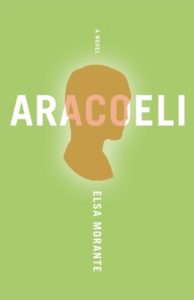
Aracoeli by Elsa Morante

Posted September 29, 2018 by Michael @ Knowledge Lost in Literary Fiction / 1 Comment

Aracoeli by Elsa MoranteTitle: Aracoeli (Goodreads)
Author: Elsa Morante
Translator: William Weaver
Published: Open Letter, 2009
Pages: 311
My Copy: Paperback

Buy: AmazonBook DepositoryWordery (or visit your local Indie bookstore)

When an Italian booktuber (Bruno) offers some recommendations for great Italian authors to check out, I am going to pay attention. In his video, he recommended Alberto Moravia and Elsa Morante, who were married for twenty years. Comparing Elsa Morante to Elena Ferrante peaked my interest and the recommendation given was her last novel Aracoeli. A melancholic novel about an aging man attempting to recover his past and get his life on track. Stuck in a dead-end job for a small publishing house, 43 year old Manuel travels to the home town of his mother Aracoeli, to try and understand her.

People that have a deep understanding of psychology would get more from Aracoeli than I did but what struck me is his obsession with his mother. I do believe that Manuel is a very unreliable narrator so all his thoughts and feelings have to be considered before discovering the truth. His self-loathing I could handle but I was often frustrated with his short-sightedness. It was difficult to like this character because I found myself constantly trying to analyse him, never sure if I was understanding who he truly was.

Aracoeli was an enigma as well, mainly because we are constantly inside Manuel’s had. I never felt like I was fully understanding this character, and when the novel talks about how she contracts an incurable disease (syphilis is implied) or how she was a nymphomaniac I spent more time wondering about her situation. She was a victim of her circumstances and the way women were treated. Reading Aracoeli felt more like sifting through all that is going on to find the truth, but that is part of its appeal.

If I am to compare Elena Ferrante to Elsa Morante, it would be in relation to the way both wrote about the treatment of women. Both wrote incredibly complex Neapolitan women trying to navigate their way through life. I think Ferrante is a much easier read but I might consider Morante a much more rewarding experience.

I do not begin to understand the complexity of Aracoeli and I know it will be many read throughs before I even scratch the surface. I love novels like this because they make you work for a much more rewarding experience. I may not understand Aracoeli now but I hope to in the future. There is so much despair and destruction in the book, but I find myself pondering it weeks after I finished it. I have to return to Aracoeli, it is the type of book that leaves you no other choice.


The Shape of the Ruins by Juan Gabriel Vásquez

Posted September 27, 2018 by Michael @ Knowledge Lost in Historical Fiction / 2 Comments

The Shape of the Ruins by Juan Gabriel VásquezTitle: The Shape of the Ruins (Goodreads)
Author: Juan Gabriel Vásquez
Translator: Anne McLean
Published: MacLehose Press, 2015
Pages: 505
Genres: Historical Fiction
My Copy: Library Book

Buy: AmazonBook DepositoryKindleWordery (or visit your local Indie bookstore)

Longlisted for the Man Booker International Prize 2019

Juan Gabriel Vásquez is quickly becoming a new favourite of mine. Having read The Sound of Things Falling and now The Shape of the Ruins, I cannot help but appreciate his style. I compared him to Roberto Bolaño in my previous review, mainly because they both like to insert themselves into the narrative. Bolaño has his alter ego Arturo Belano show up in a few of his novels. Whereas Juan Gabriel Vásquez just used the same name for his characters. I am positive this are not just a character that shares the same name. His approach to literature is to explore Columbian history in a fictionalised account, but I think that these characters are just a device to tell the reader how the past has affected him.

The Sound of Things Falling looks on the impact the Pablo Escoba had on Colombia. While The Shape of the Ruins is focused on the murders of both Rafael Uribe Uribe in 1914 and Jorge Eliécer Gaitán in 1948. Rafael Uribe Uribe’s political ideas lead to the establishment of Guild socialism and trade unions in Colombia, while Jorge Eliécer Gaitán was leader of a populist movement in Colombia. Their political ideology were very different but Vásquez uses the investigations into their deaths as a way to look at Colombia. Particularly how it lead to a ten year civil war known as La Violencia.

Within the novel these two political figures are often referenced in relation to two different facts. Rafael Uribe Uribe was the inspiration for the character General Buendia in Gabriel García Márquez’s in One Hundred Years of Solitude and Jorge Eliécer Gaitán is referred two as the Colombian J.F.K. Which to my mind made me automatically look at this novel as a way to explore the cultural significance of these two murders as well as Colombia on the world stage. Particularly the cycle of violence that is constantly putting the country in the news.

I find it difficult to review a novel like The Shape of the Ruins, not because there is not much to say, quite the opposite. In fact, it is because I do not know the history of Colombia well enough to voice any interesting opinions. Books like this are often referred to as autofiction, which is a literary term that refers to a fictionalised autobiography. Most works of fiction have elements of truth within the characters but these books are using the experience and history to build a story around it. I read translations because I want to understand the world a little better, and I appreciate the chance to learn their history in the process. This is why I love authors like Juan Gabriel Vásquez.

To be fair, I have been obsessed with Latin American history for a few months and I have so much to read and learn. I turn to Juan Gabriel Vásquez as a new default recommendation. He will sit next to Roberto Bolaño as some of my favourite authors from South America. There are plenty more authors to explore on this continent but I have to recommend Ariana Harwicz, Mariana Enríquez, Pola Oloixarac and Samanta Schweblin as well. These four have all been recently translated and make up some of the exciting emerging female authors coming out of the continent, although these four are all from Argentina.

Having read Juan Gabriel Vásquez in the past, I would recommend starting with The Sound of Things Falling. There is something about exploring the effects the drug cartels had on the country that appealed to me. The Shape of the Ruins is also a great novel and if you care more about the political landscape then jump straight to this novel. I have a few more novels to read from Juan Gabriel Vásquez, which I probably will not read this year, but they will be coming up soon. Please recommend me a Vásquez to try next, or just recommend me an author that has a similar style.


Convenience Store Woman by Sayaka Murata

Posted August 24, 2018 by Michael @ Knowledge Lost in Contemporary / 4 Comments

Convenience Store Woman by Sayaka MurataTitle: Convenience Store Woman (Goodreads)
Author: Sayaka Murata
Translator: Ginny Tapley Takemori
Published: Portobello Books, 2016
Pages: 176
Genres: Contemporary
My Copy: Paperback

Buy: AmazonBook DepositoryKindleWordery (or visit your local Indie bookstore)

Longlisted for the BTBA 2019

The latest literary sensation seems to be Convenience Store Woman, this book is everywhere but maybe because it is currently WITMonth (Women in Translation Month). This is a dark comedy that explores the life of Keiko, who never felt like she fit in with society. She took a job in a convenience store and now eighteen years later she feels like this is where she belongs. Thanks to the convenience store manual she knows exactly how she is meant to act and behave.

Convenience Store Woman dives into society and starts questioning what we consider social norms. For Keiko she feels comfortable working in a convenience store. However for everyone else, they think something is wrong with her. To them, she should have moved on to a better job, gotten married and had kids. This is a brutal look at how damaging social norms can be as the reader follows Keiko dealing with these outside pressures that society have put on her.

The novel is constantly questioning this idea of what people call ‘normal’ and wants us to consider why it is so important. Keiko seemed like a happy person, she liked the structure and the routine of being a convenience store worker. She may be socially awkward or odd but why would that matter to everyone else in the world? We see the damage social pressure puts on this woman.

I loved this novel because it explored this important social issue so flawlessly. There is constant pressure put on people that is so unnecessary. For example, I have been married for almost nine years now and the question of children is always being asked. What if we do not want children? Or what if we cannot have children? I have witnessed this pressure and how damaging it can be. You are basically saying, ‘this person is not human because they will not conform to my expectations of what makes a person normal’. That whole attitude makes me so angry. People should be able to live their own lives the way that choose to do so.

As you can see, Convenience Store Woman has had an effect on me. It was such a pleasure to read this dark and humorous book but the feeling of anger still runs strong within me. I am pleased to see this novel getting so much attention, and I hope this is another small step towards allowing others to live their own true self.

Unrelated but I need to memorialise this event, when telling my wife that I had finished reading Convenience Store Woman, she thought I said I inconvenienced all women.


The True Deceiver by Tove Jansson

Posted August 21, 2018 by Michael @ Knowledge Lost in Literary Fiction / 0 Comments

The True Deceiver by Tove JanssonTitle: The True Deceiver (Goodreads)
Author: Tove Jansson
Translator: Thomas Teal
Published: Sort Of Books, 1982
Pages: 201
Genres: Literary Fiction
My Copy: Paperback

Buy: AmazonBook DepositoryKindleWordery (or visit your local Indie bookstore)

My first experience with Tove Jansson was reading Fair Play last year, but for some reason I never wrote a review. I enjoyed the book thoroughly, particularly the relationship between Mari and Jonna. I believe that the novel was autobiographical as it share similarities with the life she shared with Tuulikki Pietilä. I mention Fair Play because The True Deceiver shares similarities but portrays a vastly different relationship between the two women. In the deep winter snow, a young woman fakes a break-in of an elderly artist in order to persuade her that she needs companionship. A novel of both deception and friendship, The True Deceiver is a chilling tale of an unorthodox friendship.

This is a quiet little novel of two social outcasts who develop a relationship in the most unconventional way. The book explores the idea of finding truth behind deception. Katri convinces the rich illustrator Anna to take her and her brother in so they could care for the house. While the plot is not that interesting in the grand scheme of things, it is the character development that makes this a brilliant book. There are similarities between Katri and Anna, both social outcasts, both lonelier than they would want people to believe and it is their relationship that drives this novel.

I admit that Katri’s deception made me dislike her, but it was hard to keep that attitude towards her. Katri was witty and sharp tongued, and I quickly fell in love with her for those qualities. I admit I love characters that rail against social norms and once I got past her deception to Anna, I appreciated her brutal honest attitude. Then there is Anna, who I identified with as an eccentric recluse. The chilliness of the weather and the coldness of the deception combined with the relationship between Katri and Anna brought everything together wonderfully.

It is often hard to review a novel like The True Deceiver or even Fair Play. I feel like these types of novels need to be experienced firsthand. It is a character driven novel that will stay with you for a long time. As much as I enjoyed Fair Play, I do think The True Deceiver is a stronger book, and I would recommend starting with it, if you have never tried Tove Jansson’s adult novels. The next Jansson pick would have to be The Summer Book, it seems to be the one everyone talks about.


Lullaby by Leïla Slimani

Posted August 17, 2018 by Michael @ Knowledge Lost in Contemporary / 2 Comments

Lullaby by Leïla SlimaniTitle: Lullaby (Goodreads)
Author: Leïla Slimani
Translator: Sam Taylor
Published: Faber & Faber, 2016
Pages: 224
Genres: Contemporary
My Copy: Paperback

Buy: AmazonBook DepositoryKindleWordery (or visit your local Indie bookstore)

At the beginning of the year Lullaby by Leïla Slimani (The Perfect Nanny in North America) was getting a lot of attention. It tells the story of Myriam, a French-Moroccan lawyer who is anxious to get back to work after giving birth to her second child. Before doing so, they must find the perfect nanny to take care of their children. Louise is a polite and quiet woman who goes above and beyond looking after the two children but is she really the perfect nanny?

Leïla Slimani is a French-Moroccan journalist who lives in Paris with her two young children. My interpretation of this novel is that Leïla Slimani let all her insecurities about leaving her children with a nanny play out on the page. There is a constant feeling of fear and jealousy that it explored inside Myriam’s mind. It is this realism that makes Lullaby a novel worth reading.

Lullaby won the Prix Goncourt in 2016 which is one of France’s most prestigious literary awards. Winners of this prize include Marcel Proust for In Search of Lost Time, Simone de Beauvoir (The Mandarins), and Marguerite Duras with her amazing novel The Lover. With this type of prestige behind the prize, it is not surprising that Leïla Slimani’s Chanson douce was translated so quickly.

The baby is dead. It only took a few seconds.

This is a dark glimpse into the mind of motherhood, something I would pair with Die, My Love. It must have been very therapeutic for Leïla Slimani to write out this novel and explore the feeling of returning to the work force. I do not know if this is autobiographical in any way, I just base my assumption on the similarities of Myriam and Leïla. I understand why North America called this novel The Perfect Nanny but honestly the French title Chanson douce translates to soft song. Sam Taylor is the translator for both, I am just a little wary about the accuracy of the text when the title is vastly different from the original. Lullaby is a quick and thrilling read that will make you feel uncomfortable. This is not for everyone but for fans of dark fiction, it is worth checking out.


Soviet Milk by Nora Ikstena

Posted August 14, 2018 by Michael @ Knowledge Lost in Literary Fiction / 2 Comments

Soviet Milk by Nora IkstenaTitle: Soviet Milk (Goodreads)
Author: Nora Ikstena
Translator: Margita Gailitis
Published: Peirene Press, 2015
Pages: 192
Genres: Literary Fiction
My Copy: Paperback

Buy: AmazonBook DepositoryKindleWordery (or visit your local Indie bookstore)

Most people are aware that I am a fan of Soviet literature, reading about people living through political turmoil fascinates me. So I knew I had to pick up Soviet Milk. This novel explores the effects of Soviet rule on one person. This nameless woman attempts to live her life in Soviet Latvia and pursue her dreams of becoming a doctor. However the state has other plans for her. Soviet Milk chronicles her journey as the state deprives her of her profession, her identity, and her family.

This is my first Latvian novel, and I will admit to having a very limited understanding of the Baltics. However I have read my fair share of Soviet literature so I was prepared. While this is a novel very focused on one individual, it does spend a lot of time exploring the mother/daughter relationship. This nameless woman has to struggle through so much, due to an unfortunate incident with a soldier in St. Petersburg. Reflective in tone, the novel is constantly searching for the answers. Switching between the bitter tone of the mother to a more curious tone with her daughter. It is a constant struggle between trying to hide the suffering from her daughter and her daughter trying to understand the depression of her mother.

Motherhood and milk are a constant theme throughout this novel. As a reader we are in this constant fragile state as we witness attempts of protection, anger, curiosity and sadness between the two women. This is a complex look into a mother/daughter relationship that says far more about Soviet and Latvian life that we might realise. Having conversations about this novel with Latvian blogger Agnese from Beyond the Epilogue, I know there is so much more to explore with Soviet Milk. I hope with many re-reads that I am able to start to understand more and more.

I believe this is autobiographical in many ways, giving us a little insight into Nora Ikstena’s own life. Margita Gailitis did a brilliant job translating this complex novel into English. I read this during a particularly stressful time at work and this lead me to struggle through this novel. I have a great appreciation for Soviet Milk but I review this knowing full well that I need to revisit this novel. I think it is worth checking out and I have continually been thinking about what Nora Ikstena was trying to do with Soviet Milk but I had to add a disclaimer as I struggled through the reading of this one. Not the book’s fault, just picked up at the wrong time.