Format: Paperback

La Bastarda by Trifonia Melibea Obono

Posted August 10, 2018 by Michael @ Knowledge Lost in Contemporary / 2 Comments

La Bastarda by Trifonia Melibea ObonoTitle: La Bastarda (Goodreads)
Author: Trifonia Melibea Obono
Translator: Lawrence Schimel
Published: Feminist Press, 2018
Pages: 120
Genres: Contemporary
My Copy: Paperback

Buy: AmazonBook DepositoryKindleWordery (or visit your local Indie bookstore)

Going into La Bastarda, I did not know what to expect. I picked it up on a whim; a coming of age story about a teenage girl rebelling against the norms of Fang culture sounds too good to pass up. This is the first novel by an Equatorial Guinean woman to be translated into English and, let’s be honest, I need to read more books from Africa. One of the reasons I read books in translations is to explore cultures I have never experienced. La Bastarda did give me the opportunity to both learn about Equatorial Guinea and experience what it must be like as a queer person.

There is a lot to say about the Fang culture and I will try to include that along the way but I feel that looking at this novel from a western perspective gives us a lot to talk about. Mainly the fact that tribal culture and our own are very similar. La Bastarda follows an orphaned teen named Okomo who is under the care of her grandmother. Okomo dreams of finding her father but it is forbidden by the elders, particularly her grandfather. It is Fang custom to obey your elders. However with the help of her uncle Marcelo and a group known as the indecency girls, we follow Okomo on her journey of self-discovery.

Okomo is a bastarda, the daughter of no man. Her mother was unwed when she got pregnant. Because Okomo’s biological father did not pay the dowry to marry her mother, he holds no right to be known as a father. Okomo was an outcast, she was looked down on because she was a bastarda but she feels different in another way. According to the Fang customs, once a girl has her period she is old enough for marriage. She has constant pressure to find a husband and bring in a dowry so she can get married and start producing an heir.

There is a great exploration into masculinity within La Bastarda, Okomo wonders what makes someone a man. At first she thought a penis makes someone a man but her grandparents constantly tell her that her uncle is not a man. He is often referred to as a ‘man-woman’ and has to live in the forest away from the tribe. Okomo’s grandfather wants her uncle to do his duty and get his brother’s wife pregnant in order to hide the family’s shame. Fertility plays a great role among the Fang and if you are not fulfilling your role to the tribe you are considered subhuman. To the tribe, Marcelo is a ‘man-woman’ because he is neither married nor producing offspring. His sexuality does not matter. The teenage girls Okomo befriends are known as the indecency (later referred to as ‘woman-man’) because they have not found husbands yet.

There is a lot of sexual violence within La Bastarda, which is very important to discuss. I acknowledge that as a straight white man, that my opinion on this topic is less than ideal but I feel this needs to be discussed. It was not until Okomo was raped by the three women, that we even see Okomo considering herself a lesbian. Not to take anything away from the fact that this is rape, it reads like she only discovers her sexuality by force. Which lead to me thinking just how many people are pushed into self-discovery or are completely unware. I know my own experiences make me ignorant of this journey of discovery, so I have to turn to novels like this.

The forest became a place of freedom for Okomo who quickly fell in love. When their secrets are eventually discovered by the tribe, the punishment was that the girls are forced into marriages, as a form of corrective rape. It is sad to think that the importance of reproduction is considered more important that the wellbeing of a person but it does get you to think about western culture and just how much this is still a problem here as well. Within La Bastarda the only place of freedom is in the forest, which is interesting, considering that African mythology and our own fairy tales depict the forest of a place of evil and witchcraft. In these stories the hero journeys into the forest on a quest, in La Bastarda that quest is one of self-discovery.

Since finishing this short novel I have not been able to stop reflecting on it. La Bastarda has a lot to say, and while it will make you unconformable, it is an important message. While I viewed a lot of this novel in relation to gay and lesbian culture here in the Western world, I cannot begin to imagine the struggle for LGBTQI rights in Africa. I struggle to put into words the feelings I have here, because it is not my journey nor is it a culture I understand. I hope I was able to articulate my thoughts without offending. I believe the importance of equality and I think La Bastarda was able to highlight the struggles people face from another part of the world.


The 7th Function of Language by Laurent Binet

Posted August 5, 2018 by Michael @ Knowledge Lost in Literary Fiction / 5 Comments

The 7th Function of Language by Laurent BinetTitle: The 7th Function of Language (Goodreads)
Author: Laurent Binet
Translator: Sam Taylor
Published: Harvill Secker, 2015
Pages: 400
Genres: Literary Fiction
My Copy: Paperback

Buy: AmazonBook DepositoryKindleWordery (or visit your local Indie bookstore)

Longlisted for the Man Booker International Prize 2018

Every now and then you find a premise that sounds perfect. For me, The 7th Function of Language was just that novel. For a long time I have been struggling to review this book, it felt tailor-made for me but I wanted to do something more than gush. Centred around the death of literary critic Roland Barthes who was struck down by a laundry van. But was it an accident? The 7th Function of Language dives into the world of the French intelligentsia, as police detective Jacques Bayard tries to navigate the world of linguistics and literary theory in order to understand what really happened.

The way this novel works famous literary theorists like Roland Barthes, Jacques Derrida, Umberto Eco, Gilles Deleuze, Michel Foucault, Judith Butler, and Julia Kristeva into the plot is entertainingly comical without detracting from the importance of these people. The novel essentially needs to give a brief introduction to everyone and their theories and does so by deploying a detective unfamiliar with their world that requires explanations. Which allowed me to grasp a little more about people like Derrida and Foucault. It also made me want to pull out my copy of A Lover’s Discourse.

“As Umberto Eco might say: for communicating, language is perfect; there could be nothing better. And yet, language doesn’t say everything. The body speaks, objects speak, history speaks, individual or collective destinies speak, life and death speak to us constantly in a thousand different ways. Man is an interpreting machine and, with a little imagination, he sees signs everywhere”

When this was longlisted for the Man Booker International Prize, I saw a few people calling this novel pretentious, while others were comparing it to Dan Brown. A contradiction that never seemed to sit right with me. I never found it to be either, I would prefer to compare the novel with something like Foucault’s Pendulum by Umberto Eco, which is a novel about three members of the press that decided to make up their own conspiracy theories. This allowed Eco to teach the reader about secret societies and conspiracies all within the plot. Laurent Binet takes a similar approach in exploring literary theories within the confines of the plot without it feeling like non-fiction or making the novel clunky.

This is a perfect blend of a satirical novel and a thriller. These are the types of books I love, I learn something while reading a fast paced crime novel. I normally pick up a crime novel as palette cleanser but if it is able to teach me something, I love them more. This is why I enjoy the writing of Umberto Eco and now I think Laurent Binet will make this list, once I read HHhH. I wish this was available as an audiobook because I think it would work really well in that medium. This never felt like a hard read, there was plenty of comedic moments and the literary references scattered throughout were a pure delight to discover.

“Eco listens with interest to the story of a lost manuscript for which people are being killed. He sees a man walk past holding a bouquet of roses. His mind wanders for a second, and a vision of a poisoned monk flashes through it.”

If you are a fan of literary theory or philosophy, then this is the book for you. This is a new favourite and next time I read this, I will have to read A Lover’s Discourse simultaneously. I am the kind of person that is slowly trying to read through The Norton Anthology of Theory and Criticism, so this quickly became a new favourite. It is hard to be critical about a novel that I enjoyed so much, I loved this book, but I understand it is not for everyone.


The Neighborhood by Mario Vargas Llosa

Posted July 30, 2018 by Michael @ Knowledge Lost in Contemporary / 0 Comments

The Neighborhood by Mario Vargas LlosaTitle: The Neighborhood (Goodreads)
Author: Mario Vargas Llosa
Translator: Edith Grossman
Published: Farrar, Straus and Giroux, 2016
Pages: 256
Genres: Contemporary
My Copy: Paperback

Buy: AmazonBook DepositoryWordery (or visit your local Indie bookstore)

I have been reading a lot of authors lately that I have been meaning to try for a long time, which leads me to pick up The Neighborhood by Mario Vargas Llosa. The novel follows two wealthy couples that find themselves embroiled in a salacious scandal, starting with a politically motivated blackmail that lead to photos being published in a gossip magazine. While the actions of one man, this scandal affects not only his own wife but also his lawyer and his wife.

Set in 1990s Lima, The Neighborhood explores the not only the effects of one person’s actions but also the seedy underbelly of Peruvian privilege. Most people are aware of my love for political turmoil in my literature, so this was a book I knew I would need to read. However it was not the political elements that ended up interesting me but the personal affects a scandal had on the people around him. While Enrique is navigating through the blackmail and threats of exposure, his wife is in the midst of a passionate love affair with his lawyer’s wife.

This brings me to the major problem with the novel, sex. I am beginning to wonder why male writers even attempt to write sex scenes because they far too often come across as cringe worthy. The lesbian affair was one of the most interesting aspects of the story but whenever Mario Vargas Llosa started writing about sex, the novel becomes unreadable. This is probably some of the worst sex scenes I have read, and I mean they are worse than people like Haruki Murakami and I think he has won the Bad Sex in Fiction award. (Note: Murakami has not won the award but has been nominated numerous times. Also it is interesting to note the ratio of Men to Women who have won the award; 22 to 2).

Mario Vargas Llosa has this great ability to demonstrate just what is going on in at the time politically. I wanted to learn more about the corruption and politics of 1990s Peru. I think he has a unique ability to blend the political landscape into a personal story. Exploring not just the effects of the country but how it personally affects an individual. Judging by the book, I could not tell you what political views has, but if I had to guess, I would say he was in the centre of the spectrum with a slight lean to the left.

There is so much to really enjoy about The Neighborhood, it is just a shame a vital part of the novel lets the entire book down. Rather than Vargas Llosa writing out his lustful fantasies about lesbians, he could have talked more about the world. Alberto Fujimori was the president at the times and there is a lot there that would be worth mentioning. I would rather explore that to descriptions of armpit licking. Mario Vargas Llosa won the Nobel Prize in Literature, “for his cartography of structures of power and his trenchant images of the individual’s resistance, revolt, and defeat.” To be fair, this was done to perfection. If there were not any sex scenes I would confidently pick up more Mario Vargas Llosa novels, but at the moment, I am too worried.


The Sound of Things Falling by Juan Gabriel Vásquez

Posted July 24, 2018 by Michael @ Knowledge Lost in Historical Fiction / 2 Comments

The Sound of Things Falling by Juan Gabriel VásquezTitle: The Sound of Things Falling (Goodreads)
Author: Juan Gabriel Vásquez
Translator: Anne McLean
Published: Bloomsbury, 2011
Pages: 298
Genres: Historical Fiction
My Copy: Library Book

Buy: AmazonBook DepositoryKindleWordery (or visit your local Indie bookstore)

I have been meaning to try some Juan Gabriel Vásquez for some times now, he seemed like the type of author I like. The Sound of Things Falling has been the one that was repeatedly recommended to me so it seemed like the perfect place to start. The novel is narrated by law professor Antonio Yammara, who explores the past and present state of Colombia and the effects Pablo Escobar and the drug trade has had on the country. However this is more of a personal journey as well, looking at how it has affected his life, from the loss of friends, the injuries received from being shot, and a broken marriage.

What really stuck out to me is the way Vásquez uses memory as a method of developing the character as well as examining the state of Colombia. The memories play a key role in this novel, as it is closely tied to Antonio Yammara’s own post-traumatic stress disorder. This was so well executed that auditory memory is worked into the narrative so effortlessly. It is hard to find examples where auditory memory is written so well, I find it often comes off as clunky and really breaks up the narrative. In The Sound of Things Falling the relationship between memory and trauma is masterfully done.

I cannot say I knew much about the history of Colombia. Pablo Escobar is such a notorious figure, but the impact on the country was all new to me. I have not seen Narcos, but after reading this novel I feel like I should. I appreciate the way Juan Gabriel Vásquez took elements of Colombian history that outsiders are aware of and then used the personal approach to examine the lasting effects. I have to wonder how much of this novel was auto-biographical. I know Vásquez studied law, but do not know much else about him.

Interesting enough while Juan Gabriel Vásquez does consider Gabriel García Márquez an influence on his writing, The Sound of Things Falling has no magical realism in it at all. I like to compare it more to the style of Roberto Bolaño as it is more hyperrealism, although with a disproportionate focus on the violence of Colombian history. I know this comparison does not quite work as Bolaño has used elements of magical realism more than this novel but I am thinking more in the style and feel of The Savage Detectives.

I have spent a lot of time reading Latin American literature this year and I must say, this may be a new obsession for me. I like the gritty nature, mixed with the historical turmoil. It reminds me of Russian literature but with more of a darker style. Reading fiction that looks at the effects of political mismanagement is something that I am interested in and I like the style of Latin American writing, it reminds me more of the pulp writing of 1920s North America. Juan Gabriel Vásquez’s latest book to be translated into English, The Shape of the Ruins is waiting for me at the library so I shall see if I have discovered a new favourite author.


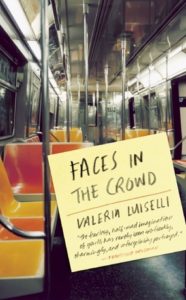
Faces in the Crowd by Valeria Luiselli

Posted July 21, 2018 by Michael @ Knowledge Lost in Contemporary / 0 Comments

Faces in the Crowd by Valeria LuiselliTitle: Faces in the Crowd (Goodreads)
Author: Valeria Luiselli
Translator: Christina MacSweeney
Published: Coffee House Press, 2011
Pages: 146
Genres: Contemporary
My Copy: Paperback

Buy: AmazonBook DepositoryKindleWordery (or visit your local Indie bookstore)

Faces in the Crowd is the story of a young mother living in contemporary Mexico City who is trying to write a novel. She recounts her time living in New York as a translator. Her novel is based on the bohemian life of Mexican poet Gilberto Owen, mainly focusing on his time in Harlem. Valeria Luiselli’s first novel to be published into English, Faces in the Crowd is a spectacular novel dealing with multiple perspectives and a shifting reality.

I have already recorded and released a podcast about this novel, with Lia from Hyde and Seek but I felt that I needed to put in a short review as well. If you are interested, most of my thoughts about this book are better discussed on that episode. Needless to say, I loved this book. Faces in the Crowd is the second Luiselli novel I have read. Having read The Story of My Teeth last year but this one stood out more. This is the novel that turned me into a fan and made me determined to read everything she has written, assuming it has been translated into English.

“…a horizontal novel told vertically”

The different perspectives made for a unique reading experience, one that made me slow down and take my time trying to understand what was going on. This really is a horizontal novel told vertically in the sense that you read down the page but there are so many layers of which you need to keep track. First you have her life as a married woman with a child in modern Mexico. Then you have her time as a translator in New York. The third thread is around Gilberto Owen’s life. However the narrative fractures and reality shifts, and the narrative threads get complicated, leaving the reader to try and decide between reality and fiction, the fiction that this unnamed woman is writing.

I knew I loved this novel from the start because it felt like a real approach to translated literature. “I worked as a reader and translator in a small publishing house dedicated to rescuing ‘foreign gems.’ Nobody bought them, though, because in such an insular culture translation is treated as suspicion. But I liked my work and I believed that for a time I did it well.” This statement happened on page one, and I felt like Valeria Luiselli had captured something real. I often feel that people treat translations as suspicious or something inaccessible.

I treated this novel as a peek into the world of translations and I felt like it captured it well. I think there was so much more going on that helped me fall in love with Faces in the Crowd and I hope that more people pick it up. Like I said earlier, check out the Lost in Translations episode on this book. I do not want to put too many details into my review because I legit want people to listen to the podcast. I have Sidewalks on my shelf, which is also translated by Christina MacSweeney, so I will probably pick that up soon.


August by Romina Paula

Posted July 19, 2018 by Michael @ Knowledge Lost in Contemporary / 2 Comments

August by Romina PaulaTitle: August (Goodreads)
Author: Romina Paula
Translator: Jennifer Croft
Published: Feminist Press, 2009
Pages: 224
Genres: Contemporary
My Copy: Paperback

Buy: AmazonBook DepositoryKindleWordery (or visit your local Indie bookstore)

Twenty-one- year old Emilia travels home to rural Patagonia to scatter the ashes of her friend Andrea. Her death was a surreal experience from her new home in Buenos Aires. However returning home five years later is a confronting experience. Once back home Emilia finds herself face to face with her adolescence, as she immerses herself with her memories. August is a blend of the grief narrative mixed with a coming of age story.

What really stuck me with this novel is the way Romania Paula was able to capture that feeling of nostalgia, with the raw emotions of her grief. Blending the constant references to music and pop culture helped drive my own feeling of nostalgia. The angst of being home reminded me of my own younger days. Then there is that feeling of grief, a feeling I have not experienced with such intensity but felt real with a raw intensity. The combination of all these elements really brought this novel together perfectly.

It was a profoundly real experience and the combination of Romania Paula’s writing style and the translation by Jennifer Croft really helped to drive the reading experience. I have been impressed with the work being done by Croft, having recently translated Flights by Olga Tokarczuk from the Polish, which won this year’s Man Booker International Prize. It is at a point where I will pick up anything she translates in the future. Both Flights and August have been both great reading experiences for me, yet the styles are completely different.

It is hard to review a book like August. It is one of those books you need to experience. The novel was published by Feminist Press whose mission statement is to “advance women’s rights and amplify feminist perspectives”. My experience with Feminist Press has been a very positive experience and so much of their catalogue sounds great. With more of a focus on reading women in translations, I know that Feminist Press will provide some raw and gritty experiences. I do not want to say more about August, I just hope I have said enough to convince people to read it.


The Seven Madmen by Roberto Arlt

Posted July 17, 2018 by Michael @ Knowledge Lost in Classic / 3 Comments

The Seven Madmen by Roberto ArltTitle: The Seven Madmen (Goodreads)
Author: Roberto Arlt
Translator: Nick Caistor
Published: Serpent's Tail, 1929
Pages: 323
Genres: Classic
My Copy: Paperback

Buy: AmazonBook DepositoryKindleWordery (or visit your local Indie bookstore)

Remo Erdosain is a typical middle-class man; that is until he finds himself going down the rabbit hole of conspiracies. The mysteries surrounding The Astrologer finds Erdosain going from a recently unemployed accounting clerk to a follower of a political fanatic. Under the charismatic sway of The Astrologer, The Seven Madmen follows the downwards spiral of Remo Erdosain, a path that could be fatal for the people of Buenos Aires.

One thing that really stuck out with this novel is the way Roberto Arlt wrote the character of The Astrologer. He could be a fanatic religious leader, a socialist revolutionary or just a fascist. No matter how you view this character, his vile thoughts are harmful to both Remo Erdosain and others. This opens the book to explore extremist behaviour without making a political stand. The political turmoil that has rocked Argentina during this time, lead to dangerous ideas from multiply parties or factions and I thought The Seven Madmen brilliantly explores the destructive nature without picking a side.

Written as an existential novel, The Seven Madmen is a realistic depiction of the social issues facing Argentina during the early twentieth century. While this is an early example of magical realism, using fantastical elements to explore myth and reality, the novel became a prophetic depiction of the cycle of violence that would plague the country for the rest of the twentieth century. The novel remains a modern classic today because of its ability to depict the political turmoil but also because it still remains relevant today. If this is not enough to convince you, this is probably one of the best apocalyptic novels I have read in a long time.

However The Seven Madmen is not a full novel, it is only the beginning. Still waiting for the second half of the story The Flamethrowers to be published into English. Fortunately The Seven Madmen does stand on its own. There is so much to explore in this book, and I will probably re-read it again before reading The Flamethrowers. There is so much to explore and with a little more knowledge about Argentinian history, this book just continues to open up. I love the political and economic turmoil in the novel and thankfully the afterword by Roberto Bolaño helped to understand so much more (seriously more publishers need to switch to an afterword instead of an introduction). Roberto Arlt has that 1920s style of written that reminds me of the great pulp writers like Raymond Chandler and James M. Cain, which only served to add to my enjoyment of this book. Seriously, this is a must read.


Flights by Olga Tokarczuk

Posted May 17, 2018 by Michael @ Knowledge Lost in Literary Fiction / 3 Comments

Flights by Olga TokarczukTitle: Flights (Goodreads)
Author: Olga Tokarczuk
Translator: Jennifer Croft
Published: Fitzcarraldo Editions, 2017
Pages: 410
Genres: Literary Fiction
My Copy: Paperback

Buy: AmazonBook DepositoryKindleWordery (or visit your local Indie bookstore)

Winner of the Man Booker International Prize 2018
Shortlisted for the National Book Award for Translated Literature 2018
Longlisted for the Warwick Prize for Women in Translation 2018
Longlisted for the BTBA 2019

Flights by Olga Tokarczuk was the final novel I have to read for the Man Booker International Prize shortlist, and what a book to go out on. Tokarczuk is a Polish writer that has not gotten much attention in the English-speaking world until recently. She has won the Nike Award (which is a Polish literary award) twice for her novel Bieguni in 2008 and Księgi jakubowe (The Books of Jacob) in 2015. Curiously, Flights is the English title for Bieguni which I believe roughly translates to Runners.

Sitting here, I find it very difficult to write a review of Flights, it feels more like a novel that should be experienced rather than written about. It is an experimental novel that focuses more on travel writing rather than an actual plot. The narrative is musing on what it means to travel the world rather than her story. However, this works really well, and I wonder if this is the type of book that should be in the seat pocket of every plane for the travellers to read and reflect on their own experiences.

I am a fan of the postmodern novel so I am never disappointed if there is a lack of plot or character development, provided that the author is doing something interesting enough to keep my attention. If I was to compare this to any other book on the Man Booker International Prize longlist, I would compare it to The White Book. Simply because this is the fragmented musings of a writer on a particular topic, in this case travel. Exploring the oddness of modern travel, the airports, hotels, public transport and even guide books. There is so much to meditate one, I am actually surprised she was able to spend so much time with this one topic and cover so many different aspects.

The narrator describes herself as a pilgrim and I found myself to be her companion. I had an intimate knowledge of every thought and feeling she had. I have heard that this book shares so many similarities to Moby Dick and I have never wanted to read this Herman Melville classic more. Although I might simply read Moby Dick just so I can reread Flights.

To say I was enchanted by Flights might be an understatement, at times I was transfixed, and I never wanted to leave this book. I know Jennifer Croft probably has a busy life but I really hope she translates some of Olga Tokarczuk’s other novels. I recently found out that she was a founding editor of The Buenos Aires Review (which has not released new content since December 2017) along with Pola Oloixarac (who wrote the amazing Savage Theories) and Heather Cleary (who has translated a few Sergio Chejfec novels for Open Letter). My love of Argentinian literature is pleased to find that this is bilingual magazine. Croft has also translated August by Argentinian author Romina Paula, which I have recently ordered from Feminist Press. Now that I have finished being distracted by the translator, I cannot recommend Flights enough, especially if you are interested in travel writing.


Vernon Subutex, 1 by Virginie Despentes

Posted May 15, 2018 by Michael @ Knowledge Lost in Contemporary / 0 Comments

Vernon Subutex, 1 by Virginie DespentesTitle: Vernon Subutex, 1 (Goodreads)
Author: Virginie Despentes
Translator: Frank Wynne
Series: Vernon Subutex #1
Published: MacLehose Press, 2017
Pages: 352
Genres: Contemporary
My Copy: Paperback

Buy: AmazonBook DepositoryKindleWordery (or visit your local Indie bookstore)

Shortlisted for the Man Booker International Prize 2018
Longlisted for the Warwick Prize for Women in Translation 2018

Having read Virginie Despentes previously (Apocalypse Baby) I have to say I was a little worried about reading her Man Booker International Prize shortlisted book. I was worried that Despentes was aiming for to shock, but this novel seems to be a cutting-edge social novel looking directly at the punk sub-culture in France. The book is the first in the trilogy and it focuses on Vernon who is feeling ambivalent about his fast approaching half century. He started working at Revolver, a hip Parisian record store in his twenties but now he is reflecting on his own life. Vernon Subutex, 1 explores the rapidly changing social scene of music and the punk rock lifestyle.

The record store once boasted a legendary status but now, in the 2000s, it is struggling. However, in a throwaway comment, the internet believe that Vernon is in possession of the last filmed recordings of the famous musician Alex Bleach. Beach recently died from a drug overdose and now people from all walks of life are after Vernon and this supposed recording.

I view Vernon Subutex, 1 as the beginning of an epic journey. Often, we read an epic as a story that follows a family through their generations but this is more of a social epic. It follows both Vernon and the music industry as their worlds rapidly change. What drew me to this novel is the music references, there are so many bands and songs referenced in this book that I remember fondly. Before becoming a book nerd, I spent a lot of time listening to music, and the punk scene was one I closely followed. While I still listen to music, I do not have a finger on the pulse anymore. I have borne witness to the changes the internet brought to the music industry. Music stores closing everywhere as the rise of piracy and streaming quickly spread. However, it is important to remember that the revival of vinyl has helped indie record stores survive nowadays.

For me, there was just too much that I could relate to in Vernon Subutex, 1 and I found myself loving the reading experience. While I was never into the drugs and alcohol consumption that is associated with this sub-culture, I could identify with the social disconnect, music obsession and laziness that characterised Vernon. Then Virginie Despentes starts to dive into a darker side of the sub-culture, dealing with violent tendencies, racism and sexual identity. Despentes previously was a sales clerk in a record store and a freelance rock journalist, which plays a big part in helping shape this novel. Although her past careers as a sex worker and pornographic film critic have also influenced the plot. She seems to explore themes of youth marginalisation, the sexual revolution lived by Generation X, music and pornography within Vernon Subutex, 1 and Apocalypse Baby, which leads me to suspect this is common in all her novels.

Virginie Despentes may have found a place with French authors like Emmanuel Carrère and Michel Houellebecq and while I was not blown away by Vernon Subutex, 1, I will be continuing with book two when it is released into English later this year. I feel like there is still more of the story left to explore and I hope that it all comes together in the end. Right now, it feels incomplete and something I would not recommend to anyone, unless they love the music. There is a Spotify playlist which features all the songs and artist mentioned in the trilogy which has lead to discovering some new French bands. If it was not for the Man Booker International Prize longlist, I may have never given Virginie Despentes another chance, but I am glad I have.


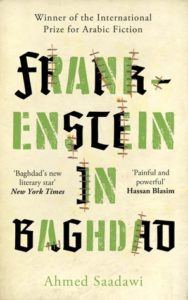
Frankenstein in Baghdad by Ahmed Saadawi

Posted May 14, 2018 by Michael @ Knowledge Lost in Horror, Literary Fiction / 4 Comments

Frankenstein in Baghdad by Ahmed SaadawiTitle: Frankenstein in Baghdad (Goodreads)
Author: Ahmed Saadawi
Translator: Jonathan Wright
Published: Oneworld Publications, 2018
Pages: 272
Genres: Literary Fiction, Horror
My Copy: Paperback

Buy: AmazonBook DepositoryKindleWordery (or visit your local Indie bookstore)

Shortlisted for the Man Booker International Prize 2018

There has been a lot of buzz around Frankenstein in Baghdad, even before being spotlighted on the Man Booker International Prize longlist and now shortlist. Ahmed Saadawi’s novel is an intense portrayal of Iraqi life in post invasion Baghdad. The violence never stopped after the American invasion and junk dealer Hadi collects body parts lying on the streets and patchworks them together. However when a wandering spirit of a guard who was a victim of a car-bomb explosion finds the corpse, he is quick to possess it, giving birth to a monster known as Whatsitsname, who sets out to seek vengeance for all the victims that make up this monster.

Two hundred years ago Mary Shelley published Frankenstein and Ahmed Saadawi’s nod to this classic serves as celebration of the genre Shelley has created. I am often sceptical about a remake or reimagining of a classic, especially when that book is so close to my heart. However I was drawn to Frankenstein in Baghdad, but that might be my love for books in translation. There are elements of this novel that almost mirror Frankenstein but with a more modern spin. Take for example the opening chapter, rather than Captain Robert Walton writing to his sister to setup the story, we have an activity report from the Tracking and Pursuit department. Letter writing is a dying art form but a military report perfectly modernised the novel’s setup.

The war on Iraq is a topic that is often talked about in western society. A war that President George W Bush claimed was successful in the Mission Accomplished speech held on the USS Abraham Lincoln in 2003. Yet it was not until the end of 2011 when all U.S. troops were officially withdrawn. I say ‘officially withdrawn’ but the U.S. have still had troops in Iraq, most notably the American-led intervention of the Islamic State of Iraq and the Levant in 2014 and Operation Conquest in Mosul in 2016. The war on Iraq lead to the Iraqi Civil War which led to America’s involvement again in what they call the war on terror. I do not know much about the conflicts in Iraq apart from the information shared on the news.

I cannot expect the news to portray an unbiased account of everything happening in Iraq so it was nice to learn a little more with Frankenstein in Baghdad. While this is a surreal and fantastical novel, the book did confirm what I have always suspected. That war and violence do not lead to peace. Everything I knew about the war on Iraq had always made it out to be that America is spreading democracy and peace to the Middle East. However all the evidence points to a creation of a new monster, one that wreaks havoc on Baghdad, one that used the power vacuum and hatred to gain a foothold. Not Whatsitsname, but the Islamic State of Iraq and the Levant (ISIL), which is also known as the Islamic State of Iraq and Syria (ISIS).

Frankenstein in Baghdad transforms from a novel of pure horror based on the actual horrors faced every day. However this novel is not as depressing as you might expect. Ahmed Saadawi has managed to convey so much of the world he lives in without scaring the reader away. Frankenstein in Baghdad reads more like a black comedy, a satire of the current state of the Middle East. Taking the themes found in Frankenstein of the way society turned a creature into a monster and turning it back onto the world showing us all the monster that has been created.

While this may not be a direct connection, it is a connection I found in the novel. While Whatsitsname is possessed by righteous fury, going about slaughtering those who have turned Baghdad into a slaughterhouse, this might work for the real life Frankenstein. Although we could argue that they are bound by the same motivation. I will leave any political opinions up to the reader to interpret. This is a stunning novel that I have spent a lot of time thinking about. There is something about Ahmed Saadawi’s story that makes this a must read. Whether his attentions were to compare Frankenstein with that of ISIS is entirely up to the reader. Novels are always subjective, this is the connections I made. I am left with anger towards the U.S. treatment of Iraq and I never had a high opinion in the first place. Without getting too political I want to leave you with one question to think about, should any country force their own values on a culture that is vastly different from their own?

This review was originally published in the literary journal The Literati