Reading Challenge: 1001 Books You Must Read Before You Die

The Strange Case of Dr. Jekyll and Mr. Hyde by Robert Louis Stevenson

Posted May 30, 2013 by Michael @ Knowledge Lost in Classic, Gothic, Horror / 0 Comments

The Strange Case of Dr. Jekyll and Mr. Hyde by Robert Louis StevensonTitle: The Strange Case of Dr. Jekyll and Mr. Hyde (Goodreads)
Author: Robert Louis Stevenson
Published: Signet, 1886
Pages: 92
Genres: Classic, Gothic, Horror
My Copy: Personal Copy

Buy: AmazonBook DepositoryKindle (or visit your local Indie bookstore)

Robert Louis Stevenson’s classic gothic horror novella Strange Case of Dr Jekyll and Mr Hyde is probably known to many people; it’s been adapted many times and is often a symbol of the horror genre in pop culture. We all know the story; mild-mannered Dr Jekyll by day but at night, thanks to a potion, Mr Hyde is unleashed. But do we really know this tale; the tale of good and evil, or maybe the unleashing his secret inner persona, or maybe this is a story about dissociative identity disorder?

This is a reread for me so like I did in The Great Gatsby; I’m going to quote my old review (which is relatively short) but expand with what I know now. First we need some context; Robert Louis Stevenson had already had some success as a Victorian adventure writer before he came up with the idea of Dr Jekyll and Mr Hyde. He had already written Treasure Island and his collection of short stories New Arabian Nights; in fact it is believe that he came up with the idea while working on his revisions for the short story Markheim (which, in my opinion, is his best piece). So already you get a sense that he knows what he is doing and if you’ve read Markheim you can see the similarities clearly. It was the late into the Nineteenth Century where there were extraordinary technological advances being made and people had a growing pessimism towards a possible decline in arts and religion.

The Promethean personality is something we’ve seen in books like Dracula by Bram Stoker, but this novella has more in common with Mary Shelley’s Frankenstein. Both involve scientists that defy the laws of nature and God with major consequences. Also, they play on the concept of good and evil and the dangers of advancing sciences but they also have been written in a way that to this day people debate the meaning of the novel.

Some say this is a novella that looks at that great Victorian idea of inner conflict with humanity; that good and evil exist in us all and it is an internal struggle between the two. While others suggest that maybe Stevenson was interested in exploring mental health, especially when it comes to split personalities or what should be correctly called a dissociative identity disorder? When I first read this book I got a sense of both, saying “[That] it’s a vivid portrayal of a split personality, split in the sense that within the same person there is both an apparently good and an evil personality each being quite distinct from the other.”  As an interesting side note Vladimir Nabokov has famously argued that the “good versus evil” view within this novella is misleading, as Dr Jekyll himself is not, by Victorian standards, a morally good person.

“The novella’s impact is such that it has become a part of the language, with the phrase “Jekyll and Hyde” coming to mean a person who is vastly different in moral character from one situation to the next.” While this is true, the tale has left a bigger impact on pop culture than just one phrase and classic horror movies. Within comic books both The Hulk and Batman’s rival Two-Face have clear influences from this novella; in fact you might argue that all superheroes are influenced as well, all living a double life.  Even the framework has been used in other fables, gothic, horror and speculative fiction.

“Robert Louis Stevenson is an amazing writer and this book is well worth the read, I’ve always enjoyed a story that tries to explore two sides of a situation.” Not only does this highlight how much I’ve improved in my reviewing but it serves as a reminder of my interest in plots that explore both points of view. Frankenstein still remains my ‘go to book’ for this even though rereading Strange Case of Dr Jekyll and Mr Hyde has rekindled an interest in Robert Louis Stevenson’s thoughts on the whole “good versus evil” view. I much prefer Markheim and think I might go read it again now.


Mrs Dalloway by Virginia Woolf

Posted May 21, 2013 by Michael @ Knowledge Lost in Classic / 0 Comments

Mrs Dalloway by Virginia WoolfTitle: Mrs Dalloway (Goodreads)
Author: Virginia Woolf
Published: Oxford World's Classics, 1925
Pages: 185
Genres: Classic
My Copy: Personal Copy

Buy: AmazonBook Depository (or visit your local Indie bookstore)

Clarissa Dalloway goes around London preparing to host a party that evening. It’s a nice day and she finds herself being reminded of her youth in the Bourton and wondering about her life and her choice of husband; marrying the reliable Richard Dalloway instead of the mysterious and challenging Peter Walsh, as she never had the option to be with Sally Seton. These conflicts have been reintroduced when Peter pays her a visit.

The novel begins with Clarissa’s point of view and follows her perspective closely, travelling forwards and back in time and in and out of her mind to construct an image of her life. Clarissa is bubbly and lively, caring a great deal about what people think of her, but she is also self-reflective. She is often questioning life and constantly wondering whether happiness is truly possible. Though she is happy with her marriage to Richard she feels both great joy and dread towards her life and struggles to strike a balance between her desire for privacy and her need to connect with others.

Her husband Richard Dalloway is a member of the conservative government and plans to write a history of The Brutons, a great military family. He is a loving husband and father and devoted to social reform while appreciating English tradition. Peter Walsh is a close friend of Clarissa, once desperately in love with her. When she rejected his proposal, he moved to India; though frequently having romantic problems with women throughout the novel he is currently in love with a married woman in India. A socialist and highly critical of people, he is conflicted about everything in his life. Then there is Sally Sutton, a close friend of Clarissa in their youth, she was a wild handsome woman who would say anything. They were sexually attracted to each other as teenagers. Sally now lives in Manchester where she is married and is known as Lady Rosseter.

This is primarily a novel about life and relationships, with Clarissa reflecting on her life and wondering if she has made the right choices when it comes to marriage. There are so other themes that play a big part within this novel as well; some of these include disillusionment towards the British Empire, fear of death, oppression and balancing life between the need to keep up appearances and having some privacy. I won’t go into these themes in any detail, for the simple reason that I feel that Virginia Woolf leaves it very open to interpretation and it is up to the individual reader to make of it what they will.

For me, the major theme that came out was the struggle Clarissa had with trying to play the good hostess by drawing people together through her parties and her introverted nature. I saw Clarissa as an introvert, though she has a bubbly personality, she is often feels shrouded within her own reflective soul and thinks the ultimate human mystery is how she can exist in one room. She likes the idea of being independent and able to spend time to reflect but she is also aware of the inevitable loneliness that comes with a life of self reflection. If you understood something completely different from this novel, please let me know how you read this book in the comments below.

Now that I’ve looked at the themes of this novel, I want to have a quick look at some of the motifs and symbols used in Mrs Dalloway. The most important of them is time, which is so important to the structure, themes and characters of this novel that Virginia Woolf almost called it The Hours. Time keeps order to this novel; with all the thoughts, memories, and encounters within Mrs Dalloway, it becomes a vital element to the book. Also the old woman in the window across from house symbolises the life Clarissa desires; a private life with time to reflect. You also have things like the flowers with all their colour, varieties and beauty being a motif for emotions, Shakespeare and poetry representing these emotions as well and water suggesting the possibility of death.

Virginia Woolf can be a difficult author to read and requires a lot of thought but as I’ve now discovered with Mrs Dalloway, it is worth the effort. I remember reading To the Lighthouse and really struggling, but when I was told it was about sex, I thought I really missed the point. It’s a novel I plan to revisit again but as I mentioned in this review, I think Woolf writes her novels in such a way that you can interpret it anyway you want.

I don’t know if I would call myself a Virginia Woolf fan now, but I was really impressed reading and studying Mrs Dalloway. I will admit that that I’m planning to read A Room of One’s Own and reread To the Lighthouse. Maybe after that I might call myself a fan but I would recommend reading Virginia Woolf for all serious literature readers and studiers and anyone that needs to increase their pretentious levels. For me, Mrs Dalloway was both an interesting book and an interesting endeavour into improving my critical reading skills.


The Great Gatsby by F. Scott Fitzgerald

Posted May 17, 2013 by Michael @ Knowledge Lost in Classic / 0 Comments

The Great Gatsby by F. Scott FitzgeraldTitle: The Great Gatsby (Goodreads)
Author: F. Scott Fitzgerald
Published: Scribner, 1925
Pages: 180
Genres: Classic
My Copy: Paperback

Buy: AmazonBook Depository (or visit your local Indie bookstore)

Nick Carraway moves in next door to the young and mysterious millionaire, Jay Gatsby. Nick is soon following the dramas of Gatsby’s quixotic passion for Daisy Buchanan. Often hailed as the “Great American Novel”, F Scott Fitzgerald’s magnum opus is a portrait of the Jazz Age and the great American dream.

We all know the story, we’ve either been forced to read it in school or we’ve seen the movie, I wanted to reread this in the lead up the terrifying new adaptation by Baz Luhrmann. I remember reading it when I first started become a serious reader and I thought I would look at what I originally wrote and try and dissect and expand on it now that I think I’ve improved in reading critically.

First of all “One of the most interesting aspects of The Great Gatsby is the Point of View”, while this has probably been covered many times by people I will just cover this off again. Carraway tells the story of a group of destructive personalities but first you have to understand Nick before trying to understand the others.

Without going into anything controversial by claiming Nick Carraway was bisexual and in love with Jay Gatsby, let’s just say he idolised him. A Yale graduate, World War I veteran and relatively well off (inherited money), Carraway moves in next door to the charismatic and much talked about Jay Gatsby. But this leads to the question of just what is the relationship between Nick and Gatsby; is Jay using Carraway to get closer to Daisy? I think there friendship was real, Nick envied the person Jay was and he in return grew fond of Carraway.

The book does a decent job at shedding light on the egotistical, desire driven tendencies of human nature.” While this is true I think to expand on this you really need to look at what F Scott Fitzgerald was trying to do with this book, and to do that we must first look at the colour scheme (weird I know). There are two primary colours that play an essential role in this book. Firstly, green, the light over the river on the East Egg dock. The representation of Gatsby’s hopes and dreams, the green light represents the American dream. This would be considered objectification, that Gatsby believes that his American dream is to have Daisy.

The other major colour in this book is Gold or Yellow, the symbol of wealth and beauty. I think Yellow and Gold play as much of a significant role as the green light. This is true American goal; wealth and beauty, to be able to live without a care in the world. This is what I think Fitzgerald was trying to show us; like I said in my original review of this novel, these people are egotistical and desire driven and I think the author wanted us to see that. The problem with a carefree life is the fact that you don’t care about anything other than yourself and you don’t realise just how destructive that can be.

Carraway starts out starry eyed towards high society but slowly becomes more and more uncomfortable with the unrestrained materialism and lack of morality that comes with it.” I think that Carraway found himself sucked into high society and captivated by the presence of Gatsby. While in some respects he remains an outsider, he tries desperately to fit in and pursue the idea of the American Dream. The Great Gatsby tries to highlight the decline of this so called American dream, which originally was about discovery, uniqueness, and the pursuit of happiness but in the 1920s it seemed to decline and represent easy money and a social of leisure.

F. Scott Fitzgerald paints a unique literary picture of the time and life style, with interesting, snooty and slightly annoying characters.” I will admit that I sigh every time I read this sentence. Why was I the type of person that wanted likeable characters? Just because I hate these people, doesn’t mean that the book isn’t great and that they don’t have anything significant to teach. These people are supposed to be unlikeable, Fitzgerald isn’t trying to show us how great high society is; he wants to point out the flaws and what he sees as the decline of the American dream.

Everyone seems so self-absorbed and never think of each other; which helped drive the story beautifully.” We can probably argue if this really is the great American novel or even the great Jazz age novel. I know a lot of people hated this novel but I think there is so much this book can teach us and it’s less than 200 pages. F Scott Fitzgerald did a brilliant job of layering everything on top of each other that I feel the need to read this book again (already) just to see what I might pull out of it this time.

Someday I would like to do a post about motifs because there are so many recurring themes in the book, I think this would be a perfect novel to explore the idea of what a motif is. I read all the reviews from people that hate this book and I feel like I want to use that dreaded saying, “I don’t think you got what this book is trying to do”. But I hope this helps understand what this book really is about; while pointing out what you think I got wrong.

I reread this novel in anticipation of the new adaptation, which I’m scared about; I remember the old movie and think it failed to capture the true essence of this novel. This leads to two questions I want to ask the readers; “Is The Great Gatsby unfilmable?” and “Was Gatsby truly great?”.  I know my answers, so I’ll be interested to see what others think. I’m surprised how much fun I had dissecting my original thoughts and expanding on them.


The Reader by Bernhard Schlink

Posted May 15, 2013 by Michael @ Knowledge Lost in Historical Fiction / 0 Comments

The Reader by Bernhard SchlinkTitle: The Reader (Goodreads)
Author: Bernhard Schlink
Translator: Carol Brown Janeway
Published: Orion, 1998
Pages: 216
Genres: Historical Fiction
My Copy: Personal Copy

Buy: AmazonBook Depository (or visit your local Indie bookstore)

The Reader tells the story of the teenage years of Michael Berg while recovering from hepatitis and his passionate affair with a mysterious woman twice his age. Later going on to study law and discovering that this woman was involved in the death march from Auschwitz. The book continues on through the war crimes trial and the relationship between the two after her imprisonment.

Bernhard Schlink was born in 1944 (one year before the war ending), studied law then became a professor of public law and the philosophy of law. His passion for reading comes from a teacher in his high school who encouraged his reading and discovery of literature. Later he discovers that this teacher was a member of the Gestapo and involved in some questionable practices. His first series of books featuring a sixty year old private investigator Gerhard Selb (Selb translates to Self) also had a questionable past during the war and his coming to terms with this. This is interesting since the books in the series are called; Self’s Punishment, Self’s Deception and Self’s Murder. Also he has a collection of essays called Vergangenheitsschuld which translates to Guilt about the Past, which leads you to believe that Bernhard Schlink has a fascination about the effect of World War II has on the next generation of Germans.

This is not a book about the Holocaust novel; while this historical event plays a role, this is rather a novel that gives you a lot of questions and problems to think through. Divided into three parts; the summer of love, the trial and imprisonment; The Reader explores three different scenarios as well as the notion of keeping secrets. At the start of the book Hannah comes across as Good Samaritan trying to help Michael who was throwing up in the street. Later he pursues her and she gets an impression that he is old enough to be out of school; he doesn’t correct her, thinking the papers he leaves behind was enough for her to know his true age but we later finds out she would never have looked at them. When she finds out, they are in bed together and he tells her that he is skipping classes to be with her. She throws him out and it’s not until very later in the book we discover just how important education is to her. Hannah is his first love, he is too young to fully understand the kind of relationship they are having, while Hannah remains guarded and tries to protect both her public and private shames.

While most people focus mostly on the relationship between the two, but there is so much more to look at in the novel. Years later Michael finds Hannah again in a trial and the reader is asked to consider two things; the nature of her guilt and the significance of her other secret (the one she is more ashamed of it). While she was never the ringleader of her charges and she was following orders, when it came to the damning report, she let the court believe she wrote it to continue to hide her illiteracy. This brings to the overall concept to the book; ignorance is not necessarily innocence. The pride to protect herself from people discovering of her illiteracy works against her though out the entire book. She gives up promotions and lands herself in prison all to protect this secret.

This leads into the third part; years later we find that Michael starts reading to Hannah once again. Sending cassettes both the reader and Hannah mistakenly get the impression that this is an act of affection and when Hannah eventually finds out,  we also find out just how cold he has been acting. I’m not sure if he was trying to gain back the power in their relationship or just the bitterness of his life doing it but we are led to believe he still cares about Hannah when all he really cares about is that summer fling when he was still a teenager.

The book wants you to recognise that you are the reader, and Hannah, in particular, wants you to realise just how blessed you are to be able to read this book. I remember there was a great movie adaptation of this book a while ago; while very meta to have a movie about reading, I’m surprised how well it came together. I didn’t remember much about this movie while I read this but it all come back to me as I discovered it in the book. It was a great feeling to remember as I read and not know what would happen next.

I really loved this book; there is that element of uncomfortableness with the relationship at the start, which really is something people can be afraid to talk about but with a book like this it can be scandalous.  There are also so many other interesting elements that I think are equally valuable; especially with the whole German shame towards what they did in World War II and the next generation having to deal with it. While the movie closely follows the book, it is still worth reading; I highly recommend it.


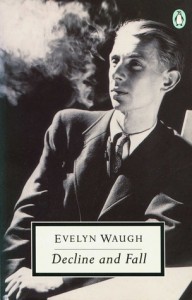
Decline and Fall by Evelyn Waugh

Posted May 11, 2013 by Michael @ Knowledge Lost in Classic / 4 Comments

Decline and Fall by Evelyn WaughTitle: Decline and Fall (Goodreads)
Author: Evelyn Waugh
Published: Penguin, 1928
Pages: 216
Genres: Classic
My Copy: Personal Copy

Buy: AmazonBook DepositoryKindle (or visit your local Indie bookstore)

Paul Pennyfeather finds himself taking a job at a public school called Llanabba after being expelled from Oxford for indecent behaviour. He takes up some private tutoring to get close to the student’s mother, Margot Beste-Chetwynde. Their relationship forms and they are soon engaged; all the while Paul is still unaware that the main source of her income is a number of high class brothels in South America. Evelyn Waugh’s Decline and Fall is a black comedy satirising British society in the 1920s.

This is my first Evelyn Waugh novel; why did I pick this over Brideshead Revisited? Simple answer is a friend loves this book and I thought I would see if I trust her taste in literature; since they are more of a genre reader. Decline and Fall gets its name from Edward Gibbon’s The History of the Decline and Fall of the Roman Empire, a book that traces the trajectory of the Roman Empire, and Western civilisation as a whole. There are some who also attributes the title to Oswald Spengler’s The Decline of the West, a philosophical book that rejects the Euro-centric view of history. Both books are important to remember as both look at western civilisation and reject the idea that it is the be all and end all.

Decline and Fall satirises a world where the British social institutes (like schools) have lost their integrity and their authority. The church has lost its faith and the aristocracy have declined to the same level as the masses since the educational system teaches nothing worth learning. The situation is both humorous in its approach and also very dystopian. Waugh has a great deal of fun playing with this world but when you reflect on this book and take out all the comedy, it really is quite scary; sure I’m for equality in the social classes but the prediction of a failing education system is not something I look forward to.

There are two major literary techniques within this novel that I feel are worth looking at; first of all there is the humour which, while funny, leaves a lot to the reader’s imagination with the deadpan narrative of the newspaper reporter. For all I know the book really isn’t about the decline of education and society but the way this book is written has set my mind running in that direction, it could have filled in the blanks on its own. The second is the way this book parodies English literature within the book, from a reference to Shakespeare’s Othello to many more. A better English major than I could probably pull this book apart a lot better and tell you every single literary reference within the book.

This book confronts the reader with some difficult moral decisions all the while doing it in a tone that reminds me of Hitchhiker’s Guide to the Galaxy and Monty Python. The general decay of society is the major theme throughout this book but you might not even pick up on this if you are only reading this for the humour. There are elements of both Horatian and Juvenalian satire within the book and I like the way Evelyn Waugh writes it so you can read in either form and still get some enjoyment from Decline and Fall.

After reading this novel, I’m keener than ever to check out Brideshead Revisited and some of his other works. This is not a perfect novel, I did find myself a little bored at times and even lost but Decline and Fall has some interesting ideas worth reading about. I can’t help but wonder if reading The History of the Decline and Fall of the Roman Empire or The Decline of the West might have a positive effect on this novel. I won’t say this is a great novel but I’m glad to have read and dissected Evelyn Waugh’s Decline and Fall.


Main Street by Sinclair Lewis

Posted May 10, 2013 by Michael @ Knowledge Lost in Classic / 0 Comments

Main Street by Sinclair LewisTitle: Main Street (Goodreads)
Author: Sinclair Lewis
Published: Modern Library, 1920
Pages: 448
Genres: Classic
My Copy: Personal Copy

Buy: AmazonBook Depository (or visit your local Indie bookstore)

Main Street; that primary street in every small town that is exactly the same, full of stores and guaranteed to run into people you know. Carol Kennicott finds herself moving to Gopher Prairie, Minnesota with her new husband. Carol is a liberal, free spirited city girl who finds herself appalled by the backwardness of this small country town. Her disdain for the town’s ugliness and smug conservatism compels her to change it.

I grew up in Gopher Prairie; well not exactly but when I was just starting high school I was moved from Sydney to a small mining town in North Queensland called Charters Towers, so I know what Carol was going through. Sure, it wasn’t the 1910’s but for someone that loves city life (even at a young age) this move was devastating. Main Street is a satirical novel by Sinclair Lewis about the pettiness, back-stabbing and hypocrites that make up a small town. I will admit that I had never heard of this book until I read Z: A Novel of Zelda Fitzgerald. Knocking This Side of Paradise by F. Scott Fitzgerald off the number one spot, Main Street became extremely popular becoming one of the major best sellers of its time. Naturally having read about the impact this book had on the Fitzgerald’s and the readers of the time, I looked this book up and immediately added it to my “to read” list.

Carol is the heroine of this novel; enthusiastic and with high hopes for her future, she finds herself in a town that expects her just to play the house wife. Her love of sociology and her degree in English literature appear to be useless to Carol in Gopher Prairie. She feels like an outsider and even when she tries to fit in by throwing a Chinese themed party (where the guests feel bewildered by the strangeness of it all) or joining the woman’s group, the culture shock leaves her unsatisfied. I had to laugh at the woman’s group when they gathered to discuss poetry, Carol felt excited and asked which poets they will discuss. Their reply was ‘all of them’ and she finds herself in a very generic conversation about poets. At the end of the meeting she enquires about other poets which were missed and how they could improve this discussion, in which they decide that one extra meeting devoted to poetry will cover everything.

“I do not admit that Main Street is as beautiful as it should be! I do not admit that dish-washing is enough to satisfy all women!”

Carol struggles to find her identity within this town, she thinks of herself as some sort of artist and intellectual but Gopher Prairie doesn’t appear to give her the stimulation she so desires. She sees the other woman in the town as lacking of intelligence, curiosity or even a personality and never feels like she will be satisfied with all the other women. Living in the small town slowed her path to self-discovery; I feel like in any other circumstance Carol would have discovered her true identity a lot sooner.

The people of Gopher Prairie have grown complacent and comfortable with the familiar. So when Carol tries to make a change, she is met with resistances; not just because she is a woman but also being an outsider. While she is trying to get involved and make the town a better place by proposing they revitalise city hall and turn it into a meeting centre for events and dances, the town is worried she might make young people aware of sexuality while they are still in high school. You have to chuckle at their backwards ideas, I don’t think I ever thought improving the town would ever lead to sexual corruption of the youth.

I really enjoyed this satirical novel; while people thinking this novel wasn’t funny did lead me to write a post about understanding satire, I did think this was humorous. I think this is just me relating to the backwardness of a small town like Gopher Prairie. Times have changed a lot since the 1910’s but in a small town it kind of feels like nothing has changed. Not necessarily an easy book to read, but I really did like the culture clash between the “wholesome” small town and an outsider.  Sinclair Lewis got it right when he wrote about just how difficult it is being an outsider in a town where everyone knows everyone.


Heart of Darkness by Joseph Conrad

Posted May 8, 2013 by Michael @ Knowledge Lost in Classic / 0 Comments

Heart of Darkness by Joseph ConradTitle: Heart of Darkness (Goodreads)
Author: Joseph Conrad
Published: Oxford World's Classics, 1899
Pages: 225
Genres: Classic
My Copy: Personal Copy

Buy: AmazonBook DepositoryKindle (or visit your local Indie bookstore)

Heart of Darkness tells the tale of Charlie Marlow’s journey on an ivory transporter down an unknown river in the Congo. What he sees horrifies and perplexes him, calling into question the very basis of civilisation and human nature. The story follows this commercial agent and the object of his obsession, the notorious ivory-procurement agent Mr Kurtz. This novella has become an important piece in the western canon for its range of themes and scholarly values.

I remember reading this book a few years back and while I thought it was an interesting book, I never really grasped it completely (and I’m not sure if I ever will) but for comparison to what I know now and then, check out my review here. To begin with we need to gain an understanding of Joseph Conrad’s life because there are a lot of life experiences in this book. Born Josef Teodor Konrad Walecz Korzeniowski in Russian-ruled Poland in 1857; this part of Poland is now part of Ukraine. Both parents were political activists and as a result of their participation in the Polish independence movement they were exiled to Northern Russia in 1863. At sixteen he dropped out of school to work on a French merchant ship, sailing the West Indies as an apprentice. Later he joined a British ship where he served as a merchant for ten years, during this time he gained the rank of captain and became a naturalized British citizen. During a trip in 1890 sailing through the Belgian Congo and Congo River he got really sick and had to retire from sailing and focused his energy on writing. This means Joseph Conrad must have grown up speaking Polish and Russian, learning French at some point and then English. Although he often struggled to write in his adopted language, he is now considered one of the greatest prose stylists in English literature.

There are many themes explored in this book, so much so that I think I would need to keep reading this book again and again to discover them. Though major themes include slavery (the effect the British had on Africa) as well the author’s problems with Colonialism and Imperialism. There are a few other themes I would much prefer exploring. First of all, the idea of alienation; both Conrad and Marlow are both outsiders. The entire novel questions what alienation and loneliness can do to a person over an extended period of time, especially since they are in hostile environments. Even the doctor warns Marlow prior to his departure of changes to his personality that may be produced by a long stay in another country.  Prolonged solitude seems to have damaging effects on the sailors, which leads me into another major theme; insanity. In the case of Kurtz, the loneliness lead to literal madness, while others like Marlow’s predecessor, Captain Fresleven was described as a gentle soul that transformed into a violent one.

There are other themes I really would love to talk about but for the sake of keeping this review a decent length I will just highlight them. Heart of Darkness also looks at the way Belgium is exploiting the Congo, order verse disorder, duty verse responsibility, doubt verse ambiguity, race verse racism and finally violence and cruelty. All these, plus many more, are reasons why this book has been studied. It is a very difficult book to explore, I found myself rereading passages trying to get more out of it. I know at one point near the start of reading this I thought I would never get enough meaning out of this book but eventually it opened up to me.

There are a lot of symbols within the book as well, beginning with the title and the setting; Heart of Darkness deep in the heart of the Congo, the centre of the deep dark Africa. Even the fact that the entire story is told in the late afternoon as the sun sets is a motif of Africa. There are a lot more in this novel but I want to quickly talk about the movie adaptation Apocalypse Now. Sure there are some similarities but not enough to really consider the movie to be based on this novella. There are more similarities with Coleridge’s The Rime of the Ancient Mariner in the way the book starts out, also with Bram Stokers’ Dracula with the suspension between life and death. So how are they the similar, since one is set in the Congo and the other during the Vietnam War? The very basic answer would be that both look at the deterioration of humanity as a result of conflict, one via imperialism and one by war.

I would love to talk about the narrative and how there are two narrators, Marlow and someone anonymous. And how all the scenes on the Nellie are obviously an introductory and critique to the story that it doesn’t go away after the intro. Marlow’s narrative is often interrupted by this unnamed narrator as they listen to the story as a way for Conrad to tell the reader to notice different themes. There are also the proses in the book, poetic and while difficult, you can get swept away and not really notice just what Conrad is trying to do. So many things I want to talk about but I have to cut this review short.

Heart of Darkness is a really complex book but if you take the time to break it apart and explore the text critically, you’ll find there is so much to appreciate. It’s like a fine meal, it can be enjoyed without any thought, but if you take the time to see how each element complements each other you end up enjoying the novella a whole lot more. It all comes together with a sense of satisfaction that while you might not know everything Joseph Conrad was trying to say, you know enough for the book to have real value.


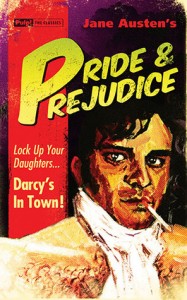
Pride and Prejudice by Jane Austen

Posted April 21, 2013 by Michael @ Knowledge Lost in Classic / 13 Comments

Pride and Prejudice by Jane AustenTitle: Pride and Prejudice (Goodreads)
Author: Jane Austen
Published: Pulp! The Classics, 1813
Pages: 320
Genres: Classic
My Copy: Personal Copy

Buy: AmazonBook Depository (or visit your local Indie bookstore)

Jane Austen’s Pride and Prejudice is often considered one of the greatest novels of all time; the story of proud William Darcy and the prejudices of Elizabeth Bennet. From Lizzie’s perspective their spirited courtship plays out on the page; in this witty comedy of manners, upbringing, morality, education, and marriage in early 19th century society.

Most of you would already know this story; you’ve probably seen an adaptation or two in your time. For me, I was never interested in reading this book, I knew what it was about but I never knew what to expect. Eventually I had to read this book, in part for university and because it’s a classic that will always remain on the 1001 Books You Must Read Before You Die List. This is the novel that just will not die; 200 years later since this was published the book still sits very often in the top ten in a lot of bookstores and other literary lists. It’s been adapted multiple times as well as been retold many times (highlights include Lost in Austen & The Lizzie Bennet Diaries). The novel has also inspired a range of other books including books by Georgette Heyer, Agatha Christie and Helen Fielding.

First of all I want to look at Jane Austen’s attempt to play with the traditional quest format to offer us this rather clever novel. Let’s look at the novel from a traditional storytelling point of view. The potential princes in this novel; Darcy was considered clever and cold, Mr Wickham was too hot, then there was Mr Collins, the one that could save the ‘castle’ who should be just right, but he was not warm but tepid and boring. The pattern is reshaped and slowly the princess’ heart has been won, even if she doesn’t know it straight away. Then Austen needs to make the suitor eligible to win over the heroine; so she sends him on a quest to win Lizzie’s heart. Then like all quest stories, the story ends abruptly, with a marriage and a happy ending. This ancient pattern only provided the basic story structure for Jane Austen to weave her story into.

The interesting thing about this novel is the fact that this book has no physical action in the entire book; the novel rather concerns itself with the complexity of courtship and marriage in the landowning classes in provincial England. Austen writes about the people she knows, doing the activities we would expect them to do. Yet she manages to write it with such wit and skill that the novel refreshing and remained so popular.

Elizabeth Bennet is clearly Austen’s favourite in the book; the character is stronger and smarter than even the men in the book. Yet she goes to great lengths to make sure that this is believable. While she is clever, Lizzie still has romance/the sublime on her mind; her references to the Lake Distracts could be considered evidence of this. I feel like Jane Austen is trying to show that a woman like Lizzie should be deserving of the family home more than someone like Mr Collins. The Bennet’s are not middle class in this novel; Mr Bennet doesn’t work, he is a man of leisure, landowners but without a son their property will be inherited by Mr Collins. So we have this impending doom (according to Mrs Bennet) with only one hope of saving the family, marriage. When Lizzie Bennet rejects Mr Collins and eventually marries Darcy, Austen tries to tell us that character matters more than rank when it comes to romance, but then there is still a whole lot to do with rank and class that remains within the novel.

At the start of the novel Lizzie and Darcy hate each other but by the end they are the perfect couple. So what is Austen trying to tell us with this change in momentum? To do this let’s look at the other relationships; First off there is some evidence that Mr and Mrs Bennet got married at a very young age, lust had brought the two together and there might have been a pregnancy. Now that the lust has cooled they find they have nothing in common. Mr Collins and Charlotte are almost the opposite; there is no passion in their marriage, it was more of a business arrangement, no kids and unhappy in their marriage. Mr Bingley and Jane are just smitten with each other; there is no real evidence that there is anything more than just an infatuation. So when it comes to Lizzie and Darcy, they are written as the opposite, they are not smitten, they have to make their way there. They develop a healthy respect and admiration as well as love. All the details are focused on Lizzie and Darcy; all the other characters are rather underdeveloped, they feel more like caricatures, yet we still need to look at the other couples to see what Austen was trying to achieve.

Now I want to look more at the writing and style rather than character and plot. Pride and Prejudice started off as an epistolary novel, it has been said that this was originally written as a series of letters; this is why there is a huge lack of character description. This is also a novel of wit so let’s focus more on how Jane Austen achieves that.

“It is a truth universally acknowledged, that a single man in possession of a good fortune must be in want of a wife.”

Looking at the very first line we get a sense of Austen’s ironical attacks; Bingley and Darcy both have women lined up but both don’t seem too keen to marry. Single men with large fortunes have the luxury of doing what they want. It is only Mrs Bennet that is trying to convince the reader that the opening line is indeed true. Just in the first few lines we can see the subtlety of Austen’s language. This book is full of other slight digs at society and it took me a second read through to really see them, but they are there and I suspect that is why this book continues to remain popular; no matter how many times you read this book there is still something to discover.

Jane Austen likes to dig at the concepts at Class and Courtship, but more so towards love and marriage. It is interesting to see that many people read this book at face value and just gloss over any attempt at irony in this book. This book is riddled with discursive and dramatic irony but to Jane Austen’s credit she was able to do it in such a subtle way that it can be easily overlooked or missed. For a cynical person like me, it was this irony that I respect the most. I love that you can read this book as a great romance or as an ironic look at love and marriage. While the irony plays out in the book, Jane Austen’s fundamental optimism makes sure no damage was done and the outcome is a happy one.

I expected Pride and Prejudice to be a romance, exploring the courtship of Lizzie and Darcy, which it is, but I was so pleased that there was so much more in this novel to explore. I read this novel and then went back and reread this novel right away; this was mainly because I needed to for Uni but I found this deliciously cynical voice come through the second time that changed my opinion of this book. I’m not sure if Jane Austen’s novels are always so ironic but if they are, she has found herself a new fan.


Infinite Jest by David Foster Wallace

Posted April 12, 2013 by Michael @ Knowledge Lost in Literary Fiction / 0 Comments

Infinite Jest by David Foster WallaceTitle: Infinite Jest (Goodreads)
Author: David Foster Wallace
Published: Back Bay Books, 1996
Pages: 1079
Genres: Literary Fiction
My Copy: Personal Copy

Buy: AmazonBook Depository (or visit your local Indie bookstore)

In the not so distant future, the residents of a Boston halfway house for recovering addicts and the students of the Enfield Tennis Academy both search for the master copy of a bizarre movie that is so entertaining the viewers die in a state of catatonic bliss. That movie is called Infinite Jest and it is said that anyone who watches it will lose all desire to do anything but watch it. This semi-parodic novel questions what entertainment is and why it dominates our lives.

I’m not going to lie, this book is both lengthy and difficult to read but in the end it is worth the effort. You will need three bookmarks for this book, one for where you are up to, another for the endnotes and the third for the timeline that sits around page 80. You do need to read the endnotes, this book relies heavily on them; they include definitions, side thoughts, in depth details and even a filmology. You will also need to know the timeline because David Foster Wallace likes to jump around a bit, so it helps to keep up. This is where it gets tricky; in the book’s future each year has a corporate sponsorship, so you have Year of the Whopper, Year of the Tucks Medicated Pad, Year of the Trial-Size Dove Bar and so on. It helps to know in what order the years are in so you can piece it all together. While all this might help you keep track of what’s going on there is still the fact that this book is piled with subplot after subplot and you will have to keep track of more characters than A Game of Thrones novel. You will need to keep notes and it might even be a good idea to get a study guide because this book will take you on a very interesting ride.

As I said before, this book is not easy; I took my time with it and slowly chipped away at this book for two months but I still think I’ve missed a lot. While there are some tangents that happen in the endnotes, this book jumps around so much that sometimes you get lost and have to go back. There shouldn’t be any shame in doing this as Wallace’s writing voice is a postmodern mixture of high- and low-brow linguistic traits which is very difficult to become familiar with. He also uses juxtaposes, colloquialisms and polysyllabic and highly esoteric words so you will need to spend some time researching.

Now that I’ve talked about the difficulties of reading the book, I should probably talk about my thoughts on it. Infinite Jest starts off rather dense, you really need to push through the first few hundred pages before things start to make any real sense. So why is this book considered a masterpiece, magnum opus or anything else it has been referred to? It’s not to read; rather it is a book that will challenge us, to rattle us out of complacency. For me I think David Foster Wallace has the ability to take something like substance addiction, recovery programs, depression, abuse, death, relationships, popular entertainment and even tennis and look at it in a very careful way. The way Wallace explores each topic may make you feel uncomfortable and it is confronting but you do gain a deeper understanding.  Yet the book doesn’t remain dry and depressing; Wallace has a very unique way of using humour to basically satirise the issues without making fun of them.

This book is a parody and comment on American culture, yet this is also a semi-autobiographical novel of the issues facing the author. Creating this funny but bitter sweet novel that I found difficult not to associate with the life of David Foster Wallace; his depression that lead to his suicide.  There is a lot going on in this novel and to go through all the major themes within this novel would probably turn this review into something too long to read so if you want to talk about themes I’ll leave that for the comments. So just a brief overview; the main character Hal Incandenza is an intelligent tennis prodigy dealing with the intense pressure put on him to succeed in a junior Tennis Academy, dealing with a drug addiction and the ongoing strain (both physical and emotional) to reach his full potential. While that is an understated summary, all the subplots makes it hard to cover, this is just the basis of the book.

Addiction and depression would be the two major themes in the most brutally confronting depiction of the struggles I’ve ever read. No other book has given me the insight like this one. I feel like the depiction of depression is often wrong in books and movies; depression is a complex thing, it’s not a state, it’s an overall feeling that can’t be shaked. One of the characters in the book; Kate tried to commit suicide because “[she] just didn’t want to feel this way anymore” and “[she’d] rather feel nothing than this”. This tragically honest view on depression really opened my eyes on the state of mind and the struggles that people dealing with depression go through, and for this only, Infinite Jest was worth reading.

The futuristic America created in Infinite Jest feels very much like western society now, just with the increased corporate involvement but that is the way the world is heading. I am reminded of dystopian classics with his satire of society and the social/cultural commentary. It really covers a lot of interesting topics and, while it is difficult, well worth reading.

This is one of those books I plan to re-read once I have a degree in Literature behind me; while I got a lot out of this novel, I am hit with the feeling that I’ve only scratched the surface. This is rather impressive novel overall, never have I seen a novel with over 60% of Goodreads users rating the book five stars and for good reason, the book covers a lot of topics and does it really well. Blending serious topics with an awkward sense of humour is balanced perfectly, and I highly recommend reading Infinite Jest; even if it is only to increase your pretentious levels.


The Virgin Suicides by Jeffrey Eugenides

Posted April 9, 2013 by Michael @ Knowledge Lost in Literary Fiction / 0 Comments

The Virgin Suicides by Jeffrey EugenidesTitle: The Virgin Suicides (Goodreads)
Author: Jeffrey Eugenides
Published: Bloomsbury, 1993
Pages: 249
Genres: Literary Fiction
My Copy: Personal Copy

Buy: AmazonBook Depository (or visit your local Indie bookstore)

The town of Grosse Pointe, Michigan are fascinated by the death of 13-year-old Cecilia Lisbon and then eventually her four older sisters. All five suicides have been the subject of much confusion as everyone tries to piece together an explanation for these acts. The girls seemed so normal and twenty years later their enigmatic personalities are still the subject of much speculation as the boys recall their adolescence and infatuations with the Lisbon girls.

The Virgin Suicides is told by an anonymous narrator in the first person plural as he and a group of men recall their obsession over the Lisbon girls. This is an interesting way of showing the story because you never really find out their motivations and all you can really do is speculate based on the evidence these boys have collected. At times I think the girls suffered from depression, being in an overly protective home and being avoided at school. While their parents were overly protective, there is never really any signs of abuse and they are just trying to raise the girls up in a way they thing is right. Then at school it never seems like the girls have any friends and just stick together; there is no indication that any of the other girls in school talked to them and all the boys seemed too obsessed with them that they never really socialise with the girls either. Does this mean they suffer from depression? I don’t know but being treated like a prisoner at home and a leper at school would be difficult.

Cecilia (13), Lux (14), Bonnie (15), Mary (16), and Therese (17) all have their own personalities and this never comes through in this book. The idea of the boys worshipping them all without really knowing how to tell them apart is an interesting concept. High School infatuation really doesn’t give way to really understanding the girls and that was one of the major problems the girls had. As they reflect on what happened they refer to themselves as the “custodians of the girls’ lives” but none of them really took anytime to truly know them when they were alive; they just piece together based on their memories and the evidence they took from their house. To me this is the key to this whole book; they can never really know what the girls felt because they were too scared to find out and the parents kept them on a tight leash.

I love this book, it’s deliciously bleak and Jeffrey Eugenides is just a wonderful writer. I’m surprised how well thought out and polished this is for a debut novel; it outshines a lot of other books.  Eugenides is fast becoming a favourite of mine; I adored The Marriage Plot and now only have his most talked about novel, Middlesex to read. I love the combination of darkness and elegance in this book, mix that with this thought provoking concept you really do get a sense of why Eugenides is such a great author.

While the subject matter of suicide is difficult to approach, I think Jeffrey Eugenides did a masterful job at showing just how devastating it is for everyone around. He adds that intrigue that never quite goes away and then he also questions the town’s people and even the reader into what we can do to recognise this pain and maybe help prevent it. No matter how many clues you search for in this book, can you really know the true motivation behind the girl’s suicides? This is what makes this book so great; it doesn’t give you the full answer but leaves you with some many options. I think this is the point, there normally isn’t one clear answer to why someone would take their own lives; it is collection of little things the build up until they can’t take it anymore.

I’ve not seen the movie adaptation of this book and quite frankly I’m a little scared. I don’t know how it would work as a film. I know it could probably convey the heartbreaking concept of this book but the beauty of this book would be almost impossible to translate onto the screen.

It is a weird concept to think of a book about suicide as beautiful or gorgeous but I can’t think of any other way to describe it. Sure the subject matter is dark (which I love anyway) but the way Jeffrey Eugenides approaches it is first class. There is no finger pointing and no reason to play the blame game, it focuses solely on the Lisbon Girls and just how much the town didn’t know about them. A haunting read but never really going too dark, the balance between tragedy and understanding is just perfect.