Source: Personal Copy

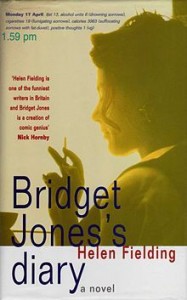
Bridget Jones’s Diary by Helen Fielding

Posted April 25, 2013 by Michael @ Knowledge Lost in Chick Lit / 0 Comments

Bridget Jones’s Diary by Helen FieldingTitle: Bridget Jones's Diary (Goodreads)
Author: Helen Fielding
Series: Bridget Jones #1
Published: Pan Macmillan, 1996
Pages: 310
Genres: Chick Lit
My Copy: Personal Copy

Buy: AmazonBook Depository (or visit your local Indie bookstore)

Bridget Jones’s Diary is the year in the life of a thirty-something single working woman living in London. While she writes about her career, problems, family, friends, and a quest for a romantic relationship she is also on a quest for self improvement. To quit smoking, cut down on drinking, lose weight and develop Inner poise, this novel is a comical look at the modern woman.

First of all, I think of this book as a pseudo feminist novel; while there are plenty of elements in the novel that could be considered a critique of feminism; this is more satire than anything else. Bridget wants to be that kind of woman but she never gets there, she tries to come across as a strong independent working woman who does what she wants when she wants, but when it all comes down to it, what she wants is a man. Interesting enough the strongest feminist is the mother who has legitimate feminist ideals, but not portrayed in a very positive light.

There is this idea that Bridget Jones’s Diary is based on Pride and Prejudice but I have some issues with this and I will try to explore some of my basic thoughts on this. Firstly Bridget is not Elizabeth Bennett; she would like to be, but in the book her personality would be more like Lydia. Her goal is to become more like Lizzie but her relationship with Daniel Cleaver (possible the Wickham of the story) shows us that she is living a life of self gratification. If we are going to compare characters to those in Pride and Prejudice, then Bridget’s mother might start off as a Mrs Bennett but in the end turns into a Lydia as well. Mark Darcy is obviously Mr Darcy and probably the only character that closely resembles the original character. There is also the desire to find a husband (or mate) due to the pressures put on them by their mothers as well as the perception of running out of time. In Lizzie’s case, she was at the age where she needs to seriously consider getting married as it was expected of her and in Bridget’s case it was more to do with her biological clock.

Here is how I think the comparison was made; in the novel Bridget was obsessed with the BBC TV adaptation of Pride and Prejudice, she considered Lizzie and Darcy the idea of the a great romance and wanted to find her own Mr Darcy. She loves the lake scene with Colin Firth in the wet white shirt (not in the book), so when it come to moment where Bridget realises who’s the right man for her, the book tries to replicate the scene with the description of Mark Darcy coming in dirty and sweaty and her attraction to him at that moment. Obviously since the movie had Colin Firth playing Mark Darcy, they were able to replicate this scene a lot better and this is why the ending was changed.

I don’t know much about Chick Lit so it is hard to talk about the writing and how it compares to other books in this genre but I have some thoughts I want to explore. First of all, this novel is almost like a soliloquy; obviously being a diary she is expecting no one else to read her thoughts, so she can express feelings that she would never consider sharing with others. The diary takes the reader through the year with her, as it happens, not with the wisdom of hindsight or any wisdom at all. The only problem is that it blurs the line between a first person narrative and third; there are parts of the book where it would be obscure to think Bridget was writing down everything happening, minute by minute as it was happening. This is to help add to the comedy of the book but to me it added to the absurdity.

Lastly I want to talk about Bridget Jones; the modern woman, obsessed with romance but still wanting to appear as a strong independent woman. She starts the diary in an effort try to improve herself but it also suggests that she is self-absorbed. What really got me was her negative body image; each day she weighed herself and throughout the course of the entire book the most she ever weighed was 9.6 stone (just over 60kg or 132 pounds) and she considers herself overweight by that? I know she compares herself to people on TV but it’s just ridiculous. Also with the amount of calories, cigarettes and alcohol she drinks, I’m surprised she is so under weight and that is where the satire started to frustrate me.

Overall, I was entertained by this book; as a novel it did have its issues and is riddled with chick lit clichés. As a satirical novel, it worked on some levels but most of the time it had to rely on the chick lit elements to help push it through. I didn’t remember much about the movie, except for the fountain scene and Renée Zellweger putting on weight for the role. Which when comparing it to the book doesn’t make sense but on a personal level, I think it was an improvement; she looked fantastic. Overall the book was quirky but the real surprise for me was the wit and irony used throughout the novel; enough to entertain me.


A Treacherous Likeness by Lynn Shepherd

Posted April 24, 2013 by Michael @ Knowledge Lost in Crime, Historical Fiction / 5 Comments

A Treacherous Likeness by Lynn ShepherdTitle: A Treacherous Likeness (Goodreads)
Author: Lynn Shepherd
Published: Corsair, 2013
Pages: 336
Genres: Crime, Historical Fiction
My Copy: Personal Copy

Buy: AmazonBook Depository (or visit your local Indie bookstore)

In 1850, a young detective takes on a new case unlike anything seen before; Charles Maddox’s client is the surviving son of Percy Bysshe Shelley and Mary Shelley. Maddox has to track down some papers concerning the Shelleys that could be used for blackmail and ruin their literary legacy. This will take him into investigating the dark lives of not just Percy Bysshe Shelley but all the young Romantics and question the cause of death for Shelley’s first wife, Harriet.

This was a really difficult book to review but I will try hard to be fair and explore the two contradicting opinions I have about this book. First of all, I read this book with not much knowledge of the Romantics; I knew basics but I hadn’t explored them as much as I would have liked. I’ve been a fan of this literary movement even since the start of my reading life and most of you know that Frankenstein remains my favourite novel of all time. So when I heard about this book, I knew I wanted to read it.

Reading the book, I found it interesting; the writing style really reminded me of the time. Yet at times I felt like the writing was trying to reflect the time and sometimes it just did not feel right. I found myself rereading paragraphs trying to pick up what bothered me about them. I never really found the problem, I do not even think it was the writing that was my problem but more of the tone, but more on that later. When it comes to the mystery, everything felt pretty straightforward, piece by piece slowly revealed until the reader finally knows what was going on.

While I did have some problems with the book, all in all I was enjoying the book and would give it a rating of three stars, maybe three and a half. I didn’t find out much about the protagonist Charles Maddox as I would have liked but this could be because this detective appears in Lynn Shepherd’s other novel Tom-All-Alone. If I had read this book first I might have a different opinion towards Maddox. Which brings me to my problems; A Treacherous Likeness would have been a decent novel if it wasn’t using literary legends. This book made me want to explore more about the Romantic Movement, to its credit, but this was also its downfall.

After finishing this novel, I’ve been dipping in and out of three different books; The Monsters: Mary Shelley and the Curse of Frankenstein by Dorothy & Thomas Hoobler; Young Romantics: The Tangled Lives of English Poetry’s Greatest Generation by Daisy Hay; and Footsteps: Adventures of a Romantic Biographer by Richard Holmes. All these Non-Fiction books are vastly different but I picked them to get more of an insight on the lives of the Shelleys. Now the Romantics are wonderfully complex people with equally complex relationships and I don’t understand what their lives were like but the creative licence this author took in A Treacherous Likeness to weave this story through only leads me to think one thing. With all I’ve learnt about Percy Bysshe Shelley and the others I’ve come to the conclusion that Lynn Shepherd mustn’t like them at all.

I’ve got more to learn about the lives of the great poets but after reading some of the non-fiction of the time and reflecting back on A Treacherous Likeness I can’t help thinking, while the author has excellent knowledge on these people there has to be hatred towards them as well. In A Treacherous Likeness there are the controversial statements of Mary Shelley not writing Frankenstein, killing her baby and with Percy Bysshe Shelley’s help pushing Harriett to suicide. While they have merit and we can’t be sure if these are true or not they still point towards a dislike of these people, Mary Shelley in particular. This could be the author’s attempt to weave her story through the facts and create this complex mystery; for me, after all the research it just comes across in a negative way.

I have a lot to learn about the Romantic Movement and I have to give A Treacherous Likeness credit for the re-spark in my interest in these people. I am not trying to be negative towards Lynn Shepherd; I think she has a great writing style and hope that she continues writing historical mysteries. I would prefer if it wasn’t based on real people because when it comes to the Romantics and Mary Shelley, I still adore them and don’t like to read anything that paints them in a horrible light. Sure they were not the nicest people, they made many mistakes but we can’t deny what they did for literature. I think I will have to try Tom-All-Alone one day just so I’m not judging this author on just one experience; her writing is worth reading, I just had some issues with this novel.


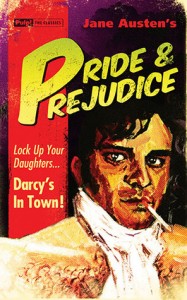
Pride and Prejudice by Jane Austen

Posted April 21, 2013 by Michael @ Knowledge Lost in Classic / 13 Comments

Pride and Prejudice by Jane AustenTitle: Pride and Prejudice (Goodreads)
Author: Jane Austen
Published: Pulp! The Classics, 1813
Pages: 320
Genres: Classic
My Copy: Personal Copy

Buy: AmazonBook Depository (or visit your local Indie bookstore)

Jane Austen’s Pride and Prejudice is often considered one of the greatest novels of all time; the story of proud William Darcy and the prejudices of Elizabeth Bennet. From Lizzie’s perspective their spirited courtship plays out on the page; in this witty comedy of manners, upbringing, morality, education, and marriage in early 19th century society.

Most of you would already know this story; you’ve probably seen an adaptation or two in your time. For me, I was never interested in reading this book, I knew what it was about but I never knew what to expect. Eventually I had to read this book, in part for university and because it’s a classic that will always remain on the 1001 Books You Must Read Before You Die List. This is the novel that just will not die; 200 years later since this was published the book still sits very often in the top ten in a lot of bookstores and other literary lists. It’s been adapted multiple times as well as been retold many times (highlights include Lost in Austen & The Lizzie Bennet Diaries). The novel has also inspired a range of other books including books by Georgette Heyer, Agatha Christie and Helen Fielding.

First of all I want to look at Jane Austen’s attempt to play with the traditional quest format to offer us this rather clever novel. Let’s look at the novel from a traditional storytelling point of view. The potential princes in this novel; Darcy was considered clever and cold, Mr Wickham was too hot, then there was Mr Collins, the one that could save the ‘castle’ who should be just right, but he was not warm but tepid and boring. The pattern is reshaped and slowly the princess’ heart has been won, even if she doesn’t know it straight away. Then Austen needs to make the suitor eligible to win over the heroine; so she sends him on a quest to win Lizzie’s heart. Then like all quest stories, the story ends abruptly, with a marriage and a happy ending. This ancient pattern only provided the basic story structure for Jane Austen to weave her story into.

The interesting thing about this novel is the fact that this book has no physical action in the entire book; the novel rather concerns itself with the complexity of courtship and marriage in the landowning classes in provincial England. Austen writes about the people she knows, doing the activities we would expect them to do. Yet she manages to write it with such wit and skill that the novel refreshing and remained so popular.

Elizabeth Bennet is clearly Austen’s favourite in the book; the character is stronger and smarter than even the men in the book. Yet she goes to great lengths to make sure that this is believable. While she is clever, Lizzie still has romance/the sublime on her mind; her references to the Lake Distracts could be considered evidence of this. I feel like Jane Austen is trying to show that a woman like Lizzie should be deserving of the family home more than someone like Mr Collins. The Bennet’s are not middle class in this novel; Mr Bennet doesn’t work, he is a man of leisure, landowners but without a son their property will be inherited by Mr Collins. So we have this impending doom (according to Mrs Bennet) with only one hope of saving the family, marriage. When Lizzie Bennet rejects Mr Collins and eventually marries Darcy, Austen tries to tell us that character matters more than rank when it comes to romance, but then there is still a whole lot to do with rank and class that remains within the novel.

At the start of the novel Lizzie and Darcy hate each other but by the end they are the perfect couple. So what is Austen trying to tell us with this change in momentum? To do this let’s look at the other relationships; First off there is some evidence that Mr and Mrs Bennet got married at a very young age, lust had brought the two together and there might have been a pregnancy. Now that the lust has cooled they find they have nothing in common. Mr Collins and Charlotte are almost the opposite; there is no passion in their marriage, it was more of a business arrangement, no kids and unhappy in their marriage. Mr Bingley and Jane are just smitten with each other; there is no real evidence that there is anything more than just an infatuation. So when it comes to Lizzie and Darcy, they are written as the opposite, they are not smitten, they have to make their way there. They develop a healthy respect and admiration as well as love. All the details are focused on Lizzie and Darcy; all the other characters are rather underdeveloped, they feel more like caricatures, yet we still need to look at the other couples to see what Austen was trying to achieve.

Now I want to look more at the writing and style rather than character and plot. Pride and Prejudice started off as an epistolary novel, it has been said that this was originally written as a series of letters; this is why there is a huge lack of character description. This is also a novel of wit so let’s focus more on how Jane Austen achieves that.

“It is a truth universally acknowledged, that a single man in possession of a good fortune must be in want of a wife.”

Looking at the very first line we get a sense of Austen’s ironical attacks; Bingley and Darcy both have women lined up but both don’t seem too keen to marry. Single men with large fortunes have the luxury of doing what they want. It is only Mrs Bennet that is trying to convince the reader that the opening line is indeed true. Just in the first few lines we can see the subtlety of Austen’s language. This book is full of other slight digs at society and it took me a second read through to really see them, but they are there and I suspect that is why this book continues to remain popular; no matter how many times you read this book there is still something to discover.

Jane Austen likes to dig at the concepts at Class and Courtship, but more so towards love and marriage. It is interesting to see that many people read this book at face value and just gloss over any attempt at irony in this book. This book is riddled with discursive and dramatic irony but to Jane Austen’s credit she was able to do it in such a subtle way that it can be easily overlooked or missed. For a cynical person like me, it was this irony that I respect the most. I love that you can read this book as a great romance or as an ironic look at love and marriage. While the irony plays out in the book, Jane Austen’s fundamental optimism makes sure no damage was done and the outcome is a happy one.

I expected Pride and Prejudice to be a romance, exploring the courtship of Lizzie and Darcy, which it is, but I was so pleased that there was so much more in this novel to explore. I read this novel and then went back and reread this novel right away; this was mainly because I needed to for Uni but I found this deliciously cynical voice come through the second time that changed my opinion of this book. I’m not sure if Jane Austen’s novels are always so ironic but if they are, she has found herself a new fan.


Ex-Heroes by Peter Clines

Posted April 18, 2013 by Michael @ Knowledge Lost in Fantasy / 0 Comments

Ex-Heroes by Peter ClinesTitle: Ex-Heroes (Goodreads)
Author: Peter Clines
Series: Ex-Heroes #1
Published: Broadway, 2012
Pages: 274
Genres: Fantasy
My Copy: Personal Copy

Buy: AmazonBook Depository (or visit your local Indie bookstore)

There are not more no super villains for these Crusaders for justice but a zombie apocalypse has given them a new challenge. Hulled up in a film studio-turned-fortress, the Mount, these heroes do their best just to survive in a world overwhelmed but these hungry corpses. While the ex-humans walk the streets night and day these superheroes can no longer call themselves heroes, they are fighting to survive like everyone else; they are Ex-Heroes.

This book has been a little bit of a success story as of late, Peter Clines published the first two books of this trilogy with a tiny little publisher known as Permuted Press. But it was not until one of the editors of Ready Player One got sick of Goodreads recommending him this series did things change. After finally caving and reading Ex-Heroes this editor loved the book so much that he went out and acquired the series for Crown Publishing group. Now this book seems to pop up everywhere, and the new buzz has really brought new life into this book.

I really like the concept of superheroes in a zombie apocalypse; they are no longer heroes, they have to fight for survival just like everyone else. Yet there is a part of them that wants to still protect the innocent and they do try. There is this whole inner turmoil coming out in these ex-heroes that I love, this is the end of the world and while they want to be heroes again they need to think about their own lives as well. The conflict within themselves is what drew me to this novel the most.

Sure, there are other wonderful zombie apocalypse elements within the book, it is jammed pack with action and yet there is a story arc  that feels very much like a super villain’s rise to power which I think will develop over the next few books too. Also you will find a heap of nerd references in Ex-Heroes; not really to the same extent to Ready Player One but they are there and for a nerd like me they are always fun to discover.

Ex-Heroes feels like an attempt to try something new in the Zombie Apocalypse genre. Blending his love for Superheroes and Zombies, Peter Clines has produced this wonderful action-packed adventure that is worth checking out. I’m interested to see where the next couple of books take us and wish Clines best of luck for the future success of this series.


What it Was by George Pelecanos

Posted April 17, 2013 by Michael @ Knowledge Lost in Pulp / 0 Comments

What it Was by George PelecanosTitle: What it Was (Goodreads)
Author: George Pelecanos
Series: Derek Strange and Terry Quinn #5
Published: Back Bay Books, 2012
Pages: 243
Genres: Pulp
My Copy: Personal Copy

Buy: AmazonBook Depository (or visit your local Indie bookstore)

Derek Strange left the police department to set up shop as a private investigator while his old partner Frank “Hound Dog” Vaughn remained. When a young woman comes to Strange to help find a costume ring, it leads him right to Vaughn’s active homicide case. Now both of them are working together trying to find a ruthless killer known as Red Fury.

George Pelecanos is best known as a writer for The Wire; I will admit I’ve not watched the show in its entirety but I thought I will try one of his books. I picked up this book because it was accessible but soon found out it was book five in a series about Derek Strange & Frank Vaughn. Luckily enough this read like a standalone and still felt like I learnt enough about the two to enjoy this book.

This book reminds me of those 1970’s pulp movies, but I don’t think I’ve ever read a novel with that same feel. You have the typical cool, badass African American who goes around kicking ass and then you have his former partner who is as hard-boiled as they come but since he is a cop he does things by the book. This is almost like a buddy cop situation but because they are not working together it doesn’t turn into anything formulaic.

Pelecanos packs a lot of detail into this novel; the cars, the clothes and the action packed plot but most of all the music. I cannot help but wonder if George Pelecanos was obsessed with music at the time of writing this book, because it really came through. Not only does he mention songs, albums and artists but who was playing what instrument and a little review of the song according to the character. Never have I read such an obsession with music since American Psycho.

I’m not sure if Strange had an afro but I can’t imagine him any other way with his bellbottom pants; it really was an image driven novel. I think with all the work George Pelecanos did with TV helped him world build and paint a picture. There were some clunky parts of the book but nothing really that would detract from the enjoyment of Pelecanos hard-boiled style.

I want to read more books in this series, as well as try out some of his other standalone novels. While this was book five, it was enough to convince me to explore more of this author’s catalogue, but I can’t help but wonder if reading this series out of order was one of my major problems with the book. I hear many people talking about The Night Gardener, so maybe that will be my next step into George Pelecanos style.


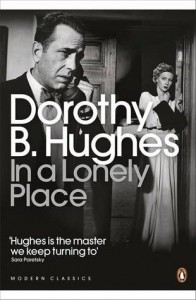
In A Lonely Place by Dorothy B. Hughes

Posted April 16, 2013 by Michael @ Knowledge Lost in Pulp / 0 Comments

In A Lonely Place by Dorothy B. HughesTitle: In A Lonely Place (Goodreads)
Author: Dorothy B. Hughes
Published: Penguin, 1947
Pages: 186
Genres: Pulp
My Copy: Personal Copy

Buy: AmazonBook Depository (or visit your local Indie bookstore)

Post World War II Los Angeles, the place you go to find the great American dream, but a stranger is preying on young women. Ex-airman, Dix Steele offers to help his detective friend solve the case and catch the serial killer in the hopes it will help him with the crime novel he is writing. Along the way he meets the luscious Laurel Gray—the femme fatale. The queen of noir, Dorothy B. Hughes blends psychological suspense with conventional hard-boiled and noir styles to give us In a Lonely Place.

Dorothy B. Hughes is known for her crime novels, 14 books primarily in the hard-boiled and noir genre and In a Lonely Place would be her most recognisable. This could be because of the Nicholas Ray adaptation starring Humphrey Bogart and Gloria Grahame or because of the psychological elements she brings to the genre. A lot of people will compare this novel with Patricia Highsmith’s The Talented Mr Ripley and while they are very similar I can’t help but thinking of the works of Jim Thompson as well. This might be because they all share the same influences Kafka, but more importantly Fyodor Dostoyevsky.

In a Lonely Place starts off like a typical noir novel and immediately the reader suspects there is something not quite right with Dix Steele. Could it be the fact that he is pretending to write a crime novel to sponge off his friends and family? Or the fact that he is a cynical misogynist? Maybe, but if you look a little closer at the writing you will find the answer. This is told in the first person but not by Dix Steele himself, like this person is with him at all times and sees everything Dix does. This sets up the psychological portrait of a woman-hating serial killer that really makes this novel work.

Towards the end of the book when Laurel Grey and the detective’s wife discover that Steele himself is the murderer, it comes as no great surprise. The book builds up like this big great reveal but there are so many elements throughout the book that give it away. I don’t think it was ever meant as a twist, just a way for Dix to find out himself. But through the whole book I was waiting and waiting for it to happen, I never really thought it would happen so late in the story.

The movie In a Lonely Place is vastly different to the book; for one thing Dix Steele is a successful screenwriter not a conman pretending to be a crime writer. Also true to Hollywood form, during the whole film everyone suspects Steele to be the killer but he turns out innocent. He still was a cynical vet but he never really had a chip on his shoulder towards the opposite sex, it felt like it was towards everyone. Also femme fatale Laurel Gray really wasn’t sassy or strong minded in the movie which was the biggest disappointment of them all.

Dorothy B. Hughes wanted to expose the misogyny of American society at that time with this book and she did a great job. The end result is this dark psychological tale that the movie adaptation butchered. Problem is I’ve seen the movie many times before finally reading the book, so it took me a long time to really get going. Both stories are worth checking out but trying to connect the film to the book doesn’t really do either of them any justice.

In a Lonely Place is worth reading; it’s nice to read a woman’s take on the noir genre. This really is a male dominated genre but women like Dorothy B. Hughes, Patricia Highsmith and Megan Abbott prove they can write noir just as well. The thing I loved most about this novel was that the influences of Fyodor Dostoyevsky’s Crime and Punishment were written all over this and yet Hughes made it her own. Make sure you check this novel out if you are a fan of hard-boiled, noir or even psychological thrillers.


Infinite Jest by David Foster Wallace

Posted April 12, 2013 by Michael @ Knowledge Lost in Literary Fiction / 0 Comments

Infinite Jest by David Foster WallaceTitle: Infinite Jest (Goodreads)
Author: David Foster Wallace
Published: Back Bay Books, 1996
Pages: 1079
Genres: Literary Fiction
My Copy: Personal Copy

Buy: AmazonBook Depository (or visit your local Indie bookstore)

In the not so distant future, the residents of a Boston halfway house for recovering addicts and the students of the Enfield Tennis Academy both search for the master copy of a bizarre movie that is so entertaining the viewers die in a state of catatonic bliss. That movie is called Infinite Jest and it is said that anyone who watches it will lose all desire to do anything but watch it. This semi-parodic novel questions what entertainment is and why it dominates our lives.

I’m not going to lie, this book is both lengthy and difficult to read but in the end it is worth the effort. You will need three bookmarks for this book, one for where you are up to, another for the endnotes and the third for the timeline that sits around page 80. You do need to read the endnotes, this book relies heavily on them; they include definitions, side thoughts, in depth details and even a filmology. You will also need to know the timeline because David Foster Wallace likes to jump around a bit, so it helps to keep up. This is where it gets tricky; in the book’s future each year has a corporate sponsorship, so you have Year of the Whopper, Year of the Tucks Medicated Pad, Year of the Trial-Size Dove Bar and so on. It helps to know in what order the years are in so you can piece it all together. While all this might help you keep track of what’s going on there is still the fact that this book is piled with subplot after subplot and you will have to keep track of more characters than A Game of Thrones novel. You will need to keep notes and it might even be a good idea to get a study guide because this book will take you on a very interesting ride.

As I said before, this book is not easy; I took my time with it and slowly chipped away at this book for two months but I still think I’ve missed a lot. While there are some tangents that happen in the endnotes, this book jumps around so much that sometimes you get lost and have to go back. There shouldn’t be any shame in doing this as Wallace’s writing voice is a postmodern mixture of high- and low-brow linguistic traits which is very difficult to become familiar with. He also uses juxtaposes, colloquialisms and polysyllabic and highly esoteric words so you will need to spend some time researching.

Now that I’ve talked about the difficulties of reading the book, I should probably talk about my thoughts on it. Infinite Jest starts off rather dense, you really need to push through the first few hundred pages before things start to make any real sense. So why is this book considered a masterpiece, magnum opus or anything else it has been referred to? It’s not to read; rather it is a book that will challenge us, to rattle us out of complacency. For me I think David Foster Wallace has the ability to take something like substance addiction, recovery programs, depression, abuse, death, relationships, popular entertainment and even tennis and look at it in a very careful way. The way Wallace explores each topic may make you feel uncomfortable and it is confronting but you do gain a deeper understanding.  Yet the book doesn’t remain dry and depressing; Wallace has a very unique way of using humour to basically satirise the issues without making fun of them.

This book is a parody and comment on American culture, yet this is also a semi-autobiographical novel of the issues facing the author. Creating this funny but bitter sweet novel that I found difficult not to associate with the life of David Foster Wallace; his depression that lead to his suicide.  There is a lot going on in this novel and to go through all the major themes within this novel would probably turn this review into something too long to read so if you want to talk about themes I’ll leave that for the comments. So just a brief overview; the main character Hal Incandenza is an intelligent tennis prodigy dealing with the intense pressure put on him to succeed in a junior Tennis Academy, dealing with a drug addiction and the ongoing strain (both physical and emotional) to reach his full potential. While that is an understated summary, all the subplots makes it hard to cover, this is just the basis of the book.

Addiction and depression would be the two major themes in the most brutally confronting depiction of the struggles I’ve ever read. No other book has given me the insight like this one. I feel like the depiction of depression is often wrong in books and movies; depression is a complex thing, it’s not a state, it’s an overall feeling that can’t be shaked. One of the characters in the book; Kate tried to commit suicide because “[she] just didn’t want to feel this way anymore” and “[she’d] rather feel nothing than this”. This tragically honest view on depression really opened my eyes on the state of mind and the struggles that people dealing with depression go through, and for this only, Infinite Jest was worth reading.

The futuristic America created in Infinite Jest feels very much like western society now, just with the increased corporate involvement but that is the way the world is heading. I am reminded of dystopian classics with his satire of society and the social/cultural commentary. It really covers a lot of interesting topics and, while it is difficult, well worth reading.

This is one of those books I plan to re-read once I have a degree in Literature behind me; while I got a lot out of this novel, I am hit with the feeling that I’ve only scratched the surface. This is rather impressive novel overall, never have I seen a novel with over 60% of Goodreads users rating the book five stars and for good reason, the book covers a lot of topics and does it really well. Blending serious topics with an awkward sense of humour is balanced perfectly, and I highly recommend reading Infinite Jest; even if it is only to increase your pretentious levels.


The Lions of Al-Rassan by Guy Gavriel Kay

Posted April 10, 2013 by Michael @ Knowledge Lost in Fantasy / 2 Comments

The Lions of Al-Rassan by Guy Gavriel KayTitle: The Lions of Al-Rassan (Goodreads)
Author: Guy Gavriel Kay
Published: Harper Voyager, 1995
Pages: 548
Genres: Fantasy
My Copy: Personal Copy

Buy: AmazonBook Depository (or visit your local Indie bookstore)

The peninsula of Al-Rassan has been split into three kingdoms; formerly under Jaddite control and known as Esperana. The split between the three Jaddite factions in the north and some Asharite kingdoms in the south makes for a volatile relationship of political and religious indifferences. The book centres on three protagonists from different races; Jehane bet Ishak, a Kindath physician in Fezana; Rodrigo Belmonte, a Jaddite captain of a company of cavalry and Ammar ibn Khairan, an Asharite poet, mercenary,
and advisor to King Almalik of Cartada.

The major theme I found in this book was one of religious indifference; the three main kingdoms in this book are actually based on the three major religions, the Kindath, based on the Jews; the Asharites, based on the Muslims; and the Jaddites, based on the Christians. The problem I had with this novel, it becomes incredibly confusing and hard to keep up; you practically have to keep a graph to remember which person is from where and what religion they are based on. I think one of the hardest things with High Fantasy is that all the weird names, races and everything else makes it too confusing.

This is a really complex story and even without the religious metaphors, you still have to have wrap your head around the medical practices of Jehane bet Ishak and all the other physicians in Al-Rassan. As well as military strategies mentioned by Rodrigo Belmonte, Ammar ibn Khairan and King Almalik of Cartada, plus many more overly thought out issues that Guy Gavriel Kay decides to inject into this novel. Luckily this world is the basis of some of his books so while he loves his metaphors, all the world building should translate into his other books.

The world is based around Moorish Spain which helps put the architecture and people’s behaviours into perspective. Even some of the characters are based loosely on Moorish historical figures such as El Cid and Ibn Ammar. Historical fantasy is apparently the genre type for The Lions of Al-Rassan but I cannot say that I have ever heard of this genre type but with a little bit of research I have since found out it is a pretty common sub-genre. Blending elements of the historical into a high fantasy setting and sometimes adding a mystical thread, this genre mixes elements of alternative history but sets it in a completely different world (with common elements); One Thousand and One Nights being the most known novel within the genre.

While this really is not my type of novel, I sometimes felt like the plot was not moving fast enough and other times felt completely lost, The Lions of Al-Rassan somehow managed to keep me. I give full credit to Guy Gavriel Kay’s writing style; the language and the similes helped paint a beautiful scene and overall story. Then the conflict between Jews and Muslims and Christian metaphor was really what interested me the most and kept me going. While fantasy has never been a strong suit for me, it really felt like a template just to explore the author’s thoughts on something so complex and misunderstood as religion. You can see the similarities between the factions and exploring this volatile world from a military strategy perspective really spotlights the political roadblocks that stand in the way for harmony.

This really ended up being something much more than I expected. Proving high literature can be found in any genre. If I had the time and knowledge, I think this would be a great book to pick apart and explore, though that would require deep looks into the theology of the three religions, history of Moorish Spain as well as military strategies. I am sure there must be an academic out there that took the time to look at this book but for me, I just enjoyed my brief visit to the world of Al-Rassan.


The Virgin Suicides by Jeffrey Eugenides

Posted April 9, 2013 by Michael @ Knowledge Lost in Literary Fiction / 0 Comments

The Virgin Suicides by Jeffrey EugenidesTitle: The Virgin Suicides (Goodreads)
Author: Jeffrey Eugenides
Published: Bloomsbury, 1993
Pages: 249
Genres: Literary Fiction
My Copy: Personal Copy

Buy: AmazonBook Depository (or visit your local Indie bookstore)

The town of Grosse Pointe, Michigan are fascinated by the death of 13-year-old Cecilia Lisbon and then eventually her four older sisters. All five suicides have been the subject of much confusion as everyone tries to piece together an explanation for these acts. The girls seemed so normal and twenty years later their enigmatic personalities are still the subject of much speculation as the boys recall their adolescence and infatuations with the Lisbon girls.

The Virgin Suicides is told by an anonymous narrator in the first person plural as he and a group of men recall their obsession over the Lisbon girls. This is an interesting way of showing the story because you never really find out their motivations and all you can really do is speculate based on the evidence these boys have collected. At times I think the girls suffered from depression, being in an overly protective home and being avoided at school. While their parents were overly protective, there is never really any signs of abuse and they are just trying to raise the girls up in a way they thing is right. Then at school it never seems like the girls have any friends and just stick together; there is no indication that any of the other girls in school talked to them and all the boys seemed too obsessed with them that they never really socialise with the girls either. Does this mean they suffer from depression? I don’t know but being treated like a prisoner at home and a leper at school would be difficult.

Cecilia (13), Lux (14), Bonnie (15), Mary (16), and Therese (17) all have their own personalities and this never comes through in this book. The idea of the boys worshipping them all without really knowing how to tell them apart is an interesting concept. High School infatuation really doesn’t give way to really understanding the girls and that was one of the major problems the girls had. As they reflect on what happened they refer to themselves as the “custodians of the girls’ lives” but none of them really took anytime to truly know them when they were alive; they just piece together based on their memories and the evidence they took from their house. To me this is the key to this whole book; they can never really know what the girls felt because they were too scared to find out and the parents kept them on a tight leash.

I love this book, it’s deliciously bleak and Jeffrey Eugenides is just a wonderful writer. I’m surprised how well thought out and polished this is for a debut novel; it outshines a lot of other books.  Eugenides is fast becoming a favourite of mine; I adored The Marriage Plot and now only have his most talked about novel, Middlesex to read. I love the combination of darkness and elegance in this book, mix that with this thought provoking concept you really do get a sense of why Eugenides is such a great author.

While the subject matter of suicide is difficult to approach, I think Jeffrey Eugenides did a masterful job at showing just how devastating it is for everyone around. He adds that intrigue that never quite goes away and then he also questions the town’s people and even the reader into what we can do to recognise this pain and maybe help prevent it. No matter how many clues you search for in this book, can you really know the true motivation behind the girl’s suicides? This is what makes this book so great; it doesn’t give you the full answer but leaves you with some many options. I think this is the point, there normally isn’t one clear answer to why someone would take their own lives; it is collection of little things the build up until they can’t take it anymore.

I’ve not seen the movie adaptation of this book and quite frankly I’m a little scared. I don’t know how it would work as a film. I know it could probably convey the heartbreaking concept of this book but the beauty of this book would be almost impossible to translate onto the screen.

It is a weird concept to think of a book about suicide as beautiful or gorgeous but I can’t think of any other way to describe it. Sure the subject matter is dark (which I love anyway) but the way Jeffrey Eugenides approaches it is first class. There is no finger pointing and no reason to play the blame game, it focuses solely on the Lisbon Girls and just how much the town didn’t know about them. A haunting read but never really going too dark, the balance between tragedy and understanding is just perfect.


Occupation Diaries by Raja Shehadeh

Posted April 8, 2013 by Michael @ Knowledge Lost in Non-Fiction / 0 Comments

Occupation Diaries by Raja ShehadehTitle: Occupation Diaries (Goodreads)
Author: Raja Shehadeh
Published: Profile, 2012
Pages: 212
Genres: Non-Fiction
My Copy: Personal Copy

Buy: AmazonBook Depository (or visit your local Indie bookstore)

Raja Shehadeh’s Occupation Diaries gives an insight of a Palestinian who chronicles for the two years in Israel leading up to the Palestinian bid for UN statehood in September 2011. This diary shows a fierce and lyrical portrait of a life lived under siege, balancing the memories, as well as the everyday reality of living under occupation in Palestine. It is often the smallest details of daily life that tell us the most.

I have to admit I don’t know much about the tension between the Israelis and Palestinians so it was interesting to read one person’s perspective. But this is very one sided and while it was an interesting book I was left with more questions than I started with. To be honest I spent most time wondering what Raja Shehadeh wasn’t telling us and concerned that maybe he is stretching the truth. It is a diary that seems to focus on the little things and I never felt like it really explored the issue at all; just a collection of small stories.

There is no real joy in this book; sometimes you get a glimpse but then it fades fast. I know this is an occupied state but the feeling of hopelessness without any optimism really made this book difficult to connect with. This was no easy read, even though the writing was beautiful and it wasn’t overly complex, it was just the anger and one sidedness of this whole thing made it a hard read for me.

Shehadeh is very passionate within this book but the bleakness of the whole situation really didn’t work for me. I know this is a very complex issue but the simplification of the whole thing within this book makes it a difficult read. I love the writing and really want to read some of this author’s works of fiction but I just never connected with this type of non-fiction. Too one sided, too many unanswered questions and I spent too much time wondering if this was real or not.