Source: Personal Copy

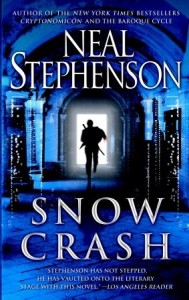
Snow Crash by Neal Stephenson

Posted June 26, 2013 by Michael @ Knowledge Lost in Speculative Fiction, Thriller / 0 Comments

Snow Crash by Neal StephensonTitle: Snow Crash (Goodreads)
Author: Neal Stephenson
Published: Bantam Press, 1992
Pages: 440
Genres: Speculative Fiction, Thriller
My Copy: Personal Copy

Buy: AmazonBook Depository (or visit your local Indie bookstore)

In a time in the not so distance future where the federal government of the United States has yielded most of its power to private organizations and entrepreneurs, franchising individual sovereignty reigns supreme. Merchant armies complete national defence, highway companies compete for drivers and the mafia own the pizza delivery game. Hiro Protagonist, “Last of the freelance hackers and greatest swordfighter in the world”, finds himself without his pizza delivery job when a young skateboard “Kourier” named Y.T. tries to hitch a ride on his vehicle. Leading them on a grand scale adventure trying to uncover just what exactly Snow Crash is.

Like all of Neal Stephenson books, you can expect this one to cover subjects like  history, linguistics, anthropology, archaeology, religion, computer science, politics, cryptography, and philosophy, all while keeping to his cyberpunk thriller style. He says this book was named after the early mac software failure mode:

“When the computer crashed and wrote gibberish into the bitmap, the result was something that looked vaguely like static on a broken television set—a ‘snow crash’”

His goal, was to take the reader on a “full tour of Sumerian culture, a fully instantiated anarcho-capitalist society, and a virtual meta-society patronized by financial, social, and intellectual elites.” Snow Crash is a pseudo-narcotic or is it something far worse; Hiro and Y.T (short for Yours Truly) slowly discover that it is in fact a computer virus capable of infecting the brains of careless hackers in the Metaverse (the successor to the internet) and a mind altering virus in reality.

One of the things I liked most about Snow Crash was the fact that Neal Stephenson showed us how to write a kick ass teenage girl protagonist. Young Adult novels like to use a strong teenaged girl as a main character but few of them really know how to make her great; most are just Katniss clones. While Y.T’s narrative wasn’t as focused as that of Hiro, it was more of a pleasure to read, she seemed to accomplish the most in the entire book and she did it her own way without compromising her character. Sure, she did manage to get into some trouble and make some bad choices but she’s human, I expect them to struggle and fall and recover from their mistakes.

While this was a fun and exciting novel there are some things that I just didn’t like; firstly each ethical group portrayed the stereotypical extreme.  The mafia, the rednecks from New South Africa, the Pentecostals, Mr. Lee’s Greater Hong Kong and so on, all felt very much like the cliché versions of these cultures and Stephenson played on the stereotypes a little too heavily. I know they were only minor plot arcs but it still felt like it was overdone. The most interesting people in the book are the ones living outside their cultural and ethnic groups; Hiro, Y.T and Raven.

Then there is my biggest problem with the book, which is a similar problem I had with Reamde and that is I feel like Neal Stephenson turns some chapters into a Wikipedia articles just to give us all the interesting information he has on a subject he is exploring. In this book it is every time the librarian talks, there is heaps and heaps of interesting, and sometimes irrelevant, information and the way Stephenson tried to stops it become and wall of text is the awkward attempt to make it sound like a conversation. Hiro keeps interrupting the librarian’s information with very simplified reiteration, agreements and metaphors, I found it incredible annoying.

Overall this was a fast paced cyber thriller with some weird and unusual tangents and twists. Stephenson has some interesting ideas about the future of the world but for some reason I never feel a strong connection to his books. I think I prefer William Gibson’s style and take on the future cyber world but can’t fault Stephenson for what he does. Not that I’ve read many books from this author and there are plenty more I want to read, maybe I just feel like he over simplifies and draws his novels out a little too much.

The Round House by Louise Erdrich

Posted June 24, 2013 by Michael @ Knowledge Lost in Historical Fiction / 0 Comments

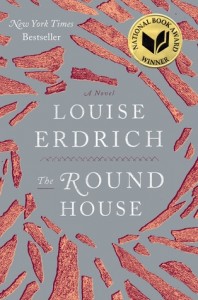
The Round House by Louise ErdrichTitle: The Round House (Goodreads)
Author: Louise Erdrich
Published: Harper Collins, 2012
Pages: 321
Genres: Historical Fiction
My Copy: Hardcover

Buy: AmazonBook DepositoryKindle (or visit your local Indie bookstore)

In Spring of 1988, a woman on a reservation in North Dakota was brutally attacked and raped. The details of Geraldine Coutts’ traumatising event slowly unfold as she reluctantly recounts the account to the police or her husband. Not only will her life be changed forever, but that of her husband Bazil and their thirteen year old son Joe. In just one day, Joe’s life is irreversibly transformed as he finds himself thrust unprepared into adulthood in Louise Erdrich’s National book award winning The Round House.

From the perspective of Joe we follow this tragic story from that one Sunday in the spring through all the challenges that face the family afterwards. Not only is justice difficult to find for the victims of rape but imagine just how hard it would be when there are laws preventing the North Dakota police arresting anyone on an Indian reservation. This is a look at the problematic laws between America and native tribes as well as rape victims. Can there be justice in these cases? The tribal judge and Joe’s father, Bazil has faced many problems with finding justice but this time it is so much more personal and really highlights the fact that these laws in America need to be changed which are being worked on but unfortunately due to these tangled laws, 1 in 3 Native women were reportedly raped in their lifetime according to a 2009 report (this figure could be higher as Native women often do not report rape) and 86 percent of the sexual assaults are perpetrated by non-Native men.

Not only is this book trying to show us just how bad the laws are at protecting Native women, but  this book, from Joe’s perspective,  goes into some other details , such as, a teenage boy growing up in a both a tribal environment and the modern world. The two cultures clash from time to time, not just when it comes to the laws and justice, but through a teenager’s eyes the modern and traditional worlds are so incompatible. Joe was an interesting character whose childhood was cut so short and being ill equipped to deal with adulthood really just added another dimension of struggle to this book.

It felt like this was a coming of age story for Joe, he was thrust into adulthood far too quickly but he was still struggling to grow. The whole sexual awakening and puberty and everything else he would have had to go through at the same time as trying to help his mother heal; I don’t know how someone would be able to manage in that circumstance. Louise Erdrich did try to explore the sexual awakening and rebellious phase of Joe’s life but due to the tragic event of his mother’s life, it become really difficult to balance the two and that was one of the major issues I had with the book. I felt like Erdrich was trying to do too much and maybe didn’t execute the plot well enough to manage her ideal outcome for this novel.

Then I found some of the minor characters to interchangeable and others far more interesting than the primary ones. The rest of the family apart from Geraldine, Bazil and Joe, all felt too similar that they should have been written out of the book completely. But then you have Grandma Ignatia with her raunchy stories, the old man who tell fables in his sleep and the ex-stripper and her past. All three characters, plus a couple more seemed far more fascinating than the main characters; I would have rathered a novel about them instead.

For me the novel started off difficult, the violent nature of rape has that effect. I found it difficult to get started and that never really went away; I wanted the book to end or change perspective or do something to keep me reading but it never did. I had to read this book for book club, so I did finish it. If it wasn’t for book club, I might have abandoned or put this book aside for a long time. Sure, there are interesting points this novel brings up but I don’t think it was deserving of such a prestigious award like the National Book Award. Then again the social spotlight on these tangled laws needed to be brought to the attention of all Americans and I guess this book did a good job at that.

I’m not sure if I want to read more of Louise Erdrich’s novels but I’ve heard good things about them, but I had heard good things about this book too. Rape and the social injustice of Native women are serious problems that need to be addressed so I will give Louise Erdrich credit for The Round House, it did its job. Thank goodness the novel I finished next was Snow Crash; review soon. I would like to know if anyone has read or plans to read The Round House and if they have some thoughts on the book and these issues.


Gentlemen & Players by Joanne Harris

Posted June 16, 2013 by Michael @ Knowledge Lost in Thriller / 0 Comments

Gentlemen & Players by Joanne HarrisTitle: Gentlemen & Players (Goodreads)
Author: Joanne Harris
Published: Black Swan, 2005
Pages: 507
Genres: Thriller
My Copy: Personal Copy

Buy: AmazonBook Depository (or visit your local Indie bookstore)

Audere, agere, auferre.
To dare, to strive, to conquer

For generations, privileged young men attended private schools like St. Oswald’s Grammar School for Boys, groomed for greatness and success. But this year the winds have turned, not only are suits, paperwork, and information technology threating to overwhelm the school and break the traditions of this elite school but someone is trying to corrupt and destroy St. Oswalds once and for all; this is a game for Gentlemen and Players.

Nothing like a gentlemen’s game of revenue and murder, Joanne Harris’ novel is astonishing and surprising. I normally associate Joanne Harris with the likes of Chocolat, but when I heard she had written this dark psychological thriller, I had to read it right away. This is a game of idealism verses cynicism, equality verses privilege and principle verses corruption; this is a game of chess. I love how Harris wrote this whole sociopathic revenge novel using the themes of Chess. You have the black pawn moving silently trying to take down the white king.

Roy Straitley is one of the narrators of this story, an unmarried classics master that tells us about life at St. Oswald’s, focusing on the day to day events, with the students and his work colleagues. Most importantly are The New Head (the king and only referred to as the new head even though he has been doing the job for 15 years), Pat Bishop (second master), Jeff Light (games Master), Chris Keane (new English Teacher) and Dianne Dare (also a new teacher in the French department). Straitley doesn’t know it yet but he is considered to be the white knight of this novel and the second narrative; the black pawn keeps their identity hidden till the very end (although if you are a keen chess player you might work it out in this review) and tells the story of early life at St Oswalds and their plans to destroy this school.

I love how Joanne Harris wrote this book with the chess metaphor, but she used a couple of tricks to throw off who might be the sociopath. Not that I really have a problem with it, I had my suspicions of who it might have been and her cheap tricks really threw me off at times. There is some interesting name choices used in the book; like Bishop, and Light sounds a little like Knight, and these were just ways to help build this metaphor.

While the reader will largely focus on working out just who is the person seeking revenge on St. Oswalds, this book also deals with entitlement and elitism. We know from near the start that the black pawn was poor and their father was the janitor so we know that the pawn holds so much hostility towards the rich and elite. So we know that we are dealing with the problem of not fitting in and being excluded. There are also elements of adolescent sexuality, gossip and tradition verse progress that are very clear throughout this book.

This is a wickedly dark thriller that had me gripped from the very start, it had a real serial killer vibe to it when the black pawn took moves to strategically destroy this school and then you have this very proper and traditional account of life in an elite school. Naturally this narrative changes as the white knight slowly starts to understand there is imminent danger at his beloved school.

While really entertaining and tricky, Joanne Harris also reminds us just how much lives depend on trust. This unsettling strategy to slowly plant seeds of doubt and suspicion could be futile. I found Gentlemen and Players to be a smart and witty psychological thriller; I never expected something so bleak to come from someone that wrote something as sweet as Chocolat. I’m reminded a little of The Talented Mr. Ripley when I read through this novel, sometimes I was surprised that Harris was able to outclass and fool me.


Naked Lunch by William S. Burroughs

Posted June 14, 2013 by Michael @ Knowledge Lost in Classic / 5 Comments

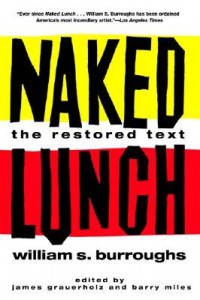
Naked Lunch by William S. BurroughsTitle: Naked Lunch (Goodreads)
Author: William S. Burroughs
Published: Grove Press, 1959
Pages: 289
Genres: Classic
My Copy: Personal Copy

Buy: AmazonBook Depository (or visit your local Indie bookstore)

In a complex and disturbing string of events, William Lee finds himself fleeing from the police. While on the run, this drug addict finds himself journeying across the United States and into Mexico. His travels lead him into the underground world of both drug and homosexual culture. The coun
ter story revolves around the use of mind control by the government and psychiatrists to manipulate and direct the public.

Considered one of the most important novels of the twentieth century, William S. Burroughs’ Naked Lunch is a bizarre cut up narrative protesting the death penalty. You got that the book was trying to do that from the synopsis right? Naked Lunch is a non-linear narrative that does make it really difficult to summarise the plot. Burroughs is famously known for his cut-up narrative; which is a literary technique that can be traced back to the Dadaists in the 1920s. For more information about Burroughs and cut-up check out my post called William S. Burroughs & Surrealist Writing Methods.

The book looks into two key groups; the drug and homosexual subcultures. The two unite early in the novel by the narrator but are never mutually exclusive. At the start of the book William Lee believes he will be punished more harshly for his involvement in homosexual activities than using and selling illegal drugs, which is really sad to think that people are being still victimised over their sexuality and drugs have just become socially acceptable.

Then the subplot largely focuses on the way in which psychotherapy combines with the government to institute mind control. Dr Benway experiments on ways to manipulate the minds of his patients in order to further his research. With no ethical consideration, he often changes his patient’s sexual identity and then tries to cure them. He also creates a mental controlling device for the towns as a way to use the population for his sadistic experiments and put them through psychological torture. Many of these experimental towns are based on the utopian idea and Burroughs like to explore the problems with the idea in a rather sinister way.

So how is this novel a protest to the death penalty? Well that would be in the same way Jonathan Swift’s Modest Proposal ideals with economics. William S. Burroughs uses Juvenalian satire to highlight the barbaric, disgusting and anachronism of capital punishment. While the sex in Naked Lunch can be considered as mutual satisfaction sometimes, it is also used as a metaphor (especially in the more violent sexual acts) for defeating an enemy, self serving idol worshipping and capital punishment. The results of these metaphors are often confusing, shocking, taboo and sickening. Sex is a powerful tool with this novel and while it does look at sex and relationships in a positive way (rarely), the majority is used to symbolise the dark and cynical themes within the book.

William Lee is obviously William S. Burroughs alter ego and the book can be read as a semi-autobiographical novel through a serious drug addiction but like Infinite Jest there is so much more going on. This book did remind me a lot of Infinite Jest; not just with how it dealt with drug addiction but the way it used very dark themes to look at other social issues. William S. Burroughs had a similar experience to the narrator, taking trips around the world in order to avoid being arrested. Even the addition and sexual experimentation is similar to the authors own experiences, as part of his attempts to separate himself from mainstream culture. William S. Burroughs is a fascinating man and I’m interested to learn/blog more about him.

I’m not sure what the difference between the original and restored text but I did read the restored edition. While this was a really weird and somewhat difficult book to get though there is so many interesting themes to explore that I feel very satisfied by completing this novel. It is disturbing and some of it will make you feel sick to your stomach and I can understand why people hate this book. This is a really intense novel that will drain you emotionally and mentally. The book is full of violent and graphic sex, so it will never be for everyone but I can see why it is an important novel, not just because of the obscenity trial but also for all the themes.

I’ve not read many Beat novels in my life, I think On the Road was the only other one but I do like the gritty and surreal approach both books take. I’m not sure if this is a major theme for all beat novels but if so, I will have to read more. I doubt I’ll ever return to Naked Lunch simply because of how disturbing some of the scenes are but I know I can be completely satisfied with having read this one and judging by this review, I can also take comfort in the fact I was able to pick it apart and understand some of the themes.


The 5th Wave by Rick Yancey

Posted June 9, 2013 by Michael @ Knowledge Lost in Young Adult / 0 Comments

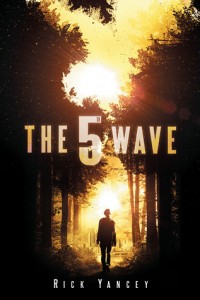
The 5th Wave by Rick YanceyTitle: The 5th Wave (Goodreads)
Author: Rick Yancey
Series: The Fifth Wave #1
, 2013
Pages: 460
Genres: Science Fiction, Young Adult
My Copy: Personal Copy

Buy: AmazonBook Depository (or visit your local Indie bookstore)

The 1st Wave took out half a million people.
The 2nd Wave put that number to shame.
The 3rd Wave lasted a little longer, twelve weeks… four billion dead.
In the 4th Wave, you can’t trust that people are still people. 
And the 5th Wave? No one knows. But it’s coming.

The aliens have landed; with each wave there are less saviours. Cassie is on the run, not just from the visitors but from everyone else as well. The 4th wave has destroyed all trust and the only people she knows she can trust were her Father and brother. That was until she met Evan Walker.

I’ve said it before; I’ve never really gotten into the whole Young Adult craze; but I keep trying. Alien invasion, I might try some of that. The 5th Wave is your typical run of the mill Young Adult post apocalyptic novel, but the whole time I spent reading this I wondered if this book was written for young adults. This leads me to question if any of the more recent books are written for teenagers. In this growing genre it seems that the average age of a YA reader is not a teenager.

Skynet, X-Wings, Close Encounters, they are all references I don’t expect young adults to make. I do hope they know what Star Wars and Star Trek are or even who Terminator and Darth Vader are, but sometimes I wonder about that too. This feels like they are trying to go for the nostalgic readers much like Ready Player One did but I’m not sure it worked as well here.

This was a really quick read for me, I think I knocked it out in a few hours, so I don’t want to criticise the entertainment factor but there was a lot in the book that I just didn’t like. Children being trained up in combat? Sure, the kids today wouldn’t have read Enders Game but if you are catering for the nostalgic reader try not hiding the fact that you are pretty much stealing huge ideas from other books. I know Hunger Games was a big hit and it is pretty awesome to have a kick ass heroine but I felt like Cassie was too much of a Katniss photocopy and there wasn’t much that was original about her. While we are at it, please stop with the love triangles, it’s very rare to find one that is done in an interesting and unique way; why are they in every YA book?

To me the characters in this book were very underdeveloped, Cassie in particular which is annoying when she is the main protagonist. I liked Evan in parts but I did think that some depth to all the characters would have helped boost my enjoyment. Then there is the plot; it was predictable and never surprising. Entertaining, yes, but there has to be something more to a book, I want to be both entertained and left with thoughts of the book rolling around in my head for days afterwards.

For me it felt like Rick Yancey read all the popular dystopian/post apocalyptic young adult novels then went and watched all those 1980 Science Fiction movies from his childhood and just mashed them all together. Taking his favourite parts from each plot and using it in his own piece and guess what? It’s a triology.

I was entertained, I was nostalgic and it was a fun book to read but now that I’ve had a little vent, I can say I really want something different from this genre. Alien Invasion, yes this is something I don’t think has been done, unless you count The Host (which I don’t). I do like that this novel is a little dark and raw but it really held back in my opinion.

There isn’t enough nostalgia for my taste and the language, sexual references and violence make me wonder just how old you need to be for YA? 15? I’m sure kids will think this is just as fun as sneaking into watch a movie for over 18 year olds but to call this the “Young Adult novel of the year” I feel maybe stretching it a little too far. But what do I know; I’m just that crazy bitter old man that reviews books on the Internet.


The Strange Case of Dr. Jekyll and Mr. Hyde by Robert Louis Stevenson

Posted May 30, 2013 by Michael @ Knowledge Lost in Classic, Gothic, Horror / 0 Comments

The Strange Case of Dr. Jekyll and Mr. Hyde by Robert Louis StevensonTitle: The Strange Case of Dr. Jekyll and Mr. Hyde (Goodreads)
Author: Robert Louis Stevenson
Published: Signet, 1886
Pages: 92
Genres: Classic, Gothic, Horror
My Copy: Personal Copy

Buy: AmazonBook DepositoryKindle (or visit your local Indie bookstore)

Robert Louis Stevenson’s classic gothic horror novella Strange Case of Dr Jekyll and Mr Hyde is probably known to many people; it’s been adapted many times and is often a symbol of the horror genre in pop culture. We all know the story; mild-mannered Dr Jekyll by day but at night, thanks to a potion, Mr Hyde is unleashed. But do we really know this tale; the tale of good and evil, or maybe the unleashing his secret inner persona, or maybe this is a story about dissociative identity disorder?

This is a reread for me so like I did in The Great Gatsby; I’m going to quote my old review (which is relatively short) but expand with what I know now. First we need some context; Robert Louis Stevenson had already had some success as a Victorian adventure writer before he came up with the idea of Dr Jekyll and Mr Hyde. He had already written Treasure Island and his collection of short stories New Arabian Nights; in fact it is believe that he came up with the idea while working on his revisions for the short story Markheim (which, in my opinion, is his best piece). So already you get a sense that he knows what he is doing and if you’ve read Markheim you can see the similarities clearly. It was the late into the Nineteenth Century where there were extraordinary technological advances being made and people had a growing pessimism towards a possible decline in arts and religion.

The Promethean personality is something we’ve seen in books like Dracula by Bram Stoker, but this novella has more in common with Mary Shelley’s Frankenstein. Both involve scientists that defy the laws of nature and God with major consequences. Also, they play on the concept of good and evil and the dangers of advancing sciences but they also have been written in a way that to this day people debate the meaning of the novel.

Some say this is a novella that looks at that great Victorian idea of inner conflict with humanity; that good and evil exist in us all and it is an internal struggle between the two. While others suggest that maybe Stevenson was interested in exploring mental health, especially when it comes to split personalities or what should be correctly called a dissociative identity disorder? When I first read this book I got a sense of both, saying “[That] it’s a vivid portrayal of a split personality, split in the sense that within the same person there is both an apparently good and an evil personality each being quite distinct from the other.”  As an interesting side note Vladimir Nabokov has famously argued that the “good versus evil” view within this novella is misleading, as Dr Jekyll himself is not, by Victorian standards, a morally good person.

“The novella’s impact is such that it has become a part of the language, with the phrase “Jekyll and Hyde” coming to mean a person who is vastly different in moral character from one situation to the next.” While this is true, the tale has left a bigger impact on pop culture than just one phrase and classic horror movies. Within comic books both The Hulk and Batman’s rival Two-Face have clear influences from this novella; in fact you might argue that all superheroes are influenced as well, all living a double life.  Even the framework has been used in other fables, gothic, horror and speculative fiction.

“Robert Louis Stevenson is an amazing writer and this book is well worth the read, I’ve always enjoyed a story that tries to explore two sides of a situation.” Not only does this highlight how much I’ve improved in my reviewing but it serves as a reminder of my interest in plots that explore both points of view. Frankenstein still remains my ‘go to book’ for this even though rereading Strange Case of Dr Jekyll and Mr Hyde has rekindled an interest in Robert Louis Stevenson’s thoughts on the whole “good versus evil” view. I much prefer Markheim and think I might go read it again now.


The Hunter by Julia Leigh

Posted May 28, 2013 by Michael @ Knowledge Lost in Contemporary / 0 Comments

The Hunter by Julia LeighTitle: The Hunter (Goodreads)
Author: Julia Leigh
Published: Penguin, 1999
Pages: 188
Genres: Contemporary
My Copy: Personal Copy

Buy: AmazonBook Depository (or visit your local Indie bookstore)

Under an assumed identity of Martin David, Naturalist, M arrives to hunt down the last Tasmanian tiger rumoured to exist within Tasmania. On the edge of the wilderness, he will soon slip into an untouched world of silence and stillness. Hunting the last thylacine, an animal extinct since the 1930’s, but a sighting has been reported.

Julia Leigh, born in 1970 in Sydney, Australia, has received critical acclaim even though she has had a very small writing career so far. The Hunter in 1999; a novella in 2008, Disquiet; and then she wrote and directed the 2011 movie Sleeping Beauty (not to be confused with the fairy tale). I tend to think that most of her acclaim came from people expecting great things from her after she was selected to be the protégé of Pulitzer and Nobel Prize winning author Toni Morrison in 2002 as part of the Rolex Mentor and Protégé Arts international philanthropic programme.

The Hunter is an interesting novel because it follows a post colonial narrative which is unheard of for an Australian novel. When it comes to Australian adventure novels, most of the time characters just get lost in the wilderness not go hunting dangerous animals.  This leads to an interesting portrayal of the thylacine, which I will look at later. The Hunter may be a stripped back quest narrative but it feels very American and masculine for an Australian female author. American in a sense that the hunt narrative could be compared to Moby Dick, Old Man and the Sea and even The Bear, comparisons which she has acknowledged. Masculine in the way she gives approaches this novel with detachment, contempt and control over the death hunt subject matter. You could compare the paired back minimalist prose to something found in hard-boiled fiction, but not quite.

M is the archetype of a hunter, a figure that inhabits the story rather than one the lives in its world. There are not too many details of this character, but he seems to have similar characteristics as the hero in a spaghetti western. Ruthless, cold, calculating and inhuman but never unethical; though the lack of character development is an important part of this book. It forces the reader to keep him at arm’s length so we can study him. It’s almost like Julia Leigh has been taking active steps so that we never warm to him.

He is never a role model or anti-hero; he is just a faceless man in pursuit of the last remaining thylacine. What does the thylacine represent in this book? Imagination, hope for the future, guilt of the past, living in harmony with nature or a biotech ghost in a Tasmanian gothic novel? It’s up to the reader to decide, but while we are on the subject of the thylacine, does this animal both represents the Australian wildlife, an animal going extinct to raise global awareness as a form of Ecocriticism or is it supposed to be an animal that could harm or kill the hunter? These are the questions that I believe Julia Leigh wants us to ask as readers.

Julia Leigh setups a situation where the reader has to reason with their imagination and emotions in order to get the reader to think about what the author might be saying. I really like how you can read The Hunter as an adventure, a Tasmanian gothic or as ecocriticism. No matter which way you read this you are not wrong. I thought of this more as a western; just with the way the protagonist was portrayed and the people drinking in the bar reminded me of those rednecks drinking in a saloon in those spaghetti western films. I’m interested to see how people read this book and just see what they got out of it.


Alex by Pierre Lemaitre

Posted May 26, 2013 by Michael @ Knowledge Lost in Thriller / 1 Comment

Alex by Pierre LemaitreTitle: Alex (Goodreads)
Author: Pierre Lemaitre
Translator: Frank Wynne
Series: Verhoeven Trilogy #2
Published: MacLehose Press, 2011
Pages: 368
Genres: Thriller
My Copy: Personal Copy

Buy: AmazonBook Depository (or visit your local Indie bookstore)

When someone is kidnapped, the first few hours are critical; the chances of finding the victim alive drastically decrease after that. The beautiful and tough Alex Prévost is no ordinary victim but can she escape? Her time is running out. Commandant Camille Verhoeven has nothing to go on, no suspects, no leads and no hope. All they know is the girl was snatched off the streets of Paris and shoved into a van. The mystery of the fate of Alex will keep Verhoeven guessing until the bitter end.

This is the second book in the Verhoeven trilogy but the only one that has been translated into English so far. While it is very much a standalone novel, I got a feeling that some critical information about Commandant Camille Verhoeven was missing in the development of this character. This could be the simple fact that this is the standard and over done thriller formula. I picked up this book because I’ve heard it being compared to Gone Girl a few times and thought it was a good excuse to read some translated crime.

Alex does have an unreliable victim, like Gone Girl but comparing this book to that one is a big stretch. The whole style and feel to Alex was nothing like the psychological thriller that is Gone Girl. This novel does try to be psychological but comparing the two is pointless, this novel takes a whole different route and the only real similarities are the genre and the unreliable victim. I tend to think marketing people look for connections between books as a way to promote books and this can be destructive.

Alex is a thriller told from a third person narrative that follows both the victim, Alex and Commandant Camille Verhoeven as he tries to piece together this enigma of a case. While this tends to work well in exploring the two sides of this case as victim and investigator, I sometimes wished I could get into the mindset of both characters. Without spoiling any of this novel, there are parts of the book that could have been interesting to explore the psychology of the characters. I think Alex was a complex character that could have been used better within the book to improve both plot and the overall novel.

Now, there are so many plot holes within this novel that really got to me, from the very first few chapters I got that feeling everyone was attractive, despite their age. It seems like Pierre Lemaitre knew of no other way to describe someone. I don’t want to spoil anything for people that want to read this book so I won’t mention the biggest plot hole I found (if you have read this book I’d love to discuss it with you). There is also a lot of repetitiveness within this novel, I don’t know how many times Lamaitre can mention she wasn’t average and when she was a teen Alex blossomed into a bombshell with large breasts but it was too many. Then you mix the generic thriller formula to the mix and you are left with a novel that could have done great things but took the safe road.

I think the unreliable victim narrative could have been executed a whole lot better and we could have had a decent novel with twists and turns. I’m a little disappointed that the author decided to play it safe and go with the cliché plot that is known to sell books. Books like Gone Girl that take risks and surprise the reader are the ones that are remembered and respected by readers. Sure sometimes we want something that we know will be enjoyable and doesn’t require much effort for a cosy winter (or summer read) but when you set up a book like Pierre Lemaitre did in Alex and chose not to take full advantage of the situation I feel let down and disappointed.


Mrs Dalloway by Virginia Woolf

Posted May 21, 2013 by Michael @ Knowledge Lost in Classic / 0 Comments

Mrs Dalloway by Virginia WoolfTitle: Mrs Dalloway (Goodreads)
Author: Virginia Woolf
Published: Oxford World's Classics, 1925
Pages: 185
Genres: Classic
My Copy: Personal Copy

Buy: AmazonBook Depository (or visit your local Indie bookstore)

Clarissa Dalloway goes around London preparing to host a party that evening. It’s a nice day and she finds herself being reminded of her youth in the Bourton and wondering about her life and her choice of husband; marrying the reliable Richard Dalloway instead of the mysterious and challenging Peter Walsh, as she never had the option to be with Sally Seton. These conflicts have been reintroduced when Peter pays her a visit.

The novel begins with Clarissa’s point of view and follows her perspective closely, travelling forwards and back in time and in and out of her mind to construct an image of her life. Clarissa is bubbly and lively, caring a great deal about what people think of her, but she is also self-reflective. She is often questioning life and constantly wondering whether happiness is truly possible. Though she is happy with her marriage to Richard she feels both great joy and dread towards her life and struggles to strike a balance between her desire for privacy and her need to connect with others.

Her husband Richard Dalloway is a member of the conservative government and plans to write a history of The Brutons, a great military family. He is a loving husband and father and devoted to social reform while appreciating English tradition. Peter Walsh is a close friend of Clarissa, once desperately in love with her. When she rejected his proposal, he moved to India; though frequently having romantic problems with women throughout the novel he is currently in love with a married woman in India. A socialist and highly critical of people, he is conflicted about everything in his life. Then there is Sally Sutton, a close friend of Clarissa in their youth, she was a wild handsome woman who would say anything. They were sexually attracted to each other as teenagers. Sally now lives in Manchester where she is married and is known as Lady Rosseter.

This is primarily a novel about life and relationships, with Clarissa reflecting on her life and wondering if she has made the right choices when it comes to marriage. There are so other themes that play a big part within this novel as well; some of these include disillusionment towards the British Empire, fear of death, oppression and balancing life between the need to keep up appearances and having some privacy. I won’t go into these themes in any detail, for the simple reason that I feel that Virginia Woolf leaves it very open to interpretation and it is up to the individual reader to make of it what they will.

For me, the major theme that came out was the struggle Clarissa had with trying to play the good hostess by drawing people together through her parties and her introverted nature. I saw Clarissa as an introvert, though she has a bubbly personality, she is often feels shrouded within her own reflective soul and thinks the ultimate human mystery is how she can exist in one room. She likes the idea of being independent and able to spend time to reflect but she is also aware of the inevitable loneliness that comes with a life of self reflection. If you understood something completely different from this novel, please let me know how you read this book in the comments below.

Now that I’ve looked at the themes of this novel, I want to have a quick look at some of the motifs and symbols used in Mrs Dalloway. The most important of them is time, which is so important to the structure, themes and characters of this novel that Virginia Woolf almost called it The Hours. Time keeps order to this novel; with all the thoughts, memories, and encounters within Mrs Dalloway, it becomes a vital element to the book. Also the old woman in the window across from house symbolises the life Clarissa desires; a private life with time to reflect. You also have things like the flowers with all their colour, varieties and beauty being a motif for emotions, Shakespeare and poetry representing these emotions as well and water suggesting the possibility of death.

Virginia Woolf can be a difficult author to read and requires a lot of thought but as I’ve now discovered with Mrs Dalloway, it is worth the effort. I remember reading To the Lighthouse and really struggling, but when I was told it was about sex, I thought I really missed the point. It’s a novel I plan to revisit again but as I mentioned in this review, I think Woolf writes her novels in such a way that you can interpret it anyway you want.

I don’t know if I would call myself a Virginia Woolf fan now, but I was really impressed reading and studying Mrs Dalloway. I will admit that that I’m planning to read A Room of One’s Own and reread To the Lighthouse. Maybe after that I might call myself a fan but I would recommend reading Virginia Woolf for all serious literature readers and studiers and anyone that needs to increase their pretentious levels. For me, Mrs Dalloway was both an interesting book and an interesting endeavour into improving my critical reading skills.


Invitation to a Beheading by Vladimir Nabokov

Posted May 19, 2013 by Michael @ Knowledge Lost in Classic / 0 Comments

Invitation to a Beheading by Vladimir NabokovTitle: Invitation to a Beheading (Goodreads)
Author: Vladimir Nabokov
Published: Vintage, 1936
Pages: 240
Genres: Classic
My Copy: Personal Copy

Buy: AmazonBook Depository (or visit your local Indie bookstore)

In this bizarre and irrational world, Cincinnatus has been convicted and condemned to death by beheading for gnostical turpitude, an imaginary crime with no definition.  Cincinnatus spends his remaining days in prison where he is visited by the chimerical jailers, an executioner who masquerades as a prisoner, and his in-laws. When Cincinnatus is finally brought out to be executed, he simply wills his executioners out of existence: they disappear, along with the whole world they inhabit.

There is no denying that Invitation to a Beheading is a weird novel; often compared with Franz Kafka’s The Castle, it is important to know that Vladimir Nabokov had not read any German novels, let alone Kafka when writing this. The reason this is important is to avoid trying to compare the two novels; sure they have similarities but they are still also vastly different. Originally published as a serial, with the title Sovremennye Zapiski (Contemporary Notes), Nabokov has stated while Lolita holds his greatest affection, this novel holds his greatest esteem.

While people call this Kafkaesque, the impossible and dreamlike world reminds me more of Haruki Murakami’s style. From the very start the reader understands there is something not right about this world, this reminded me of Hard-Boiled Wonderland and the End of the World. I got the feeling that this wasn’t reality but a world constructed in Cincinnatus’ mind based on his fears, doubts, and insecurities. Cincinnatus’ enemy is the society he’s created and the people of that society act according to ridiculous rules that have been set. We never know what gnostical turpitude is and this will probably remind people of Kafka’s The Trial. Cincinnatus is rebelling against the construction of this reality and the rules the people of this society observe and perhaps this is what makes him a criminal.

Maybe gnostical turpitude is the crime of being different from all the other people in this reality. Maybe Cincinnatus is being oppress for his ideas and his nature. Maybe he is so different from everyone around him; he has an internal depth that the others lack. A lot like Lolita, Vladimir Nabokov has a way about his writing that just leaves you with so many questions that you need to think through, this whole reality and society leaves me perplexed. Though this is the point; life isn’t simple and being an outsider sometimes feels like you are Cincinnatus in a bizarre reality.

While this book primarily looks at society and oppression it also looks at human connection. Cincinnatus desires to connect with his wife Marthe, despite her unfaithfulness and lack of concern for him. The one thing he craves the most is to make a connection and she felt like the logical choice; also the fact that he loved her helped. He begs her to come alone and reveal her true self to him but there is always something that interferes with the communicating.

While this was a very odd book, Vladimir Nabokov is just a brilliant writer and that really makes up for the weirdness. Also the weird and bizarre act as motifs within the narrative and without the symbolism and meaning it would just be trippy book. Nabokov does a good job of weaving his messages and ideas while entertaining the reader in unexpected ways. Most people only ever read  Lolita by Vladimir Nabokov and I think that means they miss out on his brilliance, I hope to read more; currently on my To Be Read list is Mary, Pnin and Pale Fire. Are there any others I should add?