Source: Personal Copy

Mini Review: Graphic Novels (Fables, Batman & Hawkeye)

Posted October 12, 2013 by Michael @ Knowledge Lost in Graphic Novel / 0 Comments

I’ve been reading a few graphic novels in the past month or two and I have really struggled to work out how to review them. I thought maybe I could just give a quick mini review of the ones I’ve read recently. I just discovered Comixology (I know, late to the party) and their mobile app is great. I never thought reading a comic on a phone would be a great experience but they have nailed it. So you might see a few more reviews of graphic novels in the future.

Fables: Legends in Exile I really love the concept of Fables, the Fabletown community (all characters from different fairy tales) living in New York. The Big Bad Wolf is a hard-boiled detective that is on the case to find out who killed Rose, Snow White’s sister. While the art has a real 80’s feel to it, it is the story telling that makes this a great graphic novel. I expect to be reading a lot more from this series.


Batman: The Killing Joke I’m not a fan of art style in Alan Moore’s graphic novels but I really do enjoy a good Batman comic. This is a dark, comical and sadistic read, almost like an origin story for The Joker. If you are a fan of Alan Moore or Batman, this is a must read, this is The Joker that Heath Ledger modelled his role after in The Dark Knight.


Hawkeye: My Life as a Weapon Hawkeye is one great superhero and he doesn’t have any superpowers. In fact most of my favourite superheroes don’t have superpowers (The Punisher, Batman) but unlike them, Hawkeye isn’t doing this for revenge. Most people know that there are two Hawkeye’s (Clint Barton and Kate Bishop) and Matt Fraction (the author) has an interesting approach to including both of them. This is more of a look into the personal lives of Hawkeye rather than a superhero adventure, highly recommend this and will be continuing this series.

If anyone knows of some good graphic novel series I should try, please let me know. If you have not really tried a comic before and don’t know where to start, check out my First Steps post on that topic. On a final note, another great thing about the Comixology app is the free comics, good way to try a series (normally offer issue one or a previewer) without spending any money.


The Pillars of the Earth by Ken Follett

Posted September 29, 2013 by Michael @ Knowledge Lost in Book of the Month, Historical Fiction / 0 Comments

The Pillars of the Earth by Ken FollettTitle: The Pillars of the Earth (Goodreads)
Author: Ken Follett
Series: The Pillars of the Earth #1
Published: Pan Macmillan, 1989
Pages: 1088
Genres: Historical Fiction
My Copy: Audiobook

Buy: AmazonBook DepositoryKindle (or visit your local Indie bookstore)

The Pillars of the Earth follows the building of a cathedral in the town of Kingsbridge, England in the middle of the 12th century. Set during the time of King Stephen and the Anarchy, it explores the lives of Tom Builder and his family as he finally gets to achieve his dream of being master builder for a cathedral. There are forces that are working against the completion of this church for reasons of power and greed.

Ken Follett was an author of trashy thrillers before turning his hand to the epic novels. So it is not surprising that the novel attempts to explore themes of intrigue and conspiracy against this historical event. I’ve only ever read one other Follett novel (The Eye of the Needle) and while I thought this was a better book they are very similar.

One of the biggest problems I had with both novels is Ken Follett’s approach to women. In particular his creepy schoolboy approach to breasts, I’m not saying I’m not a fan but the way Follett’s writes about them, reminds me of George R. R. Martin and Haruki Murakami. I don’t know about you but it felt like every woman in Kingsbridge has massive breasts and if they didn’t they will be forever alone. On the plus side they won’t be raped either; but all the large breasted women ended up married and the flat chested ones were left for bigger boobs.

One of the positives of this novel was the cathedral; it was the most interesting character in the whole novel. We get to witness the rise in gothic architecture in the Romanesque age and I found the insights into the architectural evolution were so interesting. This seems to be the most researched part of the novel and I think was the only reason to read this book.

My wife loves this novel and I can see why people will enjoy this novel but considering that her favourite novels include this and Outlander makes me worry. She seems to be interesting in epic novels with incredibly flawed men. I hope she isn’t trying to tell me anything but I can appreciate her passion towards these epics.

Every man in the novel seems overly flawed with the exception of the asexual Prior. I know Follett’s loves sexual frustrated men and he struggled to write Prior Philip’s so he decided to make him completely uninterested in sex. Which is a huge contrast to every other male in the book. At times I had to stop reading this novel out of frustration but managed to power through.

I think if you really love this epic you don’t mind how long this novel is but if not this feels like it could use a good editing. This book sits at over a thousand pages and there is so much padding that could have been cut out to bring this book back down to at least 750. The themes in this novel didn’t feel like they were executed properly; there are many medieval novels that talk about the corruption of the Christian church, abuse of power, greed and gender politics. What The Pillars of the Earth did that felt unique was explore passion and base an entire novel around the construction of this one cathedral. The passion and architecture is the key to this book and really without them it would have just been a thriller written as a historical novel.

While I had a lot of problems with The Pillars of the Earth, I did like parts of this novel and enjoyed raging at the other parts. I can know join in on the cultural conversation for this novel, but maybe I’m too late for this. I read Twilight for the same reason and do enjoy raging in reviews but I can’t say this was a bad read. I respect everyone who loved this book and I’m not saying that because my wife loved it, I just can see what would interest people here.


Golden Parasol by Wendy Law-Yone

Posted September 25, 2013 by Michael @ Knowledge Lost in Non-Fiction / 0 Comments

Golden Parasol by Wendy Law-YoneTitle: Golden Parasol (Goodreads)
Author: Wendy Law-Yone
Published: Chatto & Windus, 2013
Pages: 320
Genres: Non-Fiction
My Copy: Paperback

Buy: AmazonBook Depository (or visit your local Indie bookstore)

Ed Law-Yone was the proprietor of The National In Burma 1962 while there was a military coup. His daughter Wendy Law-Yone was left with the manuscript of his father’s auto-biography and asked to tell his story. Golden Parasol is the memoir of the daughter of a Burmese journalist, political prisoner and revolutionary and follows her memories of her father, imprisonment and escape from the country.

I’m not much of a non-fiction reader, as much as I try, and while this isn’t a topic that interests me, I’m still glad to have read it. Wendy Law-Yone is a novelist and her memoir of her father’s life reads like a novel which really helped me to get through this book  I don’t know much about Burma (now known as Myanmar) but now I know a little about the coup in 1962 (also suspect a CIA conspiracy).

Ed Law-Yone seemed to be a complex and colourful character, and if his daughter makes you question his character a little bit, chances are there was something off about him. What he did in the effort to bring democracy to Burma was extraordinary but that doesn’t mean he was a good man. I got the sense that Wendy was a little angry towards him. I’m not saying that he was a bad man but reading between the lines maybe there was a little bit of bitterness between the two; maybe a little neglect or annoyance towards all the time she spent at the newspaper.

When I read a memoir or biography (what’s the difference?) I tend to take what is written with a little grain of salt. I try to work out what might have been left out; I just wonder what secrets lay behind the writing. I really like how chapter 2 started, with some text from Ed’s manuscript and Wendy’s comments in-between (almost a little playful or sarcastic) and was a little disappointed that this tactic was abandoned but I think that would have made for a more difficult read.

Golden Parasol may not be the type of book I normally pick up and I didn’t think I would enjoy this one. I was interested in the narrative and how easy the author made this to read. I’m glad to have read this one, it wasn’t fantastic but it was an interesting insight. My struggle with non-fiction continues, I think I would be better off reading topics I’m interested in instead of something like Golden Parasol.


The Castle of Otranto by Horace Walpole

Posted September 19, 2013 by Michael @ Knowledge Lost in Classic, Gothic / 0 Comments

The Castle of Otranto by Horace WalpoleTitle: The Castle of Otranto (Goodreads)
Author: Horace Walpole
Published: Penguin, 1764
Genres: Classic, Gothic
My Copy: Audiobook

Buy: AmazonBook DepositoryKindle (or visit your local Indie bookstore)

Conrad, the heir to the house of Otranto, died under mysterious circumstances on the day of his wedding. His father, Manfred, lord of the castle, who feared the end of his dynasty, was determined to marry his son’s betrothed. However as Manfred tries to marry Princess Isabella, she escapes to a church and a number of supernatural events stand in his way. These terrifying omens soon threaten this unlawful union, as the curse placed on Manfred’s ancestor, who usurped the lawful Prince of Otranto, begins to unfold.

The Castle of Otranto established the Gothic as a literary genre and inspired Ann Radcliffe, Bram Stoker, Daphne Du Maurier and Stephen King. The Castle of Otranto has a unique blend of psychological realism, supernatural terror, guilty secrets and unlawful desires but I read this book as a critic on marriage. In 1773 The Marriage Act was passed, an act that is also known as “An Act for the Better Prevention of Clandestine Marriage”. The act was successful in preventing marriages not performed by an Anglican clergyman but also this act didn’t apply to royalty.

This act was passed eleven years before The Castle of Otranto was published and considering the fact that Horace Walpole was the Member of Parliament for Callington (1741–1754), Castle Rising (1754–1757) and King’s Lynn (1757–1768), I get the sense that he would have had strong opinions on the topic. From some quick research on Horace Walpole, I know that he had a strong interest in social and political issues. We can’t overlook his sexuality either, Walpole never married or had relationships with women; some claim he was asexual but I tend to side with the people that claimed he was a homosexual. Some of his closest friends including Anne Seymour Damer and Mary Berry are apparently lesbians as well. This information and the reading of this novel led me to interpret the fact that Walpole was against The Marriage Act.

Let’s look at the novel, Manfred was planning on ending his marriage with Hippolita and marry the much younger Isabella. The introduction of the Marriage Act (despite this book being set sometime between 1000 and 1200) meant that the marriage would have been easier to achieve and Isabella’s fear of Manfred more realistic. Putting aside Isabella’s reluctance to the marriage, there were also the supernatural events (the Church) standing in his way, in which I interpreted as the church still being against clandestine marriage despite it being possible for Manfred. I read the entire book as a metaphor of society and the church standing in the way of a desired marriage. This brings me to an interesting thought; Lord Manfred is considered the antagonist on the novel, portrayed as being deranged but I viewed this as the social view of homosexuality at the time.

There is so much more I can talk about here, like the archetype of Gothic characters (involving heroes and anti-heroes) and the setting (the Castle). While I have talked about Manfred, I want to quickly talk about Isebella and the castle. When Isebella tried to escape she turned into the outsider, a person thrown out of her community; this could also be used as a metaphor for Walpole’s feelings and sexuality. When she escaped she used the underground passages of the castle, which invokes all the characteristics of the Gothic genre; the darkness, obscurity, vastness, and the terror that may arising. Yet the castle and its mysterious characteristic could be a motif for Horace Walpole’s loneliness in the universe.

I won’t go into any more symbols, themes or motifs or this would turn into a really long review. My main interpretation of this novel is clear and I hope I have given you enough to back up my claims. While this isn’t my favourite example of Gothic literature, it was a great read and while short, there is a lot to digest. For all Gothic fans, I recommend checking out The Castle of Otranto; this is an excellent example of the gothic form.


Kiss Me First by Lottie Moggach

Posted September 16, 2013 by Michael @ Knowledge Lost in Thriller / 5 Comments

Kiss Me First by Lottie MoggachTitle: Kiss Me First (Goodreads)
Author: Lottie Moggach
Narrator: Imogen Church
Published: Picador, 2013
Pages: 352
Genres: Thriller
My Copy: Audiobook

Buy: AmazonBook DepositoryKindle (or visit your local Indie bookstore)

Leila spends most of her life on the Internet, one day she finds a forum called Red Pill, which discusses philosophical ideas. She feels at home on this site and becomes a regular contributor. One day the creator of the site approaches her with a secret project. Tess is looking for a way to end her life without hurting her friends and family. She asks Leila to continue her online life for her so she can slip away from the world unnoticed.

This will be a hard book to review and I will try not to give away any spoilers that aren’t in the book blurb. Written in the style of an online journal, the reader will slowly explore the motivations behind Tess wanting to kill herself, why Leila decides to help and the aftermath that follows. This was a real page-turner and it made me miss forums, but not online journals (I never was good at that) because I have a book blog and it is pretty much an online journal of my reading life.

I love the concept of this book, in a world where we spend most of the time communicating online, what is to say that we are truly communicating with the intended person. Their identity could have been stolen, it could be someone pretending to be someone they are not or someone has taken over their life after they completed suicide. There is no real way to tell that is really happening in the online world.

The Internet is a tricky thing to portray in a novel, with changing technology and new trends, how do you stay relevant. Also do you write the book in text/IM language and use memes and current trends to tell the story? Kiss Me First is not trying to say the Internet and social networking is bad but just using it as a tool to tell this mystery.

I’m always interested in how the Internet is portrayed in a novel and Kiss Me First has managed to get the balance right. A mixture of nostalgia towards dying sites like the online journal or forums, relevance when talking about social networking, and tongue in cheek when talking about never understanding what text/IM language is all about. For some, the narrative might not be the easiest to read but if you have spent time reading online journals at any point of time, you will pick it up pretty easily.

I really enjoyed this novel, the mystery was pretty ordinary but there were some surprises. I preferred the philosophical questions and the way Lottie Moggach explored the online life with such ease. I was surprised to learn that this was a debut novel; it was executed well and offered some interesting thoughts on social networking. Also credit where credit is due, the approach to the internet was handled well; I think it will stand the test of time for a while and not age as fast as some novels. Kiss Me First has been getting a lot of attention lately and it really was a thrilling novel and is sure to entertain the readers, especially if you spend most of your day online.


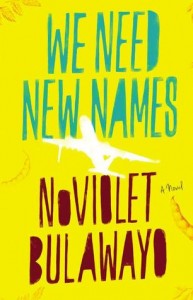
We Need New Names by NoViolet Bulawayo

Posted September 14, 2013 by Michael @ Knowledge Lost in Contemporary / 0 Comments

We Need New Names by NoViolet BulawayoTitle: We Need New Names (Goodreads)
Author: NoViolet Bulawayo
Narrator: Robin Miles
Published: Chatto & Windus, 2013
Pages: 290
Genres: Contemporary
My Copy: Audiobook

Buy: AmazonBook Depository (or visit your local Indie bookstore)

We Need New Names tells the story of Darling and her friends growing up in what they call Paradise in Zimbabwe. This novel explores the struggles faced growing up in this landlocked country, which isn’t all-bad; the kids find ways to manage and even have fun. When Darling got a little older she was sent to America where a whole new set of mischief and adventures began.

Zimbabwean author NoViolet Bulawayo (real name Elizabeth Tshele) does an interesting job of exploring life growing up in Zimbabwe and then learning to live in America. A culture clash, that is not unlike her own story. Darling and her friends seem to make their own fun, from playing made up games like Country Game and stealing guavas. But Zimbabwe is politically unstable and they have suffered because of the white people. There are some interesting insights about life in this country and I really enjoyed learning about Darling’s life.

Then the novel changes drastically and Darling starts her life in America. This might be an improvement in her life style but this doesn’t mean she was not missing her home. The culture clash was the most interesting part of this book, from stealing guavas to survive and making up games to fast food and spending her afternoons with new friends watching redtube. This was a completely different life and story and it was interesting to compare the two and follow Darling’s journey.

At times in the novel I got confused; especially when Darling refers to Shanghai and Budapest, I couldn’t work out how she got to these locations but then worked out these are different sections of Paradise and named after the ethnic groupings. I know, I’m a little slow and a little surprised I didn’t pick up on this right away but Darlings language took me a while to work out and fully understand what she was saying.

While this book is easy to read (once you get to know Darling’s narrative style), this can be hard hitting. The novel is confrontational and will give you some insight into an African life and the struggles facing children in places like Zimbabwe. Struggles you might never have thought of and moving them to a place like America might give them a better chance in life but then you have a whole new set of struggles to understand.

Longlisted for the Man Booker and I was recommend this book by another book blogger (Jennifer from The Relentless Reader), I am really glad I read We Need New Names. The novel took me on an interesting journey and I feel I learnt from it and that is what makes for a great book. I don’t think it will win the Man Booker, but I hope it make the shortlist as well. I wouldn’t call this novel a typical literary prize nomination but a novel that deserves some boost in sales from its nomination.


The Machine by James Smythe

Posted September 11, 2013 by Michael @ Knowledge Lost in Literary Fiction, Speculative Fiction / 6 Comments

The Machine by James SmytheTitle: The Machine (Goodreads)
Author: James Smythe
Published: Blue Door, 2013
Pages: 328
Genres: Literary Fiction, Speculative Fiction
My Copy: Hardcover

Buy: AmazonBook Depository (or visit your local Indie bookstore)

Beth lives in a remote village by the sea, a desolate place where she can rebuild her life following the return of her husband after the war. Vic is haunted by his memories and turns to a machine to take his nightmares away, but it takes everything away; now Beth is determined to rebuild him.

Dubbed as Frankenstein for the 21st century, The Machine is a wonderfully dark and complex novel that really deserves more attention. I normally get annoyed when novels are compared to Frankenstein; how can any novel truly compare? The Machine was a different story; I wasn’t expecting it to compare to Frankenstein, I was more interested with the dark and complex nature of this book. The novel reminds me more of the British TV show Black Mirror; there are two episodes in particular, the episode where all memories are recorded for instant playback (1×3) and the one where a woman loses her husband and turns to a service that continues his online life (2×1). The show is considered “a hybrid of The Twilight Zone and Tales of the Unexpected which taps into our contemporary unease about our modern world” and is designed to be thought provoking. In fact The Machine feels right at home with the style of that show.

Imagine if you can record all your memories and then wipe the ones that cause pain?  Would removing some memories change a person completely? What if that machine wipes every memory and leaves the person catatonic? What are the moral implications of playing with someone’s memories? How should the government regulate scientific advances like this? If you could, would you try to rebuild a loved one? There are just so many questions to answer and The Machine does a great job of creating more. Don’t expect answers, this book is all about giving you questions.

I love a novel that gets you questioning life and philosophy. James Smythe masterfully does what so many try to do, it’s so refreshing to read something like this but it makes me sad that this book isn’t getting more attention. I feel the need to read every James Smythe book I can get my hands on in the desire to experience this feeling again. Science Fiction is a genre that really can explore humanity and morality and Smythe reminds the readers that it’s possible. In the 60s and 70s it felt like all Sci-Fi novels had a message and we have exchanged that for entertainment. Not that there is anything wrong with entertaining the reader but you can do that while exploring philosophical ideas.

There is so much I want to say about this book and the majority of it is positive but I won’t, I think everyone should read this book and experience it for themselves. The plot is compelling and James Smythe writes like a master of his craft. The Machine has already secured a place in my “best books of 2013” list and I want to read more of his books, just to have this experience again. Go out now and get your copy of The Machine.


Oryx and Crake by Margaret Atwood

Posted September 9, 2013 by Michael @ Knowledge Lost in Dystopia, Speculative Fiction / 12 Comments

Oryx and Crake by Margaret AtwoodTitle: Oryx and Crake (Goodreads)
Author: Margaret Atwood
Series: Maddaddam #1
Published: Bloomsbury, 2003
Pages: 378
Genres: Dystopia, Speculative Fiction
My Copy: Audiobook

Buy: AmazonBook DepositoryKindle (or visit your local Indie bookstore)

Jimmy was a member of a scientific elite, living in isolation, suffering through bitter loneliness. Then an unnamed apocalypse came along, now he is known as Snowman and he may be one of the few survivors. This post-apocalyptic hermit resides near; what he refers to as Crakers—strange human-like creatures. In flashbacks the story develops, the Crakers, Wolvogs, Pigoons and Rakunks are assorted life forms that are the products of genetic engineering.

Oryx and Crake are the symbols of a fractured society, which Jimmy was once a part of. This is where trying to explain this novel can get complex. There are two different worlds within this book the post-apocalyptic world but then there are the flashbacks. The dystopian world was far more interesting for me. Much like Super Sad True Love Story. this is a dystopian world that I can see coming, corporation’s rule the world and pornography has become mainstream. It is normal to watch live executions and surgeries, nudie news (apparently watching the news when they are fully clothed is just weird), even child pornography.

I love novels that deal with the dangers of corporations having too much power; Super Sad True Love Story is a prime example of it (I should re-read that novel) and Oryx and Crake is another example of this (need more examples). Science and marketing techniques leave the public as powerless consumers and there is nothing to stop the unprecedented corporate greed.

Genetic engineering is a slippery slope; I seem to find myself attracted to novels that deal with science going too far. Oryx and Crake is a great example of this; Crake is a scientist working in the biotech project that created the Crakers. Genetic engineering progress continued to advance and eventually lead to a complex and sinister project called Paradice, but when that collapsed it caused this global devastation.

Oryx was a girl Jimmy and Crake found on a child pornography site that eventually was hired by Crake as a prostitute and to teach the Crakers. Oryx obviously had a difficult past, and Oryx and Crake attempts to deal with this issue as well. This is not an easy issue to deal with, the majority of the world would say they are against child pornography and yet it continues to happen and we see no signs of it ever being truly dealt with. Margaret Atwood doesn’t have a problem with trying to deal with difficult issues and this novel has plenty to say.

Moving away from the dystopian world and into the post-apocalyptic one, we have a whole new set of themes and issues. While this is a direct result of the corporate destruction, now we have to deal with survival. The Crakers are like little helpless children that Snowman tries to help; so now we have parental responsibilities as a major theme as well as our social responsibilities. He also has to protect them from the Wolvogs, Pigoons, Rakunks and whatever might disrupt their civilisation.

This is the second Margaret Atwood novel I’ve read and I’m starting to see a familiar theme coming through in her novels. I believe she wants the reader to have a look at civilisation and what we are doing that is beneficial or harmful. I’m sure the rest of the Maddaddam trilogy will deal with this; I’m not sure if all her books have a similar theme but I suspect they might.

I love a novel that tells a great story but is also loaded with different themes and symbolism. I feel so fulfilled reading a book like Oryx and Crake and spending time digesting the words and examining what Atwood wants to tell us. I was meaning to read this novel for so long and now I’m left with intense desire to read the next two in the series. Thanks you Bloomsbury Australia for pressuring me into reading this book, I have no regrets.


Death in the Afternoon by Ernest Hemingway

Posted August 30, 2013 by Michael @ Knowledge Lost in Non-Fiction / 0 Comments

Death in the Afternoon by Ernest HemingwayTitle: Death in the Afternoon (Goodreads)
Author: Ernest Hemingway
Published: Scribner, 1932
Pages: 416
Genres: Non-Fiction
My Copy: eBook

Buy: AmazonBook Depository (or visit your local Indie bookstore)

Death in the Afternoon is a non-fiction book by Ernest Hemingway that explores the ceremony and traditions of Spanish bullfighting. Looking at the history and the culture behind bullfighting, the book also explores the dangers and fears being faced. Still considered one of the best books ever written about bullfighting, Death in the Afternoon explores the sport by one of its aficionados.

This is an interesting book, not something I would read normally but I did enjoy it. While I am morally opposed to bullfighting I didn’t have any really knowledge of the sport and culture behind it. So I went into this book with an open mind and a little hesitant. I had never had a good experience with Hemingway in the past; granted I’ve only read one of his novels (The Old Man and the Sea) but it was enough to never go back. I know this is not a good reason not to return but I have to admit I did enjoy the writing styles.

Ernest Hemingway has a very descriptive writing style which makes for some interesting insights; but sometimes too much. I get the impression that he is using humour in some of his writing but it’s so obscure that it either goes over my head or is just downright weird. I know Hemingway was a rather unusual man and had an interesting life but he isn’t someone that I think I will ever understand or connect with in any way. While I’m against bullfighting, Hemingway seems to be an advocate towards it and often wants it to be more violent and deadly.

You have to understand that Ernest Hemingway is an arrogant, sexist, pompous ass and it often comes through in his writing, so you have to take everything he says with a huge grain of salt. I found myself disagreeing with him all too often but still interested in what he was saying. I went into this book knowing that Hemingway and I weren’t going to get along at times, which was lucky because I was ready to throw out any of his opinions that didn’t align with mine. I did find it interesting how he kept using bullfighting as a metaphor for art and Spain; I don’t know if I agree with this but he seemed was be determined to make this point.

While I’m still opposed to bullfighting, I now have a whole lot more information about the topic; possibly too much. Hemingway’s writing style was enough to make me willing to try something else of his (if I find something good) and this was an interesting and different reading experience. I don’t read enough non-fiction, let alone travel or sports writing so this was a book way out of left field. I’m determined to read more non-fiction now and I hope that I manage to get through at least one a month. Also interesting to see how this review turned out; I’m never know how to approach a non-fiction review and I think I did alright here.


Miami Blues by Charlies Williford

Posted August 27, 2013 by Michael @ Knowledge Lost in Pulp / 0 Comments

Miami Blues by Charlies WillifordTitle: Miami Blues (Goodreads)
Author: Charlies Williford
Series: Hoke Moseley #1
Published: Penguin, 1984
Pages: 284
Genres: Pulp
My Copy: Paperback

Buy: AmazonBook DepositoryKindle (or visit your local Indie bookstore)

After landing in Miami, Freddy Frenger Jr. (or Junior as he prefers to be called) steals three wallets and begins to plan his new life. While leaving the airport he snatches a suitcase and leaves a corpse of a Hare Krishna behind. Detective Hoke Moseley is on the case; chasing Junior and his new hooker girlfriend through luxury hotels and the suburban streets of Miami.

If this sounds really familiar then you’ve probably seen the 1990 movie of the same name starring Alec Baldwin and Jennifer Jason Leigh. While there are some major differences to the two, the majority of the book is exactly the same. I’m a little disappointed when I found out this was the first in the Hoke Moseley series, because I always thought of the detective as a supporting role. In the movie Junior steals Moseley’s badge and starts pretending to be a cop to con people; this was the best part of the movie. Sadly in the book there isn’t much of that going on.

Charlies Williford is an author of fiction, poetry, an autobiography, and literary criticism but he is best known for his hard-boiled writing. I think it is weird that he was a poet and literary critic as well as pulp writer, but then again I really shouldn’t be. It’s just an interesting fact about the author.  When you think 1980’s hard-boiled novels, Miami Blues is probably going to be one of the top nominations on that list. Charlies Williford was such a prolific writer, with over forty novels published, it is kind of sad that he is best known for the Hoke Moseley series that he wrote very late in his life. I wonder what some of his other books were like, there seems to be a whole lot of hard-boiled novels in the 1950’s and 1960’s that look interesting.

This book is an example of the noir sub-genre Florida glare which is basically a crime novel set in Florida where the heat and the culture play a role in the story as well. Noir is typically associated to LA and there have been some writers out there that wanted to depict Florida as the perfect location for crime stories as well. Some examples of this include the Travis McGee (by John D. MacDonald), Jack Ryan (by Elmore Leonard), and Dexter Morgan (by Jeff Lindsay) series and I’m sure many more. It is an interesting concept though do we really need another genre? I like how the heat of Florida plays a part in the book and the environment is almost like a supporting character.

This was a quick read and one of the rare cases where I think I prefer the movie over the book. I wonder if there are any more noir novels where a character pretends to be a cop in order to con people; I’m sure there are plenty out there, I like the concept and would like to read more of them. I think I’ll have to try another Charlies Williford, maybe something earlier. Does anyone want to recommend me a good Charlies Williford novel?