Source: Personal Copy

Moon over Soho by Ben Aaronovitch

Posted November 24, 2013 by Michael @ Knowledge Lost in Fantasy / 0 Comments

Moon over Soho by Ben AaronovitchTitle: Moon over Soho (Goodreads)
Author: Ben Aaronovitch
Series: Peter Grant #2
Narrator: Kobna Holdbrook-Smith
Published: Orion, 2011
Pages: 396
Genres: Fantasy
My Copy: Audiobook

Buy: AmazonBook DepositoryKindle (or visit your local Indie bookstore)

Constable Peter Grant is back and this time he suspects sorcery in Soho. Jazz musicians in the area are dying; brains scans show they have been magically drained. When the girlfriend of one of the victim’s ends up in bed with Peter, complications are ensured. DCI Nightingale is still recovering so it is up to Peter Grant to handle this one alone.

One of the things I loved about the first book in this series, Rivers of London, was the fact that Peter Grant was a new police officer and new to wizardry. Moon over Soho is a natural progression from that; except that Peter Grant has improved in leaps and bounds. There are still mistakes being made but he is starting to come into his own element, it is like watching him grow as a character.

I’m not sure why the humour has been scaled back in this series but the urban fantasy style seems to be well established and I’m excited to read book three. The series is starting to give Harry Dresden from The Dresden Files a run for his money. While not as dark, the London setting and humour in all its nuance makes for a fantastic read. Ben Aaronovitch’s series may in some parts feel very similar to other urban fantasy novels; I’m impressed with the way he stands apart from the others.

I want to say it is the real English flavour that makes this series enjoyable; I love that style of crime and comedy. This could be because more urban fantasy novels are set in an American or fantastical setting. The uniqueness of the style makes this feel fresh, and then you get all those tropes from urban English novels thrown in as well, like slang.

When it comes to plot, the novel is pretty standard in relation to urban fantasy. I think the characters, the setting and humour is what makes this novel and series interesting. I was in a reading slump when I worked my way through this book. I tried it as a way to break the slump; I was able to read and enjoy the novel but never got out of my slump.

Unfortunately I’m still in a slump, but reading this novel was fun and entertaining. I’m almost tempted in reading book three just to work my way out of the slump. I will talk more about slumps later but reading books like this might do the trick in breaking my reading problems. Peter Grant is a fun character and the series is really enjoyable, I can’t wait to read more.
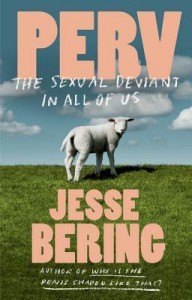

Perv: The Sexual Deviant in All of Us by Jesse Bering

Posted November 17, 2013 by Michael @ Knowledge Lost in Non-Fiction / 2 Comments

Perv: The Sexual Deviant in All of Us by Jesse BeringTitle: Perv: The Sexual Deviant in All of Us (Goodreads)
, 2013
Pages: 288
Buy: AmazonBook Depository (or visit your local Indie bookstore)

Jesse Bering, award-winning columnist and psychologist, wants to talk about perversions. We are deviants in one form or another; we may not be paedophiles, or into voyeurism and exhibitionism but there maybe something in our past we rather not discuss. In Perv, Jesse Bering looks at the psychology of having a fetish outside the norm and compares it to the difficulties he faced growing up in the 70s and 80s as a gay man.

This is an interesting book; it doesn’t condone sexual abuse or committing a sex crime. This rather looks at the psychology of paraphilia’s and makes the reader think about it in a different light. Just because someone has a fetish for something unusual doesn’t make them any less human. Bering looks at cultural thought, imprinting, conditioning and compares them to his own struggles as a homosexual.

While he looks at things like zoophiles, paedophiles and bestiality, he also looks at other perversions. Cross dressing, bondage, sadism and tries to get the reader to accept people as human. Just because they have this desire doesn’t mean they are committing crimes, these people are struggling and dealing with the guilt. As Bering states, sometimes they often feel like they have three options in life; depressive sleep, being institutionalised or suicide. Neither of these solutions seems effective at solving the problem.

I thought I had a decent understanding of the GSM (Gender and/or sexual minority or LGBT if you prefer) lifestyle but this just throws so many questions. I’m not comparing GSM with paedophilia, I’m just saying that the psychology of sex is so complicated and how can you treat people with paraphilia without a decent grasp on it. Especially a paraphilia that was so rare that no one bothered to find the Greek name for it.

There wasn’t much about paraphilia’s as I wanted; I was hoping to learn more about these ‘out of the norm’ sexual preferences. Not because I want to make fun of them, the whole thing is just fascinating. My favourite paraphilia discovered from this book is auto-plushophilia (look it up). I think this book looked at paraphilia’s in a new light, I hope this will help me understand them a little better and make it easier to accept them. I now think the Diagnostic and Statistical Manual of Mental Disorders approach to paraphilia’s are very dated and destructive. If psychologists don’t approach the treatment of these people struggling in a more accepting and human way then these people will never get the help they are seeking.


Guest Review: Laura Lamont’s Life in Pictures

Posted November 14, 2013 by jus_de_fruit in Guest Posts, Historical Fiction / 2 Comments

Guest Review: Laura Lamont’s Life in PicturesTitle: Laura Lamont's Life in Pictures (Goodreads)
Author: Emma Straub
Published: Pan Macmillan, 2012
Pages: 256
Genres: Historical Fiction
My Copy: Paperback

Buy: AmazonBook DepositoryKindle (or visit your local Indie bookstore)

I haven’t found much time to read in recent times. This book has been with me for a while, but I’ve now finished reading it. I never felt like this book was a compulsive page-turner, but it was something enjoyable and familiar that I could easily pick up and return to in the rare times of quiet that I can spend reading.

I don’t feel this book ever had any form of climax; as the title suggests, this book is about life. Laura Lamont, originally Elsa Emerson, grows up in Wisconsin, but eventually finds her way to Hollywood and becomes an actress, wins an Oscar, falls in love, has some children. It could be the story of any woman, although most of us probably lack an Oscar. Beyond the backdrop of Hollywood, this story is pretty ordinary. I found it easily to relate to Laura at different stages in her life.

I think this story is really about the roles we play in our lives. Daughter, Sister, Friend, Lover, Wife, Mother, Grandmother.  Life constantly changes us. I think that the acting aspects may have just highlighted these changes more. Laura becomes quite famous, and struggles when she starts to disappear from the public eye. We are constantly changing, becoming different versions of ourselves, to fit the life that happens around us. Sometimes we yearn for the past, other times we look to the future, and there are even moments of contentment where we are happy just where we are in this moment.

I imagine this book would make a great holiday read, or like me, something that is easy to return to when other things are overtaking your life.

This is a guest post by Mary; not only is she my wonderful wife, she is also my editor and helps moderate the Literary Exploration group on Goodreads. Big thanks to her for this post and everything she does to help me with this blog.


You Are Not So Smart by David McRaney

Posted November 13, 2013 by Michael @ Knowledge Lost in Non-Fiction / 2 Comments

You Are Not So Smart by David McRaneyTitle: You Are Not So Smart (Goodreads)
Author: David McRaney
Narrator: Don Hagen
Published: Gotham, 2011
Pages: 301
Genres: Non-Fiction
My Copy: Audiobook

Buy: AmazonBook DepositoryKindle (or visit your local Indie bookstore)

We all believe we are rational and logical beings but just how accurate is that? You Are Not So Smart explores a range of different psychological and sociological ideas to show how much we don’t know. From cognitive biases, confirmation biases to the spotlight effect this book explores many ideas in a light hearted and accessible way.

I don’t know much about psychology but this book really gave me an interesting insight into cognitive biases. This is what I would call pop psychology; little pieces of information to think about without going into great detail. I never read the You Are Not So Smart blog but this book seemed interesting and I was curious about how the mind works.

Now that I’ve read this book, I have started listening to the You Are Not So Smart podcast, but haven’t read much of the blog. From what I can see, every chapter is a blog post, same format, same style and word for word. Makes it easy to write a book and if you are passionate about a topic it seems to work well.

The book started off really bland for me, I thought I would struggle to get through the book but then I became accustomed to the style. Then I was fascinated and couldn’t stop talking and thinking about what I learnt. As many people know, I have this blog to blog about my autodidactic adventures. It  is weird; I thought going to university would give me more to blog about but it didn’t. This book has given me some good posts, and an interest in psychology.

I’m beginning to see the appeal to non-fiction, if it is fascinating, gets me thinking and gives me more blog posts from Knowledge Lost, then I’m happy. I’m going to try to read more non-fiction and I’m hoping to learn more about psychology. Yet another category to add to the blog that has been neglected for far too long.

This is easy to read and, as I said, took me a little while to get use to but I’m a fan. I’ll even read his next book; even if it is the same. I’ve been listening to the podcast and it has given me a few other books to read. Including the book I’ll be reviewing next, Perv: The Sexual Deviant in All of Us (review in a few days). Pop psychology, told in an easy and sometimes humorous way, but then again isn’t that what pop psychology is meant to be?


High Fidelity by Nick Hornby

Posted November 11, 2013 by Michael @ Knowledge Lost in Contemporary / 4 Comments

High Fidelity by Nick HornbyTitle: High Fidelity (Goodreads)
Author: Nick Hornby
Published: Penguin, 1995
Pages: 245
Genres: Contemporary
My Copy: Paperback

Buy: AmazonBook DepositoryKindle (or visit your local Indie bookstore)

Rob Fleming is a thirty something London record store owner who has just lost his girlfriend Laura. Rob recalls his five most memorable break ups and then proceeds to get in touch with these girls in order to find out why they all ended up leaving him. Over at Championship Vinyl, Rob and his employees Dick and Barry spend their time demonstrating their vast music knowledge and constructing top five lists for every situation imaginable.

I really loved the movie High Fidelity, one of my favourites for a long time. So I’ve always meant to read the book and I finally got myself a copy. I devoured the book, faster than I expected. The book and the movie are very similar with not many noticeable differences, I was really happy about that. Problem with seeing the movie first is the fact that I keep picturing John Cusack, Iben Hjejle and every character. The only character I couldn’t remember was Ian and I imagined Peter Serafinowicz instead of Tim Robbins.

The only Nick Hornby movie I’ve read prior to High Fidelity was Juliet, Naked and I really didn’t get on to well with it. I was worried that I might have similar problems with this novel. Likely everything think I loved about the movie, comes from the book. The quirky nature, the themes and all those top five lists. Makes me want to watch the movie all over again. Weird but I prefer the movie, John Cusack is a great actor and I think it works better with the aid of audio and visual stimulation.

The thing I loved High Fidelity is the whole self-discovery plot. Rob Fleming begins the novel telling us about his top five breakups and how Laura didn’t hurt him as much as the others. This leads him to contact these five women and find out why everyone leaves him. What he discovered was the opposite and he learns more about himself than expected. The novel ends with not happiness but a deeper understanding of himself and what he must do to achieve a better life.

His love is so centred around his passion for music; he has to learn how to balance his life better. For music lovers, especially those who have an understanding in 80’s and 90’s music should appreciate this novel. For a romantic comedy, Hornby has this unique way of taking the genre that’s demographic is women and writing it with the male reader in mind.

If you liked the movie, then I’m not sure you really need to read the book. If you loved it, like I did then why not experience it in its original format (it’s like the Vinyl vs. CD debate). While it is very similar to the movie it was an enjoyable experience, one I would repeat sometime. It is a short novel so there is no real reason not to read it, except the movie is less time consuming.


Paddle Your Own Canoe by Nick Offerman

Posted November 7, 2013 by Michael @ Knowledge Lost in Humour, Non-Fiction / 3 Comments

Paddle Your Own Canoe by Nick OffermanTitle: Paddle Your Own Canoe (Goodreads)
Author: Nick Offerman
Narrator: Nick Offerman
Published: Penguin, 2013
Pages: 320
Genres: Humour, Non-Fiction
My Copy: Audiobook

Buy: AmazonBook DepositoryKindle (or visit your local Indie bookstore)

Nick Offerman is best known for playing Ron Swanson on Parks and Recreation. This is his first memoir where he muses about life, manliness, wood work and how to best grill meat. Find out about Offerman’s childhood in small town Minooka, Illinois, his love of the theatre, his love of wood work, his wife Megan Mullally and the deadpan comedic style that made him a star.

If you are a Parks and Recreation fan, and in particular a Ron Swanson fan, then this is the book for you. Just to be clear my favourite character is April. Most of Ron Swanson’s quirks and history are taken right out of Nick Offerman’s life so it is almost like learning about the history of the Pawnee Parks Department director.

I got the audiobook of this and I highly recommend you do the same as Offerman narrates this himself. So it feels like Ron Swanson is narrating the book and then you get that Swansonesque chuckle when he tells a joke or a funny story. Listening to Ron Swanson was the best part of the book and I was actually interested in Offerman’s life.

Paddle Your Own Canoe goes further than just talking about Offerman’s life; he also talks about his personal philosophies and what he considers to be the real makings of a man. There is a lot of talk about equality, treating everyone equal, no matter religion, sexuality and so on. It was really interesting to listen to him talk about respect and not being an asshole. I was really impressed with his views on life. not all of them, but he seemed like a really down to earth and stable guy.

When he talks about Megan Mullally is one of my favourite parts. The love he has for his wife and the respect he shows her is beautiful. He talks about their courtship and their marriage and it is all so wonderful I don’t think I could bare it if they ever separated. He is a little sleazy and even tells the reader to Google Megan Mullally’s breasts, but over all you can see how much he adores her.

I didn’t think I would enjoy reading a memoir of an actor, especially a comedian but I thought this was wonderful. I wonder if reading a memoir of a really amazing actor would be as good. This is light hearted, fascinating and surprising. I never thought Nick Offerman would have such a love for the theatre but now I want to see his deadpan style on the stage. Fans of the show or Offerman will love this; I’m not sure about everyone else.


Solo by William Boyd

Posted November 6, 2013 by Michael @ Knowledge Lost in Thriller / 2 Comments

Solo by William BoydTitle: Solo (Goodreads)
Author: William Boyd
Series: James Bond
Published: Jonathan Cape, 2013
Pages: 322
Genres: Thriller
My Copy: Paperback

Buy: AmazonBook DepositoryKindle (or visit your local Indie bookstore)

The year is 1969 and special agent James Bond has just celebrated his forty-fifth birthday when he is directed by M to undertake an unusual assignment. The western African nation of Zanzarim is in the middle of a civil war and his mission is to eliminate the rebel threat. When Bond gets to West Africa he soon finds out this isn’t as straightforward as it appeared. Soon he finds himself going solo to seek revenge.

I love the James Bond movies but haven’t had much experience with the 007 books; I have only read Carte Blanche and Casino Royale. So if I’m comparing this book to those two, then Solo is amazing. But if I compare it to everything I know about Bond then there is something missing. William Boyd has modelled his Bond after You Only Live Twice so I can’t help but picture Sean Connery.

Solo’s 007 seems to be a heavy smoker but his drinking and womanising is lacking. I know that might seem weird but Bond and misogyny go hand in hand. It is like having a Bond without any wacky gadgets…oh wait, that is a bit of problem here too. One of the things that got me out Boyd’s Bond was that whenever he beds a woman he is making love to her. This just bothered me, I can’t imagine Bond being in love with all those women so the term ‘making love’ doesn’t seem right, also couldn’t we mix it up a little and use a few different teams; ‘slept with’, ‘took to bed’ and so on?

Apart from my issues with this novel, Boyd has a decent knowledge of James Bond and it was nice to see references in the book to a younger 007. For example when he tried to get a Walther PPK in a gun store, they didn’t have any so he went with a Beretta and made references to this being his weapon of choice when he was younger. Little things like that really pulled the book together.

Aside from his knowledge on Bond, William Boyd also has a decent knowledge of that classic spy thriller formula. Nothing too complicated but the light reading of a Bond or Thriller novel. Blending the nuances of the Bond and spy thriller genre, Boyd really seemed to make this his own. While die-hard fans may be annoyed and some people will be bothered with the changes, this was a lot of fun to read.


The Bell Jar by Sylvia Plath

Posted October 30, 2013 by Michael @ Knowledge Lost in Book of the Month, Classic / 7 Comments

The Bell Jar by Sylvia PlathTitle: The Bell Jar (Goodreads)
Author: Sylvia Plath
Published: Harper Collins, 1963
Pages: 213
Genres: Classic
My Copy: Audiobook

Buy: AmazonKindle (or visit your local Indie bookstore)

Esther Greenwood is a young woman from Boston who gains an internship at a prominent women’s magazine in New York City. We follow her personal life and her decline into depression, attempting suicide to being committed into an asylum. We see the bad treatment as well as the good, all the way up to her attempt to re-enter the world.

This is the seminal semi-autobiographical novel of Sylvia Plath and I’m so glad that I’ve finally read The Bell Jar. I want to say she is the female version of Charles Bukowski (even though I’ve only read Factotum); there are differences but I feel like the voice and style feel very similar. Originally published under the pseudonym Victoria Lucas to protect identities of characters she took liberties with, but more  the fact it parallels Plath’s own experiences.

A bell jar is an inverted glass jar that is normally air tight used to display objects for observation, normally for scientific curiosity. For Esther the bell jar is a symbol of madness, when gripped with depression she feels like she is stuck in a jar with no real perspective to the outside world. It prevents her from  making any real connections with people and sometimes she feels like she is on display (especially when she was hospitalised and received all those visitors).

What was interesting for me is that to me it never really felt like Esther Greenwood suffered from depression to begin with. I’m not saying she wasn’t really suffering but for me I think the idea was forced on her by everyone else, just because her thoughts were a little macabre and she was a little different. Almost like she was forced into her descent, because she was a little different to the norm.

Esther has an obsession with death; we get that from the very start with her fascination of newspaper headlines about executions, suicide and death. There is also the blood motif  throughout the book; blood normally represents life but the constant bleeding would point towards death. When she starts to think about killing herself she talks about it at great lengths and even practices slashing her own wrists.

I think this is a novel about the regression into madness, the life experiences that normally have a positive on a person’s live, but for Esther these were partly responsible of her descent. Romance, success in education, finding work and marriage proposals tend to upset or disorient her and in the end instead of finding reasons to live she finds how different she is to others and this cements her choice to die.

Then the book looks into the world of treating mental illness, the good and the bad. This is where the book moves into the territory similar to One Flew over the Cuckoo’s Nest, in particular a look at 1950 psychiatric treatments. In this part there seems to be three treatment types used within the book; talking, injections of insulin and then the dreaded electroshock therapy. The treatment is meant to clear the mind entirely and after her first electroshock treatment Esther was unable to think about knives. The treatment was doing more damage than good, especially to her intellect.

I went into this book thinking there might have been some psychological elements but  that this was mainly a novel about feminism. It is to some extent but what I got was so much more; I was really impressed with this novel and really enjoyed the journey it took me. I feel like kicking myself for not reading this sooner. A novel about a protagonist slipping into depression is normally right up my alley but I’m a little perplexed about the ending. Overall this is a masterpiece and well worth reading.


The Year of the Flood by Margret Atwood

Posted October 24, 2013 by Michael @ Knowledge Lost in Dystopia, Speculative Fiction / 0 Comments

The Year of the Flood by Margret AtwoodTitle: The Year of The Flood (Goodreads)
Author: Margaret Atwood
Series: Maddaddam #2
Narrator: Lorelei King
Published: Bloomsbury, 2009
Pages: 434
Genres: Dystopia, Speculative Fiction
My Copy: Audiobook

Buy: AmazonBook DepositoryKindle (or visit your local Indie bookstore)

The Year of the Flood follows the lives of two characters, Toby and Ren. Toby is a young woman who lost her family and the corporations are to blame. She is forced work in a burger chain you would never want to eat at, that was until she met the Gardeners. Ren grows up working in a sex club called Scales and Tails. She previously dated Jimmy (Snowman) and found herself locked in bio-containment when the pandemic happened.

This is the second book in the Maddaddam trilogy and happens simultaneously to Oryx and Crake (for the most part). While book one jumped between the dystopian corporations-controlled world and after the pandemic, The Year of the Flood is more linear and set mainly in the pre-apocalyptic world. While it isn’t really necessary to read Oryx and Crake first, I think the majority of the world building was done in the first book leaving this one more open to focus on the characters and plot.

I will admit I loved the way Oryx and Crake portrayed the corporations dystopian world I love so much but I think The Year of the Flood was overall a better novel. I liked the characters more and the portrayal of a religious cult was fascinating. Margret Atwood seems to draw a lot on personal religious experiences and then build on that to create this cult. I’ve been in plenty of churches, have met many religious fanatics and it really feels like Atwood has too.

She even took the religious element one step further by adding 14 hymns; even during her book promotions and on the audio book they have performances of these hymns. I think Atwood managed to balance religious fanaticism and hostile corporation practises just right in the novel. Both never felt overpowering and allowed for character and plot development to take the foreground.

The more I read of Atwood the more I am in awe of her brilliance. I remember reading The Handmaids Tale and never really thought too much of it but now I that I know her style and the messages she wants to get across, I feel like I should try that book again. There are some other Atwood books I want to try as well so they might have to come first.

I’m entrenched in the Maddaddam world and looking forward to reading the final novel in the trilogy. Luckily I have the book on my shelf waiting and I probably read it soon. I don’t normally read a series (or the same author) so close together but I was sucked in and needed more from this world. Fans of both post apocalyptic and dystopian novels should check out the Maddaddam trilogy, there are some interesting themes through the first two books and I’m sure it will continue in book three.


Snapper by Brian Kimberling

Posted October 23, 2013 by Michael @ Knowledge Lost in Contemporary / 0 Comments

Snapper by Brian KimberlingTitle: Snapper (Goodreads)
Author: Brian Kimberling
Published: Tinder Press, 2013
Pages: 240
Genres: Contemporary
My Copy: Hardcover

Buy: AmazonBook Depository (or visit your local Indie bookstore)

Nathan Lochmueller is a birdwatcher; it is not every day you can build a career around doing something you love. Snapper charts the love affair that Nathan has with bird watching and the seamlessly unobtainable Lola. This is a coming of age, and quite possibly a semi-autobiographical, novel set in rural Indiana, ‘the bastard son of the Midwest’.

This is a bookclub book so it will be a little tricky reviewing this without some of the others’ insights being mixed in with mine. Normally I write a review before attending book club but I seemed to have run out of time. This is a coming of age story that explores life in Indiana as well as the life of a biologist.

Apparently the biology is right and this was important to one of the book club members, who is in fact a biologist as well. For me this felt more like a combination of little stories; just as I start getting into one story the chapter ends and we are on another story. Non-linear groups and the only thing that seems to hold the threads together is the relationship between Nathan and Lola.

I hate to use someone else’s thoughts but one group member hit the nail on the head when she called Lola a manic pixie dream girl. Nathan seems bitter and cynical about everything except when it comes to Lola. He seems blinded about this unobtainable girl, she was never leading him on but he still lived in hope.

I really enjoyed this novel, almost experimental in the style but I felt like the chapters were so disconnected it really took me out of the novel. My major problems with this novel were the editing. I don’t know how this got published with such inconsistencies in the formatting; some chapters have quotation marks, others don’t (I really don’t know why books choose not to have them) and this really annoyed me. If you want to print a book, at least have a standardised format for the entire book. It feels like some chapters were formatted by a different editor to the others and no one compared notes. Even the major mistake where the city Canberra is found in the country Canberra instead of Australia.

Apart from all of this, I enjoyed reading Snapper in all its nuances and will probably read more from this debut author. I’m sure if Brian Kimberling writes another novel it will be autobiographical and to do with biology which are not really my thing but this pretentious, semi-experimental novel is definitely my thing.