Source: Personal Copy

Questions of Travel by Michelle de Kretser

Posted August 22, 2013 by Michael @ Knowledge Lost in Literary Fiction / 0 Comments

Questions of Travel by Michelle de KretserTitle: Questions of Travel (Goodreads)
Author: Michelle de Kretser
Published: Allen & Unwin, 2012
Pages: 528
Genres: Literary Fiction
My Copy: Personal Copy

Buy: AmazonBook Depository (or visit your local Indie bookstore)

Laura Fraser is an artistic Australian, who lost her mother at a very early age and her father was cold and distinct towards her, as was her brother. On the other side of the world Ravi Mendes’ life was almost the complete opposite to Laura, but still struggles in life at times; currently he is determined to break into the computer science industry. Alternating from one character to the other, Michelle de Kretser’s Questions of Travel explores why we are all influenced by travel.

Questions of Travel won the Miles Franklin award this year but if it wasn’t for my book club I would never have read it and I think that might have been a mistake. This novel is almost a post-modernist novel in the experimental way the author approached it. I read this book as if the two characters are sitting me down and going through their photo album and telling the story related to each picture. Slowly we get the full story but there are a lot of pieces we have to fill in for ourselves. The reason I thought this was just the way it was written and you have these really short chapters but every now and then you get a long one. Also the dates on each chapter become more specific as we got closer to the present day, almost like the character remembers the year rather than the decade now.

While reading this novel I got the impression that Michelle de Kretser was trying to explore the whole philosophy behind travel; why we do it? What we love about it? That feeling you get being in a strange country. This was a really interesting approach she took and really worked well with the experimental writing style. The author used to write for the Lonely Planet and throughout this novel you can see her small digs at these books and the bureaucracy behind them. Little things like this really helped lighten the mood for the novel.

Questions of Travel has some beautiful language throughout the book and you find yourself really taking the time to enjoy the book (even though I didn’t have much of that before my next book club meeting). This novel demanded more time than I gave it and I might have missed so much but due to time restrictions I had to power through it. There were times I found some great quotes and I wanted to write them down but I was in too much of a hurry (also I never seem to do that but am trying to make more of an effort).

The novel is both thought provoking and emotional; you’ll experience the highs and lows of the two main characters and even if you have found a favourite, both characters offer interesting insights to life and travel. Also on a positive note, this novel also offers one of the best opening chapters I’ve read in recent times, it comes out of nowhere and smacks you in the face. I spent days trying to decide if I liked this book and what I liked about it and that right there is why I enjoyed it; like Slaughterhouse-Five the time spent afterwards thinking about it is what I will remember more than the book itself. I’m not sure if I would recommend this novel to many people, you’d have to be willing to read experimental or post-modernist novels to really enjoy what Michelle de Kretser is doing.


The Amazing Adventures of Kavalier & Clay by Michael Chabon

Posted August 21, 2013 by Michael @ Knowledge Lost in Historical Fiction, Literary Fiction / 0 Comments

The Amazing Adventures of Kavalier & Clay by Michael ChabonTitle: The Amazing Adventures of Kavalier & Clay (Goodreads)
Author: Michael Chabon
Narrator: David Colacci
Published: Fourth Estate, 2000
Pages: 659
Genres: Historical Fiction, Literary Fiction
My Copy: Personal Copy

Buy: AmazonBook Depository (or visit your local Indie bookstore)

The Amazing Adventures of Kavalier & Clay follows the story of two Jewish cousins. Joe Kavalier is an artist that escapes occupied Czech to America where he meets writer Sam Clay. During the golden age of comics Kavalier and Clay become major players in the industry creating many comic book heroes including The Escapist. The superhero is a Nazi-busting saviour who liberates the oppressed around the world.

I’ve read Michael Chabon before and the thing I really enjoyed about his novels is that they are full of intertextual goodness. With The Yiddish Policemen’s Union, it blends his literary style with elements of alternative history and noir. The Amazing Adventures of Kavalier & Clay blends with elements of the comic book genre. This is what impresses me the most with Chabon’s style and makes me keen to read The Telegraph Avenue (which I hope blends elements of music into his style). I wonder if all his books are full of intertextuality and will love to find some other novelists that do this; it really works for me but maybe it’s just my love for literary fiction and the genres he blends with it.

There is so much more going on with the novel. The Escapist is used to play out all Kavalier’s fantasies of being a magician/escape artist but he uses the comic books to spread his propaganda towards the Nazis. Most of this novel is set before World War II in America before the world really knew the extent of what the Third Reich were up to. Michael Chabon is a Jewish novelist and his heritage seems important to him and this comes through in his novel.

This novel deals with so many different literary themes; escape from oppression, coming of age, family and relationships. Just writing that sentence makes me think that Chabon might have over done it but really this book comes together beautifully. I don’t often use the terms like magnum opus and tour de force but having read the novel and people’s impressions of this book, it really seems to fit.

Kavalier and Clay become legends in the comic book world and as the world and industry changes, they are repeatedly asked to change and conform but they never compromise. They had a clear message they wanted to say and they refused to change that message. I’m impressed with everything about this book from the blending of comic books and its culture, Jewish mysticism and world history to the character development, proses and my overall opinion of the novel.

If you’ve never read a Michael Chabon novel then I recommend it; I’m not saying start with this novel but look for one with a theme that interests you. Out of the two I’ve read, I’ve been impressed with them both but I have to say The Amazing Adventures of Kavalier & Clay is masterfully crafted and deserves all the praise it received. I have Telegraph Avenue on the shelf and I’m interested in trying Wonder Boys soon as well. The Escapist was made into a comic by Dark Horse Comics but I think it was part of a promotion for this book. Also the film rights for the book have been sold but with the luck it’s been having I’m doubtful it will ever be made.


Fadeout by Joseph Hansen

Posted August 18, 2013 by Michael @ Knowledge Lost in Pulp / 9 Comments

Fadeout by Joseph HansenTitle: Fadeout (Goodreads)
Author: Joseph Hansen
Series: Dave Brandstetter #1
Published: University of Wisconsin Press, 1970
Pages: 187
Genres: Pulp
My Copy: Personal Copy

Buy: AmazonBook DepositoryKindle (or visit your local Indie bookstore)

Dave Brandstetter is an insurance investigator who is hired to investigate a death claim of a local celebrity, whose car plunged off a bridge in a storm. In the absence of a body the insurance company needs to send their own investigator before handing over $150,000 (works out to be about $900,000 by today’s standards). As the investigation continues Brandstetter is convinced that Fox Olson is still alive and he must find him before the would-be killer does.

Dave Brandstetter embodies the tough, no-nonsense persona of most classic Hard-boiled detectives with one major difference; he’s openly gay. As most people know, I have a love for the hard-boiled detective and I’m always looking for new and interesting takes on this genre. I’ve found that in Joseph Hansen’s Fadeout. There are a few reasons why I plan to continue the series and I thought rather than talk about the book, it would be nice to mention what will make me continue with the other eleven novels.

First of all, I’ve never read a pulp novel like this before; a homosexual protagonist would have been controversial in 1970. This would have been near the beginning of the gay pride movement and Hansen must have gone through a lot of hardship with writing this character and being a homosexual as well. With all the stigma and prejudices towards homosexuality back then (and let’s face it, it’s still around today) it was refreshing to see a protagonist who is proud and comfortable with his sexuality (I get sick of seeing homosexuals in literature being portrayed as unstable or disturbed) .

From the very first page of Fadeout, we find out that Dave Brandstetter has just lost a long term partner to cancer, so now we have this fresh new angle as well. Joseph Hansen has been quoted in saying the following about this topic;

“There was room in the form to say important things about men and women and how they cope with life.”

So we have this protagonist that is both tough as nails and maybe cynical of life after this tragic loss but we also get to watch him deal with his grief. Throughout Fadeout you witness Dave Brandstetter struggle with loneliness, sexual desire and even alienation and you really get an idea of just how hard it must be for him. It’s something I don’t think I’ve seen in a hard-boiled novel before and it seems to work really well, I feel for Brandstetter and have a better understanding of just what makes this man tick and that connection makes me want to continue the series.

Lastly, something I didn’t see too much of in Fadeout but I feel like this would be an element that Joseph Hansen would work into the series; I can see it coming. Dave Brandstetter is an insurance investigator, in most hard-boiled novels you have the detective hired by someone close to the victim to solve the puzzle. In this series you have the investigator working against the people; working for the insurance company. Mix that with people’s prejudices and you have a protagonist that will have to struggle to solve any mystery because people will close up and refuse to talk to the man. I like the whole idea; sort of like an anti-hero, he wants to solve the crime or mystery but he has the best interest of the insurance company in mind and not the people. If Hansen uses this throughout the rest of the series, it could really open it up to some interesting and new situations.

Judging by the difficulty of getting a hold of this book, I’m inclined to think this series is cult classic but then you look at the blurbs on the book and think this is a series I should have known about and really is a classic in its own right. I’m sure it will be difficult to get a hold of the other eleven books but I think it will be worth the effort. I want to see if my predictions are correct and also see what Joseph Hansen does with the series. Highly recommend Fadeout; it has the makings of a classic hard-boiled novel but then you have added elements to make it stand out.


Lexicon by Max Barry

Posted August 12, 2013 by Michael @ Knowledge Lost in Thriller / 0 Comments

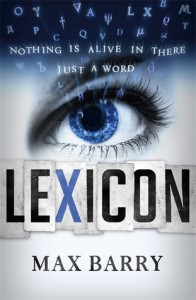
Lexicon by Max BarryTitle: Lexicon (Goodreads)
Author: Max Barry
Narrator: Heather Corrigan, Zach Appelman
Published: Hachette, 2013
Pages: 384
My Copy: Personal Copy

Buy: AmazonBook DepositoryKindle (or visit your local Indie bookstore)

They are an ancient secret society known only as the Poets; words are their weapons and the art of manipulation is their game. When one young woman breaks the rules for love, things start to unravel. Street-wise runaway Emily Ruff finds herself as a new recruit, training in a facility disguised as an exclusive school outside of Arlington, Virginia. She learns to use language to manipulate minds. While an innocent man is ambushed in an airport bathroom; they claim he is the key to winning a secret war that rages on. Lexicon is a fast paced thriller that explores the power of language and coercion.

I’ve been meaning to read a Max Barry novel for a while now; they all seem to be corporate or in the case of Jennifer Government marketing satires but never got around to trying them. Then Lexicon was released and it seems to tick a few of my boxes to make me sit up and take notice of it. While this has been getting a bit of buzz in America (well done fellow Australian, Max Barry) I just knew I had to read this one. I wasn’t trying to jump on the bandwagon it just seemed like my type of book and I had an opportunity to read it, so I took it.

While this is obviously a fast paced thriller (as I think most of Barry’s books) I can see where the idea a satire comes into play with his works. In Lexicon we look at modern ideas on privacy, identity and information and using an old idea that language is power we can see how Max Barry is toying with the idea that all those things we hold sacred can be manipulated and lost.  This is where the corporate satire comes into play; even in Lexicon, privacy, identity and data-collection are all important and need to be protected and Barry plays with the readers fears to suck them into his thrilling world.

Not only is this a thrilling and addictive read, I really enjoy the way the two different stories are weaved together. You get the story of Emily as she discovers this secret society and learns to coerce through the power of language and then you get the other plot thread and discover what happened in Broken Hill. I love the way this was done and it’s nothing new but it worked really well for a book like this one.

The problem with reviewing a book like Lexicon is there are so many things I want to say about the book but I think anything I do say will possibly be a spoiler. Max Barry really knows how to mix satire into a thriller and produce an altogether addictive read. I hate to do this normally but in an effort to give people an idea what this novel is like; Rebecca Schinsky (from Bookriot) says this about the Lexicon;

“Imagine X-Men plus The Magicians with a side of Nick Harkaway”

Which is a good way to describe the book; the X-Men idea really works as a way to describe the training facility disguised as an exclusive school that Emily is training at. I’ve not read The Magicians but it’s been on my TBR for a while but I tend to avoid fantasy that but I love the Nick Harkaway shout out. Angelmaker was my favourite book of 2012, it is also an addictive thriller with some literary merit and I think this is definitely the case with Lexicon. I know this seems like a glowing review, I did really enjoy it and highly recommend it but it does have flaws but honestly I didn’t care, I was immersed and wanted to know what happens next.


Grifter’s Game by Lawrence Block

Posted August 7, 2013 by Michael @ Knowledge Lost in Pulp / 0 Comments

Grifter’s Game by Lawrence BlockTitle: Grifter’s Game (Goodreads)
Author: Lawrence Block
Series: Hard Case Crime #1
Published: Hard Case Crime, 1961
Pages: 205
Genres: Pulp
My Copy: Personal Copy

Buy: AmazonBook DepositoryKindle (or visit your local Indie bookstore)

Leonard K. Blake is a conman hiding out in Atlantic City, but of course that’s not his real name, nor is it David Gavilan or Joe Marlin. He has a knack for telling a story and knows exactly what people want to hear in order to take advantage of them. Then he meets Mona, a blonde bombshell, bored wife to a millionaire. He can make a lot of money from this woman but when he steals a suitcase full of heroin from a train station that belongs to her husband things change. A brick of pure heroin will either make him rich or dead and so could Mona.

Originally released in 1961 under the name Mona and later released as Sweet Slow Death, Lawrence Block’s novel Grifter’s Game (the title he originally wanted to use) is the first book in the now popular Hard Case Crime series. This is a gritty noir at its best, something Block is known for and something readers come to expect from this imprint. A fast paced narrative that will keep the reader on its toes right to the end.

I’m not going to lie to you, while reading this book I have to think back on my past and all the dumb things I’ve done and I thought to myself, I might have been a pretty good grifter if I was born back then. Honestly I knew how to lie and manipulate, not something I’m proud of and not something I ever want to do again. So this book hit a little close to home with me and reminded me of the past I would rather leave behind; something that makes this a difficult book for me to read.

The more I read Lawrence Block, the more I like his style which is good because he has published a lot of books, most in different series so it’s always nice to read a standalone. From the snappy dialogue to the plotting, Block has really crafted his style that could rival some of the greats from the golden age of pulp. He really knows how to write both noir and hard-boiled novels that remain gritty and fresh, after so many books I’m not sure how he manages to do this.

Grifter’s Game is probably not the best novel to start with if you’ve never read Lawrence Block, but is definitely one worth trying. He really captured how I would picture an immoral, unsympathetic lowlife and somehow manages to still get the read to care about what happens. This was the perfect book to launch the Hard Case Crime imprint with.  It has everything you want in a pulp; plot, fast pacing, complex characters, gritty prose, great dialogue and the shocking end.


Cat’s Cradle by Kurt Vonnegut

Posted July 30, 2013 by Michael @ Knowledge Lost in Book of the Month, Science Fiction / 0 Comments

Cat’s Cradle by Kurt VonnegutTitle: Cat's Cradle (Goodreads)
Author: Kurt Vonnegut
Published: Dial Press, 1963
Pages: 287
Genres: Science Fiction
My Copy: Personal Copy

Buy: AmazonBook DepositoryKindle (or visit your local Indie bookstore)

John (Jonah) is an everyman, he tells us about the times he planned to write a book about America and the importance of what they did the day Hiroshima was bombed. He finds himself involved with the children of Felix Hoenikker (a fictional Nobel laureate physicist and known in the book as the father of the atomic bomb). The Hoenikkers lead him to discover a crystal known as Ice-Nine, which they have kept secret and is an alternative structure of water.

Like most of Kurt Vonnegut’s books that I’ve read (with the exception of Breakfast of Champions) Cat’s Cradle is this bizarre journey that isn’t necessarily enjoyable to read but when you finish the book and reflect you start to see the brilliance. I remember with Slaughterhouse-Five when I ended the book I gave it a 2 star rating; it was just plain weird but the book never left my thoughts. I digested what I had read and began to understand and slowly that rating grew and now I think it is a work of genius.

As Cat’s Cradle begins to twist and turn in true Vonnegut style you eventually end up in the bizarre and fictitious island of San Lorenzon. The book continues with more twists until it becomes apparent that Ice-Nine can be a very destructive material. The novel is laced in  laced with irony and parody, this is part of Vonnegut’s satirical humour and you have to except that he knows what he is doing and let him take you on this journey.

What I think Kurt Vonnegut and the narrator of Cat’s Cradle is trying to tell us as readers is the discovery of Ice-Nine can truly benefit mankind but then you find a military application for it and everything changes. This is a warning, with the amazing advances in technology without any growth in an ethical awareness human annihilation is a real possibility. Vonnegut was living in the Nuclear age when this book was written, the threats felt real and it was what had most people worried. The confrontation between technology and morality is ever present within this modern classic.

But there is a parallel (but similar) message running through Cat’s Cradle as well. John is often known as Jonah in the novel and you have to think biblical for this one. Jonah is a biblical prophet that goes to Nineveh (after much drama) and tells them of their destruction. The people repent and God takes pity on them and the city is spared. A symbolic message; a cautionary warning to the readers of Jonah’s (aka John) prophetic findings that could lead to the end of the world.

In true Vonnegut form, this book will take you on an interesting ride with no possible way of predicting the outcome. The book satirises science, technology, the arms race and even organised religion in this classic post-modern sci-fi novel. It is always hard to talk about a Vonnegut book or even try to explain his literary style, but if you like a dark comedy, science fiction or satire novel then Kurt Vonnegut is always a good choice. I would recommend starting with Slaughterhouse-Five as that is probably considered his magnum opus.  Although I wasn’t a fan of Breakfast of Champions, I feel like I’m a true fan of what Vonnegut does and Cat’s Cradle is a good example of that.


Consider Phlebas by Iain M. Banks

Posted July 28, 2013 by Michael @ Knowledge Lost in Science Fiction / 0 Comments

Consider Phlebas by Iain M. BanksTitle: Consider Phlebas (Goodreads)
Author: Iain M. Banks
Series: Culture #1
Narrator: Peter Kenny
Published: Orbit, 1987
Pages: 471
Genres: Science Fiction
My Copy: Personal Copy

Buy: AmazonBook DepositoryKindle (or visit your local Indie bookstore)

The Culture war rages across the galaxy. Billions have died, and just as many are doomed. Planets, moons and even stars are at risk of destruction. The Idirans fought for their faith and the Culture for their moral right to exist. For Horza and his crew land, they are stuck somewhere in the middle of this conflict. Both the Culture and the Idirans are after one thing, but when Horza finds, it his motley crew of unpredictable mercenaries, human and machine may have sealed their own destruction.

Prolific author Iain Banks is known for his literary novels but when he writes his seminal space opera series he uses the pseudonym Iain M. Banks. Sadly Banks lost his battle with cancer on the 9th of June 2013. I realised that I’ve never read anything by this author and since I had Consider Phlebas, I thought this was the place to start; Book One in the Culture series.

I will admit I haven’t read much space opera in the past and I feel like I’ve gone off Science Fiction, well the modern ones at least. I love the old Sci-Fi novels of the 1950’s-1970’s; they blend these futuristic stories with some really interesting philosophical ideas and I miss that type of stuff. When I started reading Consider Phlebas I thought just maybe this will be the series that returns me to those awesome philosophical sci-fi novels. There was some slight philosophical ideas in the novel but that got drowned out by the fast paced plot.

The Culture is a post-scarcity society. A symbiotic society of artificial intelligences (AIs) (Minds and drones), humanoids and other alien species all sharing equal status. We know what aliens and humanoids are but let me quickly explain Minds; these are powerful and intelligent AIs so advance they are self-aware. Almost like a futuristic Skynet but with designs to be treated as equals with the rest of the universe. The Idirans are a major galactic race; they have all the control and want to supress everyone else. They are a deeply religious group who believe in a ‘rational’ God who wants a better existence for his creation. Now that we have explained both sides of the war, feel free to draw the symbolism out of it. Example: The Idirans are Americans, or the Church in medieval times and the Culture are anyone that stands against them. It really is up to you on how you want to interpret this.

The thing I often find hard about these type of Science Fiction and Fantasy novels, is you have to spend so much time trying to work out who each race is and if they represent something relevant to our own history. Once you spent all your time working that out, then you have to write it all down because there are so many you need to reference back to as you go along. Having done that, now you have a slightly better chance at understanding just what the hell is going on with the books. Some people pick this up really easily and just fly through these books fully understanding or just thinking of them as race a, race b and so on. I can’t do that, I want to pull interesting information out of a book and I know that there can be a lot of symbolism in these novels but there is a lot of work involved with working that out before you can even start to read the book.

I feel like I have hit the wall with Science Fiction (I’m not talking about dystopian or post-apocalyptic novels but the Sci-Fi set in space) and maybe I need to read a classic just to get myself out of this rut. As a literary explorer I try these newer Sci-Fi novels in the hopes to find a new and interesting author but most of the time it’s in vain. Don’t get me wrong, once I worked out my own analogy for The Idirans and The Culture I was able to enjoy this book but it feels like too much work. I like working for it while reading but in the cases like Consider Phlebas I think all the work needs to be done before you really start to get into the book and that just doesn’t really appeal to me. Now I’ve worked out a basic idea of this world, I might continue the series. The imagery and the pacing of this book is great and I think Iain M Banks did a great job with it, but I think I might try an Iain Banks book instead; did someone say The Wasp Factory?


The Shining Girls by Lauren Beukes

Posted July 25, 2013 by Michael @ Knowledge Lost in Science Fiction, Thriller / 9 Comments

The Shining Girls by Lauren BeukesTitle: The Shining Girls (Goodreads)
Author: Lauren Beukes
Published: Harper Collins, 2013
Pages: 389
Genres: Science Fiction, Thriller
My Copy: Personal Copy

Buy: AmazonBook Depository (or visit your local Indie bookstore)

During the depression era, Harper Curtis finds a key to a house that opens onto other times. But it comes at a cost, he has to hunt down and kill all the shining girls; those bright girls burning with potential. He stalks them through the different ages, leaving clues on their bodies. But when one of the girls doesn’t die she starts to hunt him. Can Kirby Mazrachi track down this time-traveling serial killer before it’s too late?

Right off the bat, a time traveling serial killer was enough to sell me on this book, it sounded unique and familiar all at the same time. I started reading this book instead of reading the novel I needed to read for book club (which is And the Mountains Echoed) as a way of procrastinating and simply because I wanted something light and entertaining while I wasn’t feeling too well. I flew through this novel and while it was dark, twisted and often graphic, I still felt like it missed something.

I like my serial killers to have an inner conflict; the inner turmoil of Raskolnikov in Crime and Punishment, the dark passenger of Dexter in the Dexter series (and TV show) and if you’ve seen Mr Brooks, the guy in the back seat (played by William Hunt). I love the psychological elements that are found in these examples and this is what I look for in a novel about serial killers. I want to know their motivations, their convictions, the struggle between good and evil within each one of them and when I didn’t get that in The Shinning Girls, I was disappointed by that.

Then again I love how graphic this book is; there is a real thrill to read the macabre and Lauren Beukes doesn’t hold back in the book. While the author doesn’t go into too much detail about the time travelling mechanics, when someone asked me if the time travelling elements were believable in the book I had to stop and think. Firstly can time traveling be believable? Then I spent time thinking about the different theories around time traveling and going back and forth in time, never really seemed to alter the future at all. Why didn’t Harper just go back to the same day and finish Kirby off? Or even a different day? There are so many questions that are left to the imagination and nothing about time travelling was ever be truly explored. You know what? I think I prefer it that way, there are too many theories regarding time travel, I think it was best to leave it up the reader to draw their own conclusions about some of the plot. I don’t like it when everything is wrapped up neatly and every thread within a novel is covered off. I want something left to my imagination, I want to form my own ideas and I want to question the book in the end.

I think Lauren Beukes made a conscious effort not to fill in all the gaps; there are so many questions, backstory and motivations that could have been filled in but leaving that all up to the imagination of the reader just worked better for this book. It also can set up for possible sequels and spin offs. This means when Leonardo DiCaprio’s production company, Appian Way and MRC brought the rights to make this into a TV series (even before the book was released in America) I think Beukes decision paid off. With all those lose threads, it give the TV adaptation room to move and vary from the book if needed (in order to set up a few seasons). Adaptations are tricky and I’m often against them but with a book like The Shining Girls, I think they have a good foundation to work with and expand without upsetting too many of the diehard fans.

The Shinning Girls is far from perfect; there are things I would have liked to see done differently but this was pure entertainment and the fact that there are a slight literary quality about it helped as well. I’m curious to see what happens with the TV show and I’ll be sure to watch it if it ever makes it to air but in the meantime, this is a Science Fiction/Thriller that I’m happy to recommend to people. There is a lot to think about and it is one hell of a read.


Joyland by Stephen King

Posted July 22, 2013 by Michael @ Knowledge Lost in Crime / 0 Comments

Joyland by Stephen KingTitle: Joyland (Goodreads)
Author: Stephen King
Series: Hard Case Crime #112
Published: Hard Case Crime, 2013
Pages: 283
Genres: Crime
My Copy: Hardcover

Buy: AmazonBook Depository (or visit your local Indie bookstore)

Devin Jones has gotten a job working as a ‘carnie’ in a small North Carolinian town. The amusement park Joyland was a site of the legendary unsolved murder. The house of Horrors was where this murder took place, half way through the ride a man cut the throat of his date and threw the body out of the carriage. It wasn’t until the end of the night that they found the dead body (most people thought it was part of the house of horrors) but by then the man was long gone.

Stephen King is best known for his fantastical and horror elements but since this was a Hard-Case Crime novel, I expected more of a pulp novel rather than what I got. There was that pulp and gritty whodunit element but true to King style there was some supernatural components within the novel as well which for me seemed unnecessary; I felt like King sets up the novel in his normal horror fashion and then completely forgets about it. It wasn’t till right near the end that he returned to this plot arc, almost like he needed to wrap everything up in a nice neat bow so he had to finish off that arc as quickly as possible. Without these supernatural elements the novel would remain just the same and maybe even more realistic. There is the fortune teller who gets more air time but then that could be just a character that is really good at reading people and wouldn’t need to be explained.

Both the whodunit and horror genre styles don’t really fit this book anyway; this is a coming of age novel, dealing with Devin’s first real job, his first heart break, first sexual experience, as well as friendship and loss. The story feels like a noir or pulp novel by the way it is written but that all takes a backseat to the building of characters. Not that there is anything wrong with that but in pulp novels it’s all about the minimalism and jamming the novel with a fast paced plot. Joyland didn’t do this and I struggle to find a reason why this book was added to the Hard-Case Crime series.

So once I got past my initial expectations, Joyland does turn out to be a fairly enjoyable novel. It’s not what I wanted but it was still good. I’ve not read much of King in the past (The Gunslinger and 11/22/63) and both those novels really were not what I would have expected from a Stephen King novel. I must remember to read some of his classic novels like The Shining, The Stand or It just to see if what I expect from this author is different. I never expected so much character development and I never expected his books to focus more on the relationship with other characters, but it seems I might be misinformed about his works.

Joyland mainly focuses on Devin’s heartbreak, the girl he thought was the one and everything was perfect. You know your typical young adult, love struck thinking that never seems to be correct. This heartbreak really affects Devin, as all first heartbreaks do, but then he meets single mum Annie and her son Mike. Mike is such a great character and probably the only one I actually liked within the book and the relationship between the three blossoms in a somewhat awkward way. I felt like King had a good handle on the difficult relationship but some of the directions he took left me perplexed. This plot arc took up about two hundred pages and that only left 80 pages to really return to the mystery of Joyland.

As much as I enjoyed this book, I feel this book wasn’t marketed properly, this is not a noir style mystery and I don’t think it deserved to be put in the Hard-Case Crime series. As a standalone Stephen King novel I probably wouldn’t have picked it up if it wasn’t marketed the way it was. Interestingly King didn’t release this book in eBook format, he wanted everyone to go into their local bookstore and buy the book. Yet he didn’t restrict the sales of the book on those online bookselling websites; so really his attempt to get people into bookstores failed. Don’t go into this novel expecting pulp, this is a coming of age story, with a dash of attempt at the pulp genre.


The Absolutely True Diary of a Part-Time Indian by Sherman Alexie

Posted July 12, 2013 by Michael @ Knowledge Lost in Young Adult / 0 Comments

The Absolutely True Diary of a Part-Time Indian by Sherman AlexieTitle: The Absolutely True Diary of a Part-Time Indian (Goodreads)
Author: Sherman Alexie
Published: Little Brown and Company, 2009
Pages: 230
Genres: Young Adult
My Copy: Personal Copy

Buy: AmazonBook DepositoryKindle (or visit your local Indie bookstore)

The Absolutely True Diary of a Part-Time Indian tells the story of Arnold ‘Junior’ Spirit, a 14 year old cartoonist growing up on the Spokane Indian Reservation who has hydrocephalus (an excess of cerebrospinal fluid in his skull). Junior leaves his school on the ‘rez’ to attend an all-white high school in a nearby farm town in the hopes to gain a better education. The only other Indian at the school is the mascot and Junior finds himself in a whole new world.

I’m really not sure why Sherman Alexie wrote Junior with hydrocephalus, or why he was given poor eyesight, experiences frequent seizures, stutters, and a lisp. It all felt pretty excessive and only really played a factor in the first couple of chapters of this novel. We establish the fact he is different and then it’s a non-issue for the rest of the book. Going to an all-white school was enough to make him different to the rest, so the point really felt redundant. I had a feeling this was a semi-autobiographical novel so I did seem research on Alexie and found out he too was born with hydrocephalus. Alexie underwent brain surgery at six months old. The surgeons expected that he would not survive and if he did he would have a permanent mental disability. So that explains why it was in the story but that lead me wondering at what point does this book remain a novel if the plot is the same. I don’t know enough about Sherman Alexie’s life to know but it was something to consider.

I picked up this novel because I heard it being compared to The Perks of Being a Wallflower one too many times. A similarity that feels stretched; the books follow a similar plot, a realistic teenage life for a protagonist on the outside looking in. There are the same reasons the books were banned in schools, a tragic death of character, alcohol and bullying. That’s where the similarities seem to stop (unless you count first person narrative a similarity but then that would cover a lot of books), The Absolutely True Diary of a Part-Time Indian was also banned due to content referencing racism, poverty and masturbation. These are a majority of issues teenagers face and I’m often confused at why people don’t want teenagers to read about the issues they are going through. I’m not a parent so I can’t really judge.

The Absolutely True Diary of a Part-Time Indian not only looks at the normal teenage issues but really wants to focus on the cultural differences. Junior’s daring move to a new school for a better education may seem to be the right choice for him but there are different obstacles he has never faced before. He has to try and bridge the two cultures, but neither side fully understands the other. This inevitably leads to fights and confrontations and eventually they start to understand each other a little better. The friends he eventually makes at the school are middle class and he isn’t; they expect him to have money due to the casinos on the reservation but in reality the mismanagement and location means no one on the reservation is making money. Arnold is ashamed of this fact and tries to hide it as best as he can, which leads to an economical clash as well as a cultural one.

The big message I got out of this novel and I think it is an important one, is the desire Junior has to be a better person. He couldn’t accept using textbooks that are over thirty years old and he put himself into the world and into the deep end (so to speak) just so he can get a better education. The idea of taking a risk to reap the rewards are often never really discussed in Young Adult literature and it was great to see such a positive message been told.

I personally didn’t think too much of this novel, I wanted it to be more like The Perks of Being a Wallflower or maybe a John Green novel and I never really got over the fact it wasn’t. There were so many interesting themes and messages within this book but I never felt like the narrative worked. It felt more like a book aimed at younger teenagers but this novel is definitely not suitable for a twelve year old. The Absolutely True Diary of a Part-Time seems well received by the masses and for a good reason, I’m just the odd person out which seems to be a regular occurrence.