Source: Personal Copy

The Paris Wife by Paula McLain

Posted January 23, 2014 by Michael @ Knowledge Lost in Historical Fiction / 0 Comments

The Paris Wife by Paula McLainTitle: The Paris Wife (Goodreads)
Author: Paula McLain
Published: Virago, 2011
Pages: 392
Genres: Historical Fiction
My Copy: Paperback

Buy: AmazonBook DepositoryKindle (or visit your local Indie bookstore)

Forget everything you know about Ernest Hemingway because Paula McLain has set out to change that in The Paris Wife. This stunning novel follows a fictionalised account of Ernest Hemingway and his first wife Hadley Richardson. McLain’s version of Hemingway starts off as a tender man, with a crush on an older woman; he is persistent and full of love; nothing like what I know of the man.

The Paris Wife begins in the Chicago in 1920; it is here we meet Hadley and Ernest. Slowly we watch the two fell in love and get married. Soon after they have relocated to Paris where they meet other expatriate authors, such as James Joyce, Ezra Pound and F. Scott Fitzgerald. The love shared between Hadley and Ernest is nothing short of beautiful, while it lasted.

If you know much about Ernest Hemingway, you know this whirlwind romance wasn’t going to last, I’m not spoiling anything by mentioning this. In fact it is mentioned on the back of the book. What I found most interesting about The Paris Wife is the way it is written in a first person perspective. My calculations from the clues in the book, is that Hadley was narrating this account at least thirty-four years after her divorce from Hemingway.

This presents a unique perspective of Ernest Hemingway, the pain and suffering would have been mostly gone and we get a distorted opinion of this famous author. Paula McLain’s masterfully presented Hemingway in such a way that I began to re-evaluate my personal opinion of the man. He was depicted as loving and caring, a struggling author with big dreams but also suffering from the torments of war. This eventually all came crashing down and my opinions where back to how I originally felt about this author; it takes some talent to be able to pull that kind of writing off.

This is the kind of novel you take to Paris. The atmosphere of 1920’s Paris was stunning, I could picture it and I wanted to go back to France and enjoy this city all over again. Unfortunately I don’t live in the world of Midnight in Paris, so I will have to stick with the modern city. Mentions of Shakespeare and Company were particularly special for me as I have very fond memoirs of that wonderful bookstore.

Fictionalised accounts are tricky and should always be taken with a giant grain of salt but I was happy to see Ms McLain ended this book with a note about her research including sources for her research. While this doesn’t mean I’m going to take the entire story as true, it does provide me with some reassurances that the author intended to keep as close to the facts as possible. This meant that at times the novel did feel more like a biography but the story was compelling enough to keep the book enjoyable.

One thing that bothered me after reading some reviews about this book is the people who hated this book because of the ‘unlikeable character’ when referring to Hemingway. I’ve always thought of the author as an unlikeable person (the man was a dick). What I was impressed with is the fact that Paula McLain managed to alter my opinion and try to look at things from another perspective. He was self-destructive and often came across as a man with no remorse but seeing his downward spiral on the page is what made this journey interesting.

I read this book for Jazz Age January; it was a good excuse to pick up The Paris Wife. I did in fact enjoy the novel but not in the sense that I would recommend it, I just think it was an interesting journey and look at Ernest Hemingway. There were flaws in the novel but you have to respect the way McLean worked the reader. I knew the Fitzgeralds and Hemingway had a falling out but now I suspect it was a case of them siding with Hadley during the break up. I will have to research some more to know for sure.


The Sign of Four by Arthur Conan Doyle

Posted January 16, 2014 by Michael @ Knowledge Lost in Classic, Crime / 0 Comments

The Sign of Four by Arthur Conan DoyleTitle: The Sign of Four (Goodreads)
Author: Arthur Conan Doyle
Series: Sherlock Holmes #2
Published: Penguin, 1890
Pages: 152
Genres: Classic, Crime
My Copy: Paperback

Buy: AmazonBook DepositoryKindle (or visit your local Indie bookstore)

Mary Marston’s father disappeared and suddenly she has started receiving several large pearls. Now a mystery letter tells her she is a wronged woman, so she seeks out Sherlock Holmes to ask for help. This case leads Holmes down a path that involves the East India Company, India, the Indian Rebellion of 1857, a stolen treasure, and a secret pact among four convicts and two corrupt prison guards.

Scottish born Arthur Ignatius Conan Doyle was the third of ten siblings to Charles Altamont Doyle, an Irish artist who suffered from alcoholism, and Mary Foley, who was also Irish. In his youth he led a street gang called the Baker Street Irregulars. He then went on to be a medical student at Edinburgh University where he was mentored and influenced by Joseph Bell. Bell was a forensic surgeon and considered a pioneer in the field; he also was the inspiration for Sherlock Holmes.

The Sign of Four was written in 1890 but it was set in 1888 which is the same year as the Jack the Ripper murders. In fact by modern standards the distance between 221B Baker Street (the home of Sherlock Holmes) and the Whitechapel district is less than ten kilometres apart. The living conditions of the East End of London even before the Whitechapel Murders could be described as, in the words of Holmes in A Study of Scarlet “that great cesspool into which all the loungers and idlers of the Empire are irresistibly drained”. Naturally after the Ripper killings the public were in a panic; in comes the literary hero, here to fight crime, dispense justice and protect the streets of London, here is Sherlock Holmes.

It is important to note that historical context didn’t start or stop with the Ripper murders. In order to understand The Sign of Four better, the events of the Indian Rebellion of 1857 must also be taken into account. The four convicts in the title are connected to this to uprising. There is no single reason for the rebellion unless you consider colonialism as the cause. It was a mix of economic, political, social and much more that caused, in the terms of the British, ‘the mutiny’. Without going into too much detail about the rebellion, imperialism or even the use of the word ‘savages’, it is important to understand the basis and mindset of the time to analyse the text fully.

While The Sign of Four is a book that reflects the ideals of the late nineteenth century, some ideas, like justice are still relevant. The Indian Rebellion may no longer be considered mutiny or a crime; the way justice was dispensed in the end still remains a satisfactory resolution for the readers. It is still fair to say that the idea of being a hero to women and sexual justice is very real in the modern world. Conan Doyle highlighted the prejudice between both sexes but this stereotype remains very relevant in current times. The principle of moral rightness; equity is still an issue today.

There was a lot I got out of this novel, especially when it comes to justice, sexual equality and historical context. I was surprised with the start of this novel; the cocaine use from Sherlock was a little shocking. I knew there were references in this novel but I didn’t expect what I read. The whole idea of dulling his mind when he is not solving a mystery is an interesting one. Not really justifiable but the excuse got me thinking about his passion and how people manage when they are not doing what they enjoy.

I’m not sure if it was because I was studying this novel but this was the first Sherlock Holmes novel I’ve read where everything clicks and the symbolism and motifs hit me. I feel like I need to reread the other Holmes novels and see what I’ve missed. This book will have a special place in my heart now; the book that opened my eyes to Sir Arthur Conan Doyle’s brilliance. Am I weird for loving books that teach me? Most people read for enjoyment, but I feel more satisfied when I’ve discovered something about a book and the world.


And Then There Were None by Agatha Christie

Posted December 29, 2013 by Michael @ Knowledge Lost in Book of the Month, Classic, Crime / 2 Comments

And Then There Were None by Agatha ChristieTitle: And Then They Were None (Goodreads)
Author: Agatha Christie
Published: St. Martin's Griffin, 1939
Pages: 264
Genres: Classic, Crime
My Copy: Audiobook

Buy: AmazonBook DepositoryKindle (or visit your local Indie bookstore)

Ten people have been invited to have a holiday on Soldier Island; when they arrived they thought they had nothing in common. Soon they find out all of them have become complacent with the death (or deaths) of other human beings. One by one they all die, but who is the one that is there to seek revenge on the others?

And Then There Were None was originally titled Ten Little (I would rather not say) after the British nursery rhyme. The US edition used this title (which is also the last line of the rhyme) as well as changing the song to Ten Little Indians. Once again the novel was revived and now the song title has been changed to Ten Little Soldiers. Apart from the offensive name of the book originally, this novel was wildly successful and introduced a very common crime trope into the world. Ten people trapped in a house on an island trying to work out who is killing them off one by one. I’m sure you can think of many films, shows and books that have paid homage to this theme.

This classic crime novel looks at the idea of administrating justice; who has the right to judge others, and what happens when the law fails. I’m going to try to avoid spoilers and tell you who the killer is but most people would have read this and probably remember who the perpetrator was. The killer believes the others are complacent and in most facts while they deny being guilty publically are living tormented lives. Not everyone, but it was interesting to see that kind of turmoil and I was a little upset to see that wasn’t explored in greater detail. Having said that, I think the torment played out more in the symbolism and motifs. I’m thinking about the dreams and hallucinations (the guilty consciences of the victims are explored here) or the storm; a symbol of violence that cuts them off from the world.

The killer has set out to commit the perfect crime and it looks good on paper but I never really bought into it. While reading this novel I had a feeling that the cosy crime approach is playing against the story. If you think about the mess made from the violent murders, wouldn’t help the police work out what happened in the end? I’m sure they wouldn’t rely on the handwritten accounts, the evidence would be inconsistent. Making this far from a perfect crime (sorry this is hard to explain without spoilers).

This was my first Agatha Christie novel and while I enjoyed it there is one thing that frustrated me. I hate crime novels that hold back important pieces of evidence and expect the reader to work out what happened. I always feel like the author is trying to be smug but really it is just poorly executed writing. It wasn’t so bad in this novel but I get the feeling it is a common occurrence in all her novels and I can’t stand that. You have to make a great protagonist to make up for the withholding of information. It works better as a first person narrative; the unreliable narrator is more likely to forget to tell you important clues.

I will read some more Christie, I hope I’m mistaken about the withholding of clues. And Then There Were None had no real protagonist but maybe a Hercule Poirot, Miss Jane Marple or Tommy and Tuppence mystery hide this a little better. I suspect Murder on the Orient Express will be my next Agatha Christie read but who knows. I prefer my detectives a little more Hard-Boiled so it might be awhile between Christie novels.


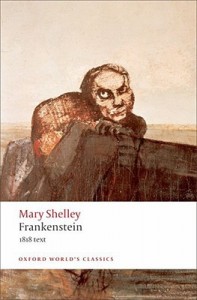
Frankenstein (1818 Edition) by Mary Shelley

Posted December 27, 2013 by Michael @ Knowledge Lost in Classic, Gothic, Science Fiction / 5 Comments

Frankenstein (1818 Edition) by Mary ShelleyTitle: Frankenstein (1818 Edition) (Goodreads)
Author: Mary Shelley
Published: Oxford World's Classics, 1818
Pages: 261
Genres: Classic, Gothic, Science Fiction
My Copy: Audiobook

Buy: AmazonBook DepositoryKindle (or visit your local Indie bookstore)

Victor Frankenstein is a student of science, obsessed with discovering the cause of life. One night he bestowed animation upon a lifeless matter and created a monster. He recoils from his hideous creation and the monster is cast out and left tormented by isolation and loneliness. Evil is unleashed and a campaign for vengeance against Frankenstein has begun.

Most people are aware of my passion for Frankenstein, I may not read it every year but I do come close. Picking up this book is like coming home, the joy that sweeps over me as I emerse myself into the text is indescribable. Have you ever had that feeling where a book can bring you so much joy, I even have to buy different versions of this novel just to have on my self. I have some rather handsome editions; a leather-bound copy, an annotated edition and a nice illustrated hardcover released by Dark Horse Comics.

So imagine my shock to discover that the audiobook I was listening to was a little different to the novel I was accustomed to. With a little research I discovered Dan Stevens (the narrator, yes the one from Downton Abbey) was reading from the 1818 edition. Not the heavily revised 1931 version, which is most commonly printed. I didn’t even know there were two different versions; this was an exciting day for me. Not only can I continually read Frankenstein and gain immense pleasure from it, but I can also switch between two different versions of the story.

I was familiarising myself with the text of Frankenstein for a university course, so I had decided to look at the book a little differently. For an older review, one I still think is pretty good click here. I knew a little more about Mary Shelley this time, so I was looking at Frankenstein with some context. Before Shelley wrote Frankenstein she had given birth to a daughter, two months premature. This daughter only lived a few weeks, a year later she gave birth to William Shelley. After the birth of her son she suffered from postpartum depression.

The birth of William happened a few months before the story of Frankenstein was conceived, so it wasn’t too surprising to see William’s name in the novel. William was Victor Frankenstein’s youngest brother, who was strangled to death by the monster. So I have two lines of thought here, one being that Mary Shelley’s depression manifested an urge to strangle William, the second is a little more complex.

I want to skip over the whole parody of creationism within Frankenstein, which would have to be an entirely different blog post (maybe when I read it next time). Life was created (without the need of a female) and then rejected. He has no loving mother; he is born fully grown but still has the intelligence of an infant, he was rejected before he could learn about the world. Again I’m left with two thoughts, is this about growing up without a mother or was this rejection of her child? I’m not really good at forming arguments (something I need to learn) but I wanted to leave you with those thoughts, and one other. In a journal entry in 1915 Mary Shelley wrote about the death of her first child, and being tormented by the idea of it coming back to life.

You know that “never meet your idols” phrase? I never really understood it; sure Mary Shelley wasn’t a ‘nice’ person but who is? She was tormented and complex and from that sprung forth a novel with so many layers that you could write a book on it. This was what made her my literary idol, not being a good person. I know I will keep reading this novel and try to write a review on each different perspective I find. Who knows it could make up and interesting collection of posts. Look for my next Frankenstein post (possible next year), not sure what it would be about; Creationism, Paradise Lost, Feminism, Slavery, Revolution, or something else. If you haven’t experienced the joys of a book so complex and layered, don’t you think it’s time you did so?


Careless People by Sarah Churchwell

Posted December 19, 2013 by Michael @ Knowledge Lost in Non-Fiction / 3 Comments

Careless People by Sarah ChurchwellTitle: Careless People (Goodreads)
Author: Sarah Churchwell
Published: Virago, 2013
Pages: 358
Genres: Non-Fiction
My Copy: Paperback

Buy: AmazonBook DepositoryKindle (or visit your local Indie bookstore)

Since the publication of The Great Gatsby in 1925, it has been talked and talked about. Some people were forced to read it in high school, some hate it and others love it. No matter what you think about the book you can’t deny its significance. Careless People looks at The Great Gatsby, F. Scott Fitzgerald and what was happening during the Jazz era. More specifically the months when this classic too place.

I loved The Great Gatsby, the first time I read it I got little out of it (see review) but the second time around, I feel like I really understood it (see that review as well). Though I’ve come to realise this novel is full of layers and the more you read and research the more you will get out of this novel. It has been widely though that The Great Gatsby was autobiographical in nature so understanding F. Scott Fitzgerald is important when reading this classic critically.

Sarah Churchwell has made life a little easier for people that love and want to learn more about this novel. Careless People looks at the text and then different events that were happening at the time of writing this novel. She also talks about the Fitzgeralds (a very interesting couple) and tries to give us some context about the motivations and thoughts behind this Magnum opus.

So you get historical context as well as a unique look into the lives of the Fitzgeralds and what we call the Jazz Age. I really enjoyed this book, as a lover of The Great Gatsby (not the terrible movie) I found it fascinating to learn about just what has happening at that time, especially in New York and F. Scott Fitzgerald. One of the most interesting thinks I learnt from the book was about the lexicon, and new words coined at the time that are used today.

Something I often worry about when reading a non-fiction book like that is referencing. It is not common practice but I seem to respect a book more if I can see where information was found. Careless People did a great job with this; over 50 pages of notes and a bibliography so if you are interested (like me) you can look further and do some independent researching. Part biography, literary criticism, history and true crime, Careless People has a lot of information in it but it is only a scratching the surface on all accounts.

I wish I had this much to say about a book, especially the ones I love; I just want to dive in and learn all I can about it. I often struggle to write a review post, but one day I hope I can pull something off like this; keep an eye out for my 400 page reviews. It is clear that Churchwell is passionate about The Great Gatsby. This would be a great companion next time you read the classic, I can imagine how helpful it would be. I loved Careless People; I want to read more books like this, particularly about novels I love.


Eyrie by Tim Winton

Posted December 16, 2013 by Michael @ Knowledge Lost in Contemporary / 0 Comments

Eyrie by Tim WintonTitle: Eyrie (Goodreads)
Author: Tim Winton
Published: Penguin, 2013
Pages: 424
Genres: Contemporary
My Copy: Hardcover

Buy: AmazonBook DepositoryKindle (or visit your local Indie bookstore)

Tom Keely lives a life in solitude, away from the world. Somehow he has lost his bearings in his middle age and is held up in his high-rise apartment, where he can look down on the world. One day he runs into a neighbour and her introverted son. The woman recognises him from back in the day. This encounter shakes him up in a way he really doesn’t understand and he soon finds himself letting them into his life.

I’ve only read Breath by Tim Winton in the past, which I didn’t think too highly of, so I wasn’t sure what to expect with Eyrie. I know well enough to never judge an author by one book and Winton is acclaimed enough to make me think there is really something in his writing. While I wouldn’t say this book is amazing, I think I can see why people like Tim Winton as an author.

The plot is incredibly simple; there is nothing special about it and it has all been done before. This does however in fact open Tim Winton up to what he seems to do really well and that is exploring characters. He has this ability of taking these characters that seem to make sense on the surface but underneath they are complex. Humans are complex characters, not inheritable good or bad and I think Winton knows how to write this.

In the end I think the fact that the plot was very basic was my biggest problem with this novel, which is strange I’ve read and enjoyed some great novels that have virtually no plot but Eyrie didn’t work as I hoped. I think the fact that everything felt a little predictable (plot wise) made me feel detached. Apart from the plot, everything seemed to work. I know I shouldn’t get so hung up about the plot, maybe if it wasn’t so obvious I might have gotten more enjoyment from Eyrie.

Tim Winton is a decent writer, I’m sure I will find a book of his that I can connect with. I will keep looking; still have Cloudstreet, Dirt Music and others to try. The urban location of Eyrie meant that this book felt less like an Australian novel, luckily the slang saved it there. Anyone know which one will work best for me? I’m making an effort to read more Australian novels and am also looking for recommendations as well.


The Narrow Road to the Deep North by Richard Flanagan

Posted December 14, 2013 by Michael @ Knowledge Lost in Historical Fiction / 0 Comments

The Narrow Road to the Deep North by Richard FlanaganTitle: The Narrow Road to the Deep North (Goodreads)
Author: Richard Flanagan
Published: Vintage, 2013
Pages: 467
Genres: Historical Fiction
My Copy: Paperback

Buy: Book Depository (or visit your local Indie bookstore)

The Narrow Road to the Deep North follows the story of Dorrigo Evans, an Australian doctor haunted by his past; life in Tasmania, a love affair with his uncle’s wife, World War 2 and so on. At the heart of the story is his horrific time in a Japanese slave labour camp as a prisoner of war working on the Burma death railway. Taking its title from 17th-century haiku poet Basho’s travel journal, The Narrow Road to the Deep North is about the impossibility of love.

I started reading this book at the beginning of my recent reading slump, I felt so much pressure to try and get it read before my local book club. As a result, I wasn’t able to finish it in time and I ended up putting this aside half read. I obviously went back to the book and finished it, but I think it did play a big role in my enjoyment of the novel.

This is my first Richard Flanagan novel; I have heard a lot about him, but never had a chance to try him out before. The Narrow Road to the Deep North is about the harshness of war, not just the struggle of trying to survive the battlefield, or being a prisoner of war. This goes further and looks at trying to survive post war. I’ve read some great novels similar to this; Catch 22, Slaughterhouse-Five, The Yellow Bird, Billy Lynn’s Long Halftime Walk and The Machine come to mind. So I felt that I ended up using these novels as the measuring stick and The Narrow Road to the Deep North just didn’t feel like it covered the topic properly.

I felt like this book also tried to be an epic novel, following the exquisite pain of Dorrigo Evans’s life. Then I got halfway through the novel and wasn’t sure how it could cover the entire life in so little pages. I normally associate epics with great big books and if this book covered more of Dorrigo’s life then it could have fit this genre.

Flanagan focuses on not just the cruelty of war and it’s after effects but the impossibility of love, especially when so damaged. I think this was the major theme Flanagan wanted to explore, more than war and the Burma death railway. The relationship between his uncle’s wife Amy and then his girlfriend Ella play a big role in exploring Dorrigo’s life and the pain he suffers. Forbidden love and the relationship everyone expects from him; this is what I think the author wanted to explore.

I really enjoyed the style of Richard Flanagan’s The Narrow Road to the Deep North, so much so that I think it could have been a future Australian classic. The main problem was some parts go on for pages in great detail and then others were just glossed over. There was no consistency and in a great epic novel, you expect the same amount of detail in everything happening. Sure some parts deserve more time but I think there were something interesting points that needed to be focused on a lot more. This is a good novel that could have been great; I think that is what frustrated me the most about The Narrow Road to the Deep North.


The Bone People by Keri Hulme

Posted November 29, 2013 by Michael @ Knowledge Lost in Book of the Month, Literary Fiction / 0 Comments

The Bone People by Keri HulmeTitle: The Bone People (Goodreads)
Author: Keri Hulme
Published: Pan Macmillan, 1984
Pages: 540
Genres: Literary Fiction
My Copy: Paperback

Buy: AmazonBook Depository (or visit your local Indie bookstore)

It was a gloomy and stormy night, a mute 7 year old boy, Simon shows at the hermit Kerewin’s tower. The next morning his adoptive father, Joe came to pick him up. Because Simon couldn’t explain his motives, Kerewin has to rely on Joe to tell their curious story. A storm earlier that year sees Simon wash up on a beach with no memory or clue of his identity. Joe and his now deceased wife took the troubled boy in, but the traumatised boy is just too hard to cope with.

The Maori people use bones as tools and for art; they believe the notion of a person’s core is found within their skeleton. The bones are a common theme throughout the novel; each character is emotionally stripped to the bone. It is then we truly see what type of person these characters are. This novel is full of violence and twisted emotions, making this a tense and draining book to read.

Something I really liked about this novel was Keri Hulme’s use of silence as tool that drives the plot. Simon is unable to speak, but we find out this is more of a psychological rather than a physical restriction, as he can sing. I think he is afraid to say the wrong thing, a defensive strategy. He uses notes as a primary form of communication, this way there are no expressions of his emotion and he can protect himself. The book goes a little further, Simon is also silent about the pain, when he is beaten he doesn’t make a sound. Kerewin also uses silence in a similar way, she built her tower to hide away and be a recluse; no one can hurt her if she is in solitude. She is always an artist suffering from a creative silence; not being able to let her creative side flow through her art. You can read this book and find many examples of silences within it; very effective and I spent a lot of time trying to work out the meaning behind it.

Each character has been damaged that their defensive mechanisms make it hard to open up to others. Yet the three main characters spend the entire novel trying to work out what love is and how to find it. They are all isolated themselves from the world; Kerewin in her tower, Simon with his inability to steak and Joe with his grief. There is just so many themes you could look at in The Bone People, the idea of a utopian society uniting Maori and Western culture, Post-colonial discourse, cultural illness, violence as a way to communicate and you can just go on and on.

This is not the easiest book to read, it is confronting and tense. The Bone People left me with mixed emotions; on one hand the writing was wonderful and left me thinking about so many issues but on the other hand the violence just left me with a sick feeling. I often try to leave my emotional opinion of the subject matter out of analysing a book but I just can’t help it with this one. In the end, I think the book has something important to say and worth reading.


Practical Classics by Kevin Smokler

Posted November 28, 2013 by Michael @ Knowledge Lost in Non-Fiction / 2 Comments

Practical Classics by Kevin SmoklerTitle: Practical Classics (Goodreads)
Author: Kevin Smokler
Published: Prometheus Books, 2013
Pages: 320
Genres: Non-Fiction
My Copy: Paperback

Buy: AmazonBook DepositoryKindle (or visit your local Indie bookstore)

Classics have a lot to say about life, the problem is the ones that are forced upon us during high school are normally hated or forgotten about. Teachers pick books that are designed to teach important lessons as well as develop critically reading skills. Kevin Smokler has decided to reread those classics and try to tell the reader why we should reread them.

Practical Classics: 50 Reasons to Reread 50 Books You Haven’t Touched Since High School is a collection of essays that often remind the reader what these classics have to offer but told in a very accessible and humours ways. I’m not sure where I first heard about this book, I want to say Books on the Nightstand but I can’t be too sure. I’ve always had an interest in classics and what is assigned in English classes around the place.

The only book I remember studying in High School was Romeo and Juliet and I have to admit I never read it, we ended up watching the movie instead; the Baz Luhrmann version was just released. So I never had a chance to learn about the classics and reading critically. These are new skills I’m still developing. When I suddenly gained an interest in reading and education and have often spent time thinking about what books I would want to teach (see this old post where I pick some books to teach).

Out of the 50 books in this novel; I think I only read a small portion of them so Smokler has really destroyed my TBR list with so many more novels. Not that it really is his fault; I will probably read most of them anyway. I’m interested in knowing why some of these books were chosen, I couldn’t work that out at times and really want to learn more about how they pick the books. Kevin Smokler stated that he reread the books he was assigned in high school and then consulted friends, teachers, etc. to get a nice round 50.

This doesn’t help answer the question I had but it was probably the most practical way to pick books. I’m just fascinated in the idea of studying literature and the process behind deciding what to teach. I’m taking the time to work through an English Lit course and I hope it doesn’t squash my passion for the topic to continue further in. I would love to know if there were books that could help satisfy my curiosity; I will continue to search for them.

I wasn’t much of a non-fiction reader for a long time (in fact I’ve only been a reader since 2009), but books about books are my newfound interest. Kevin Stoker’s book really was a fascinating read and I want people to recommend me some more non-fiction books that will help. Stoker mentioned two in his book that I am to pick up and I hope some of the readers of this will give me some more. If you are interested in learning why classics are important, or you are just interested in books about books, this is a nice addition.


The Know-It-All by A.J. Jacobs

Posted November 27, 2013 by Michael @ Knowledge Lost in Non-Fiction / 2 Comments

The Know-It-All by A.J. JacobsTitle: The Know-It-All (Goodreads)
Author: A. J. Jacobs
Narrator: Geoffrey Cantor
Published: Simon & Schuster, 2004
Pages: 389
Genres: Non-Fiction
My Copy: Audiobook

Buy: AmazonBook Depository (or visit your local Indie bookstore)

A.J. Jacobs has noticed an ever widening gap left from graduating from an Ivy League education. His solution, to read the entire Encyclopaedia Britannica, from A to Z. Follow A.J. as he works his way through all 32 volumes, that’s 33 thousand pages and 44 million words. His wife thinks it’s a waste of time, his friends believe he has lost his mind, but follow this unconventional task in this memoir.

I have read an A.J. Jacobs memoir before; I read “Year of Living Biblically: One Man’s Humble Quest to Follow the Bible as Literally as Possible” and found it really entertaining. This task sounded really interesting, I’m interested in the things people do to increase their pretentious levels. I’m not sure I will ever take up a task like reading the Encyclopaedia, especially with easy to access to Wikipedia.

Knowledge has interested me, and the way to obtain more knowledge is fascinating. The full title of this book is The Know-It-All: One Man’s Humble Quest to Become the Smartest Person in the World; A.J. Jacobs documents the journey in this hilarious memoir. Not only do you get little snippets of facts that he found interesting but you get a look at his life. I really enjoyed the social impact reading the Encyclopaedia had; you watch his pretentious levels rise but you also watch his social skills fall. Obviously people don’t like being corrected, or want to hear weird related facts but I can’t help thinking that I would do the same thing as well.

A.J. Jacobs is quite a character and reading about the ways he tries to put his newfound knowledge into practise was really interesting. From going to a chess club, a crossword tournament and Who Wants To Be a Millionaire, Jacobs tries all sorts of ways to practise often with hilarious effects. Why take the test to join Mensa if you are already in Mensa; why not? Although A.J. Jacobs was entertaining, I really found his dad so much more interesting; he was fascinating.

I love books about books and humorous memoirs about learning, so this was right up my alley. A.J. Jacobs got the balance between trivia and real life. Following Jacobs and his wife as they try to get pregnant and I felt relief when they finally conceived. I’m curious if there are more entertaining memoirs like this worth reading, maybe a year reading classics or just novels, something similar. I think I need to read more books like this.