Source: Personal Copy

Beat The Reaper by Josh Bazell

Posted May 5, 2012 by Michael @ Knowledge Lost in Thriller / 0 Comments

Beat The Reaper by Josh BazellTitle: Beat The Reaper (Goodreads)
Author: Josh Bazell
Series: Peter Brown #1
Published: Little Brown and Company, 2008
Pages: 310
Genres: Thriller
My Copy: Personal Copy

Buy: Amazon (or visit your local Indie bookstore)

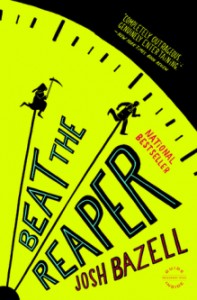
I was recommended this book last year, and while it looks interesting, I kept putting this book off. I’m not sure why I did, as this book was so much fun to read. Think mob book (in the style of Lock Stock and Two Smoking Barrels or Snatch) meets Scrubs but with a much darker sense of humour. Beat the Reaper by Josh Bazell tells the story of Peter Brown, an intern for Manhattan’s worst hospital. Dr. Brown is in the Federal Witness Protection Program having previously been a mob hitman named Pietro Brwna. I know, the feds lacked imagination and yet the mob failed to find him until one of them ends up being a patient of Dr. Peter Brown.

The humour alone makes this book worth reading, but then on top of that you have the story of a kick ass doctor in what would make a great blockbuster movie if it was directed by someone like Guy Ritchie or Quentin Tarantino. Having said that there are rumours of this book being made into a movie (New Regency acquired the rights in 2009) or even a TV series (HBO started development in 2011) but both seemed to be interested in Leonardo DiCaprio as the protagonist. I can’t see DiCaprio as Peter Brown; I often imagined him more of Vinnie Jones type character even though he probably isn’t right for the role either.

While I think it would make a great adaptation, I’m not going to hold my breath for one; let alone a good one. Beat the Reaper could be the next sleeper hit; with an increasing cult following, this book was well worth the read. All readers interested in an edge of your seat action novel, or a dark medical/mob read should go out and grab a copy of this book. I can’t wait to get my hands on the next book in this series.


For The Win by Cory Doctorow

Posted May 1, 2012 by Michael @ Knowledge Lost in Young Adult / 0 Comments

For The Win by Cory DoctorowTitle: For The Win (Goodreads)
Author: Cory Doctorow
Published: Tor, 2010
Pages: 480
Genres: Young Adult
My Copy: Audiobook

Buy: Amazon (or visit your local Indie bookstore)

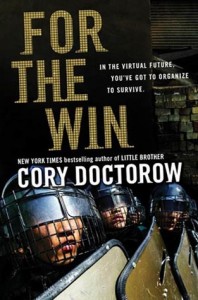
I’m not sure if I’ve just read a novel or had a lesson in economics. Cory Doctorow’s dystopian novel For the Win tells the story of the exploitation of an online role playing game’s economy. In the running of what could be classed as electronic sweatshops throughout Asia, gold farmers suffer from very poor work conditions in the effort to mine gold and find virtual treasure to sell to first world customers. The novel has a typical ‘unite and rise against authority to improve our lifestyle’ plot but add a Massively Multiplayer Online Role Playing Game (MMORPG) this book makes for some interesting concepts. While this book is a book about slave labour, gangsters and forming a revolution, this book also dives into the world of global finance in a very educational way.

This book reminds me of Neal Stephenson’s novel Reamde, in the sense that it explores the world of gaming from the perspective of gold farming. While Stephenson focused on all the aspects of creating a MMORPG for the purposes of gold farming and money laundering, For the Win focuses on the concept of the in-game financial system and how fragile global economy can be. The author floods the book with many different financial theories and uses the games economy to help the reader understand just how global finances work. While this novel focuses on the in-game aspects of economics, the theories taught are very real.

Like Reamde, For the Win made me thing of an aspect of gaming that I never released existed. While Reamde hired a geologist to create the world of T’Rain’s mining system; For the Win had an economist working for the game developers. This book was a real eye opener while still making a great story. To begin with I had trouble keeping up with all the characters Doctorow tried to introduce, characters from USA, India and China; but slowly I started to get a feel for which character was which. I don’t think Cory Doctorow spent enough time exploring his characters, I felt like I only got a glimpse of each character and I would have liked more. For the Win is a book for gamers, but non-gamers might also enjoy the thrilling ride this takes the reader on. It is more than just a lesson in economics and it is more than a novel about unionising Gold Farming. While very predictable this ended up being a great read.


Past The Shallows by Favel Parrett

Posted April 20, 2012 by Michael @ Knowledge Lost in Literary Fiction / 0 Comments

Past The Shallows by Favel ParrettTitle: Past The Shallows (Goodreads)
Author: Favel Parrett
Published: Hachette, 2011
Pages: 272
Genres: Literary Fiction
My Copy: Personal Copy

Buy: Amazon (or visit your local Indie bookstore)

Past the Shallows tells the story of Miles and Harry, growing up in a remote Tasmanian fishing village with their father. While the book tries to deal with overcoming personal fears, loss of their mother and, more recently, their grandfather and trying to survive their bitter alcoholic father, this book tends to be far too familiar. When I first started reading this book I first thought it reminded me of The Shipping News by Annie Proulx, a glimpse of The Man Without a Face by Isabelle Holland (when talking about George) and  then it moved on to even more familiar territory which seems to be covered in just about every book and movie out there.

One of the main problems I had with this book was that I started off liking Miles and Harry but then, as I kept reading. I began to stop caring about them,  and in the end I really didn’t care about them at all. There were so many characters that could have been good but didn’t appear in the book to fully understand them. Mr Roberts was one example. I also spend a lot of time trying to work out Miles and Harry’s older brother Joe; I wasn’t sure whether to like him or hate him but in the end I just didn’t care. The stand out character for me in this book wasn’t a person but the ocean, the dark deeps that Harry feared wasn’t necessary a typical character but seemed to have the best personality in the book.

The novel seemed to be more a book of the bonds of brotherhood and family. The two boys are confronted with the painful family secrets while having to deal with their dad. Favel Parrett does a great job of turning the word ‘Dad’ into a chilling and sinister word that makes the actions of the father more impacting to the reader. The lifestyle of this small country town, while different to the one I grew up in brings back so many memories; small country show, show bags and farm animals.

Favel Parrett’s debut novel is at times gut wrenching and shocking but I never went away from this book feeling like I had just read something interesting. It all felt way too familiar and that left me wanting to read something new and maybe unpredictable. I adored the writing style in Past the Shallows, it was almost poetic and it just pushed me through this book with such ease; even in the parts of the book I wasn’t enjoying.

Nominated for the Miles Franklin award (an annual literary prize for the best Australian novel) this year I think the book stands a good chance. While I thought it was a decent read, I never felt emotional towards it; but I’m sure there were tears shed and hearts broken from many readers. I think the lyrical poses are enough to make this one of the better literary works in Australia from last year. Having said that the book is up against some other great novels (which I haven’t read yet) including All That I Am by Anna Funder and The Street Sweeper by Elliot Perlman; so I will be interested to see whether or not this book takes out the top prize.

I will admit that I don’t read nearly enough Australian novels; I’m still trying to play catch up with all the classics and other great literary works; but I do plan to fix that. Maybe when next year’s Miles Franklin short list is announced I will have a better idea of what books are worth reading. But for now I do believe that Past the Shallows is a great debut novel by Favel Parrett.  I’m looking forward to seeing what she comes up with next; hopefully another book that is hauntingly beautiful.

 This book was read as part of my local National Year of Reading program; I also live tweeted my way through this book and that can be found here; http://sfy.co/pJq


Reamde and my Fears of Large Novels

Posted February 15, 2012 by Michael @ Knowledge Lost in Literature, Thriller / 5 Comments

reamdeI don’t normally read books that are over 1000 pages and after reading Reamde, I’m a little reluctant to read something this big again. Not that there was anything wrong with this book; but sitting at over 1100 pages, it was a big task chipping away through this book. Neal Stephenson provides a story full of nerdism, thrills and a lot of action, dipping into aspects of organised crime and terrorism. My first thought of this book was the MMORPG (Massively Multiplayer Online Role-Playing Game) game that this book is based around; every aspect of this game is covered in this book. It takes all the aspects he liked about World of Warcraft and gave it a face lift, threw out all the parts he didn’t like, even going to the extent of making the world geographically accurate for people interested in mining. But the underlining reason for T’Rain, is the gold farming market; while Blizzard tries to crack down on farming, this game is based around a potential money laundry scheme. While T’Rain was created for sinister reasons, the creation of the game and the employee of popular fantasy writers turned the game into a huge success. Just reading about this game made me want to play it. This game serves as a background for the main plot in Reamde.

While there is a lot happening in Reamde, the main plot is centred around a virus, which encrypts files and hold them for ransom for T’Rain gold. This virus affects a computer containing sensitive documents of the Russian Mob, who do not wish to pay the ransom but set out to hunt down the people behind the virus and make an example of them. Along the way many people become involved including the T’Rain founder, a T’Rain employee, some Chinese gold farmers/hackers, a Russian mercenary, a Hungarian hacker, the CIA, MI6 and some international terrorists.

While I enjoyed the ride that Reamde took me on, I can’t help thinking that there is a lot of fat that needs to be trimmed. I’m not sure if being a bestselling author Neal Stephenson had the freedom to fatten this book up, or the editors didn’t do a good job, or they intentionally left the book this long; but I think that this book could haveeasily been turned into a 700-800 page novel without losing any of the plot. While this book was really enjoyable for a nerd like me, I still can’t help but wonder; does it need to be this big?

Which brings me to the point of this blog post; do you find big novels daunting? I know some people prefer a longer novel, because they are not ready to leave a world so quickly; it’s possible these people are fast readers or not so easily distracted. I often think that I tend to get bored with the world, often wishing for it to end. This could be because I’m easily distracted, or because I’m impatient and want to move onto a new book; I often procrastinate reading by reading another book. I’m just curious how people view large novels; would you prefer them or do you try to avoid them? In the past I think I would avoid them, often dreading reading books that are more the 600 pages but I’ve come to the realisation that I can’t put them off for too long. My to-read pile is growing at an alarming pace and the amount of larger novels are making me feel a little uneasy.

In the past I think my average novel is about 280-300 pages long (thank goodness for pulp novels and their need to wrap up in under 300 pages) but I’ve had to push myself to tackle some of the bigger novels. There are too many classics that need to be read and there are a few recent releases that seem to be critically acclaimed that I’ve got my eye on. Personally my reading goal is 100 books a year but maybe next year I should focus on a page count instead of trying to push myself to read 100 books. Please let me know your thoughts of larger novels; I would love to know the pros and cons of them.


My Issues With The Book Thief

Posted August 3, 2011 by Michael @ Knowledge Lost in Literature / 10 Comments

I felt the need to write a new blog post because it’s been a while and this book has been bugging me all night; time to create some controversy. I recently read The Book Thief, a book that has come highly recommended to me, but I’m struggling to see why. As many people know The Book Thief is a young adult book by Australian author Markus Zusak that has been an international bestseller and has won numerous awards. The book tells the story of a teenage girl living in Nazi Germany who likes to steal books. While most people adored this book, I never was able to get into it and I wasn’t really sure why; this seemed to keep me up all night, so I thought I would share what I liked and didn’t like about it.

The Writing

For the most part, this novel is well written; almost in a poetic way. But at the start of each part, I’m not sure why Zusak has to list every main character that will appear in the next section, it felt a bit like a screen play in that aspect and I really felt as if he was giving away the story before it actually happened. This was only a minor problem but it did bug me a little.  As for the rest of the writing, it was an unusual style that took awhile to adapt to but it really did work with the narrative.

The Characters

I never really got into any other characters in this book. I felt Liesel didn’t even need to steal books in the end but it didn’t really seem to stop her. Hans seemed to be a typical nice guy that didn’t know how to say no, Max didn’t really do much that was of interest, Rudy only cared about kissing Liesel and the only person that seemed to be colourful was her foster mother, Rosa. I thought all the characters were two dimensional and no one really had any depth. Quite frankly, I didn’t care what happened to any of them, the only person that seemed interesting was the Narrator; Death.

The Narrative

I like the fact that Death was the narrator; he did offer a unique perspective on some very dull characters. It took me a while to get used to the fact that Death wasn’t a dark character but a hopeful observer, but as my wife pointed out, Death wouldn’t be haunted by himself; it’s the humans that are haunted by him and we are the ones that think he represents an ending. It turned out that Death was haunted by humans, leading to some interesting themes throughout the book.

The Plot

I don’t know if it was my need for the macabre, the fact I wanted a dark YA book or the fact that it was set in Nazi Germany; but I really wanted this novel to be darker than it actually was. Being in war time Germany, you would expect something exciting to happen. They hide Max; the Jew in the basement and there was some bombings but apart from that, there was nothing of a climax in The Book Thief, it felt like it dragged on and never went anywhere. I really thought Zusak was holding back and was too afraid to go to a dark place and it ended up been too light and fluffy for a war time story.

The Major Themes

While this does appear to be a light read, there are still some very interesting themes throughout this novel. The main theme that stuck with me is the way Death is trying to understand the two sides of humanity; while the Nazi’s are cruel to the Jews, one member of the party, Hans, shows nothing but kindness and compassion towards them. While this is confusing to Death, it really is an interesting theme to have in a YA novel, where the majority of the readers are at a point in their life where they need to find their identity. Other themes that showed up in the book included guilt and the value of works (as a reader and a writer).

The Book Thief is for the most part a nicely written YA story, but the potential was there for something far better. I understand the fact that holding back for a YA novel, but I’m sure the readers know that war is a dark and scary place and the writer could have used that to make this book a more exciting read. I hope people enjoy this book, but for me I expected much more. What did others think of this book?

The Man in the High Castle by Philip K. Dick

Posted August 11, 2010 by Michael @ Knowledge Lost in Classic, Science Fiction / 0 Comments

The Man in the High Castle by Philip K. DickTitle: The Man in the High Castle (Goodreads)
Author: Philip K. Dick
Published: Vintage, 1962
Pages: 259
Genres: Classic, Science Fiction
My Copy: Personal Copy

Buy: Amazon (or visit your local Indie bookstore)

For those who haven’t read this month’s Book club book, the alternate reality classic The Man in the High Castle by Philip K Dick, I will try not to give away too much of the story. Most of you are aware of the basic plot outline, but I will just give you a quick overview before talking about the interesting concepts I found within the book. Set in 1962, 14 years after a longer World War II, life is under totalitarian Fascist imperialism as the war was won by Imperial Japan and Nazi Germany. Having divided the world the Axis Powers are now conducting intrigues against each other in North America.

Alternate Reality

With Japan and Germany being in power, the world is a much different place; more of a dystopian society, where everyone is considered racially superior to the Americans. The last remaining Jews are in hiding and continually being hunted down. The book actually deals with justice and injustice; gender and power; the shame of cultural inferiority and identity; and the effects of fascism and racism upon culture.

Metafiction

The Man in the High Castle focuses the story around a popular and banned novel written by Hawthorne Abendsen (The Man in the High Castle). The book entitled The Grasshopper Lies Heavy portrays an alternate reality where  Japan and Germany lost the war and America and England become the victors. Changing racialist-cultural tensions and creating a liberal, democratic, capitalist society.

I Ching

In this novel the I Ching (Book of Changes) is often consulted by the characters as an oracle. I Ching is an ancient Chinese book of divination and was used by Philip K Dick to determine the plot particulars. In two separate interviews Philip K Dick has said;

“I started with nothing but the name, Mister Tagomi, written on a scrap of paper, no other notes. I had been reading a lot of Oriental philosophy, reading a lot of Zen Buddhism, reading the I Ching. That was the Marin County zeitgeist, at that point; Zen Buddhism and the I Ching. I just started right out and kept on trucking.”

“In the event, he blamed the I Ching for plot incidents he disliked: “When it came to close down the novel, the I Ching had no more to say. So, there’s no real ending on it. I like to regard it as an open ending.”

Philip K Dick’s classic science fiction novel has a lot of interesting aspects to it. I think it could easily be one of those books you could spend hours discussing all the little characteristics to it. Another book that challenges your views on society by showing what life could be like if the war turned out differently. Reflected above were just the major aspects to this book.


To Kill A Mockingbird by Harper Lee

Posted July 28, 2010 by Michael @ Knowledge Lost in Classic / 0 Comments

To Kill A Mockingbird by Harper LeeTitle: To Kill A Mockingbird (Goodreads)
Author: Harper Lee
Published: Harper Collins, 1960
Pages: 323
Genres: Classic
My Copy: Personal Copy

Buy: Amazon (or visit your local Indie bookstore)

To celebrate 50 years of publication this month, The newly formed Literary Exploration Book Club decided to read Harper Lee’s classic To Kill A Mockingbird. The book has been described as a southern gothic novel which gave the book a certain appeal to me and was one of the main reasons I decided to read this book. What I found left me a little disappointed.  To begin with, I found the book didn’t start to get interesting till chapter 11. I know the back story was needed, it was a different time, but I didn’t much care for the childhood of Jean Louise, Jem or even Boo. To me it felt like it dragged on and could have used some cutting down, but some people like to hear about life in the 1930’s. When I did eventually get to chapter 11, I did start to enjoy the book a lot more and finally at chapter 17 we started to get into the real story of To Kill A Mockingbird; The Court Case.

Atticus was the only truly enjoyable character for me.  He was a wise and fair man, though he never wanted to take Tom Robinson case he did his upmost to make sure he was treated fairly and got the best representation possible. Atticus was the shining light throughout this book; he was a scholar and gentlemen through thick and thin. Once the court case was over and Atticus no longer had to deal with Tim Robinson the book again went back to its original slow pace and eventually fizzled out.

The book wasn’t all bad, it was well written and tackled some important topics, including racial injustice, class and even sexuality. I can see why this is a classic book and I think Harper Lee did a fantastic job at shedding light on some important social issues, the story just felt to slow for my liking, but I can understand why so many people enjoy this book.


The Great Gatsby by F. Scott Fitzgerald

Posted July 21, 2010 by Michael @ Knowledge Lost in Classic / 0 Comments

The Great Gatsby by F. Scott FitzgeraldTitle: The Great Gatsby (Goodreads)
Author: F. Scott Fitzgerald
Published: Scribner, 1925
Pages: 184
Genres: Classic
My Copy: Personal Copy

Buy: Amazon (or visit your local Indie bookstore)

One of the most interesting aspects of The Great Gatsby is the Point of View. I don’t think I’ve read a book in the point of view of an onlooker, which was written as well as this F. Scott Fitzgerald classic. The book does a decent job at shedding light on the egotistical, desire driven tendencies of human nature. Nick Carraway tells the story of a group of destructive personalities. Carraway starts out starry eyed towards high society but slowly becomes more and more uncomfortable with the unrestrained materialism and lack of morality that comes with it.

F. Scott Fitzgerald paints a unique literary picture of the time and life style, with interesting, snooty and slightly annoying characters. Everyone seems so self absorbed and never think of each other; which helped drive the story beautifully. The book is very familiar to the movie, though the book is far superior. I thoroughly enjoyed this book.


Alice’s Adventures in Wonderland by Lewis Carroll

Posted June 27, 2010 by Michael @ Knowledge Lost in Childrens, Classic / 0 Comments

Alice’s Adventures in Wonderland by Lewis CarrollTitle: Alice's Adventures in Wonderland (Goodreads)
Author: Lewis Carroll
Published: Penguin, 1889
Pages: 239
Genres: Childrens, Classic
My Copy: Personal Copy

Buy: Amazon (or visit your local Indie bookstore)

One thing I think Lewis Carroll did right in Alice’s Adventures in Wonderland was the way he wrote a book suitable for kids and still enjoyable for adults. The characters in the book are so amazing that you can’t help but fall in love with them. Stand out characters for me included the philosophical Cheshire Cat and the melancholy Mock Turtle. The whole story was witty and full of amusing puns and is considered one of the best examples of literary nonsense. Alice’s Adventures in Wonderland overall is an enjoyable, well written and constructed tale and a surprisingly enjoyable book to read. I could possibly go on about the philosophy, the homages, or even the reflects to English society in the 19th century; but I will leave all that for the comments below. Read the book, enjoy the book and discuses the book. I really think this is one of those brilliant books that has so many elements worth discussing.


Mother Tongue by Bill Bryson

Posted June 23, 2010 by Michael @ Knowledge Lost in Non-Fiction / 0 Comments

Mother Tongue by Bill BrysonTitle: Mother Tongue (Goodreads)
Author: Bill Bryson
Published: Penguin, 1980
Pages: 270
Genres: Non-Fiction
My Copy: Paperback

Buy: Amazon (or visit your local Indie bookstore)

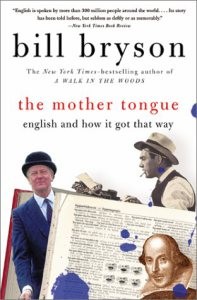
Recently I read Made In America by Bill Bryson, so I thought it would be appropriate to read Mother Tongue as well. Though there was a fair chunk of similar information in both books, Mother Tongue is just more relevant. While Made in America focused on the history of English in America; Mother Tongue focuses mainly on the history of English in general. Trying to cover questions like, “Why is there a ‘u’ in four and not in forty?” or “Why do we tell a lie and tell the truth?”

Bill Bryson does a great job of teaching and keeps the book interesting and sometimes humorous. Though the format and the style of the books are similar, I would recommend Mother Tongue over Made in America simply because the information is more relevant and covers all aspects of the English language.

Recommended for all English geeks, this book will give you a deeper understanding of the language as well as grammatical structures like amphibology. My wife might also be happy to hear that the book covers the topic of onomatopoeia.