Tag: books

ArmchairBEA 2014: Author Interaction & More Than Just Words

Posted May 27, 2014 by Michael @ Knowledge Lost in ArmchairBEA / 29 Comments

abea

Day two here at Armchair BEA and we are talking author interaction & more than just words. Where I live we tend not to get many authors up, but when we do, I often try and catch their readings, book signings or talks. It can be difficult when they are authors that you’ve never read or have no interest in reading; I want to be supportive of the authors that do come to this city but I also don’t want to be stuck buying books I don’t plan to read.

I’ve had some great experiences with authors, from hanging out with them at a cocktail party (Trudi Canavan, Rachel Caine and Felicia Day), to having great conversations them on Twitter (I still get excited when Megan Abbott replies to a tweet or Gary Shteyngart favourites a tweet) to awkward book signings (I’m thinking about the time Nick Earls signed a book ‘My apologises for not being Russian and long dead’). Some authors know how to interact to the public and I have to respect them.

2014-05-21 11.14.00

However there is the other side of the pendulum, the authors that should just get off social networking or take a leaf from J.D. Salinger’s book and avoid all people. Authors need to remember and accept the fact that not all readers are going to enjoy their books. I write negative reviews and I do try to be constructive when I do so but authors can get so defensive and venomous towards negative feedback that they should stop reading their reviews. I’m not just talking about personal experience, I’m talking about comments you see on Twitter or the bullying on Goodreads. I do understand this can be an issue for reviewers as well but I tend to think if you can’t handle negative feedback (this goes for reviewers too) then stay away from the internet.  I’ll end my rant there.

Moving on to the topic of more than just words, where I want to discuss a few things. Firstly audiobooks (as long as they are unabridged) counts as reading. Just because you are getting a book read to you doesn’t mean you are not experiencing it. Sure an audiobook is a completely different experience but I think it does not matter that the listener has not read the book. Our brains are wonderful and complex things, I think to read the book aloud in my head and an audio book is similar but someone else reading it. I still process it in similar ways and retention levels tend to be the same (for me anyway). I listen to a lot of audiobooks; mainly become I work on a computer all day with headphones in. Sometimes music is good, but I find audiobooks (especially when it comes to non-fiction and hard novels) can be a great way to experience a book while working.

Now there is the concept of graphic novels, I’ve seen people really take them on board and others avoid them at all cost. For those who do avoid graphic novels I’d love to know why. I worry people get the wrong idea about graphic novels and think they are all about superheroes with powers, but there are some great ones out there. If you want some recommendations check out my post where I suggest five different graphic novels to try that don’t feature super heroes.

ArmchairBEA is a virtual convention for book blogger who can’t attend Book Expo America and the Book Blogger Convention. Button by Sarah of Puss Reboots


The Collected Works of A.J. Fikry by Gabrielle Zevin

Posted May 14, 2014 by Michael @ Knowledge Lost in Contemporary / 6 Comments

The Collected Works of A.J. Fikry by Gabrielle ZevinTitle: The Collected Works of A.J. Fikry (Goodreads)
Author: Gabrielle Zevin
Published: Little Brown and Company, 2014
Pages: 243
Genres: Contemporary
My Copy: Paperback

Buy: AmazonBook DepositoryKindle (or visit your local Indie bookstore)

Who doesn’t love a story about a bookshop or books? The Collected Works of A.J. Fikry (or in the US, it’s weirdly named The Storied Life of A.J. Fikry) tells the story of Island Books and its quirky owner, A.J. Fikry. Following the death of his wife, the angry, middle aged loner is finding out just how much he relied on his wife, the people person. The novel starts off with Amelia, a newly employed book rep for Knightley Press, she is passionate about the books she is offering but one of her new clients is Island Books.

This independent book shop on Alice Island just off the coast of Massachusetts sports the motto “No Man Is an Island; Every Book Is a World.” While the bookshop sounds like a quaint little indie store, Her first impression of A.J shook Amelia. He’s an old fashioned man set in his ways;

“I do not like postmodernism, post­apocalyptic settings, postmortem narrators, or magic realism. I rarely respond to supposedly clever formal devices, multiple fonts, pictures where they shouldn’t be — basically gimmicks of any kind. .?.?. I do not like genre mash-ups à la the literary detective novel or the literary fantasy. Literary should be literary, and genre should be genre, and crossbreeding rarely results in anything satisfying. I do not like children’s books, especially ones with orphans, and I prefer not to clutter my shelves with young adult. I do not like anything over four hundred pages or under one hundred fifty pages. I am repulsed by ghostwritten novels by reality television stars, celebrity picture books, sports memoirs, movie tie-in editions, novelty items, and — I imagine this goes without saying — vampires.”

I have to love A.J. Finky; he is a cranky literary snob and he reminds me of Richard Anger from Books or maybe he reminds me of myself. That is until he finds a two year old abandoned in his bookshop and his life changes completely. The story is a cute and quirky, but fairly predictable story but in all honesty, who really cares? The Collected Works of A.J. Fikry is a fun and bittersweet novel, it is hard to criticise a book that you enjoy reading from start to finish.

Everything you expect to happen happens and in the end all loose ends are wrapped up in a nice neat bow. While I think it is a little too neat, the tone of the entire novel is light and I can’t measure The Collected Works of A.J. Fikry any other way, no matter how much I might want to. A straightforward novel about love, family, loss, joy and more importantly books. I love all the little inscriptions that Fikry leaves for Maya in all those books. While I’m a little annoyed that the book that bring Fikry and Amelia closer together is the only fictional book in this novel.

Gabrielle Zevin did a great job here; all the characters are great, in particular Fikry and Maya. I have to admit, if I were to have a child I would want them to be like Maya. She is so smart, unrealistically smart, but I don’t care, I had fun with the novel. Zevin has written a fun novel and a winning formula for her, I must admit I’ve never heard of her and this is her seventh novel. She seems to be more known as a YA author, which explains why I’ve never heard of her.

The Collected Works of A.J. Fikry is an optimistic love letter to the independent bookstore, as a book lover I hope they remain strong for a very long time. I’ve always been a fan of the indie bookstore and books about books so this was a real thrill for me to read. I admit that Books was a better novel but two great books about books so far this year is a good effort. Especially when both books have a great independent bookstore at the centre of their plots. All book lovers should pick up both novels.


My Bookish Manifesto

Posted May 10, 2014 by Michael @ Knowledge Lost in Literature / 20 Comments

I love my blog, I’ve been very proud of it and I can’t think of anything better. I like to spend my time playing with it, slowly improving it and writing posts for it. I don’t make money off my blog but it is a real passion of mine and something I plan to continue for a very long time. Recently I read a fantastic article on advice to young critics, while this is focused on the TV and movie industry I think it is still relevant to what I want to achieve.

Feeling all inspired by this article, I started thinking about what I want to achieve in life. I want to be considered a critic and I would love to get paid to do what I love but if that never happens I will still enjoy doing it. I’m not satisfied to with my current skill level and I want to continuously be improving. I took the advice given in the article on board and decided to adapt it to reflect my intentions. Being as pretentious as I am, I’m calling this my book critic manifesto.

  • Read a lot of different books – make sure to explore a wide range of genres, going outside more comfort zones and reading from more nationalities, different translations and genres.
  • Read from the back list – avoid only reading from the novels that have only just come out. Read books from all periods of time. Go back further than the 18th century and try to understand how books from the past have paved a way for the present.
  • Learn about the book industry – the politics and what goes on behind the scenes, it is important to have a finger on the pulse of the bookish world and understand trends and strategies deployed by the publishers.
  • Write every day – Commit to writing at least one post a day, it doesn’t matter if they get published or not, develop a habit. Writing takes practice and the more you practise the better you will be come. This is an essential step for self-improvement.
  • Find time to read every day – I can’t improve as a book critic if I’m not spending time reading, make the time. Listen to audiobooks while working, driving or exercising. Carry a book (or ebook) at all times and use any free time to read a little more.
  • Write it down – any good ideas or notes I have need to be written down before I forget. I’ve started carrying a notepad with me and finding other methods to jot down notes and thoughts as they come to me.
  • Rewrite – Edit, edit and edit some more. First drafts are never going to be my best writing but I often don’t like to rewrite. I must disciple myself to put my best work forward and thing will mean rewriting.
  • Proof read – I’m lucky enough to have a great editor (my wife) who is supportive of my blogging. She generously takes the time to read over every post I write before it hits the blog. I have to train her to be tougher on me and tell me if I need to re-write something but with her help I will improve. However I need to make her life easier not harder, I need to make sure I’m not relying on her and I’m checking my work thoroughly before she sees it.
  • Read up on history and psychology – It is fascinating to see how helpful knowledge of history and psychology can help with critical thinking. I am to critique books, so I need to understand more about the historical context and the psychology behind it.
  • Study literary theory – I need to understand literary criticism better; I know I will never understand all the theories but a basic knowledge will be useful. I suspect that my primary focus will be Marxist and Psychoanalytical theory but I would also like to be able to read a book from a Feminist, Post-Colonial, etc. view point as well.
  • Learn about language – Read more books about language and grammar, they can be fun and I can learn a lot from them.
  • Interact with the bookish community – it is important to continually seek out people with different viewpoints, I don’t want to become an echo chamber. Interacting with people that read and review books differently to me will help me develop my style and avoid becoming stale. We don’t want to live in a world where everyone says the same thing and if I can spend time reading different opinions I hope to avoid being similar to the crowd.
  • Learn about creative writing – I sometimes wish I could write a story but I feel I’m better suited as a critic and a reader than an author. I do need to learn the tools of the trade so I can understand why an author does what they do and develop an appreciation for the craft.
  • Develop my voice – I feel like my style is very conversational and personal; this is how I relate to the novels and this is how I feel. With practice I can perfect my style but I must always remember what I’m trying to achieve and how I want to come across in my writing.
  • Avoid only writing reviews – I don’t want to fall in the habit of only writing book reviews, if I’m writing every day I’m never going to keep up. I will write non-review posts, about my bookish thoughts or what ever is going on in the bookish world. Memes are great but I don’t want to rely heavily on them.
  • Meet deadlines – If I’m going to request an ARC then I must make sure that I read and review the book before the deadline or release date. Non-solicited ARCs don’t need to be read before a deadline or at all. I have written a review policy that clearly states that not all ARCs will be read but I need to make sure if I’ve committed to one that I read it.
  • Don’t be afraid to be different – I’ve found that I often hate books that others may enjoy, I do enjoy writing a negative review and I must remember that there is nothing wrong with that. However I must also remember that the job of an author is hard and I must always use tack and constructive criticism. I can’t be afraid to try something different and have a voice that differs from the rest, stand firm in what I think and be uncompromising in my writing.
  • Be the best you can be – I need to learn that sometimes a piece of writing isn’t working and I should dump it and start again. I shouldn’t be afraid to start over, I want my editor to be hard on me and I should be hard on myself too. I can learn a lot from others and I must be willing to take criticism. It is a helpful to my growth as a critic and also essential. If I’m not happy with a piece how can I expect others to enjoy it. Try and try again until you get it right.
  • Just write – I know that there will be times where I will feel like I’m not writing well or am suffering from a writer’s block. I need to remember that I don’t have to publish everything I write to my blog. I can write a bad piece and then dump it and try again, I might get some decent lines out of my bad writing that can help form a better piece.
  • Have fun – This is a passion not a chore.

This is still a work in progress and I plan to add more to this manifesto when I think of it. I feel like I have a goal in sight and I want to work towards it. This is not about getting a job or anything like that; this is about developing my skills to be the best book blogger/critic I can be. I’m passionate about books and I love talking about them, I will improve and this is how I plan to do just that. If you have any good advice that I can add to this, let me know in the comments below.


What I Hate about Book Blogging

Posted April 26, 2014 by Michael @ Knowledge Lost in Literature / 12 Comments

As much as I love book blogging and have no desire to slow down anytime soon, there is one thing that annoys me. It is not exactly a huge problem and I think this falls under the category ‘First World Problems’ but it has been coming an increasing annoyance for me. I’m not talking about the lack of commenting (I know I’m guilty of this) or the struggle to be part of the crowd of first readers, who boost about all the wonderful ARC’s they read. I’m even not complaining about the lack of male book bloggers or the excess of blogs talking about the exact same thing, this is something completely different.

I started book blogging in April 2012 as a way to track my reading journal. I have an autodidactic blog where I previously discussed literature, but I found myself losing focus on what that blog was all about. I transferred most of my literary posts onto this blog and started blogging passionately about the books I’ve read, loved and hated. I love the way this blog documents my reading journey but the problem is the fact that it only covers my journey from 2012 onwards.

I started reading in 2009 when the reading bug hit me hard; in that time I read some fantastic books but they don’t show up on my blog. I’m at a point in blogging were I want to make reference to books I read before I started blogging but I have no post to link it to. This isn’t a huge problem but it is something that has become increasingly annoying.

I’m now at a stage in my book blogging where I want to go back and re-read a lot of those great or interesting books just so I can blog about them. This also means if I ever want to write a blog post on every book that is on the ‘1001 Books you must Read Before you Die’ list (a life goal of mine) then I will have to re-read over 50 of the books on the list. I was just wondering if I’m the only one who feels this way or if anyone has gone to the extreme of re-reading most of the books from their past just to blog about them?


All That Is by James Salter

Posted February 22, 2014 by Michael @ Knowledge Lost in Historical Fiction, Literary Fiction / 0 Comments

All That Is by James SalterTitle: All That Is (Goodreads)
Author: James Salter
Published: Picador, 2013
Pages: 304
Genres: Historical Fiction, Literary Fiction
My Copy: Paperback

Buy: AmazonBook DepositoryKindle (or visit your local Indie bookstore)

After 30 years James Slater returns to the literary world with a new novel, All That Is. With 88 years of life experience under his belt, Salter offers a unique perspective of life, passion and regret. All That Is explores fragment of Philip Bowman’s life, as a naval officer in World War II, attending Harvard University and going on to be an editor of a small publishing house. While this doesn’t cover Bowman’s life in the way a memoir would, we get little snippets of his life and what is important to him.

James Salter has been often dubbed as a writer’s writer, a title he wished to shed when writing All That Is, but does he pull that off? For me, this title means that he is a writer than other writers and serious readers love, but that the casual reader often won’t enjoy. The reasoning is that the beauty in Salter’s books is in the proses and not the plot. He feels like an old fashion writer; he writes proses so  elegant that it is often intimidating. He doesn’t try to write the perfect sentence that will blow the reader away every time; he does not want to lavish the reader, but you’ll still find a style that I think is graceful from page to page.

Something that I think goes against what is often taught to writers is that Salter is really good at ‘telling not showing’. He knows what he is doing and he executes this method in a precise way that just works for him. There are times when his similes and metaphors do come across as weird but for the most part everything flows and I found myself being swept away in the cleverness of his writing.

When exploring Philip Bowman’s life, we really get a sense of him as a person and the people he meets along the way. Some people we only meet for a few paragraphs but the style of Salter is enough to give the reader a good sense of who they are in such a short amount of time. This is a real talent and I really loved the little snap shots of people along the way. He manages to explore the little details and while we don’t know everything, he has painted a magnificent portrait of Bowman’s life.

As if it was a refrain to the novel we are often taken to a cocktail party and often we read about Philip Bowman making a move on a woman (often a married one) and inviting them to lunch. This often leads to sex and I think we are constantly reading about these conquests because they are important to Bowman. While this does feel a little repetitive at times, I think it is interesting to show the behavioural pattern of Bowman and his tried and true method of picking up woman.

I want to talk about the sex within All That Is (and Salter novels in general), while there isn’t as much as there was in A Sport and a Pastime (which I consider an erotic novel) there was still a lot in this one. The sex scenes in his novels might be considered crude and offensive to some, but they do play an important part, in All That Is we explore the passion and regrets of Philip Bowman’s life, a man that likes sex and though he can be a bit of a dick at times when trying to get laid, it felt honest and real. Salter doesn’t play around with euphemisms when he writes sex scenes, they are non-ludicrous and sometimes over descriptive. The thing I like about his sex scenes is that he doesn’t always try to be erotic, sometimes they are awkward or unintentionally funny, this just makes it feel more real; sometimes there is passion and it’s erotic, sometimes things go wrong. Often better than the sex itself is the events that follow, they may just be lying in bed making small talk, but it is here we get some real unseen insights into these characters.

I think I’m becoming a fan of James Salter, while I would recommend A Sport and a Pastime over this novel, there is a real joy in reading proses like this. James Salter does give a huge nod to the book industry and his love of books, but for me this was about life, love, passion and regret. Exploring the life of Philip Bowman was an interesting endeavour; sure, he is fictional but the book says a lot about life in general. Salter is not for everyone but if you like beautiful language and not afraid of some graphic depictions of sex then he is an author worth checking out.


Books by Charlie Hill

Posted February 3, 2014 by Michael @ Knowledge Lost in Humour / 6 Comments

Books by Charlie HillTitle: Books (Goodreads)
Author: Charlie Hill
Published: Tinder Press, 2013
Pages: 242
Genres: Humour
My Copy: Library Book

Buy: AmazonBook Depository (or visit your local Indie bookstore)

When two tourists drop dead, it peaks neurologist Lauren Furrow’s interest and seeks out indie bookseller Richard Anger to help her uncover this mystery. What they find is something unexpected. Have you ever read a book so mediocre that your brain stops working? Best-selling author Gary Sayles’s books are doing just that. Charlie Hill’s Books will take a satirical look at the state of our book industry today.

This novel starts out with Richard Anger, an angry book seller with the best bookshop ever mentioned in a novel. “A bookshop full of long-forgotten noir fiction, modernist classics, chapbooks, transgressive experimentation, translated erotica, minimalism, short stories, satires, samizdat, surrealist poetry and smut.” This is the kind of book shop I would love to spend my time in, it’s the type of store I would love to own; it just sounds amazing. Is it bad that I identified and really enjoyed the character of Richard Anger? I just thought his whole attitude and personality really tied the book together, offsetting the humour with some bitterness.

As this is a satire, I paid closed attention at what Hill was parodying. A particular favourite of mine was the literary critic, who was a blogger. As a book blogger I’ve heard it so many times, people calling blog reviews into question and while running a blog gives you more freedom to explore your own style and voice but that doesn’t mean what we say is less relevant. This tiny dig at literary criticism amused me greatly but then again I enjoyed the many little pokes being made at the book industry.

As an overview of this novel, Books is satire on the sheer amount of books that are extremely similar being published. You know the styles, I won’t point out books but there are heaps of examples of books that feel very much like a carbon copy of a similar book that was popular. There are genres out there that have the same thing being published over and over again because they sell. Books takes a look at this practise and just made fun of it.

People are devouring these books that are so similar that they all die from SNAPS (Spontaneous Neural Atrophy Syndrome).  Books reads similar to a thriller but there are so many laugh out loud moments. I love how on the surface this novel seems like a genre-based novel but if you explore it a little deeper you see so much. You can spend a lot of time trying to dissect Books and seeing everything Charlie Hill is doing here.

If you are a fan of books and want a good laugh at the expense of the book industry, then Books is for you. I had so much fun reading this book and equally as much fun thinking about what is written. I picked up this book because I love books about books and satire and I was not disappointed. This could be on my best of 2014 list but it is way too early to tell. Highly recommend Books, it is fun to read and you’ll enjoy the fun it made at the book industry.


Monthly Review – January 2014

Posted January 31, 2014 by Michael @ Knowledge Lost in Monthly Reading / 0 Comments

Tinker Tailor Soldier SpyHard to believe that the first month of 2014 is over, it has been amazing to see how much excitement people are having towards The Literary Exploration Reading Challenge. For those who don’t know about the reading challenge, there is still time to join in the fun, so check out my introductory post here. Most people were busy enjoying the reading challenge, so our group read, Tinker, Tailor, Soldier, Spy, didn’t get talked about much, but from what I’ve read it has all be very positive.
I’ve been off to a flying start this year, I’ve read seven books which is surprising since I have no reading goal and I want to take my time with reading. Most of those books go towards the Literary Exploration Reading Challenge and you can find my own record of the challenge here. I’m thinking about trying to read two books for each genre this year and I’m keeping a record of every book and which genre it best fits into on that page as well, just to see which genres need more attention in my exploring.

Highlights of the month for me include; Books by Charlie Hill, 84 Charing Cross Road by Helene Hanff, All That Is by James Salter, The Last Girlfriend on Earth by Simon Rich and Loaded by Christos Tsiolkas. Also a special mention to my current literary obsession Gary Shteyngart; I read his memoir Little Failure and bought all his books (with the exception to Super Sad True Love Story, which I already owned), I hope to read all his books this year but I’m sure other books will get in the way. So what have you been reading this month?

Read More


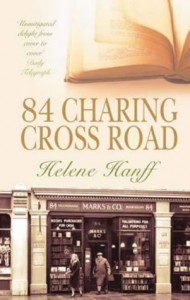
84 Charing Cross Road by Helene Hanff

Posted January 18, 2014 by Michael @ Knowledge Lost in Non-Fiction / 0 Comments

84 Charing Cross Road by Helene HanffTitle: 84 Charing Cross Road (Goodreads)
Author: Helene Hanff
Published: Virago, 1970
Pages: 230
Genres: Non-Fiction
My Copy: Library Book

Buy: AmazonBook Depository (or visit your local Indie bookstore)

84 Charing Cross Road documents twenty-year of correspondences between Helene Hanff and Frank Doel. Helene was an American writer while Frank the chief buyer of Marks & Co, an antiquarian bookseller located at the eponymous address in London, England. Starting out as a request for obscure classics, the book follows the blossoming relationship with Helene and the people of Marks & Co. Followed by The Duchess of Bloomsbury Street, a collection of diary entries of Helene’s trip to England and the tour of bookshops.

Helene noticed an ad in the Saturday Review of Literature and first contacted the shop in 1949. This started a beautiful love story found in this book, not between Helene and Frank but rather a love of books. This is the type of book you read if you are a book lover; it makes me wish I could correspond with a bookstore (or a book lover) about books. Can you imagine this happening with Amazon or Book Depository? Nowadays we have twitter (which I’m always on talking about my love of books) but 140 characters sometimes are not enough to say what you want to say.

I went into this book a little unsure, a collection of letters between a book lover and a bookseller, how great can this book really be? What I found was that the silver tongue and wit of Helene Hanff really made this book for me. You know that feeling in writing where you not sure if the person is being sarcastic or not, I started off wondering this but so found she had a wicked sense of humour and I’m so glad the people of Marks & Co never took offense (or they didn’t appear to). This might have been their (Frank Doel and the others that wrote to Helene) professional nature that slowly changed into a friendship, once they started to get to know each other and understood her sense of humour.

One of the major problems I had with this book is not really a problem but a personal preference, which has to do with grammar and formatting. I understand they tried to keep the writing the same as the letters but I wouldn’t mind if they fixed it a little to add punctuation and correct it. Another thing that throws me was the missing letters, I know things get lost but when you are absorbed in a conversation about a book (like Pride and Prejudice) it is disappointing to not know what happened.

The edition of 84 Charing Cross Road I borrowed from the library also came with The Duchess of Bloomsbury Street. This is the travel diary of Helene Hanff’s time visiting London. Looking at details of this book the term ‘zesty memoir’ is mentioned a few times, but I felt it to be a disappointment in comparison. It was entertaining but it didn’t have the banter or wit I expected, it just felt like a step by step play of everything Helene did while visiting London. While these two books work as companion pieces The Duchess of Bloomsbury Street was too one sided for my taste. Think of it like a sequel, once you finish 84 Charing Cross Road you’ll probably want to know what happened on her trip to London.

84 Charing Cross Road has been made into a movie and a stage play; I’ve not seen them but I’m interested to see how this book translates into another medium. I love how the book is promoted with the line “so begins a love affair”; this is a love affair with books. I managed to write this entire review without mentioning this is an epistolary book that I feel the need to mention my achievement. Highly recommend that you get your hands on both novels and reading them, especially if you are a lover of books.


2014 Reading Goals

Posted December 21, 2013 by Michael @ Knowledge Lost in Literature / 9 Comments

With 2014 so close, it is time again to start thinking about what my reading goals will be for next year. Firstly I want to have a quick look at how I went with my 2013 Reading Goals. First of all I went on a semi book buying ban which lasted most of the year but didn’t do much to reduce my TBR (To Be Read shelf) but it did get me to use the library more (see my post Book Buying Bans Don’t Work). Secondly there was the reading goal of 150 books (on Goodreads) which I did complete. I stated in my 2013 Reading Goals post that “I would just take the time and read some bigger books and some non-fiction” which I feel I failed. I did read some bigger books and non-fiction but not enough to satisfy myself. Lastly there was the Literary Exploration reading challenge, which was a lot of fun and I did complete.

What does that mean for 2014? Well I would like to move away from a reading goal, I like the idea of trying to hit 100 or 150 books in the year but I want the freedom. I don’t want to pressure myself to read x amount of books a week or year, I want to read bigger books and with no reading goal I might be able to achieve this. I’m not sure if I will achieve this, I’m sure I’ll cave and set my reading goal on Goodreads to 150 books.

I do want to read more non-fiction, maybe I can put pressure on this and set a 2 book a month goal on myself. I’ve recently enjoyed more non-fiction and might have finally caught the (non-fiction) reading bug, especially books about books. I want to try and nurture this and hopefully I’ll find a passion towards biographies and non-fiction as well as fiction. As for reading more big books, I’ll continue working on that, but I’m not going to force anything.

Finally the Literary Exploration reading challenge is back for another year. I will be doing the ‘Insane challenge’ again, that is 36 books in different genres. I might even get cocky and try and do two books from the 36 different genres, but I will see how I go. I like that I’m willing to explore all genres and want to make sure I read more in some of the genres I don’t normally read. I will continue to advocate the joys in reading more widely and I hope the Literary Exploration reading challenge will help more people discover this.

What are other people planning for next year? Are any trying something a little bit different? I’m interested in learning more about other people’s reading goals and hopefully discover some new ways to challenge myself for 2015. Hope everyone enjoys the holiday period and are excited for 2014’s reading challenges.


Book Buying Bans Don’t Work

Posted December 7, 2013 by Michael @ Knowledge Lost in Literature / 9 Comments

This year I decided to go a book buying ban, I was only allowed to buy books that I needed (for book clubs or study). The idea was to reduce my TBR (To Be Read) and focus on the books that are on my shelves that I haven’t read. I have so many unread books that I have a whole bookshelf in my bedroom full of books to read next. I kept to this book buying ban till very recently and what I learnt was; there is no way to reduce your TBR!

As a book blogger, you soon discover there are a lot of ways to get books you want to read without having to pay for them. Granted this is not always the case and for the books you are dying to read, it is probably better to just buy the book. I think all serious readers know the different ways to get free books. I’m not talking illegal; I’m talking about making use to your library, ebook services, galleys, egalleys and so on. You can do pretty well for yourself as a book blogger and never have to buy a book.

For me, I’m not the type of reader that focuses just on new releases so galleys (or ARCs) and egalleys (while great) was not my main source of books this year. Most of the books I read this year were actually from the library and there wasn’t much from my shelf. I spend so much time on the library website looking for books that I had on one of my Goodreads TBR’s selves (I have two on Goodreads one for books on my shelf and one for the books I don’t own) and reserving them.

So what I learnt from this experiment is I like owning books and I’m glad to be out of this book buying ban. But the main lesson was that I need to use the library more, they are a great service and I need to take full advantage of it. There is one other thing I learnt from this book buying ban and that is, some books interest you at a point in time but you often lose interest before actually reading it. There is a heap of books I wanted to read but never got around to it and I’m glad I didn’t impulse buy the books. Buzz books are interesting but sometimes you need to understand what you like to read more than what is so exciting at the time.

Have you tried a book buying ban? If so, I would love to know why you tried it and did it help you achieve what you wanted to achieve. I don’t think I’ll go on a book buying ban again but I think I will approach reading differently. My TBR is so big and I’m not sure how to reduce it, maybe I have to force myself. Let me know if you have any other thoughts on book buying bans, I would love to hear them.