Tag: Classic

Crime and Punishment by Fyodor Dostoevsky (trans. by Oliver Ready)

Posted November 10, 2020 by Michael @ Knowledge Lost in Classic / 5 Comments

Crime and Punishment by Fyodor Dostoevsky (trans. by Oliver Ready)Title: Crime and Punishment (Goodreads)
Author: Fyodor Dostoyevsky
Translator: Oliver Ready
Published: Penguin Classics, 1866
Pages: 702
Genres: Classic
My Copy: Paperback

Buy: AmazonBook DepositoryKindleWordery (or visit your local Indie bookstore)

What I love about rereading a translated classic is that most of the time there are so many translations to try out. The translator makes a big difference and it is amazing how different it can make in interpreting the text. I love Russian literature and have openly discussed my issues with most of the commonly used translators, being their translation method, the anglicising of names or their censorship of the text. I will leave you to work out my meaning here, I just reread Crime and Punishment, but being an outsider to a BookTube readathon. My issue was the fact they picked a translation that I was not interested in reading, so I buddy-read the Oliver Ready translation with Derek from Read the World! I thought it was a way of being ‘sort of’ apart of the community reading event but still have a more one-on-one conversation with a better translation.

It has been eight years since I last read Crime and Punishment, and looking back at my previous review, it does not look like I said anything interesting about this great novel. I mention the class struggle and internal conflict of Raskolnikov, but I did not really go into any detail. The internal conflict is obvious, you can see a psychological break down of Raskolnikov after the murder, but I struggle to comprehend everything Dostoevsky is trying to say here. From the reread, it feels like there is a philosophical question being thrown at the reader, but Dostoevsky never seems to offer any insights. I wonder if Dostoevsky had any true answers here, because on this reread, I feel like the struggle with understanding the psychological and philosophical ramifications of the crime is the purpose of the novel and no true answers are given, or if they are I might find out on a later reread.

Class struggle was an interesting topic to explore with Crime and Punishment. Raskolnikov is struggling with the idea of class internally. He has it in his mind that he is a wealthy intellectual, but in reality, he is just a struggling young man living off the money his mother gives him. Upon rereading, I was fascinated to just how disillusioned he is about his own class status. He is just a young man, that really has no idea of his own value or how to budget his money. I found it interesting to look back at my reading of this novel, I was closer to the same age as Raskolnikov and probably had similar naivety. However, I will not go into great detail about this, as you will be able to find my discussion of the book with Derek here.

I was very impressed with Oliver Ready’s translation of Crime and Punishment; I think his translating method really appealed to me. There was some modernisation of the writing but done in a way that still felt dated. Like he used phrases that felt old but still more contemporary, and I think he managed to nail that balance of making the book accessible, while still feeling like an older piece of literature. I really hope Ready continues to translate some of the Russian classics, not just Dostoevsky.

I am probably going to regret not putting extra time into this review, I have a lot to say but I know that I want to save that for the podcast. This time reading it, I think I cared more about the secondary characters rather than Raskolnikov, particularly his sister Dunya, but I also liked Sofya. She was a fascination for me, and I wish Dostoevsky spent more time with her. I will have to read this novel again and again, not sure which translation I will go with next, possible the Michael R. Katz translation. This is the type of book that needs to be reread every few years, just to see what you get out of it later.


The Door by Magda Szabó

Posted August 28, 2018 by Michael @ Knowledge Lost in Classic / 2 Comments

The Door by Magda SzabóTitle: The Door (Goodreads)
Author: Magda Szabó
Translator: Len Rix
Published: NYRB Classics, 1987
Pages: 262
Genres: Classic
My Copy: Audiobook

Buy: AmazonBook DepositoryWordery (or visit your local Indie bookstore)

Magda Szabó is one of those authors I have wanted to read for a very long time; her novel The Door seemed like the perfect place to start. This Hungarian modern classic explores the relationship between two very different women. Our narrator Magda is a writer and intellectual who is constantly in and out of favour with the government, while Emerence is her strong and opinionated house keeper. The novel starts with Magda waking up from a dream to face a haunting fact, that she killed Emerence.

The first thing that sticks out to me in this novel is the relationship between Magda and Emerence. I am drawn to the raw approach Magda Szabó took to explore this relationship. There are times where there was heat and toxicity between the two but then there were other times of affection and love. It is rare to read a relationship written so well. I often feel like the nuances of a relationship are never explored to any satisfactory level. In The Door we get to experience the ups and downs of this relationship. There are many times I felt frustrated by their actions but that ends up just being their different personalities butting heads.

Throughout the novel, a door is used as a metaphor to give the reader a more in depth look at these two characters. At times the door is a symbol of secretiveness, especially when it comes to Emerence. However there are times that it is used to symbolise the current state of their friendship. Whether they were actively distancing themselves from each other or they were close enough to share in a secret. The effect of the door becomes an important symbol of understanding Emerence. The fact that she would greet her guests outside and never let them inside shows just how close the two have become when she lets Magda inside.

Set between 1960 and 1980 in Hungary, it is important to know that this was when the Hungarian Socialist Workers’ Party was in control. If you explore this relationship of Magda and Emerence under a Marxist lens you will see where I am going here. We have Magda representing the intelligentsia and Emerence is a symbol of the working class. The idea behind the Bolshevik Revolution was to make sure people were treated the same. Without the working class, the October Revolution would have never happened. However it was the intelligentsia that took leadership, essentially creating a new social class system, thus negating their whole revolution.

In the end of The Door we are left we are left with the emptiness of losing Emerence. This woman seemed to possess inhuman strength and drive and her death left such a big hole not only Magda’s life but the whole community. If I was to compare Emerence death with the state of Hungary at the time of writing this novel. I would say that this is a reflection of the Hungarian economic and political reforms which let the country into mounting foreign debts. The cause of this points to Hungary’s outdated manufacturing facilities the inability to produce goods that were saleable on world markets.

It might be my love for Soviet literature, but my approach to this was very much a Marxist approach. Like many books in the Soviet era, I think The Door explored so many interesting elements of the country’s political and social issues. From religion to the class struggle and then the death of the working class. Analysing a novel and looking at the historical context really opens up the book for me. I know some people do not appreciate literary theories but for me it is a way to bring the text to life. Marxism and psychoanalysis are the two methods I seem to use the most, but I do not think I am equipped to fulling analyse Emerence. Although Magda might be easier, same name as the author, a writer, an enemy to the Communist Party, sounds autobiographical to me. Which makes me wonder, what was she trying to say with the death of Emerence?


The Seven Madmen by Roberto Arlt

Posted July 17, 2018 by Michael @ Knowledge Lost in Classic / 3 Comments

The Seven Madmen by Roberto ArltTitle: The Seven Madmen (Goodreads)
Author: Roberto Arlt
Translator: Nick Caistor
Published: Serpent's Tail, 1929
Pages: 323
Genres: Classic
My Copy: Paperback

Buy: AmazonBook DepositoryKindleWordery (or visit your local Indie bookstore)

Remo Erdosain is a typical middle-class man; that is until he finds himself going down the rabbit hole of conspiracies. The mysteries surrounding The Astrologer finds Erdosain going from a recently unemployed accounting clerk to a follower of a political fanatic. Under the charismatic sway of The Astrologer, The Seven Madmen follows the downwards spiral of Remo Erdosain, a path that could be fatal for the people of Buenos Aires.

One thing that really stuck out with this novel is the way Roberto Arlt wrote the character of The Astrologer. He could be a fanatic religious leader, a socialist revolutionary or just a fascist. No matter how you view this character, his vile thoughts are harmful to both Remo Erdosain and others. This opens the book to explore extremist behaviour without making a political stand. The political turmoil that has rocked Argentina during this time, lead to dangerous ideas from multiply parties or factions and I thought The Seven Madmen brilliantly explores the destructive nature without picking a side.

Written as an existential novel, The Seven Madmen is a realistic depiction of the social issues facing Argentina during the early twentieth century. While this is an early example of magical realism, using fantastical elements to explore myth and reality, the novel became a prophetic depiction of the cycle of violence that would plague the country for the rest of the twentieth century. The novel remains a modern classic today because of its ability to depict the political turmoil but also because it still remains relevant today. If this is not enough to convince you, this is probably one of the best apocalyptic novels I have read in a long time.

However The Seven Madmen is not a full novel, it is only the beginning. Still waiting for the second half of the story The Flamethrowers to be published into English. Fortunately The Seven Madmen does stand on its own. There is so much to explore in this book, and I will probably re-read it again before reading The Flamethrowers. There is so much to explore and with a little more knowledge about Argentinian history, this book just continues to open up. I love the political and economic turmoil in the novel and thankfully the afterword by Roberto Bolaño helped to understand so much more (seriously more publishers need to switch to an afterword instead of an introduction). Roberto Arlt has that 1920s style of written that reminds me of the great pulp writers like Raymond Chandler and James M. Cain, which only served to add to my enjoyment of this book. Seriously, this is a must read.


How Frankenstein Changed My Life

Posted June 14, 2018 by Michael @ Knowledge Lost in Literature / 2 Comments

Two hundred years ago, a book was published that literally changed my life. It is very rare to say that a book could have such a life changing effect on someone but in my case it is actually true. It happened about nine years, without going into too many details, I was not happy with myself. I was directionless and went through a self-destructive phase. While it was not just literature that saved me, I do have to give credit to my wife as well. Books ignited the spark in me that made everything else click into place. I am a very different person to who I was back then, I suddenly turned into a passionate and voracious reader thanks to Mary Shelley’s Frankenstein.

It all started with when I discovered a little radio show called The Culture Club by Craig Schuftan. This show explored similarities between music and the art world. This peaked my interest and I started reading his book Hey, Nietzsche! Leave Them Kids Alone which looked at the similarities modern rock had with the Romantic period. Looking at bands like My Chemical Romance, Weezer, and The Smashing Pumpkins. The Romantic poets were the rock stars of their time, and their angst felt very similar. I knew I had to read Frankenstein and it all fell into place from there. Reading this classic, I quickly identified with the creature Victor Frankenstein had created. Although his pain was far more real than my angst, I have people who care about me, I was just an outsider.

My feeling of not belonging in this world was similar to what I was reading in this novel. Frankenstein was the first book I picked up because of Hey, Nietzsche! Leave Them Kids Alone and I did that because of one of my favourite Smashing Pumpkin songs, Disarm. In this song Billy Corgan fantasises about cutting his parents limbs off, because he hated them for bring him into the world.

“It’s about chopping off somebody’s arms.. The reason I wrote Disarm was because, I didn’t have the guts to kill my parents, so I thought I’d get back at them through song. And rather then have an angry, angry, angry violent song I’d thought I’d write something beautiful and make them realize what tender feelings I have in my heart, and make them feel really bad for treating me like shit. Disarm’s hard to talk about because people will say to me ‘I listen to that song and I can’t figure out what it’s about.’ It’s like about things that are beyond words. I think you can conjure up images and put together phrases, but it’s a feeling beyond words and for me it has a lot to do with like a sense of loss. Being an adult and looking back and romanticizing a childhood that never happened or went by so quickly in a naive state that you miss it.”  — Billy Corgan on Disarm (RAGE, 1993)

This tenderness that Corgan reflects in Disarm is not dissimilar to the creatures own feeling. One of the most common themes I get while re-reading Frankenstein is this feeling of how society treats people who are different. For the creature, he came into this world and was immediately rejected by his creator. He was also rejected by everyone he encounters. He pleads with Victor Frankenstein to create him a companion; that is all he wants. He came into this world with love in his heart, but was denied it at every turn. Most of my early reading life focused on this idea of an outsider and how the world treated them. Books like American PsychoPerfume by Patrick Suskind and the Dexter Morgan series all deal with these monstrous characters and how the world and their situation has shaped them. I found comfort in the exploration of the outsider in literature. The idea of blaming society for the way I was felt good, but with my new found thirst for literature came a better understanding of myself and the way the world works. Nowadays I like to read transgressive fiction because it is very different to my own life but while writing this article I cannot help but wonder if it was originally because I identified with them more than with a protagonist that gets a happy ending.

Re-reading Frankenstein again I cannot help but reflect on how different each reading experience really is. There are so many different ways to read Frankenstein, commonly there is the idea of science taking things too fast, or the dangers of playing God. Or perhaps Mary Shelley wants to simply say actions have consequences. When I studied Frankenstein in university I knew a little more about Mary Shelley, so I was looking at Frankenstein with some context.

Before Shelley wrote Frankenstein she had given birth to a daughter, two months premature. This daughter only lived a few weeks, a year later she gave birth to William Shelley. After the birth of her son she suffered from postnatal depression. The birth of William happened a few months before the story of Frankenstein was conceived, so it wasn’t too surprising to see William’s name in the novel. William was Victor Frankenstein’s youngest brother, who was strangled to death by the monster. So, either Mary Shelley’s depression manifested an urge to strangle William, or there is something far more complex happening in the novel. Looking at the story arc of William’s death, we know a young woman is accused of the murder. So maybe there is something here to be said about the mother-child relationship, especially with the idea of maternal guilt and thinking about her lost daughter.

Maybe you want to explore this idea of creating life without the need of a woman, or maybe this is just a parody of creationism. Even the subtitle of ‘the Modern Prometheus’ means you can look at the similarities between this novel and Greek mythology. Paradise Lost by John Milton is another piece of literature that is often explored in relation to Frankenstein. I am struck by how many different ways we can look at Frankenstein and as I develop my own skills in analysing literature, I often return to this classic and see what I can find with a re-read. Mary Shelley is a very interesting person to read about, and I have picked up a few biographies on her, including The Monsters: Mary Shelley and the Curse of Frankenstein by Dorothy & Thomas Hoobler and Young Romantics: The Shelleys, Byron and Other Tangled Lives by Daisy Hay (my next one will be Romantic Outlaws: The Extraordinary Lives of Mary Wollstonecraft and Her Daughter Mary Shelley by Charlotte Gordon). I find knowing the context only enhances my enjoyment of a book. I know people read for many different reasons but for me it is all about educating and improving myself. I do read for escapism but I tend to enjoy a novel more if there is some interesting themes to explore.

For someone who has only been a reader since 2009, I feel like I have a lot of literature to catch up on but I still feel the urge to revisit my favourites over and over again. I started off wanting to re-read Frankenstein every year but that quickly faded away, but I still like to revisit the text, it still remains one of my favourites. Did you know there are two different editions of Frankenstein out there? The book was originally published in 1818 but it was then republished in 1831 with revisions made by Mary Shelley. While the 1831 edition is commonly the one that gets published, I like to switch between the two different editions.

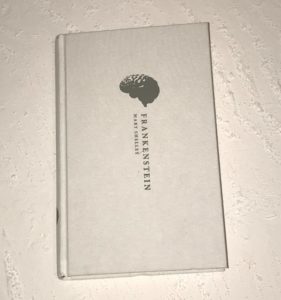
I have lost count of how many copies I own of Frankenstein. I own some beautiful editions including a new hardcover of the 1818 text from Oxford World Classics which I am currently reading. The book means so much I have copies all over the house, and one at work. Plus there is the ebook and audiobook edition I can access from my phone at any time. Literature plays such a huge part of my life, even I have trouble imagining my life without them. Frankenstein played a big part in my own transformation. All I can hope is that people continue to find something in this piece of classic literature. I will be re-reading this for years to come and I hope it continues to make an impact to people over the next two hundred years.

This beautiful edition of the 1818 text of Frankenstein was sent to my by Oxford World Classics

This review was originally published in the literary journal The Literati


The Invention of Morel by Adolfo Bioy Casares

Posted January 9, 2017 by Michael @ Knowledge Lost in Classic / 2 Comments

The Invention of Morel by Adolfo Bioy CasaresTitle: The Invention of Morel (Goodreads)
Author: Adolfo Bioy Casares
Translator: Ruth L.C. Simms
Artist: Norah Borges
Published: NYRB Classics, 1940
Pages: 103
Genres: Classic
My Copy: Paperback

Buy: AmazonBook Depository (or visit your local Indie bookstore)

Never have I read anything like The Invention of Morel, it is beautiful and yet left me somewhat confused. I have spent more time thinking about this novella than actually reading it. While the plot is straight forward, it is the bizarre and fantastical elements that left me perplexed. The novella tells the story of a man on the run, who hides on a deserted island (the fictional island of Villings which is believed to be part of the Ellice Islands, now known as Tuvalu). When people start to arrive on the island, things become a little more complicated.

This is the book that launched Adolfo Bioy Casares’s career, despite being his seventh book. He remains a little obscure outside of Argentina, even though his friend Jorge Luis Borges is known to sing his praises. While this book is sometimes categorised as science fiction or fantasy, for me it reads like a psychological adventure story. Rather than focusing on a plot which is common in genre fiction, he prides himself in making the book plotless and almost formless. This is a unique style for a novel like this but helps explore the inner psyche of the narrator.

The way the novella is written leaves you constantly questioning the reliability of the narrator. This is done in many different ways, from the disease that is apparently effecting the island (symptoms seems to be similar to radiation poisoning) to the hallucinations the narrator experiences from food poisoning and just the bizarre nature of the novella as a whole. I found this to be an effective way to explore The Invention of Morel and the main protagonist. It was these psychological elements of the book that I ended up appreciating.

The Invention of Morel was written in a time where radiation has a hot topic. I do not know much about the history of radioactivity but I know Marie Curie died in 1934 from aplastic anaemia, which is believed to be brought on by exposure to radiation, then in the 1940s there was a race to perfect the nuclear bomb. This I believe had an effect on Bioy Casares’s novella and helped him explore the idea of dying which leads to the theme of waiting for his soul to pass on.

I have to add that the reason Louise Brooks was put on the cover of the edition I read was because Adolfo Bioy Casares wrote this novella as a reaction to the demise of her film career. Take that to mean what you will, I do not know anything about Brooks to be able to draw any connections between her life and the book. Also the illustrations were provided by Norah Borges, Jorge Luis Borges younger sister. I am so please to have read The Invention of Morel, it was such an enjoyable experience and this novella is something I will contemplate for years to come.


Don Quixote by Miguel de Cervantes

Posted July 5, 2016 by Michael @ Knowledge Lost in Classic / 8 Comments

Don Quixote by Miguel de CervantesTitle: Don Quixote (Goodreads)
Author: Miguel de Cervantes Saavedra
Translator: Edith Grossman
Published: Harper Perennial, 1615
Pages: 940
Genres: Classic
My Copy: Paperback

Buy: AmazonBook DepositoryKindle (or visit your local Indie bookstore)

Don Quixote is a staple in western literature, it ushered in the golden age of Spanish literature and it is also is one of the earliest examples of the modern (canonical) novel. The novel tells the story of a Spanish nobleman (Hidalgo) obsessed with the chivalric romance literature of the middle ages, who sets out to try and revive chivalry. With his trusty squire Sancho Panza, he sets out on an adventure to undo all the wrongs and injustices he encounters in the world. Claiming to be a knight. he gives himself the name Don Quixote of La Mancha.

From the very start, we get a sense that maybe Don Quixote is crazy. In psychology the term Quixotism relates to “over-idealism” and is often used in reference to someone with a naïve romanticism towards utopianism. The term “tilting at windmills” refers to a scene near the beginning of the novel where Don Quixote races off to fight giants that were actually windmills. If you consider that Don Quixote went mad from all the books he was reading and set off to try and fix the world, then this could be used as a metaphor towards Miguel de Cervantes Saavedra own feeling toward the same books, but rather than fixing the world he wrote Don Quixote. This brings to mind the quote from Toni Morrison “If there’s a book that you want to read, but it hasn’t been written yet, then you must write it.”

Don Quixote, like many books of the time, was read to children; this is a novel I could never imagine being read to any child now. However one thing that makes this novel so great is that there are so many interpretations to be taken from the text. Harold Bloom (who wrote the introduction to my copy of the book) calls this a work of radical nihilism and anarchy, in the way it glorifies fantasy over reality. Calling him the Sorrowful Knight whose objective is that “He is at war with Freud’s reality principle, which accepts the necessity of dying.” The translator of the edition I read, Edith Grossman, has said, “When I first started reading the Quixote I thought it was the most tragic book in the world, and I would read it and weep”. However when she worked on the translation she remembered “sitting at my computer and laughing out loud.”

After the French Revolution a popular interpretation of the novel was that it was about ethics and righting the wrongs of society.  While later on it was a social commentary which always lead to the discussion of whose side Cervantes was on. You could even pull some religious or feminist themes out of this novel but for me, I read this as a Marxist text. The relationship between Don Quixote and Sancho Panza was a good representation of the class struggle. It is evident that Quixote needed Sancho Panza more than Panza needed him. Sancho Panza was there to rise the ranks of society while Don Quixote was be completely lost without his squire.

I cannot talk about Don Quixote without mentioning the way that Miguel de Cervantes played with intertextuality. This novel is split into two parts; the first part was originally published in 1605. In 1614 a second volume was released by an anonymous author. It is believed that Miguel de Cervantes started writing his second part after this and in 1615 it was released. While part one was a spoof of the literature that annoyed him, part two was more an attack on this unauthorised story of Don Quixote. It even made references to this scandal as Don Quixote explores the concept of someone writing about him.

This is the type of novel that deserves to be read again and again. Every reading will probably offer something different and this review is a reference point of what I got out of reading this book the first time around. If you get the chance, I recommend reading this with someone. I read this with Hilary from Yrrobotfriend and the discussions were the best part of this reading experience. While reading this novel I enjoyed part one the most but on reflection, I think part two offers more.


The Brothers Karamazov by Fyodor Dostoevsky

Posted May 23, 2016 by Michael @ Knowledge Lost in Classic / 4 Comments

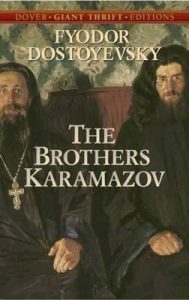
The Brothers Karamazov by Fyodor DostoevskyTitle: The Brothers Karamazov (Goodreads)
Author: Fyodor Dostoevsky
Translator: Constance Garnett
Published: Dover Thrift, 1880
Pages: 736
Genres: Classic
My Copy: Paperback

Buy: AmazonBook DepositoryKindle (or visit your local Indie bookstore)

Written in the final years of Fyodor Dostoevsky’s life (he died four months after it was published), The Brothers Karamazov is probably his most philosophical novel. It tells the story of four very different brothers who all got involved in the murder of their own father. While similarities can be made between this novel and Crime and Punishment as they share similar themes, they are still vastly different. Rather this book deals more with life, death and the meaning of life.

“The mystery of human existence lies not in just staying alive, but in finding something to live for.”

At the start of the novel we meet Fyodor Pavlovich Karamazov, who fathers three sons during his two marriages and is rumoured for have fathered a fourth illegitimate son. He often makes the list when people talk about ‘the most disgusting characters’ in literature, or similar topics. This forms the basis of the plot and the brothers grow up with very different lives, separated from their father and each other. As a result these four brothers are very different; Dmitri is a sensualist, Ivan a rationalist (an atheist), Alexei is a novice in the Russian Orthodox Church and Pavel, well let’s just say, silent and sly.

The very different personalities of these brothers is what allows Fyodor Dostoevsky to explore all his philosophical ideas. One of the major themes in this novel is that of religion and while questioning faith is a common theme in modem literature at the time, in Russia it was considered big deal. In 987 Vladimir the Great sent out envoys to study the various religions of neighbouring nations in order to pick the right religion for Russia. Seems a little unorthodox (no pun intended) but eventually the nation adopted Orthodoxy. What became Russian Orthodoxy was embraced by all of Russia and had its own vision of creating a country of love and humility.

This is important because The Brothers Karamazov is not about questioning the existence of God but rather the role of the church when it comes to morality. It should be noted this was at a time where the Russian Socialism movement was gaining some traction and their goal was to create heaven on earth. With characters of vastly different ideals, Dostoevsky was able to explore the ideas he had floating in his head from different angles. Was Christianity simply a mask for the authority? In one of the most famous chapters Ivan talks about “The Great Inquisitor” which is a powerful argument of scepticism and against religious faith.

Other major themes found in the novel are that of fate and free will. This is closely connected with the ideas around religion. For Alexei, he has the freedom to commit to the order of the church, something that seems like a paradox to someone like Dmitri. Fyodor Dostoevsky explores the psychological makeup of control by society and authority. This plays into the Socialist debate at the time; do we have free will, when we are being controlled by the church or the Tsar. Or maybe we have the freewill but blindly follow the laws put in place by the church and the authority without question.

For Ivan, he lives by the philosophy that “everything is permitted”, which leads to another major theme, that of justice and morality. The murder of Fyodor Karamazov is at the centre of this theme, as well as the trail the follows. The Brothers Karamazov essentially wants the reader to question life, question their beliefs, and the roles of earthly or divine justice. The justice system found in the novel appears to be weird and problematic. The innocent are found guilty, the jury are manipulated by lawyers and the book even questions harsh punishments; like exile to Siberia. It is here we wonder about the different between morality and the laws imposed upon us.

There is so much more you can get out of The Brothers Karamazov (for example family) but for me, this reading through was about questioning life in the lead up to death. I really liked how Fyodor Dostoevsky used the different brothers to explore the different angles and question his own beliefs. Dostoevsky often wrote about society, religion, politics and ethics, however in his final years while writing The Brothers Karamazov, we get the sense that he was thinking more about his own life and his legacy. In fact his tombstone is inscribed with the verse from John 12:24; “Verily, verily, I say unto you, Except a corn of wheat fall into the ground and die, it abideth alone: but if it dies, it bringeth forth much fruit.” Most people know that I’m a fan of Fyodor Dostoevsky and I am so glad to have read The Brothers Karamazov however next time I plan to read it in the David McDuff translation, rather than this one translated by Constance Garnett.


We Have Always Lived in the Castle by Shirley Jackson

Posted December 16, 2015 by Michael @ Knowledge Lost in Classic, Horror / 0 Comments

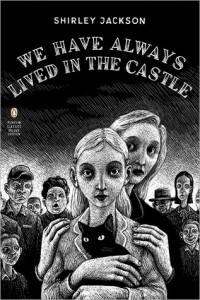
We Have Always Lived in the Castle by Shirley JacksonTitle: We Have Always Lived in the Castle (Goodreads)
Author: Shirley Jackson
Narrator: Bernadette Dunne
Published: Penguin, 1962
Pages: 146
Genres: Horror, Classic
Buy: AmazonBook DepositoryKindle (or visit your local Indie bookstore)

The Blackwood sisters, Constance and Merricat (Mary Katherine) try to live an idyllic life with their uncle Julian in their big New England house. The villagers surrounding them hate them and often chant hurtful words. The Blackwood family were once much bigger, but one meal changed it all. Arsenic in the sugar served with dessert killed the rest of the family, Constance never had sugar, Merricat was sent to her room before supper and Julian only had a little sugar and is now a shell of his former self. Despite the fact that Constance was arrested and then acquitted of this crime, the rumours still run wild and the Blackwoods live their life in seclusion, that is until Charles arrived and tried to steal the family fortune.

While We Have Always Lived in the Castle is the first Shirley Jackson I have read, it was in fact her final novel. I went into this book knowing nothing about the story and I found it the perfect way to experience the novel. An American gothic that is in part a haunted house story, in part a mystery, and as Jackson’s biographer Judy Opphenheimer calls it a “paean to agoraphobia”. A psychological story that explores the effects of rumours and public opinion, all told from the perspective of eighteen year old Merricat, who is an unreliable narrator.

There is a real mystery about the Blackwoods, but I was more interested in the effects the villagers had on the family. I know the isolation is a reflection of the author’s own agoraphobia and nervous conditions but I took it more as a look into social issues, essentially the effects of rumours and speculation. I cannot help but compare the book with Frankenstein. This is the beauty of fiction and the way people all have different perspectives on the same piece of literature.

I found both Constance and Merricat to be wonderful characters, they are both strong and at times unlikeable, while being mysterious and complex. Merricat has to be one of the best narrators found in literature; I never could fully understand her and she often surprised me. She is likeable but I could never trust her completely. She was an enigma and as the novel progressed and secrets revealed, I really appreciated the way Shirley Jackson crafted these characters.

There is a fine balance between the morbid and the whimsical to be found in We Have Always Lived in the Castle; it is poetic and haunting. Discovering Shirley Jackson came at the perfect time, I read this book during Halloween and I eagerly await next year to read another one of her novels. I know I could read Jackson at other times, but I do think her writing suited Halloween perfectly. I know The House of Haunting Hill is recommended, but I would love to know which of her other books should take priority.


The Legend of Sleepy Hollow by Washington Irving

Posted December 14, 2015 by Michael @ Knowledge Lost in Classic, Horror / 0 Comments

The Legend of Sleepy Hollow by Washington IrvingTitle: The Legend of Sleepy Hollow (Goodreads)
Author: Washington Irving
Published: Tor, 1820
Pages: 96
Genres: Classic, Horror
My Copy: Audiobook

Buy: AmazonBook DepositoryKindle (or visit your local Indie bookstore)

Most people know the story of Sleepy Hollow, we have probably seen a movie or the TV show. But how accurate are these adaptations to the book? The Legend of Sleepy Hollow is probably Washington Irving’s best known short story. Appearing in his collection The Sketch Book of Geoffrey Crayon, Gent along with the story that is often a companion to Sleepy Hollow, Rip Van Winkle. The Legend of Sleepy Hollow tells the story of Ichabod Crane in the Dutch settlement of Tarry Town and his encounters with the Headless Horseman.

There are many pop culture references to the Headless Horseman as well as adaptations. I remember Tim Burton directing a movie adaptation starting Johnny Depp and Christina Ricci and of course the more recent TV show. Although I cannot think of one reference or adaptation that seemed to get the story right. For starters, the TV show likes to portray Ichabod Crane as a gentleman (although a turncoat) but I got a very different experience in Washington Irving’s short story. I found Ichabod Crane to be a greedy character that wanted everything; from riches to notoriety.

The story is told as an investigation into the supernatural, trying to unlock the legend of the Headless Horseman. This worked really well, Washington Irving had a great ability in creating an atmosphere. As a reader I felt like I could picture everything he was writing and it really helped set the tension. Irving wrote beautiful words and combining this with the atmosphere, I felt myself fully immersed in the settlement of Tarry Town.

Having said that, the plot did not really go anywhere and it felt like it was over before it really got started. I think this story could have done with more pages, allowing to build the plot and characters in greater detail. There are some interesting themes of wealth, nature and truth but for the most part I felt it was lacking. I like the way Washington Irving wrote and I am glad that I finally know the story of The Legend of Sleepy Hollow now, even if it was just an average tale.


The Handmaid’s Tale by Margaret Atwood

Posted November 29, 2015 by Michael @ Knowledge Lost in Classic, Dystopia / 0 Comments

The Handmaid’s Tale by Margaret AtwoodTitle: The Handmaid's Tale (Goodreads)
Author: Margaret Atwood
Published: Vintage, 1985
Pages: 324
Genres: Classic, Dystopia
My Copy: Audiobook

Buy: AmazonBook DepositoryKindle (or visit your local Indie bookstore)

Most people would be familiar with Margaret Atwood’s novel The Handmaid’s Tale; a Christian totalitarian theocracy has overthrown the US government and are controlling reproduction. Set in the not so distant future, this dystopian society serves as a platform for Margaret Atwood to explore some real issues. Written in 1985, it is surprising to think that these themes and issues are still relevant thirty years later.

When I read this novel about four years ago, I think I missed the point, saying “I felt like Margaret Atwood spent too much time trying to explain the dystopian world in which The Handmaid’s Tale is set rather than the story itself.” I obviously was reading this book for its plot rather than trying to understand what Atwood wanted to say. To be fair I recognised this, citing “I understand she was trying to create a world that was a metaphor of a totalitarian society and explore the issue of women’s right” but even that makes me sound naive or stupid. One reason I like rereading books is for the fact that it shows me how much I have improved as a reader. I gave The Handmaid’s Tale three stars when I read it in 2011, but it is now clear to me that this is a brilliant novel and needs a much higher rating.

Looking at this dystopian society; the government wants control over reproduction. To do this, women become a political tool, rather than humans. This government was created due to a dramatic decrease in birth rates. Women become the property of their husband or the state. Women are not allowed to vote, have jobs, read or anything else that might make them have individual thoughts.

“There is no such thing as a sterile man anymore, not officially. There are only women who are fruitful and women who are barren, that’s the law.”

This one quote really summed up this novel for me; the whole idea that women are only useful for one thing. Women are considered subhuman and their only use involves their ovaries and womb. Even the main character, Offred reflects in one scene that her body was an instrument of passion and desire but now she has only one purpose; reproduction. She does not consider it rape, because she signed up to be a Handmaid; but what other choice did she have? In fact rape is severely punished and the government believes the women are protected. Yet would it not be considered rape if we take away the women’s rights, including their right to give consent?

There are many layers that could be explored within The Handmaid’s Tale, I would like to explore the novel deeper. I think looking at this book from a religious angle would be interesting as well, and I think I will need to give it a reread before considering that. I am glad to give this book another go; rereading this was eye opening and really highlighted just how much I have grown. One thing I found humorous was that Margaret Atwood set this book in the United States of America and references escaping to safety in Canada. This is an iconic novel and Atwood is an author well worth exploring; having said that, I have only read The Handmaid’s Tale and the MaddAddam trilogy. Lucky for me, I have so many more Margaret Atwood novels to explore.