Tag: Classic

A Dog’s Heart by Mikhail Bulgakov

Posted September 19, 2015 by Michael @ Knowledge Lost in Classic, Russian Lit Project / 4 Comments

A Dog’s Heart by Mikhail BulgakovTitle: A Dog's Heart (Goodreads)
Author: Mikhail Bulgakov
Translator: Antonina W. Bouis
Published: Alma Classics, 1925
Pages: 144
Genres: Classic
My Copy: Library Book

Buy: AmazonBook DepositoryKindle (or visit your local Indie bookstore)

Serge Voronoff is a surgeon born in Voronezh, Russia and later a naturalised French citizen, famous for experiments implanting animal testicles into humans. This was during a time when xenotransplantation research was trending and in 1889 he injected himself under the skin with a combination of ground-up dog and guinea pig testicles. He theorised that the animal implants will help increases the hormonal effects to retard ageing. However his methods quickly lost favour when it was discovered any improvements were a result of the placebo effect. This real life scientist helped inspire Mikhail Bulgakov’s novel Dog’s Heart (also known as Heart of a Dog).

While foraging through the garbage on winter night in Moscow, 1924 a stray dog is found by a cook and given a scrubbing with hot water. While waiting his end, the dog lies there in self-pity, but to his surprise a successful surgeon Filip Preobrazhensk comes and gives him a piece of sausage. The dog followed Filip home where he is give the name Sharik, which is a word to describe a well pampered dog. Very experiments were performed on Sharik, including various transplants of human organs until he was transformed into an unkempt human and given the name Poligraf Poligrafovich Sharikov.

Having read a few books by Mikhail Bulgakov, I have come to expect one thing; social satire on the state of Communist Russia. A Dog’s Heart has this in spades, satirising the Communist ideal of the New Soviet man, while even criticising eugenics. The New Soviet man was an idolised version of what the Communist Party of the Soviet Union believe all citizens should be like. Leon Trotsky wrote about this in his 1924 book Literature and Revolution; “Man will make it his purpose to master his own feelings, to raise his instincts to the heights of consciousness, to make them transparent, to extend the wires of his will into hidden recesses, and thereby to raise himself to a new plane, to create a higher social biologic type, or, if you please, a superman.” The New Soviet man (or woman) was selfless, learned, healthy, muscular, and enthusiastic in spreading the socialist Revolution, this was the ideal citizen needed to grow the Soviet nation.

The plot of A Dog’s Heart parodies Mary Shelley’s Frankenstein while it looks at the idea of the New Soviet man. This gives Bulgakov the ability to look at eugenics as well. Take for example the practices of Serge Voronoff and compare them with Victor Frankenstein. This paints a vivid picture and if the Soviets knew how to create their ideal citizen in a lab there is no doubt in my mind they would be working towards; it is possibly, they were researching a way in secret.

Mikhail Bulgakov seems to have started a tradition of doubling names with patronymic; Poligraf Poligrafovich in A Dog’s Heart and Leopold Leopoldovitch in A Young Doctor’s Notebook. This could be considered a nod to Nikolai Gogol’s with his hero Akakii Akakievich in “The Overcoat”. However I have come to learn this is also satirising the new naming conventions adopted during the early Soviet Union. A large number of Soviet children were given atypical names to show their Revolutionary support. This included initialisms, for example; Мэл (Mel named after Marx, Engels and Lenin), Марлен (Marlene named after Marx and Lenin) and Стэн (Stan named after Stalin and Engels).

The more I read from Mikhail Bulgakov, the more I think he was one of Russia’s best satirist. I have been slowly working my way through Manuscripts Don’t Burn, which is a collection of Bulgakov’s letters and diary entries compiled by J.A.E. Curtis. This has been beneficial in gaining insight to the start’of the Soviet Union at the time of writing his novels. A Dog’s Heart is one of Bulgakov’s better known novels and I am glad to have read it with an understanding of the personal and historical context. I believe The Master and Margarita is Mikhail Bulgakov’s best novel but A Dog’s Heart is worth checking out too.
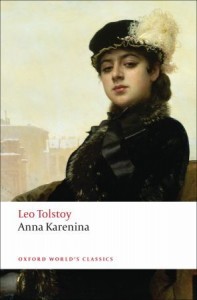

Anna Karenina by Leo Tolstoy

Posted May 28, 2015 by Michael @ Knowledge Lost in Classic, Russian Lit Project / 0 Comments

Anna Karenina by Leo TolstoyTitle: Anna Karenina (Goodreads)
Author: Leo Tolstoy
Translator: Aylmer Maude, Louise Maude
Published: Oxford World's Classics, 1873
Pages: 831
Genres: Classic
My Copy: Personal Copy

Buy: AmazonBook DepositoryKindle (or visit your local Indie bookstore)

Anna Karenina is the tragic story of the socialite’s marriage to Karenin and her affair with the wealthy Count Vronsky. The novel begins in the midst of their families break up due to her brother’s constant womanising; a situation that preferences her own situation throughout the novel. Running in parallel to this story of Konstantin Levin, a humble country landowner that wishes to marry Kitty, who is Anna’s sister in-law. Anna Karenina is a pinnacle piece of realist literature, exploring a wide range of family issues.

At over 800 pages, Anna Karenina can be a daunting novel to pick up; the large cast of characters does not make it any easier. I look at this classic novel as an exploration into melodrama that just about every family experiences. Born in 1828, Lev (Leo) Nikolaevich Tolstoy was born into a large and wealthy Russian landowning family, and has often been suggested that Anna Karenina is based on a similar social upbringing. While there are vast differences, issues with wealth, religion, farming and morality are issues that seem to parallel between reality and fiction. The story arch of Levin is considered to be autobiographical; Tolstoy’s first name is Lev (although in English he is known as Leo) and the Russian surname Levin actually means Lev.

Leo Tolstoy has been known for adding real life events into his fiction as a way with dealing with current political and social issues. Within Anna Karenina, events like the liberal reforms initiated by Emperor Alexander II of Russia and the judicial reform are used as the backdrop for the novel. This allows him to explore current issues, like the developing of Russian into the industrial age and the role of agriculture in these changing times. Also Tolstoy questions the role of the woman in this changing society and (the ever popular in Russian lit) class struggles.

The story of Anna Karenina is probably the most interesting for me and I enjoyed reading the struggle between love and the public opinion. She was trapped in a marriage and wanted to divorce but Karenin, who was a politician cared more about his public image. Then there is the fact that Anna’s brothers womanising destroyed the family and now she is faced with a similar situation that could cause the same damage. Adultery becomes a big theme within the book and seems to be a common theme within Russian literature to this day. However with Nathaniel Hawthorne’s The Scarlet Letter (1850) and Gustave Flaubert’s Madame Bovary (1857), these three novels seemed to start a fascination in exploring the themes of passion and adultery in the mid to late nineteenth century.

There is a lot to explore within this book, and re-reading Anna Karenina was such an enjoyable experience. I know big books often scare me but there is something about going back to a much-loved novel that I find enjoyable. Leo Tolstoy intentionally made this novel long, he wanted to replicate life’s journey and the struggles people face along the way. I think he was able to capture that struggle and Anna Karenina will remain a favourite on my shelves and in Russian literature. There are so many more themes that could be explored within the novel but I will leave that for others to discover on their own.


The Stranger by Albert Camus

Posted May 2, 2015 by Michael @ Knowledge Lost in Classic / 6 Comments

The Stranger by Albert CamusTitle: The Stranger (Goodreads)
Author: Albert Camus
Translator: Matthew Ward
Published: Vintage, 1941
Pages: 123
Genres: Classic
My Copy: Paperback

Buy: AmazonBook DepositoryKindle (or visit your local Indie bookstore)

The Stranger (also known as The Outsider or L’Étranger) tells the story of Meursault, an unsympathetic French Algerian, who after attending his mother’s funeral, finds himself killing an Arab man. The novel follows a first-person narrative that explores the events before and after this murder. Albert Camus said is best when he said “I summarised The Stranger a long time ago, with a remark I admit was highly paradoxical: ‘In our society any man who does not weep at his mother’s funeral runs the risk of being sentenced to death.’ I only meant that the hero of my book is condemned because he does not play the game.”

On the surface The Stranger is the story of an emotionless protagonist; Meursault does not care about anything and could be considered a sociopath. However, this novel is often cited as an example of Camus’ philosophy on the absurd and existentialism. So in order to fully grasp the intent behind this classic novel, we must look into just what existentialism is and more practically absurdism.

The absurd is often referring to the conflicting philosophy that humans have a tendency to seek out value and meaning in life. However absurdism believes it is logically and humanly impossible to find any meaning of life. Philosophers may have very different doctrines but they generally believe that philosophical thinking begins with the human subject. Though existentialism comes from the disorientation or confusion that we are living in a meaningless (or absurd) world.

For Albert Camus, The Stranger is an exploration into the meaning of life and if life has no meaning what is the purpose of morality. Meursault’s detachment from the world is a result of his conclusion that life is meaningless; “The chaplain knew the game well too, I could tell right away: his gaze never faltered. And his voice didn’t falter, either, when he said, ‘Have you no hope at all? And do you really live with the thought that when you die, you die, and nothing remains?’ ‘Yes,’ I said.” Paradoxically, it was only after being sentenced to death, that Meursault was able to obtain some sense of happiness.

Without an understanding of Albert Camus’ philosophical ideas, I do not think that the reader will have any hope in truly understand or appreciating this novel. However I have heard that The Stranger has been an option for high school students (especially in America) to study. I wonder how many students fall into the trap of picking this novel thinking it was short only to discover how difficult it is to analyse. I do not have enough of an understanding of absurdism or existential philosophy to full appreciate The Stranger. However re-reading this novel has helped me understand this enough to enjoy the Camus’ philosophical ideas.


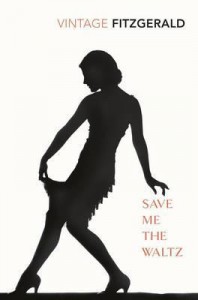
Save Me the Waltz by Zelda Fitzgerald

Posted March 14, 2015 by Michael @ Knowledge Lost in Classic / 2 Comments

Save Me the Waltz by Zelda FitzgeraldTitle: Save Me the Waltz (Goodreads)
Author: Zelda Fitzgerald
Narrator: Jennifer Van Dyck
Published: Vintage, 1932
Pages: 225
Genres: Classic
My Copy: Audiobook

Buy: AmazonBook DepositoryKindle (or visit your local Indie bookstore)

Save Me the Waltz is the story of Alabama Beggs, a young Southern girl who meets and falls in love with David Knight during World War I. The two inevitably get married and David goes on to become a successful painter, before moving their family to the French Riviera. However Alabama is determined to find her own success and takes up ballet. When she lands her first solo debut in the opera Faust the cracks in their marriage become evident.

After an episode of hysteria in 1932, Zelda Fitzgerald was admitted to the Johns Hopkins Hospital in Baltimore for treatment. Dr Adolf Meyer, an expert on schizophrenia was her doctor and as part of her recovery routine he got her to write at least two hours a day. Save Me the Waltz was written over the course of six weeks and was the first and only novel to be published by Zelda Fitzgerald. Her husband was outraged that she took so much of their personal life and added it into this novel. Despite the fact that the majority of F. Scott Fitzgerald’s novels are also autobiographical and he used the same material for his novel Tender is the Night.

I wanted to read Save Me the Waltz after reading Tender is the Night to compare the similarities. The problem I soon discovered is that Save Me the Waltz has possibly been whitewashed by F. Scott Fitzgerald. Apparently he helped Zelda revise her book and the amount that has been changed is unknown because her original manuscript has been lost. However Scott went from being irate to writing to Maxwell Perkins at Scribner (their publisher) “Here is Zelda’s novel. It is a good novel now, perhaps a very good novel—I am too close to tell.” I am inclined to believe that he has made sure he comes across better than originally written but without the original that is purely speculation.

The major theme within Save Me the Waltz is around the intense desire for Alabama/Zelda to succeed for themselves. It was not enough for either person to be the wife behind a successful man, and it explores the problems faced in doing this in a male dominated society. When Alabama gets her dream job in Naples with the San Carlo Opera Ballet Company, David does not want to move. Considering that he is a painter and could really work from anywhere, it says a lot about their marriage. This does not hinder Alabama from perusing her dreams and she goes to Naples anyway, leaving her husband to look after their child alone. Now this move may make people uneasy but it really plays with the power dynamic of marriage. Zelda Fitzgerald wants to challenge the conceptions people had of the role of a wife in a marriage and ask why it was alright for a man to go away for work but not the woman.

This can be a very difficult novel to read, knowing the historical context and history behind the story. Comparing this book with Tender is the Night does not leave F. Scott Fitzgerald in pleasant light but then again his novel did not do that either. One of the most powerful lines in this novel can be found right near the end and it beautifully wraps up the whole book into a few lines. “Emptying the ashtrays was very expressive of myself. I just lump everything in a great heap which I have labelled ‘the past,’ and having thus emptied this deep reservoir that was once myself, I am ready to continue.”

While I cannot say that Save Me the Waltz is a strong novel, it was a fascinating exploration into the lives of the Fitzgeralds. I am glad to have read and compared this book to Tender is the Night but I think it has only fuelled my interest into this couple. I still need to read a biography or two on the Fitzgeralds but I am beginning to get a better idea of their lives. I think if you are going to read Tender is the Night, you need to read Save Me the Waltz so you can have perspective on the autobiographical elements; even if they were tainted by F. Scott Fitzgerald’s edits.


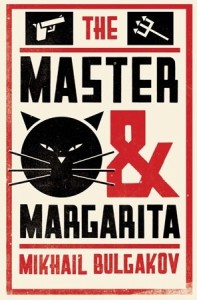
The Master and Margarita by Mikhail Bulgakov

Posted March 10, 2015 by Michael @ Knowledge Lost in Classic, Magical Realism / 2 Comments

The Master and Margarita by Mikhail BulgakovTitle: The Master and Margarita (Goodreads)
, 1967
Pages: 403
Buy: AmazonBook Depository (or visit your local Indie bookstore)

When I first read The Master and Margarita by Mikhail Bulgakov back in 2012 I had no idea how to review it. Now that I have re-read the book, I am still at a loss. The Master and Margarita is often considered as one of the best novels of the 20th century by critics and cited as the top example of Soviet satire. Like most of Mikhail Bulgakov’s bibliography, this author never saw the effect that this novel had on the world; it was written between 1928 and 1940 but was first published in 1967, long after his death.

One of the things I love about Russian literature is the social commentary and satirical nature found in a lot of their books. During the Soviet era there was a lot written about the political state of the country but these were often heavily censored before publication. There was a distribution practise happening at the time call called samizdat, which is when individuals reproduced censored publications and passed them out to readers. The term samizdat comes from the Russian words, sam which roughly means “self” and izdat “publishing house”, so possibly the first use of self-publishing. If it wasn’t for this underground practice we may never have the uncensored editions of Russian classics like Doctor Zhivago by Boris Pasternak, the majority of Aleksandr Solzhenitsyn books and of course The Master and Margarita.

The novel starts out with Berlioz and Bezdomny talking at the Patriarch ponds when a mysterious professor appears and strikes up a conversation. This professor is actually Satan and he was talking to them about the existence of God, the idea being if God doesn’t exist, can Satan?. Russia at the time was an atheist state, in fact communism and religion often do not go hand in hand. During the Stalinist era the Soviet government tried to suppress all forms of religious expression. Bulgakov’s commentary on religion and the government is an interesting one and while there are other interpretations of the novel this was what I took away from the novel this time round.

The ideas of censorship of religion continues with the Master’s book about Pontius Pilate, which was rejected and he was accused of pilatism. Though pilatism is found throughout the book The Master and Margarita as well, Pilate is not only in the Master’s novel but appears in Satan’s stories as well as dreams. The Master has poured his heart and soul into it his novel and having rejected sent him into a tailspin. This satirisation of censorship and religion plays though out the entire novel.

The idea of pilatism is an interesting one since in Christianity Pontius Pilate is the seen as the one that sentenced Jesus (referred to by his Hebrew name Yeshua Ha-Nozri in this novel) to die on the cross. Pilate becomes a symbol of humanity’s evil within religion and The Master and Margarita but you can argue that it is possible that he was a victim of society. Pilate’s ruling on Yeshua Ha-Nozri was due to pressure from the people and the high priests, he literally (and symbolically) washed his hands of the situation. I got the impression that Mikhail Bulgakov was comparing this idea of pilatism with the soviet government at the time. Human nature is apparently evil but it is also very influential of society, and what does that say about the atheist state?

There is so much going on within this novel and I would love to talk about the influences of Goethe’s tragic play Faust on the book. However I think I would need to re-read Faust to be able to compare it with The Master and Margarita. I would have also liked to explore the constant changes on narration, from an omniscient observer to the characters within the book but not sure what else to say about that. I re-read this book as part of a buddy read, my first buddy read in fact and I had a lot of fun doing this but I think I wasn’t a good reading partner. This time I read the Hugh Aplin translation of The Master and Margarita and I think I enjoyed it more than the Pevear/Volokhonsky translation I read last time. This may have been because I got more out of the book or maybe there is something about Richard Pevear and Larissa Volokhonsky translations I didn’t like, I tend to avoid their translations.

I hope I have made a coherent review, I focused mainly on censorship and religion because this book is weird and all over the place so I needed to stick to one topic to make sense of what I have read. I do plan to re-read The Master and Margarita sometime in my life, I might even try a different translation again (any suggestions?). I got so much out of this book this time around and has really made me appreciate the value of re-reading. I ended my last review of this book telling people to ‘just read it’ and I think that sentiment still stands.


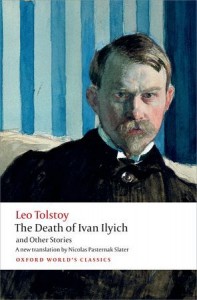
The Death of Ivan Ilyich by Leo Tolstoy

Posted January 15, 2015 by Michael @ Knowledge Lost in Classic / 0 Comments

The Death of Ivan Ilyich by Leo TolstoyTitle: The Death of Ivan Ilyich (Goodreads)
Author: Leo Tolstoy
Translator: Nicolas Pasternak Slater
Published: Oxford World's Classics, 1884
Pages: 256
Genres: Classic
My Copy: Paperback

Buy: AmazonBook DepositoryKindle (or visit your local Indie bookstore)

Ivan Ilych’s life revolved around his career; as a high court judge he takes his job very seriously. However after he falls off a ladder, he soon discovers that he is going to die. The Death of Ivan Ilyich is a novella that deals with the meaning of life in the face of death. A masterpiece for Leo Tolstoy written after his religious conversion in the late 1870s.

Something that was fascinating about The Death of Ivan Ilyich is the drastic change in writing style when comparing it to Anna Karenina and War and Peace. I am not just referring to the length, but that does play a big part. I have read somewhere that Tolstoy intentionally made Anna Karenina and War and Peace so long because he wanted to replicate life and the journey the characters face. Allowing the reader to experience every decision and moral dilemma that the character is facing, exploring the growth or evolution of each and every person within the novels.

The Death of Ivan Ilyich takes a more focused approach, dealing with major questions revolving around the meaning of life, death and spirituality. Leo Tolstoy had a major conversion in the late 1870s and the questions in this novel were the questions he was asking himself. Whether or not Ivan Ilyich found the answers he was looking for is up to the reader but it is believed that Leo Tolstoy was still looking for the same answers well after finishing this novella.

There is a lot of pain and torment that appears in this book, which reflects the authors search for answers and that is what really stood out for me. Not only was I reading a spiritual/existential struggle of the protagonist but Tolstoy’s own feeling really came out within the pages. This is what makes this a masterpiece that explores the tortured artist in great detail. I don’t want to say much more, this is the type of book people have to read and make their own mind up about the themes presented, but it is worth reading.


Jane Eyre by Charlotte Brontë

Posted January 3, 2015 by Michael @ Knowledge Lost in Classic / 4 Comments

Jane Eyre by Charlotte BrontëTitle: Jane Eyre (Goodreads)
Author: Charlotte Brontë
Published: Oxford World's Classics, 1847
Pages: 542
Genres: Classic
My Copy: Paperback

Buy: AmazonBook DepositoryKindle (or visit your local Indie bookstore)

When Jane Eyre was originally published, it was called Jane Eyre: An Autobiography edited by Currer Bell (Charlotte Brontë’s pen-name), which in itself is a fascinating insight into this classic novel. The idea Charlotte Brontë wanted this to be viewed as an autobiography implies this is more of a social commentary more than a classic gothic novel. This is what I want to focus my review on; what did she want to say about the world when she wrote this book?

Most people know the plot of Jane Eyre, so we can skip that and go right into the analysis. Bildungsroman is the primary genre of Jane Eyre, which is basically a coming of age story that documents the psychological and moral growth of its protagonist, which is interesting because on the surface there doesn’t seem to be much growth for Jane Eyre. Apart from the class struggle; Jane Eyre was an educated orphan who always believed she was low class. She constantly discriminates against herself about her class and this ultimately allows Mr Rochester to be the dominating force he is in their relationship. However it isn’t until Jane has money and returns to find Rochester blind and cripple, that she agree to marry him; what does that say about the social balance?

Though there is a whole idea of independence that plays out within this novel as well. I never thought that Jane Eyre and Mr Rochester had any chemistry and the first proposal was forced upon her. Thankfully it was revealed that Rochester was already married and Jane got out of the position she was in. She had to learn independence and the ability to make decisions for herself. This was tested when St. John (which I discovered is meant to be pronounced together like sin-jun) asked her to marry him.

There is a strong sense of religious morality at the core of Jane Eyre, just look at when St. John proposed to Jane Eyre, it allowed her to played with the idea of a moral decision. There is also an equilibrium between moral duty and earthly happiness that comes into play in this scene. Jane sees John as a brother but he tries to pressure her by implying that it is her Christian duty to marry him and work as a missionary in India. Her refusal to marry him but still travel to India as a missionary was met with disdain. John tries to emotionally blackmail her into marriage using God’s will as ammunition, even though there is no love and would only be a marriage of convenience.

I know I may have asked a few too many questions in this review, but there are some interesting thoughts to be had about Jane Eyre. I am not going to go into how Mr Rochester is the Byronic hero, the gothic themes, or how people should view this book as a Romantic novel and not a romantic book. Personally I think there are interesting elements within this classic book but Charlotte Brontë is my least favourite of all the Brontë sisters. This is the first time reading Jane Eyre and I might read it again at some point; but I hope I offered some interesting insights into the book.


A Christmas Carol by Charles Dickens

Posted December 30, 2014 by Michael @ Knowledge Lost in Book of the Month, Classic / 4 Comments

A Christmas Carol by Charles DickensTitle: A Christmas Carol (Goodreads)
Author: Charles Dickens
Published: Oxford World's Classics, 1843
Pages: 438
Genres: Classic
My Copy: Paperback

Buy: AmazonBook DepositoryKindle (or visit your local Indie bookstore)

When it comes to Christmas books, A Christmas Carol by Charles Dickens is probably the first book that comes to mind. Published in 1843, this novella was an instant success and has been a beloved classic since then. I am not going to go into a plot summary because I believe most people know the story but if you don’t, go watch A Muppet’s Christmas Carol. Told in five staves (similar to stanzas or verses) this book has been adapted so many times that A Christmas Carol has just become a part of the Christmas period.

While compassion, forgiveness and getting into the Christmas spirit is the major theme of this novella, one thing that really stuck with me is Dickens’ ideas of isolation and loneliness. While it is true that Ebenezer Scrooge never indicates he is feeling alone, since the death of Jacob Marley seven years earlier there is a sense that he has falling in despair. Marley died on Christmas Eve and appeared to be Scrooge’s only companion, which leads to a disdain for the holiday period.

Charles Dickens wanted to emphasise the importance of being with friends and family, especially during Christmas. However I got the sense that he may have treated the idea of isolation poorly. Sure, Scrooge was a grumpy old man who was tight with his money but I got no real indication that he was unhappy to be alone. Scrooge could have been an introvert and enjoyed the quiet solitude; is that really such a bad thing?

Then all of a sudden Scrooge is cured from his rationality and becomes an extravert. This is a little strange, Scrooge’s emotional and psychological makeup might not be pleasant or agreeable to the popular worldview but they were his own thoughts. Scrooge was a financial supporter of The Poor Law Amendment Act of 1834 and didn’t want to give money to a charity that worked against his political ideology.

I am not bagging out A Christmas Carol, I do enjoy it but as I was re-reading this novella I kept wondering what this story is saying if we take out the element of Christmas. Basically this is the story of curing someone of his or her personality. I had a lot of fun looking at this book from another point of view, it just gave me a lot more to think about. A Christmas Carol is a nice quick story about the importance of being with your friends and family during this holiday period. Next year I might try Truman Capote’s collection of stories about Christmas.


Middlemarch by George Eliot

Posted December 17, 2014 by Michael @ Knowledge Lost in Classic / 4 Comments

Middlemarch by George EliotTitle: Middlemarch: A Study of Provincial Life (Goodreads)
Author: George Eliot
Published: Penguin, 1872
Pages: 880
Genres: Classic
My Copy: Hardcover

Buy: AmazonBook DepositoryKindle (or visit your local Indie bookstore)

Middlemarch: A Study of Provincial Life was George Eliot’s seventh novel and was originally published in a serial from 1871-72. Set in a fictional town, this novel follows a wide range of characters in interlocking narratives that really do allow the reader to study the provincial life of Middlemarch. As this is broken into eight “books” it would be difficult to summarise the plot and even write a review that could do this book justice. Instead I am going to write down some thoughts and observations I found while reading Middlemarch.

First of all, I think it is beneficial to know a little about George Eliot; an understanding of her life helps put a lot of this novel into perspective. Most people know George Eliot is a pen name for Mary Ann Evans, she used the pseudonym to keep her private life from public scrutiny, as she was in a relationship with a married man, George Henry Lewes with whom she was living with. She picked a male nom de plume to escape the stereotypes placed on woman writers, this allowed her to offer a social critic without being judged on her gender. Raised as an Anglican, Mary Ann struggled with religious doubts and eventually became an atheist. As a young woman (before her relationship with George Henry Lewes), her father threatened to throw her out of the house due to her non-belief, but they seemed to come to a compromise. Mary Ann continued to attend church with her father until he passed away to keep him happy, even if she didn’t believe in a God anymore.

This is a very tiny glimpse at Mary Ann Evans but I wanted to share that information about her as it ties into common themes found throughout Middlemarch. The themes I am talking about here are gossip, marriage, femininity and religion. Living in Victorian England may not be too different to now (people like to gossip), Mary Ann would have been the subject of plenty of gossip and in a small town like Middlemarch it feels like the primary source of information. Throughout this novel, information is continuously being conveyed from an indirect party. George Eliot satirises the idea of gossip by continuously having other characters speak on someone else’s behalf to avoid direct communication. While others will avoid conversations believing that any relevant information will eventually make its way to them. These ideas of gossip feel like Eliot is poking fun at how gossip is used, however as a social commentary it is spot on.

I love what George Eliot has to say on the ideas of courtship and marriage and this is one of the most important parts of the novel. In Middlemarch marriage is never an end result, the happily ever after ending literary trope. While some people do end up being happy, there are plenty of unhappy marriages within the novel. Mary Ann’s lover George Henry Lewes was trapped in an unhappy marriage which he couldn’t get out of and this seems to be the basis of relationships within Middlemarch. There is this exploration of the idea of courtship, and it begs the reader to question these ideas. There are a lot of thoughts on how well we can really know someone before marriage; playing with ideas on being an outsider, deception and even intimacy. Each marriage within Middlemarch is different and it allows the reader to explore these unions as part of a social construct.

While there was a huge focus on marriage within Middlemarch there still were a few unwed woman within the novel. There are well educated women with the book that sometimes appear to be happier than the woman trapped in marriage. Eliot wanted to depict woman as strong individuals who have something to offer the world other than just being wives and mothers. The women in the book are often great and complex personalities but then Eliot plays with the ideas of suppressing themselves for men and the role they play in society. There is some social conditioning within the book but ultimately I kept seeing this idea of women having the ability to make social change.

Finally I want to talk about religion and spirituality; this is an interesting theme that steams from Mary Ann’s own life. I suspect sitting in a church listening to someone talk about a God she didn’t believe in made her think a lot about spirituality and organised religion. I haven’t used any examples but in this case I want to compare Dorothea with Mr Bulstrode. Dorothea has this internal and private spiritual life, the depiction of this is somewhat vague in the novel. This is because as an outsider she doesn’t come across as a spiritual person but internally it is an intimate part of her life. While Mr Bulstrode is portrayed as someone who is more public about his religious beliefs. While not always hypocritical he has a warped opinion; he believes his previous transgressions are part of the providential plan but will openly condemn others for their past misdeeds. Throughout Middlemarch, religion and spirituality is explored in different way and it is interesting to compare it with the ideas of morality within the novel.

There are so many different themes I can talk about, including money, education, vocations, social classes and even self-delusion but that would drag this on too much. I read Middlemarch with the aid of a reading guide called Eliot’s Middlemarch by Josie Billington and I did this because there is so much to offer within this novel I wanted to get as much as I could from the book. This is a smart and intelligent social commentary and I got the sense that there was no wasted moments within the book despite the fact it was 880 pages long. I dipped in and out of this novel for six months and I am glad I choose to read it in this way; it allowed me to ponder what I read before moving on. It is the type of book you need to spend a lot of time with and written in a way that allows you to dip in and out.

I haven’t even talked about the writing or style of Middlemarch and that is probably the most important part. There is a slight detachment within the style, this is probably because the novel is a form of social criticism; a study of provincial life. Having said that, I found Middlemarch very funny; the satirical irony and wit played a big part for me, but you could also say this is a morbid book. The style of the book is psychological, erudite and extremely elegant; I often felt myself being swept away with the writing but still fascinated by the insightfulness.

It is hard to explain how much I loved this book; this a realistic depiction of Victorian life and George Eliot displays a real mastery on human nature. However, even though it sounds like it is nothing but a psychological look at society, Eliot is able to make you feel like you are a part of the story. I am sure you can read this book as just a beautiful Victorian classic but I picked up this book for the social criticism. If you do want to get more out of this book then I recommend Josie Billington’s reading guide Eliot’s Middlemarch. This is the type of book I will need to frequently return to throughout my life and see what I get out of it with a re-read.


Roadside Picnic by Arkady & Boris Strugatsky

Posted December 12, 2014 by Michael @ Knowledge Lost in Science Fiction / 2 Comments

Roadside Picnic by Arkady & Boris StrugatskyTitle: Roadside Picnic (Goodreads)
Author: Arkady Strugatsky, Boris Strugatsky
Translator: Olena Bormashenko
Published: Chicago Review Press, 1972
Pages: 209
Genres: Science Fiction
My Copy: Paperback

Buy: AmazonBook DepositoryKindle (or visit your local Indie bookstore)

Aliens have made contact, or have they? Thirteen years after the visitation, an international science cooperative has locked up each landing site, dubbed Zones in an effort to study the unexplained phenomena. Red Schuhart is a stalker, someone that sneaks into the zones and tries to collect artefacts. Despite the legal ramifications, artefacts on the black market sell really well. When Red puts together another team to collect a “full empty” everything goes wrong.

The attempts to gain publication of Roadside Picnic is a story in itself; like most Russian literature this novel was originally serialised in a literary magazine. Attempts to publish in book form took over eight years, mainly due to denial by the Department for Agitation and Propaganda. The heavily censored book that originally was published was a significant departure to what the authors originally wrote. I am unclear as to whether the new translation I read corrected this censorship, to quote the back of the book “this authoritative new translation corrects many errors and omissions”. I know some of the corrections made included to the original translation starting thirty years after the visitation rather than thirteen but unsure what else was changed. However, despite the censorship and notwithstanding the fact this novel was out-of-print in America for thirty years; Roadside Picnic is wildly regarded as one of the greatest science fiction novels of all time.

The title Roadside Picnic refers to the visitation and the fact that they never made contact with humanity. The novel plays with the idea that intelligent life wouldn’t want to make contact with the human race. One look at humanity, full of all the violence towards each other, aliens would conclude that humans are not intelligent life forms but rather savages. One character within the novel, Dr. Valentine Pilman compared the aliens visit to that of an extra-terrestrial picnic.

“Xenology is an unnatural mixture of science fiction and formal logic. At its core is a flawed assumption—that an alien race would be psychologically human.”

It is fascinating to look at humanity in a first contact novel and it reminded me of how much I’ve enjoyed the psychological/philosophical science fiction novels that seemed to be produced in the 1960s and 70s. However Roadside Picnic went deeper; like most Russian novels of this time, there was a strong reflection on society at the time. Like I said before, I am not sure if this edition still holds the Soviet censorship but I was impressed by the subtle look at society. It wasn’t just a poke at the Soviet Union but rather a look at humanity under an unidentifiable superpower. This could be an American superpower and it looks at ideas of what might happen if the government prohibits the people from gaining access to the biggest scientific discovery of their time. You have a struggle between quarantined verses legitimate scientific research, playing with the moral idea of government regulated technology.

Moving away from the themes, Roadside Picnic is a thrilling and beautifully written novel. Red Schuhart almost comes across as a hard-boiled narrator but less cynical; he remains a wide-eyed curious protagonist throughout the narrative. A surreal, tense story that threw out the rules found in a ‘first contact’ novel and ended up redefining the genre. It went on to challenge some of the ideas in the study of xenology and perhaps even ufology.

Arkady and Boris Strugatsky have been the authors of over twenty science fiction novels, their unique style of blending Soviet rationalism with speculative fiction can be found throughout their books. Roadside Picnic remains their masterpiece and inspired the Russian cult classic movie Stalker (1979) directed by Andrei Tarkovsky. Arkady and Boris Strugatsky wrote the screenplay for Stalker and then the novelisation; no idea why you need a novelisation of a movie that was based on a book. Roadside Picnic is an amazing novel, and reminds me why I love Russian science fiction. The blend of social commentary and science fiction is what I continue to look for when searching for books in this genre.