Posted June 13, 2012 by Michael @ Knowledge Lost in Literature / 0 Comments
I’m not sure how I feel about re-reading books; as a book lover I have to face the facts that I’m never going to read all the books I want to read. So why would I waste time re-reading a book? Sometimes there are books with so many layers that you need to re-read them just to explore the plot and the themes deeper and sometimes it’s just a matter of comfort. For the past three years I’ve been re-reading Frankenstein ever year; simply because I love this book and yet there is still so much in the book to discover. This year I haven’t felt the need to re-read it, yet. So I’ve been questioning the idea of ‘to re-read or not to re-read?’
There are some books I still would like to re-read; The Shadow of the Wind by Carlos Ruiz Zafón and Slaughterhouse-Five by Kurt Vonnegut come to mind but sometimes I think there are too many books worth reading to go back to a book. I know there will always be books I will want to re-read and some I will read again but I’m not sure how I feel about the whole concept. I’ve never understood the idea of people completing a book then going back to the same book again straight away. Having said that, I often try to read in a different genre or style after a reading a book because I worry I would get bored with an author or genre if I fully entrench myself. I would love to hear other people’s thoughts on re-reading.
Posted June 10, 2012 by Michael @ Knowledge Lost in Classic, Dystopia, Speculative Fiction / 0 Comments
 Title: We (Goodreads)
Author: Yevgeny Zamyatin
Translator: Clarence Brown
Published: Penguin, 1921
Pages: 226
Genres: Classic, Dystopia, Speculative Fiction
My Copy: Library Book
Buy: Amazon, Book Depository (or visit your local Indie bookstore)
Yevgeny Zamyatin wrote his seminal dystopian novel We (1921) based on his personal experiences during the two Russian revolutions (1905 and 1917) and the first World War. The book ended influencing dystopian authors like Aldous Huxley and George Orwell. This book not only influenced the dystopian genre but could also be the influence towards the post-apocalyptic genre as this was set in a world where all was wiped out but “0.2% of the earth’s population”. The book is set in ‘One State’ which has been organised to be a workers’ paradise; everything has to work like clockwork and everything is based on logic and mathematics. This society is heavily surveillanced, has martial law and is heavily censored; a totalitarian world.
The protagonist, D-503, is an engineer who begins writing a journal (much like in 1984) to document Integral, the spaceship being built to invade other planets. D-503 is under constant surveillance by the Bureau of Guardians (the secret police) as is everyone else. He is assigned a lover O-90, but ends up having an uncontrollable attraction to I-330. This leads to nightmares and furthermore into what could be considered a mental illness. I-330 reveals to D-503 a world that was previously unknown to him. Will he hang onto hope or will reason get the better of him?
We was an impressive novel; not only with the themes that it explores but also with the technology and the simple fact that it was years and years ahead of its time. While some say We was released in 1920 and others 1921, there is no denying that, because of the subject matter, this was an impressive piece of literature. If it wasn’t for this book we may never of been able to enjoy Aldous Huxley’s Brave New World (1932), George Orwell’s Nineteen Eighty-Four (1949) or even Kurt Vonnegut’s Player Piano (1952). By today’s standards this book would be overlooked but something innovative and so complex to be written so long ago makes this worth a read.
Posted May 28, 2012 by Michael @ Knowledge Lost in Historical Fiction / 0 Comments
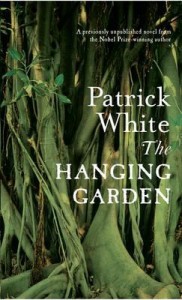 Title: The Hanging Garden (Goodreads)
Author: Patrick White
Published: Knopf Doubleday, Random House, 2012
Pages: 224
Genres: Historical Fiction
My Copy: Personal Copy
During my last book club gathering, we were talking about Patrick White’s unfinished novel; The Hanging Garden and this lead into a discussion of books being published after the author dies which the author never wanted to see the light of day. Patrick White never wanted this novel released; I believe he did tell someone to burn it because it wasn’t finished or anywhere near ready for readers. There are heaps of authors that have had books released that were never meant to be released including; Kurt Vonnegut, Virginia Woolf, Mark Twain, Ernest Hemingway, Leo Tolstoy and the most famous of them all was Franz Kafka’s The Trial. This does lead to some interesting topics; do you think books that the author never intended to be released should be published? Are publishers just using them as a money making gimmick? And lastly, if those manuscripts were submitted to a publisher by an unknown author, would they still be published?
Patrick White is a two time Miles Franklin award winner and has also won the Nobel Prize for Literature. His unfinished novel The Hanging Garden was only just recently published; it feels like an old novel in the sense that, while it’s nicely written; nothing ever happens in the book. This is very much a character driven book, focusing on the two characters and a wild garden. I think I’d be alright with reading a book like this if I didn’t have the feeling that the author hated every single one of his characters; he was mean and cruel to them all, not just the key characters. As a general rule I love dark and flawed characters but this just felt mean and even the attempts of being erotic felt awkward. I spent the whole book waiting for something to happen and I was left disappointed. Also, as this is an unfinished novel, I don’t know what the overall goal was with this book and I get the feeling that maybe Patrick White doesn’t either. There are parts of this book that are beautifully written and then there are parts that felt like the author’s ramblings. This is supposed to be an unedited book but while I think there was some editing done there are also parts of the book that clearly feel unedited. Including a few paragraphs that didn’t make sense and had no punctuation and then some notes to himself reminding him to explore or research some parts later. While I’m not a fan of this book, I think a lot of people might get a kick out of it. Either for the memories of the time and the place; the memorable characters, or just to see the thought process of once of Australian top authors of all time.
On this day 100 years ago, Patrick White was born
Posted May 21, 2012 by Michael @ Knowledge Lost in Top 5 / 0 Comments
 As most of you may know, I never use to be much of a reader; it was only last year that I decided to discipline myself to read more. So I thought I might as well share with you five books that really had strong effects on me and my views on life.
- Markheim – This short story by Robert Louis Stevenson is definitely my favourite of his works I’ve read so far. The concept is amazing, but I won’t give you any spoilers.
- Slaughterhouse-Five – And so it goes…nothing could have prepared me for a book like this. It’s unique in its style and left me pondering it for months after reading it.
- Wuthering Heights – I know one reader that would be happy to see this on my list. The reason it does grace this list is the simple fact, that it defied all expectations. I went into this book thinking I knew what the story was about, but it shattered every expectation and left me with a dark and beautiful tale.
- Frankenstein – It is apparent that this book has changed my life. I’ve mentioned it before in reference to pop culture and even a Smashing Pumpkins song. This book is simply a brilliant book on very real social issues.
- Hey! Nietzsche! Leave them kids alone! – This book is the reason this blog exists. Craig Schuftan opened my eyes to a world I didn’t know by providing some interesting connections between the Romantic Period and today’s music scene.
Posted April 12, 2010 by Michael @ Knowledge Lost in Literature / 0 Comments
As most of you may know, I never use to be much of a reader; it was only last year that I decided to discipline myself to read more. So I thought I might as well share with you five books that really had strong effects on me and my views on life.
- Markheim – This short story by Robert Louis Stevenson is definitely my favourite of his works I’ve read so far. The concept is amazing, but I won’t give you any spoilers.
- Slaughterhouse-Five – And so it goes…nothing could have prepared me for a book like this. It’s unique in its style and left me pondering it for months after reading it.
- Wuthering Heights – I know one reader that would be happy to see this on my list. The reason it does grace this list is the simple fact, that it defied all expectations. I went into this book thinking I knew what the story was about, but it shattered every expectation and left me with a dark and beautiful tale.
- Frankenstein – It is apparent that this book has changed my life. I’ve mentioned it before in reference to pop culture and even a Smashing Pumpkins song. This book is simply a brilliant book on very real social issues.
- Hey! Nietzsche! Leave them kids alone! – This book is the reason this blog exists. Craig Schuftan opened my eyes to a world I didn’t know by providing some interesting connections between the Romantic Period and today’s music scene.
Posted February 17, 2010 by Michael @ Knowledge Lost in Writing / 0 Comments
 Like Slaughterhouse-Five, Breakfast of Champions left me with a lot to think about. In the mists of this satirical story there is a whole other element; the book explores the effects of an author-reader relationship, mainly with Kilgore Trout and Dwayne Hoover. The book the sent Dwayne Hoover was in the form of a letter from the creature telling the reader he is the only real person in the world, everyone else were robots, and later in the epilogue the creator has a conversation with Trout.
It’s an interesting concept, and one I haven’t really thought about before, but it is something to ponder.
Posted May 30, 2009 by Michael @ Knowledge Lost in Classic, Science Fiction / 0 Comments
 Title: Slaughterhouse-Five (Goodreads)
Author: Kurt Vonnegut
Published: Vintage, 1969
Pages: 186
Genres: Classic, Science Fiction
My Copy: Personal Copy
Buy: Amazon (or visit your local Indie bookstore)
Slaughterhouse-Five, or The Children’s Crusade: A Duty-Dance With Death is an unusual story with many layers to it. The book itself is a post-modern, anti-war, science fiction metafiction novel. The Narrator starts off telling people about the book he is writing on the subject of Dresden and being in a POW camp (The Slaughterhouse) during the War. Trying to remember what happened in Dresden, the narrator goes on to tell the story of some of the other people in the Slaughterhouse with him. Billy Pilgram is the main character in the book, an optometrist who has become unstuck in time and randomly travels through time and is abducted by the “four-dimensional” aliens from planet Tralfamadore. Being POW in Dresden has had a lasting effect on Billy’s post-war life, and combined with the abductions and time travel, he has become fatalistic.
The whole story just has so many layers to try to explain, but it makes for an interesting read. Since Billy keeps randomly traveling to the Past, Future and Tralfamadore there just seems to be a lot going on and can get a little confusing. The book really highlights the effects of war on the survivors and what could be considered schizophrenia.
…And So It Goes
