Tag: Literary Fiction

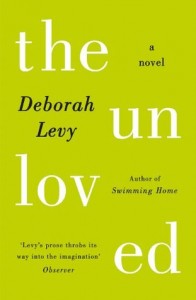
The Unloved by Deborah Levy

Posted November 22, 2014 by Michael @ Knowledge Lost in Literary Fiction / 0 Comments

The Unloved by Deborah LevyTitle: The Unloved (Goodreads)
Author: Deborah Levy
Published: Hamish Hamilton, 1995
Pages: 208
Genres: Literary Fiction
My Copy: Library Book

Buy: AmazonBook Depository (or visit your local Indie bookstore)

Due to the success of Swimming Home getting a Man Booker shortlisting in 2012, Deborah Levy’s 1995 novel The Unloved was edited and republished earlier this year. I have been a fan of Levy since discovering Swimming Home thanks to the Man Booker and I admit I was a little slack getting to her backlist. I read her collection of short stories last year and finally returned to another novel with The Unloved.

The Unloved tells the story of a group of self-indulgent European tourists who decide to celebrate Christmas in a remote French château. However during their stay one of them is brutally murdered and the unloved child Tatiana knows who did it. The subsequent investigation into this death turns more into an examination of love, desire and rage. This is a shocking and exciting novel, full of characters you can’t help but suspect of murder.

There is something strangely familiar with this novel; while it had a different plot to Swimming Home, the themes felt very much alike. Both tell a psychological story of love and desire that is full of Freudian ideas. There is a philosophical feel about these novels as Levy forces the reader to think about life and death in an interesting way. In The Unloved it becomes less about the murder, and focuses more about a psychoanalytical look at the rest of the people in the French château.

The writing within The Unloved may not be as beautiful as Swimming Home but it was still wonderful. There is a strong sense of symbolism flowing through out the narrative and from time to time wonderfully elegant writing. I am not trying to dismiss this novel at all; it has its moments and I admire Levy’s wry style.

I feel the book explored the same themes as Swimming Home, just not as refined. It is weird to judge a book by its themes, Deborah Levy has a keen interest on the topic and passionate about exploring it. The Unloved is worth checking out; the plot and characters are all magnificent. I just would have preferred if the book explored these themes from a different perspective.


All that is Solid Melts into Air by Darragh McKeon

Posted October 28, 2014 by Michael @ Knowledge Lost in Historical Fiction, Literary Fiction / 7 Comments

All that is Solid Melts into Air by Darragh McKeonTitle: All that is Solid Melts into Air (Goodreads)
Author: Darragh McKeon
Published: Viking, 2014
Pages: 391
Genres: Historical Fiction, Literary Fiction
My Copy: Paperback

Buy: AmazonBook Depository (or visit your local Indie bookstore)

All that is Solid Melts into Air tells the story of the Soviet Union in 1986. A nine year-old piano prodigy continuously falling victim to bullies, a surgeon throwing himself into his work to avoid the emotion pain of a failed marriage, a former dissident struggling to free herself from political constraints. Everyday Russians trying to make life work in this repressed state; that was until a disaster in Ukraine changes things.

Most people who know me know that I am a fan of Russian literature and books set in Russia. The Cold War years are of particular interest to me, the social and political unrest makes for a haunting backdrop for great story telling. When I head that All that is Solid Melts into Air was this year’s answer to A Constellation of Vital Phenomena, it was all I needed to buy this book. While reading the book I found out the novel centred around the Chernobyl nuclear accident which just gave that extra element to turn this into a new favourite.

I have never read a novel about the Chernobyl disaster before and I am struggling to think of other books that focus on this historical event. So I was pleased to have a new insight on a situation I hope to never experience. This was a beautiful and haunting tale of Russians living life and the connections they make along the way. However little gems like the controversial idea of implementing safety measure pre-disaster and the Soviet Union’s efforts to cover the accident up really helped make this novel great.

The title is taken from a line in The Communist Manifesto, which is quoted before the novel kicks off. This is an interesting quote to add, not just to give a reference to the title but the implications of what to expect within the novel. As Karl Marx and Friedrich Engels theorise in their political manifesto, “The history of all hitherto existing society is the history of class struggles”.

“All that is solid melts into air, all that is holy is profaned, and man is at last compelled to face with sober senses, his real conditions of life, and his relations with his kind.” – Karl Marx (The Communist Manifesto)

While this is a strong character driven novel, it is not the personal but political transgressions that stood out for me. All that is Solid Melts into Air is set in a time where the Iron Curtain is beginning to collapse; things are drastically changing and then the disaster involving the Chernobyl Power Plant throws the people into civil unrest. While the book focuses on a few characters the overall theme is one of class struggles. The Russian people struggling against the Soviet government; the fear and repression rules stronger than the radioactive atmosphere. An interesting concept considering the communist society that Marx wrote about was nothing like the political government at the time.

I am a little sad to see this gem has remained under the radar; All that is Solid Melts into Air deserves so much more attention. Despite that horrific setting, this is a novel of great beauty with visceral portrayals of both people and places. The struggle the people go through is handled with tender care and empathy. It is hard to believe that Darragh McKeon is a debut author; much like Anthony Marra, I am eagerly awaiting his next novel. All that is Solid Melts into Air is a new favourite and you can expect it to be near the top of my ‘best of 2014’ list.


Station Eleven by Emily St John Mandel

Posted October 24, 2014 by Michael @ Knowledge Lost in Literary Fiction, Speculative Fiction / 0 Comments

Station Eleven by Emily St John MandelTitle: Station Eleven (Goodreads)
Author: Emily St John Mandel
Published: Pan Macmillan, 2014
Pages: 333
Genres: Literary Fiction, Speculative Fiction
My Copy: Library Book

Buy: AmazonBook DepositoryKindle (or visit your local Indie bookstore)

Emily St John Mandel’s new novel Station Eleven begins with a performance of King Lear; everything was going smoothly until the lead actor Arthur Leander dies on stage. A new strand of the flu known as the Georgia Flu sweeps the world. It “exploded like a neutron bomb over the surface of the earth” and wiped out 99% of humanity. This all happens in the first 30 pages, the rest of the novel focuses on a group of performers known as The Travelling Symphony, who travel America putting on Shakespeare plays to those surviving colonies.

The post-apocalyptic novel has been a popular topic over the past few years. There are millions of YA novels on the topic and in the world of literary fiction it books like The Road by Cormac McCarthy, The Passage by Justin Cronin and the Maddaddam series by Margaret Atwood dominate. Recently I have read some post-apocalyptic novels that have failed to satisfy me in the way that books like The Road by Cormac McCarthy had in the past. Both California by Edan Lepucki and On Such a Full Sea by Chang-rae Lee had potential but just did not get there. Luckily Emily St John Mandel was there to restore my faith in the literary post-apocalyptic genre.

What I look for in a post-apocalyptic can be difficult to pin point. I want a dark but glittering novel that is both intelligent and audacious. It needs to do something that is different so it will be set apart from others. Station Eleven did this for me; this is not a novel about the aftermath of a global pandemic, this is about the power and importance of art. Not so much the survival of art but the importance it plays on a more personal level.

Mandel wrote a roving novel that follows a group of people struggling with life in a desolate time. This is a stylistic and complex novel told in a non-linear way to explore both the present struggles like the rarity of food and water and the disappearance of all technology. This is an exploration into individuals rather than a collective destiny. Each character has their own story to tell and the non-linear format allows their backstory to be told. They are struggling with memories, loss, nostalgia, solitude and yearning from some stability.

Canadian author Emily St John Mandel is one of those authors that receives high praises for her novels but still manages to fly mostly under-the-radar. I hate to use this term, but with all the praise from other authors she comes across as a ‘writer for writers’. Based on my experience of her writing from Station Eleven this a sad situation, her skills deserve to be realised by the reading public.

I am glad I picked up this novel; I was a little hesitant but I had heard so much about Emily St John Mandel that I just had to find out for myself. To begin with the story of Shakespearian actors was what made this different but I soon found the haunting and complex plot  full of subtleties that worked in the books favour. I am still hesitant of all the new post-apocalyptic novels to come but now I know not to overlook Emily St John Mandel in the future.


Levels of Life by Julian Barnes

Posted September 19, 2014 by Michael @ Knowledge Lost in Non-Fiction, Short Stories / 0 Comments

Levels of Life by Julian BarnesTitle: Levels of Life (Goodreads)
Author: Julian Barnes
Published: Random House, 2013
Pages: 128
Genres: Non-Fiction, Short Stories
My Copy: Personal Copy

Buy: AmazonBook DepositoryKindle (or visit your local Indie bookstore)

“Every love story is a potential grief story.”

It is official, I’m now a huge fan of Julian Barnes. Having read and enjoyed The Sense of an Ending and Metroland, I knew I had to read more of his novels. I did try Through the Window and found his essays challenging but mainly because the man is far too intelligent and I couldn’t keep up. I decided to try Levels of Life simply because I wanted to see how Barnes connects love and loss with ballooning and photography.

“Love is the meeting point of truth and magic. Truth, as in photography; magic, as in ballooning.”

Told in three masterful parts, Levels of Life tells stories that don’t seem connected but Barnes manages tol fit together. He is a master at the metaphor and this book told in narrative form tells the highs and lows of love. Part one “The Sin of Height” tells a narrative of Colonel Frederick Burnaby, an English soldier and traveller who crossed the English Channel in a hot air balloon in 1882. This story focuses on the obsessions that both Burnaby and French photographer Nadar had towards ballooning.

The next part, called “On the Level” looks at Colonel Burnaby and the French exotic actress, Sarah Bernhardt. Both shared an interest in ballooning which led to love. Two larger than life characters and a love that could never last, while Burnaby believed it was possible, Bernhardt thought differently. Here we have two stories; one depicting the highs of passion and love and the second, the idea of love fizzling out which only leaves one last essay.

“You put together two people who have not been put together before. Sometimes it is like that first attempt to harness a hydrogen balloon to a fire balloon: do you prefer crash and burn, or burn and crash?”

But sometimes it works, and something new is made, and the world is changed. Then, at some point, sooner or later, for this reason or that, one of them is taken away. And what is taken away is greater than the sum of what was there. This may not be mathematically possible; but it is emotionally possible.

“The Loss of Depth” is the last essay and is the story of the loss Julian Barnes suffered when his wife died of a brain tumour in 2008. This is a tender account of dealing with grief. The build-up of the other two essays just made the last one heart breaking and I found myself crying (something I don’t often do). Barnes explores life after losing his wife and at times it is a little funny, yet remains very moving.

“Initially, you continue doing what you used to do with her, out of familiarity, love, the need for a pattern. Soon, you realise the trap you are in: caught between repeating what you did with her, but without her, and so missing her; or doing new things, things you never did with her, and so missing her differently. You feel sharply the loss of shared vocabulary, of tropes, teases, short cuts, injokes, sillinesses, faux rebukes, amatory footnotes – all those obscure references rich in memory but valueless if explained to an outsider.” 

Julian Barnes managed to capture love and loss so perfectly, I felt like adding so many quotes to this review but I had to hold off. This is the type of book that will sit with me for a long time and I tear up just thinking about it. I’m amazed at Barnes’ skill as a writer and how he fit so much beauty and so many emotions into a short book is beyond me. I am going to have to read every book I can find from Julian Barnes.


Tigerman by Nick Harkaway

Posted August 7, 2014 by Michael @ Knowledge Lost in Literary Fiction, Thriller / 0 Comments

Tigerman by Nick HarkawayTitle: Tigerman (Goodreads)
Author: Nick Harkaway
Published: William Heinemann, 2014
Pages: 372
Genres: Literary Fiction, Thriller
My Copy: ARC from Edelweiss

Buy: AmazonBook DepositoryKindle (or visit your local Indie bookstore)

Nick Harkaway is fast becoming a favourite author of mine; Angelmaker was his take on the espionage novel while The Gone-Away World (I hate to admit this but still haven’t read this one) saw him take on the post-apocalyptic. His third novel Tigerman is his take on the superhero genre. While you might be surprised to see me speaking so highly on genre fiction, it is Harkaway’s approach that needs to be admired. His novels have a real focus on the genre but still manage to blend a high amount of literary fiction into the book and this is done so masterfully that you can read it without looking at the themes if you are so inclined (I don’t know why).

Lester Ferris is a sergeant in the British Army, serving in Afghanistan. That was until he was reassigned to the island of Mancreu, where he can serve out his remaining time before retirement without burning out. Mancreu is a former British colony on the verge of destruction. The island is described as the most toxic place on the planet; this is all thanks to the years of pollution and chemical dumping. The United Nations and the World Health Organisation has sent representatives to turn Mancreu into an “Interventional Sacrifice Zone”, which basically means everyone leaves so we can obliterate the island.

This island gives the novel an interesting background; on one hand it is home to a range of ethnicities, from Arabs, Africans, Asians and of course Europeans. Since this is a former British colony you can look at this novel through the lens of post-colonialism and get some great value out of it. Also, as the island is scheduled for destruction there is  a typical side effect; the lack of laws being enforced has led to a hotbed of unwanted criminals. Using the island to support their smuggling operations, a ring of illicit ships known as ‘the black fleet’ lurk in the bay.

Now you have a protagonist in Lester Ferris who is on the verge of burning out. He is nearly forty and has no family to speak of, his life seems to be the army and the horrors he would have seen serving in Afghanistan may have ruined him. His job is to try and keep the peace without stirring anything up; his position as a sergeant in the British Army on this former colony is purely decorative and he has been sent there to keep him out of the way.

On the island, he friends a street smart, comic obsessed kid which sparks a pseudo-paternal instinct within him. He doesn’t know how to look after a kid but the desire is there. He turns to a masked hero known as Tigerman in the effort to make the island a little better without causing a diplomatic incident. The concepts of being a vigilante and paternal instincts play a big part of Tigerman.

I find that Nick Harkaway often uses a great deal of wit, ambition and irony within his novels and I find Tigerman to be a much more mature offering. Harkaway has already proved his skills in the world of genre fiction but now his is flexing some serious literary muscle. Tigerman is proof that he should be taken seriously as a literary author for this emotionally touching and intellectually satisfying novel. For a fan of literary theories there is plenty to explore in Tigerman; I personally would put on my feminist, post-colonial or psycho-analytical hat if I was to approach this novel as a literary theorist, but I can see many different ways to go about analysing this novel. That is before considering all the intertextuality that runs wild within the novel.

This may be the fanboy within me speaking but I was yet again very impressed with Tigerman. I still hold a special place in my heart for Angelmaker and I think that will always remain my favourite but I have to wonder why I have not read The Gone-Away World yet. I have The Gone-Away World on my shelf and will make sure that I visit it in the not too distant future. What can I say, I’m impressed with Nick Harkaway and I love his unique and well balanced blend of wonderfully energetic genre fiction and smart, witty literary fiction.


Contemporary Fiction Vs. Literary Fiction

Posted June 20, 2014 by Michael @ Knowledge Lost in Literature / 26 Comments

Genres are always tricky and there are often a lot of problems with assigning a genre.  Recently River City Reading (a fantastic blog if you are not following it) was asking about historical fiction which was interesting but I have been thinking about something different. I am curious to know how people choose if a book is contemporary fiction or literary fiction. Most people may agree that literary fiction covers a wide range of different genres but when it comes to contemporary fiction there is a very fine line between the two.

I know that when it comes to genres, everyone have a different opinions and we can spend time arguing about each one. So I thought, why not create a space where we can argue contemporary fiction verses literary fiction. For me, I think contemporary fiction focuses on the modern life and all the moral and relationship dilemmas that we face as humans. Literary fiction can cover the same topic but executed a little differently. When it comes to literary fiction it is all about the proses, beauty and how thought provoking a book can be.

Which does bring up an interesting problem; should literary fiction be considered a genre. If you think about it, literary fiction tends to blend into all other genres, to the extent that I’d rather call it a category not a genre. You can have literary fantasy, literary detective fiction and it will go on and on. So why do people insist on making literary fiction a genre? I tend to think most people refer to contemporary fiction as literary fiction however I think they are separate.

Genres are confusing and often are easily mixed up, it would be great if we can throw them away all together but they still have a use. I thought I would write this post to ask people what they think, how do people separate contemporary fiction and literary fiction. Do you even try to separate them, or do you have a technique to work it out? Furthermore, do you think genres are essential and what would a world be like if we just separate everything as fiction and non-fiction?


ArmchairBEA 2014: Introduction and Literature

Posted May 26, 2014 by Michael @ Knowledge Lost in ArmchairBEA / 30 Comments

abea

This is my third year participating in the Armchair BEA event. While I am not an American I do like the opportunity to join with book bloggers around the world and talk about our favourite subject, books. I am sure most people know already but just in case; BEA is the Book Expo of America, held in New York, where people in the book industry of America get to be enticed with new books from publishers. There is an event now known as BookCon where book lovers can experience the same enticement, however they won’t get any diversity. Putting aside the problems with BookCon, I’m pleased to join all the fun with Armchair BEA. This is a virtual conference for the book bloggers that can’t make it to BEA. Over the next few days I will be joining in with this event and their daily blog post topic suggestions.

For the past two years I’ve been enjoying this event, it is a great way to meet new bloggers and show off your own book blog. As this is the first day of Armchair BEA I probably should move on to the topics for the day. Today we are introducing ourselves and talking about my favourite topic…literature. As a way of introduction Armchair BEA has provided ten questions and asks everyone to pick their favourite five and answer them.

Please tell us a little bit about yourself: Who are you? How long have you been blogging? Why did you get into blogging? Where in the world are you blogging from?

My name is Michael, I hail from North Queensland in Australia and I only became a reader in 2009. I started blogging not long after that over at Knowledge Lost as a way to sort my thoughts and explain what I had learnt along the way. I know I need to spend more time on that blog and I’m hoping to get back into it now that I’m forcing myself to write every day. I started Literary Exploration as a way to document my book journey and soon discovered I’m very passionate about books and book blogging. There is one thing I hate about book blogging but for the most part I really enjoy the whole experience.

Describe your blog in just one sentence. Then, list your social details — Twitter, Facebook, Instagram, etc. — so we can connect more online.

Literary Exploration is documentation of my bookish journey as I explore literature in all its forms.

You can normally find me on twitter: @knowledgelost or my blog @litexploration as well as Facebook, Instagram, sometimes Tumblr and Pinterest. I’m also very active on Goodreads (also check out the Literary Exploration Book Club), Literally and Booklikes.

What was your favourite book read last year? What’s your favourite book so far this year?

Highlights of 2013 include;

For more books check out my best of 2013 post

Highlights of 2014 (so far) include;

What is your favourite blogging resource?

One of the best investments I’ve made for my blog is the Ultimate Book Blogging Plugin. This one plugin has saved me a lot of time and makes my life so much easier. I can collect a lot of relevant information thanks to this plugin and it automatically updates my review index. It has a lot of cool features and I highly recommend it to all book bloggers. Of course you’ll all have to move to a self-hosted WordPress platform but that is a good idea anyway.

Spread the love by naming your favourite book blogs:

I’m always happy to recommend some great book blogs; here are some that I’m always happy to see updates from;

Time now to look at that all important topic of Literature: I’m a bit of a pretentious reader, so I’m always interested in reading books that are considered high literature. I’ve even set myself a life goal of reading the entire 1001 Books You Must Read Before You Die List, I might even try to review them all too. I find myself drawn to literary more as I become a better reader; there is something about the prose and structure that stands out. As a literary explorer I try not to entrench myself in just one genre, but luckily there is plenty of great literary genre novels out there. I don’t have to sacrifice quality in order to read genre fiction.

However there are so many classics out there that I still have to read and I feel bad for not having read books like Middlemarch, The Brothers Karamazov, The Woman in White, The House of Mirth and so on. I want to catch up on all these great novels and I think classics are an essential part of the reading journey. I recommend every reader try to read more classics and to help you along, I suggest joining something like The Classics Club is a great way to challenge yourself to more classics. I want to take to the conversation to the comments but I’d like to ask some questions of the readers to help the conversation along;

  • What is your favourite literary novel (in any genre)?
  • Which classic would you like to read but are dreading?
  • What genre do you spend most of you time reading?
  • What genres tend to scare you?
  • Finally, are there classics that just seem too hard and why?

ArmchairBEA is a virtual convention for book blogger who can’t attend Book Expo America and the Book Blogger Convention. Button by Sarah of Puss Reboots


So this happened

Posted May 11, 2014 by Michael @ Knowledge Lost in Literature / 2 Comments

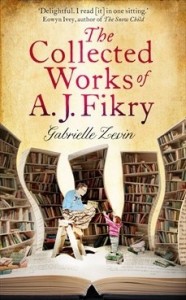
The Completed Works of A.J. FikryDo you remember the scene in The Collected Works of A. J. Fikry (known as The Storied Life of A. J. Fikry in the US) by Gabrielle Zevin where A. J. talks to a sales rep about the suspension of disbelief? In this scene they talk about how some novels require a suspension of disbelief. On one end of the scale you have literary fiction were everything is about real life situations, then three quarters of the way down the scale you have The Magicians with its references to magic and Fillory. At the end of the scale there is A. J. and his decision to adopt little Maya.

Do you remember this scene? I spent a sleepless night analysing this scene. Trying to understand the concept of ‘suspension of disbelief’ and what the author wanted to say on this topic. I’ve been enjoying The Collected Works of A. J. Fikry but this one scene really stuck with me. The only problem is, this scene doesn’t exist and I was analysing a scene that played out in my mind instead.

It got me wondering about this weird situation. Why would I be kept up all night wondering about a non-existent scene? That whole experience was odd and I’m not sure what to make of it. Do others have similar stories like this? It’s an entertaining story, worth sharing but I feel little a senile because of it.

My review of The Collected Works of A. J. Fikry will be out this week.


Middlesex by Jeffrey Eugenides

Posted March 30, 2014 by Michael @ Knowledge Lost in Book of the Month, Literary Fiction / 6 Comments

Middlesex by Jeffrey EugenidesTitle: Middlesex (Goodreads)
Author: Jeffrey Eugenides
Published: Bloomsbury, 2002
Pages: 529
Genres: Literary Fiction
Buy: AmazonBook DepositoryKindle (or visit your local Indie bookstore)

When Jeffrey Eugenides set out to write Middlesex he wanted to “[tell] epic events in the third person and psychosexual events in the first person”. He had decided that the voice “had to render the experience of a teenage girl and an adult man, or an adult male-identified hermaphrodite”. This was no easy task; he had to seek expert advice about intersexuality, sexology, and the formation of gender identity. His motivation came from reading the 1980 memoir Herculine Barbin and being unsatisfied by the lack of detail about intersex anatomy and his emotions.

”I was born twice: first, as a baby girl, on a remarkably smogless Detroit day in January of 1960; and then again, as a teenage boy, in an emergency room near Petoskey, Michigan, in August of 1974.”

If you’ve read Jeffrey Eugenides before you will know he doesn’t just stop at one issue, Middlesex is also loosely based on his life and is used to explore his Greek Heritage. While the book’s main protagonist is Cal Stephanides, Middlesex is a family saga that explores the impact of a mutated gene over three generations. Starting with Cal’s grandparents, the novel looks at their escape from the ongoing Greco-Turkish War and emigrating from Smyrna in Asia Minor to the United States. This section has similar themes to most immigration stories, looking at Greek and US culture in the 1920’s as well as their efforts to assimilate into American society. However this is overshadowed by the fact that Cal’s grandparents are also brother and sister.

Middlesex continues to follow the Stephanides family through the story of Cal’s parents and eventually his life. While the reader gets glimpses of Cal’s life throughout the novel, the last part is where we really explore how the 5-alpha-reductase deficiency (a recessive condition that caused him to be born with female characteristics) impacted his life. While I got the impression that this was the main focus of the novel and to some extent it is, I was expecting to explore the struggle and emotions behind his condition to a greater extent.

Jeffrey Eugenides has a lot going on his novels and you really need to be a literary critic to enjoy Middlesex to the full extent. I love Eugenides because he is too smart for his own good, on a basic level you can enjoy his novels but there is so much going on underneath that rereading is almost essential. Middlesex is a family saga but there are elements of romance, history, coming of age and, because of his Greek heritage, tragicomedy. You could spend hours exploring the hysterical realism and metafictional aspects from this book. For example; does Cal’s condition have any bearing on where he is narrating this novel from? Berlin, a city that also was divided into two (East and West). Also, why does the narrative style switch between first and third person? Some parts of the story are told in first person but Cal would never have been able to recount what happened in that kind of detail. Is this to evoke confusion within the reader, forcing them to just feel a fraction of what Cal must be feeling?

This is an incredibly complex novel and I feel like I’ve only scratched the surface of what Jeffrey Eugenides has done. This is in fact the third of his novels I’ve read and sadly that is all of them for now. While I did enjoy Middlesex I found more joy from The Virgin Suicides (which deals with suicide) and The Marriage Plot (dealing with mental illness). I really appreciate the themes Eugenides explores and the complexities of his novels, but personal opinion is going against the norm here. Middlesex is probably his most recognised novel; it even won the Pulitzer Prize for Fiction.

Don’t let the complexity of Middlesex put you off reading this fantastic novel; sure, there is a lot there but it still worth picking up. You can spend as much time as you want exploring its depths but in the end you’ll come away with something. It is a compelling read that will stay with you well after finishing it. This is the perfect type of novel to pick up for a book club.


Alif the Unseen by G. Willow Wilson

Posted March 23, 2014 by Michael @ Knowledge Lost in Fantasy / 0 Comments

Alif the Unseen by G. Willow WilsonTitle: Alif the Unseen (Goodreads)
Author: G. Willow Wilson
Narrator: Sanjiv Jhaveri
Published: Allen & Unwin, 2012
Pages: 433
Genres: Fantasy
My Copy: Paperback

Buy: AmazonBook DepositoryKindle (or visit your local Indie bookstore)

Alif is the online persona of a grey hat working in the United Arab Emirates, taken from the first letter in the Arabic alphabet. Alif is a 23 year old Arab/Indian, working in internet security who fell in love with an Arab aristocratic woman he met online. Their relationship is doomed from the start; her family would never accept someone outside her social class, let alone an Indian. Her father has already arranged a more suitable suitor for her; a mysterious and powerful man who is known online as ‘the Hand’, the states leading internet censor. In an attempt to get the girl, Alif has made a powerful enemy, one that forces him to go underground into the world of Jinn’s (genies), ghouls, demons and all the others that remain unseen.

Debut author G. Willow Wilson set out to write a book that can bring her three loves together. A love of comic books and all things geeky, as well as her love of literary fiction and that of her Muslim heritage. The result is Alif the Unseen, a rich blend of cyberpunk and urban fantasy that explores the Arabic culture as well as looks as many social-political issues. Personally I think Wilson set out to expose the bias that the online community has no social consciousness, and educate the world on Muslim culture as well as explore the societal impact of hackivism.

I picked up this novel because G. Willow Wilson is the writer behind the new Ms. Marvel; the fourth character to take on this superhero and is the first Muslim character to have their own Marvel series. After reading the first issue, I wanted to check out Alif the Unseen. I knew it was a cyberpunk/urban fantasy blend but now I expected a strong Arabic or Muslim presence. I didn’t except a literary approach to this genre, but I was pleasantly surprised, Wilson has a lot to say on the Middle East social-politically speaking but also she educates the reader on a culture that is possibly unfamiliar to them.

G. Willow Wilson also takes on Middle Eastern folklore and myths and blends these fables with a religious element. Take jinn for example, we know them as genies but Islamic belief divides sentient beings into three categories. These are Malayka (angels), Nas or Banu Adam (human) and Jinn (the hidden ones). Angels are genderless and have no free will, but humans and Jinn’s are gendered and have free will, this is why Islamics believe Satan was a Jinn and not an angel, as it is impossible for an angel to disobey the will of God. Also playing a role in the story is the hamsa (or the hand of Fatima) which is like a good luck charm in Islamic culture. In the Judeo-Christian world this is often called the hand of Mary or Miriam.

I also want to talk about hackivism. In this novel Alif lives in a heavily censored world; the government believes in having a tight control on what is on the internet. Alif is a grey hat; this is a hacker that doesn’t work for a cooperation of the government.  The term comes from the old western metaphor where the good guys wore white hats and the villains had black hats. A grey hat would be someone whose activities and practices fell in a grey area. For Alif, it was a matter of free speech (and possibly money). He provided security for enemies of the Arad stats, militant Islamists and even pornographers. Sites that the government wants to shut down often turned to Alif or another grey hat for internet security.

I can probably go on and talk more about the range of topics that are going on in Alif the Unseen, but I fear I don’t have the knowledge of Middle Eastern folklore or culture, Islam and hackivism. One of the things I enjoy most about reading is the ability to explore different cultures and learn about the world. Alif the Unseen took me into the rich world of the United Arab Emirates and looked at many social issues, in particular class and religion. I’m not much of a fantasy reader but I do seem to prefer urban fantasy, add in the cyberpunk and literary elements and I’m happy. Alif the Unseen will entertain and educate all its readers; most people will just read it for the entertainment but I hope they take a little understanding with them.