Tag: Literary Fiction

The Bone People by Keri Hulme

Posted November 29, 2013 by Michael @ Knowledge Lost in Book of the Month, Literary Fiction / 0 Comments

The Bone People by Keri HulmeTitle: The Bone People (Goodreads)
Author: Keri Hulme
Published: Pan Macmillan, 1984
Pages: 540
Genres: Literary Fiction
My Copy: Paperback

Buy: AmazonBook Depository (or visit your local Indie bookstore)

It was a gloomy and stormy night, a mute 7 year old boy, Simon shows at the hermit Kerewin’s tower. The next morning his adoptive father, Joe came to pick him up. Because Simon couldn’t explain his motives, Kerewin has to rely on Joe to tell their curious story. A storm earlier that year sees Simon wash up on a beach with no memory or clue of his identity. Joe and his now deceased wife took the troubled boy in, but the traumatised boy is just too hard to cope with.

The Maori people use bones as tools and for art; they believe the notion of a person’s core is found within their skeleton. The bones are a common theme throughout the novel; each character is emotionally stripped to the bone. It is then we truly see what type of person these characters are. This novel is full of violence and twisted emotions, making this a tense and draining book to read.

Something I really liked about this novel was Keri Hulme’s use of silence as tool that drives the plot. Simon is unable to speak, but we find out this is more of a psychological rather than a physical restriction, as he can sing. I think he is afraid to say the wrong thing, a defensive strategy. He uses notes as a primary form of communication, this way there are no expressions of his emotion and he can protect himself. The book goes a little further, Simon is also silent about the pain, when he is beaten he doesn’t make a sound. Kerewin also uses silence in a similar way, she built her tower to hide away and be a recluse; no one can hurt her if she is in solitude. She is always an artist suffering from a creative silence; not being able to let her creative side flow through her art. You can read this book and find many examples of silences within it; very effective and I spent a lot of time trying to work out the meaning behind it.

Each character has been damaged that their defensive mechanisms make it hard to open up to others. Yet the three main characters spend the entire novel trying to work out what love is and how to find it. They are all isolated themselves from the world; Kerewin in her tower, Simon with his inability to steak and Joe with his grief. There is just so many themes you could look at in The Bone People, the idea of a utopian society uniting Maori and Western culture, Post-colonial discourse, cultural illness, violence as a way to communicate and you can just go on and on.

This is not the easiest book to read, it is confronting and tense. The Bone People left me with mixed emotions; on one hand the writing was wonderful and left me thinking about so many issues but on the other hand the violence just left me with a sick feeling. I often try to leave my emotional opinion of the subject matter out of analysing a book but I just can’t help it with this one. In the end, I think the book has something important to say and worth reading.


Barracuda by Christos Tsiolkas

Posted November 3, 2013 by Michael @ Knowledge Lost in Literary Fiction / 10 Comments

Barracuda by Christos TsiolkasTitle: Barracuda (Goodreads)
Author: Christos Tsiolkas
Published: Allen & Unwin, 2013
Pages: 528
Genres: Literary Fiction
My Copy: ARC from Publisher

Buy: Book Depository (or visit your local Indie bookstore)

Danny Kelly’s dream is to win Olympic gold, and he even transferred to a prestigious private school to help realise this goal. But at this school he was an outsider and was shunned by the rich boys that attend. His coach believes in him, but the rest of the swim team doesn’t and this could start affecting his confidence. Danny’s win at all costs ferocity drives him and his psychotic approach earns him respect as well as the nickname Barracuda.

Christos Tsiolkas is best known for his highly controversial, but brilliant novel The Slap. Going into this book I worried that this wasn’t going to live up to my expectations of the author but I was surprised. My prediction for a clichéd ‘overcome all odds to achieve greatness’ type novel may be right but it is also very wrong. That is the basic plot but I forgot to take into account of Tsiolkas’s ability to incredibly layer stories.

Barracuda started off tame, full of angst but tame compared to The Slap but soon I was in unfamiliar territory. Unflinching, controversial and not afraid to tread into the dark side; the kind of book that is uncomfortable to read but enjoyable to finish.  The thing I love about Christos Tsiolkas, apart from the dark and brutal approach, is the profound and thought provoking story telling. He is the master of his craft.

This novel like The Slap is a great look at modern Australian life, but this one isn’t looking at parenting but instead the teenage years. Barracuda’s main focus is not about winning or chasing your dreams but for me it is all about alienation. When I was a teenager I was uprooted from all my friends in Sydney and moved to a small country town in north Queensland, where I had no friends and this novel made me relive that feeling of alienation (which I’ve never forgiven my parents for).

Tsiolkas doesn’t stop there, he likes to add layers upon layers and you spend a lot of time after reading this book just thinking about it. This for me is a sign of a great novel and I love how he dealt with alienation so effectively and then managed to look at struggles with sexual identity as well. I feel like Christos Tsiolkas is not afraid to put more and more problems for one character to deal with and it feels so real, the angst of an Australian teenager growing up in the 90’s was done to perfection.

I will admit while I loved this book, it was uncomfortable and sometimes poking at old wounds but the novel was almost a masterpiece. I did feel like it was a little long and dragged on a little at times but overall I was very pleased. Christos Tsiolkas is fast becoming my favourite Australian author and I really want to  read some of his other books; maybe not The Jesus Man but Loaded sounds really good.


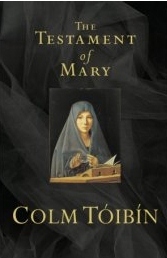
The Testament of Mary by Colm Tóibín

Posted September 22, 2013 by Michael @ Knowledge Lost in Literary Fiction / 0 Comments

The Testament of Mary by Colm TóibínTitle: The Testament of Mary (Goodreads)
Author: Colm Tóibín
Published: Picador, 2013
Pages: 104
Genres: Literary Fiction
My Copy: Library Book

Buy: AmazonBook Depository (or visit your local Indie bookstore)

In the town of Ephesus, Mary lived alone. She had no interest in collaborating with the authors of the gospels. For her, the crucifixion of her son years ago has left her indifferent to the rest of the world. Whether or not she believes that his death was worth it, he was still her son and witnessing the events that lead to him dying have been very emotional. This is The Testament of Mary.

I read this book on the Nativity of Mary (September 8th); while I’m not Catholic it felt like the perfect day to read this novella. The book is both bitter sweet and full of rage; not for or against Catholicism. While the author Colm Tóibín is born Irish Catholic but now identifies as an atheist. While this book isn’t theologically sound, it was an interesting look into what it might have been like to watch Jesus’s journey on earth.

I never really thought about what it might have been like to witness miracles, resurrections and the crucifixion of Jesus. I couldn’t imagine what it would be like to be the mother of Jesus, let alone experiencing all these unexpected events involving her son. The rage, the compassion, the isolation and pride that Mary must of experience all comes into play in this novella.

The Testament of Mary is a tender and heart breaking book, not really religious or anti religious. The balance is just right. The only problem I have is the theology but I have to let this go and remind myself that this was a work a fiction. Being raised as a Pentecostal, I never really cared too much about the life of Mary apart from her giving birth to Jesus but then going onto marry a Catholic my views have changed a little. My views towards Mary may not be in line with my wife’s but that is beside the point.

A quick and interesting work of fiction into the life of Mary; I loved the way this book was written. It really had a way of sweeping me into a story and expressing the emotions she faced in an affectionate and sour way. We have no idea what Mary would have felt but I can only imagine the fixed emotions that went through her mind. While this novella is haunting and stubborn in it’s approach, it is a compassionate and provocative read; this doesn’t work to counteract each other but only highlights the beauty of the mixed emotions.


The Machine by James Smythe

Posted September 11, 2013 by Michael @ Knowledge Lost in Literary Fiction, Speculative Fiction / 6 Comments

The Machine by James SmytheTitle: The Machine (Goodreads)
Author: James Smythe
Published: Blue Door, 2013
Pages: 328
Genres: Literary Fiction, Speculative Fiction
My Copy: Hardcover

Buy: AmazonBook Depository (or visit your local Indie bookstore)

Beth lives in a remote village by the sea, a desolate place where she can rebuild her life following the return of her husband after the war. Vic is haunted by his memories and turns to a machine to take his nightmares away, but it takes everything away; now Beth is determined to rebuild him.

Dubbed as Frankenstein for the 21st century, The Machine is a wonderfully dark and complex novel that really deserves more attention. I normally get annoyed when novels are compared to Frankenstein; how can any novel truly compare? The Machine was a different story; I wasn’t expecting it to compare to Frankenstein, I was more interested with the dark and complex nature of this book. The novel reminds me more of the British TV show Black Mirror; there are two episodes in particular, the episode where all memories are recorded for instant playback (1×3) and the one where a woman loses her husband and turns to a service that continues his online life (2×1). The show is considered “a hybrid of The Twilight Zone and Tales of the Unexpected which taps into our contemporary unease about our modern world” and is designed to be thought provoking. In fact The Machine feels right at home with the style of that show.

Imagine if you can record all your memories and then wipe the ones that cause pain?  Would removing some memories change a person completely? What if that machine wipes every memory and leaves the person catatonic? What are the moral implications of playing with someone’s memories? How should the government regulate scientific advances like this? If you could, would you try to rebuild a loved one? There are just so many questions to answer and The Machine does a great job of creating more. Don’t expect answers, this book is all about giving you questions.

I love a novel that gets you questioning life and philosophy. James Smythe masterfully does what so many try to do, it’s so refreshing to read something like this but it makes me sad that this book isn’t getting more attention. I feel the need to read every James Smythe book I can get my hands on in the desire to experience this feeling again. Science Fiction is a genre that really can explore humanity and morality and Smythe reminds the readers that it’s possible. In the 60s and 70s it felt like all Sci-Fi novels had a message and we have exchanged that for entertainment. Not that there is anything wrong with entertaining the reader but you can do that while exploring philosophical ideas.

There is so much I want to say about this book and the majority of it is positive but I won’t, I think everyone should read this book and experience it for themselves. The plot is compelling and James Smythe writes like a master of his craft. The Machine has already secured a place in my “best books of 2013” list and I want to read more of his books, just to have this experience again. Go out now and get your copy of The Machine.


The Amazing Adventures of Kavalier & Clay by Michael Chabon

Posted August 21, 2013 by Michael @ Knowledge Lost in Historical Fiction, Literary Fiction / 0 Comments

The Amazing Adventures of Kavalier & Clay by Michael ChabonTitle: The Amazing Adventures of Kavalier & Clay (Goodreads)
Author: Michael Chabon
Narrator: David Colacci
Published: Fourth Estate, 2000
Pages: 659
Genres: Historical Fiction, Literary Fiction
My Copy: Personal Copy

Buy: AmazonBook Depository (or visit your local Indie bookstore)

The Amazing Adventures of Kavalier & Clay follows the story of two Jewish cousins. Joe Kavalier is an artist that escapes occupied Czech to America where he meets writer Sam Clay. During the golden age of comics Kavalier and Clay become major players in the industry creating many comic book heroes including The Escapist. The superhero is a Nazi-busting saviour who liberates the oppressed around the world.

I’ve read Michael Chabon before and the thing I really enjoyed about his novels is that they are full of intertextual goodness. With The Yiddish Policemen’s Union, it blends his literary style with elements of alternative history and noir. The Amazing Adventures of Kavalier & Clay blends with elements of the comic book genre. This is what impresses me the most with Chabon’s style and makes me keen to read The Telegraph Avenue (which I hope blends elements of music into his style). I wonder if all his books are full of intertextuality and will love to find some other novelists that do this; it really works for me but maybe it’s just my love for literary fiction and the genres he blends with it.

There is so much more going on with the novel. The Escapist is used to play out all Kavalier’s fantasies of being a magician/escape artist but he uses the comic books to spread his propaganda towards the Nazis. Most of this novel is set before World War II in America before the world really knew the extent of what the Third Reich were up to. Michael Chabon is a Jewish novelist and his heritage seems important to him and this comes through in his novel.

This novel deals with so many different literary themes; escape from oppression, coming of age, family and relationships. Just writing that sentence makes me think that Chabon might have over done it but really this book comes together beautifully. I don’t often use the terms like magnum opus and tour de force but having read the novel and people’s impressions of this book, it really seems to fit.

Kavalier and Clay become legends in the comic book world and as the world and industry changes, they are repeatedly asked to change and conform but they never compromise. They had a clear message they wanted to say and they refused to change that message. I’m impressed with everything about this book from the blending of comic books and its culture, Jewish mysticism and world history to the character development, proses and my overall opinion of the novel.

If you’ve never read a Michael Chabon novel then I recommend it; I’m not saying start with this novel but look for one with a theme that interests you. Out of the two I’ve read, I’ve been impressed with them both but I have to say The Amazing Adventures of Kavalier & Clay is masterfully crafted and deserves all the praise it received. I have Telegraph Avenue on the shelf and I’m interested in trying Wonder Boys soon as well. The Escapist was made into a comic by Dark Horse Comics but I think it was part of a promotion for this book. Also the film rights for the book have been sold but with the luck it’s been having I’m doubtful it will ever be made.


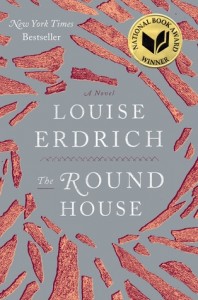
The Round House by Louise Erdrich

Posted June 24, 2013 by Michael @ Knowledge Lost in Historical Fiction / 0 Comments

The Round House by Louise ErdrichTitle: The Round House (Goodreads)
Author: Louise Erdrich
Published: Harper Collins, 2012
Pages: 321
Genres: Historical Fiction
My Copy: Hardcover

Buy: AmazonBook DepositoryKindle (or visit your local Indie bookstore)

In Spring of 1988, a woman on a reservation in North Dakota was brutally attacked and raped. The details of Geraldine Coutts’ traumatising event slowly unfold as she reluctantly recounts the account to the police or her husband. Not only will her life be changed forever, but that of her husband Bazil and their thirteen year old son Joe. In just one day, Joe’s life is irreversibly transformed as he finds himself thrust unprepared into adulthood in Louise Erdrich’s National book award winning The Round House.

From the perspective of Joe we follow this tragic story from that one Sunday in the spring through all the challenges that face the family afterwards. Not only is justice difficult to find for the victims of rape but imagine just how hard it would be when there are laws preventing the North Dakota police arresting anyone on an Indian reservation. This is a look at the problematic laws between America and native tribes as well as rape victims. Can there be justice in these cases? The tribal judge and Joe’s father, Bazil has faced many problems with finding justice but this time it is so much more personal and really highlights the fact that these laws in America need to be changed which are being worked on but unfortunately due to these tangled laws, 1 in 3 Native women were reportedly raped in their lifetime according to a 2009 report (this figure could be higher as Native women often do not report rape) and 86 percent of the sexual assaults are perpetrated by non-Native men.

Not only is this book trying to show us just how bad the laws are at protecting Native women, but  this book, from Joe’s perspective,  goes into some other details , such as, a teenage boy growing up in a both a tribal environment and the modern world. The two cultures clash from time to time, not just when it comes to the laws and justice, but through a teenager’s eyes the modern and traditional worlds are so incompatible. Joe was an interesting character whose childhood was cut so short and being ill equipped to deal with adulthood really just added another dimension of struggle to this book.

It felt like this was a coming of age story for Joe, he was thrust into adulthood far too quickly but he was still struggling to grow. The whole sexual awakening and puberty and everything else he would have had to go through at the same time as trying to help his mother heal; I don’t know how someone would be able to manage in that circumstance. Louise Erdrich did try to explore the sexual awakening and rebellious phase of Joe’s life but due to the tragic event of his mother’s life, it become really difficult to balance the two and that was one of the major issues I had with the book. I felt like Erdrich was trying to do too much and maybe didn’t execute the plot well enough to manage her ideal outcome for this novel.

Then I found some of the minor characters to interchangeable and others far more interesting than the primary ones. The rest of the family apart from Geraldine, Bazil and Joe, all felt too similar that they should have been written out of the book completely. But then you have Grandma Ignatia with her raunchy stories, the old man who tell fables in his sleep and the ex-stripper and her past. All three characters, plus a couple more seemed far more fascinating than the main characters; I would have rathered a novel about them instead.

For me the novel started off difficult, the violent nature of rape has that effect. I found it difficult to get started and that never really went away; I wanted the book to end or change perspective or do something to keep me reading but it never did. I had to read this book for book club, so I did finish it. If it wasn’t for book club, I might have abandoned or put this book aside for a long time. Sure, there are interesting points this novel brings up but I don’t think it was deserving of such a prestigious award like the National Book Award. Then again the social spotlight on these tangled laws needed to be brought to the attention of all Americans and I guess this book did a good job at that.

I’m not sure if I want to read more of Louise Erdrich’s novels but I’ve heard good things about them, but I had heard good things about this book too. Rape and the social injustice of Native women are serious problems that need to be addressed so I will give Louise Erdrich credit for The Round House, it did its job. Thank goodness the novel I finished next was Snow Crash; review soon. I would like to know if anyone has read or plans to read The Round House and if they have some thoughts on the book and these issues.


TransAtlantic by Colum McCann

Posted June 7, 2013 by Michael @ Knowledge Lost in Historical Fiction, Literary Fiction / 0 Comments

TransAtlantic by Colum McCannTitle: TransAtlantic (Goodreads)
Author: Colum McCann
Published: Bloomsbury, 2013
Pages: 320
Genres: Historical Fiction, Literary Fiction
My Copy: ARC from Netgalley

Buy: AmazonBook DepositoryKindle (or visit your local Indie bookstore)

The National Book Award-winning author of Let the Great World Spin by Colum McCann comes an astonishing new novel, TransAtlantic. Through a series of narratives that span 150 years and two continents comes this magnificent and somewhat ambitious novel. From the first TransAtlantic flight from Newfoundland to the west of Ireland to the American senator crossing the ocean in search for lasting peace in Ireland, this is part fiction part historical literary achievement.

I’ve often struggled with the novels that are made up from a collection of short stories as well as the ones that blend fact and fiction. A Visit from the Goon Squad was a widely talked about book for having a chapter dedicated to a different person but I didn’t think much of it, while The Imperfectionists did the same thing a whole lot better. Now we have TransAtlantic, which I’m not sure if it was the fact that I read this while flying but this really stands out about the rest. Then you have these novels that draw a lot from history.  A Treacherous Likeness was a disaster; Z: The Novel of Zelda Fitzgerald I thought missed too much of her later years; Burial Rites was the exception but only because it was such an obscure historical event I didn’t know about it. Yet TransAtlantic seems to be standing out above these novels as well.

The first chapter looks at the incredible story of the first flight across the Atlantic in 1919, an epic feat in human history by all accounts. I felt like Colum McCann handled this so masterfully that I wasn’t concerned about the historical facts, I was absorbed in the tension facing these two men as they battle against the odds to make it.

Yet this isn’t just about the history of flight across the Atlantic Ocean, this focuses a lot on Ireland. McCann is an Irish born author so you expect to see Irish history within this book but he is also coming from a journalist background and it really shows. This novel takes a look at slavery and conflict within Ireland making this an interesting look at the significance of TransAtlantic flight.

Colum McCann weaves a tapestry of rich and powerful short stories that lavish us with this literary piece. From the get go I felt drawn into the novel, the short sentences seem to keep me reading at such a fast pace. While I had to get off one plane and board another half way through this book, I was so sucked in I felt like asking the pilot to take the long way just so it wouldn’t interrupt my reading.

Key historical figures within TransAtlantic include Frederick Douglass, John Alcock and Teddy Brown and George Mitchell. The novel both encouraged me to learn more about these people and while giving me a new insight of both TransAtlantic flight and historical events within Ireland. On reflection I can pinpoint exactly what worked well and what didn’t, the different elements of this novel all seemed to work together to hide whatever flaws I was looking for.

TransAtlantic was both an addictive read and a stunning piece of literary fiction. While it wasn’t perfect, I’m not sure how to fault this book, I picked the right book for the right time and it was an enjoyable experience. I’ve not read Colum McCann before, in fact I hadn’t heard of him, but you can be sure I’ll be tracking more of his novels down.


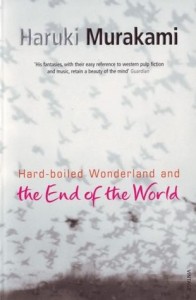
Hard-Boiled Wonderland and the End of the World by Haruki Murakami

Posted April 29, 2013 by Michael @ Knowledge Lost in Book of the Month, Literary Fiction, Magical Realism / 0 Comments

Hard-Boiled Wonderland and the End of the World by Haruki MurakamiTitle: Hard-Boiled Wonderland and the End of the World (Goodreads)
Author: Haruki Murakami
Translator: Alfred Birnbaum
Published: Vintage, 1985
Pages: 400
Genres: Literary Fiction, Magical Realism
My Copy: Personal Copy

Buy: AmazonBook Depository (or visit your local Indie bookstore)

In the future, Tokyo remains the technology powerhouse it is today. With the major advances in technology, data security has become more valuable; problem is all codes can be broken if you know how. The Calcutec is a human data processor/encryption system who has been trained to use his bio-algorithms implant and subconscious for encryption. A new comer to a strange, isolated walled town known as “The End of the World” is assigned a job as a dream reader. As he finds acceptance within the town, his mind begins to fade; or has it only been suppressed?

Hard-Boiled Wonderland and the End of the World tells the story of a split between two parallel narratives from different worlds. The consciousness and the unconscious mind; “Hard-Boiled Wonderland” refers to The Calcutec’s life as an encryption machine while “The End of the World” is his subconscious world. The two stories are told in alternating chapters as the reader slowly discovers the mysteries connecting these two worlds together. Hard-Boiled Wonderland is a homage to Raymond Chandler and hard-boiled fiction, as well as to science fiction and cyberpunk and “The End of the World” has similarities to Franz Kafka’s The Castle.

The major theme within this book is the nature of consciousness; both narratives are constructed around this general idea. While the odd numbered chapters refer to the conscious mind and the even-numbered chapters the subconscious, it is interesting to note they link together with similar themes; for example the song Danny Boy appeared in consecutive chapters. Even characters are shared between consciousnesses; the object of the narrator’s desire, the librarian is a perfect example of this.

Beyond that, the concept of subconscious being able to be controlled or shaped plays out in the entire book. This brings me to another major theme within this novel; the morality of science. The scientific experiments been done on the narrators mind in the attempt to separate the conscious and the subconscious in an attempt create more secure encryptions is an interesting topic. It reminds me a little of Frankenstein when it looks at the dangers of science and its moral implications. The Professor’s experiment killed about twenty people and while he feels remorse for the tragedy he also feels like it was the right choice in the name of progress.

While there are many more themes that would be interesting to explore I wanted to look at character. In both narratives there are no names for any of the characters, each is referred to by their occupation or a general description; from the Narrator, known as The Calcutec, the Librarian, the Old Man, the Professor, the Big Guy and the Chubby Girl. I never really payed too much attention to this while reading the book but referring to a girl as “the Chubby Girl” did bother me; it wasn’t till the very end that I was bothered by the lot. I couldn’t understand why this book was so frustratingly vague and incomplete with character and setting descriptions, I don’t know what the reason behind it would be, except for maybe removing any obstructions that might hinder the understanding of the novel.

Even the narrative is offering a very limited view of what is actually happening but slowly most of the mysteries do become clearer but the entire focus was on the subtext of this book. This wasn’t meant to be about great characters or scenes; this was all about exploring the themes as a way to get Haruki Murakami’s thoughts on the subject across. In a sense, this is what Murakami excels at; if it wasn’t for these well thought out ideas his books would just be odd and weird. This is my second Murakami novel and the first one I’ve actually enjoyed.

I’ve finally discovered what makes Haruki Murakami an author to take notice of; I didn’t find the same thing with 1Q84, I thought it was long winded and repetitive but Hard-Boiled Wonderland and the End of the World really worked for me. I have some issues with the novel, obviously the vagueness was one of the major ones, but overall this was a really interesting journey for me.


Life After Life by Kate Atkinson

Posted April 26, 2013 by Michael @ Knowledge Lost in Historical Fiction / 18 Comments

Life After Life by Kate AtkinsonTitle: Life After Life (Goodreads)
Author: Kate Atkinson
Published: Knopf Doubleday, 2013
Pages: 480
Genres: Historical Fiction
My Copy: Personal Copy

Buy: AmazonBook Depository (or visit your local Indie bookstore)

What if you had the chance to live your life again and again, until you finally got it right?

Ursula Todd is born in a snowstorm in England in 1910 but dies before she can take her first breath. During that same snowstorm she was born again and lives to tell the tale; again and again. Life after Life tells the story of Ursula’s lives, as with each new life she makes small changes that send her on a completely different path.

I feel like I’m the only person on the planet that thought this book was overhyped and over rated. Sure Kate Atkinson has this trippy ability to create this bleak world while still managing to add some wit and compassion but it wasn’t the writing that was at fault. The premise of the book makes it sound really good but let’s face it; it is just Groundhog Day in disguise.  The book is clever, but it tries too hard to be clever and it didn’t really turn out the way it should have; for me anyway. This book is getting so many rave reviews, I feel like I am a black sheep just telling people it did not work.

As I said before, there is nothing wrong with the writing; Kate Atkinson has created this lyrical narrative and I did find myself being swept away in the words. I even felt like at times I was reading this book without thinking about what was happening; a few times I had to stop and process before continuing. I almost found myself not noticing a death and Ursula’s life starting again and that could have got me completely lost. I did feel like Kate Atkinson did however overdo the twists and it turned out to be a roundabout way to retell the same story over and over again with different outcomes. This could have worked; and it sounds like it worked for many people but I sadly wasn’t one of them.

I wonder if Kate Atkinson was trying something different and experimental where she could play with the character’s death and life, explore the concept of life’s choices and their consequences but because there were no real penalty to Ursula’s life I wonder if it really worked? Do you ever have déjà vu? (I don’t think so, but I could check with the kitchen) Life after Life just seems to repeat the same scenes, some readers might gain a sense of familiarity and for me it just felt like I wasn’t getting anywhere.

Life after Life is the kind of book you should probably read in a real cold climate; the snowy, dark and sometimes bleakness of the novel seems to call for it. Maybe read snuggled up on a dark winters night and don’t forget your booties ’cause it’s cooooold out there today (It’s coooold out there every day. What is this, Miami Beach?).  It is just the book that would work better in the cold; though it is never cold here in Townsville, maybe that’s why it didn’t work for me.

I really wanted to enjoy this book; I will try another Kate Atkinson novel because I really think she has a great style. Just so happened Life after Life was not for me and I know people loved this book and will probably complain about this review but at least it was just an excuse to put some Groundhog Day quotes into something. This book has had so many positive reviews so maybe it is just me, if the book sounds like something you’d like then don’t let this review stop you, is it too early for flapjacks?


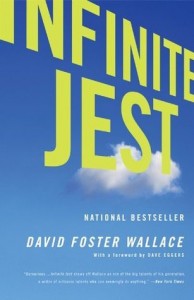
Infinite Jest by David Foster Wallace

Posted April 12, 2013 by Michael @ Knowledge Lost in Literary Fiction / 0 Comments

Infinite Jest by David Foster WallaceTitle: Infinite Jest (Goodreads)
Author: David Foster Wallace
Published: Back Bay Books, 1996
Pages: 1079
Genres: Literary Fiction
My Copy: Personal Copy

Buy: AmazonBook Depository (or visit your local Indie bookstore)

In the not so distant future, the residents of a Boston halfway house for recovering addicts and the students of the Enfield Tennis Academy both search for the master copy of a bizarre movie that is so entertaining the viewers die in a state of catatonic bliss. That movie is called Infinite Jest and it is said that anyone who watches it will lose all desire to do anything but watch it. This semi-parodic novel questions what entertainment is and why it dominates our lives.

I’m not going to lie, this book is both lengthy and difficult to read but in the end it is worth the effort. You will need three bookmarks for this book, one for where you are up to, another for the endnotes and the third for the timeline that sits around page 80. You do need to read the endnotes, this book relies heavily on them; they include definitions, side thoughts, in depth details and even a filmology. You will also need to know the timeline because David Foster Wallace likes to jump around a bit, so it helps to keep up. This is where it gets tricky; in the book’s future each year has a corporate sponsorship, so you have Year of the Whopper, Year of the Tucks Medicated Pad, Year of the Trial-Size Dove Bar and so on. It helps to know in what order the years are in so you can piece it all together. While all this might help you keep track of what’s going on there is still the fact that this book is piled with subplot after subplot and you will have to keep track of more characters than A Game of Thrones novel. You will need to keep notes and it might even be a good idea to get a study guide because this book will take you on a very interesting ride.

As I said before, this book is not easy; I took my time with it and slowly chipped away at this book for two months but I still think I’ve missed a lot. While there are some tangents that happen in the endnotes, this book jumps around so much that sometimes you get lost and have to go back. There shouldn’t be any shame in doing this as Wallace’s writing voice is a postmodern mixture of high- and low-brow linguistic traits which is very difficult to become familiar with. He also uses juxtaposes, colloquialisms and polysyllabic and highly esoteric words so you will need to spend some time researching.

Now that I’ve talked about the difficulties of reading the book, I should probably talk about my thoughts on it. Infinite Jest starts off rather dense, you really need to push through the first few hundred pages before things start to make any real sense. So why is this book considered a masterpiece, magnum opus or anything else it has been referred to? It’s not to read; rather it is a book that will challenge us, to rattle us out of complacency. For me I think David Foster Wallace has the ability to take something like substance addiction, recovery programs, depression, abuse, death, relationships, popular entertainment and even tennis and look at it in a very careful way. The way Wallace explores each topic may make you feel uncomfortable and it is confronting but you do gain a deeper understanding.  Yet the book doesn’t remain dry and depressing; Wallace has a very unique way of using humour to basically satirise the issues without making fun of them.

This book is a parody and comment on American culture, yet this is also a semi-autobiographical novel of the issues facing the author. Creating this funny but bitter sweet novel that I found difficult not to associate with the life of David Foster Wallace; his depression that lead to his suicide.  There is a lot going on in this novel and to go through all the major themes within this novel would probably turn this review into something too long to read so if you want to talk about themes I’ll leave that for the comments. So just a brief overview; the main character Hal Incandenza is an intelligent tennis prodigy dealing with the intense pressure put on him to succeed in a junior Tennis Academy, dealing with a drug addiction and the ongoing strain (both physical and emotional) to reach his full potential. While that is an understated summary, all the subplots makes it hard to cover, this is just the basis of the book.

Addiction and depression would be the two major themes in the most brutally confronting depiction of the struggles I’ve ever read. No other book has given me the insight like this one. I feel like the depiction of depression is often wrong in books and movies; depression is a complex thing, it’s not a state, it’s an overall feeling that can’t be shaked. One of the characters in the book; Kate tried to commit suicide because “[she] just didn’t want to feel this way anymore” and “[she’d] rather feel nothing than this”. This tragically honest view on depression really opened my eyes on the state of mind and the struggles that people dealing with depression go through, and for this only, Infinite Jest was worth reading.

The futuristic America created in Infinite Jest feels very much like western society now, just with the increased corporate involvement but that is the way the world is heading. I am reminded of dystopian classics with his satire of society and the social/cultural commentary. It really covers a lot of interesting topics and, while it is difficult, well worth reading.

This is one of those books I plan to re-read once I have a degree in Literature behind me; while I got a lot out of this novel, I am hit with the feeling that I’ve only scratched the surface. This is rather impressive novel overall, never have I seen a novel with over 60% of Goodreads users rating the book five stars and for good reason, the book covers a lot of topics and does it really well. Blending serious topics with an awkward sense of humour is balanced perfectly, and I highly recommend reading Infinite Jest; even if it is only to increase your pretentious levels.