Tag: Literary Fiction

The Son by Philipp Meyer

Posted April 11, 2013 by Michael @ Knowledge Lost in Historical Fiction / 0 Comments

The Son by Philipp MeyerTitle: The Son (Goodreads)
Author: Philipp Meyer
Published: Ecco, 2013
Pages: 576
Genres: Historical Fiction
My Copy: ARC from Netgalley

Buy: AmazonBook DepositoryKindle (or visit your local Indie bookstore)

The Son is a multigenerational saga spanning three generations. This unforgettable Texas family’s story plays out from the three perspectives, each with their own hardships from Comanche and border raids to the oil boom. This is a story of power, blood, and the land; Philipp Meyer explores the American dream and the dark roots of which it came.

I’ve been meaning to pick up American Rust for a while now but instead The Son is the first look at the remarkable writing of Philipp Meyer. The Son follows three main characters of a Texas family: Eli, his son Pete and Pete’s Granddaughter Jeanne, each with their own set of issues to deal with. Overall this is a novel of the rise of a Texas oil dynasty and the demons facing them.

 First the McCullough family is an old frontier family taking the land from the natives; the first character Eli (born in 1836) tells the story of being early settlers. But he soon finds himself being the sole survivor after being raided by the Comanche. His story is one that shows both sides, being taken captive and then learning the ways of the American natives. Confronting him and the reader with the idea of heritage from both the settlers and natives view point.

His son Peter, not only has to deal with his father’s violent past but also the Mexican border raids of the early 1900s. This is a very emotionally driven narrative, his father who has obviously had to adapt to Comanche life only to watch them die out with disease, starvation and the discrimination of settlers. Now Eli has a drive for power and Peter shares this story, how it effects the family, all while defending their land from raiding Mexicans.

Finally we have Jeanna, her story is not so violent but confronting none the less. Her story follows the Oil booms of the 20th century, the social and economy changing all while dealing with the demons of her family history. She is left to deal with most of the major consequences of her family’s choices in the past, while trying to succeed in business in a male dominated industry and world.

This is an epic adventure of wealth, privilege, family and the consequences of our actions. While it is a pretty dark subject matter, the book is rather elegant and beautiful. The prose alone makes it that way, Meyer really has created this wonderful scenery, yet I’ve not really noticed an overuse of similes. The writing style reminds me a little of John Steinbeck but there is an element of Cormac McCarthy that comes through as well, especially in Eli’s story. Overall The Son is a compelling novel with some interesting ideas for the reader.

I was really impressed with this novel but with the constant changing of time periods and characters at times I did feel like I struggled to keep up but Philipp Meyer did manage to push the story on. Historical Fiction with shades of western and southern gothic is how I would describe this novel but there is so much more to it than that. This is the second book in the American trilogy planned by Meyer, all dealing with issues facing America. American Rust with the towns that modern economy leave behind when all the factories move and The Son rather than dealing with a declining America, it deals with its dark past full of the blood and bones on the natives. I can’t wait to read American Rust and I’m interested to know what book three would be about but that may be awhile out. For now it check out Philipp Meyer’s works he has the makings of a great American author.


The Virgin Suicides by Jeffrey Eugenides

Posted April 9, 2013 by Michael @ Knowledge Lost in Literary Fiction / 0 Comments

The Virgin Suicides by Jeffrey EugenidesTitle: The Virgin Suicides (Goodreads)
Author: Jeffrey Eugenides
Published: Bloomsbury, 1993
Pages: 249
Genres: Literary Fiction
My Copy: Personal Copy

Buy: AmazonBook Depository (or visit your local Indie bookstore)

The town of Grosse Pointe, Michigan are fascinated by the death of 13-year-old Cecilia Lisbon and then eventually her four older sisters. All five suicides have been the subject of much confusion as everyone tries to piece together an explanation for these acts. The girls seemed so normal and twenty years later their enigmatic personalities are still the subject of much speculation as the boys recall their adolescence and infatuations with the Lisbon girls.

The Virgin Suicides is told by an anonymous narrator in the first person plural as he and a group of men recall their obsession over the Lisbon girls. This is an interesting way of showing the story because you never really find out their motivations and all you can really do is speculate based on the evidence these boys have collected. At times I think the girls suffered from depression, being in an overly protective home and being avoided at school. While their parents were overly protective, there is never really any signs of abuse and they are just trying to raise the girls up in a way they thing is right. Then at school it never seems like the girls have any friends and just stick together; there is no indication that any of the other girls in school talked to them and all the boys seemed too obsessed with them that they never really socialise with the girls either. Does this mean they suffer from depression? I don’t know but being treated like a prisoner at home and a leper at school would be difficult.

Cecilia (13), Lux (14), Bonnie (15), Mary (16), and Therese (17) all have their own personalities and this never comes through in this book. The idea of the boys worshipping them all without really knowing how to tell them apart is an interesting concept. High School infatuation really doesn’t give way to really understanding the girls and that was one of the major problems the girls had. As they reflect on what happened they refer to themselves as the “custodians of the girls’ lives” but none of them really took anytime to truly know them when they were alive; they just piece together based on their memories and the evidence they took from their house. To me this is the key to this whole book; they can never really know what the girls felt because they were too scared to find out and the parents kept them on a tight leash.

I love this book, it’s deliciously bleak and Jeffrey Eugenides is just a wonderful writer. I’m surprised how well thought out and polished this is for a debut novel; it outshines a lot of other books.  Eugenides is fast becoming a favourite of mine; I adored The Marriage Plot and now only have his most talked about novel, Middlesex to read. I love the combination of darkness and elegance in this book, mix that with this thought provoking concept you really do get a sense of why Eugenides is such a great author.

While the subject matter of suicide is difficult to approach, I think Jeffrey Eugenides did a masterful job at showing just how devastating it is for everyone around. He adds that intrigue that never quite goes away and then he also questions the town’s people and even the reader into what we can do to recognise this pain and maybe help prevent it. No matter how many clues you search for in this book, can you really know the true motivation behind the girl’s suicides? This is what makes this book so great; it doesn’t give you the full answer but leaves you with some many options. I think this is the point, there normally isn’t one clear answer to why someone would take their own lives; it is collection of little things the build up until they can’t take it anymore.

I’ve not seen the movie adaptation of this book and quite frankly I’m a little scared. I don’t know how it would work as a film. I know it could probably convey the heartbreaking concept of this book but the beauty of this book would be almost impossible to translate onto the screen.

It is a weird concept to think of a book about suicide as beautiful or gorgeous but I can’t think of any other way to describe it. Sure the subject matter is dark (which I love anyway) but the way Jeffrey Eugenides approaches it is first class. There is no finger pointing and no reason to play the blame game, it focuses solely on the Lisbon Girls and just how much the town didn’t know about them. A haunting read but never really going too dark, the balance between tragedy and understanding is just perfect.


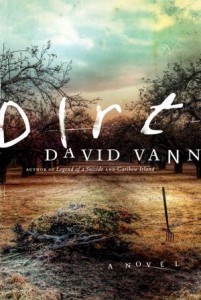
Dirt by David Vann

Posted April 4, 2013 by Michael @ Knowledge Lost in Contemporary / 0 Comments

Dirt by David VannTitle: Dirt (Goodreads)
Author: David Vann
Published: Harper Collins, 2012
Pages: 260
Genres: Contemporary
My Copy: Library Book

Buy: AmazonBook DepositoryKindle (or visit your local Indie bookstore)

Galen is a 22 year old who is still living with his emotionally dependant mother instead of going off to college or living life. He has no idea who his father is.  His grandmother is losing her memory which is leaving his mother and him living on the family trust, old money which his aunt Helen wants. With a keen interest in Buddhism, Galen wishes to free himself from the corporeal but he is trapped by his dysfunctional family and his fleshly desires weigh him down.

Dirt is not an easy book to read, portraying a violently dysfunctional family, with no likeable characters. While Galen tries so hard to live a different lifestyle, it is clear that he has a lot more meditation to do. His constant desire for his boldly flirtatious 17 year old cousin, Jennifer, often leads him into trouble. Giving into his fleshly desires leads to the catalyst of this novel.

Because his grandmother is losing her memory, aunt Helen and her daughter work to try and get as much money out of her as possible. Without a care for anyone but themselves they are both physically and emotionally violent towards Galen and his mother. The grandmother will never remember and they can continue to manipulate her to write more checks for them.

Galen’s mother is so emotionally dependant that, despite having the money, she has constantly told her son they can’t afford to send him to college and she needs his help to run the walnut orchard. Yet there is a part of her that hates her son, even physically scared of him. So when she catches Galen having sex with Jennifer she found her way out. Telling him that he was going to report him to the police for statutory rape, that way she can live her life and pretend she doesn’t have a son.

This is the part that didn’t feel right to me; while the sex scenes between Galen and Jennifer were disturbing and is probably what everyone dislikes about this novel, it’s the conflicting message of his mother that really annoyed me. She came across as dependent of her son and scared to be alone, but when she has the chance to send him to prison she took it. I know he was wrong and he probably should pay for his actions, but to me it felt like she just turned against him and was so full of hate toward her son all of a sudden. Maybe it was seeing Galen with another woman that set her off, knowing that he was no longer hers and he was now a man but I never really felt that came across well enough. It was missing the motivations behind her actions, but this may also be the unreliable first person narrator.

This is dark and disturbing with senses of incest, so this might not be a book for everyone. I really like David Vann and I was physically disturbed by the dysfunctionality of this family. There is a real sense of hopelessness with each character, while the first person narrative didn’t give much opportunity to explore this, it did give an overall picture. Galen is a creepy sociopath and while he tries to better himself, he is always a victim of his own actions. I liked this book but I fully support why people don’t; you really have to be prepared to handle the violence and madness of Dirt.


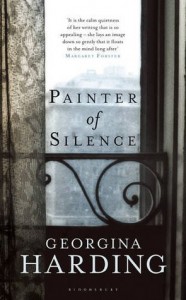
Painter of Silence by Georgina Harding

Posted April 2, 2013 by Michael @ Knowledge Lost in Historical Fiction / 0 Comments

Painter of Silence by Georgina HardingTitle: Painter of Silence (Goodreads)
Author: Georgina Harding
Published: Bloomsbury, 2012
Pages: 312
Genres: Historical Fiction
My Copy: ARC from Publisher

Buy: AmazonBook Depository (or visit your local Indie bookstore)

Post World War II Romania is under the brutal Stalinist regime; an unnamed man wakes up in hospital deaf, mute and unable to communicate. A young nurse, Safta, recognises him and brings him a pencil and paper so he can draw. Slowly and painstakingly, memories appear on the page, not just his memories but Safta’s too as they grew up together. But his world has remained the same size and Safta’s has expanded to embrace languages and society.

Communist Romania wouldn’t be the easiest place to live and author Georgina Harding builds this wonderfully artistic scene with real beauty but also despair and hopelessness. This took a little time to become accustomed with; the overuse of similes really made for a rough start in reading this book. It really felt like the word ‘like’ appeared on every second line, but when I started to get further into the novel I did find myself being swept away in this artistic world.

The unnamed name protagonist (who we eventually find out is Augustin) slowly pieces together his world through his art and we as readers are on this journey with him. Finding out. as he has, that he is the son of the Safta’s family cook and the special bond the two formed growing up together. I do not think Augustin is a mute, he just doesn’t speak, but this does not mean that he cannot communicate; each detailed drawing he produces proves this.

There was something unnatural about the plot that really didn’t sit well with me; the whole book Augustin communicates via drawings yet there is this feeling like you find out more about this character than you possibly can via a drawing. Is this pure speculation from the author? Or is there something I am missing? While it wasn’t a big concern, that really did end up bothering me about this book. I just felt like that whole part of the book was a little contrived, yet it really did not effect my enjoyment of the book as this was an afterthought.

This book was really well written, I do not like to use the word Readable but I think that does cover my thoughts on the style. I really liked the way this book ended up feeling like a piece of art with all the little details and yet it still managed to capture the mental and physical burdens of the characters living in this post-war town. I found myself drifting into the story as it floats along and I had to pull myself out so I could pay more attention; it’s a rare feeling and if I wasn’t trying to read critically I would have happily floated through this novel.

While the fact that this book wasn’t linear it never really got confusing, you get little memories and slowly it starts to reveal the bigger picture. While this could get frustrating I never felt as though this was the case with Painter of Silence. Sure, I could talk about how some parts of this novel felt forced and artificial, but I will be honest, none of that ended up bothering me.

You can try to pick apart this novel as much as you like but you will still be left with this beautiful piece of art. I really did enjoy the experience of reading Painter of Silence by Georgina Harding; it is one of those novels that will stick with you and you cannot help but remember its fond memories. It’s a lyrical journey worth taking, even if it is a little unrealistic; just enjoy the ride.


Lolita by Vladimir Nabokov

Posted March 30, 2013 by Michael @ Knowledge Lost in Book of the Month, Classic / 9 Comments

Lolita by Vladimir NabokovTitle: Lolita (Goodreads)
Author: Vladimir Nabokov
Published: Penguin, 1955
Pages: 390
Genres: Classic
My Copy: Hardcover

Buy: AmazonBook Depository (or visit your local Indie bookstore)

Lolita is the highly controversial novel of Humbert Humbert, a middle-aged literature professor and his obsession with twelve year-old Dolores Haze. Of whom he becomes a step father as well as being sexually involved. Considered one of the most controversial novels of the twentieth century, Lolita is known not just for the disturbing nature but for the unreliable narration and sophisticated writing style.

Vladimir Nabokov’s masterpiece, Lolita, is one of those books that are worth reading even if it makes you very uncomfortable. The protagonist is the villain who tries so hard to gain the readers sympathy through his sincerity and melancholy. But as the story progress you can even see that he has lost of sympathy for himself and starts referring to himself as maniac who deprived Dolores of her childhood. The novel provides a remarkable perspective into the mind of a man you just want to hate and I will admit it can be a little exciting to watch him go through hell. Nabokov writes a hated character in the hope to knock him around and give him some humility and the reader is left wondering if he will learn from his mistakes.

This has often been described as an erotic novel, even the Great Soviet Encyclopedia called Lolita “an experiment in combining an erotic novel with an instructive novel of manners”. Personally I think of this book as a satirical tragedy with elements of eroticism and remorse. The narrator spends a fair chunk of the book begging the reader to understand that he is not proud of his actions and he is often stricken with guilt at the awareness of robbing Lolita of her childhood. But there is a case to be made at the fact that this is just an exploitation of a weak adult by a corrupt child but this can be problematic and not something I wish to go into great deal about.

The novel as a whole is a very one sided argument, we know how Humbert feels about the entire situation; we hear this to a very sickening degree. He has remorse but his obsession keeps him from ever changing, but one has to wonder what was really going through the mind of Dolores. I have to wonder how she sees the situation or even what she was thinking or feeling throughout the novel. We, as readers, can only surmise since we are forced to absorb Humbert’s feelings.

It is interesting to point out just how two dimensional all the characters are; all except himself and Dolores (Lolita), which he goes into great detail.  It reminds me of life; people tend to describe each other in a two dimensional manner unless we are obsessed with or interested in the person. This technique of writing really added to the realistic feeling of this book.

Lolita was a really awkward and sickening novel to read, there aren’t many books out there that have made me sick to my stomach. Lolita pulls off that feeling that horror novels try to achieve yet often get wrong – that feeling of uneasiness for the reader. This is my second read of this novel, so I knew what to expect and I was able to look past the controversial elements and focus on what this book can offer to the literary world.

Apart from the elements of oppression and an authority figure trying to assert their dominance this book explores tragicomedy, unreliable narration, irony and because Vladimir Nabokov is a Russian it could be a metaphor for totalitarianism. There are many themes you can explore within the novel but the one that will stick in most people’s minds is the lasting damage created by child sexual abuse.

Interestingly enough Vladimir Nabokov is a surrealist often linked to Gogol, Dostoevsky, and Kafka which make you wonder about some of the elements of this book even more. With a love of intricate word play and synesthetic detail Lolita turns into a wry observation of western culture. The novel is full of cleaver word play, double entendres, multilingual puns and in the end when you boil done to why people love it, it is just  a beautifully written novel.

You may not enjoy reading this book but you might enjoy having read it. I have to admit that I enjoyed this book more the second time around; there is great beauty to be found in this book and while content makes this book difficult to get through it is well worth the effort. I remember one of my first blog posts on literature was called “What Would You Read in an Introduction to Fiction Course” where I listed the books I’d include if I was to create an introduction to Fiction course and Lolita was one of my choices. Having now reread this book, it just validates my choice even more, there is so much to explore in this book that it has been put back on my list of books to reread.


The Remains of the Day by Kazuo Ishiguro

Posted March 17, 2013 by Michael @ Knowledge Lost in Historical Fiction / 0 Comments

The Remains of the Day by Kazuo IshiguroTitle: The Remains of the Day (Goodreads)
Author: Kazuo Ishiguro
Published: Faber & Faber, 1986
Pages: 272
Genres: Historical Fiction
My Copy: Personal Copy

Buy: AmazonBook DepositoryKindle (or visit your local Indie bookstore)

England 1956, Stevens is a long-serving butler at Darlington Hall who decides to take a motoring trip through the country. Partly for work and partly for personal reasons, but this six day outing becomes a trip into the past as he remembers not only two world wars but an unrealised love between himself and his housekeeper. The Remains of the Day is an incredible novel of meditation, a changing England and missed love.

Stevens is an old fashion butler, always keeping to the rules and holding himself to a higher standard particularly when it comes to dignity. Throughout the novel he reflects on what it takes to be a truly accomplished butler; often referring to the Hayes Society, an elite society of butlers in the 1920s and 1930. The notion of “a dignity in keeping with his position” being the main ingredient to making a truly great butler. As he reflects on the idea of dignity, he also reflects on how he upholds himself as well as the changed world. Lord Darlington has passed away and an American, Mr Farraday is the new owner of Darlington Hall. This means a whole new way of doing things and as Stevens masterfully adjusts to the new way, he notices that he is doing too much as well as lacking in the ability to communicate the way his new employee wishes. Stevens takes his job too seriously so he struggles to be able to banter with his employee in the way Farraday wishes. He agonizes over his need to offer some witty banter and all attempts fail. He fails to realise that it is his delivery that is lacking and yet he keeps on reflecting on this.

The reason I wanted to talk about dignity and banter, is while Stevens’ is such a great character, he spends all his time reflecting on how he can be the best butler to his that he completely misses the opportunity of love. As this novel progresses and Stevens reflects on his time at Darlington Hall you can see a relationship blossom between the housemaid Miss Kenton and himself. The further you read, the more her feelings develop, while he is blissfully ignorant. Stevens does eventually realise but it is far too late.

The Remains of the Day is such a beautiful novel; while it does remind me a little of Downton Abbey (which I adore) this novel has other elements in it which make it worth exploring. It’s a book of loyalty and politics, love and relationships as well as memories and perspective. I don’t think I’ve seen the movie adaptation of this book but I’m struggling to see how it would work in that format. Does anyone know if the movie is worth watching?

I do recommend this book to fans of Downton Abbey, but I also want to recommend it to people looking for a stunningly elegant to read. Kazuo Ishiguro masterfully crafted this book and it paid off, winning the Man Booker Prize as well as Guardian’s “Books You Can’t Live Without” and the “1001 Books You Must Read Before You Die” list as well as a whole lot more. I’m so glad I picked up this book, it was short but it did so much. I would have to add it to a list of essential readings.


Tenth of December by George Saunders

Posted March 7, 2013 by Michael @ Knowledge Lost in Short Stories / 0 Comments

Tenth of December by George SaundersTitle: Tenth of December (Goodreads)
Author: George Saunders
Published: Bloomsbury, 2013
Pages: 272
Genres: Short Stories
My Copy: ARC from Publisher

Buy: AmazonBook DepositoryKindle (or visit your local Indie bookstore)

American journalist George Saunders is often known for his short stories; a finalist for the 2006 Hemingway Foundation/PEN Award for his first collection of stories, CivilWarLand in Bad Decline. His second collection In Persuasion Nation was a finalist for The Story Prize (2007).  So when his third book of short stories came out this year Tenth of December you can bet it received a lot of buzz.

I’ve personally not read George Saunders before but when people keep calling him one of the best writers in this medium I knew I had to check him out. Tenth of December reminded me firstly of Deborah Levy’s collection of short stories Black Vodka, simply because it had that same feel to them (at least for me); that contemporary and witty flavour with an element of darkness.

Tenth of December blends ten thought provoking stories with his own blend of satire that is often heading towards a cliché but always manages to avoid it. The humour mixed with the bittersweet and sometimes dangerous plots are clever and unpredictable. I never really thought of myself as a fan of short stories in the past but I’ve discovered so many really great contemporary collections well worth exploring. Tenth of December will be joining that list along with Black Vodka by Deborah Levy and Revenge by Yoko Ogawa.

Nothing like reading a short story before bed, especially when you have no idea where the author is going to take you. George Saunders does a great job at this and I’ve heard this is the weaker of his short story collections; if this is the case I can’t wait to read some more. Highly recommend this to people interested  into something complex and satirical that deals with  ludicrousness, fear and rescue. Most stories originally appeared in The New Yorker and highlights for me include Escape from Spiderhead, The Semplica Girl Diaries and Home.


The Lifeboat by Charlotte Rogan

Posted March 4, 2013 by Michael @ Knowledge Lost in Historical Fiction, Literary Fiction / 0 Comments

The Lifeboat by Charlotte RoganTitle: The Lifeboat (Goodreads)
Author: Charlotte Rogan
Published: Reagan Arthur Books, 2012
Pages: 278
Genres: Historical Fiction, Literary Fiction
My Copy: Personal Copy

Buy: AmazonBook DepositoryKindle (or visit your local Indie bookstore)

In the summer of 1914 the Empress Alexandra sinks; this elegant ocean liner suffers from a mysterious explosion and all the passengers scramble for safety. Henry Winters managers to secure a place on a lifeboat for his new bride Grace but when the people on the lifeboat soon realise they are over capacity the real struggle for survival begins.

The Lifeboat is an elegant and thrilling novel with many complex issues weaved into it. For any to live, some must die but the hard choice of survival can be taken too far. At what point does the struggle for survival turn into manslaughter and can you really live with your actions. With personality clashes between characters like John Hardie and Mrs Grant, this book is just a stimulating and thought provoking read.

My first thought with this book was that this was just playing out a novel based on ecologist Garrett Hardin’s metaphor for resource distribution. Hardin’s metaphor describes a lifeboat bearing 50 people, with room for ten more. The lifeboat is in an ocean surrounded by a hundred swimmers. The “ethics” of the situation stem from the dilemma of whether swimmers should be taken aboard the lifeboat. But when I read this book there was more of a focus on the moral dilemma, in regards to an overcrowded lifeboat.

This book is a highly emotional novel and while you do get some character development, this mainly focuses on Grace and her take on the situation at hand. I must admit to hating Mrs Grant throughout the entire book; she was bossy and always plotting against the others. While John Hardie seems to always try to do what was best for the people in the lifeboat and he seemed strong and determined; it was interesting to see how the pressure got to him.

Another aspect this book dealt with was the one of social class; the sinking of the Empress Alexandra brought people from all different social backgrounds onto the lifeboat. So it is interesting when they need to throw people off the lifeboat for survival how important class is to the people wanting to survive; as if that would be have importance at a time like this. I think Charlotte Rogan did a great job setting the novel in 1914; you have the sinking of the Titanic not too long before in 1912 and the time and age is perfect to look at the issue of social class as well as morals.

The Lifeboat is a stunning debut novel from Charlotte Rogan; while it could use a bit more development with some of the characters, this booked worked well with exploring the issues it set out to explore. I think Rogan has a worthy example of well crafted contemporary fiction, with the dilemmas the characters face and the pace the novel keeps. I really am impressed with the way this novel turned out and I hope Charlotte Rogan has an equally impressive sophomore novel.


Factotum by Charles Bukowski

Posted March 2, 2013 by Michael @ Knowledge Lost in Literary Fiction / 0 Comments

Factotum by Charles BukowskiTitle: Factotum (Goodreads)
Author: Charles Bukowski
Published: Ecco, 1975
Pages: 205
Genres: Literary Fiction
My Copy: Library Book

Buy: AmazonBook DepositoryKindle (or visit your local Indie bookstore)

A perpetually unemployed alcoholic. Henry Chinaski drifts through the seedy city streets of lower-class LA in search of a job. Factotum takes place in 1944 and follows the life of Chinaski in his search for a job that will not separate him from his writing. He is consistently rejected by the only publishing house he respects but he is driven by the knowledge that he could do better than the authors they publish.

When they call Charles Bukowski’s Factotum a beer-soaked, deliciously degenerate novel they are not lying. Bukowski is known for the literary movement Dirty Realism; a movement that often focuses on transgressive fiction in a very raw and interesting way. The willingness to try and portray forbidden behaviours and shock readers is what makes Factotum such a great read.

Henry Chinaski is Charles Bukowski alter ego so you suspect this is a semi-autobiographical novel that tries to capture not only his uncompromising love for writing but the isolation and loneliness he must feel. The emotional honesty that pours out in this book is both heart-breakingly beautiful but also very refreshing. I’ve yet to find a novel that displays that kind of reality in the way Bukowski does.

I really want to read more books by Charles Bukowski, I’m trying to track down Ham on Rye but my library doesn’t have it and my semi book buying ban for the year really makes it difficult to obtain. I really look forward to reading it, as I was recommended both books by a reliable source. I’m sure Post Office, Hollywood or Pulp will be worth reading but since I was recommended Ham on Rye I really want that to be my next dip into Bukowski’s mind, but maybe it won’t turn out that way.

Factotum is gritty and raw; I enjoyed everything about it and it was a quick read that I really didn’t want to end. Henry Chinaski is a great character; his low-life urbanity and alcoholism makes him a great guide into the seedy underbelly. I would love to know what Charles Bukowski’s other novels are like; do any of my readers enjoy his works and could maybe recommend something similar?


Truth by Peter Temple

Posted February 19, 2013 by Michael @ Knowledge Lost in Crime / 0 Comments

Truth by Peter TempleTitle: Truth (Goodreads)
Author: Peter Temple
Published: Text, 2009
Pages: 287
Genres: Crime, Literary Fiction
My Copy: Personal Copy

Buy: AmazonBook Depository (or visit your local Indie bookstore)

Inspector Stephen Villani stands in a luxury apartment, a young woman dead in the bath. He finds certainties of his life crumbling after the discovery of this murder. His four months as the acting head of the Victoria Police homicide squad have not gone well; first, two Aboriginal teenagers are shot dead and there is also no progress on the killing of a man in front of his daughter. A novel about murder, corruption, treachery and ultimately the Truth.

I didn’t realise this was the sequel to The Broken Shore when I started this novel but seeing Inspector Stephen Villani was only a minor character in the first book I thought it was ok to continue. But I wonder if I should have read them in order, because Truth never really clicked with me.

The novel was very difficult to read and hold my attention; the flashbacks, the sheer amount of characters and attempts at complexity made it really difficult to know what is what in this novel. It tried to be a gritty police procedural with some political aspects but never really seemed to click. While the main plot could have worked well, the flashbacks and cast size turned this book into a difficult book.

I’m surprised this book won the Miles Franklin award; I know a lot of people that loved The Broken Shore and hated this book so I can’t help but wonder if this book won based on the love of its predecessor. It was interesting to see Peter Temple’s character Jack Irish making an appearance in the book.

I just don’t see the appeal to this book but it wasn’t the writing style that made this book so hard to read. While this is the first Peter Temple book I’ve read, I can see why he is one of Australia’s better crime writers. I will try The Broken Shore sometime just to see why one was so loved and this one was so hated.