Tag: Mary Shelley

First Steps: Banned Books

Posted September 26, 2013 by Michael @ Knowledge Lost in First Steps / 0 Comments

literary stepsFirst Steps is a new segment that was inspired by the Literary Exploration Reading Challenge. Each week or two, we look at books from different themes, genres or maybe authors and suggest some that are worth trying. Not necessarily all easy to read books but the ones that are worth the time and effort. My goal is to have First Steps guide you to some great books in places you don’t normally venture to.

To celebrate banned book week and because I’ve been asked for some suggestions on what to read, I thought I would share a couple of books that you should check out. I’m not going to focus on high literature or the controversial books but rather some great reads in a few different genres and styles.
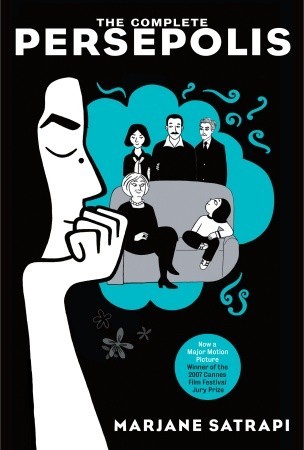
Persepolis by Marjane Satrapi

Persepolis is the autobiography of Satrapi, growing up within a large and loving family in Tehran during the Islamic Revolution. She balances the plot between her private and public life, in a country plagued by political upheaval. I can’t recommend this graphic novel enough, if you have never tried a comic then try this one.


Fahrenheit 451 by Ray Bradbury

The ultimate book about the problems with banning books and ironically it managed to get banned. Guy Montag is a fireman, his job is to burn books; the source of all discord and unhappiness. Guy is unhappy with his life and there is discord in his marriage. A terrifyingly prophetic novel of a post-literate future.


Alice’s Adventures in Wonderland by Lewis Carroll

Yes, this book was banned; a classic children’s novel that is probably the best example of the literary nonsense genre. This book plays with logic and narrative structure making this book popular among adults as well as children. I love this book and it is full of witty and amusing puns.
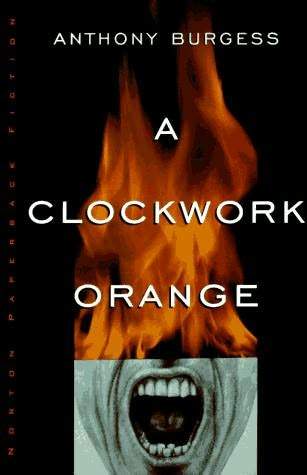


A Clockwork Orange by Anthony Burgess 

One of my favourite dystopian novels out there, A Clockwork Orange is just weird and a real khorosho (horrorshow). A Clockwork Orange tells the story of Alex, your humble narrator; a disturbing 15 year old anti-hero, until the government tried some experimental behaviour-modification treatment on him.


Frankenstein; or, The Modern Prometheus by Mary Shelley

My all-time favourite, a book I read again and again. There are so many different themes you can pull out of this novel and it infuses elements from the Romantic Movement, gothic, horror and science fiction. Everyone has an idea of what this book is about but just how different is it to its pop culture references.


Lolita by Vladimir Nabokov

I can’t recommend banned books without Lolita getting a look in. The highly controversial novel of Humbert Humbert, a middle-aged literature professor and his obsession with twelve year-old Dolores Haze. You may not enjoy reading this book but you might enjoy having read it.

Feel free to suggest some more banned books and even recommend some to me that I should check out. I have plans to read Eleanor & Park by Rainbow Rowell (a recent addition to the banned books list) this week but I can’t seem to get a copy, so I might be late with my banned book reading.


Top Ten Tuesday: The Worst Movie Adaptations

Posted July 9, 2013 by Michael @ Knowledge Lost in Adaptations, Top Ten Tuesday / 0 Comments

I had so much fun doing Top Ten Tuesday last week that I thought I would join in again. Top Ten Tuesday is a book blogger meme that is hosted by The Broke and the Bookish and this week the theme is: Top Ten Best/Worst Movie Adaptations. I want to look at ten books that should have never been made into movies because they never work and never will work in this particular format. These are mainly books that have a strong internal monologue, the emotions and inner turmoil is vital to the book and/or they are too many narrators to really work.

10. The Hitchhikers Guide to the Galaxy by Douglas Adams
There was a mini-series that wasn’t too bad but the latest attempt at adapting this movie was so bad. I’m a fan of Zooey Deschanel, Martin Freeman, Bill Nighy, Stephen Fry and John Malkovich but no one could save this movie.

9. Pride and Prejudice by Jane Austen
I’m sorry but the 2005 film just doesn’t work for me, there is none of Austen’s wit and only really covers the basic story. I only recently read Pride and Prejudice and adored it but most of the things I love about this book don’t translate to film.

8. Dune by Frank Herbert
David Lynch was faced with the impossible task of turning this seminal sci-fi classic into a movie and he failed, hard.

7. Catch 22 by Joseph Heller
One of those movies, I wish I could unsee. The book was so great, why would they destroy that with a film adaption?

6. Anna Karenina by Leo Tolstoy
The most recent adaptation was a horrible, horrible adaptation of such a wonderful book. It was weird how they did the movie and they left so much out. I’m not a fan of Keira Knightley so I was looking forward to the end. I’ve not seen any of the other adaptations of this classic and I never want to see them.

5. The Great Gatsby by F. Scott Fitzgerald
I keep meaning to write about the Baz Luhrmann version but keep putting it off. This is a book about unlikeable characters and symbolism, and that never worked. To be honest I don’t think Baz read the book and just tried to remake the old Robert Redford movie.

4. Dracula by Bram Stoker
I’ve never seen a Dracula movie that actually works, it’s hard to be faithful to Bram Stoker’s seminal piece of literature and still try to adapt it.

3. The Scarlet Letter by Nathaniel Hawthorne
I’m looking at you Demi Moore, Gary Oldman, and Robert Duvall. It doesn’t work and it shouldn’t be tried again. Try something like a modern retelling like Easy A, it’s not The Scarlet Letter but at least it works.

2. Crime and Punishment by Fyodor Dostoyevsky
Most of this novel plays out in the mind of Rodion Raskolnikov; mental anguish and moral dilemmas don’t translate on the screen, I never have watched a Crime and Punishment adaptation and I don’t think I ever will.

1. Frankenstein by Mary Shelley
No, just stop it, you will never get it right in a movie, you can’t tell both Victor and Monster Frankenstein’s story at the same time and explore their thoughts and emotion on the screen. Stop trying to ruin my favourite book.


The Strange Case of Dr. Jekyll and Mr. Hyde by Robert Louis Stevenson

Posted May 30, 2013 by Michael @ Knowledge Lost in Classic, Gothic, Horror / 0 Comments

The Strange Case of Dr. Jekyll and Mr. Hyde by Robert Louis StevensonTitle: The Strange Case of Dr. Jekyll and Mr. Hyde (Goodreads)
Author: Robert Louis Stevenson
Published: Signet, 1886
Pages: 92
Genres: Classic, Gothic, Horror
My Copy: Personal Copy

Buy: AmazonBook DepositoryKindle (or visit your local Indie bookstore)

Robert Louis Stevenson’s classic gothic horror novella Strange Case of Dr Jekyll and Mr Hyde is probably known to many people; it’s been adapted many times and is often a symbol of the horror genre in pop culture. We all know the story; mild-mannered Dr Jekyll by day but at night, thanks to a potion, Mr Hyde is unleashed. But do we really know this tale; the tale of good and evil, or maybe the unleashing his secret inner persona, or maybe this is a story about dissociative identity disorder?

This is a reread for me so like I did in The Great Gatsby; I’m going to quote my old review (which is relatively short) but expand with what I know now. First we need some context; Robert Louis Stevenson had already had some success as a Victorian adventure writer before he came up with the idea of Dr Jekyll and Mr Hyde. He had already written Treasure Island and his collection of short stories New Arabian Nights; in fact it is believe that he came up with the idea while working on his revisions for the short story Markheim (which, in my opinion, is his best piece). So already you get a sense that he knows what he is doing and if you’ve read Markheim you can see the similarities clearly. It was the late into the Nineteenth Century where there were extraordinary technological advances being made and people had a growing pessimism towards a possible decline in arts and religion.

The Promethean personality is something we’ve seen in books like Dracula by Bram Stoker, but this novella has more in common with Mary Shelley’s Frankenstein. Both involve scientists that defy the laws of nature and God with major consequences. Also, they play on the concept of good and evil and the dangers of advancing sciences but they also have been written in a way that to this day people debate the meaning of the novel.

Some say this is a novella that looks at that great Victorian idea of inner conflict with humanity; that good and evil exist in us all and it is an internal struggle between the two. While others suggest that maybe Stevenson was interested in exploring mental health, especially when it comes to split personalities or what should be correctly called a dissociative identity disorder? When I first read this book I got a sense of both, saying “[That] it’s a vivid portrayal of a split personality, split in the sense that within the same person there is both an apparently good and an evil personality each being quite distinct from the other.”  As an interesting side note Vladimir Nabokov has famously argued that the “good versus evil” view within this novella is misleading, as Dr Jekyll himself is not, by Victorian standards, a morally good person.

“The novella’s impact is such that it has become a part of the language, with the phrase “Jekyll and Hyde” coming to mean a person who is vastly different in moral character from one situation to the next.” While this is true, the tale has left a bigger impact on pop culture than just one phrase and classic horror movies. Within comic books both The Hulk and Batman’s rival Two-Face have clear influences from this novella; in fact you might argue that all superheroes are influenced as well, all living a double life.  Even the framework has been used in other fables, gothic, horror and speculative fiction.

“Robert Louis Stevenson is an amazing writer and this book is well worth the read, I’ve always enjoyed a story that tries to explore two sides of a situation.” Not only does this highlight how much I’ve improved in my reviewing but it serves as a reminder of my interest in plots that explore both points of view. Frankenstein still remains my ‘go to book’ for this even though rereading Strange Case of Dr Jekyll and Mr Hyde has rekindled an interest in Robert Louis Stevenson’s thoughts on the whole “good versus evil” view. I much prefer Markheim and think I might go read it again now.


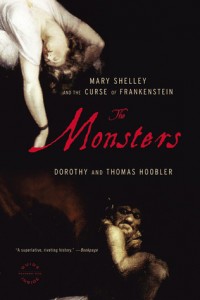
The Monsters by Dorothy and Thomas Hoobler

Posted May 18, 2013 by Michael @ Knowledge Lost in Non-Fiction / 2 Comments

The Monsters by Dorothy and Thomas HooblerTitle: The Monsters (Goodreads)
Author: Dorothy Hoobler, Thomas Hoobler
Published: Back Bay Books, 2006
Pages: 400
Genres: Non-Fiction
My Copy: Personal Copy

Buy: AmazonBook Depository (or visit your local Indie bookstore)

It was a dark and stormy night on the shores of Lake Geneva, 1816. You’ve heard the story beforbe; Lord Byron challenges his friends to see who can come up with the best ghost story. Among the people include Percy Bysshe Shelley, his lover Mary Wollstonecraft Godwin, Mary’s stepsister Claire Claremont and Byron’s physician, John William Polidori. Two novels were born that very night; Mary Wollstonecraft Shelley’s (née Godwin) Frankenstein and John William Polidori’s The Vampyre. The evening begat a curse, too. Within a few years of Frankenstein’s publication, nearly all of those involved met untimely deaths.

First of all I want to point out that authors of this book Dorothy and Thomas Hoobler don’t actually believe this was a curse. Well at least I hope they don’t, this is a little gimmick to help sell the book and I think they just wanted to explore the interesting fact that they did all die young. This book is purely a biography on Mary Shelley that focuses on the night in 1816 and the novel Frankenstein. I was hoping for something about struggling to write something as great as Frankenstein or how the novel has been destroyed by pop culture.

The book starts out with the life of William Godwin and Mary Wollstonecraft, the famous philosopher and feminist parents of Mary Wollstonecraft Shelley. The two had very different personalities and they seemed like a very odd couple but I think they really complemented each other. Sure, they had their problems but nothing like their daughter.

This brings us to the bulk of the book, Mary Shelley and the young romantics. These were the original rock stars and their lives, no soap opera will ever come close to the drama and complexity as the real lives of the romantics. I picked up this book to learn about these poets after reading A Treacherous Likeness and I wanted to know more about them. This was a very accessible biography, which focuses primarily on Mary Shelley but it gives you a great insight into her life. I don’t pretend to fully understand the Romantics, they are way to complex but I feel I have a better knowledge into their lives.

My interest in the Romantics has gotten stronger thanks to The Monsters by Dorothy and Thomas Hoobler. I have a few other books I plan to finish off in on the topic and I doubt I’ll stop there. I love the quotes and the referencing in this biography; I’ve often found that I wonder about the source of information in biographies that don’t reference so it was so handy to have that reference.

While this book does primary focus on Mary, it was nice to learn a little more of Percy Bysshe Shelley, Lord Byron, Claire Claremont and John William Polidori. I didn’t previously know the story of the original publication of The Vampyre; I found it fascinating and heart breaking for John William Polidori. It is always great to find new stories about these amazing talented people.

One thing I liked about this biography, especially after reading A Treacherous Likeness, is the fact that it didn’t try to sway the reader’s opinions; it stuck to facts and left it to the readers to make up their own mind. This was a refreshing change from the opinionated A Treacherous Likeness and I really enjoyed the experience of learning more about these poets. I’m sure there are better biographies on Mary Shelley out there but The Monsters is worth checking out as well.


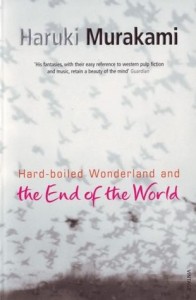
Hard-Boiled Wonderland and the End of the World by Haruki Murakami

Posted April 29, 2013 by Michael @ Knowledge Lost in Book of the Month, Literary Fiction, Magical Realism / 0 Comments

Hard-Boiled Wonderland and the End of the World by Haruki MurakamiTitle: Hard-Boiled Wonderland and the End of the World (Goodreads)
Author: Haruki Murakami
Translator: Alfred Birnbaum
Published: Vintage, 1985
Pages: 400
Genres: Literary Fiction, Magical Realism
My Copy: Personal Copy

Buy: AmazonBook Depository (or visit your local Indie bookstore)

In the future, Tokyo remains the technology powerhouse it is today. With the major advances in technology, data security has become more valuable; problem is all codes can be broken if you know how. The Calcutec is a human data processor/encryption system who has been trained to use his bio-algorithms implant and subconscious for encryption. A new comer to a strange, isolated walled town known as “The End of the World” is assigned a job as a dream reader. As he finds acceptance within the town, his mind begins to fade; or has it only been suppressed?

Hard-Boiled Wonderland and the End of the World tells the story of a split between two parallel narratives from different worlds. The consciousness and the unconscious mind; “Hard-Boiled Wonderland” refers to The Calcutec’s life as an encryption machine while “The End of the World” is his subconscious world. The two stories are told in alternating chapters as the reader slowly discovers the mysteries connecting these two worlds together. Hard-Boiled Wonderland is a homage to Raymond Chandler and hard-boiled fiction, as well as to science fiction and cyberpunk and “The End of the World” has similarities to Franz Kafka’s The Castle.

The major theme within this book is the nature of consciousness; both narratives are constructed around this general idea. While the odd numbered chapters refer to the conscious mind and the even-numbered chapters the subconscious, it is interesting to note they link together with similar themes; for example the song Danny Boy appeared in consecutive chapters. Even characters are shared between consciousnesses; the object of the narrator’s desire, the librarian is a perfect example of this.

Beyond that, the concept of subconscious being able to be controlled or shaped plays out in the entire book. This brings me to another major theme within this novel; the morality of science. The scientific experiments been done on the narrators mind in the attempt to separate the conscious and the subconscious in an attempt create more secure encryptions is an interesting topic. It reminds me a little of Frankenstein when it looks at the dangers of science and its moral implications. The Professor’s experiment killed about twenty people and while he feels remorse for the tragedy he also feels like it was the right choice in the name of progress.

While there are many more themes that would be interesting to explore I wanted to look at character. In both narratives there are no names for any of the characters, each is referred to by their occupation or a general description; from the Narrator, known as The Calcutec, the Librarian, the Old Man, the Professor, the Big Guy and the Chubby Girl. I never really payed too much attention to this while reading the book but referring to a girl as “the Chubby Girl” did bother me; it wasn’t till the very end that I was bothered by the lot. I couldn’t understand why this book was so frustratingly vague and incomplete with character and setting descriptions, I don’t know what the reason behind it would be, except for maybe removing any obstructions that might hinder the understanding of the novel.

Even the narrative is offering a very limited view of what is actually happening but slowly most of the mysteries do become clearer but the entire focus was on the subtext of this book. This wasn’t meant to be about great characters or scenes; this was all about exploring the themes as a way to get Haruki Murakami’s thoughts on the subject across. In a sense, this is what Murakami excels at; if it wasn’t for these well thought out ideas his books would just be odd and weird. This is my second Murakami novel and the first one I’ve actually enjoyed.

I’ve finally discovered what makes Haruki Murakami an author to take notice of; I didn’t find the same thing with 1Q84, I thought it was long winded and repetitive but Hard-Boiled Wonderland and the End of the World really worked for me. I have some issues with the novel, obviously the vagueness was one of the major ones, but overall this was a really interesting journey for me.


A Treacherous Likeness by Lynn Shepherd

Posted April 24, 2013 by Michael @ Knowledge Lost in Crime, Historical Fiction / 5 Comments

A Treacherous Likeness by Lynn ShepherdTitle: A Treacherous Likeness (Goodreads)
Author: Lynn Shepherd
Published: Corsair, 2013
Pages: 336
Genres: Crime, Historical Fiction
My Copy: Personal Copy

Buy: AmazonBook Depository (or visit your local Indie bookstore)

In 1850, a young detective takes on a new case unlike anything seen before; Charles Maddox’s client is the surviving son of Percy Bysshe Shelley and Mary Shelley. Maddox has to track down some papers concerning the Shelleys that could be used for blackmail and ruin their literary legacy. This will take him into investigating the dark lives of not just Percy Bysshe Shelley but all the young Romantics and question the cause of death for Shelley’s first wife, Harriet.

This was a really difficult book to review but I will try hard to be fair and explore the two contradicting opinions I have about this book. First of all, I read this book with not much knowledge of the Romantics; I knew basics but I hadn’t explored them as much as I would have liked. I’ve been a fan of this literary movement even since the start of my reading life and most of you know that Frankenstein remains my favourite novel of all time. So when I heard about this book, I knew I wanted to read it.

Reading the book, I found it interesting; the writing style really reminded me of the time. Yet at times I felt like the writing was trying to reflect the time and sometimes it just did not feel right. I found myself rereading paragraphs trying to pick up what bothered me about them. I never really found the problem, I do not even think it was the writing that was my problem but more of the tone, but more on that later. When it comes to the mystery, everything felt pretty straightforward, piece by piece slowly revealed until the reader finally knows what was going on.

While I did have some problems with the book, all in all I was enjoying the book and would give it a rating of three stars, maybe three and a half. I didn’t find out much about the protagonist Charles Maddox as I would have liked but this could be because this detective appears in Lynn Shepherd’s other novel Tom-All-Alone. If I had read this book first I might have a different opinion towards Maddox. Which brings me to my problems; A Treacherous Likeness would have been a decent novel if it wasn’t using literary legends. This book made me want to explore more about the Romantic Movement, to its credit, but this was also its downfall.

After finishing this novel, I’ve been dipping in and out of three different books; The Monsters: Mary Shelley and the Curse of Frankenstein by Dorothy & Thomas Hoobler; Young Romantics: The Tangled Lives of English Poetry’s Greatest Generation by Daisy Hay; and Footsteps: Adventures of a Romantic Biographer by Richard Holmes. All these Non-Fiction books are vastly different but I picked them to get more of an insight on the lives of the Shelleys. Now the Romantics are wonderfully complex people with equally complex relationships and I don’t understand what their lives were like but the creative licence this author took in A Treacherous Likeness to weave this story through only leads me to think one thing. With all I’ve learnt about Percy Bysshe Shelley and the others I’ve come to the conclusion that Lynn Shepherd mustn’t like them at all.

I’ve got more to learn about the lives of the great poets but after reading some of the non-fiction of the time and reflecting back on A Treacherous Likeness I can’t help thinking, while the author has excellent knowledge on these people there has to be hatred towards them as well. In A Treacherous Likeness there are the controversial statements of Mary Shelley not writing Frankenstein, killing her baby and with Percy Bysshe Shelley’s help pushing Harriett to suicide. While they have merit and we can’t be sure if these are true or not they still point towards a dislike of these people, Mary Shelley in particular. This could be the author’s attempt to weave her story through the facts and create this complex mystery; for me, after all the research it just comes across in a negative way.

I have a lot to learn about the Romantic Movement and I have to give A Treacherous Likeness credit for the re-spark in my interest in these people. I am not trying to be negative towards Lynn Shepherd; I think she has a great writing style and hope that she continues writing historical mysteries. I would prefer if it wasn’t based on real people because when it comes to the Romantics and Mary Shelley, I still adore them and don’t like to read anything that paints them in a horrible light. Sure they were not the nicest people, they made many mistakes but we can’t deny what they did for literature. I think I will have to try Tom-All-Alone one day just so I’m not judging this author on just one experience; her writing is worth reading, I just had some issues with this novel.


My Experience with the 1001 Books You Must Read Before You Die List

Posted October 27, 2012 by Michael @ Knowledge Lost in Literature / 29 Comments

One of my favourite bookish podcasts is The Readers; if you haven’t heard it before go and subscribe, it offers random book-based banter which has been both enjoyable to listen to and offers some interesting ideas for future blog posts. This post is inspired by the latest episode about the “1001 Books You Must Read Before You Die” list.

With the newly revised book being released earlier this month, I thought I would share my experience with this list. As most people know I was never much of a reader, I think I read about one or two books a year. In 2009 something clicked in my head (thanks to Craig Schuftan) and I wanted to read everything I could get my hands on. But I had a problem; I really didn’t know where to start. I found plenty of books that looked interesting but I wasn’t sure if they would fulfil my yearning.

So with no idea of what my literary tastes were and not knowing what books would be required reading. I turned to a “1001 Books You Must Read Before You Die” list which I found while searching books that were considered required reading for everyone. The thing I loved about this book was the fact that it was a combination of old and new books ranging from all different genres. This helped start my literary journey and find a real joy in being a literary explorer.

While I don’t read many books from the list now, I discovered the types of books and genres I really like and what hasn’t worked for me. Personally I would love to read every book on the list but as I discovered there are now four different editions. Do you read the entire list from one edition or combine the lot and read every book ever mentioned? I’ve come to the conclusion I would rather use the list as a guide in addition to discovering new books on my own accord as well.

I will always hold this list close to my heart because it did nurture my newly formed love of reading but it also helped my pretentious level as a book critic. I wish the publisher released a list of the books that have been removed from the new edition, I know there was a spread sheet that had the first three lists on it, so you can see which ones disappeared from each update and tick off all the books you’ve read but sadly that was taken down for copyright violations.  The publisher should look into something similar as I’m sure there are people out there that are willing to pay a small fee to have access to all the lists for referencing.

As a point of reference since beginning my reading journey back in 2009, I’ve now read over 400 books and seventy six of them were from the “1001 Books You Must Read Before You Die” list. The list is still a point of reference for me when I feel like I’m not reading books that are literary enough. While the list covers most genres and offers an interesting perspective on your reading life, it never really felt like it was full of highly literary novels. For me it was just a way to explore and cover the essentials in reading. Here are ten books from the ones I’ve read that I loved and highly recommend;

  1. Frankenstein by Mary Shelley
  2. Crime and Punishment by Fyodor Dostoyevsky
  3. Wuthering Heights by Emily Brontë
  4. Rebecca by Daphne du Maurier
  5. Slaughterhouse Five by Kurt Vonnegut
  6. Catch-22 by Joseph Heller
  7. The Big Sleep by Raymond Chandler
  8. Foucault’s Pendulum by Umberto Eco
  9. Perfume by Patrick Süskind
  10. A Clockwork Orange by Anthony Burgess

7 Deadly Sins of Reading

Posted June 23, 2012 by Michael @ Knowledge Lost in Random / 0 Comments

So blog tagging is annoying and I don’t normally participate in them, but I saw this post from Jae over at Book Nympho where she just pretty much told everyone to participate. I thought this would be a nice follow up to my confession of a reader post, so I’m going to join in. I’d like to encourage others to participate too as I’d be interested in reading their answers.

7 Deadly Sins of Reading

GREED: What is your most inexpensive book?
Obviously that would be a free book, but do ARC’s count? My latest ARC received would be The Dog Stars by Peter Heller. But if you aren’t talk about advance reader copies of books the last free book I received was the new 24hr book Willow Pattern, which I’ve read but not planning to review on my blog so I might as well talk about it a little here.  I thought it was an interesting social experiment but was it great literature? No, it was not. It’s amazing that a book can be written, edited and published in just 24 hours. It is interesting how the nine authors worked together but this really isn’t one voice and the story didn’t really flow well from author to author.

WRATH: What author do you have a love/hate relationship with?
I don’t think I really have a love/hate relationship with any author. Probably the closest would be my feelings towards China Miéville; I love what he does for literature but I keep hoping he will write another book that I will like. I love The City & The City but haven’t read anything else of his that even compares.

GLUTTONY: What book have you deliciously devoured over and over with no shame whatsoever?
That’s easy, I have a gluttonous feeling towards Frankenstein and most of my readers know this. I own multiple copies of this book and have already shared my thoughts on re-reading recently.

SLOTH: What book have you neglected reading due to laziness?
I’ve always wanted to read Finnegans Wake by James Joyce because that will make me look cool, right? I think it sounds like a weird and interesting book but I’m too lazy to put the time and effort into reading it, I think that’s why many people haven’t read it. I also want to read Ulysses  but that isn’t really a priority.

PRIDE: What book do you most talk about in order to sound like a very intellectual reader?
I don’t do that; let’s talk Russian writers shall we? I really think Leo Tolstoy’s Anna Karenina was quite brilliant but I do prefer the works of Fyodor Dostoyevsky; Notes from  Underground may be a great starting point for Dostoyevsky but you really should read Crime and Punishment. Ok maybe I do, do that.

LUST: What attributes do you find most attractive in male or female characters?
I love the smart, witty characters in books. Maybe that is slightly nerdy of me but I think they are just the most interesting characters to read. I also love the inner torment of a character but that is not really an attractive feature. But ultimate fictional crush would be Alaska, she was so cool and I was so heart broken when she died.

ENVY: What books would you most like to receive as a gift?
I do need more copies of Frankenstein; I would love some nice leather-bound, cloth bound or maybe a first edition of this book. They would look so pretty on my book shelf.

So there we have it, more confessions. I would love for people to either do a post similar and link me it or let me know what their reading sins are in the comments.


Five Books That Changed My Life

Posted May 21, 2012 by Michael @ Knowledge Lost in Top 5 / 0 Comments

As most of you may know, I never use to be much of a reader; it was only last year that I decided to discipline myself to read more. So I thought I might as well share with you five books that really had strong effects on me and my views on life.
  • Markheim – This short story by Robert Louis Stevenson is definitely my favourite of his works I’ve read so far. The concept is amazing, but I won’t give you any spoilers.
  • Slaughterhouse-Five – And so it goes…nothing could have prepared me for a book like this. It’s unique in its style and left me pondering it for months after reading it.
  • Wuthering Heights – I know one reader that would be happy to see this on my list. The reason it does grace this list is the simple fact, that it defied all expectations. I went into this book thinking I knew what the story was about, but it shattered every expectation and left me with a dark and beautiful tale.
  • Frankenstein – It is apparent that this book has changed my life. I’ve mentioned it before in reference to pop culture and even a Smashing Pumpkins song. This book is simply a brilliant book on very real social issues.
  • Hey! Nietzsche! Leave them kids alone! – This book is the reason this blog exists. Craig Schuftan opened my eyes to a world I didn’t know by providing some interesting connections between the Romantic Period and today’s music scene.

Confessions of a Reader

Posted May 4, 2012 by Michael @ Knowledge Lost in Literature / 6 Comments

While most people know my story, I wasn’t much of a reader until a few years ago when something clicked and I started reading and wanting to read almost everything in sight. I’ve been playing catch up with everyone else for the past few years. While I claim to be a bibliophile, I’ve still got a lot to catch up on. My name is Michael and these are by reading confessions:

I haven’t borrowed a book from the library in about a year While I love libraries and my local librarians are awesome people, I think I like books too much to borrow them. I don’t think I would want to return them. Plus I’m now more of an e-reader and still waiting for a digital local library.

Short story collections often bore me: While it’s great to read some quick stories, when reading a whole book full of short stories – especially on the one topic – it often gets boring and becomes a struggle. I think the fact that I read it straight through instead of a little at a time is my main problem.

I still groan at the thought of reading some genres: While I do try to keep an open mind to new and recommended book, I tend to avoid or put off reading some genres. I’m not sure if this is simply because I haven’t experienced enough good books in these genres but fantasy, magic realism, romance and paranormal romance novels never seem appealing.

Large books often scare me:  I will try to read them but I don’t like the idea of investing in a long story when I can read two or three books instead. I’ve written a post previously about this same issue.

I’ve never read Jane Austin:  I probably should. I know she is one of the most famous writers but I have so many other books to read and none of her books really interest me.

I read literary books with the hope to look cool: Even though I’ve realised that I’ve enjoyed most of them. My main motivations for reading books like 1Q84 by Haruki Murakami, Extremely Loud and Incredibly Close by Jonathan Safran Foer, A Visit from the Goon Squad by Jennifer Egan and The Shipping News by Annie Proulx in an effort to look more like a literary elitist.

I rarely complete a book series: I can only think of two book series that I’ve read completely through, most of the time I read one of the books just to test the series out and move onto more interesting novels. I haven’t finished The Hunger Game series and I only read the first two books from the Song of Ice and Fire series to keep in front of the Game of Thrones TV series.

Audiobooks have replaced my music in the car and while I do work or exercise. I like being able to listen through a novel during those times where I’m doing mundane tasks. I often have an audiobook and an ebook on the go at the same time. It’s surprisingly easy to read two books at the same times if one of them is an audiobook.

I’m addicted to Goodreads: This is an effect of my reading and a need to keep a record of all the books I’ve read and want to read. I’m now part of a few groups on Goodreads and spend most of my work day on the site.

I own multiple copies of Frankenstein and even a few other books. I love Frankenstein and I need more copies of it, so I can have a copy of the book in every part of the house. Most multiple copies of books are by accident but when it comes to Frankenstein it was intentional.

I’m sure I can keep going with my confessions but I think I will stop with those ten. I would love to know what you would confess about your reading habits.