Tag: Mystery

Abandoning The Luminaries

Posted March 15, 2014 by Michael @ Knowledge Lost in Historical Fiction / 13 Comments

The LuminariesRecently The Readers (which is a fantastic podcast) did an episode on when you have to finish a book. This has got me thinking a lot as I was reading a book for book club that I wasn’t enjoying. I feel like I need to finish a book in order to participate in the discussion but this particular book was over 800 pages and after 200 pages I was ready to throw in the towel. The book was The Luminaries and I have now abandoned the book, but I thought it would be a good opportunity to talk about the book, and the need to finish or abandon a book.

By all accounts, I should have loved The Luminaries; it has murder, mystery and it is a detective story cleverly disguised as literary fiction. Eleanor Catton is a talented writer and there is no denying that, the proses in The Luminaries are spectacular but some will argue that the words don’t match the time period. For me the problem with this novel is the believability and the fact that it takes too long to say what it needs to say. For the very start it felt repetitive, Walter Moody was introduced as a person on the run, trying to find his own fortune. Moody had brought shame to his family, but doesn’t want to go into the details; this takes up about 40 pages of the book. I felt like this wasn’t building mystery or developing the character, it just went around and around in circles.

As for the believability I first need to talk about my life. I was raised in a small mining town called Charters Towers. In the 1870s, this town was attracting prospectors from all over the world, so much so that it was the second biggest city in Queensland at the time. During the gold rush Charters Towers produced over 200 tonnes of gold from 1871–1917. The history of Charters Towers felt nothing like Hokitika 1866 from the book. The miners in this novel are nothing like my experience of miners (or others involved in the goldrush), the book lacked the drinking to access, over use of swearing, constantly fighting and over playing Cold Chisel. The Gold rush should be a dark and violent time but The Luminaries was based around twelve people that do nothing but talk.

The Luminaries won the Man Booker Prize in 2013 and my experience doesn’t match that of the people that have finished the book. General consensus seems to be that this book gets really good at page 600. I have to wonder if it is worth pushing through 600 pages for 200 pages of greatness. Big books always scare me and I was reading War and Peace at the same time, so I had an amazing book running alongside a book that wasn’t working for me. I wanted to finish this book for book club but in the end, there are too many books to read and left this book with 600 pages to go.

I’ve never really been good at abandoning books and I really felt like I had to finish this book but in the end it wasn’t working and The Dark Path by David Schickler was calling me. Have you ever felt that you had to finish a book? Normally I feel that I have to finish a book club book. This is the first one I abandoned; I love to hate a book but 800 pages is a big investment. Also when it comes to abandoning books, do you have a set page count you give a book to impress you? Have you ever considered writing a review of a book you abandoned? I would love to hear your thoughts on when you have to finish a book or abandon it.


Guest Review: The Flavours of Love by Dorothy Koomson

Posted January 27, 2014 by jus_de_fruit in Crime, Guest Posts, Thriller / 0 Comments

Guest Review: The Flavours of Love by Dorothy KoomsonTitle: The Flavours of Love (Goodreads)
Author: Dorothy Koomson
Published: Quercus, 2013
Pages: 429
Genres: Crime, Thriller
My Copy: Paperback

Buy: AmazonBook Depository (or visit your local Indie bookstore)

I came across this book at the bookshop while looking for Christmas presents for my husband. He was with me at the time and saw my reaction when I read the synopsis on the back. Cooking and murder and secrets! So much that interested me. The Flavours of Love tells the story of Saffron Mackleroy and her family after the murder of her husband 18 months earlier. The killer of her husband has started sending letters to Saffron to make her aware that she is being watched. And on top of all that, she has all the usual family drama to deal with. Her teenage daughter has some very confronting issues to deal with, the younger son is withdrawing from life, her husband’s aunt has been asked to leave her nursing home. This story is more than just about trying to solve a murder; it’s about how to survive life.

Dorothy Koomson’s writing was very compelling. I was mesmerized from the first chapter and at the end of the night, I had to force myself to put the book down to get some sleep, as I knew I wouldn’t ever find a place I would willingly stop. It was so great to get to Friday night and know I could stay up as late as I wanted and power through the last half of the book. It was after 4am when I got to bed, knowing the family was safe again after Joel’s killer had been caught.

This book could have easily just focused on the murder aspect, but it incorporated so many other things. It gave me so much to reflect upon about my own relationships and how I might cope in a similar circumstance but I hope I never have to find out. Losing the love of your life would be devastating, but then you have to send the kids back to school, return to work, keep paying bills. Life goes on and doesn’t slow down when tragedy strikes. And there are all those little things, the little neuroses that your spouse would be able to talk you through, and to suddenly lose that voice of reason and do things you might not have done in the past. So many little things that we take for granted in the normality of our lives.

I loved learning about the love that Saffron and Joel shared with little flashback scenes to their life together, while they were dating and married. There is so much magic in this book amongst all the tragedy and drama that is revealed between the pages. I wasn’t really sure of the genre to class this book as when I started it, but wanted to include it in my Literary Exploration Challenge. I eventually settled on Thriller, because I certainly felt thrilled all the way through it as all the secrets were unraveled.

I don’t think I’d ever heard of Dorothy Koomson before, but she is now firmly planted on my radar and I will be hunting down her other books to read.

This is a guest post by Mary; not only is she my wonderful wife, she is also my editor and helps moderate the Literary Exploration group on Goodreads. Big thanks to her for this post and everything she does to help me with this blog.


The Sign of Four by Arthur Conan Doyle

Posted January 16, 2014 by Michael @ Knowledge Lost in Classic, Crime / 0 Comments

The Sign of Four by Arthur Conan DoyleTitle: The Sign of Four (Goodreads)
Author: Arthur Conan Doyle
Series: Sherlock Holmes #2
Published: Penguin, 1890
Pages: 152
Genres: Classic, Crime
My Copy: Paperback

Buy: AmazonBook DepositoryKindle (or visit your local Indie bookstore)

Mary Marston’s father disappeared and suddenly she has started receiving several large pearls. Now a mystery letter tells her she is a wronged woman, so she seeks out Sherlock Holmes to ask for help. This case leads Holmes down a path that involves the East India Company, India, the Indian Rebellion of 1857, a stolen treasure, and a secret pact among four convicts and two corrupt prison guards.

Scottish born Arthur Ignatius Conan Doyle was the third of ten siblings to Charles Altamont Doyle, an Irish artist who suffered from alcoholism, and Mary Foley, who was also Irish. In his youth he led a street gang called the Baker Street Irregulars. He then went on to be a medical student at Edinburgh University where he was mentored and influenced by Joseph Bell. Bell was a forensic surgeon and considered a pioneer in the field; he also was the inspiration for Sherlock Holmes.

The Sign of Four was written in 1890 but it was set in 1888 which is the same year as the Jack the Ripper murders. In fact by modern standards the distance between 221B Baker Street (the home of Sherlock Holmes) and the Whitechapel district is less than ten kilometres apart. The living conditions of the East End of London even before the Whitechapel Murders could be described as, in the words of Holmes in A Study of Scarlet “that great cesspool into which all the loungers and idlers of the Empire are irresistibly drained”. Naturally after the Ripper killings the public were in a panic; in comes the literary hero, here to fight crime, dispense justice and protect the streets of London, here is Sherlock Holmes.

It is important to note that historical context didn’t start or stop with the Ripper murders. In order to understand The Sign of Four better, the events of the Indian Rebellion of 1857 must also be taken into account. The four convicts in the title are connected to this to uprising. There is no single reason for the rebellion unless you consider colonialism as the cause. It was a mix of economic, political, social and much more that caused, in the terms of the British, ‘the mutiny’. Without going into too much detail about the rebellion, imperialism or even the use of the word ‘savages’, it is important to understand the basis and mindset of the time to analyse the text fully.

While The Sign of Four is a book that reflects the ideals of the late nineteenth century, some ideas, like justice are still relevant. The Indian Rebellion may no longer be considered mutiny or a crime; the way justice was dispensed in the end still remains a satisfactory resolution for the readers. It is still fair to say that the idea of being a hero to women and sexual justice is very real in the modern world. Conan Doyle highlighted the prejudice between both sexes but this stereotype remains very relevant in current times. The principle of moral rightness; equity is still an issue today.

There was a lot I got out of this novel, especially when it comes to justice, sexual equality and historical context. I was surprised with the start of this novel; the cocaine use from Sherlock was a little shocking. I knew there were references in this novel but I didn’t expect what I read. The whole idea of dulling his mind when he is not solving a mystery is an interesting one. Not really justifiable but the excuse got me thinking about his passion and how people manage when they are not doing what they enjoy.

I’m not sure if it was because I was studying this novel but this was the first Sherlock Holmes novel I’ve read where everything clicks and the symbolism and motifs hit me. I feel like I need to reread the other Holmes novels and see what I’ve missed. This book will have a special place in my heart now; the book that opened my eyes to Sir Arthur Conan Doyle’s brilliance. Am I weird for loving books that teach me? Most people read for enjoyment, but I feel more satisfied when I’ve discovered something about a book and the world.


And Then There Were None by Agatha Christie

Posted December 29, 2013 by Michael @ Knowledge Lost in Book of the Month, Classic, Crime / 2 Comments

And Then There Were None by Agatha ChristieTitle: And Then They Were None (Goodreads)
Author: Agatha Christie
Published: St. Martin's Griffin, 1939
Pages: 264
Genres: Classic, Crime
My Copy: Audiobook

Buy: AmazonBook DepositoryKindle (or visit your local Indie bookstore)

Ten people have been invited to have a holiday on Soldier Island; when they arrived they thought they had nothing in common. Soon they find out all of them have become complacent with the death (or deaths) of other human beings. One by one they all die, but who is the one that is there to seek revenge on the others?

And Then There Were None was originally titled Ten Little (I would rather not say) after the British nursery rhyme. The US edition used this title (which is also the last line of the rhyme) as well as changing the song to Ten Little Indians. Once again the novel was revived and now the song title has been changed to Ten Little Soldiers. Apart from the offensive name of the book originally, this novel was wildly successful and introduced a very common crime trope into the world. Ten people trapped in a house on an island trying to work out who is killing them off one by one. I’m sure you can think of many films, shows and books that have paid homage to this theme.

This classic crime novel looks at the idea of administrating justice; who has the right to judge others, and what happens when the law fails. I’m going to try to avoid spoilers and tell you who the killer is but most people would have read this and probably remember who the perpetrator was. The killer believes the others are complacent and in most facts while they deny being guilty publically are living tormented lives. Not everyone, but it was interesting to see that kind of turmoil and I was a little upset to see that wasn’t explored in greater detail. Having said that, I think the torment played out more in the symbolism and motifs. I’m thinking about the dreams and hallucinations (the guilty consciences of the victims are explored here) or the storm; a symbol of violence that cuts them off from the world.

The killer has set out to commit the perfect crime and it looks good on paper but I never really bought into it. While reading this novel I had a feeling that the cosy crime approach is playing against the story. If you think about the mess made from the violent murders, wouldn’t help the police work out what happened in the end? I’m sure they wouldn’t rely on the handwritten accounts, the evidence would be inconsistent. Making this far from a perfect crime (sorry this is hard to explain without spoilers).

This was my first Agatha Christie novel and while I enjoyed it there is one thing that frustrated me. I hate crime novels that hold back important pieces of evidence and expect the reader to work out what happened. I always feel like the author is trying to be smug but really it is just poorly executed writing. It wasn’t so bad in this novel but I get the feeling it is a common occurrence in all her novels and I can’t stand that. You have to make a great protagonist to make up for the withholding of information. It works better as a first person narrative; the unreliable narrator is more likely to forget to tell you important clues.

I will read some more Christie, I hope I’m mistaken about the withholding of clues. And Then There Were None had no real protagonist but maybe a Hercule Poirot, Miss Jane Marple or Tommy and Tuppence mystery hide this a little better. I suspect Murder on the Orient Express will be my next Agatha Christie read but who knows. I prefer my detectives a little more Hard-Boiled so it might be awhile between Christie novels.


Under a Silent Moon by Elizabeth Haynes

Posted December 20, 2013 by Michael @ Knowledge Lost in Crime / 1 Comment

Under a Silent Moon by Elizabeth HaynesTitle: Under a Silent Moon (Goodreads)
Author: Elizabeth Haynes
Series: Detective Inspector Louisa Smith #1
Published: Sphere, 2013
Pages: 384
Genres: Crime
My Copy: ARC from Edelweiss

Buy: AmazonBook DepositoryKindle (or visit your local Indie bookstore)

A suspected murder in a farm outside a small English village, a young woman was found dead with blood all over the cottage. At the same time the police are called in to investigate what looks like a suicide by driving into a quarry. DCI Louisa Smith and her team are assigned this case, they discover a link between the two deaths, a link that sealed the fate of these two woman. It all happened one dreadful cold night under a silent moon.

Elizabeth Haynes’s novel Into the Darkest Corner was one of the best books I read in 2011. I still have both Revenge of the Tide and Human Remains sitting on my shelf and I probably should read them soon. I decided to read Under a Silent Moon first because it is her latest offer and I was interested to read her take on the police procedural genre. This is a new direction for this author and I really wanted to see how her style translated.

What I loved about Into the Darkest Corner was how dark and disturbing that psychological thriller was. It was the type of book that I loved but couldn’t recommend to everyone because it might have contained triggers; it felt too realistic and unsettling. Some of her dark psychological style is definitely in this novel but there is something so different about Under a Silent Moon.

The novel felt like a very technical police procedural, I have no idea how a detective investigates crimes, my knowledge comes from men like Philip Marlowe who are hard-boiled and so smart that you often miss the clues (sometimes I think the clues never existed in the novel). I’m not sure how accurate or researched this novel was, but I think it worked well; she got that balance between technical and plot right. I liked how this book had police reports, notes and other documents to help drive the plot and give the reader a deeper insight into the crimes.

The major problem I had was that I wanted something darker; this felt too much like a generic crime thriller but Elizabeth Haynes style was evident and I like how detailed the book was. It was a slightly different take on the police procedurals I’ve read but it also felt the same. I also didn’t think much of the characters, there could have been more to them and I know this is the start of a series so I suspect that will come in future books.

In turn, I want to like all the uniqueness of Under a Silent Moon; I definitely like Hayne’s style but I just think there are too many crime novels that are similar. Sure, they all sell well, I just like when I book stands above the rest. There are so many things that were great about this novel, and I will be reading the next chapter in the series when it gets released. I think I prefer the dark psychological thriller style found in Into the Darkest Corner and was secretly hoping for something like that. I probably should try Revenge of the Tide and Human Remains first but if you haven’t read Elizabeth Haynes before and are not afraid of something that will disturb you, then I recommend Into the Darkest Corner instead.


The Literary Exploration Reading Challenge Returns for 2014

Posted December 12, 2013 by Michael @ Knowledge Lost in Literature / 9 Comments

The Literary Exploration reading challenge is back, by popular demand. As most people know, Literary Exploration tries to explore all different genres in the hope to become a well-rounded reader and even discover something new. So we are challenging everyone to dedicate either 12, 24 or 36 books that you would normally read during the year to different genres. We have compiled a list which hopefully will give you a chance to explore literature a little deeper.
It’s real simple; below you will see an easy (12 books), hard (24 books) or insane (36 books) challenge. Each genre links to the Goodreads genre page if you need some suggestions on what to read. We want you to have some fun and explore; hopefully you might find a new genre that peaks your interest. To sign up either join the Literary Exploration book club on Goodreads and talk about your progress with others involved or for the bloggers out there, if you want to add it as part of your blogging experience simply let us know with a link (to your Literary Exploration Challenge page) in the comments below so our readers can see how you are going.

This year we have adjusted the insane challenge slightly to make it a little more rounded. The popularity of the reading challenge with overwhelming and we are pleased to see how many people wanted to do it again next year. We have even offered some bonus for those who want to take it to the next level. The idea of this challenge is to have a well-balanced list of genres and not focusing on one genre more than any others.

Good luck all who decide to join in. I personally am going to go for the 36 book, insane challenge and I’m really looking forward to it. While there are some genres I’m not looking forward to reading, it’s all part of being a literary explorer. What could be wrong with that?

Read More


First Steps: Cyberpunk

Posted August 17, 2013 by Michael @ Knowledge Lost in First Steps / 0 Comments

literary stepsFirst Steps is a new segment that was inspired by the Literary Exploration Reading Challenge. Each week or two, we look at books from different themes, genres or maybe authors and suggest some that are worth trying. Not necessarily all easy to read books but the ones that are worth the time and effort. My goal is to have First Steps guide you to some great books in places you don’t normally venture to.

Cyberpunk is a genre I have found many people struggle with, especially in the Literary Exploration Reading Challenge. I’m not sure if this is a lack of recommendations or they just not sure what this genre is all about. Cyberpunk is a futuristic world that focuses on “high tech and low life[s]” (according to What is cyberpunk? From Cyberpunked: Journal of Science, Technology, & Society 2009). Think post-industrial dystopian worlds with advanced technology and cybernetics; science fiction normally with a touch of thriller, mystery or pulp.

Movie examples would include Blade Runner, Ghost in the Shell, Tron, The Matrix and Surrogates. On TV think Dark Angel or Dollhouse and in video games there are heaps of examples but the best two are; Deus Ex or Watch Dogs. This is a genre that is almost dying out, technology advancement has been accepted by most and often used in science fiction or dystopian novels, but it does leave behind a couple of new sub genres; steampunk and dieselpunk.

Snow Crash by Neal Stephenson

This book is big but lots of fun; it follows two protagonists hunting down a virus in the not so distant future. A world where the United States has yielded most of its power to private organizations and entrepreneurs. Everything has been franchised, from armies, highways to even suburbs.


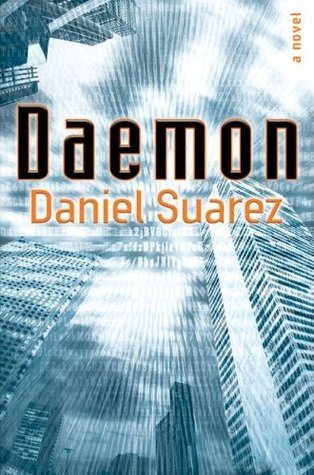
Daemon by Daniel Suarez

Technology controls almost everything in our modern world, from remote entry on our cars and the flight controls of our airplanes to the movements of the entire world economy. But what if some computer designer has been planting a dormant daemon in everything that he creates that will take full control of everything connected to a computer when he dies.


Altered Carbon by Richard K. Morgan

In the twenty-fifth century, technology has advanced so much that human personalities can be digitally stored on what is known as a Stack. These stacks can be downloaded into new bodies or sleeves, so when you die your stack can be stored indefinitely and you can be resleeved and continue living. Death is impossible, or is it?


Neuromancer by William Gibson

This is a seminal cyberpunk novel by the legend himself; William Gibson. The first novel to ever win the “Triple crown” in science fiction (winning the Nebula Award, the Philip K. Dick Award, and the Hugo Award). This follows the story of a low-level hustler, hacker and thief in the dystopian underworld of Chiba City, Japan.


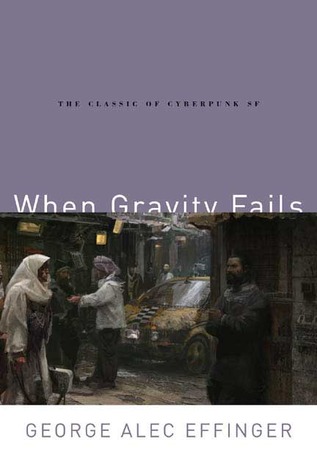
When Gravity Fails by George Alec Effinger

A new kind of killer roams the streets of the Arab ghettos of Budayeen, a madman whose bootlegged personality cartridges range from a sinister James Bond to a sadistic disemboweler named Khan. The unique blend of Middle Eastern culture and religion and cyberpunk noir makes this highly recommended.


The Shining Girls by Lauren Beukes

Posted July 25, 2013 by Michael @ Knowledge Lost in Science Fiction, Thriller / 9 Comments

The Shining Girls by Lauren BeukesTitle: The Shining Girls (Goodreads)
Author: Lauren Beukes
Published: Harper Collins, 2013
Pages: 389
Genres: Science Fiction, Thriller
My Copy: Personal Copy

Buy: AmazonBook Depository (or visit your local Indie bookstore)

During the depression era, Harper Curtis finds a key to a house that opens onto other times. But it comes at a cost, he has to hunt down and kill all the shining girls; those bright girls burning with potential. He stalks them through the different ages, leaving clues on their bodies. But when one of the girls doesn’t die she starts to hunt him. Can Kirby Mazrachi track down this time-traveling serial killer before it’s too late?

Right off the bat, a time traveling serial killer was enough to sell me on this book, it sounded unique and familiar all at the same time. I started reading this book instead of reading the novel I needed to read for book club (which is And the Mountains Echoed) as a way of procrastinating and simply because I wanted something light and entertaining while I wasn’t feeling too well. I flew through this novel and while it was dark, twisted and often graphic, I still felt like it missed something.

I like my serial killers to have an inner conflict; the inner turmoil of Raskolnikov in Crime and Punishment, the dark passenger of Dexter in the Dexter series (and TV show) and if you’ve seen Mr Brooks, the guy in the back seat (played by William Hunt). I love the psychological elements that are found in these examples and this is what I look for in a novel about serial killers. I want to know their motivations, their convictions, the struggle between good and evil within each one of them and when I didn’t get that in The Shinning Girls, I was disappointed by that.

Then again I love how graphic this book is; there is a real thrill to read the macabre and Lauren Beukes doesn’t hold back in the book. While the author doesn’t go into too much detail about the time travelling mechanics, when someone asked me if the time travelling elements were believable in the book I had to stop and think. Firstly can time traveling be believable? Then I spent time thinking about the different theories around time traveling and going back and forth in time, never really seemed to alter the future at all. Why didn’t Harper just go back to the same day and finish Kirby off? Or even a different day? There are so many questions that are left to the imagination and nothing about time travelling was ever be truly explored. You know what? I think I prefer it that way, there are too many theories regarding time travel, I think it was best to leave it up the reader to draw their own conclusions about some of the plot. I don’t like it when everything is wrapped up neatly and every thread within a novel is covered off. I want something left to my imagination, I want to form my own ideas and I want to question the book in the end.

I think Lauren Beukes made a conscious effort not to fill in all the gaps; there are so many questions, backstory and motivations that could have been filled in but leaving that all up to the imagination of the reader just worked better for this book. It also can set up for possible sequels and spin offs. This means when Leonardo DiCaprio’s production company, Appian Way and MRC brought the rights to make this into a TV series (even before the book was released in America) I think Beukes decision paid off. With all those lose threads, it give the TV adaptation room to move and vary from the book if needed (in order to set up a few seasons). Adaptations are tricky and I’m often against them but with a book like The Shining Girls, I think they have a good foundation to work with and expand without upsetting too many of the diehard fans.

The Shinning Girls is far from perfect; there are things I would have liked to see done differently but this was pure entertainment and the fact that there are a slight literary quality about it helped as well. I’m curious to see what happens with the TV show and I’ll be sure to watch it if it ever makes it to air but in the meantime, this is a Science Fiction/Thriller that I’m happy to recommend to people. There is a lot to think about and it is one hell of a read.


Joyland by Stephen King

Posted July 22, 2013 by Michael @ Knowledge Lost in Crime / 0 Comments

Joyland by Stephen KingTitle: Joyland (Goodreads)
Author: Stephen King
Series: Hard Case Crime #112
Published: Hard Case Crime, 2013
Pages: 283
Genres: Crime
My Copy: Hardcover

Buy: AmazonBook Depository (or visit your local Indie bookstore)

Devin Jones has gotten a job working as a ‘carnie’ in a small North Carolinian town. The amusement park Joyland was a site of the legendary unsolved murder. The house of Horrors was where this murder took place, half way through the ride a man cut the throat of his date and threw the body out of the carriage. It wasn’t until the end of the night that they found the dead body (most people thought it was part of the house of horrors) but by then the man was long gone.

Stephen King is best known for his fantastical and horror elements but since this was a Hard-Case Crime novel, I expected more of a pulp novel rather than what I got. There was that pulp and gritty whodunit element but true to King style there was some supernatural components within the novel as well which for me seemed unnecessary; I felt like King sets up the novel in his normal horror fashion and then completely forgets about it. It wasn’t till right near the end that he returned to this plot arc, almost like he needed to wrap everything up in a nice neat bow so he had to finish off that arc as quickly as possible. Without these supernatural elements the novel would remain just the same and maybe even more realistic. There is the fortune teller who gets more air time but then that could be just a character that is really good at reading people and wouldn’t need to be explained.

Both the whodunit and horror genre styles don’t really fit this book anyway; this is a coming of age novel, dealing with Devin’s first real job, his first heart break, first sexual experience, as well as friendship and loss. The story feels like a noir or pulp novel by the way it is written but that all takes a backseat to the building of characters. Not that there is anything wrong with that but in pulp novels it’s all about the minimalism and jamming the novel with a fast paced plot. Joyland didn’t do this and I struggle to find a reason why this book was added to the Hard-Case Crime series.

So once I got past my initial expectations, Joyland does turn out to be a fairly enjoyable novel. It’s not what I wanted but it was still good. I’ve not read much of King in the past (The Gunslinger and 11/22/63) and both those novels really were not what I would have expected from a Stephen King novel. I must remember to read some of his classic novels like The Shining, The Stand or It just to see if what I expect from this author is different. I never expected so much character development and I never expected his books to focus more on the relationship with other characters, but it seems I might be misinformed about his works.

Joyland mainly focuses on Devin’s heartbreak, the girl he thought was the one and everything was perfect. You know your typical young adult, love struck thinking that never seems to be correct. This heartbreak really affects Devin, as all first heartbreaks do, but then he meets single mum Annie and her son Mike. Mike is such a great character and probably the only one I actually liked within the book and the relationship between the three blossoms in a somewhat awkward way. I felt like King had a good handle on the difficult relationship but some of the directions he took left me perplexed. This plot arc took up about two hundred pages and that only left 80 pages to really return to the mystery of Joyland.

As much as I enjoyed this book, I feel this book wasn’t marketed properly, this is not a noir style mystery and I don’t think it deserved to be put in the Hard-Case Crime series. As a standalone Stephen King novel I probably wouldn’t have picked it up if it wasn’t marketed the way it was. Interestingly King didn’t release this book in eBook format, he wanted everyone to go into their local bookstore and buy the book. Yet he didn’t restrict the sales of the book on those online bookselling websites; so really his attempt to get people into bookstores failed. Don’t go into this novel expecting pulp, this is a coming of age story, with a dash of attempt at the pulp genre.


Fetish by Tara Moss

Posted July 18, 2013 by Michael @ Knowledge Lost in Crime, Thriller / 0 Comments

Fetish by Tara MossTitle: Fetish (Goodreads)
Author: Tara Moss
Series: Makedde Vanderwall #1
Published: Harper Collins, 1999
Pages: 325
Genres: Crime, Thriller
My Copy: Library Book

Buy: AmazonBook Depository (or visit your local Indie bookstore)

Makedde Vanderwall is a Canadian model on assignment in Australia. The advantage with some work down under is the fact that she will get to see her good friend Cassandra again. But when Cassandra is found dead by Mak she finds herself in a cat and mouse game to catch the killer before he gets her. Who can she trust and where can she turn when she’s a stranger in a land without any friends?

Makadde is a beautiful, tall and curvy international model who is studying psychology; she’s basically Tara Moss. Model turned author Tara Moss gets to live out all the thrilling adventures she wants through Makedde, not that I can say this is semi-autobiographical but I’m sure Moss wishes it was to some extent. These similarities really give this novel an authentic voice, about modelling as well as the creepy stalker (in which I suspect Moss has had) that ends up being the serial killer known as the Stiletto killer.

Not that I have anything against this book, in fact it is off to a good start for a thriller series, I just never really get into this bestseller formula. All those bestselling crime thriller writers enjoy great success with their books but I tend to think they all feel the too similar. I’m glad Tara Moss broke into the market with such success. It opened up to more in this series and then eventually trying something a little different with her Pandora English series.

Makadde is a tough intelligent woman in the wrong place at the wrong time but I would have liked to see her be more of a bad ass and really kick butt. There are times where this side of her comes out but for the rest of the time everything feels very convenient. Moss has a lot of great ideas for Mak and I did think maybe too many of them were pushed into this novel. It’s a case of first novel, too many ideas. I’m not sure what to expect from the rest of the series but I suspect now she has dealt with a similar situation she can now kick ass and take names. I hope to see her become more of a Phillip Marlowe type character, but with a model turned PI it may be wishful thinking and too much to expect.

There are six books in the series but I have to wait till book four for Mak to become  forensic psychologist and PI, so I’m not sure if I want to wait that long. Fetish was an entertaining read and maybe the series is just off to a slow start. Part of me wants to continue and watch Moss grow as a crime writer but part of me thinks there are too many books in the world to read already. I feel conflicted and I’m not sure what to do, I think I will keep Split close by for when I need something light and entertaining. When I say Fetish was just a light read, this doesn’t mean it’s predictable; I found myself surprised with some of the twists this book takes and I never did work out who the killer was till Moss was ready to reveal it.

There are good and bad parts of this book, I was not fully satisfied with the novel but as this is the first novel, I’m willing to forgive far more. I will let you know how I go if I ever pick up Split but for now I would like people to tell me what they thought of Fetish, Makedde Vanderwall and the rest of the series. I need to know if I should continue and what people think of the novels. Tara Moss’s influences include Thomas Harris and Patricia Cornwell  and I can see these influences coming through. I would like to see more of Thomas Harris in her books; I like the dark and psychological elements of the Hannibal series.