Tag: Mystery

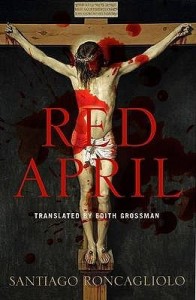
Red April by Santiago Roncagliolo

Posted April 18, 2015 by Michael @ Knowledge Lost in Crime, Thriller / 2 Comments

Red April by Santiago RoncaglioloTitle: Red April (Goodreads)
Author: Santiago Roncagliolo
Translator: Edith Grossman
Narrator: Jonathan Keeble
Published: Atlantic Books, 2011
Pages: 288
Genres: Crime, Thriller
My Copy: Audiobook

Buy: AmazonBook DepositoryKindle (or visit your local Indie bookstore)

Associate District Prosecutor Felix Chacaltana Saldivar does everything by-the-book, he is organised and knowledgeable on the laws of the land but this tends to rub people the wrong way. When a body is found burnt beyond recognition, Chacaltana’s life is never going to be the same. The investigation into this unique murder leads the associate District Prosecutor to question the choices the government are making. Set during Holy Week in Peru, Red April is a chilling political thriller that explores a twisted murder and a morally bankrupt government.

Red April takes place during Lent 2000, mainly in the Peruvian city of Ayacucho and follows a methodical prosecutor as he investigates a bizarre crime. These were the final days of Alberto Fujimori who vacated the presidency and fled the country in November 2000 due to a major corruption scandal and allegations of human rights violations. When Fujimori came to power in 1990, Peru was dominated by two terrorist organisations, the Maoist group Sendero Luminoso and the Marxist-Leninist organisations known as Túpac Amaru Revolutionary Movement (MRTA). It was not until about 1997 when most of this internal conflict resolved, but this was achieved by the Grupo Colina, which was a death squad made up of members of the Peruvian Armed Forces.

Set in the early 2000s, this novel explores that period of time where people loved Alberto Fujimori for making them feel safe but corruption is becoming a big problem. Even the main protagonist struggled with the idea of not supporting the president. Saying something like “the terrorist killed my mother, brother and sister but since the president took office, no one else from my family has been killed. Why would I vote for somebody else?” This hold on the past is something that runs strong throughout the novel, particularly with Associate District Prosecutor Felix Chacaltana Saldivar who holds on to the memory of his mother. The book is set during Lent and then Holy Week which is a time of reflection and to remember the past, when Christ died for the sins of the world.

Peru is a very religious country, in the 2007 census only 2.9% identified as non-religious, with 81.3% claiming to be Roman Catholic. The Catholic Church is a very important part of the country, even Article 50 of its constitution states that “[the Church is] an important element in the historical, cultural, and moral development of the nation.” The city of Ayacucho, in which the majority of this novel is set. lays claim to 33 Catholic Churches (one for every year of Jesus’ life) and hosts a large religious celebration during Holy Week every year. When reading Red April you quickly learn just how important religion is to the Peruvian people and the plot of the novel.

One of the things that fascinated me about Red April is the culture depicted within the book. Santiago Roncagliolo did not shy away from depicting the dark themes or the problematic political situation that Peru faces. He questions the counter-terrorism strategies of the Fujimori government but also depicts the overall sense of relief that the people had when terrorist organisations were dealt with. The corrupt government and the bureaucratic nightmare that Felix lived through all gave a sense of the political landscape. The Associate District Prosecutor did everything to the letter of the law, including sending rapists to prison; however this made him an outcast, even the rape victims got angry that they were unable to marry their attackers and get their reputation intact.

One reason I read a lot of translated fiction is because I find it interesting to explore different cultures and worlds. The Peru depicted in Red April is so foreign to me that I could not help but be spellbound by the cultural differences. Red April was the 2011 winner of the International Foreign Fiction Prize (IFFP), a literary award I have started to follow closely now that I read more books in translation. The novel was translated into English by Edith Grossman and is a book that I picked up in order to read more books from South America. I am very glad to have read Red April, not only is it an excellent mystery/thriller but as you can see it was an interesting insight into Peru.
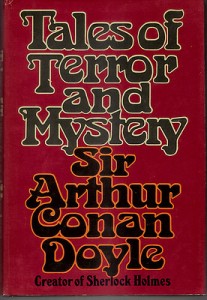

Tales of Terror and Mystery by Arthur Conan Doyle

Posted November 29, 2014 by Michael @ Knowledge Lost in Crime, Short Stories / 0 Comments

Tales of Terror and Mystery by Arthur Conan DoyleTitle: Tales of Terror and Mystery (Goodreads)
Author: Arthur Conan Doyle
Published: Knopf Doubleday, 1913
Pages: 224
Genres: Crime, Short Stories
My Copy: Library Book

Buy: AmazonBook DepositoryKindle (or visit your local Indie bookstore)

When we talk about Sir Arthur Conan Doyle, Sherlock Holmes always seems to be one of the first things that spring to mind. Sadly for this Scottish writer, this turned into both a blessing and a curse. Firstly, Sherlock Holmes remains a seminal part of crime writing and English literature, but limited the writer’s chances in exploring something different. In 1893 Doyle famously tried to kill off Sherlock Holmes in the story “The Final Problem” but due to public outcry and high demands the eccentric detective returned in the 1901 novel The Hound of the Baskervilles.

While Arthur Conan Doyle is known for his prolific writing, he didn’t gain much recognition for his works outside of Sherlock Holmes. Even though some critics believe his historical novels are some of his best works and The Lost World being the inspiration behind Michael Crichton’s Jurassic Park. I picked up Doyle’s 1923 short story collection Tales of Terror and Mystery as part of our book club, but this afforded me the opportunity to explore his writing outside of Sherlock.

Tales of Terror and Mystery is a collection of thirteen short stories broken up into two topics; six stories on terror and seven on mystery. The book kicked off on a positive gear, the tales of terror are almost like a homage to Edgar Allen Poe. Even the short story “The New Catacomb” has a remarkable similarity to Poe’s “The Cask of Amontillado”. What I enjoyed about these tales of terror was the way Doyle went a little darker and macabre to what I expected from this author.

Having such a great experience with the tales of terror it was a shame to move onto the tales of mystery. Here is a fun experiment; replace the protagonist name with Sherlock Holmes in these stories and see if they feel any different. It doesn’t work in all the stories; I wanted Conan Doyle to explore different styles of writing but I felt like the tales of mystery was almost like Holmes stories at times and the rest just didn’t work too well at all.

Some of the stories with Tales of Terror and Mystery worked really well but then the rest just feel short. I loved that Arthur Conan Doyle seemed to be influenced by great short story writers like Edgar Allen Poe or H.P. Lovecraft in some of the stories. However for the most part I was left wanting something a little more. Also, like what I have found with Doyle’s writing, there are some incredibly racist moments within this collection, with stories like “The Japanned Box” and “The Jews Breastplate”. After reading The Sign of Four earlier this year I have come to expect this colonialism nature from his writing. I like that some of these stories were macabre but overall I think this lacked the stylistic approach I am used to from this author.


The Cold Dish by Craig Johnson

Posted November 16, 2014 by Michael @ Knowledge Lost in Crime, Western / 11 Comments

The Cold Dish by Craig JohnsonTitle: The Cold Dish (Goodreads)
Author: Craig Johnson
Series: Walt Longmire #1
Narrator: George Guidall
Published: Penguin, 2004
Pages: 400
Genres: Crime, Western
My Copy: Audiobook

Buy: AmazonBook DepositoryKindle (or visit your local Indie bookstore)

The Cold Dish is the first book in the Walt Longmire series by Craig Johnson, which is basis of the short lived A&E television show Longmire. While the book and show both have western mystery vibes, they have subtle differences. The book shares similar attributes but does not have the same feel as the television program, which seems to target western fans before adding any mystery or drama. I suspect the reason the show never really took off was the fact that everyone was middle aged.

Walt Longmire is the sheriff of the fictional Wyoming county of Absaroka. His only friend is Henry Standing Bear; together they remind me of a more serious Statler and Waldorf with their self-deprecation. The novel revolves around the death of Cody Pritchard, a man who two years earlier was suspected for raping a Cheyenne girl. Longmire is on the case and Henry helps him by being a liaison between the Sheriff’s office and the Cheyenne reservation in the effort to solve this crime.

I have only watched the first season of Longmire so it is hard to compare between the book and the show. I know Longmire is portrayed as rough and tough in the show but it leaves out a lot of his wit and humour. Deputy Victoria Moretti shows the most change between the book and series; her whole attitude and backstory played out in very different ways. To be honest I do not know why I did not watch any more of this show, I think it was a matter of timing and a busy schedule.

I read this for my Literary Exploration reading challenge and I thought a western with a mystery was the best way to experience this genre. While this novel is full of the typical mystery tropes, this was actually a very entertaining novel. The wry wit and self-deprecation is what worked for me within the novel; it almost makes me want to re-watch the TV show to see what I missed. I am tempted to read more of this series but I fear the formulaic elements will quickly get in the way.


Gone Girl by Gillian Flynn

Posted September 29, 2014 by Michael @ Knowledge Lost in Book of the Month, Crime, Thriller / 0 Comments

Gone Girl by Gillian FlynnTitle: Gone Girl (Goodreads)
Author: Gillian Flynn
Published: Weidenfeld & Nicolson, 2012
Pages: 442
Genres: Crime, Thriller
My Copy: Personal Copy

Buy: AmazonBook Depository (or visit your local Indie bookstore)

I’ve been trying to review this book for a while now and it has become a real struggle. I don’t want to give any spoilers for this brilliant book so I will try my best. Advanced warning: this review may have spoilers or turn out incredible vague. When I first saw this book I kept thinking this was just another YA novel but then I noticed this book kept popping up everywhere so I thought I better read what this is about and when I did, I had to read it right away.

When Amy disappears in suspicious circumstances all eyes fall to her husband as the primary suspect. Nick claims he is innocent but the evidence is not in his favour. Did Nick kill his wife? As this novel progressed any ideas of what happened will be shattered, any presumptions you’ve made about the characters will be wrong. Gone Girl by Gillian Flynn is a dark and twisted journey with so much unpredictability that you will be up all night trying to find out what really happened to Amy.

What I loved about this book was that you never really know what to expect. The book is told from the perspective of Nick and Amy, the diary of Amy tells the back story of their lives while the alternative chapters told from Nick takes the story from the disappearance. Slowly the pieces start to fall into place but there is always another curve ball just around the corner. The dark and psychological aspects of this novel remind me of something Jim Thompson would write but then the thriller and suspense of this book reminds me a lot of books like Before I Go to Sleep or Into the Darkest Corner.

Flynn did a brilliant job with this novel, it kept me up at night, made me want to skip work to read this book and in the end any spare time I had I was back in this book trying to find out what really happened to Amy. I wasn’t sure what I was in for and I didn’t know who to believe but in the end I enjoyed the ride. On reflection this book seemed incredibly basic with its plot but writing in a brilliant way that while reading you never have enough pieces to solve this puzzle. Highly recommend this book to any lovers of mystery and suspense.


Mr. Mercedes by Stephen King

Posted August 21, 2014 by Michael @ Knowledge Lost in Crime, Thriller / 0 Comments

Mr. Mercedes by Stephen KingTitle: Mr. Mercedes (Goodreads)
Author: Stephen King
Published: Hodder, 2014
Pages: 496
Genres: Crime, Thriller
My Copy: Paperback

Buy: AmazonBook Depository (or visit your local Indie bookstore)

When I picked up Stephen King’s new novel Mr Mercedes, I felt anxious and nervous. This novel has been billed as King’s first hard-boiled detective novel and it reminded me of his past attempts at pulp fiction. Joyland was billed as a pulp novel and by all accounts it had the makings of a good dime-store novel but the end result felt like King stuck to what he does best and only paying homage to the genre. Mr Mercedes has all the hallmarks of a hard-boiled novel, a brooding and jaded detective, a femme fatale and mysterious villain but this read more like a cat and mouse suspense thriller. Don’t get me wrong, this novel is a homage to detective fiction; Philip Marlow gets a mention and a fedora even makes an appearance. Though the third person narrative and chapters focusing solely on the killer meant we are in a thriller and I had to adjust my expectations.

Bill Hodges is a retired cop with not much to do; when he was on the force he was highly decorated but now he is left alone with the thoughts of all his unsolved cases. One of those cases was the psycho-loner who ploughed down a crowd of people in a stolen Mercedes. One day Hodges receives a letter from this killer taunting him into a little game of cat and mouse. This is a high-stakes race against time; can Hodges catch the Mercedes Killer before he strikes again?

I found it interesting that Stephen King picked the fundamental character archetypes found in hard-boiled fiction, in particular to Bill Hodges, and made it his own. On the other hand the plot felt into the typical tropes found in suspense thrillers. So we have a book that is walking a fine line between homage and cliché. When it comes to hard-boiled detectives, there has been a great evolution in the genre and character archetype; it was felt a little dated to see an old white guy again. I felt it to be unnecessary, in fact I am struggling to think of any ethnicity within the book that didn’t come across as stereotypical. It was a shame because you can do so much with a hard-boiled detective and still keep him as a homage to 1940’s crime novels.

I get the impression that maybe Stephen King is the kind of writer that sticks to the tried and true methods of writing within a genre. As prolific author, I’m beginning to question if he ever takes a risk in his writing. I am not one to judge King’s work, I’ve only read a few of his books (I think five) but they all seem to follow the typical tropes found within their genres. Does he take risks?

It is starting to bug me this whole ‘old white guy’ category of novels all feature non-multicultural characters and if we do have some ethnicity, they all feel a little too stereotypical. It isn’t necessary in today’s novels; there is room to explore some diversity within a book. I won’t go into anything about feminism because I fear I would give spoilers with what I want to say but we need more strong/independent women in novels like this.

Having had a bit of a rant, I found that I’ve managed to talk about the novel and not give any spoilers. I did in fact enjoy the ride this took me on, it was predictable and typical of the genre but sometimes it is fun to go on that journey again. In fact (with the exception of On Writing) I think this is the first Stephen King novel that I have actually enjoyed. I find some parts of his other books entertaining but on a whole they do not work for me. Maybe I’ve just read the wrong King novels. Bill Hodges is returning in another two more novels and I will be picking them up and using the books as a little entertaining read when I need them.


The Thousand-Dollar Tan Line by Rob Thomas & Jennifer Graham

Posted May 2, 2014 by Michael @ Knowledge Lost in Crime / 2 Comments

The Thousand-Dollar Tan Line by Rob Thomas & Jennifer GrahamTitle: The Thousand-Dollar Tan Line (Goodreads)
Series: Veronica Mars #1
, 2014
Pages: 324
Buy: AmazonBook DepositoryKindle (or visit your local Indie bookstore)

Veronica Mars is quite possibly one of the most interesting characters on TV. She’s intelligent, witty and snarky; think Philip Marlowe meets Nancy Drew. First of all, if you haven’t seen the TV show, I highly recommend you do so first. Watch the show then the movie and then you’ll be ready to read this novel. This new series takes place after the events of the movie, which means not only do I have to avoid spoiling the novel, but I must also try and avoid any major spoilers of the movie. I’m sure there will be spoilers from the TV show (mild spoilers from the movie as well) but that really can’t be helped.

Veronica Mars is back in the land of sun, sand, rich entitled kids, crime and corruption otherwise known as Neptune, California. A town that has no middle class, you are either rich or you are considered low class, and the Sheriff, he comes down hard but only on those below the poverty line. When a girl goes missing at spring break, a media frenzy follows but the Sheriff’s department are not being helpful. Veronica is hired to find the girl but this leads her into a dangerous underground of drug and organised crime.

All your characters are back, with one surprise. I’m pleased to report that everyone and everything in Neptune felt authentic and I’m so happy to see that Mac had a bigger role as Veronica’s sidekick. There is one major flaw in this movie, it changed perspectives; the TV show and movie are all told in a first person narrative but the book is in third person. Which is strange, Veronica Mars’ first person narration is iconic to the brand and also a vital part of the neo-noir style. While that noir style is still evident in the novel it just didn’t feel the same.

Another major flaw in the novel is the missing ‘bigger’ mystery. It was what made the TV show so great; ‘who killed Lilly Kane’ is what got me addicted to the show and each season had a new mystery to solve. I would have liked to see this return in the new book series but much to my disappointment it didn’t. These books are marketed to fans of the Veronica Mars brand and taking away pieces that make the show/movie great really does not do this novel or the others any justice.

I am a marshmallow (if you don’t know what that is then maybe this book isn’t for you) so I obviously loved this novel and enjoyed being back in Neptune. I will be reading any Veronica Mars novel that gets released and backing any kickstarters for any more possible movies. It was fun to stay in Veronica Mars’ world but I would like to know what happened in the ten years between the TV show ending and the movie. I’m hoping this series will tell me more about Veronica’s university and FBI years.


Where is the Overall Story Arc in a Crime Series?

Posted April 19, 2014 by Michael @ Knowledge Lost in Literature / 2 Comments

One thing that annoys me about reading a crime series is the lack of an overall story arc. I’m not saying that this is the case with all book series but it seems to be for the majority of them. Within crime fiction especially, the overall story arc is often very basic and often feels like a crime of the week format. This isn’t the case with romance, science fiction and fantasy they are more likely to have a continuous story line and have huge success with it.

When I read a series it is more than often a crime series and I wish the ‘new novel, new crime’ wasn’t the norm. When I watch TV, I often enjoy a series with an ongoing story; Veronica Mars is a prime example on television of what I want in a crime novel. A case that needs to be solved in every book but a bigger mystery that lasts over a couple of novels. Why can’t they do that in a novel series? I know a book is a bigger investment but I often read one book in a series and never continue because there is nothing to keep me reading.

The problem is that everything seems to be a series at the moment; I like the idea of returning to a great character but I need more. I like hard-boiled and noir crime novels but I find myself reading them less and less. I don’t want to read a series if there is nothing to keep me reading. A character has to be amazing to keep me reading, or they could just give me an unanswered mystery. Does anyone know of a good crime series that develops characters over a long period of time and also has an overall story arc?  Let me know. I wish I could write, I have been developing a concept in my head but I have no idea how to put it onto a page.


Big Bad Wolf by Nele Neuhaus

Posted April 17, 2014 by Michael @ Knowledge Lost in Crime / 0 Comments

Big Bad Wolf by Nele NeuhausTitle: Big Bad Wolf (Goodreads)
Series: Bodenstein & Kirchhoff #6
, 2014
Pages: 404
Buy: Book Depository (or visit your local Indie bookstore)

After finishing The New York Trilogy I needed something light, something I didn’t have to analyse. I picked up Big Bad Wolf because I enjoyed Snow White Must Die so much. I’m not saying that I can’t analyse a novel like this one (you can analyse every text), I just think at times some light reading is needed. Big Bad Wolf tells the story of a crime that happened on the river Main near Frankfurt. Investigators Pia Kirchhoff and Oliver von Bodenstein are back to investigate the crime, as the case progresses they find it taking them into a pit of evil and cruelty in the midst of a middle class utopia.

I am trying to make an effort to read more translated fiction; I loved Snow White Must Die which is book four in the series but only the first one to be translated into English. This is book six in the same series and I have to wonder why a publisher would publish books in such a weird order; this was a similar issue that happened with Jo Nesbø. I understand that a publisher would want to translate the novels that will sell the best but if Nele Neuhaus’ popularity continues to grow at this rate we will have another Nesbø situation.

Everything I loved about Snow White Must Die is absent in Big Bad Wolf; I think the problem is that Pia Kirchhoff and Oliver von Bodenstein are considered the main protagonists while Snow White Must Die focused more on the life of a man who served ten years for a crime he didn’t commit. That is what fascinated me but Big Bad Wolf is just another crime novel.

I’ve read so many great crime novels now that I find most of them clichéd and formulaic, Big Bad Wolf isn’t that bad but I’m looking for books that do something different and fresh with the genre. There are some decent moments in Big Bad Wolf, some unexpected twists but I wanted more. The novel is darker than most popular crime novels but keeps to the standard formula. One thing I did find difficult about this novel was the amount of view points, making it difficult at times to understand what was going on but this is an acceptable method for building suspense.

I highly recommend Snow White Must Die, if you haven’t tried some German translated crime before then this might be a good starting point. As for Big Bad Wolf, I’m disappointed with the end result but others might enjoy it more than I do. I hope Nele Neuhaus’ other novels are more like Snow White Must Die but I won’t be in a hurry to try her works again.


The New York Trilogy by Paul Austen

Posted April 13, 2014 by Michael @ Knowledge Lost in Crime, Literary Fiction / 2 Comments

The New York Trilogy by Paul AustenTitle: The New York Trilogy (Goodreads)
Author: Paul Auster
Published: Penguin, 1987
Pages: 308
Genres: Crime, Literary Fiction
My Copy: Audiobook

Buy: AmazonBook DepositoryKindle (or visit your local Indie bookstore)

If you want to try a metafictional detective novel, then look no further than The New York Trilogy by Paul Austen. Originally published sequentially as City of Glass, Ghosts and The Locked Room, these three interconnecting stories have been since collected into a single volume. Heavily influenced by the post-modernist movement, this novel blends elements of neo-realism, soft-boiled fiction and of course, metafiction. Even the pulp style cover (illustrated by Art Spiegelman) has a metafictional style to it.

I really wish I had a better grasp on post-modernism; there is a lot of literary theory that must go into fully understanding a novel like The New York Trilogy. My level of understanding of post-modernism might hinder this review but I will do my best to add something valuable here. Starting with a look at any example of one of the narrators; such as the one known as Peter Stillman, or is he? Maybe his name is something entirely different; maybe it is Paul Auster. This gives you an idea of just how you have to read this book; continuously questioning everything and assuming things are not as they have been told. This does make the novel difficult to read, I had to take my time with it and reread almost everything.

The first story City of Glass follows a detective fiction writer that becomes a private investigator. This unnamed narrator explores layers of identity and reality; often to Paul Auster (the author), Paul Auster (the writer), Peter Stillman (the mark), the other Peter Stillman (the son) and finally Daniel Quinn (the protagonist). The story follows this narrator as he descends into madness as the reader follows close behind. This is story that explores the relationship between the author, characters and the reader in a twisted kind of way. Essentially asking us to consider who has the real power in this relationship?

Ghosts follows the story of a private eye called Blue who is hired to follow Black; he has been hired by White to write down everything Black does. Only problem is that Black doesn’t do too much apart from sit and write all day, which means Blue spends all day sitting and writing. This is a story that explores the issue of who has the real power, the author or their characters. Paul Auster is showing us his views towards writing (sitting and watching what the character does).

Finally in The Locked Room, the title suggests that the story is referencing the locked room mystery archetype. It tells the story of a writer that doesn’t have the creativity to produce any fiction. When a childhood friend disappears, he has been hired to write his works and determine if they should be published. While one this job he finds himself taking the place of his friend and becoming husband and father to his family. This final story looks at the relationship between character and reader and asks us to consider if we are under the control of the author or do we interpret what is happening for ourselves.

It is interesting that a novel like The New York Trilogy can leave you perplexed and confused but when you try to articulate what happened and slowly dissect the novel into its three parts it all makes sense. I’m often surprised with how much I get out of a post-modern novel, especially since I often freak out and feel like I have not understood it. Then it all makes sense and I often wonder how I did not pick up on this while reading or after reading the novel. I hope I’ve made enough sense out of The New York Trilogy, a bizarre novel that requires very close attention but I’ve conquered it and I feel proud.


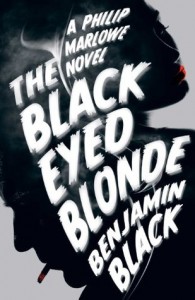
The Black-Eyed Blonde by Benjamin Black

Posted March 28, 2014 by Michael @ Knowledge Lost in Pulp / 6 Comments

The Black-Eyed Blonde by Benjamin BlackTitle: The Black-Eyed Blonde (Goodreads)
Author: Benjamin Black
Series: Philip Marlowe #10
Published: Mantle, 2014
Pages: 256
Genres: Pulp
My Copy: ARC from Netgalley

Buy: AmazonBook DepositoryKindle (or visit your local Indie bookstore)

Resurrecting iconic literary characters is tricky business and when John Banville (under the pseudonym Benjamin Black) signed on to write another Philip Marlowe novel, I was worried. Most people know I am a huge fan of Marlowe, the hard-boiled detective created by Raymond Chandler, but something in me had to know if The Black-Eyed Blonde was any good. Now I’m left to decide if to review this as a Philip Marlowe novel or cliché pulp.

The premise is simple; a blonde bombshell, Clare Cavendish, seeks out Marlowe to find her missing lover Nico Peterson. If we look at the tropes of pulp fiction, in particular hard-boiled detective novels than we must suspect Clare to be the femme fatale and the case would be full of unexpected twists and turns. In both aspects The Black-Eyed Blonde failed to deliver anything interesting; Clare was attractive and seductive but never really had an air of mystery about her and the case felt too cut and dry.

Now let’s look at the protagonist; clearly not Philip Marlowe but someone trying to impersonate this great detective. Marlowe is a modern day knight in shiny armour; in a world of corruption he is incorruptible. He is also a flawed character; Raymond Chandler’s Marlowe is a loner, bitter, cynical, quick witted with a silver tongue. The Marlowe portrayed here was a much older, slower babbling mess; nothing really rang true. You can look at the amount of alcohol Chandler’s Marlowe drinks and wonder just how a man can function but in this novel while he drank a lot, the Mexican beers don’t sit right. Also you have to wonder about the dialogue; the Marlowe in The Black-Eyed Blonde talked differently, I tried to place the way he spoke and all I could think was this character was from Brooklyn.

Since nothing in this book felt like a Philip Marlowe novel, I tried to read The Black-Eyed Blonde in the same way I would read any other pulp. I tried to separate my love of Philip Marlowe and Raymond Chandler’s writing to give a fair review but it is hard to separate the two. Even if I judge The Black-Eyed Blonde as a standalone novel I still feel like the whole thing was a bit flat. There are some decent moments in this book and I was mildly entertained, however I doubt I will ever read a Benjamin Black novel again based on this experience.

I really want to see more Philip Marlowe stories but everyone who attempts it seems to butcher the character. The Black-Eyed Blonde was better than Perchance to Dream but the bar was set so low that I think Benjamin Black must have tripped over it. Do yourself a favour; stick to Raymond Chandler. If you’ve never read a Philip Marlowe novel start with The Lady in the Lake, it is a good introduction to the character and the style without being overly complex. For me, I may just reread the series (an excuse to blog about them) and try Chandler’s short stories.