Tag: Vladimir Nabokov

Best Books of 2017

Posted December 15, 2017 by Michael @ Knowledge Lost in What are you Reading / 4 Comments

As 2017 finally comes to an end, all I can think is ‘Thank God’. While this has not been a bad reading read (over a hundred books), I did not achieve some of my goals. Most importantly I was stuck in a real creative slump for most of the year and I had trouble climbing out. I decided to take a step back from BookTube because I did not feel like it was the right medium for me. I was hoping to focus more on blogging and writing essays but that never happened either.

My goals for 20017 included writing an essay a month and I failed miserably, but now I havae co-founded a literary journal so I have to make sure in 2018 I write more. For my reading goals, I planned to read 50% books in translation which I was able to achieve and I hope to continue with this in future years. I also had a list of about ten books I wanted to read in 2017 and ended up reading only three of them. I guess planning my reading is not for me and with that in mind, I decided to have no reading goals for 2018. I just want to read what I want, when I want. I want to be carefree and enjoy my reading journey. I hope this will help me get back into my creative groove and blog or write more frequently.

Having said that, 2017 was a pretty decent reading year for me and I thought I should cover off some of my favourite books. I probably should make sure I review all these books at some point but here is my list. First, I want to give an honourable mentions to The Driver’s Seat by Muriel Spark, Night Prayers by Santiago Gamboa (translated by Howard Curtis), The North Water by Ian McGuire, Belladonna by Daša Drndić (translated by Celia Hawkesworth) and The Savage Detectives by Roberto Bolaño (translated by Natasha Wimmer).

Read More


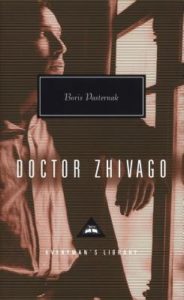
Doctor Zhivago by Boris Pasternak

Posted October 1, 2016 by Michael @ Knowledge Lost in Classic / 2 Comments

Doctor Zhivago by Boris PasternakTitle: Dr Zhivago (Goodreads)
Author: Boris Pasternak
Translator: Max Hayward, Manya Harari
Published: Everyman's Library, 1957
Pages: 512
Genres: Classic
My Copy: Hardcover

Buy: AmazonBook DepositoryKindle (or visit your local Indie bookstore)

When thinking about staples in Soviet literature, one book immediately comes to mind, and that is Doctor Zhivago by Boris Pasternak. A novel in the vein of the Russian epics like War and Peace, Pasternak’s novel tells of a tragic hero, Yury Zhivago. The novel follows the life of a flawed character as he tries to control his life and his hormones. While trying to live a moral life, he is often a victim of his own desires and misfortune, while Russia changes around him.

I have mixed feelings about this modern classic and this is mainly due to the fact that some people refer to this as an epic romance. Doctor Zhivago is as romantic as Wuthering Heights as it explore romanticism rather than love. Russian Romanticism often has an emphasis on the metaphysical discontent of society and one’s self. In this way, yes, Doctor Zhivago is a wonderfully Romantic novel but if you are looking for love, you’ve come to the wrong book. I know translator Richard Pevear has called this a moving love story (which cements many issues I have with Richard Pevear and Larissa Volokhonsky) however, can you call the struggle with morality a tale of romance?

Let’s talk about the relationships found within Doctor Zhivago. The relationship between Yury and Lana is the main focus of this classic; a woman he has lusted after for his entire life. However he marries Tonya, a woman that Yury shows no real affection towards. This is not to say that Yury does not care for Tonya, just the whole idea of marrying someone while in love with someone else is just stupid. Now I know this is an autobiographical novel and it is a reflection of Boris Pasternak’s own relationship mistakes but the relationship between Yury and Lana was always doomed, especially since she shows no interest in him.

There is something to be said about the marriage of Yury and Tonya. Following the loss of his mother and the abandonment of his father, Yury is consistently seeking out a maternal figure. One may even call it an Oedipus complex and Tonya is more of a mother figure to him. This brings up a major theme in Russian literature not just Doctor Zhivago. In the case of this novel, the human desire for companionship plays out in context of the longing for stability. Russia has suffered a lot of tumultuous times and the desire for stability tends to be reflected in their literature.

What interested me the most about Doctor Zhivago was what it had to say about the political landscape. This is why the novel was refused publication in the Soviet Union and the story behind the book is just as interesting. I picked up The Zhivago Affair: The Kremlin, the CIA, and the Battle over a Forbidden Book by Peter Finn and Petra Couvée as soon as finishing Doctor Zhivago. This book is part biography on Boris Pasternak and part history of the novel.

Boris Pasternak was so passionate about writing Doctor Zhivago, he would continually return to it in-between paid translation work. He knew that it would never be published in the Soviet Union but wanted his story out there. Because the novel covered a time between the first Russian Revolution of 1905 and the Civil War. The reader is able to follow the ideological struggle that Pasternak would have had towards his much loved motherland, from the dreams of a socialist utopia to its grim reality. These themes, its criticism towards Stalin and mentioning the realities of the Gulag (covering this topic before Aleksandr Solzhenitsyn) were some of the main reasons this book was denied publication. It was the CIA who published the book and distributed it in the Soviet Union as propaganda, the story behind this an interesting one, which I learnt from The Zhivago Affair.

Doctor Zhivago was smuggled out of the country by Giangiacomo Feltrinelli with Pasternak asking him to help get his novel out to the world, who first published the book in Italian. Pasternak also gave the manuscript to George Kutkov in the hopes of a decent and faithful English translation. Katkov promised the best translation possible and settled on Max Hayward and Manya Harari for this task. According to The Zhivago Affair, “The pair alternated chapters and then checked each other’s work. Katkov supervised them both, ‘going over everything for accuracy and nuance.’”

Originally Katkov suggested to Pasternak to use Vladimir Nabokov for the translation but this idea was rejected. “This won’t work; he’s too jealous of my position in this country to do it properly.” I am not sure what the relationship between Pasternak and Nabokov is but he has been quoted in 1927 as saying “His verse is convex, goitrous and google eyed, as though his muse suffered from Basebow’s disease. He is crazy about clumsy imagery, sonorous but literal rhymes, and clattering metre.” When Doctor Zhivago was published in America it knocked Lolita off the number one spot on the best seller list. This lead Nabokov to call it “a sorry thing, clumsy, trite and melodramatic, with stock situations, voluptuous lawyers, unbelievable girls, romantic robbers and trite coincidences.”

Despite the criticism and while I do agree it is a little clumsy in its coincidences, I cannot deny Doctor Zhivago as anything but a masterpiece. I know Boris Pasternak wanted the novel to be accessible and simple, and I was surprised how easy it was to read. There is plenty to say about this novel and I would love to talk more about it. I know this will be a novel that will be read over and over again and I encourage others to read it not for the story but for what is says about the Soviet era. Doctor Zhivago is such a cultural phenomenon and at great risk to its author, in fact apparently when Boris Pasternak gave the manuscript to Giangiacomo Feltrinelli he said “you are hereby invited to my execution.”


Pale Fire by Vladimir Nabokov

Posted September 27, 2016 by Michael @ Knowledge Lost in Classic / 2 Comments

Pale Fire by Vladimir NabokovTitle: Pale Fire (Goodreads)
Author: Vladimir Nabokov
Published: Penguin, 1962
Pages: 246
Genres: Classic
My Copy: Paperback

Buy: AmazonBook Depository (or visit your local Indie bookstore)

Vladimir Nabokov’s Pale Fire is a novel centred around a 999 line poem of the same name by fictional poet John Shade. It is primarily focused on a literary commentary by Charles Kinbote, an academic with an obsession with the poet. Starting with the poem in four cantos, then leading into Kinbote’s analysis, Pale Fire is a wonderfully complex novel on obsession and literary criticism. While Nabokov’s 1962 post-modern masterpiece might sound dense on the surface,  I found the novel itself easy to read, but difficult to unpack.

Before sharing my thoughts on Pale Fire, I feel it is important to point out Vladimir Nabokov’s academic career in America. While in America, Nabokov worked as a lecturer mainly in Russian and European literature, most notably at Cornell University from 1948-1959. The reason why this is important is the fact that this experience would have contributed the satirical nature of Pale Fire. I often found the novel to be a tongue in cheek look at literary criticism. On reading this, I found myself laughing at the leaps Kinbote often took to explain the Shade poem. I could not help but think this was a reflection of some of the assignments Nabokov read as a lit professor.

Looking deeper into Pale Fire and there is a lot to gain from the novel. What I noticed first seems to be a popular trope for Nabokov, and that is the unreliable narrator. I cannot help but comparing Charles Kinbote to Humbert Humbert from Lolita. Not only is he unreliable but the obsession with the poet John Shade feels very similar. His obsession towards the poet and the art leads to an artistic passion, however this turns into a struggle with desire exceeding creative capability. It is here we get an interesting idea of critical commentary verses the desire to creating literature.

As things progress the novel shifts to an exploration into reality. I found myself questioning the sanity of Kinbote and maybe he is actually King Charles of Zembla. He could in fact be the exiled king or far more likely, he is suffering from dangerous delusions. From what I know after reading Lolita and Invitation to a Beheading (the only other novels I have read) Nabokov likes to play around with obsession, in particular the dangerous realities it may lead to. It is here where I wished I had read Speak Memory or a biography on Nabokov, because I get a feeling of autobiographical elements in Pale Fire. There are moments that seem to parallel his own life, in regards to fleeing the Soviet Union and even teaching literature. Zembla resembles the Soviet Union but portrayed in a nostalgic way. Like Kinbote looks at the country through rose-coloured glasses, not remembering the harsh reality.

Apart from the wonderful writing style to be found in Vladimir Nabokov’s novel, you can expect to see plenty of allegories and references. One thing I love about Russian literature (and I call Nabokov a Russian simply because he was born there) is the way they often reference other novels; it is the same joy I get from reading books about books. Pale Fire is jammed packed with references from The Brothers Karamazov, A Hero of Our Time, James Joyce, Keats, Proust and even mentions Lolita. A better review could go into a lot of detail exploring the references and what they mean to the novel but I will not go into those detail.

Pale Fire is a book that will take a lifetime to read, there is so much here to explore and that is what appeals to me. The more I read from Nabokov the more I want to read, and re-read. I do feel like I need to learn more about this author before diving back into his novels. Speak Memory will be my next read from Nabokov but I am half tempted to crack open a collection of essays I have called Lectures on Russian Literature. I am excited to return to Pale Fire in the future and talk even more about the novel.


The Art of Memoir by Mary Karr

Posted December 17, 2015 by Michael @ Knowledge Lost in Non-Fiction / 2 Comments

The Art of Memoir by Mary KarrTitle: The Art of Memoir (Goodreads)
Author: Mary Karr
Narrator: Mary Karr
Published: Harper Collins, 2015
Pages: 256
Genres: Non-Fiction
My Copy: Audiobook

Buy: AmazonBook DepositoryKindle (or visit your local Indie bookstore)

I have been getting into non-fiction lately and especially memoirs. I love reading bookish memoirs, exploring someone’s reading journey or a challenge they completed. I think I have an interesting reading journey and I would love to write it down on paper. I picked up The Art of Memoir to get some ideas and motivate me into writing it down, even if it may never become a memoir. I like the idea of experimenting with the memoir form, developing my writing skills; who knows I might put my reading journey up on my blog as a series.

Mary Karr is a memoirist that has three memoirs in print, The Liars’ Club, Lit and Cherry. All three have been meet with huge acclaim, though I have not read them yet. Karr is an English literature professor Syracuse University often teaching a subject on memoirs. The Art of Memoir draws from her own experience as well as some of her favourite memoirs, including Wild by Cheryl Strayed, I Know Why the Caged Bird Sings by Maya Angelou, The Possessed by Elif Batuman and Speak, Memory by Vladimir Nabokov.

I found that this book had plenty of interesting things to think about when writing a memoir and it really got me excited on the whole endeavour. I really want to check out Mary Karr’s own memoirs and I am thankful that she put this book together. It does not offer a step by step guide but instead offers different examples on how to approach writing. I like how she kept enforcing the idea of sticking to your strengths and building from there. What works for Vladimir Nabokov will probably not work for me, even if I adore and want to emulate his writing style.

I do not know what will become of my writing, I now think of myself as a non-fiction writer (blogging). Since embracing this writing path, I have felt more inspired. I just need to experiment with different styles and see what works for me. Obviously blogging and reviewing is great but I want to see where I can go with my writing if I push myself more.


Why I Read Confronting Books

Posted November 21, 2013 by Michael @ Knowledge Lost in Literature / 4 Comments

I listen to a lot of bookish podcasts and one of my favourites is The Readers. This week on The Readers they talked about Comforting vs. Confronting Reading which got me thinking. So I thought I would try to articulate my response about Confronting Reads. I read a lot of confronting books and I have been thinking about why I do this for a while now. When The Readers spoke about this topic I thought it was time to blog about it.

One of the reasons I like confronting reads has something to do with my interest in transgressive fiction. I like to understand the mind-set of flawed characters and how their minds work. I have an interest in psychology, while I doubt I’ll ever fully understand it completely. It is the same reason why I like TV shows where the men always make mistakes. There is something about getting into the mind of someone who is making mistakes so you don’t have to.

Consider this; if you read Lolita by Vladimir Nabokov, Tampa by Alissa Nutting, The Yearning by Kate Belle, Me and Mr Booker by Cory Taylor and other books with similar themes, does that make you more likely to be a paedophile? I think not. Reading is an emotional experience and if you are part of the suffering and the mistakes of the protagonist, then you probably don’t want to experience it in a more extreme and realistic way. For me, I read about serial killers because I want to understand why a person would have that desire to kill without having first hand experience. Does that make sense or am I missing something here?

There are also many other reasons to read a confronting book; most of these books are satirical and are trying to send a message. Look at Tampa, not only is this a disturbing look at a female sexual psychopath, it is also a look at the schoolboy fantasy of an older woman or the fantasy of getting a boy before he has been corrupted by society; trying to show the reader that these fantasies are extremely damaging. A young boy is not developed enough to handle a purely sexual relationship with an older woman without getting attached or if you get a man before he is corrupted, you are just doing the corrupting.

I find a confronting novel far more enjoyable, I like the macabre and I like a darker plot, but most of all I like that satirical messages in these book (read my post on Satire if you still think it is meant to be humorous). The lessons learnt and the experiences had, may prevent me from making the same mistakes. I’ve made plenty of bad mistakes in my past and the consequences are not pretty. I much rather someone else experience them while I enjoy the book with a cup of tea in my hand. What do you think about confronting reads? Are there more reasons to read them that I haven’t covered here? Let me know in the comments.


The Strange Case of Dr. Jekyll and Mr. Hyde by Robert Louis Stevenson

Posted May 30, 2013 by Michael @ Knowledge Lost in Classic, Gothic, Horror / 0 Comments

The Strange Case of Dr. Jekyll and Mr. Hyde by Robert Louis StevensonTitle: The Strange Case of Dr. Jekyll and Mr. Hyde (Goodreads)
Author: Robert Louis Stevenson
Published: Signet, 1886
Pages: 92
Genres: Classic, Gothic, Horror
My Copy: Personal Copy

Buy: AmazonBook DepositoryKindle (or visit your local Indie bookstore)

Robert Louis Stevenson’s classic gothic horror novella Strange Case of Dr Jekyll and Mr Hyde is probably known to many people; it’s been adapted many times and is often a symbol of the horror genre in pop culture. We all know the story; mild-mannered Dr Jekyll by day but at night, thanks to a potion, Mr Hyde is unleashed. But do we really know this tale; the tale of good and evil, or maybe the unleashing his secret inner persona, or maybe this is a story about dissociative identity disorder?

This is a reread for me so like I did in The Great Gatsby; I’m going to quote my old review (which is relatively short) but expand with what I know now. First we need some context; Robert Louis Stevenson had already had some success as a Victorian adventure writer before he came up with the idea of Dr Jekyll and Mr Hyde. He had already written Treasure Island and his collection of short stories New Arabian Nights; in fact it is believe that he came up with the idea while working on his revisions for the short story Markheim (which, in my opinion, is his best piece). So already you get a sense that he knows what he is doing and if you’ve read Markheim you can see the similarities clearly. It was the late into the Nineteenth Century where there were extraordinary technological advances being made and people had a growing pessimism towards a possible decline in arts and religion.

The Promethean personality is something we’ve seen in books like Dracula by Bram Stoker, but this novella has more in common with Mary Shelley’s Frankenstein. Both involve scientists that defy the laws of nature and God with major consequences. Also, they play on the concept of good and evil and the dangers of advancing sciences but they also have been written in a way that to this day people debate the meaning of the novel.

Some say this is a novella that looks at that great Victorian idea of inner conflict with humanity; that good and evil exist in us all and it is an internal struggle between the two. While others suggest that maybe Stevenson was interested in exploring mental health, especially when it comes to split personalities or what should be correctly called a dissociative identity disorder? When I first read this book I got a sense of both, saying “[That] it’s a vivid portrayal of a split personality, split in the sense that within the same person there is both an apparently good and an evil personality each being quite distinct from the other.”  As an interesting side note Vladimir Nabokov has famously argued that the “good versus evil” view within this novella is misleading, as Dr Jekyll himself is not, by Victorian standards, a morally good person.

“The novella’s impact is such that it has become a part of the language, with the phrase “Jekyll and Hyde” coming to mean a person who is vastly different in moral character from one situation to the next.” While this is true, the tale has left a bigger impact on pop culture than just one phrase and classic horror movies. Within comic books both The Hulk and Batman’s rival Two-Face have clear influences from this novella; in fact you might argue that all superheroes are influenced as well, all living a double life.  Even the framework has been used in other fables, gothic, horror and speculative fiction.

“Robert Louis Stevenson is an amazing writer and this book is well worth the read, I’ve always enjoyed a story that tries to explore two sides of a situation.” Not only does this highlight how much I’ve improved in my reviewing but it serves as a reminder of my interest in plots that explore both points of view. Frankenstein still remains my ‘go to book’ for this even though rereading Strange Case of Dr Jekyll and Mr Hyde has rekindled an interest in Robert Louis Stevenson’s thoughts on the whole “good versus evil” view. I much prefer Markheim and think I might go read it again now.


Lolita by Vladimir Nabokov

Posted March 30, 2013 by Michael @ Knowledge Lost in Book of the Month, Classic / 9 Comments

Lolita by Vladimir NabokovTitle: Lolita (Goodreads)
Author: Vladimir Nabokov
Published: Penguin, 1955
Pages: 390
Genres: Classic
My Copy: Hardcover

Buy: AmazonBook Depository (or visit your local Indie bookstore)

Lolita is the highly controversial novel of Humbert Humbert, a middle-aged literature professor and his obsession with twelve year-old Dolores Haze. Of whom he becomes a step father as well as being sexually involved. Considered one of the most controversial novels of the twentieth century, Lolita is known not just for the disturbing nature but for the unreliable narration and sophisticated writing style.

Vladimir Nabokov’s masterpiece, Lolita, is one of those books that are worth reading even if it makes you very uncomfortable. The protagonist is the villain who tries so hard to gain the readers sympathy through his sincerity and melancholy. But as the story progress you can even see that he has lost of sympathy for himself and starts referring to himself as maniac who deprived Dolores of her childhood. The novel provides a remarkable perspective into the mind of a man you just want to hate and I will admit it can be a little exciting to watch him go through hell. Nabokov writes a hated character in the hope to knock him around and give him some humility and the reader is left wondering if he will learn from his mistakes.

This has often been described as an erotic novel, even the Great Soviet Encyclopedia called Lolita “an experiment in combining an erotic novel with an instructive novel of manners”. Personally I think of this book as a satirical tragedy with elements of eroticism and remorse. The narrator spends a fair chunk of the book begging the reader to understand that he is not proud of his actions and he is often stricken with guilt at the awareness of robbing Lolita of her childhood. But there is a case to be made at the fact that this is just an exploitation of a weak adult by a corrupt child but this can be problematic and not something I wish to go into great deal about.

The novel as a whole is a very one sided argument, we know how Humbert feels about the entire situation; we hear this to a very sickening degree. He has remorse but his obsession keeps him from ever changing, but one has to wonder what was really going through the mind of Dolores. I have to wonder how she sees the situation or even what she was thinking or feeling throughout the novel. We, as readers, can only surmise since we are forced to absorb Humbert’s feelings.

It is interesting to point out just how two dimensional all the characters are; all except himself and Dolores (Lolita), which he goes into great detail.  It reminds me of life; people tend to describe each other in a two dimensional manner unless we are obsessed with or interested in the person. This technique of writing really added to the realistic feeling of this book.

Lolita was a really awkward and sickening novel to read, there aren’t many books out there that have made me sick to my stomach. Lolita pulls off that feeling that horror novels try to achieve yet often get wrong – that feeling of uneasiness for the reader. This is my second read of this novel, so I knew what to expect and I was able to look past the controversial elements and focus on what this book can offer to the literary world.

Apart from the elements of oppression and an authority figure trying to assert their dominance this book explores tragicomedy, unreliable narration, irony and because Vladimir Nabokov is a Russian it could be a metaphor for totalitarianism. There are many themes you can explore within the novel but the one that will stick in most people’s minds is the lasting damage created by child sexual abuse.

Interestingly enough Vladimir Nabokov is a surrealist often linked to Gogol, Dostoevsky, and Kafka which make you wonder about some of the elements of this book even more. With a love of intricate word play and synesthetic detail Lolita turns into a wry observation of western culture. The novel is full of cleaver word play, double entendres, multilingual puns and in the end when you boil done to why people love it, it is just  a beautifully written novel.

You may not enjoy reading this book but you might enjoy having read it. I have to admit that I enjoyed this book more the second time around; there is great beauty to be found in this book and while content makes this book difficult to get through it is well worth the effort. I remember one of my first blog posts on literature was called “What Would You Read in an Introduction to Fiction Course” where I listed the books I’d include if I was to create an introduction to Fiction course and Lolita was one of my choices. Having now reread this book, it just validates my choice even more, there is so much to explore in this book that it has been put back on my list of books to reread.