Tag: Non Fiction

Bonk: The Curious Coupling of Science and Sex by Mary Roach

Posted November 17, 2015 by Michael @ Knowledge Lost in Non-Fiction / 6 Comments

Bonk: The Curious Coupling of Science and Sex by Mary RoachTitle: Bonk: The Curious Coupling of Science and Sex (Goodreads)
Author: Mary Roach
Narrator: Sandra Burr
Published: W. W. Norton & Company, 2008
Pages: 319
Genres: Non-Fiction
My Copy: Audiobook

Buy: AmazonBook DepositoryKindle (or visit your local Indie bookstore)

Bonk is a look into the history and study of sexual physiology. Mary Roach takes an interesting and humorous look into the world of sex research, exploring the weird methods used and the evolution of the field of study. Mary Roach has a unique style that has turned her into a household name. From a book about cadavers (Stiff), to more recently a look into the digestive track (Gulp).

This is my first Mary Roach book and I was immediately drawn to her writing style. I have never read her before, but I have heard so many good things. It was a toss-up between starting with Bonk or Stiff, but I am happy to finally have a chance to experience her writing. The blend of humour while teaching about science makes her an author I need to read more from. She has a style that I have always been interested in adopting for my blog; a balance between teaching and entertaining. Sadly my blog has been nothing but book reviews lately but I hope this will change in the near future.

I remember reading Perv: The Sexual Deviant in All of Us by Jesse Bering a few years ago and found it completely fascinating. I wanted to learn more about the research side of sex but never read anything since then. While Perv looks at the psychological study of sex, Bonk focuses more on the physiological. There are so many topics to cover on the topic, so my biggest problem with Bonk is the fact that it was a very ‘broad-strokes’ approach to the topic. Although this is a good starting point to understand the science.

I was a little horrified with all the setbacks that happened in the study of sex. Whether they are religious or cultural reasons, there has been a lot of times research falls years behind just to save face. This topic alone would be an interesting one to explore, not just about sex but research in general. I am sure there are many times where science suffers due to public opinion. I wonder if there is a book that covers this topic (if you know of one let me know).

I am glad to have finally read Mary Roach and Bonk, I have discovered a new favourite author and a topic I need to learn more about. The more non-fiction I read, the more I wonder why I had an aversion towards it for so long. It was a non-fiction book that got me into reading and I am pretty much a non-fiction writer. I have so much to learn and I plan to learn more; hopefully this will reflect on my blog in the future. If you have an interest in reading about the research of sex both physiologically and psychologically, I recommend both Bonk and Perv.


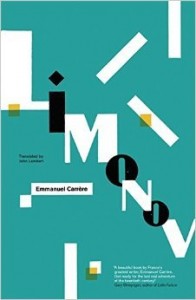
Limonov by Emmanuel Carrère

Posted September 26, 2015 by Michael @ Knowledge Lost in Non-Fiction / 3 Comments

Limonov by Emmanuel CarrèreTitle: Limonov (Goodreads)
Author: Emmanuel Carrère
Translator: John Lambert
Published: Allen Lane, 2011
Pages: 340
Genres: Non-Fiction
My Copy: Library Book

Buy: AmazonBook DepositoryKindle (or visit your local Indie bookstore)

Eduard Limonov1 is a Russian born writer and politican. Best known for founding and leading the banned National Bolshevik Party which opposed Vladimir Putin from 1994 till 2007. The National Bolshevik Party2 (Natsbols) was a militant type organisation that defended Stalinism, it was never register as an official political party. Nowadays Eduard Limonov is a member of the umbrella coalition known as The Other Russia3 which oppose the leadership of Putin for a variety of reasons from political to human rights issues. The Other Russia has a mixed group of supporters from liberals, nationalists, socialists and communists all working together to achieve a Russia without Vladimir Putin leading it.

Firstly I would like to point out that the subtitle for Limonov by Emmanuel Carrère is ‘a novel’ and there can be debates around if this should be considered a biography or a novel. Eduard Limonov’s life reads very much like a novel and this could be in part because Emmanuel Carrère is an excellent writer and John Lambert translated it into English wonderfully. I do not know enough about Limonov to be able to disagree with categorising of this as a novel but I do think all good biographies have elements of fiction to make them more readable.

Having said that the life of Eduard Limonov is a fascinating read; some consider him a terrorist, others a political leader, and there is no denying that. The beauty of Limonov is the way Emmanuel Carrère has captured this complex character in a way that shows all sides of the man while avoiding a biased portrayal. There is a lot worth talking about when it comes to Eduard Limonov but I do not want to go too much into his life story; there just is not enough time.

I am fascinated by the history of Russia, especially when it comes to the Soviet and post-Soviet eras. I love the way Emmanuel Carrère has captured the life of Eduard Limonov, a political figure that I knew nothing about. I am tempted to try some of Limonov’s own books, in particular It’s Me, Eddie: A Fictional Memoir and Memoir of a Russian Punk. Has anyone read anything by Eduard Limonov and is he worth reading? With his life experiences, I am interested to see just how he portrays himself in his books and explore more of his life story.


Mini Review – Books About Books

Posted September 17, 2015 by Michael @ Knowledge Lost in Non-Fiction / 4 Comments

As most people are aware, I am a big fan about books about books. I am fascinated about people’s journeys and relationships with books. As a big fan of books, I like to learn about how people view and write about books; I use this as a way to inspire me to improve as well as give me some new ideas on how to approach this topic. Sadly I am so far behind in my book reviewing so I need to resort to some mini reviews. However it is a good chance to talk about four very different books about books in one hit.
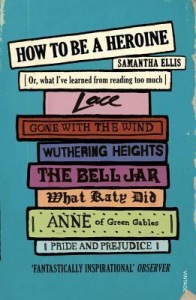
Mini Review – Books About BooksTitle: How To Be a Heroine (Goodreads)
Author: Samantha Ellis
Published: Chatto & Windus, 2014
Pages: 272
Genres: Non-Fiction
My Copy: Library Book

Buy: AmazonBook DepositoryKindle (or visit your local Indie bookstore)

Samantha Ellis is a playwright and journalist who decided to write about the woman in fiction that have influenced her life. The subtitle to How to be a Heroine is “…What I’ve Learned from Reading too Much” and this really encapsulates what Ellis is doing within the book. This is less of a bookish memoir or literary criticism and more of a revisit to some of her favourite books throughout her life and talking about it through the lens of feminism. This book includes references to The Little Mermaid, Anne of Green Gables, Pride and Prejudice, The Bell Jar and Wuthering Heights.

While this is a very important topic to discuss, I felt a bit of a disconnect to the book in general. There was times where I felt that Samantha Ellis was being dismissive and cynical towards literary criticism. Because I am fascinated and passionate about learning literary theory, I felt that her feelings towards the topic really took me away from truly enjoying the book. I did however enjoy the way Ellis analysed the good and bad qualities about each story and told the story about her relationship with the books mentioned. I think if it was not for that one thing that bugged me about How to be a Heroine I might have had a completely different experience while reading this book.
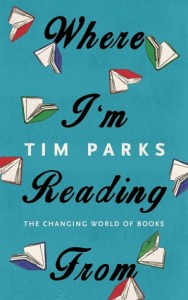

Mini Review – Books About BooksTitle: Where I'm Reading From: The Changing World of Books (Goodreads)
Author: Tim Parks
Published: Harvill Secker, 2014
Pages: 244
Genres: Non-Fiction
My Copy: Library Book

Buy: AmazonBook DepositoryKindle (or visit your local Indie bookstore)

Tim Parks is a translator, critic and even a professor of literature, so when I discovered his book Where I’m Reading From, I was excited to see what he had to say on the topic. I went into this book thinking it was a bookish memoir but found out this was a collection of essays he had written for The New York Review of Books. Some of the topics discussed in this book include, Why we read, Should you finish every book you start?, How is the Nobel Prize like the World Cup?, Why do you hate the book your friend likes? and so many more topics. I was very interested in what he had to say about translations, and the concept of how we are reading a second-hand story.

There is so much within Where I’m Reading From that I did not agree with, but I still found it interesting to read someone else’s perspective on the topics. It really got more thinking about the state of literature and the bureaucracy behind the industry and awards in far greater detail. In a lot of ways this book reminded me of What Is Literature? by Jean-Paul Sartre, although Tim Parks’ book was a lot more accessible and did not make me feel stupid. I also did a video review for this book on my YouTube channel.

Mini Review – Books About BooksTitle: Postmodernism: A Very Short Introduction (Goodreads)
Author: Christopher Butler
Series: A Very Short Introduction #74
Published: Oxford University Press, 2003
Pages: 144
Genres: Non-Fiction
My Copy: Audiobook

Buy: AmazonBook DepositoryKindle (or visit your local Indie bookstore)

I like to think I am a fan of post-modern literature, but ask me to explain it, I will have a hard time. Post-modernism is often referred to when talking about art, films, architecture, music and literature but what does it actually mean? I picked up Postmodernism: A Very Short Introduction in the hopes of understand it a little more but I still do not think I can explain it. For me, I view post-modernism, as a reaction to modernism which seemed to reject past thinking in favour of innovations like stream-of-consciousness. Post-modernism still found value in the past techniques and theories and found interesting ways to use them in new and exciting ways. Post-modernism wanted to invoke thought and criticism; within its literature you might find something bizarre or weird that you just need to talk about.

I know my view on the topic is very broad and it is far more complex but that is what I love about post-modern literature. I want books that force me to think critically about what I am reading and post-modernism forces you to do just that. In Postmodernism: A Very Short Introduction, Christopher Butler tries to equip us with the basic ideas behind post-modernism to allow us to recognise and understand the theories more easily. This is still a very complex movement but I am starting to understand why I love it. This is a good starting point, if you are actually interested in the critical thinking side of this movement.


Mini Review – Books About BooksTitle: My Reading Life (Goodreads)
Author: Bob Carr
Published: Penguin, 2008
Pages: 432
Genres: Non-Fiction
My Copy: Library Book

Buy: AmazonBook Depository (or visit your local Indie bookstore)

Bob Carr is a former Australian politician and member of the Labour Party; during his career he was a Senator, Premier of New South Wales and the Minister for Foreign Affairs. My Reading Life is a literary memoir about the books he has read and have influenced him; this was written during a period where he was not in politics. Carr divides the book into topics, focusing mainly on the political, which is obviously a reflection of his interests.

One of the things I did not like about this book was the way Bob Carr kept his political face on throughout the entire thing. I would have liked him to drop his public persona and just have a more real conversation about books. I understand that he was still political and he became the Minister of Foreign Affairs after publishing this but I would have preferred a more honest look at literature. I do hope that no Russian’s read this book after he become the Minister of Foreign Affairs, because to me it felt like Carr liked Russian lit but hated everything else about this country. There was some interesting insights made within the book and overall a decent memoir, just a little too guarded.


H is for Hawk by Helen Macdonald

Posted June 28, 2015 by Michael @ Knowledge Lost in Non-Fiction / 0 Comments

H is for Hawk by Helen MacdonaldTitle: H is for Hawk (Goodreads)
Author: Helen Macdonald
Published: Vintage, 2014
Pages: 300
Genres: Non-Fiction
My Copy: Paperback

Buy: AmazonBook DepositoryKindle (or visit your local Indie bookstore)

Helen Macdonald has always had a fascination with birds, since a young age she was determined to become a falconer. She would read books on the topic; one book in particular had stuck with her, The Goshawk by T. H. White. When Helen lost her father, grief struck her in a big way, and soon her obsession in training her own goshawk was her own way out. H is for Hawk is a memoir on both dealing with grief and obsession.

I heard so much about this book and when it was assigned for book club, I was excited. Although in the back of my mind, my thoughts on falconry were sceptical. I find falconry to be a barbaric and cruel practice that is no longer required within our culture. To starve and cage a raptor for your own amusement seems unnecessary. With these thoughts going into the book, I had a hard time appreciating the memoir.

I know Helen Macdonald repeatedly stated that she was not starving the goshawk, I still thought of it as a cruel practice. I learned a lot about falconry, some stuff was interesting but there was so much information to process. The book never changed my feelings towards falconry, only cemented them and that become my fundamental problem with H is for Hawk. I enjoyed the parts about The Goshawk and I love reading memoirs about reading books but there was not enough there to hold my interest.

I thought I would try annotating this book, it is a habit that I want to start and thought it would be fun. However I did have to stop with the annotation, as I started to feel like Helen Macdonald was over playing her grief just to make the story more interesting. I did not want to be the heartless person that criticises the author’s emotions, especially when it comes to grief. So I quickly abandoned my annotations and I continued to try to get into the habit.

While H is for Hawk has some wonderful writing, I had a very difficult time enjoying this book. I wanted Helen Macdonald to return to talking about The Goshawk through out the entire memoir. I am interested in seeing what Macdonald will do next, she certainly can right. I hope her next book, whatever that may be, will be something I can get behind.


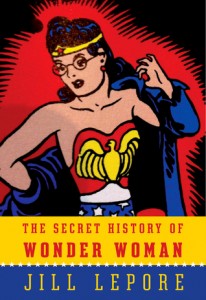
The Secret History of Wonder Woman by Jill Lepore

Posted February 20, 2015 by Michael @ Knowledge Lost in Non-Fiction / 4 Comments

The Secret History of Wonder Woman by Jill LeporeTitle: The Secret History of Wonder Woman (Goodreads)
Author: Jill Lepore
Narrator: Jill Lepore
Published: Scribner, 2014
Pages: 432
Genres: Non-Fiction
My Copy: Audiobook

Buy: AmazonBook DepositoryKindle (or visit your local Indie bookstore)

The Secret History of Wonder Woman is the story behind Wonder Woman and her creator William Moulton Marston. The life of Marston is a fascinating and unconventional one, full of contradictions and this book really explores this in a bit more detail. The idea of Wonder Woman grew from the Amazons in Greek mythology and the feminist movement. Wonder Woman first appeared in All Star Comics #8 in 1941 and is now one of the most recognisable superhero’s to grace the comic book pages. Despite this fact, there has not been a major motion picture about Wonder Woman yet, The Lego Movie (2014) has been her first and only film appearance to date.

American psychologist, lawyer and the inventor of the Lie Detector, William Moulton Marston created Wonder Woman under the pen name Charles Moulton, but it is his life that seems to be the biggest influence on this caped crusader. Wonder Woman is a powerful feminist and this may have been a little problematic for the movement. First of all, Marston’s Wonder Woman was a powerful woman but she lost her powers when bound by a man. This could be considered a symbol of the oppressive nature of a male dominated society however the frequency use pointed to his a fixation of bondage and submission.

Originally William Moulton Marston called his character Suprema and she stated that she was a “tender, submissive, peaceloving as good women are, [combining] all the strength of a Superman plus all the allure of a good and beautiful woman”. This in itself shows the problems facing the creation of Wonder Woman and Marston was very controlling of his creation and the vision he had for her. While on the surface Marston was promoting the feminist movement, his personal life contradicted his ideals; living with two women, his wife and his mistress, he expected them to fulfil all there wifely duties at home while his wife was the main source of income for the majority of their lives.

The Secret History of Wonder Woman is an interesting micro-history that explores the life of William Moulton Marston and Wonder Woman. While some of what is revealed within this book is nothing new, Jill Lepore does a good job of bringing feminist history into the world of pop-culture. There is so much worth talking about here and this book asks the question, should Wonder Woman be recognised as a feminist icon? Well worth checking out if you are a fan of this superhero or are just interested in the history behind her.


Fun Home by Alison Bechdel

Posted January 2, 2015 by Michael @ Knowledge Lost in Graphic Novel, Non-Fiction / 0 Comments

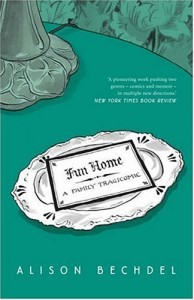
Fun Home by Alison BechdelTitle: Fun Home: A Family Tragicomic (Goodreads)
Author: Alison Bechdel
Artist: Alison Bechdel
Published: Houghton Mifflin Harcourt, 2006
Pages: 234
Genres: Graphic Novel, Non-Fiction
My Copy: eBook

Buy: AmazonBook DepositoryKindle (or visit your local Indie bookstore)

Fun Home: A Family Tragicomic is a graphic memoir that chronicles the childhood of Alison Bechdel, growing up in rural Pennsylvania and her complicated relationships with her father. Alison Bechdel is best known as the person whom the Bechdel test was named after. The Bechdel test is a simple method that can be used to determine if a work of fiction (or movie) is gender biased. To pass the Bechdel test there must be at least two women, who talk to each other about something other than men.

Fun Home is a non-linear account of Alison Bechdel’s childhood with a strong focus on her relationship with her father. A complex relationship, Bruce Bechdel was a funeral director and a high school English teacher. He was obsessed with restoring the family’s Victorian home and often viewed his children as free labour. He was often cold and prone to abusive rage, Alison’s relationship with her father was a difficult one. At 44, he stepped in front of a truck and was killed; while never confirmed, Alison believed her father completed suicide.

After his death, Alison discovered her father was a closeted homosexual who had sexual relationships with his students and babysitters. Alongside this, Fun Home follows Alison’s own struggle with her sexual identity,coming out to her parents before actually knowing her sexual preferences. The graphic novel centres on Alison Bechdel’s thoughts about whether her decision to come out triggered her father’s suicide.

This is a fascinating insight into the mind of Alison Bechdel, not only as a memoir but the struggles that she faced while trying to understand her own identity. Drawn in a gothic style, Bechdel uses blue shading to give her art a dramatic feel. She even uses childhood diary entries to help capture the mood and feel. The dramatic artwork and emotionally charged writing complement each other and really help drive the story.

While I enjoyed Blue is the Warmest Color more as a coming of age story and a struggle with sexuality, Fun Home still remains a wonderful graphic memoir than really packs an emotional punch. Graphic novels and memoirs often get pushed aside and disregarded as works of literature but every now and then comes a work of art that proves this idea wrong. It happened with Art Spiegelman’s Maus and Persepolis by Marjane Satrapi; but Fun Home seemed to be the most common example that comics (I use the term comic as a catch all for graphic novels and memoirs as well) need to be taken more seriously.

I have been reading more comics of late and I have been impressed with the way art and writing can work together to tell a story. I like these graphic novels/memoirs that capture raw emotion, in the writing or art and I am trying to find more like this. While comics by Marvel and DC are a lot of fun, there are so many other works out there that explores this art from an interesting and new way. I really enjoyed Fun Home, it wasn’t a comfortable read but the experience was well worth the effort.


My Life in Middlemarch by Rebecca Mead

Posted December 27, 2014 by Michael @ Knowledge Lost in Non-Fiction / 6 Comments

My Life in Middlemarch by Rebecca MeadTitle: My Life in Middlemarch (Goodreads)
Author: Rebecca Mead
Published: Crown, 2014
Pages: 293
Genres: Non-Fiction
My Copy: Library Book

Buy: AmazonBook DepositoryKindle (or visit your local Indie bookstore)

Rebecca Mead grew up in a coastal town in England and often dreamed of escaping to somewhere more exciting. She gained admission to Oxford and later become a journalist in the United States. When she was young Middlemarch was a favourite of hers and now as she re-reads this classic she is sharing her story along with it. My Life in Middlemarch is told partly as a bookish memoir, but also explores the life of George Eliot and her novel Middlemarch.

This book started off really well; in the prelude the reader gets to discover a bit about the life of Rebecca Mead. Beginning like a bookish memoir this insight into the author gave a fascinating look into her relationships with books, especially with Middlemarch. However as I progressed with My Life in Middlemarch, the memoir elements became fragmented and I found myself yearning to return to this style. I love bookish memoirs, I have been reading so many of them lately and this had the potential to be great but it had two other strands to weave into this book.

My Life in Middlemarch also looks at the life of George Eliot, which allows some perspective about this author. Though I had already done some extensive research. I know that the life of Eliot played a big part in understanding Middlemarch so my autodidactic nature kicked in and I learned a bit about her. I was reading Middlemarch with a reading guide as well, so I had the added advantage of gaining some insight as I read. Apart from access to George Eliot’s journals, I didn’t gain much information; it was a very broad strokes look at her life and I would have gained that information from Wikipedia. I would have been better off reading a biography or her journals instead.

Finally we come to the literary criticism within this book and yet again I felt a little disappointed. I would have liked to know what Rebecca Mead got from the book but instead she just referenced others people’s criticisms on the novel. Having smarter people’s insight into Middlemarch is useful but I would enjoy a personal opinion mixed in with all the references. It reminds me on how I write a research paper for university; I pack it with quotes and references that say what I want it to say but don’t offer much in the way of personal opinion

Combine these three parts and you have an accessible look at Rebecca Mead and her life with Middlemarch but it felt like a huge generalisation. There are some interesting elements worth exploring in this book and I feel like it could have done so much more. We have three interwoven strands within the book but nothing of substance from any of them. This would be an enjoyable book for someone that has not read Middlemarch but for me, I had just finished the classic and I picked this book up because I was not ready to move on.


What Is Literature? by Jean-Paul Sartre

Posted December 16, 2014 by Michael @ Knowledge Lost in Non-Fiction / 2 Comments

What Is Literature? by Jean-Paul SartreTitle: What Is Literature? (Goodreads)
Author: Jean-Paul Sartre
Translator: Bernard Frechtman
Published: Routledge, 1947
Pages: 280
Genres: Non-Fiction
My Copy: Library Book

Buy: AmazonBook Depository (or visit your local Indie bookstore)

What Is Literature? (Qu’est ce que la littérature?) by Jean-Paul Sartre has also been published as Literature and Existentialism. It is a collection of freestanding essays originally published in the French literary journals Les Temps Modernes, Situations I and Situations II. Jean-Paul Sartre is best known as the French philosopher who played a key part in the schools of existentialism and phenomenology. It is sometimes forgotten that he was also a literary critic and a Marxist who was often vocal about the abuses of human rights by the Soviet Union.

The reason I mention that Jean-Paul Sartre was a Marxist is because this plays a big part of What Is Literature? To understand his political standing is useful because it plays an important role in his literary criticism; Sartre was very vocal political, and though he embraced Marxism he never joined the communist party. While his literary criticism is always focused on Marxism, his schools of thought in philosophy are relevant, as well as his views on sociology and post-colonialism.

There are four essays found within What Is Literature? “What is Writing?”, “Why Write?”, “For Whom Does One Write?” and “Situation of the Writer in 1947”. “What is Writing?” is probably the most fascinating (for me, anyway) of the four essays, exploring the ideas of writing that distinguish it as an art form apart from poetry, painting and music. I found it interesting how Sartre has separated poetry and journalism out of his thoughts of writing to focus on literature as an art form. Whether you believe his idea of not, Jean-Paul Sartre will give you plenty of food for thought and I have to admit that a sufficient amount of it went over my head.

Jean-Paul Sartre has spent a great deal of time thinking about literature and writing as an art and philosophical idea, more than I could ever imagine. Because of this, it can be difficult and as a reader I had to admit that I wouldn’t understand everything. What Is Literature? did however leave me with plenty to think about and offer me a fresh perspective and that is all I wanted from this book. Let’s face it, this is a pretty pretentious book to read but I still think it is worth exploring the ideas within What Is Literature?


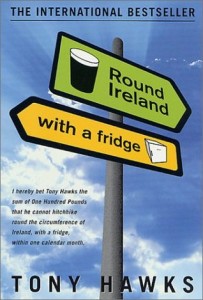
Round Ireland with a Fridge by Tony Hawks

Posted December 11, 2014 by Michael @ Knowledge Lost in Humour, Non-Fiction / 0 Comments

Round Ireland with a Fridge by Tony HawksTitle: Round Ireland with a Fridge (Goodreads)
, 1997
Pages: 248
Buy: AmazonBook Depository (or visit your local Indie bookstore)

What happens when you make a stupid bet while drunk at a bar? If you are anything like Tony Hawks, you actually try to win the bet. With £100 at stake, Tony Hawks decides to hitchhike around Ireland with a fridge (even though buying the fridge cost him £130). Round Ireland with a Fridge is a travel memoir about the adventures Tony Hawks had with his fridge.

First of all, it is important to point out that Tony Hawks is a British comedian and is not to be confused with the skateboarder. While he is best known for his travel memoirs, Hawks first claim to fame was as the lead of the comedy band Morris Minor and the Majors, which had a hit with a Beastie Boys parody in 1988.  He is also a voice actor, most notable for voicing a vending machine and a suitcase in Red Dwarf.

This book starts off with Tony Hawks talking about how he doesn’t spend much time drinking or going to bars. Then for the entire novel he drinks in bars as he hitchhikes around Ireland. Putting aside this huge contradiction this book is actually very entertaining and manages to captivate the audience for its 246 pages. Travelling from Dublin to Donegal, from Sligo through Mayo, Galway, Clare, Kerry, Cork, Wexford, Wicklow–and back again to Dublin this a story of the people he meets along the way.

The fridge actually become more of an asset that Tony Hawks originally expected, helping him get rides, free accommodation and even pick up woman. Even the fridge had its own adventures; it was christened by a nun and even went surfing. While this may seem like a gimmick you will find some interesting philosophical thoughts on people and life as Tony Hawks reflects on all the experiences he had with his fridge.

I had a lot of fun with this book and I am so glad to have read it. There were so many laugh out loud moments (I especially enjoyed Hawks views on marathons) and still offered plenty to think about. As a travel memoir I expected something like Bill Bryson and while the comedy is there I think there was more opportunity to teach people about Ireland and its culture. Highly recommend this book and I plan to seek out Playing the Moldovans at Tennis so I can dip back into Tony Hawks writing again.


Why I Read by Wendy Lesser

Posted December 10, 2014 by Michael @ Knowledge Lost in Non-Fiction / 2 Comments

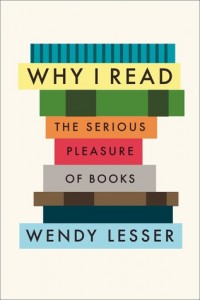
Why I Read by Wendy LesserTitle: Why I Read: The Serious Pleasure of Books (Goodreads)
Author: Wendy Lesser
Published: Farrar, Straus and Giroux, 2014
Pages: 240
Genres: Non-Fiction
My Copy: Library Book

Buy: AmazonBook DepositoryKindle (or visit your local Indie bookstore)

Wendy Lesser is the founding editor for the American literary magazine The Threepenny Review; she is lucky enough to spend her days with books. She is a bibliophile with a lifetime of reading experience to offer as well as an eclectic taste. Why I Read is a collection of essays that explores Lesser’s thoughts and ideas on literature in through the lens of different topics like character and plot.

This sounds like the type of book I should love and it ticked all the right boxes for what I look for in a book about books; eclectic taste, part memoir and offering some literary criticism. However I felt a huge disconnection with this book and I spend a lot of time just trying to pin-point what wasn’t working. Clearly Wendy Lesser is passionate about books and is well read, though I felt like that passion didn’t translation into her writing. This felt more like academic writing, so all emotion felt removed from Why I Read, but this is the type of book that needs that emotion and passion.

I enjoyed the fact that Wendy Lesser jumped from Henry James or Fyodor Dostoevsky, to Jim Thompson, Ross MacDonald, Patricia Highsmith and other crime novelists. It was fascinating to see crime novels used as examples in literary criticism, I was happy to see examples of science fiction, and fantasy also included rather than sticking to just literary fiction or classics. It is a real shame that the writing was so flat; the concepts and ideas were great and with some polishing this could have made for a wonderful book.

I am disappointed that this book never grabbed me and the writing held the book back. There are plenty of interesting ideas and literary criticism worth exploring but the dull nature really made that difficult. I sounds like Wendy Lesser is passionate about books and would have a lot ideas worth listening to if only that passion was visible in the writing.