Tag: Non Fiction

Levels of Life by Julian Barnes

Posted September 19, 2014 by Michael @ Knowledge Lost in Non-Fiction, Short Stories / 0 Comments

Levels of Life by Julian BarnesTitle: Levels of Life (Goodreads)
Author: Julian Barnes
Published: Random House, 2013
Pages: 128
Genres: Non-Fiction, Short Stories
My Copy: Personal Copy

Buy: AmazonBook DepositoryKindle (or visit your local Indie bookstore)

“Every love story is a potential grief story.”

It is official, I’m now a huge fan of Julian Barnes. Having read and enjoyed The Sense of an Ending and Metroland, I knew I had to read more of his novels. I did try Through the Window and found his essays challenging but mainly because the man is far too intelligent and I couldn’t keep up. I decided to try Levels of Life simply because I wanted to see how Barnes connects love and loss with ballooning and photography.

“Love is the meeting point of truth and magic. Truth, as in photography; magic, as in ballooning.”

Told in three masterful parts, Levels of Life tells stories that don’t seem connected but Barnes manages tol fit together. He is a master at the metaphor and this book told in narrative form tells the highs and lows of love. Part one “The Sin of Height” tells a narrative of Colonel Frederick Burnaby, an English soldier and traveller who crossed the English Channel in a hot air balloon in 1882. This story focuses on the obsessions that both Burnaby and French photographer Nadar had towards ballooning.

The next part, called “On the Level” looks at Colonel Burnaby and the French exotic actress, Sarah Bernhardt. Both shared an interest in ballooning which led to love. Two larger than life characters and a love that could never last, while Burnaby believed it was possible, Bernhardt thought differently. Here we have two stories; one depicting the highs of passion and love and the second, the idea of love fizzling out which only leaves one last essay.

“You put together two people who have not been put together before. Sometimes it is like that first attempt to harness a hydrogen balloon to a fire balloon: do you prefer crash and burn, or burn and crash?”

But sometimes it works, and something new is made, and the world is changed. Then, at some point, sooner or later, for this reason or that, one of them is taken away. And what is taken away is greater than the sum of what was there. This may not be mathematically possible; but it is emotionally possible.

“The Loss of Depth” is the last essay and is the story of the loss Julian Barnes suffered when his wife died of a brain tumour in 2008. This is a tender account of dealing with grief. The build-up of the other two essays just made the last one heart breaking and I found myself crying (something I don’t often do). Barnes explores life after losing his wife and at times it is a little funny, yet remains very moving.

“Initially, you continue doing what you used to do with her, out of familiarity, love, the need for a pattern. Soon, you realise the trap you are in: caught between repeating what you did with her, but without her, and so missing her; or doing new things, things you never did with her, and so missing her differently. You feel sharply the loss of shared vocabulary, of tropes, teases, short cuts, injokes, sillinesses, faux rebukes, amatory footnotes – all those obscure references rich in memory but valueless if explained to an outsider.” 

Julian Barnes managed to capture love and loss so perfectly, I felt like adding so many quotes to this review but I had to hold off. This is the type of book that will sit with me for a long time and I tear up just thinking about it. I’m amazed at Barnes’ skill as a writer and how he fit so much beauty and so many emotions into a short book is beyond me. I am going to have to read every book I can find from Julian Barnes.
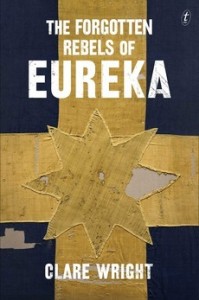

The Forgotten Rebels of Eureka by Clare Wright

Posted September 9, 2014 by Michael @ Knowledge Lost in Non-Fiction / 0 Comments

The Forgotten Rebels of Eureka by Clare WrightTitle: The Forgotten Rebels of Eureka (Goodreads)
Author: Clare Wright
Published: Text, 2013
Pages: 539
Genres: Non-Fiction
My Copy: Paperback

Buy: AmazonBook DepositoryKindle (or visit your local Indie bookstore)

In December 1854 Australia saw one of its most significant uprisings in its history known as the Eureka Rebellion. This act of civilian disobedience in Ballarat, Victoria was a protest to the expensive miner’s licence been imposed on them. The miner’s licence fee was a way around the taxation problem in the mine fields, allowing the Victorian government to provide infrastructure to the stockade. The miners didn’t see the fee this way and found it to be extortion; everyone had to pay the same amount no matter if they found gold or not, in fact you paid even if you weren’t a miner.

The Eureka Rebellion (or protest) led to the Battle of the Eureka Stockade, where police and British soldiers stepped in to break up the protest. This battle didn’t last long (around 15 minutes) but the effects were lasting. This piece of history has been taught in good high schools (not mine obviously) but it has always been focused on the men involved, even though about 40% of the mine fields consisted of woman and children.

The Forgotten Rebels of Eureka by Clare Wright is an attempt to remind people what happened and tell the untold story of the forgotten rebels. The term ‘herstory’ can be thrown around when talking about this book. My problems with this book was personal, I grew up in a small mining town that often talked about the gold rush in the 1870’s. I’ve heard enough about mining to last me a lifetime and I’m just not interested in the topic.

However I had to read this book for book club, so I made an effort and while I did find some interesting stories it felt too much like a chore. It didn’t help that the book started off as narrative non-fiction and turned into a text book half way through. In hindsight, the introduction was all I really needed to know about this piece of history, the rest just offered extra information.

I have to give the book credit to the huge section of endnotes found at the back. I respect a book more if they reference their work but I don’t seem to share the same concern with fiction. My concern however is the fact that the majority of references are second hand accounts of the Eureka Rebellion. It is true that most firsthand accounts of the rebellion were destroyed but I can’t help but take the information with a big grain of salt; it is like Chinese whispers.

The Forgotten Rebels of Eureka won the 2014 Stella Award, a literary award for Australian women writers similar to the Baileys Women’s Prize which is possibly the reason we read this one for our book club. In fact, since the next book is All the Birds Singing by Evie Wyle which one the Miles Franklin Award (Australia’s biggest literary award), I have no doubt. If you are interested in Australian gold rush history or the forgotten tales of women in a key historical events then try The Forgotten Rebels of Eureka.


In Cold Blood by Truman Capote

Posted August 30, 2014 by Michael @ Knowledge Lost in Book of the Month, Non-Fiction / 0 Comments

In Cold Blood by Truman CapoteTitle: In Cold Blood (Goodreads)
Author: Truman Capote
Published: Penguin, 1965
Pages: 336
Genres: Non-Fiction
My Copy: Library Book

Buy: AmazonBook DepositoryKindle (or visit your local Indie bookstore)

In 1959 a farmer from Holcomb, Kansas was killed along with his wife and two of his four children by a couple of two-bit thieves. This brutal crime spawned a desperate search for the killers who left bloody footprints at the murder scene. From petty crime to mass murder, In Cold Blood tells the story from murder to the gallows where they were executed by hanging.

In the Truman Capote literary masterpiece, it is easy to consider In Cold Blood a crime novel; it has shades of pulp and southern gothic throughout the book. However this journalistic investigation has often been cited as the first and best example of the non-fiction genre known as true crime. While there have been true crime books before In Cold Blood, this book did redefine the genre. Capote likes to call his book a non-fiction novel which he defined in an interview with The New Your Times as “a narrative form that employed all techniques of fictional art, but was nevertheless immaculately factual”.

However this is not just a book about the brutal murder of the Clutter family; we also get a Capote’s depiction of rural America. Outside the details of the crime, the author paints a descriptive backdrop of Kansas, the way he sees it. Religion, masculinity, femininity, the nuclear family and small town communities all play a big part in developing the scene. When he talks about the crime, the reader gets to explore the psychological motivations of murder and awaiting execution.

There is the issue of mental illness that needs to be explored when talking about In Cold Blood. It is almost like Truman Capote wants to challenge the reader to consider if Perry and Dick suffered from an untreated mental illness. There are shade of delusional, depression, schizophrenia and a sociopathic personality that comes through when talking about these two people but as this is 1959 I expect no psychological consult or treatment were given to these men; the court rejected the request.

I expected a true crime book but I feel like In Cold Blood was trying to do something similar to One Flew Over the Cuckoo’s Nest by Ken Kesey and The Bell Jar by Sylvia Plath. I was very impressed with this book and I feel like Capote may have ruined true crime and even narrative non-fiction for the rest of the authors in these genres. Capote’s investigational skills and mastery over the written word is what makes this book a masterpiece.


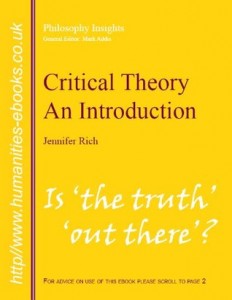
Critical Theory: An Introduction by Jennifer Rich

Posted July 24, 2014 by Michael @ Knowledge Lost in Non-Fiction / 0 Comments

Critical Theory: An Introduction by Jennifer RichTitle: Critical Theory: An Introduction (Goodreads)
Author: Jennifer Rich
Published: Humanities-Ebooks, 2010
Pages: 97
Genres: Non-Fiction
My Copy: eBook

For me Critical Theory: An Introduction by Jennifer Rich was everything I wanted Literary Theory: A Very Short Introduction by Jonathan Culler to be. It had a logical format and it went through a few different literary movements and talked about the key people and theories involved with each school of thoughts. But then it got me wondering; what is the different between Critical Theory and Literary Theory? There seems to be no real difference and I’m not entirely sure why they would use two different names to talk about the exact same thing. I might be ignorant and not fully understanding the differences but if there is a difference please let me know in the comments below.

The book starts off with Russian Formalism, a topic I spent a bit of time exploring before continuing the rest of the book. The idea of formalism is something that I feel may be a good foundation for any literary student. To be able to understand genres, tropes, metering, grammar and syntax can provide you with some questions to ask every piece of literature. Asking why a piece of text is written in one perspective and not another and what the focalisation is focusing on can help develop some useful skills. Some people are saying that formalism is making a comeback and I tend to agree, I recently completed a university subject that went though the basics of this school of thought (even if there was no mention of formalism). If you understand these basic concepts, I think you develop a decent tool base for critical reading and future studies of literary theories.

Critical Theory: An Introduction also looked at Structuralism, Semiotics, Post-Structuralism, Deconstruction, Psychoanalytic and Postcolonial Theory. I have a feeling my interest will psychoanalysis and Marxism and this book seemed to verify this very thought, even if it only went into Marxism in passing. The major problem I found is that Psychoanalytic Theory is going to be a huge undertaking, more so than most of the others. I feel that I will need to develop, not only an understanding in psychology, but also a bit of a focus into semiotics as well. I am not too bothered by this thought; this is more of a blinding realisation of how much work is ahead of me.

While Critical Theory: An Introduction may have taken a more textbook type approach to literary theory than Literary Theory: A Very Short Introduction, I think the format is better suited if I ever need to refer back to the book. Literary Theory: A Very Short Introduction was a little all over the place and it works well for reading the book from cover to cover but if I need to look up what the book says on a topic it won’t be easy. I prefer to have chapters dedicated to one literary theory; makes things easier when I refer back to this book in the future.

I’m really enjoying exploring the world of literary theory and I’m beginning to understand the different types of theories on a very fundamental level. The only downside to this is the realisation that there is so much more to learn. I have to remind myself that I’m not going to be able to become an expert in all these fields and I need to focus. I’ve chosen my preferred fields but I will continue to learn the basics of all literary theories and see if something else pops out. I’m still shopping around, while psychoanalysis and Marxism seem like the right fit for me, I’m open to the possibility of finding something better (and maybe easier). Also, learning the basics in literary theory will have the added bonus of been able to see a book from different schools of thought. If you are looking for a good, quick introduction to literary theories, Critical Theory: An Introduction by Jennifer Rich is a good pick, it is short and only covers a few theories but will give you a decent understanding of them.


Provenance by Laney Salisbury and Aly Sujo

Posted July 10, 2014 by Michael @ Knowledge Lost in Non-Fiction / 0 Comments

Provenance by Laney Salisbury and Aly SujoTitle: Provenance (Goodreads)
Author: Aly Sujo, Laney Salisbury
Published: Penguin, 2009
Pages: 301
Genres: Non-Fiction
My Copy: Audiobook

Buy: AmazonBook DepositoryKindle (or visit your local Indie bookstore)

For those that don’t know, a provenance is a document (or documents) that chronologies the ownership of a historical object. In the art world, the provenance serves almost like a certificate of authenticity as well as a historical document of the ownership, custodies or locations the piece has been displayed. The problem was, there was a time in art history where authenticating a provenance was all you needed to prove the art was genuine. This lead to all kinds of problems, in the world of computers and photocopiers it became very easier to make a document look authenticate than it was to forge a painting. This book explores this very problem; Provenance: How a Con Man and a Forger Rewrote the History of Modern Art tells the story of what was described as ‘the biggest art fraud in the 20th century’.

Provenance has one of the most extraordinary narratives I’ve ever read in a non-fiction book; it reads like an art thriller, full of suspense and mystery. It wasn’t what I expected from a true crime book on art history, I was hooked in this world and on the edge of my seat to find out what will happen next. The authors of this book, Laney Salisbury and Aly Sujo are both investigative reporters and spent the time to research and tell us the story of John Drewe, a villainous con man that set out to defraud the art world. Recruiting a struggling artist, John Myatt, to paint the forges, it is estimated that over 200 forgeries were made and only about 60 of them recovered. This means there is about 140 paintings still out there been accredited to artists like Giacometti, Dubuffet and so on.

If I may, I want to quickly touch on the problematic approach to authenticating a provenance rather than a painting. As I said before the use of computers and photocopiers made it easy to fake these documents, but John Drewe went further by sneaking forged documents of auctions, gallery displays and so on into the archives of museums and the Institute of Contemporary Arts (ICA) in London. What was scary about the elaborate efforts Drewe went to to make this provenance real is the fact a test on the painting might have been so much quicker. If they took the effort to test the paint they would have found that Myatt used a combination of emulsion paint, K-Y Jelly and then vanish to make the paintings look like oil paintings.

All my knowledge on art forgery came from people like Neal Caffrey (White Collar) so I’m not nearly knowledgeable on the topic, as I’d like to be. Art history and art crimes can be fascinating topics and what I loved about Provenance is how it showed how crime seeps in and becomes part of the history. When John Myatt served his time he decided not to point out any paintings that he had done, and that raises an interesting question. Is it better to point out the 140 or so fakes still out there and have the owners lose all that money or not? If a fake is just going to be burnt is it better to own up to the forgery or let it remain a piece of art? The financial and artistic costs would be devastating but what about the moral code that Myatt wished to live by?

This is what made for a fascinating read, I learned a small part of art history, art crimes and it also raised some philosophical questions. I know I might have said a little too much but this is history, can you give spoilers on historic events? It is a great piece of narrative non-fiction and a great way to learn more about art crimes.


ArmchairBEA 2014: Author Interaction & More Than Just Words

Posted May 27, 2014 by Michael @ Knowledge Lost in ArmchairBEA / 29 Comments

abea

Day two here at Armchair BEA and we are talking author interaction & more than just words. Where I live we tend not to get many authors up, but when we do, I often try and catch their readings, book signings or talks. It can be difficult when they are authors that you’ve never read or have no interest in reading; I want to be supportive of the authors that do come to this city but I also don’t want to be stuck buying books I don’t plan to read.

I’ve had some great experiences with authors, from hanging out with them at a cocktail party (Trudi Canavan, Rachel Caine and Felicia Day), to having great conversations them on Twitter (I still get excited when Megan Abbott replies to a tweet or Gary Shteyngart favourites a tweet) to awkward book signings (I’m thinking about the time Nick Earls signed a book ‘My apologises for not being Russian and long dead’). Some authors know how to interact to the public and I have to respect them.

2014-05-21 11.14.00

However there is the other side of the pendulum, the authors that should just get off social networking or take a leaf from J.D. Salinger’s book and avoid all people. Authors need to remember and accept the fact that not all readers are going to enjoy their books. I write negative reviews and I do try to be constructive when I do so but authors can get so defensive and venomous towards negative feedback that they should stop reading their reviews. I’m not just talking about personal experience, I’m talking about comments you see on Twitter or the bullying on Goodreads. I do understand this can be an issue for reviewers as well but I tend to think if you can’t handle negative feedback (this goes for reviewers too) then stay away from the internet.  I’ll end my rant there.

Moving on to the topic of more than just words, where I want to discuss a few things. Firstly audiobooks (as long as they are unabridged) counts as reading. Just because you are getting a book read to you doesn’t mean you are not experiencing it. Sure an audiobook is a completely different experience but I think it does not matter that the listener has not read the book. Our brains are wonderful and complex things, I think to read the book aloud in my head and an audio book is similar but someone else reading it. I still process it in similar ways and retention levels tend to be the same (for me anyway). I listen to a lot of audiobooks; mainly become I work on a computer all day with headphones in. Sometimes music is good, but I find audiobooks (especially when it comes to non-fiction and hard novels) can be a great way to experience a book while working.

Now there is the concept of graphic novels, I’ve seen people really take them on board and others avoid them at all cost. For those who do avoid graphic novels I’d love to know why. I worry people get the wrong idea about graphic novels and think they are all about superheroes with powers, but there are some great ones out there. If you want some recommendations check out my post where I suggest five different graphic novels to try that don’t feature super heroes.

ArmchairBEA is a virtual convention for book blogger who can’t attend Book Expo America and the Book Blogger Convention. Button by Sarah of Puss Reboots


Young Romantics by Daisy Hay

Posted May 21, 2014 by Michael @ Knowledge Lost in Non-Fiction / 2 Comments

Young Romantics by Daisy HayTitle: Young Romantics (Goodreads)
Author: Daisy Hay
Published: Bloomsbury, 2010
Pages: 384
Genres: Non-Fiction
My Copy: Personal Copy

Buy: AmazonBook DepositoryKindle (or visit your local Indie bookstore)

The Romantics have been a huge part of my life; if it wasn’t for them I may never have become a reader. Problem is, I don’t know much about their lives so I have set out to learn more. Young Romantics by Daisy Hay tells the basic story of their lives, but with the subtitle The Shelleys, Byron and Other Tangled Lives you can be sure it will be heavily focused on Mary and Claire.

This is not necessarily a bad thing; Mary Shelley and Claire Clairmont were fascinating people, however this seems to be the primary focus of more biographies. I was a little surprised when Daisy Hay spends so little time on that fateful time in Geneva that birthed Frankenstein but I assume that she deliberately glossed over that story assuming everyone was aware of it anyway.

Young Romantics did something I didn’t expect and that was spending a lot of time talking about the Hunt brothers. I knew they played a big part in literature at the time and that in context to the Romantics it is relevant information. However I never viewed them as Romantics and often over looked learning about them. This is a mistake on my behalf; the role the Hunts played in the Romantic Movement is an essential part in dealing with context. I might not consider them Romantics but they were there shaping the literary world along side them.

Having discovered a new interest in non-fiction I find myself wanting to read more biographies. While I have a great interest in the Romantics, I found that Young Romantics works to create a basic understanding of their lives. You get a quick overview of the lives of the Shelleys and the Hunts. Unfortunately there isn’t much to do with Lord Byron and even less to do with the others. I would have loved to read more about Keats but he only got a brief look in.

I plan to read more biographies about a range of different authors but I’m sure there will be plenty on the Romantics. I like Young Romantics for the broad strokes approach it took on the Romantics. I learnt a lot from this book but I’m sure people with a great knowledge would have been a little disappointed with it. I think if you have a passing interest in the Romantics this might be the perfect choice.


My Salinger Year by Joanna Rakoff

Posted May 17, 2014 by Michael @ Knowledge Lost in Non-Fiction / 4 Comments

My Salinger Year by Joanna RakoffTitle: My Salinger Year (Goodreads)
Author: Joanna Rakoff
Published: Bloomsbury Circus, 2014
Pages: 272
Genres: Non-Fiction
My Copy: ARC from Publisher

Buy: AmazonBook DepositoryKindle (or visit your local Indie bookstore)

When Joanna Rakoff takes her first bookish job for a New York literary agency in 1996 it was like stepping back in time. As an office girl, her job was to type up correspondences, answer the phones and whatever else needed to be done. However there was one strict rule, ‘never give out Jerry’s address or phone number’. Given the time she automatically thought Jerry Seinfeld but soon learned that the Jerry they were referring to was J.D. Salinger.

This memoir is a unique look at not only at how old-fashion the publishing world can be but at J.D. Salinger himself. Joanna Rakoff takes an almost outside view at Salinger as she spends time responding to all of the iconic author’s correspondences. Salinger is an author that has cut himself off from the world and Joanna had to inform all correspondences that their requests cannot be fulfilled; J.D. doesn’t give interviews and doesn’t want to read any of the mail.

My Salinger Year reminded me of Mad Men; while this was a memoir, the whole literary agency was like stepping into the past. The publishing world was running like they are still in the 1960’s, which gave this memoir both a quirky feel to it and exposes the reality of just how old-fashioned this industry can be. Then you have Joanna’s life outside her job, which reminds me very much of the New York literary scene that I love to read about, full of intellectuals, pseudo intellectuals and bohemian socialists. This scene is a lot of fun to read about; these are my kind of people and one of the reasons I read books about this literary scene.

Not only is there the memoir but also there is an element of literary criticism as a selection of books are analysed and discussed within the pages of this book. This changes things up slightly and I found it interesting to explore the works of Salinger in this kind of detail. I never really enjoyed The Catcher in the Rye when I read it but I struggle to find a reason for that. Holden was an unlikeable character that is always complaining about everything but this is not a reason to dislike the book. I’m always standing up for books with unlikeable characters, I feel like I may have misjudged the novel. Now that I have some more experience in critical reading I may need to pick up The Catcher in the Rye one more time.

Even if I don’t reread The Catcher in the Rye, I’m interested in the life of J.D. Salinger and will pick up a biography of this iconic author. I know there was a biopic/documentary about Salinger as well; I might have to check it out. He has really peaked my interest; the reclusiveness and introversion makes for a fascinating person. My Salinger Year is an interesting journey into the publishing world, the New York City literary scene and J.D. Salinger; I enjoyed reading this memoir and recommend anyone interested in these topics to check it out.


Boardwalk Empire by Nelson Johnson

Posted April 25, 2014 by Michael @ Knowledge Lost in Non-Fiction / 0 Comments

Boardwalk Empire by Nelson JohnsonTitle: Boardwalk Empire (Goodreads)
Author: Nelson Johnson
Narrator: Joe Mantegna
Published: Plexus Publishing, 2002
Pages: 312
Genres: Non-Fiction
My Copy: Audiobook

Buy: AmazonBook DepositoryKindle (or visit your local Indie bookstore)

Atlantic City has quite a history, from the rocky beginnings to its colourful characters like Louis “Commodore” Kuehnle and Enoch “Nucky” Johnson. Boardwalk Empire by Nelson Johnson (subtitle: The Birth, High Times, and Corruption of Atlantic City) tells the history of this US city. While this book inspired the current HBO series of the same name, this is not a reason to read this. The HBO show tells the story of a fictional character based on Nucky Johnson (called Nucky Thompson in the show). If you were to base a show on this non-fiction book it would turn out more like House of Cards.

There was a big chapter of Boardwalk Empire devoted to Nucky Johnson, who was an interesting guy. If you know the plot of the HBO series you might be aware of the type of character Nucky was, despite being only loosely based on him. His rise to power came thanks to the Volstead Act, but he wasn’t just a mob boss, he was a political powerhouse. Corruption never seemed so complex and scary; using the Republican Party to control the city all the while using extortion to fund the party. This technique helped control Atlantic City, keeping it corrupt well into the modern era.

While the history of Atlantic City is fascinating, it is sad to see just how big of an impact organised crime had on a growing city. I have an interest in the Volstead Act and how prohibition helped organised crime get a foothold in America. Boardwalk Empire shed some interesting insights into the cultural impact it had on a large scale.

I have started a new phase in my reading life where I’ve become very interested in non-fiction. While Boardwalk Empire wasn’t the greatest book, there was a lot to learn about politics and organised crime. This period of time interests me and I plan to read a whole lot more reading on the Volstead Act and organised crime, so I need recommendations. If you know good non-fiction books on these topics let me know.


Mini Reviews: Books about Books

Posted February 6, 2014 by Michael @ Knowledge Lost in Non-Fiction / 0 Comments

I don’t often write mini reviews but I do think they might be handy at times. I like to write a few hundred words on each book for documentation purposes, this is my reading journal after all. Having said that there are two books that I wanted to talk about, I can’t say I’ve ‘read’ them as these are the types of books you keep on your shelf and skim through. Both are a similar theme, my favourite non-fiction theme in fact (books about books) so I thought I would combine them into the one post.

The Novel Cure: An A-Z of Literary Remedies by Ella Berthoud, Susan Elderkin

“Sick? Tired? Lost your job? Take one dose of literature and repeat until better.”

I would like to be known as a Bibliotherapist; it is on my twitter profile so it must be true. I received this book for Christmas from the most amazing person (my wife) and now I finally have the textbook to officially hand out some bibliotherapy. You have a shopping addiction, please go away and read American Psycho by Bret Easton Ellis (that’s what it recommends); I can tell you after that book you’ll not want to be so concerned about what clothing labels are trendy enough to buy and reference in conversation. This is the medical handbook that I can truly get behind and I had a lot of fun looking through it and finding out just how to deal with my parents during Christmas. I loved this book, it was so much fun to flick through. My only problem was the fact that Frankenstein was never prescribed to cure an illness, why can’t it help a god complex, isolation or something like that?

Book Lust: Recommended Reading for Every Mood, Moment, and Reason by Nancy Pearl

“What to read next is every book lover’s greatest dilemma.”

Any real book lover knows that picking the next book is hard, but this is not the book that solves this issue. Book Lust is a collection of different reading lists for different topics, moods and so on. Say you want to know what Russian books to read or want a list of coming of age books. That is all well and good, hats off to Nancy Pearl for able to make a collection of book lists into a book series. The problem I found is book lovers are aware of most of the books mentioned in these lists; they have millions of books they want to read and this book doesn’t really help them at all. Personally I don’t think anyone apart from book lovers will read a book like this so really it feels pointless. There are lists in the book so obscure they start to feel like filler. My major beef with this book was there were no original thoughts, all books seemed like obvious choices and the presentation of each list needed work.  Each topic isn’t a book list and they are not essays of literary criticism either, for me, this just felt sloppy.  I will give credit to Nancy Pearl for being able to turn her love of book lists into a collection of books.