Tag: Non Fiction

Reading Non-Fiction

Posted September 15, 2013 by Michael @ Knowledge Lost in Literature / 0 Comments

I’m not a non-fiction reader, much to my own disappointment. A few of the non-fiction books I have read have been good and the book that inspired me and turned me into a reader was in fact a non-fiction book. Recently I’ve been inspired with an idea; this idea will require a lot of non-fiction reading and research. So I need to motivate myself in becoming a bigger non-fiction reader.

My research will require some reading up on philosophy, art history and maybe even pop culture which will be good for my blog Knowledge Lost and hopefully will give me some new posts for that poor neglected site. Here is what I need, I want to become a better non-fiction reader so I would love some recommendations of books that I might be interested in and are really interesting reads. It doesn’t have to be related but that would be a bonus; I just want some motivation and I hope some great recommendations will help. Also I need tips and advise to become a non-fiction reader. Do audiobooks make for a good way to get through a non-fiction book?

My idea may never be realised but I feel inspired to research it, even if it takes me a lifetime. My goal to become a non-fiction reader will hopefully be a result in this inspiration. My goal is to read at least one non-fiction a month; this challenge may turn me into the type of reader I want to become. I love learning new things but I need to force myself into reading those non-fiction books. One of the biggest problems is working out how to review these books, so I might just do a mini review or something in order to take some of my pressure off.

I’m not going to tell you about my idea but I will give you a list of books I plan to read; this is a very random list but these books I hope will give me some inspiration and guide me down different paths that might help. I know some of these books will be a big help, others are just interesting or books on my shelves already that might help in one form or another.

  • Being and Nothingness by Jean-Paul Sartre
  • Exquisite Corpse: Surrealism and the Black Dahlia Murder by Mark Nelson and Sarah Hudson Bayliss
  • If You Want to Write: A Book about Art, Independence and Spirit by Brenda Ueland
  • Provenance: How a Con Man and a Forger Rewrote the History of Modern Art by Laney Salisbury & Aly Sujo
  • The Culture Club by Craig Schuftan
  • The Information: A History, a Theory, a Flood by James Gleick
  • The Medium is the Massage by Marshall McLuhan
  • The Shallows: What the Internet is Doing to Our Brains by Nicholas G. Carr
  • You Are Not So Smart by David McRaney
  • Young Romantics: The Tangled Lives of English Poetry’s Greatest Generation by Daisy Hay

Death in the Afternoon by Ernest Hemingway

Posted August 30, 2013 by Michael @ Knowledge Lost in Non-Fiction / 0 Comments

Death in the Afternoon by Ernest HemingwayTitle: Death in the Afternoon (Goodreads)
Author: Ernest Hemingway
Published: Scribner, 1932
Pages: 416
Genres: Non-Fiction
My Copy: eBook

Buy: AmazonBook Depository (or visit your local Indie bookstore)

Death in the Afternoon is a non-fiction book by Ernest Hemingway that explores the ceremony and traditions of Spanish bullfighting. Looking at the history and the culture behind bullfighting, the book also explores the dangers and fears being faced. Still considered one of the best books ever written about bullfighting, Death in the Afternoon explores the sport by one of its aficionados.

This is an interesting book, not something I would read normally but I did enjoy it. While I am morally opposed to bullfighting I didn’t have any really knowledge of the sport and culture behind it. So I went into this book with an open mind and a little hesitant. I had never had a good experience with Hemingway in the past; granted I’ve only read one of his novels (The Old Man and the Sea) but it was enough to never go back. I know this is not a good reason not to return but I have to admit I did enjoy the writing styles.

Ernest Hemingway has a very descriptive writing style which makes for some interesting insights; but sometimes too much. I get the impression that he is using humour in some of his writing but it’s so obscure that it either goes over my head or is just downright weird. I know Hemingway was a rather unusual man and had an interesting life but he isn’t someone that I think I will ever understand or connect with in any way. While I’m against bullfighting, Hemingway seems to be an advocate towards it and often wants it to be more violent and deadly.

You have to understand that Ernest Hemingway is an arrogant, sexist, pompous ass and it often comes through in his writing, so you have to take everything he says with a huge grain of salt. I found myself disagreeing with him all too often but still interested in what he was saying. I went into this book knowing that Hemingway and I weren’t going to get along at times, which was lucky because I was ready to throw out any of his opinions that didn’t align with mine. I did find it interesting how he kept using bullfighting as a metaphor for art and Spain; I don’t know if I agree with this but he seemed was be determined to make this point.

While I’m still opposed to bullfighting, I now have a whole lot more information about the topic; possibly too much. Hemingway’s writing style was enough to make me willing to try something else of his (if I find something good) and this was an interesting and different reading experience. I don’t read enough non-fiction, let alone travel or sports writing so this was a book way out of left field. I’m determined to read more non-fiction now and I hope that I manage to get through at least one a month. Also interesting to see how this review turned out; I’m never know how to approach a non-fiction review and I think I did alright here.


The Lost City of Z by David Grann

Posted August 16, 2013 by Michael @ Knowledge Lost in Non-Fiction / 2 Comments

The Lost City of Z by David GrannTitle: The Lost City of Z (Goodreads)
Author: David Grann
Published: Knopf Doubleday, 2009
Pages: 351
Genres: Non-Fiction
My Copy: Library Book

Buy: AmazonBook DepositoryKindle (or visit your local Indie bookstore)

The Lost City of Z tells the story of Percy Fawcett, a legendary British explorer who disappeared in 1925 along with his son looking for an ancient lost city in the Amazon. For decades explorers, archaeologists and scientists have tried to find any evidence of this lost city of El Dorado which Fawcett has called Z. it is believed that over 100 people have perished or disappeared in this search in David Grann explores this topic in the book The Lost City of Z: A Tale of Deadly Obsession in the Amazon.

While my wife was away in Chile and Brazil I thought I would read a book set in that continent so after a bit of research and cross checking with what my library had I decided on David Grann’s The Lost City of Z. Maybe not the best book to read while she was away but I want to read more non-fiction and this sounded really interesting. For centuries Europeans believed the Amazon concealed the glittering kingdom of El Dorado and they obsessed with it. Those who did go searching for El Dorado often disappeared or died. The mysteries of the Amazon remained mysteries because the explorers didn’t understand what was in the uncharted jungles of Brazil.

Percy Fawcett has been referred to as a “Nietzschean explorer” spouting “eugenic gibberish” so it was interesting to read about his obsession with finding this lost city as well as everyone else who were determined to find El Dorado. Exploring an unknown jungle without any idea of what dangerous plants, animals and maybe tribes you find doesn’t sound like a great adventure to me but it was interesting to read about mysteries surrounding these quests. For me this book makes the Amazon sound really dangerous; many disappearing or dying and some even going insane but I was fascinated by the book and enjoyed reading it (even though my wife was in Brazil at the time).

I’m never really sure how to write a review for a non-fiction book but I hope I gave you enough information and expressed my thoughts well enough for this book. I think David Grann wrote this book in a really accessible way but at times I felt like he idolised Percy Fawcett; like he was enlightened where others call him a Nietzschean explorer, which isn’t necessarily a bad thing at all. A book that took me out of my comfort zone and I’m thankful for that. The book gets bonus points for referencing and endnotes; I might not have used them but I respect a non-fiction book more if it offers me references to back up what it is saying.


ArmchairBEA 2013: Ethics & Non-Fiction

Posted May 31, 2013 by Michael @ Knowledge Lost in ArmchairBEA / 26 Comments

armchairBEANow this is a hard topic, firstly I’m not sure if I know enough about the book blogger code of ethics (there should be one set in stone or in hardback at least) and I often struggle with reading and reviewing non-fiction. First of all, ethics; I don’t think I’ve experienced much to do with plagiarism but I think it is important to always give credit where credit is due. I like to tag my posts make it clear if I’m reviewing an ARC, just so people know that the book has been given to me for free. I think it is important to be transparent with our blogging so we can be viewed as an honest and trustworthy blog. I have had some positive and negative experiences with authors and my reviews; I think it is important to have bad reviews so people know what we like and what we hate. Now I try to be critical and constructive in my reviews but authors still take offence. There is nothing against the author, you don’t have to unfollow me on twitter and most of the time I’m willing to try another of your books. But if it doesn’t work for me, I want to write why, I never want it to feel like a personal attack; authors just have to accept that not everyone is going to like their books. I hope I didn’t get too sidetracked but I think we have an obligation to write negative reviews as well as positive.  I want to start being more vicious with my reading and abandoning books so I don’t waste to much time on the books I’m not enjoying but I also want to document my reading journey here as well so I’m looking for ways to implement abandoned books into this blog so people get a full picture of what is happening in my reading.

Ok, when it comes to Non-Fiction, I struggle to get into most books and I’m really trying. I want to learn more and I’ve been reading some books about the Romantics lately, but how do you review them? With fiction it’s easy to breakdown a book and say what you like and dislike but when it comes to non-fiction how do you give an overview of the book without sounding like Wikipedia? I’m sure you can talk about what works and doesn’t work in that non-fiction book but only to a limited extent, these are real events you can’t really say “here is why the holocaust didn’t work for me”. I want to open up this post to both ethics but more importantly to Non-Fiction.

ArmchairBEA is a virtual convention for book blogger who can’t attend Book Expo America and the Book Blogger Convention. Banner by Nina of Nina Reads and button by Sarah of Puss Reboots


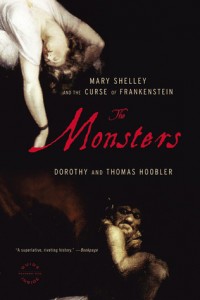
The Monsters by Dorothy and Thomas Hoobler

Posted May 18, 2013 by Michael @ Knowledge Lost in Non-Fiction / 2 Comments

The Monsters by Dorothy and Thomas HooblerTitle: The Monsters (Goodreads)
Author: Dorothy Hoobler, Thomas Hoobler
Published: Back Bay Books, 2006
Pages: 400
Genres: Non-Fiction
My Copy: Personal Copy

Buy: AmazonBook Depository (or visit your local Indie bookstore)

It was a dark and stormy night on the shores of Lake Geneva, 1816. You’ve heard the story beforbe; Lord Byron challenges his friends to see who can come up with the best ghost story. Among the people include Percy Bysshe Shelley, his lover Mary Wollstonecraft Godwin, Mary’s stepsister Claire Claremont and Byron’s physician, John William Polidori. Two novels were born that very night; Mary Wollstonecraft Shelley’s (née Godwin) Frankenstein and John William Polidori’s The Vampyre. The evening begat a curse, too. Within a few years of Frankenstein’s publication, nearly all of those involved met untimely deaths.

First of all I want to point out that authors of this book Dorothy and Thomas Hoobler don’t actually believe this was a curse. Well at least I hope they don’t, this is a little gimmick to help sell the book and I think they just wanted to explore the interesting fact that they did all die young. This book is purely a biography on Mary Shelley that focuses on the night in 1816 and the novel Frankenstein. I was hoping for something about struggling to write something as great as Frankenstein or how the novel has been destroyed by pop culture.

The book starts out with the life of William Godwin and Mary Wollstonecraft, the famous philosopher and feminist parents of Mary Wollstonecraft Shelley. The two had very different personalities and they seemed like a very odd couple but I think they really complemented each other. Sure, they had their problems but nothing like their daughter.

This brings us to the bulk of the book, Mary Shelley and the young romantics. These were the original rock stars and their lives, no soap opera will ever come close to the drama and complexity as the real lives of the romantics. I picked up this book to learn about these poets after reading A Treacherous Likeness and I wanted to know more about them. This was a very accessible biography, which focuses primarily on Mary Shelley but it gives you a great insight into her life. I don’t pretend to fully understand the Romantics, they are way to complex but I feel I have a better knowledge into their lives.

My interest in the Romantics has gotten stronger thanks to The Monsters by Dorothy and Thomas Hoobler. I have a few other books I plan to finish off in on the topic and I doubt I’ll stop there. I love the quotes and the referencing in this biography; I’ve often found that I wonder about the source of information in biographies that don’t reference so it was so handy to have that reference.

While this book does primary focus on Mary, it was nice to learn a little more of Percy Bysshe Shelley, Lord Byron, Claire Claremont and John William Polidori. I didn’t previously know the story of the original publication of The Vampyre; I found it fascinating and heart breaking for John William Polidori. It is always great to find new stories about these amazing talented people.

One thing I liked about this biography, especially after reading A Treacherous Likeness, is the fact that it didn’t try to sway the reader’s opinions; it stuck to facts and left it to the readers to make up their own mind. This was a refreshing change from the opinionated A Treacherous Likeness and I really enjoyed the experience of learning more about these poets. I’m sure there are better biographies on Mary Shelley out there but The Monsters is worth checking out as well.


Occupation Diaries by Raja Shehadeh

Posted April 8, 2013 by Michael @ Knowledge Lost in Non-Fiction / 0 Comments

Occupation Diaries by Raja ShehadehTitle: Occupation Diaries (Goodreads)
Author: Raja Shehadeh
Published: Profile, 2012
Pages: 212
Genres: Non-Fiction
My Copy: Personal Copy

Buy: AmazonBook Depository (or visit your local Indie bookstore)

Raja Shehadeh’s Occupation Diaries gives an insight of a Palestinian who chronicles for the two years in Israel leading up to the Palestinian bid for UN statehood in September 2011. This diary shows a fierce and lyrical portrait of a life lived under siege, balancing the memories, as well as the everyday reality of living under occupation in Palestine. It is often the smallest details of daily life that tell us the most.

I have to admit I don’t know much about the tension between the Israelis and Palestinians so it was interesting to read one person’s perspective. But this is very one sided and while it was an interesting book I was left with more questions than I started with. To be honest I spent most time wondering what Raja Shehadeh wasn’t telling us and concerned that maybe he is stretching the truth. It is a diary that seems to focus on the little things and I never felt like it really explored the issue at all; just a collection of small stories.

There is no real joy in this book; sometimes you get a glimpse but then it fades fast. I know this is an occupied state but the feeling of hopelessness without any optimism really made this book difficult to connect with. This was no easy read, even though the writing was beautiful and it wasn’t overly complex, it was just the anger and one sidedness of this whole thing made it a hard read for me.

Shehadeh is very passionate within this book but the bleakness of the whole situation really didn’t work for me. I know this is a very complex issue but the simplification of the whole thing within this book makes it a difficult read. I love the writing and really want to read some of this author’s works of fiction but I just never connected with this type of non-fiction. Too one sided, too many unanswered questions and I spent too much time wondering if this was real or not.


Gangster Squad by Paul Lieberman

Posted March 19, 2013 by Michael @ Knowledge Lost in Non-Fiction / 0 Comments

Gangster Squad by Paul LiebermanTitle: Gangster Squad (Goodreads)
Author: Paul Lieberman
Published: St. Martin's Griffin, 2012
Pages: 560
Genres: Non-Fiction
My Copy: Personal Copy

Buy: AmazonBook Depository (or visit your local Indie bookstore)

Gangster Squad chronicles the true story of the secret police unit that was assembled to wage war against Mickey Cohen and any other hoodlums in Los Angeles. In 1946 the LAPD created this squad to take down Cohen and clean up the streets by any means necessary. Lasting about four years this war lead to an aftermath that shocks both the LA mob and the police department but ultimately ensuring the mob will never have a foot hold on this city ever again.

I recently saw the very loosely based movie adaptation of this true crime novel and it left me curious to know more about this squad and the life of Mickey Cohen. So I went out and read the book; while it was very story driven, the novel did get rather dry about half way through. I love books about organised crime and I was happy to learn more about the infamous Jewish mobster and his downfall.

I’m not too sure how accurate this book is; I took it was a huge grain of salt but I found out afterwards this was compiled but interviews of the gangster squad and others involved in this operation, so maybe there is some truth to it. But with all true crime and non-fiction books, I remain sceptical of the research. I always read these books and wonder just how much is researched and how much is just pure speculation, I think in this aspect I prefer the fictionalised novels of true events; that way I know for sure it is just their take on the events.

I loved the movie; it was an enjoyable Hollywood butchering of what really happened and I’m fine with that, it was entertaining. As for the book, it read like a novel at the beginning but then I think the author realised we was writing True Crime and tried to over correct himself because it became really dry and clinical. I wish he didn’t shift gears because when he tried to stick to the facts I found myself getting lost with all the people mentioned; I wasn’t sure if I’m meant to know who they all where but the cast was big and there was no point of reference for them all.

It starts off with a pulp feel to it but then it changes so drastically, I’m very interested in learning more about organised crime in America through true crime and novels but this book didn’t really teach me anything. I think the book just got so jammed pack with names that I was confused and I didn’t learn anything that I didn’t already know. Finally verdict; watch the movie, it’s very entertaining and will give you some idea of what actually happened. As for the book, it didn’t really work, I like how they explored all aspects, including their failed operations but in the end Gangster Squad didn’t work as well as I was hoping.


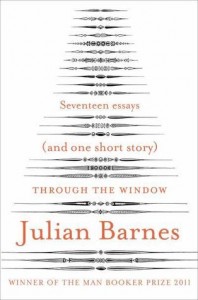
Through the Window by Julian Barnes

Posted March 9, 2013 by Michael @ Knowledge Lost in Non-Fiction / 0 Comments

Through the Window by Julian BarnesTitle: Through the Window (Goodreads)
Author: Julian Barnes
Published: Vintage, 2012
Pages: 272
Genres: Non-Fiction
My Copy: Personal Copy

Buy: AmazonBook Depository (or visit your local Indie bookstore)

Julian Barnes won the Man Booker Prize in 2011 for his book The Sense of an Ending which has sparked a huge increase in this man’s popularity. To follow up (cash in) on the buzz the release of Through the Window followed soon after, which holds Seventeen Essays (and a Short Story) on the books and authors that have meant the most to him over his career.

I remember reading Julian Barnes’ essay A Life with Books, which really was just a look at his reading history and I absolutely loved it. So I was eager to read this collection to learn more about this wonderful author. What I found was this collection was very dry and this made it difficult to read. Barnes is a very intelligent man and he flexed his intellectual muscles to the point where it back very difficult to read for a pseudo intellectual like me.

While I found it interesting to read this author’s thoughts on Penelope Fitzgerald, Hemingway, Kipling, Madame Bovary, Ford Madox Ford and George Orwell I tend to think Barnes wasn’t connecting to the reader like he did with his novels or the essay A Life with Books. It felt more like reading an academic essay more than just someone’s passion for these authors and books.

This is a difficult collection to get through, but people interested in learning more about Julian Barnes or these topics might find something in this book for them. I read this book as soon as I finished Ramona Koval’s By the Book, A Reader’s Guide to Life so it was difficult to go from a book with so much passion for reading to something so dry.


Books: A Memoir by Larry McMurtry

Posted February 24, 2013 by Michael @ Knowledge Lost in Non-Fiction / 0 Comments

Books: A Memoir by Larry McMurtryTitle: Books: A Memoir (Goodreads)
Author: Larry McMurtry
Published: Simon & Schuster, 2008
Pages: 259
Genres: Non-Fiction
My Copy: Personal Copy

Buy: AmazonBook Depository (or visit your local Indie bookstore)

Larry McMurtry is known for his novels Terms of Endearment and his 1985 Pulitzer Prize-winning novel Lonesome Dove, among many other things. But what people might not know about Larry McMurtry is he is also a rare-book scout.  Owning many second hand bookstores called Booked Up, McMurtry is always on the hunt for good books. Book is a memoir of adventures as a book seller.

Let’s face it, I love a good book memoir so I thought I had to check this one out, but I’m a little disappointed. At times in this book it felt more like bragging than actual book scouting; I don’t really enjoy reading a whole lot of “I found a book that was worth hundreds of dollars and brought it for mere dollars”. There needed to be a bit more about his love for the books and less showing off to really make this book enjoyable.

I think it would be cool to be a book seller or scout and it was interesting to read about his journey as one. I did actually visit all the second hand book stores in search for gems so maybe this book did have an effect on me. The only difference was, gems for me are the books I really want to read and not books that would make me money. I also would have enjoyed some more about Larry McMurtry’s reading life as well amd the books he was passionate about or recommends, but this just wasn’t there.

I think this book just lacked passion overall; I felt like Larry McMurtry saw books as money makers and there was no love for them. It’s an interesting book but now I know what to look for in a book about books, I don’t think I would pick up another book like this; unless recommended to me. Book sellers or book scouts may get more out of this book but I have a feeling that most would probably share my opinion.


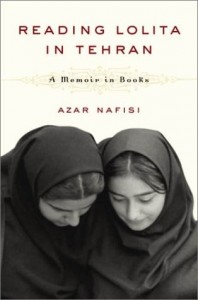
Reading Lolita in Tehran by Azar Nafisi

Posted February 10, 2013 by Michael @ Knowledge Lost in Non-Fiction / 0 Comments

Reading Lolita in Tehran by Azar NafisiTitle: Reading Lolita in Tehran (Goodreads)
Author: Azar Nafisi
Published: Hodder, 2003
Pages: 347
Genres: Non-Fiction
My Copy: Library Book

Buy: AmazonBook Depository (or visit your local Indie bookstore)

Reading Lolita in Tehran is a memoir of books read by Literature professor Azar Nafisi’s literature class during the revolution (1978-1981) up until her departure in 1997. Divided into four sections “Lolita”, “Gatsby”, “James”, and “Austen”, this memoir explores the lives of the students in a private literature class and the books that brought them all together. This is an inspired blend of memoir and literary criticism, and a moving look at the power of art and its ability to change and improve people’s lives.

I really enjoyed this book; the blend of literary criticism and memoir was really what hooked me. I especially loved the first part that focused on Lolita and the themes of oppression, authority figures trying to assert their dominance through events and a runaway convict. It was just an interesting insight from these Iranian students. It really made me want to read Lolita again and try to see what more I can get out of the book; luckily for me I might get that chance soon with the Literary Exploration book club.

I didn’t feel as strong of a connection with the other parts of this book, but I think I was just blown away by the insights into Lolita that the others didn’t have the same impact. The Great Gatsby looked at dreams and adultery all from the Iranian prospective. While Gatsby is about the American dream it was interesting to see it from a totalitarian mindset. James looks at some works of Henry James during the time of the Iran-Iraq war and the government who wants to control the liberal-minded. Lastly Austin looks at Jane Austin novels as well as the idea of abusive husbands, blindness and empathy.

This book comes together really well; you get to know these Iranian students and as well as explore some interesting ideas about the books from a perspective completely different to your own. While I would have preferred more literary criticism, I really got a lot of joy from reading this. There is a strong feminist theme throughout this book (since most of the students were women) that I suspect was the main draw card for many of the female readers of this book, and rightly so, this was an interesting look at these women. But for me, it was all about the books