Tag: Philosophy

The Elegance of the Hedgehog by Muriel Barbery

Posted December 2, 2014 by Michael @ Knowledge Lost in Contemporary / 3 Comments

The Elegance of the Hedgehog by Muriel BarberyTitle: The Elegance of the Hedgehog (Goodreads)
, 2006
Pages: 325
Buy: AmazonBook Depository (or visit your local Indie bookstore)

Renée Michel is a concierge for an upscale apartment building that is inhabited by bourgeois families. Renée is an intelligent autodidact that hides herself from the residents of this elegant apartment, trying to confirm every stereotype they might have towards a concierge. However a precocious girl named Paloma suspects there is something more about Renée. When a wealthy Japanese business man moves into the building, he sees right through the concierge’s façade and tries to befriend her for some intellectual conversations.

The Elegance of the Hedgehog is a highly successful novel by Muriel Barbery who obtained her agrégation in philosophy before becoming a professor for the Université de Bourgogne. The publication I read was a Europia edition that was translated by novelist and Literary translator Alison Anderson. L’Élégance du hérisson was translated into more than forty languages and has also been adapted into the 2009 movie The Hedgehog (Le hérisson) staring Josiane Balasko, Garance Le Guillermic and Togo Igawa.

This novel is full of allusions towards works of literature, music, films, and paintings, which is one of the reasons I loved this book. While it might come across as pretentious and somewhat cynical The Elegance of the Hedgehog plays a lot with the ideas of stereotypes, class-consciousness and acceptance. A philosophical novel that explores ideas of how we present ourselves to the world and if we should pretend to be someone different, if that is what others expect from you.

There are plenty of philosophical ideas running through this novel that presents different ideologies, Muriel Barbery has stated that literature is an effective way to explore philosophy. Having sat through plenty of long and boring philosophy classes she wanted a way to explore the ideas in a more effective and interesting way. I suspect people can get lost in the pretentious nature of this book but also the ending; however I think it was a fitting ending for the novel.

I found The Elegance of the Hedgehog to be a beautiful, if not recherché little novel and I enjoyed every moment of it. I wanted to turn back to page one and start again; I think there is plenty within this book to offer its readers. If you pay close attention to the book you might also notice that most of the book was told in a first person, present day nature that makes for a fresh look at the story that I didn’t notice till near the end. I know I should have paid more attention but this is one of the main reasons I wanted to re-read the book.

Lovers of philosophy and literature would love this book but also anyone interested in Marxism.  I know I didn’t talk much about the class struggle within the book but that is because I have much to learn in this area. The Elegance of the Hedgehog is an intelligent novel, full of references to literature, witty and smart humour with a satirical nature. The way this French novel translates into an elegant English novel is a testimony to Alison Anderson’s ability but she had a great piece of literature to work with. I would highly recommend this novel to everyone but maybe that isn’t a good idea, I think you have to be in the right frame of mind or mood to truly enjoy this book.


What We See When We Read by Peter Mendelsund

Posted November 8, 2014 by Michael @ Knowledge Lost in Non-Fiction / 3 Comments

What We See When We Read by Peter MendelsundTitle: What We See When We Read (Goodreads)
Author: Peter Mendelsund
Published: Vintage, 2014
Pages: 419
Genres: Non-Fiction
My Copy: Paperback

Buy: AmazonBook DepositoryKindle (or visit your local Indie bookstore)

When reading Moby Dick, does Ishmael look like Richard Basehart? How about Anna Karenina? Please don’t tell me she looked like Keira Knightley. What We See When We Read takes a look at the activity of reading with such depth and insight. Looking at not only the way our brain fills in the images but also what the author is trying to say. Take for example Karenin in Anna Karenina; his ears are described a few times within the novel but they get bigger. The size of his ears is an artistic simulacrum that changes as Anna Karenina’s feelings toward him change.

Peter Mendelsund is Knopf’s Associate Art Director and has been responsible for some of their most iconic book covers. Just looking at his book cover designs I get the sense that he loves reading and the artistic side of literature. His book covers really capture a feeling; they stand out and often work well with the written word inside. He is major is in Philosophy and Literature and the two work well together in looking at the idea of reading and how our minds interpret the written word.

This is very much like Understanding Comics by Scott McCloud, it explores the idea of reading in different ways and explores different concepts. We all read slightly different and Mendelsund is able to go into different methods. A stand out for me is the way Vladimir Nabokov read Kafka’s Metamorphosis; there is an image of his copy of the book and it looks like he edits and rewrites the book to make it his own. It is an interesting way to get involve with the written word.

What We See When We Read is a combination of written words and images, which allows Mendelsund to illustrate his point and give the reader a better understanding of the feelings. A big bonus is the fact that he references other books, which gives me a huge TBR pile of books that explore this idea further in different ways. I love books about books so I am pleased to have a reading list.

I have to say What We See When We Read is a must for all book lovers. This book will be a joy to read and will look good on the shelf. I own the new Vintage edition, which is a paperback but it also has French flaps so it looks nice. I like how he went for a simple cover design; it stands out and works well with this book. I know this book is rising in popularity and I hope more people get a chance to read this one as soon as possible.


Encyclopedia of a Life in Russia by José Manuel Prieto

Posted February 20, 2014 by Michael @ Knowledge Lost in Literary Fiction / 0 Comments

Encyclopedia of a Life in Russia by José Manuel PrietoTitle: Encyclopedia of a Life in Russia (Goodreads)
Author: José Manuel Prieto
Translator: Esther Allen
Published: Grove Press, 2013
Pages: 224
Genres: Literary Fiction
My Copy: Paperback

Buy: AmazonBook DepositoryKindle (or visit your local Indie bookstore)

Encyclopedia of a Life in Russia tells the story of Cuban immigrant Thelonious Monk (not his real name) living in post-Soviet Russia. Monk loves women, many of them, particularly beautiful women. In St Petersburg he meets a young woman named Linda Evangelista (also not her real name) and after brief affair and some correspondence the two strangers become an inseparable pair. He takes her to Yalta where he starts work on a new novel about her, his notes for this novel comprise of this Encyclopaedia.

This is a really tricky novel to talk about, let alone try to understand but I will try to do my best. The novel explores these two misfits as they try to explore through a world that is changing. They are caught between old traditions and modern consumerism. I suspect that Encyclopedia of a Life in Russia is semi-autobiographical as José Manuel Prieto spent twenty years in Russian. Not knowing much of José’s life only leaves me to speculate, but I have to wonder if he is Thelonious, then who is Linda (real name Anastasia Stárseva according to an entry in the ‘L’). She comes across as a really interesting and mysterious character, a modernist who in a past like was an unorthodox poet and bourgeois muse.

The novel is a fusion of history, philosophy, social-critique and in my opinion autobiographical fiction. Though, like many other postmodern novels, there is a degree of difficulty in reading it; the rewards are great but I can’t help wondering just what I’m actually reading here. It’s a satirical, philosophical, meta-fictional encyclopaedia which is evocative of the era in which it was compiled in. This makes it incredibly complex and that would require more knowledge to understand it better. There are references that range from Bach to Dostoyevsky but also consumerism. I found a lot of nods to Russian literature and a better knowledge of this (especially Checkov) would be a huge asset to this novel.

The characters think of themselves as avatars of consumer culture, navigating the border between art and commerce during the Soviet Union’s collapse in 1991. This means we get this interesting perpective of a changing Russia. Mixed in are conversations about advertisement copy and art criticism. This is invoking a blending (and changing) from the old traditional high art to a more commercial culture.

I love the way that the novel is broken into mock Encyclopaedia entries; it was an interesting narrative type but surprisingly informative. The book did force me to flip between entries, I often found myself going back and forth but this ended up creating an ever-deepening picture of the world they are living in. Reading Encyclopedia of a Life in Russia runs the risk of looking like an idiot while trying to understand this overly complex novel but the reward is far greater and in the end well worth the effort.

I did take me a while to get through this book and even longer to put together my thoughts from the notes I made (yes, I’m trying to write notes now, does it reflect in my reviews?) but I’m so glad I read this novel. The novel is packed with wit, irony, philosophical thought and the written in a poetic voice. This is a translated book from Spanish and I can’t help but be angry that something can sound so beautiful after being translated out of its original language. If you are not afraid of post modernist novels and are willing to put the time and effort into this book, then reading Encyclopedia of a Life in Russia will be highly rewarding experience.


Kiss Me First by Lottie Moggach

Posted September 16, 2013 by Michael @ Knowledge Lost in Thriller / 5 Comments

Kiss Me First by Lottie MoggachTitle: Kiss Me First (Goodreads)
Author: Lottie Moggach
Narrator: Imogen Church
Published: Picador, 2013
Pages: 352
Genres: Thriller
My Copy: Audiobook

Buy: AmazonBook DepositoryKindle (or visit your local Indie bookstore)

Leila spends most of her life on the Internet, one day she finds a forum called Red Pill, which discusses philosophical ideas. She feels at home on this site and becomes a regular contributor. One day the creator of the site approaches her with a secret project. Tess is looking for a way to end her life without hurting her friends and family. She asks Leila to continue her online life for her so she can slip away from the world unnoticed.

This will be a hard book to review and I will try not to give away any spoilers that aren’t in the book blurb. Written in the style of an online journal, the reader will slowly explore the motivations behind Tess wanting to kill herself, why Leila decides to help and the aftermath that follows. This was a real page-turner and it made me miss forums, but not online journals (I never was good at that) because I have a book blog and it is pretty much an online journal of my reading life.

I love the concept of this book, in a world where we spend most of the time communicating online, what is to say that we are truly communicating with the intended person. Their identity could have been stolen, it could be someone pretending to be someone they are not or someone has taken over their life after they completed suicide. There is no real way to tell that is really happening in the online world.

The Internet is a tricky thing to portray in a novel, with changing technology and new trends, how do you stay relevant. Also do you write the book in text/IM language and use memes and current trends to tell the story? Kiss Me First is not trying to say the Internet and social networking is bad but just using it as a tool to tell this mystery.

I’m always interested in how the Internet is portrayed in a novel and Kiss Me First has managed to get the balance right. A mixture of nostalgia towards dying sites like the online journal or forums, relevance when talking about social networking, and tongue in cheek when talking about never understanding what text/IM language is all about. For some, the narrative might not be the easiest to read but if you have spent time reading online journals at any point of time, you will pick it up pretty easily.

I really enjoyed this novel, the mystery was pretty ordinary but there were some surprises. I preferred the philosophical questions and the way Lottie Moggach explored the online life with such ease. I was surprised to learn that this was a debut novel; it was executed well and offered some interesting thoughts on social networking. Also credit where credit is due, the approach to the internet was handled well; I think it will stand the test of time for a while and not age as fast as some novels. Kiss Me First has been getting a lot of attention lately and it really was a thrilling novel and is sure to entertain the readers, especially if you spend most of your day online.


Reading Non-Fiction

Posted September 15, 2013 by Michael @ Knowledge Lost in Literature / 0 Comments

I’m not a non-fiction reader, much to my own disappointment. A few of the non-fiction books I have read have been good and the book that inspired me and turned me into a reader was in fact a non-fiction book. Recently I’ve been inspired with an idea; this idea will require a lot of non-fiction reading and research. So I need to motivate myself in becoming a bigger non-fiction reader.

My research will require some reading up on philosophy, art history and maybe even pop culture which will be good for my blog Knowledge Lost and hopefully will give me some new posts for that poor neglected site. Here is what I need, I want to become a better non-fiction reader so I would love some recommendations of books that I might be interested in and are really interesting reads. It doesn’t have to be related but that would be a bonus; I just want some motivation and I hope some great recommendations will help. Also I need tips and advise to become a non-fiction reader. Do audiobooks make for a good way to get through a non-fiction book?

My idea may never be realised but I feel inspired to research it, even if it takes me a lifetime. My goal to become a non-fiction reader will hopefully be a result in this inspiration. My goal is to read at least one non-fiction a month; this challenge may turn me into the type of reader I want to become. I love learning new things but I need to force myself into reading those non-fiction books. One of the biggest problems is working out how to review these books, so I might just do a mini review or something in order to take some of my pressure off.

I’m not going to tell you about my idea but I will give you a list of books I plan to read; this is a very random list but these books I hope will give me some inspiration and guide me down different paths that might help. I know some of these books will be a big help, others are just interesting or books on my shelves already that might help in one form or another.

  • Being and Nothingness by Jean-Paul Sartre
  • Exquisite Corpse: Surrealism and the Black Dahlia Murder by Mark Nelson and Sarah Hudson Bayliss
  • If You Want to Write: A Book about Art, Independence and Spirit by Brenda Ueland
  • Provenance: How a Con Man and a Forger Rewrote the History of Modern Art by Laney Salisbury & Aly Sujo
  • The Culture Club by Craig Schuftan
  • The Information: A History, a Theory, a Flood by James Gleick
  • The Medium is the Massage by Marshall McLuhan
  • The Shallows: What the Internet is Doing to Our Brains by Nicholas G. Carr
  • You Are Not So Smart by David McRaney
  • Young Romantics: The Tangled Lives of English Poetry’s Greatest Generation by Daisy Hay

Questions of Travel by Michelle de Kretser

Posted August 22, 2013 by Michael @ Knowledge Lost in Literary Fiction / 0 Comments

Questions of Travel by Michelle de KretserTitle: Questions of Travel (Goodreads)
Author: Michelle de Kretser
Published: Allen & Unwin, 2012
Pages: 528
Genres: Literary Fiction
My Copy: Personal Copy

Buy: AmazonBook Depository (or visit your local Indie bookstore)

Laura Fraser is an artistic Australian, who lost her mother at a very early age and her father was cold and distinct towards her, as was her brother. On the other side of the world Ravi Mendes’ life was almost the complete opposite to Laura, but still struggles in life at times; currently he is determined to break into the computer science industry. Alternating from one character to the other, Michelle de Kretser’s Questions of Travel explores why we are all influenced by travel.

Questions of Travel won the Miles Franklin award this year but if it wasn’t for my book club I would never have read it and I think that might have been a mistake. This novel is almost a post-modernist novel in the experimental way the author approached it. I read this book as if the two characters are sitting me down and going through their photo album and telling the story related to each picture. Slowly we get the full story but there are a lot of pieces we have to fill in for ourselves. The reason I thought this was just the way it was written and you have these really short chapters but every now and then you get a long one. Also the dates on each chapter become more specific as we got closer to the present day, almost like the character remembers the year rather than the decade now.

While reading this novel I got the impression that Michelle de Kretser was trying to explore the whole philosophy behind travel; why we do it? What we love about it? That feeling you get being in a strange country. This was a really interesting approach she took and really worked well with the experimental writing style. The author used to write for the Lonely Planet and throughout this novel you can see her small digs at these books and the bureaucracy behind them. Little things like this really helped lighten the mood for the novel.

Questions of Travel has some beautiful language throughout the book and you find yourself really taking the time to enjoy the book (even though I didn’t have much of that before my next book club meeting). This novel demanded more time than I gave it and I might have missed so much but due to time restrictions I had to power through it. There were times I found some great quotes and I wanted to write them down but I was in too much of a hurry (also I never seem to do that but am trying to make more of an effort).

The novel is both thought provoking and emotional; you’ll experience the highs and lows of the two main characters and even if you have found a favourite, both characters offer interesting insights to life and travel. Also on a positive note, this novel also offers one of the best opening chapters I’ve read in recent times, it comes out of nowhere and smacks you in the face. I spent days trying to decide if I liked this book and what I liked about it and that right there is why I enjoyed it; like Slaughterhouse-Five the time spent afterwards thinking about it is what I will remember more than the book itself. I’m not sure if I would recommend this novel to many people, you’d have to be willing to read experimental or post-modernist novels to really enjoy what Michelle de Kretser is doing.


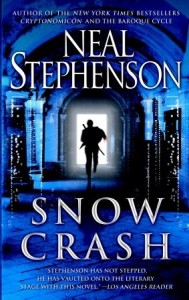
Snow Crash by Neal Stephenson

Posted June 26, 2013 by Michael @ Knowledge Lost in Speculative Fiction, Thriller / 0 Comments

Snow Crash by Neal StephensonTitle: Snow Crash (Goodreads)
Author: Neal Stephenson
Published: Bantam Press, 1992
Pages: 440
Genres: Speculative Fiction, Thriller
My Copy: Personal Copy

Buy: AmazonBook Depository (or visit your local Indie bookstore)

In a time in the not so distance future where the federal government of the United States has yielded most of its power to private organizations and entrepreneurs, franchising individual sovereignty reigns supreme. Merchant armies complete national defence, highway companies compete for drivers and the mafia own the pizza delivery game. Hiro Protagonist, “Last of the freelance hackers and greatest swordfighter in the world”, finds himself without his pizza delivery job when a young skateboard “Kourier” named Y.T. tries to hitch a ride on his vehicle. Leading them on a grand scale adventure trying to uncover just what exactly Snow Crash is.

Like all of Neal Stephenson books, you can expect this one to cover subjects like  history, linguistics, anthropology, archaeology, religion, computer science, politics, cryptography, and philosophy, all while keeping to his cyberpunk thriller style. He says this book was named after the early mac software failure mode:

“When the computer crashed and wrote gibberish into the bitmap, the result was something that looked vaguely like static on a broken television set—a ‘snow crash’”

His goal, was to take the reader on a “full tour of Sumerian culture, a fully instantiated anarcho-capitalist society, and a virtual meta-society patronized by financial, social, and intellectual elites.” Snow Crash is a pseudo-narcotic or is it something far worse; Hiro and Y.T (short for Yours Truly) slowly discover that it is in fact a computer virus capable of infecting the brains of careless hackers in the Metaverse (the successor to the internet) and a mind altering virus in reality.

One of the things I liked most about Snow Crash was the fact that Neal Stephenson showed us how to write a kick ass teenage girl protagonist. Young Adult novels like to use a strong teenaged girl as a main character but few of them really know how to make her great; most are just Katniss clones. While Y.T’s narrative wasn’t as focused as that of Hiro, it was more of a pleasure to read, she seemed to accomplish the most in the entire book and she did it her own way without compromising her character. Sure, she did manage to get into some trouble and make some bad choices but she’s human, I expect them to struggle and fall and recover from their mistakes.

While this was a fun and exciting novel there are some things that I just didn’t like; firstly each ethical group portrayed the stereotypical extreme.  The mafia, the rednecks from New South Africa, the Pentecostals, Mr. Lee’s Greater Hong Kong and so on, all felt very much like the cliché versions of these cultures and Stephenson played on the stereotypes a little too heavily. I know they were only minor plot arcs but it still felt like it was overdone. The most interesting people in the book are the ones living outside their cultural and ethnic groups; Hiro, Y.T and Raven.

Then there is my biggest problem with the book, which is a similar problem I had with Reamde and that is I feel like Neal Stephenson turns some chapters into a Wikipedia articles just to give us all the interesting information he has on a subject he is exploring. In this book it is every time the librarian talks, there is heaps and heaps of interesting, and sometimes irrelevant, information and the way Stephenson tried to stops it become and wall of text is the awkward attempt to make it sound like a conversation. Hiro keeps interrupting the librarian’s information with very simplified reiteration, agreements and metaphors, I found it incredible annoying.

Overall this was a fast paced cyber thriller with some weird and unusual tangents and twists. Stephenson has some interesting ideas about the future of the world but for some reason I never feel a strong connection to his books. I think I prefer William Gibson’s style and take on the future cyber world but can’t fault Stephenson for what he does. Not that I’ve read many books from this author and there are plenty more I want to read, maybe I just feel like he over simplifies and draws his novels out a little too much.


The Reader by Bernhard Schlink

Posted May 15, 2013 by Michael @ Knowledge Lost in Historical Fiction / 0 Comments

The Reader by Bernhard SchlinkTitle: The Reader (Goodreads)
Author: Bernhard Schlink
Translator: Carol Brown Janeway
Published: Orion, 1998
Pages: 216
Genres: Historical Fiction
My Copy: Personal Copy

Buy: AmazonBook Depository (or visit your local Indie bookstore)

The Reader tells the story of the teenage years of Michael Berg while recovering from hepatitis and his passionate affair with a mysterious woman twice his age. Later going on to study law and discovering that this woman was involved in the death march from Auschwitz. The book continues on through the war crimes trial and the relationship between the two after her imprisonment.

Bernhard Schlink was born in 1944 (one year before the war ending), studied law then became a professor of public law and the philosophy of law. His passion for reading comes from a teacher in his high school who encouraged his reading and discovery of literature. Later he discovers that this teacher was a member of the Gestapo and involved in some questionable practices. His first series of books featuring a sixty year old private investigator Gerhard Selb (Selb translates to Self) also had a questionable past during the war and his coming to terms with this. This is interesting since the books in the series are called; Self’s Punishment, Self’s Deception and Self’s Murder. Also he has a collection of essays called Vergangenheitsschuld which translates to Guilt about the Past, which leads you to believe that Bernhard Schlink has a fascination about the effect of World War II has on the next generation of Germans.

This is not a book about the Holocaust novel; while this historical event plays a role, this is rather a novel that gives you a lot of questions and problems to think through. Divided into three parts; the summer of love, the trial and imprisonment; The Reader explores three different scenarios as well as the notion of keeping secrets. At the start of the book Hannah comes across as Good Samaritan trying to help Michael who was throwing up in the street. Later he pursues her and she gets an impression that he is old enough to be out of school; he doesn’t correct her, thinking the papers he leaves behind was enough for her to know his true age but we later finds out she would never have looked at them. When she finds out, they are in bed together and he tells her that he is skipping classes to be with her. She throws him out and it’s not until very later in the book we discover just how important education is to her. Hannah is his first love, he is too young to fully understand the kind of relationship they are having, while Hannah remains guarded and tries to protect both her public and private shames.

While most people focus mostly on the relationship between the two, but there is so much more to look at in the novel. Years later Michael finds Hannah again in a trial and the reader is asked to consider two things; the nature of her guilt and the significance of her other secret (the one she is more ashamed of it). While she was never the ringleader of her charges and she was following orders, when it came to the damning report, she let the court believe she wrote it to continue to hide her illiteracy. This brings to the overall concept to the book; ignorance is not necessarily innocence. The pride to protect herself from people discovering of her illiteracy works against her though out the entire book. She gives up promotions and lands herself in prison all to protect this secret.

This leads into the third part; years later we find that Michael starts reading to Hannah once again. Sending cassettes both the reader and Hannah mistakenly get the impression that this is an act of affection and when Hannah eventually finds out,  we also find out just how cold he has been acting. I’m not sure if he was trying to gain back the power in their relationship or just the bitterness of his life doing it but we are led to believe he still cares about Hannah when all he really cares about is that summer fling when he was still a teenager.

The book wants you to recognise that you are the reader, and Hannah, in particular, wants you to realise just how blessed you are to be able to read this book. I remember there was a great movie adaptation of this book a while ago; while very meta to have a movie about reading, I’m surprised how well it came together. I didn’t remember much about this movie while I read this but it all come back to me as I discovered it in the book. It was a great feeling to remember as I read and not know what would happen next.

I really loved this book; there is that element of uncomfortableness with the relationship at the start, which really is something people can be afraid to talk about but with a book like this it can be scandalous.  There are also so many other interesting elements that I think are equally valuable; especially with the whole German shame towards what they did in World War II and the next generation having to deal with it. While the movie closely follows the book, it is still worth reading; I highly recommend it.


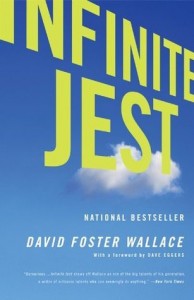
Infinite Jest by David Foster Wallace

Posted April 12, 2013 by Michael @ Knowledge Lost in Literary Fiction / 0 Comments

Infinite Jest by David Foster WallaceTitle: Infinite Jest (Goodreads)
Author: David Foster Wallace
Published: Back Bay Books, 1996
Pages: 1079
Genres: Literary Fiction
My Copy: Personal Copy

Buy: AmazonBook Depository (or visit your local Indie bookstore)

In the not so distant future, the residents of a Boston halfway house for recovering addicts and the students of the Enfield Tennis Academy both search for the master copy of a bizarre movie that is so entertaining the viewers die in a state of catatonic bliss. That movie is called Infinite Jest and it is said that anyone who watches it will lose all desire to do anything but watch it. This semi-parodic novel questions what entertainment is and why it dominates our lives.

I’m not going to lie, this book is both lengthy and difficult to read but in the end it is worth the effort. You will need three bookmarks for this book, one for where you are up to, another for the endnotes and the third for the timeline that sits around page 80. You do need to read the endnotes, this book relies heavily on them; they include definitions, side thoughts, in depth details and even a filmology. You will also need to know the timeline because David Foster Wallace likes to jump around a bit, so it helps to keep up. This is where it gets tricky; in the book’s future each year has a corporate sponsorship, so you have Year of the Whopper, Year of the Tucks Medicated Pad, Year of the Trial-Size Dove Bar and so on. It helps to know in what order the years are in so you can piece it all together. While all this might help you keep track of what’s going on there is still the fact that this book is piled with subplot after subplot and you will have to keep track of more characters than A Game of Thrones novel. You will need to keep notes and it might even be a good idea to get a study guide because this book will take you on a very interesting ride.

As I said before, this book is not easy; I took my time with it and slowly chipped away at this book for two months but I still think I’ve missed a lot. While there are some tangents that happen in the endnotes, this book jumps around so much that sometimes you get lost and have to go back. There shouldn’t be any shame in doing this as Wallace’s writing voice is a postmodern mixture of high- and low-brow linguistic traits which is very difficult to become familiar with. He also uses juxtaposes, colloquialisms and polysyllabic and highly esoteric words so you will need to spend some time researching.

Now that I’ve talked about the difficulties of reading the book, I should probably talk about my thoughts on it. Infinite Jest starts off rather dense, you really need to push through the first few hundred pages before things start to make any real sense. So why is this book considered a masterpiece, magnum opus or anything else it has been referred to? It’s not to read; rather it is a book that will challenge us, to rattle us out of complacency. For me I think David Foster Wallace has the ability to take something like substance addiction, recovery programs, depression, abuse, death, relationships, popular entertainment and even tennis and look at it in a very careful way. The way Wallace explores each topic may make you feel uncomfortable and it is confronting but you do gain a deeper understanding.  Yet the book doesn’t remain dry and depressing; Wallace has a very unique way of using humour to basically satirise the issues without making fun of them.

This book is a parody and comment on American culture, yet this is also a semi-autobiographical novel of the issues facing the author. Creating this funny but bitter sweet novel that I found difficult not to associate with the life of David Foster Wallace; his depression that lead to his suicide.  There is a lot going on in this novel and to go through all the major themes within this novel would probably turn this review into something too long to read so if you want to talk about themes I’ll leave that for the comments. So just a brief overview; the main character Hal Incandenza is an intelligent tennis prodigy dealing with the intense pressure put on him to succeed in a junior Tennis Academy, dealing with a drug addiction and the ongoing strain (both physical and emotional) to reach his full potential. While that is an understated summary, all the subplots makes it hard to cover, this is just the basis of the book.

Addiction and depression would be the two major themes in the most brutally confronting depiction of the struggles I’ve ever read. No other book has given me the insight like this one. I feel like the depiction of depression is often wrong in books and movies; depression is a complex thing, it’s not a state, it’s an overall feeling that can’t be shaked. One of the characters in the book; Kate tried to commit suicide because “[she] just didn’t want to feel this way anymore” and “[she’d] rather feel nothing than this”. This tragically honest view on depression really opened my eyes on the state of mind and the struggles that people dealing with depression go through, and for this only, Infinite Jest was worth reading.

The futuristic America created in Infinite Jest feels very much like western society now, just with the increased corporate involvement but that is the way the world is heading. I am reminded of dystopian classics with his satire of society and the social/cultural commentary. It really covers a lot of interesting topics and, while it is difficult, well worth reading.

This is one of those books I plan to re-read once I have a degree in Literature behind me; while I got a lot out of this novel, I am hit with the feeling that I’ve only scratched the surface. This is rather impressive novel overall, never have I seen a novel with over 60% of Goodreads users rating the book five stars and for good reason, the book covers a lot of topics and does it really well. Blending serious topics with an awkward sense of humour is balanced perfectly, and I highly recommend reading Infinite Jest; even if it is only to increase your pretentious levels.


The Lions of Al-Rassan by Guy Gavriel Kay

Posted April 10, 2013 by Michael @ Knowledge Lost in Fantasy / 2 Comments

The Lions of Al-Rassan by Guy Gavriel KayTitle: The Lions of Al-Rassan (Goodreads)
Author: Guy Gavriel Kay
Published: Harper Voyager, 1995
Pages: 548
Genres: Fantasy
My Copy: Personal Copy

Buy: AmazonBook Depository (or visit your local Indie bookstore)

The peninsula of Al-Rassan has been split into three kingdoms; formerly under Jaddite control and known as Esperana. The split between the three Jaddite factions in the north and some Asharite kingdoms in the south makes for a volatile relationship of political and religious indifferences. The book centres on three protagonists from different races; Jehane bet Ishak, a Kindath physician in Fezana; Rodrigo Belmonte, a Jaddite captain of a company of cavalry and Ammar ibn Khairan, an Asharite poet, mercenary,
and advisor to King Almalik of Cartada.

The major theme I found in this book was one of religious indifference; the three main kingdoms in this book are actually based on the three major religions, the Kindath, based on the Jews; the Asharites, based on the Muslims; and the Jaddites, based on the Christians. The problem I had with this novel, it becomes incredibly confusing and hard to keep up; you practically have to keep a graph to remember which person is from where and what religion they are based on. I think one of the hardest things with High Fantasy is that all the weird names, races and everything else makes it too confusing.

This is a really complex story and even without the religious metaphors, you still have to have wrap your head around the medical practices of Jehane bet Ishak and all the other physicians in Al-Rassan. As well as military strategies mentioned by Rodrigo Belmonte, Ammar ibn Khairan and King Almalik of Cartada, plus many more overly thought out issues that Guy Gavriel Kay decides to inject into this novel. Luckily this world is the basis of some of his books so while he loves his metaphors, all the world building should translate into his other books.

The world is based around Moorish Spain which helps put the architecture and people’s behaviours into perspective. Even some of the characters are based loosely on Moorish historical figures such as El Cid and Ibn Ammar. Historical fantasy is apparently the genre type for The Lions of Al-Rassan but I cannot say that I have ever heard of this genre type but with a little bit of research I have since found out it is a pretty common sub-genre. Blending elements of the historical into a high fantasy setting and sometimes adding a mystical thread, this genre mixes elements of alternative history but sets it in a completely different world (with common elements); One Thousand and One Nights being the most known novel within the genre.

While this really is not my type of novel, I sometimes felt like the plot was not moving fast enough and other times felt completely lost, The Lions of Al-Rassan somehow managed to keep me. I give full credit to Guy Gavriel Kay’s writing style; the language and the similes helped paint a beautiful scene and overall story. Then the conflict between Jews and Muslims and Christian metaphor was really what interested me the most and kept me going. While fantasy has never been a strong suit for me, it really felt like a template just to explore the author’s thoughts on something so complex and misunderstood as religion. You can see the similarities between the factions and exploring this volatile world from a military strategy perspective really spotlights the political roadblocks that stand in the way for harmony.

This really ended up being something much more than I expected. Proving high literature can be found in any genre. If I had the time and knowledge, I think this would be a great book to pick apart and explore, though that would require deep looks into the theology of the three religions, history of Moorish Spain as well as military strategies. I am sure there must be an academic out there that took the time to look at this book but for me, I just enjoyed my brief visit to the world of Al-Rassan.