Tag: romance

The Marriage Plot by Jeffrey Eugenides

Posted December 12, 2012 by Michael @ Knowledge Lost in Literary Fiction / 0 Comments

The Marriage Plot by Jeffrey EugenidesTitle: The Marriage Plot (Goodreads)
Author: Jeffrey Eugenides
Published: Harper Collins, 2011
Pages: 406
Genres: Literary Fiction
My Copy: Paperback

Buy: AmazonBook Depository (or visit your local Indie bookstore)

The Marriage Plot is a coming of age novel that explores the pains that comes with life experience. The novel follows three Brown University friends beginning their senior year and then life after graduation. Madeleine Hanna is an English major with an interest in the Victorian novel and the importance of the marriage plot within all the greatest English novels.  Leonard Morten a biologist, who is charismatic and intelligent, but constantly dealing with either unlimited energy or sinking moods. Mitchell Grammaticus studied religion and, while acts strange, has a fascination with Christian mysticism and the idea of Madeleine.

The Marriage Plot finally shows just how a love triangle plot should work. The book shifts between the three protagonists to show the inner thoughts and desires. This is a modern romance; but not in the way you expect. The Marriage Plot asks the reader the question; are the great love stories dead? Did they die off in the nineteenth century? Or does the new world of feminism and sexual freedom offer something completely different. Jeffrey Eugenides explores the ideas of contemporary relationships with such love and care that you feel like you truly know these characters.

As the love triangle between Madeleine, Leonard and Mitchell slowly unfolds, I find myself thinking that maybe Mitchell is the better choice but her attraction to Leonard just seems to get stronger. Mitchell is stuck in the friend’s zone but on reflection he never really pursued Madeleine the way she wanted and lost his chance when he had it. When she discovers Leonard’s mental illness I felt that really cemented their relationship. Sure it was going to be hard, but I think Madeleine’s guilt and the feeling of being needed really shaped their relationship.

The whole novel played around with a whole lot of different literary devices, mixing that with all the themes throughout this book really made this book stand out for me. The ideas of love were really explored well here, helping the characters to discover the difference between their fantasies and reality as well as the need for physical, intellectual and emotional satisfaction. Even Mitchell facing the discernment between the seminary and the possibility of romance has an aspect of love that often isn’t explored; do you give up your passion for a chance at romance?

The characters are so real and I feel like I know them so well; this is what made this book at time frustrating but then it was what made this book so great. While there are a lot of ideas of love throughout the book, the one that really worked for me was Jeffrey Eugenides and Madeleine’s love of literature. I finished this book and wanted to go and read A Lover’s Discourse by Roland Barthes just because Madeleine speaks so fondly of it, the kind of fondness that must truly come from the author.

This really feels like a labour of love by the author, I felt such a connection with the characters and the ideas within this book. Even the effort Eugenides put into bring out the beauty of the situations really was awe inspiring. Eugenides writes beautiful prose; well he did in this book, I’m not sure if it is the love he has for the book, or if he has that for all his novels but I’m keen to dive into Middlesex or The Virgin Suicides sometime soon.

Let’s face it, it is rare to find a book that affects you and you feel so passionately about, so finding The Marriage Plot has really made my reading journey feel worth it. I do have a few books that I hold in such high regard; FrankensteinCrime and Punishment and I would like to welcome The Marriage Plot to join them. It just feels different with this novel, I feel like I’ve discovered my softer side. I would love to know if people know of other books similar to this that I might enjoy and I also want to hear about the books that effect you in a deep and wonderful way.


House of Leaves by Mark Z. Danielewski

Posted November 29, 2012 by Michael @ Knowledge Lost in Book of the Month, Horror / 0 Comments

House of Leaves by Mark Z. DanielewskiTitle: House of Leaves (Goodreads)
Author: Mark Z. Danielewski
Published: Random House, 2000
Pages: 706
Genres: Horror
My Copy: Personal Copy

Buy: AmazonBook Depository (or visit your local Indie bookstore)

Johnny Truant searches an apartment for his friend and finds an academic study of a documentary film called The Navidson Record. This film investigates the phenomenon of the Navidson’s house where the house is larger inside than the outside. Initially it’s less than an inch difference but it keeps growing. The only problem with all of this is there is no evidence of this documentary ever existing. The book House of Leaves is that academic study (with all the footnotes) mixed with Johnny’s interjections, transcripts from the documentary and anything else.

This debut novel of Mark Z. Danielewski tries to mix a horror novel with some romance and satire but it mainly focuses on just how unreliable a narrator can be. I’ll be honest with you; I struggled to work out if I should review this as a piece of literature or as art, so I’ve done both and you can find my art review. Danielewski has really come up with a unique idea here, it’s almost the literary equivalent of The Blair Witch Project; there is a lot happening on the pages but the reader never gets a full grasp on what is actually happening.

The first 150 pages of this book were quite enjoyable, there were some funny moments and it gave you a real feel for what was going on. But then everything turns completely weird and I found myself raging and sometimes going insane. This is by no means an easy book to read, more of an exploration in the postmodern idea of Post-structuralism. I don’t pretend to understand postmodern literature but it was interest to see what Mark Z. Danielewski does in this book

You’ll either love or hate this genre blending novel; for me, I hated the story. I think my wife got more enjoyment out of watching me rage than I did with reading it. House of Leaves is known as Ergodic literature, which requires the reader to navigate the text in a non-traditional way; this is the first time I’ve seen a book like this. Everyone will have a different interpretation of this novel, so I would love to hear what others thought. Also make sure you check my post about this book as an art form.


Soulless by Gail Carriger

Posted November 22, 2012 by Michael @ Knowledge Lost in Romance, Science Fiction / 0 Comments

Soulless by Gail CarrigerTitle: Soulless (Goodreads)
Author: Gail Carriger
Series: Parasol Protectorate #1
Published: Orbit, 2009
Pages: 365
Genres: Romance, Science Fiction
My Copy: Personal Copy

Buy: AmazonBook Depository (or visit your local Indie bookstore)

Alexia Tarabotti may only be a spinster with no soul but when a she is so rudely attacked by a pack of vampires she discovers just how useful being soulless is. With the ability to negate supernatural powers, she is asked by Lord Maccon, who has been sent by Queen Victoria to investigate what is actually happening with London’s high society. Soulless is a book on social etiquette with a mixture of steampunk, werewolves, vampires, and tea-drinking.

Admittedly, this is not something I would normally read but the mixture of steampunk and Victorian high society did seem to appeal to me. However I was reluctant to try something that sounded very much like paranormal romance. Being a literary explorer, sometimes you just have to suck it up and read something way out of your comfort zone. I know I haven’t read many chick lit/romance novels so I thought maybe it was time to give Soulless ago.

One thing I did enjoy about this book was the Victorian elements; Gail Carriger is an archaeologist and it feels like she has taken all the elements from Victorian literature and society, mixed it with her love of science fiction and formed what she likes to call Urbane Fantasy. The Victorian and steampunk elements really help drive this book for me; although I’m sure Jane Austin would be shocked to read this book.

Then you have the werewolves, vampires and the soulless which I really did hate, I would have much rather read a book like this without paranormal elements and maybe replacing it with a mystery element. That way everything plot wise could still work barring some minor changes. But I have to accept paranormal novels are big sellers and they won’t be going anywhere anytime soon. It just doesn’t work for me; I don’t think I can continue the series.

Overall this book felt too predictable with the romance and the rest was just too cutesy. I like that this novel had a strong heroine like Alexia but there was too much of a struggle between what I liked and hated to really enjoy this book in any form. I know there is a lot of love for this series out there and I’m sorry to say I wasn’t able to love this book. I was glad it was a quick read. There is a lot of wit and humour in this novel but it wasn’t enough. I’m not going to continue this series but I might give one of Gail Carriger’s Etiquette and Espionage a go, even if it is set in the same universe, it does look interesting.


This Dark Endeavour by Kenneth Oppel

Posted October 20, 2012 by Michael @ Knowledge Lost in Young Adult / 0 Comments

This Dark Endeavour by Kenneth OppelTitle: This Dark Endeavour (Goodreads)
Author: Kenneth Oppel
Series: The Apprenticeship of Victor Frankenstein #1
Published: Simon & Schuster, 2011
Pages: 304
Genres: Young Adult
My Copy: Audiobook

Buy: AmazonBook Depository (or visit your local Indie bookstore)

Most people know my obsession with Frankenstein so I wanted to give This Dark Endeavour a go; since the author Kenneth Oppel calls this a prequel. Victor’s brother, Konrad, has fallen ill and no doctor has been able to cure him. Victor’s determination to save his brother has turned to alchemy to find the forbidden Elixir of Life and save his twin brother. With the help of his beautiful cousin Elizabeth and best friend Henry, Victor pushes the boundaries of nature and science in a treacherous search for the ingredients to help Konrad.

This is book one in The Apprenticeship of Victor Frankenstein series which I believe is being made into a trilogy. My first thoughts were that a YA novel about Victor Frankenstein was  never going to work, but then after a bit of a look at the book I decided to give it a go anyway. I thought maybe if his research of Frankenstein is in-depth enough and he keeps to the dark and gothic elements of the original classic it might work. I really should have stuck to my first thoughts because from the very start I hated this book.

First of all this book follows the same old paranormal young adult formula which means not so much dark and gothic elements but lots and lots to do with a love triangle. I really hate love triangles in books and this novel felt like the entire plot was centred around the love triangle. Sure, they search for the Elixir of Life but there was more to do with Victor’s feelings toward Elizabeth than the actual alchemy.

Personally I wish I never read this book, it really did nothing for the Frankenstein story and love triangles are always annoying. There is a small steampunk element in this book but that felt like the author was jumping on the bandwagon to help market this book to the readers that want Steampunk, Paranormal, Love Triangle filled Young Adult romance. If you want gothic and dark YA like I do, then this book is not for you. But if you like the idea of a romance with paranormal elements in it, then maybe give this book a go.


Guest Review: No Sex in the City

Posted September 27, 2012 by jus_de_fruit in Chick Lit, Guest Posts / 0 Comments

Guest Review: No Sex in the CityTitle: No Sex in the City (Goodreads)
Author: Randa Abdel-Fattah
Published: Pan Macmillan, 2012
Pages: 400
Genres: Chick Lit
My Copy: ARC from Publisher

Buy: Book Depository (or visit your local Indie bookstore)

I read a bit of chick-lit in my early to late twenties. It was fun to read and didn’t require much brainpower. It was easy to relate to, as a young woman experiencing a similar, yet more toned down, sort of life. My tastes may have changed in recent years.  Apart from Stephanie Plum, I’m not sure the last time I read a book that fell into the chick-lit genre. Now I seem to go after historical time travelling romances. I think I lost the ability to relate with those young women trying to find Mr Right and it started to get a bit mundane, although I suppose I could still enjoy it.  My husband’s taste in books may have also redirected my attentions.

I heard about No Sex in the City when I heard an interview with Randa Abdel-Fattah on the radio. I was fascinated by her stories of parent arranged dating and was intrigued.  It’s something completely different to my own life experience.  I did once ask my dad who he would pick if arranged marriages were a thing of our culture, and after hearing his choice, I was pretty glad that wasn’t a thing.

Randa Abdel-Fattah is an Australian born Muslim of Palestinian and Egyptian heritage who seems to have achieved quite a bit in her life working as a human rights advocate and has an interest in interfaith dialogue. These interests come through in this book, as the characters are a mix of faiths.  The main character Esma is a Muslim and her best friends who form the No Sex in the City club are a Greek Orthodox, a Jew and a Hindu. An interesting combination.

Esma is trying to find the right man to settle down with, but at 28 her family are feeling a bit desperate, but Esma knows what she wants and doesn’t feel the need to settle for anything less.  Pressure from work colleagues tell her that perhaps she should just give up, play the field a bit and see what she likes but she’s pretty set on sharing her first kiss with her husband on their wedding day.

As a young Christian woman who was reading chick-lit back in the day, there was quite a bit of falling into bed with strangers that may or may not be Mr Right. I suppose it is a reflection of the society that we live in, and quite a few young women are able to relate, but I found this book so refreshing for not being afraid to illustrate the life of a young woman living a life of chastity.  The book isn’t completely prudish, as other characters choose different paths, but this is who Esma is, and she isn’t going to apologise for that. Even though the main character is a Muslim, I’d probably recommend this to Christian women as well, as they probably get disillusioned by the way certain media portrays sex.

The book is quite easy to read and completes the check list usually found in all the others of this genre. There are problems at work and within her family that she needs to overcome, and there is a bit of a love triangle that is developed. We also get to follow the stories of her three friends as they also have their own experience of dating.

It doesn’t finish with a typical happily ever after for all the characters but you can’t help but feel that it’s all for the best.  I really enjoyed journeying with this group of young women who all seemed to know what they wanted out of life and never felt the need to settle for less. I’d probably even read more if this book was turned into a series, as I found the characters to be very likeable.

This is a guest post by Mary; not only is she my wonderful wife, she is also my editor and helps moderate the Literary Exploration group on Goodreads. Big thanks to her for this post and everything she does to help me with this blog.


Dystopian Fiction; A Brief History

Posted September 12, 2012 by Michael @ Knowledge Lost in Dystopia, Literature / 0 Comments

This post was originally a guest post that appeared on blahblahblahtoby; big thanks to Toby for allowing me to get involved in his Dystopian fortnight and for letting me share this post with my readers too.

Dystopian fiction has been around for a long time; interesting enough, it was an offshoot of utopian fiction which started growing in popularity in the 1900’s. I’m a little surprised that utopian fiction seemed to be the predominate genre but if you look at the history of dystopian literature you can see why. The spikes in popularity seems to have started from the lead up to the world war two and the cold war and then as a result of 9/11 and the war on terror. Escapist fiction; as a way to substitute the problems with the world with a more nightmarish world.

I thought it might be nice to have a quick look at the genre over time and highlight some essential reads (which stick out to me) for people that haven’t experienced all the joys of this genre. While there were dystopian novels before my first choice, I thought I would start with the one book that may be called the first purely dystopian novel.

We by Yevgeny Zamyatin (1921)

A highly influential novel based on the authors experience of the two Russian revolutions (1905 and 1917) and the First World War.  While this book is considered to be an influence for Aldous Huxley’s Brave New World (1932), George Orwell’s Nineteen Eighty-Four (1949) or even Kurt Vonnegut’s Player Piano (1952), it’s one book that is unfortunately often overlooked.


Brave New World by Aldous Huxley (1932)

Huxley refers to this book a “negative utopia” and looks at the idea of the government making a world so perfect and controlled that it really has the opposite effect; or does it? Are you really unhappy if you don’t know you are unhappy?


 Nineteen Eighty-Four by George Orwell (1949)

No dystopian list would be complete without this novel; actually these three novels could make up the definitive influences of every dystopian novel to follow. Big Brother is watching.  Orwell writes a satirical novel of what he sees as the dangers of totalitarianism.


Fahrenheit 451 by Ray Bradbury (1953)

It’s a pleasure to burn; this novel looks at book burning, mass media censorship and the importance of books. Fahrenheit 451 is set in an unspecified time in a hedonistic anti-intellectual America.


Atlas Shrugged by Ayn Rand (1957)

Set in the not too distant future this brick of a book has a look at the disappearance of innovators and industrialists and a collapsing economy. I’m not going to lie, I’ve not read this book but I couldn’t give a list of essential dystopian novels without this book.


A Clockwork Orange by Anthony Burgess (1962)

In a culture of extreme youth rebellion and violence, how can the government gain back control? Mind control and the removal of free will seems like a good idea, right?


The Handmaid’s Tale by Margaret Atwood (1985)

In this dystopian novel Atwood takes a look at a totalitarian society and the issue of woman’s rights within it. While I thought this was more like a social critique than a novel, it is still an essential read.


Never Let Me Go by Kazuo Ishiguro (2005)

Sheltered from the outside world these children were brought up to believe they are special and need to be protected, but they are only protected from the truth. This is more a book of love and friendship set in a dystopian environment.


Super Sad True Love Story by Gary Shteyngart (2010)

Super Sad True Love Story is a novel set in a very near future—oh; let’s say next Tuesday—where the world is dominated by Media and Retail. The story is centred on a thirty nine year old Russian immigrant, Lenny, and what could likely be the world’s last diary. The object of his affection, Eunice,  has her side of the story told by a collection of e-mail correspondences on her “GlobalTeens” account.

If you look at this list you can see the changing of the dystopian genre; what started as satirical looks at the fears of the world gradually changed to lighter stories of love and friendships. This brings me to the rising popularity of Young Adult Dystopian fiction. This seems to deal less with the social aspects made famous in dystopian fiction and more about friendships and endless love triangles. The lack of freedom, obsessive governments or biological issues have been replaced with post-apocalyptic romances. Not that there is a problem with this new wave of dystopian fiction (I’ve read a few good ones), I just find that the books with more social aspects offer so much more than a good read.  What are your thoughts and what would you call essential dystopian reading?


Love in the Years of Lunacy by Mandy Sayer

Posted June 22, 2012 by Michael @ Knowledge Lost in Historical Fiction, Romance / 0 Comments

Love in the Years of Lunacy by Mandy SayerTitle: Love in the Years of Lunacy (Goodreads)
Author: Mandy Sayer
Published: Atria Books, 2011
Pages: 320
Genres: Historical Fiction, Romance
My Copy: Library Book

Buy: AmazonBook Depository (or visit your local Indie bookstore)

I admit historical romance is not something you’d expect me to read but I’m all for literary exploration, so I thought I would give this Australian novel a go. Love in the Years of Lunacy is a typical story of forbidden love, set in war time Sydney. Eighteen year old Pearl is an alto sax player in an all girl jazz band that one day meets African American and jazz legend James Washington and quickly fall in love. While Australia didn’t have any laws to prevent them from falling in love or marrying, like America did, their love was taboo. While there is a lot more that I could probably say to summarise this book, you get the picture and probably can predict what happens. What I want to do is vent all my frustrations about this book (potential spoilers from here on out).

1. Historically Inaccurate
I’d probably enjoy this book a lot more if it wasn’t for the huge inaccuracy that happens in the book. The scene happens while the two love birds are at Luna Park, air raids sound and Sydney is under attack; but wait, there were no bombing in Sydney during World War 2, there was the submarine attack but this book made it sound like Sydney was getting bombed. Why? Most likely wanting to use this as an excuse for the two characters to have sex.

2. Misdiagnosis
So when the two are inevitably separated, Pearl tries to commit suicide; she says she doesn’t want live in a world without him. The Master of Lunacy (this title is government appointed to act as the authority in civil commitment proceedings) diagnoses her of having a fear of dying but when he talked to her and asked her, she told him that she was afraid of dying.

3. Faking it
You know the typical ‘fake that you’ve gotten better’ to stop having to be constantly under supervision? Pearl does this to stop herself from being bored but she did it so well that I think even the writer forgot about her depression after that paragraph ended.

4.  The Marriage Proposal
Pearl fakes her recovery so well, she ends up dating the Master of Lunacy; what? Does this not seem like an issue, an irresponsible doctor/patient relationship? Let alone the fact that Pearl was faking being over her depression and over James, so much so she falls in love with the doctor.

5. Cross Dressing Soldier
I get that a woman can fake being a man but faking being a solder in a war zone seems like a huge stretch. Especially when the writer likes to remind the reader just how beautiful Pearl is through the book. But tuck your hair under a hat and bandage her breasts up to make herself look flatter; that would work. How about when she got her period and the blood stained her pants? No one noticed that?

There is so much more I can think of that didn’t sit write with me in this book. I think there was a point I only found out Pearl was a blonde when she showed off her pubic hair to prove she wasn’t a male soldier. I did like the way this book was told in a way that a fictional Indigenous crime writer was listening to the tape recordings of his mother (who he thought was his aunt and also thought he was indigenous at the same time). But apart from that, I have too much I disliked about the book to really enjoy the story. I’ve had my rage about this book now; I can finally get it out of my mind.


Super Sad True Love Story by Gary Shteyngart

Posted May 16, 2012 by Michael @ Knowledge Lost in Dystopia, Literary Fiction, Speculative Fiction / 0 Comments

Super Sad True Love Story by Gary ShteyngartTitle: Super Sad True Love Story (Goodreads)
Author: Gary Shteyngart
Published: Random House, 2010
Pages: 334
Genres: Dystopia, Literary Fiction, Speculative Fiction
My Copy: Personal Copy

Buy: Amazon (or visit your local Indie bookstore)

While this may be a story of a modern relationship; there is so much more in the novel worth exploring. This Dystopian American back drop mixed with some very interesting concepts; including the fact everyone is ranked based on their Finances, Personality, Attractiveness and Fuckablilty, makes this a fresh and different style of novel. Gary Shteyngart offers a witty and very humorous novel but this book goes much deeper than this; I found many interesting concepts in this book, which were well thought out and made for an opportunity to make in-depth conversations based on this book.

By reading this review you are denying the existences of this review.


Looking for Alaska by John Green

Posted May 11, 2012 by Michael @ Knowledge Lost in Young Adult / 0 Comments

“How will I ever get out of this labyrinth?” — Simón Bolívar

Looking for Alaska by John GreenTitle: Looking For Alaska (Goodreads)
Author: John Green
Published: Puffin, 2005
Pages: 221
Genres: Young Adult
My Copy: Paperback

Buy: AmazonBook Depository (or visit your local Indie bookstore)

I don’t think I’ve ever started a review with a quote, but these famous last words really are relevant to this book. Looking for Alaska tells the story of Miles; a kid obsessed with memorising famous last words. He is leaving a school where he has no friends to go to a boarding school. The reason; well according to Miles it is because of François Rabelais’ famous last words “I go to seek a Great Perhaps”. At this new school Miles experiences a lot of firsts, first friends, first cigarette, first kiss, first love and first heartbreak.

Alaska is the beautiful girl that Miles has a crush on and I can see why; she is a great character. She is an outspoken book nerd who, while she can get rather emotional, is the kind of female friend every high school boy dreams of having; obsessed with sex, flirting and teasing but ultimately one of the guys. But the thing I liked about Miles and Alaska (as well as the other characters) is their emotions and the way they act seem so familiar. It is easy to connect and understand what they are going through. It is hard to get the emotions right, and make them feel real; I know most YA books miss this completely but John Green makes it look so easy.

I really connected with Looking For Alaska, and I could probably talk about the awkwardness of the characters (including the awkward blow job), the views on religion and philosophy and even the pranks and mischief they get up to; but I will leave that for the readers to discover. I think the main thing I took away from this book is the fact that John Green wrote a book exactly like the stories I’ve attempted to write when I was in high school. The feeling of loneliness, being a geek, having a crush; Green captured this perfectly and he showed me how an expert writes a YA book about love and lost. I know I’ve been on a bit of a John Green kick lately, I’ve even been watching his YouTube channel constantly but I don’t think this will stop anytime soon, I can’t wait to read another one of his books.


Confessions of a Reader

Posted May 4, 2012 by Michael @ Knowledge Lost in Literature / 6 Comments

While most people know my story, I wasn’t much of a reader until a few years ago when something clicked and I started reading and wanting to read almost everything in sight. I’ve been playing catch up with everyone else for the past few years. While I claim to be a bibliophile, I’ve still got a lot to catch up on. My name is Michael and these are by reading confessions:

I haven’t borrowed a book from the library in about a year While I love libraries and my local librarians are awesome people, I think I like books too much to borrow them. I don’t think I would want to return them. Plus I’m now more of an e-reader and still waiting for a digital local library.

Short story collections often bore me: While it’s great to read some quick stories, when reading a whole book full of short stories – especially on the one topic – it often gets boring and becomes a struggle. I think the fact that I read it straight through instead of a little at a time is my main problem.

I still groan at the thought of reading some genres: While I do try to keep an open mind to new and recommended book, I tend to avoid or put off reading some genres. I’m not sure if this is simply because I haven’t experienced enough good books in these genres but fantasy, magic realism, romance and paranormal romance novels never seem appealing.

Large books often scare me:  I will try to read them but I don’t like the idea of investing in a long story when I can read two or three books instead. I’ve written a post previously about this same issue.

I’ve never read Jane Austin:  I probably should. I know she is one of the most famous writers but I have so many other books to read and none of her books really interest me.

I read literary books with the hope to look cool: Even though I’ve realised that I’ve enjoyed most of them. My main motivations for reading books like 1Q84 by Haruki Murakami, Extremely Loud and Incredibly Close by Jonathan Safran Foer, A Visit from the Goon Squad by Jennifer Egan and The Shipping News by Annie Proulx in an effort to look more like a literary elitist.

I rarely complete a book series: I can only think of two book series that I’ve read completely through, most of the time I read one of the books just to test the series out and move onto more interesting novels. I haven’t finished The Hunger Game series and I only read the first two books from the Song of Ice and Fire series to keep in front of the Game of Thrones TV series.

Audiobooks have replaced my music in the car and while I do work or exercise. I like being able to listen through a novel during those times where I’m doing mundane tasks. I often have an audiobook and an ebook on the go at the same time. It’s surprisingly easy to read two books at the same times if one of them is an audiobook.

I’m addicted to Goodreads: This is an effect of my reading and a need to keep a record of all the books I’ve read and want to read. I’m now part of a few groups on Goodreads and spend most of my work day on the site.

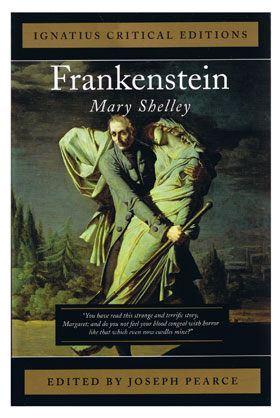
I own multiple copies of Frankenstein and even a few other books. I love Frankenstein and I need more copies of it, so I can have a copy of the book in every part of the house. Most multiple copies of books are by accident but when it comes to Frankenstein it was intentional.

I’m sure I can keep going with my confessions but I think I will stop with those ten. I would love to know what you would confess about your reading habits.