Tag: science fiction

Top 5 Sci-Fi Recommendations from the 60’s

Posted June 29, 2012 by Michael @ Knowledge Lost in Top 5 / 0 Comments

I wanted to do something different for my next top five post and I was thinking about what genres I could probably do but I thought why not take it one step further. So I thought I might focus more on the pulp sci-fi genre and take it a little further than that with the addition of psychological science fiction novels. So here is my list of the top five Science Fiction recommendations from the 1960’s.

5. Dune by Frank Herbert (1965)
Far in the future, two powerful families are locked in a bitter feud; this classic series is not only a great example of a space opera but this book has some interesting political aspects as well.

4. A Wrinkle in Time by Madeleine L’Engle (1962)
This fantastical world has elements of time travel, philosophy and religion. For a children’s book, this really has a whole load to offer and can be easy to read but complex to diagnose.

3. The Moon is a Harsh Mistress by Robert A. Heinlein (1966)
I have nothing bad to say about this book; The Moon is a Harsh Mistress is a sci-fi masterpiece.  Without giving too much away this book has a strong political message but done in such a way that the story and climax is never effected.

2. The Man in the High Castle by Philip K. Dick (1962)
Of course there was always going to be a Philip K. Dick novel here, the man is the master of writing sci-fi that will keep you thinking well after the book has ended. This book will challenge your views on society by showing what life could be like if the war turned out differently.

1. Slaughterhouse-Five by Kurt Vonnegut (1969)
The whole story just has too many layers to try to explain, this was a book that just grows on you. It really highlights the effects of war on the survivors and what could be considered schizophrenia.

I would love to know what others would recommend when it comes to 1960’s sci-fi or even just psychological science fiction.


We by Yevgeny Zamyatin

Posted June 10, 2012 by Michael @ Knowledge Lost in Classic, Dystopia, Speculative Fiction / 0 Comments

We by Yevgeny ZamyatinTitle: We (Goodreads)
Author: Yevgeny Zamyatin
Translator: Clarence Brown
Published: Penguin, 1921
Pages: 226
Genres: Classic, Dystopia, Speculative Fiction
My Copy: Library Book

Buy: AmazonBook Depository (or visit your local Indie bookstore)

Yevgeny Zamyatin wrote his seminal dystopian novel We (1921) based on his personal experiences during the two Russian revolutions (1905 and 1917) and the first World War. The book ended influencing dystopian authors like Aldous Huxley and George Orwell. This book not only influenced the dystopian genre but could also be the influence towards the post-apocalyptic genre as this was set in a world where all was wiped out but “0.2% of the earth’s population”.  The book is set in ‘One State’ which has been organised to be a workers’ paradise; everything has to work like clockwork and everything is based on logic and mathematics. This society is heavily surveillanced, has martial law and is heavily censored; a totalitarian world.

The protagonist, D-503, is an engineer who begins writing a journal (much like in 1984) to document Integral, the spaceship being built to invade other planets. D-503 is under constant surveillance by the Bureau of Guardians (the secret police) as is everyone else. He is assigned a lover O-90, but ends up having an uncontrollable attraction to I-330. This leads to nightmares and furthermore into what could be considered a mental illness. I-330 reveals to D-503 a world that was previously unknown to him. Will he hang onto hope or will reason get the better of him?

We was an impressive novel; not only with the themes that it explores but also with the technology and the simple fact that it was years and years ahead of its time. While some say We was released in 1920 and others 1921, there is no denying that, because of the subject matter, this was an impressive piece of literature. If it wasn’t for this book we may never of been able to enjoy Aldous Huxley’s Brave New World (1932), George Orwell’s Nineteen Eighty-Four (1949) or even Kurt Vonnegut’s Player Piano (1952). By today’s standards this book would be overlooked but something innovative and so complex to be written so long ago makes this worth a read.


Reading Cycles

Posted June 3, 2012 by Michael @ Knowledge Lost in Literature / 0 Comments

Have you ever noticed that you read in cycles? I have; I’ve found that I tend to get entrenched with an author at times but most of the time it with genres. While I like to say I read anything and everything, I know this is not true.  I do find it interesting to look over my reading history and see just how it progresses.

I’ve said it before and most people already know that I only started reading in the middle of 2009 and while it was a slow start I gradually got better and better at reading that now I’m aiming for 100 books a year. While I would like to talk about reading challenges sometime in the future, for now I want to look at my reading cycle. I call it a cycle because I know that eventually I will go back to these genres and immerse myself with them again and again.

While I often just read on a whim, when I do an overall look at my reading habits the cycle looks like this;

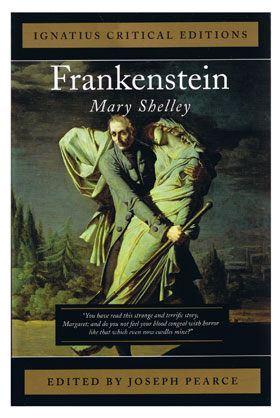
  • Classics – My reading started with Frankenstein and I read a lot of classics as a way to catch up on the book I’ve missed out on. At the same time I was also trying to catch up on the Dexter series by Jeff Lindsey.
  • 1001 Books to Read Before You Die – when I discovered this list of books, I set out to read books from this list as a good way to try out genres and styles with the knowledge that the books must be good because they made the 1001 list.
  • Sci-Fi – I’m not sure why I moved onto Sci-Fi, but there were so many books that looked interesting in this genre that it felt like the natural progression.
  • Mystery – I have a love for the macabre and crime that it wasn’t much of a surprise that I begin reading a lot of books in this genre.
  • Hard-Boiled/Noir – I finally found the style and genre in the mystery/crime genre that I like the most. Hard-Boiled and Noir will always have a special place in my heart. I love the era and the style of these novels.
  • YA – I started trying out YA because of this blog post about What is Wrong with Dark YA Novels and during the time I found my favourite YA author John Green, which meant I needed to read all of his novels (still have one to read) plus other novels that are supposedly similar to his writing style.
  • Literary Fiction – I often wonder if this was a result of my book blog or just because I wanted to read something with a little more literary merit after reading so much YA. But now it feels like I’m reading so many literary novels.

I don’t know where my reading will go from here but feel free to make a prediction. I’m happy to let my reading take me where ever it wants to go. I’m happy with where it has taken me so far. I would love to know if other people have reading cycles and what they are.


The Need to Make Speculative Fiction a Genre

Posted May 25, 2012 by Michael @ Knowledge Lost in Literature, Speculative Fiction / 0 Comments

twenty thousandRecently in the book club, I started a conversation on the difference between speculative fiction and science fiction, which maybe was met with a little bit of confusion but I think that was mainly due to people thinking of speculative fiction as an umbrella team that covers science fiction, fantasy, horror, supernatural fiction and more genres. This is correct but I want to talk about Speculative fiction as a genre for now.

While many people thing of speculative fiction as encompassing the more fantastical fiction genres, I would like to see a shift away from this definition and more towards the genre that Margret Atwood has been fighting for.  I think she said it best when she defined the differences between the two as:

“What I mean by “science fiction” is those books that descend from HG Wells’s The War of the Worlds, which treats of an invasion by tentacled Martians shot to Earth in metal canisters – things that could not possibly happen – whereas, for me, “speculative fiction” means plots that descend from Jules Verne’s books about submarines and balloon travel and such – things that really could happen but just hadn’t completely happened when the authors wrote the books.” 

I think there is a real need to separating the two as some books that are classed as science fiction don’t really fit into the general conception of sci-fi. I’m talking about books like George Orwell’s 1984, Jules Verne’s Twenty Thousand Leagues under the Sea and even Margaret Atwood’s Handmaid’s Tale.

This brings me to my point, and an interesting problem. While it would be nice to separate the two genres so that people don’t get the wrong impression of a book being classed as Science Fiction; how do we choose which goes where. Take Jules Verne as an example. At the time of his writing, these books would definitely be considered as science fiction, but with the progression of time, most of the technology in Verne’s novels have been realised; making the books speculative fiction. So how do we class these books, do we make them science fiction until the technology catches up or do we just class books as speculative fiction if there is a possibility that these events could actually happen? I would love to hear people’s thoughts on this.


Confessions of a Reader

Posted May 4, 2012 by Michael @ Knowledge Lost in Literature / 6 Comments

While most people know my story, I wasn’t much of a reader until a few years ago when something clicked and I started reading and wanting to read almost everything in sight. I’ve been playing catch up with everyone else for the past few years. While I claim to be a bibliophile, I’ve still got a lot to catch up on. My name is Michael and these are by reading confessions:

I haven’t borrowed a book from the library in about a year While I love libraries and my local librarians are awesome people, I think I like books too much to borrow them. I don’t think I would want to return them. Plus I’m now more of an e-reader and still waiting for a digital local library.

Short story collections often bore me: While it’s great to read some quick stories, when reading a whole book full of short stories – especially on the one topic – it often gets boring and becomes a struggle. I think the fact that I read it straight through instead of a little at a time is my main problem.

I still groan at the thought of reading some genres: While I do try to keep an open mind to new and recommended book, I tend to avoid or put off reading some genres. I’m not sure if this is simply because I haven’t experienced enough good books in these genres but fantasy, magic realism, romance and paranormal romance novels never seem appealing.

Large books often scare me:  I will try to read them but I don’t like the idea of investing in a long story when I can read two or three books instead. I’ve written a post previously about this same issue.

I’ve never read Jane Austin:  I probably should. I know she is one of the most famous writers but I have so many other books to read and none of her books really interest me.

I read literary books with the hope to look cool: Even though I’ve realised that I’ve enjoyed most of them. My main motivations for reading books like 1Q84 by Haruki Murakami, Extremely Loud and Incredibly Close by Jonathan Safran Foer, A Visit from the Goon Squad by Jennifer Egan and The Shipping News by Annie Proulx in an effort to look more like a literary elitist.

I rarely complete a book series: I can only think of two book series that I’ve read completely through, most of the time I read one of the books just to test the series out and move onto more interesting novels. I haven’t finished The Hunger Game series and I only read the first two books from the Song of Ice and Fire series to keep in front of the Game of Thrones TV series.

Audiobooks have replaced my music in the car and while I do work or exercise. I like being able to listen through a novel during those times where I’m doing mundane tasks. I often have an audiobook and an ebook on the go at the same time. It’s surprisingly easy to read two books at the same times if one of them is an audiobook.

I’m addicted to Goodreads: This is an effect of my reading and a need to keep a record of all the books I’ve read and want to read. I’m now part of a few groups on Goodreads and spend most of my work day on the site.

I own multiple copies of Frankenstein and even a few other books. I love Frankenstein and I need more copies of it, so I can have a copy of the book in every part of the house. Most multiple copies of books are by accident but when it comes to Frankenstein it was intentional.

I’m sure I can keep going with my confessions but I think I will stop with those ten. I would love to know what you would confess about your reading habits.


Light Reading?

Posted April 27, 2012 by Michael @ Knowledge Lost in Literature / 2 Comments

Recently my mother complained about my taste in books, calling them difficult or weird books to read. This led to her saying that she wouldn’t trust me to recommend her a book because she wants light and frivolous books. I’ve recommended her two books in the past; one was The Shadow of the Wind by Carlos Ruiz Zafón which was not really light or frivolous but it is just a brilliant story and it has something for everyone in it; everyone except my mother. The other book was a lot lighter and easier to read, it was the exciting debut novel, S.J. Watson’s Before I Go To Sleep; which she didn’t like either. So what do I recommend to someone that doesn’t want to think or feel any sad thoughts?
Light reading is an interesting concept. While some people read too many romance novels that it can’t be healthy (Yes, you know who you are but at least you try my book recommendations), others turn to fantasy, science fiction and thrillers in the hopes to escape reality. Everyone has a different concept of light reading. For me; I think I do a lot of light reading but my concept of light reading normally involves pulp fiction or a dark thriller. Then again I seem to enjoy reading all types of books and find great pleasure in reading literary fiction, classics and others books people might think isn’t light.

Which brings me to an interesting article, found on Book Riot about The Problems of Reading for Pleasure, which talks about people’s favourite books and how they are never the type of books they actually read. The author of this article tries to understand why crime and romance novels are so popular but they never seem to on people’s favourite books list. Also he mentions the fact that maybe diversity in reading will lead to a richer and more diverse reading life. I love this article because it pleases the book snob in me and it also raises a very interesting point.

While I hope people are willing to try new genres and willing to listen to recommendations from fellow bibliophiles, I wonder; do people know a reader like my mother? What do you recommend and do you secretly try to help expand their minds with great literature that may also be light and enjoyable for the reader.

I thought about this for a long time and I think I’ve found some books I would recommend to my mother;

  • Looking for Alaska by John Green
  • The Night Circus by Erin Morgenstern
  • The Curious Incident of the Dog in the Night-Time by Mark Haddon

The Hunger Games: The Book vs The Movie

Posted April 22, 2012 by Michael @ Knowledge Lost in Young Adult / 3 Comments

Normally I would stand by a simple truth; “The book is always better than the movie” but that is not always true. In the case of The Hunger Games, I’m not going to say the book is better than the movie.   I think they were both great but I can’t pick one over the other. If you haven’t been living under a rock, you would have heard of this book and the movie adaptation but just in case you haven’t, let me quickly sum it up. The Hunger Games is the story of a 16 year old girl that takes the place of her younger sister to compete in the annual televised event ‘The Hunger Games’. This is an event where a young boy and girl are called up randomly to participate in a fight to the death for survival for the entertainment of the rich and powerful.

Katniss is a strong character, with all the normal awkwardness you would expect from a teenager; having to deal with love, death and loneliness in this dystopian world that she lives in. But in the book it tends to focus a little too much on the cutesy teenage girl aspect and less on the darkness of her situation. The movie does have this same element but a lot of this has been cut down to make room for the main plot line.  When it comes to the violence, the book seems more violent and the movie felt a little anti climatic at the end. Also I’ve found in the movie the tributes were very two dimensional and very annoying but when reading the book I didn’t notice this at all. Capital’s fashion was terrible in the movie and I was glad I didn’t have to be subjected to seeing it while reading the book. In the end, the movie slightly departs from the book but it really sets up the next movie (If it gets made) really well.

While I’m talking about this movie, I want to know what was with all the racism with the twelve year old from Division 11? In the book it mentions she had dark skin but people seemed so shocked when in the movie she turned out to be an African American. It shouldn’t matter what colour her skin was all that should matter is that Amandla Stenberg played the role perfectly.

The faults I had with the movie balanced out my problems with the book. I don’t think I can pick one over the other. I’m interested in seeing how the series plays out as a movie adaptation but at the same time I don’t have much of an interest to continue the series. I think as a stand-alone book, it’s fantastic; but if I try to predict the rest of the series and all I can see are love-triangles, fighting authority and a lot more romance. If this isn’t the case, I might read the other books; but at the moment I just think it works better as a single story. Problem is, if they are making the movies I feel inclined to read the book before seeing the movie.


My Search for Good Steampunk Literature

Posted April 12, 2012 by Michael @ Knowledge Lost in Literature / 7 Comments

Steampunk and literature is an odd combination and I’ve often found it hard to find decent examples of this genre. It has gotten to the point where it is easier to look for the genre Alternate History instead of trying to find good Steampunk that isn’t the generic mass produced Young Adult novels. I’m not saying all Steampunk or YA novels are mass produced rubbish but when I look at the most popular Steampunk list on Goodreads I find the top ten are pretty much 4 different YA book series;

  • Parasol Protectorate series by Gail Carriger
  • Leviathan series by Scott Westerfeld
  • The Clockwork Century series by Cherie Priest
  • The Infernal Devices series by Cassandra Clare

I’ve not read many books from these series but I tend to think of those books are either Paranormal Fiction or Fantasy with very small elements of Steampunk. I know this genre is hard to categorise because it often features elements of science fiction, fantasy, alternate history, horror, and paranormal but from a literary point of view it’s hard to find to find exceptional novels in this genre. Often this genre is generalised as Victorian alternative history featuring anachronistic technology, or futuristic innovations.

So if we leave out the obvious influences, such as Jules Verne, H.G. Wells and even Mary Shelley are there any Steampunk novels that a wannabe literary snob like me would consider worthy? I can only think of two.

The Difference Engine by William Gibson & Bruce Sterling

Often considered one of the first Steampunk novels this had pretty much everything  I want in a Steampunk novel; the Victorian/Sci-Fi mix worked really well and it was nice to read a book with one of my heroes, Lord Byron, in it. The book follows a world changing with the invention of a mechanical and analytical computer. The book focuses not only on the technological boost but also the social change that come with it. Although at times it did drag on a little, this is definitely a recommended read for someone interested in getting a feel for the Steampunk genre.

Angelmaker by Nick Harkaway

Having recently mentioning this book in my trending books post, I thought Imight read this book before everyone else does. I’m glad I did. I hope this book gets read by many people; it has so much to offer. Angelmaker is a Steampunk adventure unlike anything I’ve read before, featuring a mystery involving Joe Spork the son of a gangster, a spy and his quest to stop the evil villain Shem Shem Tsien and his doomsday device. While this book  may feel more like a plot for a Bond movie the writing is what makes this book so great; while many people compare the style to Charles Dickens, I think that it was the Victorian writing style that made this book such a standout.

I’m interested in the Steampunk genre, so I would love to know what people think about it and what they would recommend to others. I will continue my search from great books,

even in the Steampunk genre and I hope to never rule out a popular YA books as good literature.


A Look Back at 2010

Posted January 7, 2011 by Michael @ Knowledge Lost in Writing / 0 Comments

With 2010 now behind us, I thought it was time to review some of my favourite posts and book of the year. I’ve been neglecting my blogging a little, as I’ve been focusing on my reading (ended up reading a total 87 books for the year). I’m hoping 2011 will be different; currently aiming for one post a week.

Blog Posts

10. Trying to Understand Existentialism

9. Twin Peaks and Dream Interpretations

8.  Five Books That Changed My Life

7. René Magritte’s The Lovers

6. My Goals for Knowledge Lost

5. Poetic Shock

4. Evolution of the English Language

3. Education Vs. Passion

2. Did Pop Culture Destroy Literature?

1. Nec Spe, Nec Metu (Without Hope, Without Fear)

Favourite Books Read in 2010

10. Fatherland by Robert Harris

9. The Big Sleep by Raymond Chandler

8. Sophie’s World by Jostein Gaarder

7. Animal Farm by George Orwell

6. Alice’s Adventures in Wonderland by Lewis Carroll

5. The Black Dahlia by James Ellroy

4. Maus by Art Spiegelman

3. On Writing by Stephen King

2. Brave New World by Aldous Huxley

1. Wuthering Heights by Emily Brontë


The Man in the High Castle by Philip K. Dick

Posted August 11, 2010 by Michael @ Knowledge Lost in Classic, Science Fiction / 0 Comments

The Man in the High Castle by Philip K. DickTitle: The Man in the High Castle (Goodreads)
Author: Philip K. Dick
Published: Vintage, 1962
Pages: 259
Genres: Classic, Science Fiction
My Copy: Personal Copy

Buy: Amazon (or visit your local Indie bookstore)

For those who haven’t read this month’s Book club book, the alternate reality classic The Man in the High Castle by Philip K Dick, I will try not to give away too much of the story. Most of you are aware of the basic plot outline, but I will just give you a quick overview before talking about the interesting concepts I found within the book. Set in 1962, 14 years after a longer World War II, life is under totalitarian Fascist imperialism as the war was won by Imperial Japan and Nazi Germany. Having divided the world the Axis Powers are now conducting intrigues against each other in North America.

Alternate Reality

With Japan and Germany being in power, the world is a much different place; more of a dystopian society, where everyone is considered racially superior to the Americans. The last remaining Jews are in hiding and continually being hunted down. The book actually deals with justice and injustice; gender and power; the shame of cultural inferiority and identity; and the effects of fascism and racism upon culture.

Metafiction

The Man in the High Castle focuses the story around a popular and banned novel written by Hawthorne Abendsen (The Man in the High Castle). The book entitled The Grasshopper Lies Heavy portrays an alternate reality where  Japan and Germany lost the war and America and England become the victors. Changing racialist-cultural tensions and creating a liberal, democratic, capitalist society.

I Ching

In this novel the I Ching (Book of Changes) is often consulted by the characters as an oracle. I Ching is an ancient Chinese book of divination and was used by Philip K Dick to determine the plot particulars. In two separate interviews Philip K Dick has said;

“I started with nothing but the name, Mister Tagomi, written on a scrap of paper, no other notes. I had been reading a lot of Oriental philosophy, reading a lot of Zen Buddhism, reading the I Ching. That was the Marin County zeitgeist, at that point; Zen Buddhism and the I Ching. I just started right out and kept on trucking.”

“In the event, he blamed the I Ching for plot incidents he disliked: “When it came to close down the novel, the I Ching had no more to say. So, there’s no real ending on it. I like to regard it as an open ending.”

Philip K Dick’s classic science fiction novel has a lot of interesting aspects to it. I think it could easily be one of those books you could spend hours discussing all the little characteristics to it. Another book that challenges your views on society by showing what life could be like if the war turned out differently. Reflected above were just the major aspects to this book.