Tag: The Bell Jar

Mini Review – Books About Books

Posted September 17, 2015 by Michael @ Knowledge Lost in Non-Fiction / 4 Comments

As most people are aware, I am a big fan about books about books. I am fascinated about people’s journeys and relationships with books. As a big fan of books, I like to learn about how people view and write about books; I use this as a way to inspire me to improve as well as give me some new ideas on how to approach this topic. Sadly I am so far behind in my book reviewing so I need to resort to some mini reviews. However it is a good chance to talk about four very different books about books in one hit.
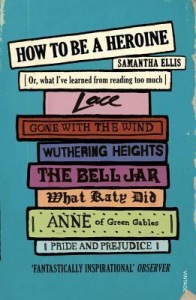
Mini Review – Books About BooksTitle: How To Be a Heroine (Goodreads)
Author: Samantha Ellis
Published: Chatto & Windus, 2014
Pages: 272
Genres: Non-Fiction
My Copy: Library Book

Buy: AmazonBook DepositoryKindle (or visit your local Indie bookstore)

Samantha Ellis is a playwright and journalist who decided to write about the woman in fiction that have influenced her life. The subtitle to How to be a Heroine is “…What I’ve Learned from Reading too Much” and this really encapsulates what Ellis is doing within the book. This is less of a bookish memoir or literary criticism and more of a revisit to some of her favourite books throughout her life and talking about it through the lens of feminism. This book includes references to The Little Mermaid, Anne of Green Gables, Pride and Prejudice, The Bell Jar and Wuthering Heights.

While this is a very important topic to discuss, I felt a bit of a disconnect to the book in general. There was times where I felt that Samantha Ellis was being dismissive and cynical towards literary criticism. Because I am fascinated and passionate about learning literary theory, I felt that her feelings towards the topic really took me away from truly enjoying the book. I did however enjoy the way Ellis analysed the good and bad qualities about each story and told the story about her relationship with the books mentioned. I think if it was not for that one thing that bugged me about How to be a Heroine I might have had a completely different experience while reading this book.
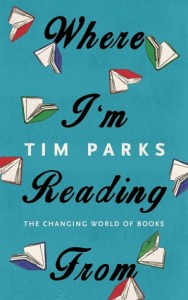

Mini Review – Books About BooksTitle: Where I'm Reading From: The Changing World of Books (Goodreads)
Author: Tim Parks
Published: Harvill Secker, 2014
Pages: 244
Genres: Non-Fiction
My Copy: Library Book

Buy: AmazonBook DepositoryKindle (or visit your local Indie bookstore)

Tim Parks is a translator, critic and even a professor of literature, so when I discovered his book Where I’m Reading From, I was excited to see what he had to say on the topic. I went into this book thinking it was a bookish memoir but found out this was a collection of essays he had written for The New York Review of Books. Some of the topics discussed in this book include, Why we read, Should you finish every book you start?, How is the Nobel Prize like the World Cup?, Why do you hate the book your friend likes? and so many more topics. I was very interested in what he had to say about translations, and the concept of how we are reading a second-hand story.

There is so much within Where I’m Reading From that I did not agree with, but I still found it interesting to read someone else’s perspective on the topics. It really got more thinking about the state of literature and the bureaucracy behind the industry and awards in far greater detail. In a lot of ways this book reminded me of What Is Literature? by Jean-Paul Sartre, although Tim Parks’ book was a lot more accessible and did not make me feel stupid. I also did a video review for this book on my YouTube channel.

Mini Review – Books About BooksTitle: Postmodernism: A Very Short Introduction (Goodreads)
Author: Christopher Butler
Series: A Very Short Introduction #74
Published: Oxford University Press, 2003
Pages: 144
Genres: Non-Fiction
My Copy: Audiobook

Buy: AmazonBook DepositoryKindle (or visit your local Indie bookstore)

I like to think I am a fan of post-modern literature, but ask me to explain it, I will have a hard time. Post-modernism is often referred to when talking about art, films, architecture, music and literature but what does it actually mean? I picked up Postmodernism: A Very Short Introduction in the hopes of understand it a little more but I still do not think I can explain it. For me, I view post-modernism, as a reaction to modernism which seemed to reject past thinking in favour of innovations like stream-of-consciousness. Post-modernism still found value in the past techniques and theories and found interesting ways to use them in new and exciting ways. Post-modernism wanted to invoke thought and criticism; within its literature you might find something bizarre or weird that you just need to talk about.

I know my view on the topic is very broad and it is far more complex but that is what I love about post-modern literature. I want books that force me to think critically about what I am reading and post-modernism forces you to do just that. In Postmodernism: A Very Short Introduction, Christopher Butler tries to equip us with the basic ideas behind post-modernism to allow us to recognise and understand the theories more easily. This is still a very complex movement but I am starting to understand why I love it. This is a good starting point, if you are actually interested in the critical thinking side of this movement.


Mini Review – Books About BooksTitle: My Reading Life (Goodreads)
Author: Bob Carr
Published: Penguin, 2008
Pages: 432
Genres: Non-Fiction
My Copy: Library Book

Buy: AmazonBook Depository (or visit your local Indie bookstore)

Bob Carr is a former Australian politician and member of the Labour Party; during his career he was a Senator, Premier of New South Wales and the Minister for Foreign Affairs. My Reading Life is a literary memoir about the books he has read and have influenced him; this was written during a period where he was not in politics. Carr divides the book into topics, focusing mainly on the political, which is obviously a reflection of his interests.

One of the things I did not like about this book was the way Bob Carr kept his political face on throughout the entire thing. I would have liked him to drop his public persona and just have a more real conversation about books. I understand that he was still political and he became the Minister of Foreign Affairs after publishing this but I would have preferred a more honest look at literature. I do hope that no Russian’s read this book after he become the Minister of Foreign Affairs, because to me it felt like Carr liked Russian lit but hated everything else about this country. There was some interesting insights made within the book and overall a decent memoir, just a little too guarded.

Ariel by Sylvia Plath

Posted December 5, 2014 by Michael @ Knowledge Lost in Poetry / 0 Comments

Ariel by Sylvia PlathTitle: Ariel (Goodreads)
Author: Sylvia Plath
Published: Faber & Faber, 1965
Pages: 81
Genres: Poetry
My Copy: Library Book

Buy: AmazonBook Depository (or visit your local Indie bookstore)

It feels like Sylvia Plath’s life overshadowed her literary value; her autobiographical novel The Bell Jar was like a confessional and people tend to read it for all the juicy bits. Ariel is a collection of poems published posthumously, just a few years after her suicide. It is true that we have Plath to think for advancing the confessional poetry form and exploring topics previously taboo like suicide, mental illness and domestic abuse.

I would like to thank Meg Wolitzer’s book Belzhar for pushing me into reading more of Sylvia Plath. The book explores a struggling student that was sent to a private school that put her in a special English class. This class spent the semester journaling and reading Plath, most importantly The Bell Jar but also Ariel. That book made me want to re-read The Bell Jar which I loved but instead decided it was time to give her poetry a go.

However I am very aware that I don’t know how to review poetry let alone a whole collection, so this is more about my experience with this book. I feel like I am becoming a better reader but if you ask me to read out loud I am going to struggle. So I decided this is an issue I needed to work on and I read Ariel to my wife (she read some of it to me as well). This may seem like a romantic and intimate thing to do with your partner but Plath has a way of killing any sexy moods.

I loved the experience but I am struck with a sense that Sylvia Plath might have been a poor choice to begin with. She has a very strong sense of imagery and plays a lot with metaphors; some of which I picked up on but there was some stuff that went over my head. Poetry is meant to be read out aloud and I thought this would help with my understanding as well as develop my skills. However I found it extremely difficult to work out punctuation in these poems. Some sentences span over a few stanzas but my natural impulse was to pause after ever line.

Having said that, this was a wonderful experience and while the poems are often dark and depressing I am glad I shared this moment with my wife. Ariel kind of reminds me of those people on the internet that overshare about their lives and you can’t help but be glued to what they write even if it annoys you. Sometimes I think, that is too much information but Sylvia Plath seems to get to the heart of that raw emotion.

Sylvia Plath was an incredibly intelligent and complex woman; I can’t help being fascinated by her. I want to learn more about her life, and understand the emotion behind her writing. Take for example her poem “Daddy”; there is this anger toward her father as well as some holocaust imagery that I just want to understand. I am going to have to find a biography on Plath’s life because I think this places a big part in her writing. Can anyone recommend me a good biography?


Belzhar by Meg Wolitzer

Posted November 21, 2014 by Michael @ Knowledge Lost in Young Adult / 0 Comments

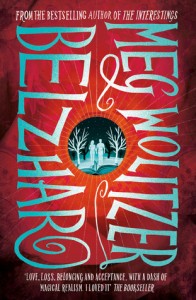
Belzhar by Meg WolitzerTitle: Belzhar (Goodreads)
Author: Meg Wolitzer
Published: Simon & Schuster, 2014
Pages: 266
Genres: Magical Realism, Young Adult
My Copy: ARC from Publisher

Buy: AmazonBook DepositoryKindle (or visit your local Indie bookstore)

Life isn’t fair; if it was, Jam Gallahue wouldn’t be shipped off to boarding school and her British boyfriend would still be alive. Belzhar tells the story of Jam, a damaged girl who was sent off to a therapeutic boarding school in Velmont called The Wooden Barn. There she was enrolled into a mysterious class called Special Topics in English where she was assigned books by Sylvia Path. Part of her homework included writing in a journal which magical sends her back into her memories to help her reclaim her past.

Jam whose real name is Jamaica is a damaged teenager; no one seems to understand how she feels and what she is going through. The same way Esther Greenwood felt within The Bell Jar. Belzhar is a psychological novel that explores the themes from Sylvia Plath’s writing in a modern day YA novel. While this book focuses on the damage that losing a boyfriend can have (especially if he dies) there was something far more scarring that just wasn’t dealt with. The protagonist got her name, Jamaica from the place her parents conceived her; I don’t know about you but I find that is far more disturbing than losing a loved one (not really).

The book takes this idea found in The Bell Jar that Jam and the other people in this class are vacuum sealed in a world no one else understands. The ideas from The Bell Jar such as depression, loneliness and suffering all play out within Meg Wolitzer’s novel in a really interesting way. This is a unique form of literary criticism; it allows the reader to get a fundamental understanding into The Bell Jar on a very basic level.

I have read a few YA novels recently and they all had a psychological element in it that I want to talk about but I do not want to spoil the plot (See review for We Are Liars soon). This makes it really difficult, because there is so much to talk about but I am very conscious about spoilers. One thing I will talk about is the magical realism thread within the book; Belzhar is the magical place they go to in their memories and relive life before things got messed up. It is an interesting way to dive into the past and deal with issues. I found it a unique way to explore the complexities of the mind via this very simple plot device.

I am not too often on-board with a magical realism thread but as I have found with Haruki Murakami it becomes a useful tool in exploring the mind. When we think about our brain, it does not conform to the laws that govern reality and the magical realism allows the author to work with that. The travels into Belzhar were just a different way to experience a flashback and I quickly accepted with the way Meg Wolitzer did that. I was a little worried when I started but I am glad I persisted.

Belzhar makes me want to revisit The Bell Jar which is a fantastic book if you have never read it. I think the biggest praise I can give Meg Wolitzer is for the loving tenderness she had towards Sylvia Plath and her writing. I have borrowed Ariel from the library to experience some of Plath’s poetry and Belzhar has left me with a renewed appreciation for this author.


How to Build a Girl by Caitlin Moran

Posted September 24, 2014 by Michael @ Knowledge Lost in Young Adult / 0 Comments

How to Build a Girl by Caitlin MoranTitle: How to Build a Girl (Goodreads)
Author: Caitlin Moran
Published: Harper Collins, 2014
Pages: 352
Genres: Young Adult
My Copy: ARC from Edelweiss

Buy: AmazonBook DepositoryKindle (or visit your local Indie bookstore)

Take to trip back to the 1990s, a time I am all too familiar with; the music was great but being a teenager was not all that it was cracked up to be. Johanna Morrigan is a fourteen year old who is unhappy with her life. That was until she decided to reinvent herself. By sixteen she was a sharp tongued goth, aspiring music journalist who went by the name Dolly Wilde (named after the socialite). How to Build a Girl is the debut novel by Caitlin Moran who is more popularly known for her views towards feminism in books like Moranthology and How to Be a Woman.

I will be honest; the only reason I picked up this book was because it was often described as The Bell Jar if it was written by Rizzo from Grease. I’m a fan of The Bell Jar and this was enough to get me curious about this novel. I can’t say I have ever been a fan of Caitlin Moran or her view points but I think her underlying message that no one should be judged for being who they are is something I can get behind.

Moran has made it clear that this is far from an autobiographical novel; her parents were never like Morrigan’s parents. However there is an element of this novel that probably reflects her teenage years. I think the teenage years are often a journey of self-discovery and reinvention and this was the main reason I wanted to read this novel.

It doesn’t matter if I agree with Johanna Morrigan’s choices and decisions; this was about her finding herself. The whole notion of self-discovery being similar to reinventing yourself is an interesting one and I enjoyed watching Dolly Wilde evolve into the person she wanted to be. Her parents and family often got in the way and tried to unintentionally (or maybe it was intentional) mould her personality. This was just an interesting journey to watch evolve.

I’m not going to talk about the feminist views within this book, it is not my place to agree or disagree. How to Build a Girl reminds me of the TV show Girls (or what I have seen of it) and if you are a fan of this show then maybe you will enjoy the novel. My biggest problem with the book was not with the feminist themes but with the writing itself; it never seemed to work for me and I felt like the intent was to shock rather than tell a good story. It is a shame, the premise is excellent and I could have enjoyed the book if more time was spent improving the proses and editing.

I wanted to love this book; the whole coming of age, self-discovery, and sexual awakening topic has always been an interesting one to me. This book started off with the best intentions but it lost its way, both in plot and writing. The rise and fall of Dolly Wilde (the character in this book, not Oscar Wilde’s niece) was worth reading but there is so much in the middle that could have been taken out and the novel would have ended up being less than a hundred pages. But these are my opinions; there are people that loved this book, I wasn’t one of them.


In Cold Blood by Truman Capote

Posted August 30, 2014 by Michael @ Knowledge Lost in Book of the Month, Non-Fiction / 0 Comments

In Cold Blood by Truman CapoteTitle: In Cold Blood (Goodreads)
Author: Truman Capote
Published: Penguin, 1965
Pages: 336
Genres: Non-Fiction
My Copy: Library Book

Buy: AmazonBook DepositoryKindle (or visit your local Indie bookstore)

In 1959 a farmer from Holcomb, Kansas was killed along with his wife and two of his four children by a couple of two-bit thieves. This brutal crime spawned a desperate search for the killers who left bloody footprints at the murder scene. From petty crime to mass murder, In Cold Blood tells the story from murder to the gallows where they were executed by hanging.

In the Truman Capote literary masterpiece, it is easy to consider In Cold Blood a crime novel; it has shades of pulp and southern gothic throughout the book. However this journalistic investigation has often been cited as the first and best example of the non-fiction genre known as true crime. While there have been true crime books before In Cold Blood, this book did redefine the genre. Capote likes to call his book a non-fiction novel which he defined in an interview with The New Your Times as “a narrative form that employed all techniques of fictional art, but was nevertheless immaculately factual”.

However this is not just a book about the brutal murder of the Clutter family; we also get a Capote’s depiction of rural America. Outside the details of the crime, the author paints a descriptive backdrop of Kansas, the way he sees it. Religion, masculinity, femininity, the nuclear family and small town communities all play a big part in developing the scene. When he talks about the crime, the reader gets to explore the psychological motivations of murder and awaiting execution.

There is the issue of mental illness that needs to be explored when talking about In Cold Blood. It is almost like Truman Capote wants to challenge the reader to consider if Perry and Dick suffered from an untreated mental illness. There are shade of delusional, depression, schizophrenia and a sociopathic personality that comes through when talking about these two people but as this is 1959 I expect no psychological consult or treatment were given to these men; the court rejected the request.

I expected a true crime book but I feel like In Cold Blood was trying to do something similar to One Flew Over the Cuckoo’s Nest by Ken Kesey and The Bell Jar by Sylvia Plath. I was very impressed with this book and I feel like Capote may have ruined true crime and even narrative non-fiction for the rest of the authors in these genres. Capote’s investigational skills and mastery over the written word is what makes this book a masterpiece.


ArmchairBEA 2014: Introduction and Literature

Posted May 26, 2014 by Michael @ Knowledge Lost in ArmchairBEA / 30 Comments

abea

This is my third year participating in the Armchair BEA event. While I am not an American I do like the opportunity to join with book bloggers around the world and talk about our favourite subject, books. I am sure most people know already but just in case; BEA is the Book Expo of America, held in New York, where people in the book industry of America get to be enticed with new books from publishers. There is an event now known as BookCon where book lovers can experience the same enticement, however they won’t get any diversity. Putting aside the problems with BookCon, I’m pleased to join all the fun with Armchair BEA. This is a virtual conference for the book bloggers that can’t make it to BEA. Over the next few days I will be joining in with this event and their daily blog post topic suggestions.

For the past two years I’ve been enjoying this event, it is a great way to meet new bloggers and show off your own book blog. As this is the first day of Armchair BEA I probably should move on to the topics for the day. Today we are introducing ourselves and talking about my favourite topic…literature. As a way of introduction Armchair BEA has provided ten questions and asks everyone to pick their favourite five and answer them.

Please tell us a little bit about yourself: Who are you? How long have you been blogging? Why did you get into blogging? Where in the world are you blogging from?

My name is Michael, I hail from North Queensland in Australia and I only became a reader in 2009. I started blogging not long after that over at Knowledge Lost as a way to sort my thoughts and explain what I had learnt along the way. I know I need to spend more time on that blog and I’m hoping to get back into it now that I’m forcing myself to write every day. I started Literary Exploration as a way to document my book journey and soon discovered I’m very passionate about books and book blogging. There is one thing I hate about book blogging but for the most part I really enjoy the whole experience.

Describe your blog in just one sentence. Then, list your social details — Twitter, Facebook, Instagram, etc. — so we can connect more online.

Literary Exploration is documentation of my bookish journey as I explore literature in all its forms.

You can normally find me on twitter: @knowledgelost or my blog @litexploration as well as Facebook, Instagram, sometimes Tumblr and Pinterest. I’m also very active on Goodreads (also check out the Literary Exploration Book Club), Literally and Booklikes.

What was your favourite book read last year? What’s your favourite book so far this year?

Highlights of 2013 include;

For more books check out my best of 2013 post

Highlights of 2014 (so far) include;

What is your favourite blogging resource?

One of the best investments I’ve made for my blog is the Ultimate Book Blogging Plugin. This one plugin has saved me a lot of time and makes my life so much easier. I can collect a lot of relevant information thanks to this plugin and it automatically updates my review index. It has a lot of cool features and I highly recommend it to all book bloggers. Of course you’ll all have to move to a self-hosted WordPress platform but that is a good idea anyway.

Spread the love by naming your favourite book blogs:

I’m always happy to recommend some great book blogs; here are some that I’m always happy to see updates from;

Time now to look at that all important topic of Literature: I’m a bit of a pretentious reader, so I’m always interested in reading books that are considered high literature. I’ve even set myself a life goal of reading the entire 1001 Books You Must Read Before You Die List, I might even try to review them all too. I find myself drawn to literary more as I become a better reader; there is something about the prose and structure that stands out. As a literary explorer I try not to entrench myself in just one genre, but luckily there is plenty of great literary genre novels out there. I don’t have to sacrifice quality in order to read genre fiction.

However there are so many classics out there that I still have to read and I feel bad for not having read books like Middlemarch, The Brothers Karamazov, The Woman in White, The House of Mirth and so on. I want to catch up on all these great novels and I think classics are an essential part of the reading journey. I recommend every reader try to read more classics and to help you along, I suggest joining something like The Classics Club is a great way to challenge yourself to more classics. I want to take to the conversation to the comments but I’d like to ask some questions of the readers to help the conversation along;

  • What is your favourite literary novel (in any genre)?
  • Which classic would you like to read but are dreading?
  • What genre do you spend most of you time reading?
  • What genres tend to scare you?
  • Finally, are there classics that just seem too hard and why?

ArmchairBEA is a virtual convention for book blogger who can’t attend Book Expo America and the Book Blogger Convention. Button by Sarah of Puss Reboots


Monthly Review – December 2013

Posted December 31, 2013 by Michael @ Knowledge Lost in Monthly Reading / 2 Comments

and then there were noneThis is the end of 2013 and what a great year we have had. Let’s have a quick look back at the year for the book club on Goodreads and our books of the months. For me some of the highlights included; The Bell Jar, The Strange Case of Dr. Jekyll and Mr Hyde, Lolita, Hard-Boiled Wonderland and the End of the World, The Fault in our Stars and The Shadow of the Wind. We seem to consistently get great books to read, including this month’s book And Then There Were None. I wasn’t sure what to expect, this was my first Agatha Christie and while I had some issues, I will read her again.

Next month we are reading an espionage novel, which will be Tinker, Tailor, Soldier, Spy by John le Carré. I’ve read this novel and really enjoyed it, so I’m excited to see what others think; the movie is pretty great too. I hope everyone had a great holiday period and look forward to the great things to come in 2014. If you’re not aware, the book discussion and everything else will be happening over on the Goodreads forums, so feel free to join in there.

This has also been a great year for this blog too, which spawned last year from the Goodreads book club. I originally hoped this would be a source for all things book club related but turned into a book journal of my life as a literary explorer. I’m glad it did turn into what it is today; I’ve had so much fun book blogging and sharing my bookish thoughts. For my favourite books of 2013, check out the post but I wanted to share some of my favourite posts.

As always this month lead me to discover some great books including The Explorer and The Echo by James Smythe, Maddaddam by Margaret Atwood, Careless People by Sarah Churchwell and a reread of Frankenstein. I thought maybe James Smythe (he made my top books of 2013 list twice) or even Frankenstein would be the highlights of the month but it was actually a non-fiction book; 84 Charing Cross Road by Helene Hanff. It’s only a collection of letters between a book lover and a second-hand book store but for any book lover, it reads like a love letter to books.

Read More


My Top Five Reads of 2013

Posted December 30, 2013 by Michael @ Knowledge Lost in Top 5 / 4 Comments

As 2013 comes to an end, it is time to do that “Best of” post. I know it’s one of those posts you are either sick of or love seeing but I have to share my favourites. It’s been a great year; over 160 books read, some amazing books and some painful ones (see Twilight and New Moon). Like last year I’m going to split my list into “Best of 2013 (released this year)” and all other novels, but as I want to focus more on Non-Fiction too I’m adding “Best Non-Fiction of 2013” to the mix.

Top Five Reads Released in 2013
5. The Unknowns by Gabriel Roth
4. Tenth of December by George Saunders
3. The Explorer by James Smythe
2. A Constellation of Vital Phenomena by Anthony Marra
1. The Machine by James Smythe

Top Five Reads in 2013
5. The People of Forever Are Not Afraid by Shani Boianjiu
4. The Virgin Suicides by Jeffrey Eugenides
3. Pride and Prejudice by Jane Austen
2. The Bell Jar by Sylvia Plath
1. If on a Winter’s Night a Traveler by Italo Calvino

Top 5 Non-Fiction Reads in 2013
5. The Monsters: Mary Shelley and the Curse of Frankenstein by Dorothy & Thomas Hoobler
4. Paddle Your Own Canoe: One Man’s Fundamentals for Delicious Living by Nick Offerman
3. Careless People: Murder, Mayhem and the Invention of The Great Gatsby by Sarah Churchwell
2. Perv: The Sexual Deviant in All of Us by Jesse Bering
1. 84 Charing Cross Road by Helene Hanff

Now it’s your turn to let me know of your favourite books, the new releases and the older books. It doesn’t matter; just what you discovered and loved.


The Bell Jar by Sylvia Plath

Posted October 30, 2013 by Michael @ Knowledge Lost in Book of the Month, Classic / 7 Comments

The Bell Jar by Sylvia PlathTitle: The Bell Jar (Goodreads)
Author: Sylvia Plath
Published: Harper Collins, 1963
Pages: 213
Genres: Classic
My Copy: Audiobook

Buy: AmazonKindle (or visit your local Indie bookstore)

Esther Greenwood is a young woman from Boston who gains an internship at a prominent women’s magazine in New York City. We follow her personal life and her decline into depression, attempting suicide to being committed into an asylum. We see the bad treatment as well as the good, all the way up to her attempt to re-enter the world.

This is the seminal semi-autobiographical novel of Sylvia Plath and I’m so glad that I’ve finally read The Bell Jar. I want to say she is the female version of Charles Bukowski (even though I’ve only read Factotum); there are differences but I feel like the voice and style feel very similar. Originally published under the pseudonym Victoria Lucas to protect identities of characters she took liberties with, but more  the fact it parallels Plath’s own experiences.

A bell jar is an inverted glass jar that is normally air tight used to display objects for observation, normally for scientific curiosity. For Esther the bell jar is a symbol of madness, when gripped with depression she feels like she is stuck in a jar with no real perspective to the outside world. It prevents her from  making any real connections with people and sometimes she feels like she is on display (especially when she was hospitalised and received all those visitors).

What was interesting for me is that to me it never really felt like Esther Greenwood suffered from depression to begin with. I’m not saying she wasn’t really suffering but for me I think the idea was forced on her by everyone else, just because her thoughts were a little macabre and she was a little different. Almost like she was forced into her descent, because she was a little different to the norm.

Esther has an obsession with death; we get that from the very start with her fascination of newspaper headlines about executions, suicide and death. There is also the blood motif  throughout the book; blood normally represents life but the constant bleeding would point towards death. When she starts to think about killing herself she talks about it at great lengths and even practices slashing her own wrists.

I think this is a novel about the regression into madness, the life experiences that normally have a positive on a person’s live, but for Esther these were partly responsible of her descent. Romance, success in education, finding work and marriage proposals tend to upset or disorient her and in the end instead of finding reasons to live she finds how different she is to others and this cements her choice to die.

Then the book looks into the world of treating mental illness, the good and the bad. This is where the book moves into the territory similar to One Flew over the Cuckoo’s Nest, in particular a look at 1950 psychiatric treatments. In this part there seems to be three treatment types used within the book; talking, injections of insulin and then the dreaded electroshock therapy. The treatment is meant to clear the mind entirely and after her first electroshock treatment Esther was unable to think about knives. The treatment was doing more damage than good, especially to her intellect.

I went into this book thinking there might have been some psychological elements but  that this was mainly a novel about feminism. It is to some extent but what I got was so much more; I was really impressed with this novel and really enjoyed the journey it took me. I feel like kicking myself for not reading this sooner. A novel about a protagonist slipping into depression is normally right up my alley but I’m a little perplexed about the ending. Overall this is a masterpiece and well worth reading.