Tag: The Trial

Distracted by Other Books

Posted March 1, 2018 by Michael @ Knowledge Lost in Monthly Reading / 6 Comments

My Thoughts and Reading in February 2018

My reading in February started off with the amazing The Unwomanly Face of War. It is a book I have not been able to get out of my mind. My wife often gets an intense hatred toward men and I think this is the first time I have come close to understanding how she fully feels. I understand how she would be angry, you just need to look at the news to see all the stupid or terrible actions been taken by men. However while reading The Unwomanly Face of War I got very angry toward men. Especially when one man told Svetlana Alexievich that war was ‘man business’ and she should write about men in war (because we do not have enough of those books). This was a fascinating collection of interviews of the woman and their involvement in war. It highlights the bravery of these women but what really shone through was just the way men reacted and their contradictory nature. The male ego is so fragile.

I have been a fan of Alexievich and but I will admit I am never impressed with these translators. I was reluctant to get The Unwomanly Face of War; luckily I did not let the translators stop me. Translating is such an art form and there are so many different thoughts on the topic; for me I prefer a translator to aim to retain the beauty of the text over complete accuracy. Other people have different opinions and I think it is important to find what works for you; especially if there are other options. One day I might have the opportunity to re-read The Unwomanly Face of War with a new translator, but until then, I take what I can get. With Svetlana Alexievich, I do not want to wait for a new translator. Speaking of which, I still need to get myself a copy of The Odyssey, translated by Emily Wilson. The Odyssey has been translated heaps of times, but I believe this is the first time it was translated by a woman. I am curious to see how this epic reads without the male gaze and I hear nothing but great things about this translation.

I finally read my first Émile Zola novel; A Love Story which is the eighth book in the Les Rougon-Macquart series. This might not have been the best place to start but what can I say, I love Oxford World Classics, and could not pass up the opportunity to work with them and read some Zola. This was a joy to read and there will be so much more Zola in my future; Thérèse Raquin sits on my shelves waiting. While I do love to receive books in the mail, I do not often review ARCs, simply because I have enough to read. My instinct is to reject any offers to review a book, unless it is a book I know I want to read. In the past I found it difficult to get the balance right, so now it is a rare occurrence. I hope to work with Oxford University Press more in the future but do not expect to see many reviews for upcoming releases. If you look at the books I talk about, it is rare to see a new release.

There are some exceptions, for example, if an author like Julian Barnes releases a new novel, or it is a book club book. This is why The Only Story and Mythos by Stephen Fry was on my reading list for this month. I love what I have read from Barnes and still more to go. As for Mythos, it felt more like Greek mythology for dummies. Not that there is anything wrong with that, it just made me want to read those classics; especially Metamorphoses by Ovid (yes, I know he is a Roman and not Greek), or maybe I should read The Myth of Sisyphus by Albert Camus. I really need to read both books at some point but reading Mythos only served to remind me how much I need to read from the Greeks and Romans.

This month was the first book club meeting of 2018. It was me and fifteen woman. Sadly I am the only male that turns up to book club; there have been others in the past but they never last long. It did feel very crowded for a book club meeting and I feel like it was too many. Luckily, I suspect that a lot of the new people came as part of their New Year’s resolution, so it is unlikely they will return in March. I am at book club to step out of my comfort zone and I think the books picked do just that. I would not have picked up Mythos on my own; I have enough books on my shelves to read without picking up a retelling of Greek mythology.

There are so many books I need to read, I always feel like I am playing catch up. Luckily I do not need to go through my shelves and do a major cull…yet. While I was starting to get use to the idea of a major move, at this point, it does not look like it is going to happen. I have startied culling my shelves but nothing major yet. There must be twenty or thirty books leaving my shelves this month, but only a few were unread books.

One of the biggest advantages of quitting BookTube, is the fact that I do not have to try and pronounce a name like László Krasznahorkai. It still annoys me that I mispronounced Michel Houellebecq in a video. For an Australian that only speaks English, there are so many authors I read that I am yet to learn how to pronounce. I normally look up how to pronounce the name before filming a video, but still have gotten it wrong. I got to read two novellas by László Krasznahorkai which was in the one collection. Sjón claimed this is the perfect starting place for Krasznahorkai in the blurb on the front but that was only part of the reason I started with The Last Wolf & Herman. In fact I do not know why I picked up this book first, I did have Satantango on my wishlist first. It must have been as a result of some of the bloggers I admire, either Tony at Messenger’s Booker or Stu at Winstonsdad’s Blog.

It is hard to remember why I put a book on my wishlist, this is one of the main reasons I am writing these reading updates. The Fountain in the Forest by Tony White was added to my wishlist because of the high praises from Andy Miller on Backlisted (my favourite podcast). I still do not recall why I wanted to read A Girl in Exile, maybe because Ismail Kadare is Albanian. The novel reminded me of The Trial to begin with but it lost momentum quickly. The book left me with the feeling that male authors should not write about breasts. I will not go into my reasoning but let’s just say it feels too creepy.

On the other side, when Natsuo Kirino writes about rape in Out, it feels so brutal. At least when Kirio talks about breasts, it does not feel like she is breathing heavily in ecstasy. Out was such a compelling thriller, and she did not shy away from the brutal nature of the topic. I do enjoy a dark crime novel and the Japanese are able to deliver. I might need to seek out some recommendations but I think I will be reading more Natsuo Kirino in the future.

Seven books read in February, while three did come from the library. I also purchased three new books, Frankenstein in Baghdad by Ahmed Saadawi, Stalin by Oleg V. Khlevniuk and The Seven Madmen by Roberto Arlt. I have already started Frankenstein in Baghdad but not sure what else will be read in March, except The Seven Madmen and maybe that biography on Stalin. I hope everyone else had a great reading month.

Read More


Invitation to a Beheading by Vladimir Nabokov

Posted May 19, 2013 by Michael @ Knowledge Lost in Classic / 0 Comments

Invitation to a Beheading by Vladimir NabokovTitle: Invitation to a Beheading (Goodreads)
Author: Vladimir Nabokov
Published: Vintage, 1936
Pages: 240
Genres: Classic
My Copy: Personal Copy

Buy: AmazonBook Depository (or visit your local Indie bookstore)

In this bizarre and irrational world, Cincinnatus has been convicted and condemned to death by beheading for gnostical turpitude, an imaginary crime with no definition.  Cincinnatus spends his remaining days in prison where he is visited by the chimerical jailers, an executioner who masquerades as a prisoner, and his in-laws. When Cincinnatus is finally brought out to be executed, he simply wills his executioners out of existence: they disappear, along with the whole world they inhabit.

There is no denying that Invitation to a Beheading is a weird novel; often compared with Franz Kafka’s The Castle, it is important to know that Vladimir Nabokov had not read any German novels, let alone Kafka when writing this. The reason this is important is to avoid trying to compare the two novels; sure they have similarities but they are still also vastly different. Originally published as a serial, with the title Sovremennye Zapiski (Contemporary Notes), Nabokov has stated while Lolita holds his greatest affection, this novel holds his greatest esteem.

While people call this Kafkaesque, the impossible and dreamlike world reminds me more of Haruki Murakami’s style. From the very start the reader understands there is something not right about this world, this reminded me of Hard-Boiled Wonderland and the End of the World. I got the feeling that this wasn’t reality but a world constructed in Cincinnatus’ mind based on his fears, doubts, and insecurities. Cincinnatus’ enemy is the society he’s created and the people of that society act according to ridiculous rules that have been set. We never know what gnostical turpitude is and this will probably remind people of Kafka’s The Trial. Cincinnatus is rebelling against the construction of this reality and the rules the people of this society observe and perhaps this is what makes him a criminal.

Maybe gnostical turpitude is the crime of being different from all the other people in this reality. Maybe Cincinnatus is being oppress for his ideas and his nature. Maybe he is so different from everyone around him; he has an internal depth that the others lack. A lot like Lolita, Vladimir Nabokov has a way about his writing that just leaves you with so many questions that you need to think through, this whole reality and society leaves me perplexed. Though this is the point; life isn’t simple and being an outsider sometimes feels like you are Cincinnatus in a bizarre reality.

While this book primarily looks at society and oppression it also looks at human connection. Cincinnatus desires to connect with his wife Marthe, despite her unfaithfulness and lack of concern for him. The one thing he craves the most is to make a connection and she felt like the logical choice; also the fact that he loved her helped. He begs her to come alone and reveal her true self to him but there is always something that interferes with the communicating.

While this was a very odd book, Vladimir Nabokov is just a brilliant writer and that really makes up for the weirdness. Also the weird and bizarre act as motifs within the narrative and without the symbolism and meaning it would just be trippy book. Nabokov does a good job of weaving his messages and ideas while entertaining the reader in unexpected ways. Most people only ever read  Lolita by Vladimir Nabokov and I think that means they miss out on his brilliance, I hope to read more; currently on my To Be Read list is Mary, Pnin and Pale Fire. Are there any others I should add?


The Trial by Franz Kafka

Posted August 20, 2012 by Michael @ Knowledge Lost in Classic / 0 Comments

The Trial by Franz KafkaTitle: The Trial (Goodreads)
Author: Franz Kafka
Translator: Willa Muir
Published: Vintage, 1925
Pages: 224
Genres: Classic
My Copy: Personal Copy

Buy: AmazonBook Depository (or visit your local Indie bookstore)

I decided to read The Trial was because I saw that next week’s lecture made reference to this book as well as Orwell’s 1984. These books weren’t required reading but I’ve read 1984 and I thought it would be a good excuse to read The Trial, because I’m pretentious like that. I really enjoyed Kafka’s The Metamorphosis so I was excited to have an excuse to read his famous unfinished novel. The Trial tells the story of Josef; a chief financial officer for a bank who finds himself being arrested and prosecuted by the authorities. The twist in the book is that the nature of his crime is never revealed to the accused or the reader.

Kafka appears to like to write philosophical novels; in The Metamorphosis he explored the idea of human identity and social acceptance. With The Trial, I get the feeling maybe this is a look at religion and the idea that life is just a big trial. Or maybe this is just an existential novel. In any case there are a lot of different aspects this book offers for exploration and these books were you can pull out different interpretations are often books I tend to love.

This is a quick read and now that I’ve read my second Kafka novel, I now understand his appeal. I’m not sure what to read next but I can’t wait to explore some more of his works. Like many classics the descriptive prose’s takes you away and you just find yourself being immersed in the story. This helps with a book that really requires your full focus.

Overall I’m satisfied with the ending of this unfinished novel, the last chapter does feel like it brings the story to an end but I can’t help but wonder where Kafka would have gone next. There was a bit of inconsistency throughout this book, with the timing and narrative but this never seemed to be a problem, it just added to the dark and gloominess of this novel. If you’ve not read Kafka, I highly recommend you give him a go, there is such a joy in reading a novel like this.


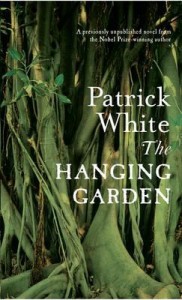
The Hanging Garden and Unfinished Novels

Posted May 28, 2012 by Michael @ Knowledge Lost in Historical Fiction / 0 Comments

The Hanging Garden and Unfinished NovelsTitle: The Hanging Garden (Goodreads)
Author: Patrick White
Published: Knopf Doubleday, Random House, 2012
Pages: 224
Genres: Historical Fiction
My Copy: Personal Copy

During my last book club gathering, we were talking about Patrick White’s unfinished novel; The Hanging Garden and this lead into a discussion of books being published after the author dies which the author never wanted to see the light of day. Patrick White never wanted this novel released; I believe he did tell someone to burn it because it wasn’t finished or anywhere near ready for readers. There are heaps of authors that have had books released that were never meant to be released including; Kurt Vonnegut, Virginia Woolf, Mark Twain, Ernest Hemingway, Leo Tolstoy and the most famous of them all was Franz Kafka’s The Trial. This does lead to some interesting topics; do you think books that the author never intended to be released should be published? Are publishers just using them as a money making gimmick? And lastly, if those manuscripts were submitted to a publisher by an unknown author, would they still be published?

Patrick White is a two time Miles Franklin award winner and has also won the Nobel Prize for Literature. His unfinished novel The Hanging Garden was only just recently published; it feels like an old novel in the sense that, while it’s nicely written; nothing ever happens in the book. This is very much a character driven book, focusing on the two characters and a wild garden. I think I’d be alright with reading a book like this if I didn’t have the feeling that the author hated every single one of his characters; he was mean and cruel to them all, not just the key characters. As a general rule I love dark and flawed characters but this just felt mean and even the attempts of being erotic felt awkward. I spent the whole book waiting for something to happen and I was left disappointed. Also, as this is an unfinished novel, I don’t know what the overall goal was with this book and I get the feeling that maybe Patrick White doesn’t either. There are parts of this book that are beautifully written and then there are parts that felt like the author’s ramblings. This is supposed to be an unedited book but while I think there was some editing done there are also parts of the book that clearly feel unedited. Including a few paragraphs that didn’t make sense and had no punctuation and then some notes to himself reminding him to explore or research some parts later. While I’m not a fan of this book, I think a lot of people might get a kick out of it. Either for the memories of the time and the place; the memorable characters, or just to see the thought process of once of Australian top authors of all time.

On this day 100 years ago, Patrick White was born