Tag: Vladimir Nabokov

Understanding my Fascination on Russian Literature

Posted January 31, 2017 by Michael @ Knowledge Lost in Literature / 0 Comments

I am not entirely sure where my interest in Russian literature came from. I think it started with a fascination with the Cold War, which lead to a desire to understand the complex nature of the Soviet Union, both its politics and the people. The first Russian novel I read was Anna Karenina by Leo Tolstoy, however my obsession with Russian literature came soon after. When I first became a reader I was using the 1001 Books You Must Read before You Die list as a guide to work out what to read. While I would love to complete the full list, it has served its purpose, which was to expose me to good literature in all genres, allowing me to find where my literary tastes lie.

My Russian literature obsession grew from my interest in satire, beginning with Super Sad True Love Story by Gary Shteyngart, which is a dystopian tale of globalisation. However under all that, it is an autobiographical novel of a Russian immigrant. I loved discovering the story underneath the plot, and I quickly discovered that Russian literature was a treasure trove for that. Russia has a very complex history; this is often reflected in its literature and makes it a big part of Russian culture.

Just a brief history on Russian literature, which has its roots in Chivalric romance, epics and chronicles on the Russian life. It is here at its roots where we establish the importance of irony and satire in the literature. It was Peter the Great’s efforts to modernise Russia that gave way to Russian literature in the 18th century. While I have not read any of these authors from this time, authors like Antiokh Kantemir and Vasily Trediakovsky were notable contributors to its literature. The 19th century is the golden age for Russian literature with Nikolai Gogol, Fyodor Dostoevsky, Anton Chekov, Ivan Turgenev and Leo Tolstoy creating some of Russia’s greatest pieces of literature. It was also where the literary movement Russian Romanticism was established, which explores metaphysical discontent with society and self, from notable authors like Alexander Pushkin and Mikhail Lermontov. The silver age in the beginning of the 20th century was focused around poetry and the avant-garde. Poets often associated with the silver age include Marina Tsvetaeva and Boris Pasternak.

This was then followed by the Soviet era, which was the rise of Socialist realism, Russian formalism and futurism. While the Soviet era was an extremely complex period for literature, and covers so many different literary styles, it is easier to put all of the work from the Soviet Era together. If you want to break out the soviet era, you could do that by Samizdat, Tamizdat and Gosizdat. Samizdat ‘self-published’ is the distribution of literature illegally published (often by carbon copies of typescripts) and distributed among other Russians. This is similar to a method used in the Tsarist era, and allowed uncensored literature by authors like Mikhail Bulgakov and Aleksandr Solzhenitsyn to reach an audience. Tamizdat ‘over there’ is when a soviet writer has their works published in the West because they could not publish in Russia. Most Soviet authors had to rely on this method to have their works published, most notable example of Tamizdat is Boris Pasternak’s Doctor Zhivago. Gosizdat ‘State publisher’ was the term used for officially sanctioned publications. In all honesty, I cannot think of a single modern classic from the Soviet Era that was published originally by the state. Although the Russian literature magazines where many works were first published would have been state run.

The post-Soviet era covers all literature published after the collapse of the USSR. Although the censorship of the soviet era was officially lifted, writers still approached sensitive subjects in a similar fashion. In part by the political/economic chaos of the post-Soviet era and partly to follow the traditions of great Russian literature. Although authors like Boris Akunin enjoy huge success in popular fiction, writing a historical detective series. This does not include the authors that fled Russia or the Soviet Union and became authors after gaining citizenship elsewhere, such as Ayn Rand, Isaac Asimov, and Vladimir Nabokov.

While there is a rich history of Russian literature, often there are common themes that appear throughout the ages. Most notably is the struggle for stability; Russian history has been a whirlwind of war and tyranny. This struggle often translates as redemption through suffering. This could be a struggle with religion, philosophy, society or even one’s self. That struggle can be seen in novels ranging from the likes of The Brothers Karamazov to Vladimir Sorokin’s 2006 science fiction novel Day of the Oprichnik. Although my wife might agree with Russian literary critic Viktor Shklovsky, who said “Russian literature is devoted to the description of unsuccessful love affairs.”

Authors within Russia often fall into the social class (I don’t think I need to explain the role class plays in Russia) known as the intelligentsia. This class of intellects are tasked to guide or critique society’s culture and politics. This is why Russian literature plays such a huge role in Russian culture, and also explains why literature was so controlled in the Soviet era. Union of Soviet Writers was formed by Stalin to control the field of literature in the USSR. Membership was not mandatory but if an author was not a member, they would have very limited opportunities for publication. Despite their best efforts, thankfully we still have a rich selection of Soviet literature critiquing the culture and politics of the time.

In both Tsarist Russia and the Soviet Union, authors had to be careful of what they said, many were exiled to a labour camp for what they wrote. So literary devices were often deployed to say what needed to be said in a more creative way. Literary devices often found in Russian literature include metaphors, allegories, irony, satire and even propaganda to express the author’s views. Which is why many Russian classics are very philosophical or political in nature. It is the dangerous writing that seems to have stood the test of time.

There is so much to offer in Russian literature, I know I have so much I need to learn and read but I am excited about the prospects. I find it sad when I see “Russian novel” used as shorthand for lengthy or turgid; I never understood that. While War and Peace is often considered a challenging book due to its length, there is a reason why it is considered a masterpiece. I would love to gain some recommendations on Russian literature I should check out. My personal favourites include Crime and Punishment by Fyodor Dostoevsky, The Master and Margarita by Mikhail Bulgakov and for something really weird, Day of the Oprichnik by Vladimir Sorokin.


What We See When We Read by Peter Mendelsund

Posted November 8, 2014 by Michael @ Knowledge Lost in Non-Fiction / 3 Comments

What We See When We Read by Peter MendelsundTitle: What We See When We Read (Goodreads)
Author: Peter Mendelsund
Published: Vintage, 2014
Pages: 419
Genres: Non-Fiction
My Copy: Paperback

Buy: AmazonBook DepositoryKindle (or visit your local Indie bookstore)

When reading Moby Dick, does Ishmael look like Richard Basehart? How about Anna Karenina? Please don’t tell me she looked like Keira Knightley. What We See When We Read takes a look at the activity of reading with such depth and insight. Looking at not only the way our brain fills in the images but also what the author is trying to say. Take for example Karenin in Anna Karenina; his ears are described a few times within the novel but they get bigger. The size of his ears is an artistic simulacrum that changes as Anna Karenina’s feelings toward him change.

Peter Mendelsund is Knopf’s Associate Art Director and has been responsible for some of their most iconic book covers. Just looking at his book cover designs I get the sense that he loves reading and the artistic side of literature. His book covers really capture a feeling; they stand out and often work well with the written word inside. He is major is in Philosophy and Literature and the two work well together in looking at the idea of reading and how our minds interpret the written word.

This is very much like Understanding Comics by Scott McCloud, it explores the idea of reading in different ways and explores different concepts. We all read slightly different and Mendelsund is able to go into different methods. A stand out for me is the way Vladimir Nabokov read Kafka’s Metamorphosis; there is an image of his copy of the book and it looks like he edits and rewrites the book to make it his own. It is an interesting way to get involve with the written word.

What We See When We Read is a combination of written words and images, which allows Mendelsund to illustrate his point and give the reader a better understanding of the feelings. A big bonus is the fact that he references other books, which gives me a huge TBR pile of books that explore this idea further in different ways. I love books about books so I am pleased to have a reading list.

I have to say What We See When We Read is a must for all book lovers. This book will be a joy to read and will look good on the shelf. I own the new Vintage edition, which is a paperback but it also has French flaps so it looks nice. I like how he went for a simple cover design; it stands out and works well with this book. I know this book is rising in popularity and I hope more people get a chance to read this one as soon as possible.


If on a Winter’s Night a Traveler by Italo Calvino

Posted October 27, 2013 by Michael @ Knowledge Lost in Classic / 4 Comments

If on a Winter’s Night a Traveler by Italo CalvinoTitle: If on a Winter's Night a Traveler (Goodreads)
Author: Italo Calvino
Translator: William Weaver
Published: Everyman's Library, 1979
Pages: 254
Genres: Classic
My Copy: Library Book

Buy: AmazonBook DepositoryKindle (or visit your local Indie bookstore)

If on a Winter’s Night a Traveler is an experimental classic that follows two protagonists, the Reader and the Other Reader. The Reader buys a fashionable new book that opens with those famous lines “You are about to begin reading Italo Calvino’s new novel, If on a Winter’s Night a Traveler. Relax. Concentrate. Dispel every other thought.” Thirty pages or so into the book he realises his copy is corrupt and consists of the same thing over and over again. Returning to the book store he discovers that what he thought was Calvino was a book by a Polish writer Bazakbal. Given the choice between the two he goes for the Polish book, as does the Other Reader, but his book turns out to be yet another novel by a different writer, as does the next, and the next.

Trying to write a synopsis for this book is tricky, there is no way I can do the novel justice in a paragraph.  This Italian surrealist novel (1979) was translated in 1981 to critical acclaim. The novel is best known for its structure. The odd number chapters are written in second person, but you have to ask yourself is it possible to have a novel in second person. As you read along eventually the narrator “you” does something that will take the reader out of the equation and turning them into a character called You. For instance, in this novel You is male, this will rule out about 50% of the readers in one hit.  This doesn’t take away from the enjoyment of this novel but is something I was deeply aware of throughout this book. There were times where I felt like the novel was in first and third person as well, so you end up with characters called You, I and He/She.

This whole book is subjective, I’m sure some people get different things out of If on a Winter’s Night a Traveler than I did but that is just what makes for a great novel. I want to talk a little about post-structuralism as I believe this novel is a great example of this literary theory. Firstly you need to understand structuralism, which is a theory that states that in order to understand a piece of literature you need to understand its relationship with the bigger picture, the overarching system or structure. You need to look into its influences, the genre, narrative and any other elements that might be relevant. The problem with this is you going further and further back eventually you might lose sight of the original text. Basically this is a set of specific rules that govern literature. Post-structuralism is basically taking those rules (they often study and analyse the rules) then setting out to critique the premises. It isn’t really throwing out the rules, more demonstrating how the rules don’t always apply.

Italo Calvino doesn’t stop at narrative modes and post-structuralism, the novel explores many more literary themes; the most obvious is the use of metafiction; a book within a book. You won’t find Outside the Town of Malbork by Tazio Bazakbal on Goodreads, I’ve checked. Then you have intertextuality, pastiche, post-modernism and so on. If you are interested in exploring literary theories this novel might be a good way to experience a whole range of different concepts in one hit. I don’t know much about literary theory so I hope my understanding on these concepts have come across as accurate and I haven’t missed it completely. I would love to attend a series of lectures where this book is deconstructed and looked at in real detail; I think that would be incredibly interesting.

Don’t worry, this isn’t a dense or hard-to-read book and I’m aware that talking about literary theory might turn people off this novel but please reconsider. This book is not only devilishly clever but it is beautifully executed. I took my time with this novel because I wanted to re-read sections, write done quotes and just talk about the book to anyone that would listen. If I didn’t borrow this from the library I would have highlighted the entire books (seriously, every line is just that great). I have brought my own copy now (yes, I broke my book buying ban) and I hope to be able to re-read this again. I’m not sure if reading this with others will help but the whole experience of reading this novel is worth sharing.

I’ve heard Italo Calvino is heavily influenced by Vladimir Nabokov which makes a lot of sense to me, the writing style does feel similar, even the humour and wit. A literary labyrinth that is so masterfully executed that the novel needs to be read again and again. I won’t go into any more details as there are a few things you just need to experience. I’m jealous of anyone that gets to read this novel for the first time as that is an experience I will never have again.

 I have to wonder why the Vintage classics cover of the word “Traveller” written correctly but throughout the book it is written in the American (wrong) spelling. I have to wonder if there is anything in that. I wonder if there is a reading companion to If on a Winter’s Night a Traveler that you can read alongside this book (similar to Infinite Jest) to discover the brilliance of this novel. I really enjoy Post-Modern literature but there is so much that I’m probably missing.

All book lovers should experience If on a Winter’s Night a Traveler, there is nothing like that feeling of pure joy when you read a beautifully clever novel. You never want it to end, that ecstasy is like a drug and you immediately want to read it again only to find that feeling is just not the same. This is a masterpiece, I know I didn’t talk much about the plot but this was so I don’t give anything away. Go read it.


First Steps: Banned Books

Posted September 26, 2013 by Michael @ Knowledge Lost in First Steps / 0 Comments

literary stepsFirst Steps is a new segment that was inspired by the Literary Exploration Reading Challenge. Each week or two, we look at books from different themes, genres or maybe authors and suggest some that are worth trying. Not necessarily all easy to read books but the ones that are worth the time and effort. My goal is to have First Steps guide you to some great books in places you don’t normally venture to.

To celebrate banned book week and because I’ve been asked for some suggestions on what to read, I thought I would share a couple of books that you should check out. I’m not going to focus on high literature or the controversial books but rather some great reads in a few different genres and styles.

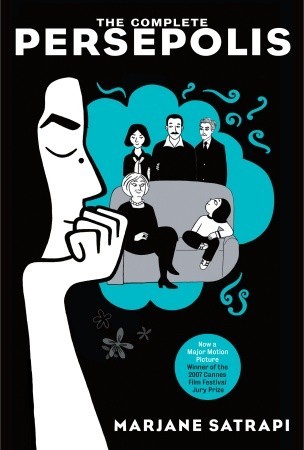
Persepolis by Marjane Satrapi

Persepolis is the autobiography of Satrapi, growing up within a large and loving family in Tehran during the Islamic Revolution. She balances the plot between her private and public life, in a country plagued by political upheaval. I can’t recommend this graphic novel enough, if you have never tried a comic then try this one.


Fahrenheit 451 by Ray Bradbury

The ultimate book about the problems with banning books and ironically it managed to get banned. Guy Montag is a fireman, his job is to burn books; the source of all discord and unhappiness. Guy is unhappy with his life and there is discord in his marriage. A terrifyingly prophetic novel of a post-literate future.


Alice’s Adventures in Wonderland by Lewis Carroll

Yes, this book was banned; a classic children’s novel that is probably the best example of the literary nonsense genre. This book plays with logic and narrative structure making this book popular among adults as well as children. I love this book and it is full of witty and amusing puns.


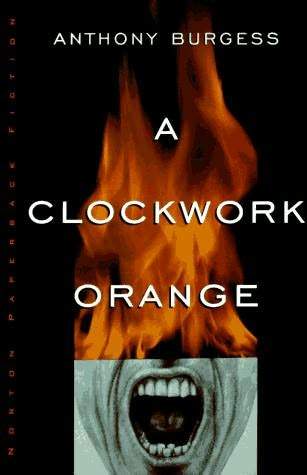
A Clockwork Orange by Anthony Burgess 

One of my favourite dystopian novels out there, A Clockwork Orange is just weird and a real khorosho (horrorshow). A Clockwork Orange tells the story of Alex, your humble narrator; a disturbing 15 year old anti-hero, until the government tried some experimental behaviour-modification treatment on him.


Frankenstein; or, The Modern Prometheus by Mary Shelley

My all-time favourite, a book I read again and again. There are so many different themes you can pull out of this novel and it infuses elements from the Romantic Movement, gothic, horror and science fiction. Everyone has an idea of what this book is about but just how different is it to its pop culture references.


Lolita by Vladimir Nabokov

I can’t recommend banned books without Lolita getting a look in. The highly controversial novel of Humbert Humbert, a middle-aged literature professor and his obsession with twelve year-old Dolores Haze. You may not enjoy reading this book but you might enjoy having read it.

Feel free to suggest some more banned books and even recommend some to me that I should check out. I have plans to read Eleanor & Park by Rainbow Rowell (a recent addition to the banned books list) this week but I can’t seem to get a copy, so I might be late with my banned book reading.


First Steps: Russian Literature

Posted July 27, 2013 by Michael @ Knowledge Lost in First Steps / 0 Comments

literary stepsFirst Steps is a new segment that was inspired by the Literary Exploration Reading Challenge. Each week or two we look at what books from different themes, genres or maybe authors and suggest some that are worth trying. Not necessarily all easy to read books but the ones that are worth the time and effort. My goal is to have First Steps guide you to some great books in places you don’t normally venture to.

I’ve been reading this amazing book called A Constellation of Vital Phenomena which is set in Chechnya and it got me thinking about Russian literature. I love reading books set in Russia and written by Russians, I don’t know why there is something about the books that draws me to them. They are often epic, slightly odd and the prose and character development are well worth reading, don’t get me started on symbolism and motifs. But it’s sad to think a lot of people are scared of reading Russian literature and while there are so many I haven’t read yet, including War and Peace, The Brothers Karamazov, Doctor Zhivago and anything by Anton Chekhov I thought I’d share five Russian novels I would recommend. I have left out Lolita by Vladimir Nabokov and Super Sad True Love Story by Gary Shteyngart simply because they are Russian Americans and it’s hard to work out which country can truly claim them.

Day of the Oprichnik by Vladimir Sorokin

This weird and wonderful postmodern novel is quite frankly so bizarre you just have to check it out. I wanted to add something contemporary to this list and thought this was the perfect choice. Set in a futuristic Russia where the Russian Empire has been restored back to the draconian codes of Ivan the Terrible.


We by Yevgeny Zamyatin

If you are fans of the dystopian genre and you haven’t read We, you really need to get onto it. This book is often considered as the first truly dystopian novel and has inspired authors such as Aldous Huxley, George Orwell and Kurt Vonnegut. Zamyantin bases this future on his personal experiences during the two Russian revolutions (1905 and 1917) and the First World War.


The Master and Margarita by Mikhail Bulgakov

Yet another weird and wonderful Russian novel, this time in the genre of Magical Realism. The whole book is based around a visit by the Devil to two passionately atheistic Russians. While this is an overly simplified synopsis it really is the basis of the entire book; if I really want to write a fully detailed overview of this book it would include a black cat, an assassin, a naked witch, Jesus and Pontius Pilate in one bizarre novel.


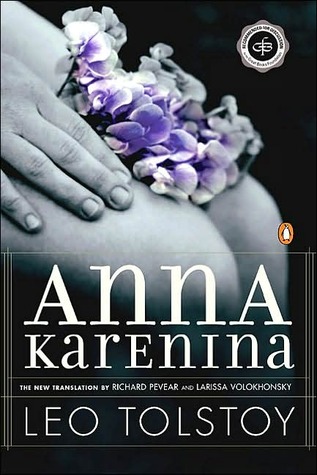
Anna Karenina by Leo Tolstoy

Don’t let the size of this book scare you, this isn’t necessarily a hard book, just long and like most Russian classics it is worth the effort. The story of love, infidelity as well as a battle of classes and the fading out of an old society to make room for modern one. If you are a patient reader and love a story with well written characters that is beautifully written then this book is worth reading, it simply is a masterpiece.


Crime and Punishment by Fyodor Dostoyevsky

I love this book so much. Before there were psychological thrillers and books like the Dexter series, there was Crime and Punishment. Raskolnikov is a conflicted character; he is showing a lot of interest in the classes and thinks he is of a higher class than others believe. But when he commits murders, guilt, remorse or regret plague him. This is a novel that focuses on the inner turmoil as well as the impact on his intellect and emotions. Beyond perfect and the type of book that you just want to read over and over again.

I know a lot of people avoid the Russian books but I’m drawn to them, I would love to know what people think and if they do avoid them, why. If you have read some great Russian novels, let me know as well because there are so many out there, I would love to know which ones are well worth reading.


Tampa by Alissa Nutting

Posted July 15, 2013 by Michael @ Knowledge Lost in Contemporary / 0 Comments

Tampa by Alissa NuttingTitle: Tampa (Goodreads)
Author: Alissa Nutting
Published: Allen & Unwin, 2013
Pages: 272
Genres: Contemporary
My Copy: ARC from Netgalley, ARC from Publisher

Buy: AmazonBook DepositoryKindle (or visit your local Indie bookstore)

Suburban middle grade teacher Celeste Prices is undeniably beautiful, everyone can see that. Her husband is rich, hardworking, determined and most people think they are the perfect couple. That’s because no one knows Celesta’s secret, her singular sexual obsession for fourteen year old boys. After all this is the real reason she became a teacher and is working at Jefferson Jr. High.

There are three main reasons people will try to avoid this book. Firstly the protagonist is not likeable, how could she be? Secondly, the sad truth is I found a lot of people tend to avoid Juvenalian satire; I’m not entirely sure why but maybe they don’t appreciate it or they forget to remember it is not an indication of the satirist persona. Lastly and probably most importantly, this book is disturbing; probably the most disconcerting book I’ve ever read (American Psycho held this place for a long time) and I found myself having to put it down just to recover.

So why read it? Tampa is a well written debut novel and arguably one of the most talked about novels at the moment. The reason it’s talked about is the subject it satirises; let’s face it, this is a topic that is often never talked about because of its disturbing nature. A female sexual predator is something I’ve never read in a book but this seems to works in Alissa Nutting’s favour. I have to take a moment to talk about the subject matter because this is important. Young teenage boys all seem to have similar fantasies; an older woman, normally a teacher or a babysitter. It’s a common sexual desire for a boy with their budding sexuality; the experienced, already developed older woman, but they don’t realise just how destructive that can be on them. They have no idea how to separate their emotions from the sexual act and this is a slippery slope that can only lead to being hurt. Not to mention the emotional and psychological damage it can do to them.

Then you have the discussion of sexual addiction being covered in this novel as well. Celeste Prices acts with sociopathic meticulousness; lying and manipulating everyone in order to get what she desires. Not just the people around her; she deludes herself as well, always trying to justify her actions. I think it was interesting how Alissa Nutting was able to look at the problems with this fantasy young boys have and how damaging it can be and at the same time have the reader think about sex addiction and how it effects the person.

Tampa is written in the first person perspective of Celeste Prices so as a reader we get to see her trying to justify her actions to herself and the reader. Though as the reader we can see how off her justification is and maybe even remember times in our own life were we have tried justifying making stupid mistakes with similar lies. The thoughts and the desire that Celeste has to the fourteen year old boys is disgusting and are sure to make you feel sick, which is the reason I couldn’t read this book in one sitting.

In fact every time I put down the book, I worried that if I showed my wife any sort of affection that she might get the wrong idea. I found out later that she was worried that if she showed any affection, I might associate it with the book. So I’m glad it was short and I didn’t have to spend too much time reading it. I’m sure my poor wife got sick of me wanting to discuss this subject matter with her, it’s not an easy topic but this novel makes you want to talk about it with someone. She tells me a similar thing happened in Glee where one of the teenage boys was molested by his babysitter when he was young and his classmates thought it wasn’t that bad as it’s every boy’s fantasy.

The fact that you can’t help wanting to talk about this novel and the themes would make this book the perfect choice for a book club which scares me a lot. I hope and pray that this never becomes the next book club book at my local book club. I love the Mary Who? Book club and this is the best indie bookstore in Townsville but I am normally the only male and most of the other people are slightly older than me. This would be the most awkward book to discuss and because I have so much I can say about this novel it would feel really weird, so I hope that it never becomes the next pick for book club.

This has been compared to Lolita and I can see why, the sexual predator and the satirical nature, but personally I think this comparison might do more harm than good.  Being compared to a masterpiece like Lolita would put so much pressure on this book and I don’t think it lives up to the beauty of Vladimir Nabokov’s writing. I get why it is compared but I think it tackles different topics and they both should be analysed separately. Having said that it might be a good book to partner with Lolita if your book club has that kind of structure set up.

Lastly I want to quickly talk about the covers because I think they are worth mentioning. In the UK and Australasia the cover is a pink shirt with a button hole. I love this cover, it is very suggestive and makes people look twice and it really suits the book. Apparently, in America, the black cover that  I thought looked boring in comparison, is made from black velvet, which might give the same suggestive tones when you pick up the book rather than looking at it. Interesting choices and I think both seem to work really well but I prefer the buttonhole cover.

I should warn people that this book contains graphical sex scenes which are ghastly and off putting, so this book is never going to be an easy read but this is a topic that needs to be discussed more and the book does this really well. I really enjoyed having read this book, but not really while reading it. I’m surprised how much I wanted to talk about the subject, so I think Alissa Nutting achieved what she set out to achieve. I hope people read it soon; I look forward to discussing the book with others.


Monthly Review – May 2013

Posted May 31, 2013 by Michael @ Knowledge Lost in Monthly Reading / 0 Comments

As May comes to a close, like all months, I want to have a quick look at what happened. First of all I managed to get fully up to date with my reviews; a few months ago I was about 20 reviews behind, waiting to be posted. Now when I finish a book the review will go up within a few days (sometimes more) and this frees me up to do other bookish posts. This is so exciting because I really like to write my thoughts about the world of literature without being confined to reviews. Also as you can see we are smack in the middle of being green with envy of everyone attending the Book Expo of America (BEA). I’m participating in Armchair BEA again and this will hopefully mean new blogs and new people to talk to. I’m also currently overseas so I’ve scheduled all these posts, I still have access to internet but I wanted to be free to comment and read instead of writing blog posts.

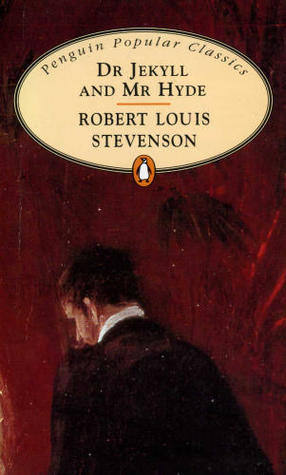
As for this month, the book club theme was Supernatural and we got to read the classic Victorian Gothic novella Strange Case of Dr Jekyll and Mr Hyde. My review went up yesterday and there have been some interesting discussions about the book and its influences in modern pop culture over at Goodreads if you’ve missed it. Next month’s book is going to be a little obscure, something I’ve not heard of; I’m really looking forward to diving into The Dud Avocado by Elaine Dundy.

Last month I was in the middle of a reading slump so I was worried that May would be a terrible month for me but I’m pleased to say the slump didn’t last long. I was able to read heaps of great books including Invitation to a Beheading, Main Street and The People of Forever Are Not Afraid. Interesting enough the highlight of the month was none of those books, but a reread of The Great Gatsby; I just enjoyed returning to that novel and then picking it apart trying to understand it. I would love to know what your highlights of the month were or even what you read this month.

My Monthly Reading


Invitation to a Beheading by Vladimir Nabokov

Posted May 19, 2013 by Michael @ Knowledge Lost in Classic / 0 Comments

Invitation to a Beheading by Vladimir NabokovTitle: Invitation to a Beheading (Goodreads)
Author: Vladimir Nabokov
Published: Vintage, 1936
Pages: 240
Genres: Classic
My Copy: Personal Copy

Buy: AmazonBook Depository (or visit your local Indie bookstore)

In this bizarre and irrational world, Cincinnatus has been convicted and condemned to death by beheading for gnostical turpitude, an imaginary crime with no definition.  Cincinnatus spends his remaining days in prison where he is visited by the chimerical jailers, an executioner who masquerades as a prisoner, and his in-laws. When Cincinnatus is finally brought out to be executed, he simply wills his executioners out of existence: they disappear, along with the whole world they inhabit.

There is no denying that Invitation to a Beheading is a weird novel; often compared with Franz Kafka’s The Castle, it is important to know that Vladimir Nabokov had not read any German novels, let alone Kafka when writing this. The reason this is important is to avoid trying to compare the two novels; sure they have similarities but they are still also vastly different. Originally published as a serial, with the title Sovremennye Zapiski (Contemporary Notes), Nabokov has stated while Lolita holds his greatest affection, this novel holds his greatest esteem.

While people call this Kafkaesque, the impossible and dreamlike world reminds me more of Haruki Murakami’s style. From the very start the reader understands there is something not right about this world, this reminded me of Hard-Boiled Wonderland and the End of the World. I got the feeling that this wasn’t reality but a world constructed in Cincinnatus’ mind based on his fears, doubts, and insecurities. Cincinnatus’ enemy is the society he’s created and the people of that society act according to ridiculous rules that have been set. We never know what gnostical turpitude is and this will probably remind people of Kafka’s The Trial. Cincinnatus is rebelling against the construction of this reality and the rules the people of this society observe and perhaps this is what makes him a criminal.

Maybe gnostical turpitude is the crime of being different from all the other people in this reality. Maybe Cincinnatus is being oppress for his ideas and his nature. Maybe he is so different from everyone around him; he has an internal depth that the others lack. A lot like Lolita, Vladimir Nabokov has a way about his writing that just leaves you with so many questions that you need to think through, this whole reality and society leaves me perplexed. Though this is the point; life isn’t simple and being an outsider sometimes feels like you are Cincinnatus in a bizarre reality.

While this book primarily looks at society and oppression it also looks at human connection. Cincinnatus desires to connect with his wife Marthe, despite her unfaithfulness and lack of concern for him. The one thing he craves the most is to make a connection and she felt like the logical choice; also the fact that he loved her helped. He begs her to come alone and reveal her true self to him but there is always something that interferes with the communicating.

While this was a very odd book, Vladimir Nabokov is just a brilliant writer and that really makes up for the weirdness. Also the weird and bizarre act as motifs within the narrative and without the symbolism and meaning it would just be trippy book. Nabokov does a good job of weaving his messages and ideas while entertaining the reader in unexpected ways. Most people only ever read  Lolita by Vladimir Nabokov and I think that means they miss out on his brilliance, I hope to read more; currently on my To Be Read list is Mary, Pnin and Pale Fire. Are there any others I should add?


Monthly Review – March 2013

Posted March 31, 2013 by Michael @ Knowledge Lost in Monthly Reading / 2 Comments

Happy Easter everyone, hope you are all enjoying the long weekend. I hope everyone has had a wonderful month of reading and had time to fit Lolita into their busy schedule. I’ve noticed a lot of mixed reactions to this book which would mainly be a result of the controversial nature of this book but it really is one of those books that have helped shape twentieth century literature, so well worth checking out. Still a lot of action happening with the reading challenge as well; looks like two hundred books been added this month. For those who don’t know about the reading challenge, there is still time to join in the fun, so check out my introductory post here.

A reminder that next month’s book will Hard-Boiled Wonderland and the End of the World by Haruki Murakami for our Japanese literature theme. I haven’t read much Murakami but expect some great discussion on this book, hopefully with some thoughts to the Magical Realism genre.

Highlights for my month’s reading included Infinite Jest which I’ve finally finished; the beautiful painting of Painter of Silence by Georgina Harding; Lolita; and In a Lonely Place. I would like to mention two other books that really blew me away. First, Pride and Prejudice which I finally got around to reading after putting it off for far too long (also have you seen the Lizzie Bennett Diaries?). Also Tenth of December; while I’m not much of a reader of short stories George Saunders showed me just enough to change my mind. What have you been reading this month and what were the highlights?

My Monthly Reading


Olympia Press; Controversy & Erotic Fiction

Posted November 16, 2010 by Michael @ Knowledge Lost in Literature / 4 Comments

It’s hard to imagine a life without a freedom to talk openly about sex. Before the sexual revolution things were completely different and there were two publishers that pushed the boundaries. In 1929 an English man named Jack Kahane formed Obelisk Press, based out of Paris. His goal was to publish books other publishers would not touch for fear of prosecution. Though Obelisk Press went bankrupt, it paved the way for dbs (dirty books) later known as Erotic Fiction. Obelisk Press published books like Henry Miller’s Tropic of Cancer, DH Lawrance’s Lady Chatterley’s Lover & James Joyce’s Haveth Childers Everywhere (often considered a working progress of Finnegans Wake).

While Jack Kahane laid the ground work, it was his son Maurice Girodias, who pushed the envelope on censorship. In 1953 Maurice started Olympia Press, a rebranded Obelisk Press which came under fire straight away for Austryn Wainhouse’s English translations of Marquis de Sade’s Justine. In a move that put Olympia Press under a lot more fire, Maurice started offering good money for dbs, though most of these books were eventually banned they were able to make a small profit before being removed from the shelves. Obelisk Press were responsible for such books like Lolita by Vladimir Nabokov, The Naked Lunch by William S. Burroughs & The Ginger Man by J. P. Donleavy.

Though both publishers ended in bankruptcy, they did pave the way with controversy and erotic fiction in English literature. Apart from the controversy it start the ball rolling for other authors and took the risk in publishing book others wouldn’t. What would books be like nowadays if no one printed books like Lolita, The Naked Lunch or James Joyce’s works?