
 A few weeks ago I discussed my reading history and now I want to cover why I read. For me, I love to be told a story, I love to immerse in a completely different world. I’ve also found that now I’ve become a reader, there are a lot more books out there that I really want to read. It seems like for every book I read, I discover at least two other books I want to read. I did get so overboard with my to-read list that I had to cull it to the essentials. Not that I don’t want to read all the books that were on my TBR list, but I’m finding it really hard to keep up with all the books I want to read. There are too many books out there but so little time; I sometimes wish I could speed read so I can catch up with all the books but I think I would miss immersing myself in a book. As said before I do set myself a reading goal every year and I hope one day I’ll have enough knowledge in literature that I might be able to better recommend books to other people.
Month: May 2012
The Fix by Nick Earls
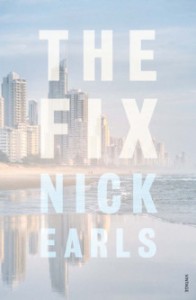 Title: The Fix (Goodreads)
Author: Nick Earls
Published: Random House, 2011
Pages: 291
Genres: Contemporary
My Copy: Personal Copy
(or visit your local Indie bookstore)
I started reading The Fix thinking this was going to be a literary novel but found this to be more like a YA novel with adult content. It took me a while to adjust my thinking about this book from literary to light hearted but when I did get into this mindset, I did start to really enjoy this book. In the back of my mind I was wanting something with more substance; something that would make me think.
Josh Lang is unemployed with aspirations of being a respected investigative journalist but all he can get is a job as a blogger expressing the opinions of a Gen Y male living in Brisbane. His brother offers to get Josh a job at the Star of Courage doing PR work which eventually leads Josh into a much more complicated situation involving a gunman, mini golf and a stripper.
While this book could almost be classed as a mystery novel, there is nothing really in the book to make it suspenseful or even a page turner. The characters feel very shallow which might be a way to portray some Gen Y character types. This book was light and easy to read but also felt too predictable. I can see what Nick Earls was trying to do in this book by slowly building up the tension but it felt like it was being built too slow that any feeling of tension was lost on me. I was waiting and waiting for a twist or a burst of excitement to come that when it did come I was expecting it.
While I did enjoy reading this novel there were a few things that stopped this book from being exciting. I love the whole blogging element in this book; as a blogger I can relate to the way his mind worked when it came to possible blog posts. There were enough little quirks in this book to make it a light and enjoyable read. I would say this felt like a transition book between YA and adult fiction more than anything else. I’ve only read one of Nick Earls’ short stories before reading this book so I can’t really judge this book in any way, shape or form. I think this book would be a great Summer read for someone on holidays and wants something quirky and easy to read.
Five Books That Changed My Life
 As most of you may know, I never use to be much of a reader; it was only last year that I decided to discipline myself to read more. So I thought I might as well share with you five books that really had strong effects on me and my views on life.
- Markheim – This short story by Robert Louis Stevenson is definitely my favourite of his works I’ve read so far. The concept is amazing, but I won’t give you any spoilers.
- Slaughterhouse-Five – And so it goes…nothing could have prepared me for a book like this. It’s unique in its style and left me pondering it for months after reading it.
- Wuthering Heights – I know one reader that would be happy to see this on my list. The reason it does grace this list is the simple fact, that it defied all expectations. I went into this book thinking I knew what the story was about, but it shattered every expectation and left me with a dark and beautiful tale.
- Frankenstein – It is apparent that this book has changed my life. I’ve mentioned it before in reference to pop culture and even a Smashing Pumpkins song. This book is simply a brilliant book on very real social issues.
- Hey! Nietzsche! Leave them kids alone! – This book is the reason this blog exists. Craig Schuftan opened my eyes to a world I didn’t know by providing some interesting connections between the Romantic Period and today’s music scene.
Into the Darkest Corner by Elizabeth Haynes
 Title: Into the Darkest Corner (Goodreads)
Author: Elizabeth Haynes
Published: Myriad, 2011
Pages: 403
Genres: Thriller
My Copy: Personal Copy
Buy: Amazon (or visit your local Indie bookstore)
Cathy’s relationship with Lee seems good to begin with, but as his true self starts to emerge, the more she is pushed into the darkest corner. This is a story of a very abusive relationship and the chilling effects it has on Catherine. Lee is controlling, abusive and thinks he is smart enough to get away with it; but can he?
Written in two parts, Into the Darkest Corner slowly unfolds the destructive relationship between Cathy and Lee. It also includes the story four years after, showing the damage done to Cathy which has left her isolated, suffering from OCD and post traumatic stress. The two different time periods are written in a slightly different format showing the chilling tale of a woman slowly slipping into her darkest corner, then showing her trying to recover from all the damage. The two different writing styles are what makes this book so haunting; it’s like watching a car crash, you can see Cathy’s happy and party-like attitude slowly dissolving.
I really enjoyed this book. It’s dark, chilling and very disturbing; it was sickening at times but still an exciting novel to read. I had real pleasure reading something so dark; not often do you find a book so disturbing and yet so enjoyable to read. While I think this book was really good, I couldn’t recommend it to anyone that might freak out or identify with Cathy too closely. This is not a light book and definitely not for overly emotional or the faint of heart. I was really impressed with Elizabeth Haynes’ debut novel Into the Darkest Corner and I can’t wait to read her next book.
The Hardest Working Fake Author
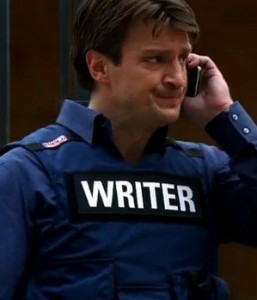
Richard Castle may be the hardest working fake author around. What seems like a great marketing strategy has seemed to take off on its own. While the Nikki Heat books seem to show up in the TV show Castle, now there is a new series to help people get a better understanding of Richard Castle’s best known character (according to the fans in the show) Derrick Storm. I’ve read a few of the Nikki Heat books now; and while I find them to be gimmicky, as a fan of the TV show, it was nice to read a book that tells a story that you don’t see on the show. Well that was with the first book Heat Wave; when I read Naked Heat, I did think it was so similar to the show that I felt like I knew the story already.
So most people may already know Richard Castle is the fictional author and protagonist of the TV show Castle and is portrayed by Nathan Fillion. Heat Wave was the first book released by this fictional author; it was released on September 29, 2009, and debuted at #26 on the New York Times Best Seller list. In its 4th week on the list, Heat Wave broke into the top 10 at #6. Now they have started a Derrick Storm series (not just the graphic novels) which takes a new direction from this marketing strategy; not promoting the show so much. A Brewing Storm tells the story of a spy coming out of retirement to help find the kidnapped stepson of a high ranking politician. While the book is short, it was interesting to get a better sense of the character that makes Richard Castle a bestselling author (in the show).
Richard Castle isn’t the only TV author to release a book; Hanky Moody of Californication has also released a book called God Hates Us All. Later this year Richard Castle will be releasing two more Derrick Storm books as well as the forth book in the Nikki Heat series; Frozen Heat.
The Red House by Mark Haddon
 Title: The Red House (Goodreads)
Author: Mark Haddon
Published: Jonathan Cape, Random House, 2012
Pages: 272
Genres: Literary Fiction
My Copy: ARC from Publisher
Buy: Amazon (or visit your local Indie bookstore)
It’s hard to review a book like this; Mark Haddon is a very talented writer and he has some brilliant techniques employed into this novel. However, I can’t help comparing this book to The Curious Incident of the Dog in the Night-Time and ultimately I think this book lacked something to make this book great. With the huge success of The Curious Incident of the Dog in the Night-Time, I can’t help but think that Mark Haddon has gotten overly confident with his writing. While it was refreshing and enjoyable to read a book with so many interesting writing techniques; I never really connected with the plot or the characters. I was so excited about reading another book by this author and I feel I made a rookie mistake by going into a book with such high expectations.
The Red House is the story about a well off physician, Richard, and his new family (recently married a woman with a sixteen year old daughter) taking a vacation. Richard invites his sister Angela and family to join them as they hadn’t seen each other since the funeral of their mother, fifteen years ago. Angela’s husband Dominic and three children are not as well off as Richard and took advantage of the offer as they wouldn’t be able to afford a vacation any other way. Together for a week in a rented cottage in Wales starts to show the cracks in everyone’s relationship and exposes just how dysfunctional the family really is.
Mark Haddon is contently switching between narrators in this book, I think I counted eight different points of views throughout this book (might be more) and one of those was an all-seeing third person narrative. With the narrative always changing and each character only giving a glimpse of an insight, this book started off a little confusing and hard to keep track of all of the main characters. One thing I’ve found that Haddon did in this book as well as The Curious Incident of the Dog in the Night-Time that I really liked was that he wasn’t afraid to expose the inner voice of each character and allowing the reader an insight into the flaws and thoughts of each one of the characters. There were also a lot of references to pop-culture within this book that was quite enjoyable to read; especially all the references to each book the main characters were reading.
The Red House was actually a nice easy read and I was surprised how fast I got through this book; this could have been all the blank pages throughout the book. While I never really connected with this book the writing styles used throughout this book were interesting and almost experimental at times. Some of it worked and some of didn’t, I think Mark Haddon was overly confident when he wrote this book and it seemed to come through in the novel. I’m sure many people will love and enjoy this book and don’t let my opinion stop you from reading it. For me I struggled making that connection and I tried and tried to enjoy this book but it just didn’t quite get there.
Super Sad True Love Story by Gary Shteyngart
 Title: Super Sad True Love Story (Goodreads)
Author: Gary Shteyngart
Published: Random House, 2010
Pages: 334
Genres: Dystopia, Literary Fiction, Speculative Fiction
My Copy: Personal Copy
Buy: Amazon (or visit your local Indie bookstore)
While this may be a story of a modern relationship; there is so much more in the novel worth exploring. This Dystopian American back drop mixed with some very interesting concepts; including the fact everyone is ranked based on their Finances, Personality, Attractiveness and Fuckablilty, makes this a fresh and different style of novel. Gary Shteyngart offers a witty and very humorous novel but this book goes much deeper than this; I found many interesting concepts in this book, which were well thought out and made for an opportunity to make in-depth conversations based on this book.
By reading this review you are denying the existences of this review.
Question Tuesday: Why a Book Blog?
I’ve been writing in my cultural blog for a few years and I love exploring everything to do with Art, Culture, Literature, Philosophy and even Poetry. But I’ve found myself writing more and more about literature, so rather than overloading Knowledge Lost with literature posts I started this book blog as a way for me to do all my bookish posts and to document my literary journey. While I do have dreams of becoming a book critic, this blog was more of an outlet for all my literary thoughts and a good place for me to practice my reviewing and writing. I do plan to continue posting on my cultural blog and you will probably see some posts that will show up on both blogs but this blog will be very bookish and hopefully the perfect outlet for me to talk books with myself and others.
Knowledge, Truth & The Encyclopédie

Often when we think of the concept of ‘truth’, we tend to think about knowledge. Nowadays we have been getting a little lazy when looking for truth, by using Google or Wikipedia; before these tools we often went to the encyclopaedia. In 1750 France, two people took on a task to change the way we think; the project was called Encyclopédie, ou Dictionnaire raisonné des sciences, des arts et des métiers, par une société de gens de lettres, mis en ordre par M. Diderot de l’Académie des Sciences et Belles-Lettres de Prusse, et quant à la partie mathématique, par M. d’Alembert de l’Académie royale des Sciences de Paris, de celle de Prusse et de la Société royale de Londres (Encyclopaedia: or a Systematic Dictionary of the Sciences, Arts, and Crafts, by a Company of Men of Letters, arranged by M. Diderot of the Academy of Sciences and Belles-lettres of Prussia: as to the Mathematical Portion, arranged by M. d’Alembert of the Royal Academy of Sciences of Paris, to the Academy of Sciences in Prussia and to the Royal Society of London).
Originally the Cyclopedia which was a project by Ephraim Chambers in 1728 but this was abandoned and Denis Diderot and Jean le Rond d’Alembert set out to create an entirely new encyclopaedia. Apart from editing and compiling Denis Diderot and Jean Le Rond d’Alembert were contributors; Diderot helped with economics, mechanical arts, philosophy, politics and religion and d’Alembert with contemporary affairs, mathematics, philosophy, religion and science. Some of the most notable contributors of this project also included;
- Louis-Jean-Marie Daubenton for natural history
- Baron d’Holbach for science (mainly chemistry and mineralogy), politics and religion
- Chevalier Louis de Jaucourt for economics, literature, medicine and politics
- Jean-Baptiste de La Chapelle for mathematics
- Jean-Jacques Rousseau for music and political theory
- Anne Robert Jacques Turgot, Baron de Laune for economics, etymology, philosophy and physics
- Voltaire for history, literature and philosophy
Modern society owes a lot to the age of Enlightenment and this Encyclopaedia project; not only did it change the way we find knowledge in the search for truth but it also created a global standard of cataloguing and preserving our knowledge. In the words of Denis Diderot himself;
“The goal of an encyclopaedia is to assemble the knowledge scattered far and wide on the surface of the earth, to expose its general system to our fellow men with whom we live and to transmit it to those who will follow us, so that […] our sons, by becoming more educated, might become at the same time more virtuous and happy.”
While this was not the only encyclopaedia at the time or even before (Ephraim Chambers’ Cyclopedia in London and Novalis’ Enzyklopädie in German) the Encyclopédie project seems to be the one that is more often referred to when looking at the history of the encyclopaedia. This could be effects of the Age of Enlightenment and its reputation with knowledge and truth, or it could be the fact that it is often referred to as the intellectual preparation for the French Revolution. However I think it was more to do with the famous “preliminary discourse” written by Jean Le Rond d’Alembert which explored the structure of the encyclopaedia articles as well as the background of the learned men that wrote each article. The significance of this is the ability to check the credibility of each article and quite possibly the start of referencing.
The Sense of an Ending by Julian Barnes
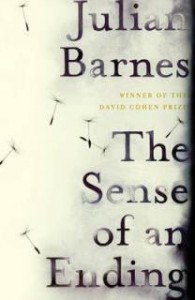 Title: The Sense of an Ending (Goodreads)
Author: Julian Barnes
Published: Jonathan Cape, 2011
Pages: 150
Genres: Literary Fiction
My Copy: Hardcover
Buy: Amazon (or visit your local Indie bookstore)
When I see a book that is only 150 pages, I automatically think the book won’t have much to offer, but then I remember some great novellas like, George Orwell’s Animal Farm, Anthony Burgess’s A Clockwork Orange, Robert Louis Stevenson’s Dr Jekyll and Mr Hyde and now Julian Barnes’s A Sense of an Ending. Winner of this year’s Man Booker prize A Sense of an Ending is the story I always wanted an angsty book about the teenage years to be like. I think back to Catcher in the Rye and think The Sense of an Ending is everything that classic should have been, all Catcher left me with was the need to slap Holden repeatedly.
The book follows the story of Tony Webster forty years later who receives an unexpected letter which leads him to remember his life forty years ago. The obsession with girls he had, his very first relationship and the memories of talking about philosophy, classical music and literature with his friends. This book is beautifully written, it was a real pleasure to read; it was intelligent, witty and I’d highly recommend it to everyone.