Month: May 2013

Crooked Letter Crooked Letter by Tom Franklin

Posted May 20, 2013 by Michael @ Knowledge Lost in Crime / 0 Comments

Crooked Letter Crooked Letter by Tom FranklinTitle: Crooked Letter Crooked Letter (Goodreads)
Author: Tom Franklin
Published: Pan Macmillan, 2010
Pages: 318
Genres: Crime
My Copy: Library Book

Buy: AmazonBook Depository (or visit your local Indie bookstore)

When another girl disappears, suspicion falls on the suspect of a twenty year old missing persons case. Larry has been living a solitary life never being able to escape the whispers of suspicion, now another girl disappears, it is starting all over again. Old boyhood friend Salas is now in law enforcement and this new case forces both men to confront the past that they have buried for so long.

Tom Franklin lived in a small southern town in Alabama, and while struggling to make it as an author he went through multiple manual labour jobs and once worked for the city morgue. In 1997 he got his first break when his short story collection, Poachers was named Best First Book of Fiction by Esquire. Since then he has been having great success with southern crime novels, winning a few awards, including the Edgar Award (for Poachers, a short story found in the book of the same name) and The Crime Writers’ Association’s Gold Dagger (awarded for best crime novel of the year) for Crooked Letter Crooked Letter.

This novel has been compared to the works of Harper Lee, Flannery O’Connor, Elmore Leonard and Cormac McCarthy, so I went in to this novel expecting a good southern crime novel and this is what I got. Except there was a little more in this novel, while you have the elements you expect, I never expected the book to explore the idea of being misunderstood and isolation. From the beginning of the novel Larry is shot and yet he is sympathetic towards his mystery attacker. He even forgave him because “all monsters were misunderstood”.

The idea that Larry thinks of himself as a monster brings up some interesting concepts, which I really want to explore but that would lead to some spoilers. He even owns an old monster mask which is hugely symbolic when it comes to the concept of being a monster living within society. This mask plays a big role throughout the novel and what it represents within each scene it shows up in only served to increase my enjoyment in exploring Crooked Letter Crooked Letter.

The relationship between Larry and Salas is an interesting one; they were childhood friends living in Mississippi in 1970. Larry comes from a working class family while Salas is an African American, I was expecting a lot to do with racism around their friendship, being a southern novel but Franklin went a whole different route.  Instead he explored their changing relationship from kids to adults, with the pressure of the world and the suspicion placed on Larry. This was unexpected and it added a really interesting look into the two characters relationship.

M-I-crooked letter-crooked letter-I-crooked letter-crooked letter-I-humpback-humpback-I 

The title of this novel references an old American children’s song used to learn how to spell Mississippi and I’ve never heard of it. Being an Australian, it is odd that we were taught how to spell Mississippi as children as well; we were never expected to spell other American states so it seems weird. Though I was taught differently and I’ve found out my wife learnt it a different way to that too. Not really important to the novel except knowing where the book is set but it a interesting thought to have about the ways we learnt to spell this word.

This is a relatively morbid novel but I honestly was hoping for something as dark as The Devil All the Time by Donald Ray Pollock (seriously I need more like this novel) but as far as melancholic books, this one is worth check out. Not only does it have some interesting themes that I think are worth exploring, I found the prose lyrical and in parts stunning. It is not without its flaws and I don’t want to go into those, for fear of spoilers but I still think highly of Crooked Letter Crooked Letter by Tom Franklin; he seems to draw a lot from Cormac McCarthy’s style, so check it out.


Invitation to a Beheading by Vladimir Nabokov

Posted May 19, 2013 by Michael @ Knowledge Lost in Classic / 0 Comments

Invitation to a Beheading by Vladimir NabokovTitle: Invitation to a Beheading (Goodreads)
Author: Vladimir Nabokov
Published: Vintage, 1936
Pages: 240
Genres: Classic
My Copy: Personal Copy

Buy: AmazonBook Depository (or visit your local Indie bookstore)

In this bizarre and irrational world, Cincinnatus has been convicted and condemned to death by beheading for gnostical turpitude, an imaginary crime with no definition.  Cincinnatus spends his remaining days in prison where he is visited by the chimerical jailers, an executioner who masquerades as a prisoner, and his in-laws. When Cincinnatus is finally brought out to be executed, he simply wills his executioners out of existence: they disappear, along with the whole world they inhabit.

There is no denying that Invitation to a Beheading is a weird novel; often compared with Franz Kafka’s The Castle, it is important to know that Vladimir Nabokov had not read any German novels, let alone Kafka when writing this. The reason this is important is to avoid trying to compare the two novels; sure they have similarities but they are still also vastly different. Originally published as a serial, with the title Sovremennye Zapiski (Contemporary Notes), Nabokov has stated while Lolita holds his greatest affection, this novel holds his greatest esteem.

While people call this Kafkaesque, the impossible and dreamlike world reminds me more of Haruki Murakami’s style. From the very start the reader understands there is something not right about this world, this reminded me of Hard-Boiled Wonderland and the End of the World. I got the feeling that this wasn’t reality but a world constructed in Cincinnatus’ mind based on his fears, doubts, and insecurities. Cincinnatus’ enemy is the society he’s created and the people of that society act according to ridiculous rules that have been set. We never know what gnostical turpitude is and this will probably remind people of Kafka’s The Trial. Cincinnatus is rebelling against the construction of this reality and the rules the people of this society observe and perhaps this is what makes him a criminal.

Maybe gnostical turpitude is the crime of being different from all the other people in this reality. Maybe Cincinnatus is being oppress for his ideas and his nature. Maybe he is so different from everyone around him; he has an internal depth that the others lack. A lot like Lolita, Vladimir Nabokov has a way about his writing that just leaves you with so many questions that you need to think through, this whole reality and society leaves me perplexed. Though this is the point; life isn’t simple and being an outsider sometimes feels like you are Cincinnatus in a bizarre reality.

While this book primarily looks at society and oppression it also looks at human connection. Cincinnatus desires to connect with his wife Marthe, despite her unfaithfulness and lack of concern for him. The one thing he craves the most is to make a connection and she felt like the logical choice; also the fact that he loved her helped. He begs her to come alone and reveal her true self to him but there is always something that interferes with the communicating.

While this was a very odd book, Vladimir Nabokov is just a brilliant writer and that really makes up for the weirdness. Also the weird and bizarre act as motifs within the narrative and without the symbolism and meaning it would just be trippy book. Nabokov does a good job of weaving his messages and ideas while entertaining the reader in unexpected ways. Most people only ever read  Lolita by Vladimir Nabokov and I think that means they miss out on his brilliance, I hope to read more; currently on my To Be Read list is Mary, Pnin and Pale Fire. Are there any others I should add?


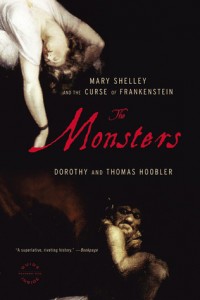
The Monsters by Dorothy and Thomas Hoobler

Posted May 18, 2013 by Michael @ Knowledge Lost in Non-Fiction / 2 Comments

The Monsters by Dorothy and Thomas HooblerTitle: The Monsters (Goodreads)
Author: Dorothy Hoobler, Thomas Hoobler
Published: Back Bay Books, 2006
Pages: 400
Genres: Non-Fiction
My Copy: Personal Copy

Buy: AmazonBook Depository (or visit your local Indie bookstore)

It was a dark and stormy night on the shores of Lake Geneva, 1816. You’ve heard the story beforbe; Lord Byron challenges his friends to see who can come up with the best ghost story. Among the people include Percy Bysshe Shelley, his lover Mary Wollstonecraft Godwin, Mary’s stepsister Claire Claremont and Byron’s physician, John William Polidori. Two novels were born that very night; Mary Wollstonecraft Shelley’s (née Godwin) Frankenstein and John William Polidori’s The Vampyre. The evening begat a curse, too. Within a few years of Frankenstein’s publication, nearly all of those involved met untimely deaths.

First of all I want to point out that authors of this book Dorothy and Thomas Hoobler don’t actually believe this was a curse. Well at least I hope they don’t, this is a little gimmick to help sell the book and I think they just wanted to explore the interesting fact that they did all die young. This book is purely a biography on Mary Shelley that focuses on the night in 1816 and the novel Frankenstein. I was hoping for something about struggling to write something as great as Frankenstein or how the novel has been destroyed by pop culture.

The book starts out with the life of William Godwin and Mary Wollstonecraft, the famous philosopher and feminist parents of Mary Wollstonecraft Shelley. The two had very different personalities and they seemed like a very odd couple but I think they really complemented each other. Sure, they had their problems but nothing like their daughter.

This brings us to the bulk of the book, Mary Shelley and the young romantics. These were the original rock stars and their lives, no soap opera will ever come close to the drama and complexity as the real lives of the romantics. I picked up this book to learn about these poets after reading A Treacherous Likeness and I wanted to know more about them. This was a very accessible biography, which focuses primarily on Mary Shelley but it gives you a great insight into her life. I don’t pretend to fully understand the Romantics, they are way to complex but I feel I have a better knowledge into their lives.

My interest in the Romantics has gotten stronger thanks to The Monsters by Dorothy and Thomas Hoobler. I have a few other books I plan to finish off in on the topic and I doubt I’ll stop there. I love the quotes and the referencing in this biography; I’ve often found that I wonder about the source of information in biographies that don’t reference so it was so handy to have that reference.

While this book does primary focus on Mary, it was nice to learn a little more of Percy Bysshe Shelley, Lord Byron, Claire Claremont and John William Polidori. I didn’t previously know the story of the original publication of The Vampyre; I found it fascinating and heart breaking for John William Polidori. It is always great to find new stories about these amazing talented people.

One thing I liked about this biography, especially after reading A Treacherous Likeness, is the fact that it didn’t try to sway the reader’s opinions; it stuck to facts and left it to the readers to make up their own mind. This was a refreshing change from the opinionated A Treacherous Likeness and I really enjoyed the experience of learning more about these poets. I’m sure there are better biographies on Mary Shelley out there but The Monsters is worth checking out as well.


The Great Gatsby by F. Scott Fitzgerald

Posted May 17, 2013 by Michael @ Knowledge Lost in Classic / 0 Comments

The Great Gatsby by F. Scott FitzgeraldTitle: The Great Gatsby (Goodreads)
Author: F. Scott Fitzgerald
Published: Scribner, 1925
Pages: 180
Genres: Classic
My Copy: Paperback

Buy: AmazonBook Depository (or visit your local Indie bookstore)

Nick Carraway moves in next door to the young and mysterious millionaire, Jay Gatsby. Nick is soon following the dramas of Gatsby’s quixotic passion for Daisy Buchanan. Often hailed as the “Great American Novel”, F Scott Fitzgerald’s magnum opus is a portrait of the Jazz Age and the great American dream.

We all know the story, we’ve either been forced to read it in school or we’ve seen the movie, I wanted to reread this in the lead up the terrifying new adaptation by Baz Luhrmann. I remember reading it when I first started become a serious reader and I thought I would look at what I originally wrote and try and dissect and expand on it now that I think I’ve improved in reading critically.

First of all “One of the most interesting aspects of The Great Gatsby is the Point of View”, while this has probably been covered many times by people I will just cover this off again. Carraway tells the story of a group of destructive personalities but first you have to understand Nick before trying to understand the others.

Without going into anything controversial by claiming Nick Carraway was bisexual and in love with Jay Gatsby, let’s just say he idolised him. A Yale graduate, World War I veteran and relatively well off (inherited money), Carraway moves in next door to the charismatic and much talked about Jay Gatsby. But this leads to the question of just what is the relationship between Nick and Gatsby; is Jay using Carraway to get closer to Daisy? I think there friendship was real, Nick envied the person Jay was and he in return grew fond of Carraway.

The book does a decent job at shedding light on the egotistical, desire driven tendencies of human nature.” While this is true I think to expand on this you really need to look at what F Scott Fitzgerald was trying to do with this book, and to do that we must first look at the colour scheme (weird I know). There are two primary colours that play an essential role in this book. Firstly, green, the light over the river on the East Egg dock. The representation of Gatsby’s hopes and dreams, the green light represents the American dream. This would be considered objectification, that Gatsby believes that his American dream is to have Daisy.

The other major colour in this book is Gold or Yellow, the symbol of wealth and beauty. I think Yellow and Gold play as much of a significant role as the green light. This is true American goal; wealth and beauty, to be able to live without a care in the world. This is what I think Fitzgerald was trying to show us; like I said in my original review of this novel, these people are egotistical and desire driven and I think the author wanted us to see that. The problem with a carefree life is the fact that you don’t care about anything other than yourself and you don’t realise just how destructive that can be.

Carraway starts out starry eyed towards high society but slowly becomes more and more uncomfortable with the unrestrained materialism and lack of morality that comes with it.” I think that Carraway found himself sucked into high society and captivated by the presence of Gatsby. While in some respects he remains an outsider, he tries desperately to fit in and pursue the idea of the American Dream. The Great Gatsby tries to highlight the decline of this so called American dream, which originally was about discovery, uniqueness, and the pursuit of happiness but in the 1920s it seemed to decline and represent easy money and a social of leisure.

F. Scott Fitzgerald paints a unique literary picture of the time and life style, with interesting, snooty and slightly annoying characters.” I will admit that I sigh every time I read this sentence. Why was I the type of person that wanted likeable characters? Just because I hate these people, doesn’t mean that the book isn’t great and that they don’t have anything significant to teach. These people are supposed to be unlikeable, Fitzgerald isn’t trying to show us how great high society is; he wants to point out the flaws and what he sees as the decline of the American dream.

Everyone seems so self-absorbed and never think of each other; which helped drive the story beautifully.” We can probably argue if this really is the great American novel or even the great Jazz age novel. I know a lot of people hated this novel but I think there is so much this book can teach us and it’s less than 200 pages. F Scott Fitzgerald did a brilliant job of layering everything on top of each other that I feel the need to read this book again (already) just to see what I might pull out of it this time.

Someday I would like to do a post about motifs because there are so many recurring themes in the book, I think this would be a perfect novel to explore the idea of what a motif is. I read all the reviews from people that hate this book and I feel like I want to use that dreaded saying, “I don’t think you got what this book is trying to do”. But I hope this helps understand what this book really is about; while pointing out what you think I got wrong.

I reread this novel in anticipation of the new adaptation, which I’m scared about; I remember the old movie and think it failed to capture the true essence of this novel. This leads to two questions I want to ask the readers; “Is The Great Gatsby unfilmable?” and “Was Gatsby truly great?”.  I know my answers, so I’ll be interested to see what others think. I’m surprised how much fun I had dissecting my original thoughts and expanding on them.


Guards! Guards! by Terry Pratchett

Posted May 16, 2013 by Michael @ Knowledge Lost in Fantasy / 0 Comments

Guards! Guards! by Terry PratchettTitle: Guards! Guards! (Goodreads)
Author: Terry Pratchett
Series: Discworld #8
Published: Orion, 1998
Pages: 317
Genres: Fantasy
My Copy: Borrowed from a Friend

Buy: AmazonBook Depository (or visit your local Indie bookstore)

The Unique and Supreme Lodge of the Elucidated Brethren of the Ebon Night is a secret organisation that plans to overthrow the Patrician and install a king of their choosing; a puppet under the control of the Supreme Grand Master. Using a stolen magic book to summon a dragon on the people of Ankh-Morpork, the plan is to slay the dragon, rid the city of its tyranny and have their hero take the throne.

Guards! Guards! attempts to parody Hard-Boiled and Noir novels with elements of police procedurals but there is one thing that really doesn’t match this style. Guards! Guards! is writing in third person with an omniscient and reliable narrator, this really seems weird since the style of novel it is trying to parody is often first person and unreliable. I’m not sure if it is the fact that all Terry Pratchett novels are written in the same style but it really didn’t help me connect with the novel, let alone notice most of the parodies.

This is a simple quest plot, The Unique and Supreme Lodge of the Elucidated Brethren of the Ebon Night obviously want to take over the throne but there are a few other plotlines that are on a quest for power. Wonse (The secretary to the Patrician) had power; he could make commands and have them carried out and he quite enjoyed that. Now he has lost this power, he wants it back. The Patrician wishes to hold onto his power as the ruining king, ultimately his calm demeanour is what aids him through the tyranny.

One thing I thought was difficult about this book was the language; while this novel uses modern language there is a lot of in world slang that took a while to get used to. There was an incident where a character got intoxicated and the words started being misspelt for emphasises. This can be effective but you don’t find out this is due to his intoxication till you read through some of his gibberish. Sometimes the language can be effective like when Death speaks, he only uses capital letters and when the dragons are speaking they use italics. Overall it just took so much to get used to. If you are a reader of the Discworld series, this might not seem too difficult but for an outsider like me it really affected my enjoyment of this novel.

This novel wasn’t broken into chapters; it’s just three hundred plus pages of continuous story. I’m not really sure the reason behind this, but the only way the novel switches between the plot and subplot are paragraph breaks. I’m not saying it is necessarily a bad thing but when you want to put the book down, I think it makes it hard to find a decent stopping place.

I’ve been very vocal about my struggle to connect with fantasy novels; I discovered I do enjoy the urban fantasy/noir blends (The Dresden Files, Bobby Dollar series) so I thought maybe this would be similar. Sure this book was funny and some of the parodies worked really well but it missed any crime element to really work for me. To make a good fantasy/noir blended novel, I think it needs to be a lot darker, with some cynical elements; it doesn’t necessarily need a crime but a quest that will cause an inner struggle within the protagonist will help.

If someone has a suggestion for a decent fantasy novel with some noir elements to it, please let me know. Guards! Guards! is a very funny fantasy novel; this is the second Discworld novel I’ve read and while I did enjoy them, I felt like the both lacked something. I guess I much prefer darker stories; this is just light entertainment and sometimes you need that, but it’s not a series I plan to read in its entirety.


The Reader by Bernhard Schlink

Posted May 15, 2013 by Michael @ Knowledge Lost in Historical Fiction / 0 Comments

The Reader by Bernhard SchlinkTitle: The Reader (Goodreads)
Author: Bernhard Schlink
Translator: Carol Brown Janeway
Published: Orion, 1998
Pages: 216
Genres: Historical Fiction
My Copy: Personal Copy

Buy: AmazonBook Depository (or visit your local Indie bookstore)

The Reader tells the story of the teenage years of Michael Berg while recovering from hepatitis and his passionate affair with a mysterious woman twice his age. Later going on to study law and discovering that this woman was involved in the death march from Auschwitz. The book continues on through the war crimes trial and the relationship between the two after her imprisonment.

Bernhard Schlink was born in 1944 (one year before the war ending), studied law then became a professor of public law and the philosophy of law. His passion for reading comes from a teacher in his high school who encouraged his reading and discovery of literature. Later he discovers that this teacher was a member of the Gestapo and involved in some questionable practices. His first series of books featuring a sixty year old private investigator Gerhard Selb (Selb translates to Self) also had a questionable past during the war and his coming to terms with this. This is interesting since the books in the series are called; Self’s Punishment, Self’s Deception and Self’s Murder. Also he has a collection of essays called Vergangenheitsschuld which translates to Guilt about the Past, which leads you to believe that Bernhard Schlink has a fascination about the effect of World War II has on the next generation of Germans.

This is not a book about the Holocaust novel; while this historical event plays a role, this is rather a novel that gives you a lot of questions and problems to think through. Divided into three parts; the summer of love, the trial and imprisonment; The Reader explores three different scenarios as well as the notion of keeping secrets. At the start of the book Hannah comes across as Good Samaritan trying to help Michael who was throwing up in the street. Later he pursues her and she gets an impression that he is old enough to be out of school; he doesn’t correct her, thinking the papers he leaves behind was enough for her to know his true age but we later finds out she would never have looked at them. When she finds out, they are in bed together and he tells her that he is skipping classes to be with her. She throws him out and it’s not until very later in the book we discover just how important education is to her. Hannah is his first love, he is too young to fully understand the kind of relationship they are having, while Hannah remains guarded and tries to protect both her public and private shames.

While most people focus mostly on the relationship between the two, but there is so much more to look at in the novel. Years later Michael finds Hannah again in a trial and the reader is asked to consider two things; the nature of her guilt and the significance of her other secret (the one she is more ashamed of it). While she was never the ringleader of her charges and she was following orders, when it came to the damning report, she let the court believe she wrote it to continue to hide her illiteracy. This brings to the overall concept to the book; ignorance is not necessarily innocence. The pride to protect herself from people discovering of her illiteracy works against her though out the entire book. She gives up promotions and lands herself in prison all to protect this secret.

This leads into the third part; years later we find that Michael starts reading to Hannah once again. Sending cassettes both the reader and Hannah mistakenly get the impression that this is an act of affection and when Hannah eventually finds out,  we also find out just how cold he has been acting. I’m not sure if he was trying to gain back the power in their relationship or just the bitterness of his life doing it but we are led to believe he still cares about Hannah when all he really cares about is that summer fling when he was still a teenager.

The book wants you to recognise that you are the reader, and Hannah, in particular, wants you to realise just how blessed you are to be able to read this book. I remember there was a great movie adaptation of this book a while ago; while very meta to have a movie about reading, I’m surprised how well it came together. I didn’t remember much about this movie while I read this but it all come back to me as I discovered it in the book. It was a great feeling to remember as I read and not know what would happen next.

I really loved this book; there is that element of uncomfortableness with the relationship at the start, which really is something people can be afraid to talk about but with a book like this it can be scandalous.  There are also so many other interesting elements that I think are equally valuable; especially with the whole German shame towards what they did in World War II and the next generation having to deal with it. While the movie closely follows the book, it is still worth reading; I highly recommend it.


Supporting Your Favourite Authors

Posted May 13, 2013 by Michael @ Knowledge Lost in Literature / 0 Comments

How do you support your favourite authors? I just listened to a great podcast of The Readers (my favourite bookish podcast, so check it out) about supporting authors and I thought I would add my thoughts as well. Sure, a lot of authors only want reviews and being a book blogger I get a lot of requests to read books and review them when really my blog is just a way to document my reading journey and talk about my favourite topic, books. I have a review policy which basically says, I’m happy to accept books but there is no guarantee that I’ll read them. If I do read a book, I will write something about it as it is part of documenting my journey but I do try to be constructive and say why the book didn’t work for me but I never go out of my way to be mean. Book reviews are a great way to share thoughts of a book and help support the author but there are so many other ways to do so now.

In a world of social media you can like them on Facebook or follow them on Twitter or if you are a fan of tumbleweeds you can try Google+ (most of my favourite authors are no longer living, so if I follow them that would be a little weird). I’ve had mixed experiences with authors on Twitter; some will just retweet every nice thing said about their book (I know one that will retweet everything, even the bad stuff) and sure that might be good in a way but these authors are not worth following. I follow some great authors that interact with their follows and it can be a great experience (sometimes if you end up not liking the book, they suddenly unfollow you). I had an interesting experience with an author who contacted me to thank me for reading and reviewing his book even though I didn’t like it and while I felt a little bad for not liking it after the thank you I now have more respect for this author for going out of his way to interact with his readers.

There are also book signings and bookish events, you can show your support for an author by going and hear them read or talk about their book. This is a good way to meet the author and get a book signed. I think you learn so much about an author by actually meeting them and see how they interact with the readers and they are also a lot of fun. I remember going to see an author and realised I was wearing a shirt that said “I’d rather be reading Dostoevsky” and this particular author ended up signing my copy of the book with an apology for being neither Russian or dead, which was really amusing and makes that book that much more special (even though I wasn’t a huge fan of it).

But when it comes down to it, the best way to support an author is just reading their books. Not necessarily buying their book, even going to the library (your local library needs support too) is a way to support the author (I believe they still getting royalties from library books). It’s not always about the royalties, sharing their creativity is important as well and in some cases what the authors value the most. If you love the book maybe go buy the book too, just to give them that extra support but remember to support your local indie bookstore whenever possible; they don’t always have the book you are looking for but if you don’t support them they may not be there for long.

So when it comes down to it, I personally feel the best way to support an author is to just read their books and maybe buy them (but never pirate them). A review helps to promote their book as well, but that really comes down to personal preference. Goodreads may not be perfect but I do trust my friends opinions of a book, rather than reading a stranger’s review. I would love to know any other ways we can help support the authors we love or any stories you would like to share that helped change your opinion of an author.


The Last Good Kiss by James Crumley

Posted May 12, 2013 by Michael @ Knowledge Lost in Pulp / 0 Comments

The Last Good Kiss by James CrumleyTitle: The Last Good Kiss (Goodreads)
Author: James Crumley
Series: C.W. Sughrue #1
Published: Vintage, 1978
Pages: 244
Genres: Pulp
My Copy: Personal Copy

Buy: AmazonBook Depository (or visit your local Indie bookstore)

James Crumley’s private investigator CW Sughrue finds himself searching for a runaway young woman, missing for ten years. But this is not how it started out; he was hired by a woman to find her ex-husband, Abraham Trahearne before he drinks himself to death. A confrontation in the bar that results in Trahearne being injured in hospital puts Sughrue in a position to look for this missing woman.

This hard-boiled novel is told in a way I don’t think has been done enough in a pulp crime novel. A parallel narrative exploring the problematic relationship between Sughrue and the wandering alcoholic novelist, and the three femme fatales in Trahearne’s life, just to make things more complex. Apart from that, you have the usual elements that make up a hard-boiled novel; alcohol, money, love, sex, power and violence.

Somehow James Crumley has a refreshing voice for this genre; I’m not sure if it is just that I’ve not read enough hard-boiled novels set in the seventies or there is something else there. I would put Crumley somewhere between Raymond Chandler and Jim Thompson; he doesn’t have the plotting skills and wit that Chandler has but he isn’t as violent and philosophical as Thompson. The narrative, while in a first person point of view, manages to switch between making the reader feel like they are in the same room trying to piece this mystery together, and then all of a sudden you are inside CW Sughrue head reading all his thoughts, emotions and memories. This isn’t easy to do but Crumley does this so seamlessly that you don’t really notice it happening. This narrative, mixed with the cynicism and low regard to society is what I think makes this book so refreshing.

This novel deals a lot with sex; Sughrue’s personal integrity and professional ethics are corrupted by the sexual desire towards Catherine; a desire she uses to manipulate him. Trahearne hasn’t been able to be creative because of his sexual desire with Melinda and his attraction towards his mother. Then there is Betty Sue, who just has a sexual desire towards everyone in the book. It’s important to know at the core of this books portrayal of sexual desire is the cynical belief that such corruption is unavoidable and even inevitable.

The Last Good Kiss also deals with the idea of identity and trying to escape your past, but ultimately realising you can’t run. Betty Sue hides her true self between layers of masks and other identities; she is running from her sexually exploitative time in San Francisco but it all comes back in the end. Trahearne can’t escape his infidelities, alcoholism and his ex-wife’s fury. All of them fail to realise that the past defines the present. Their mistakes in the past do not have to define their future but helps them grow; this book just ends up being a twisted celebration of life’s obstacles shaping our personality.

Admittedly I found myself being bored in parts of this book and wanting to skim read, but I persevered and found some interesting elements that stopped this from being a generic crime novel. CW Sughrue, is an alcoholic ex-army officer turned private investigator and that dark past is what makes me want to keep reading the series, just to discover what he is running from.  The Last Good Kiss has been described as the most influential crime novel of the last 50 years, influencing people like Michael Connelly, George Pelecanos, Dennis Lehane and even Neal Stephenson; that alone is an impressive reason to check this book out. While I think I prefer Jim Thompson for style and message, James Crumley is an author I plan to explore more of.


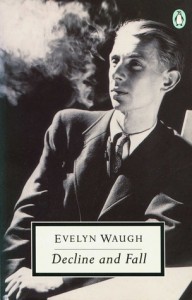
Decline and Fall by Evelyn Waugh

Posted May 11, 2013 by Michael @ Knowledge Lost in Classic / 4 Comments

Decline and Fall by Evelyn WaughTitle: Decline and Fall (Goodreads)
Author: Evelyn Waugh
Published: Penguin, 1928
Pages: 216
Genres: Classic
My Copy: Personal Copy

Buy: AmazonBook DepositoryKindle (or visit your local Indie bookstore)

Paul Pennyfeather finds himself taking a job at a public school called Llanabba after being expelled from Oxford for indecent behaviour. He takes up some private tutoring to get close to the student’s mother, Margot Beste-Chetwynde. Their relationship forms and they are soon engaged; all the while Paul is still unaware that the main source of her income is a number of high class brothels in South America. Evelyn Waugh’s Decline and Fall is a black comedy satirising British society in the 1920s.

This is my first Evelyn Waugh novel; why did I pick this over Brideshead Revisited? Simple answer is a friend loves this book and I thought I would see if I trust her taste in literature; since they are more of a genre reader. Decline and Fall gets its name from Edward Gibbon’s The History of the Decline and Fall of the Roman Empire, a book that traces the trajectory of the Roman Empire, and Western civilisation as a whole. There are some who also attributes the title to Oswald Spengler’s The Decline of the West, a philosophical book that rejects the Euro-centric view of history. Both books are important to remember as both look at western civilisation and reject the idea that it is the be all and end all.

Decline and Fall satirises a world where the British social institutes (like schools) have lost their integrity and their authority. The church has lost its faith and the aristocracy have declined to the same level as the masses since the educational system teaches nothing worth learning. The situation is both humorous in its approach and also very dystopian. Waugh has a great deal of fun playing with this world but when you reflect on this book and take out all the comedy, it really is quite scary; sure I’m for equality in the social classes but the prediction of a failing education system is not something I look forward to.

There are two major literary techniques within this novel that I feel are worth looking at; first of all there is the humour which, while funny, leaves a lot to the reader’s imagination with the deadpan narrative of the newspaper reporter. For all I know the book really isn’t about the decline of education and society but the way this book is written has set my mind running in that direction, it could have filled in the blanks on its own. The second is the way this book parodies English literature within the book, from a reference to Shakespeare’s Othello to many more. A better English major than I could probably pull this book apart a lot better and tell you every single literary reference within the book.

This book confronts the reader with some difficult moral decisions all the while doing it in a tone that reminds me of Hitchhiker’s Guide to the Galaxy and Monty Python. The general decay of society is the major theme throughout this book but you might not even pick up on this if you are only reading this for the humour. There are elements of both Horatian and Juvenalian satire within the book and I like the way Evelyn Waugh writes it so you can read in either form and still get some enjoyment from Decline and Fall.

After reading this novel, I’m keener than ever to check out Brideshead Revisited and some of his other works. This is not a perfect novel, I did find myself a little bored at times and even lost but Decline and Fall has some interesting ideas worth reading about. I can’t help but wonder if reading The History of the Decline and Fall of the Roman Empire or The Decline of the West might have a positive effect on this novel. I won’t say this is a great novel but I’m glad to have read and dissected Evelyn Waugh’s Decline and Fall.


Main Street by Sinclair Lewis

Posted May 10, 2013 by Michael @ Knowledge Lost in Classic / 0 Comments

Main Street by Sinclair LewisTitle: Main Street (Goodreads)
Author: Sinclair Lewis
Published: Modern Library, 1920
Pages: 448
Genres: Classic
My Copy: Personal Copy

Buy: AmazonBook Depository (or visit your local Indie bookstore)

Main Street; that primary street in every small town that is exactly the same, full of stores and guaranteed to run into people you know. Carol Kennicott finds herself moving to Gopher Prairie, Minnesota with her new husband. Carol is a liberal, free spirited city girl who finds herself appalled by the backwardness of this small country town. Her disdain for the town’s ugliness and smug conservatism compels her to change it.

I grew up in Gopher Prairie; well not exactly but when I was just starting high school I was moved from Sydney to a small mining town in North Queensland called Charters Towers, so I know what Carol was going through. Sure, it wasn’t the 1910’s but for someone that loves city life (even at a young age) this move was devastating. Main Street is a satirical novel by Sinclair Lewis about the pettiness, back-stabbing and hypocrites that make up a small town. I will admit that I had never heard of this book until I read Z: A Novel of Zelda Fitzgerald. Knocking This Side of Paradise by F. Scott Fitzgerald off the number one spot, Main Street became extremely popular becoming one of the major best sellers of its time. Naturally having read about the impact this book had on the Fitzgerald’s and the readers of the time, I looked this book up and immediately added it to my “to read” list.

Carol is the heroine of this novel; enthusiastic and with high hopes for her future, she finds herself in a town that expects her just to play the house wife. Her love of sociology and her degree in English literature appear to be useless to Carol in Gopher Prairie. She feels like an outsider and even when she tries to fit in by throwing a Chinese themed party (where the guests feel bewildered by the strangeness of it all) or joining the woman’s group, the culture shock leaves her unsatisfied. I had to laugh at the woman’s group when they gathered to discuss poetry, Carol felt excited and asked which poets they will discuss. Their reply was ‘all of them’ and she finds herself in a very generic conversation about poets. At the end of the meeting she enquires about other poets which were missed and how they could improve this discussion, in which they decide that one extra meeting devoted to poetry will cover everything.

“I do not admit that Main Street is as beautiful as it should be! I do not admit that dish-washing is enough to satisfy all women!”

Carol struggles to find her identity within this town, she thinks of herself as some sort of artist and intellectual but Gopher Prairie doesn’t appear to give her the stimulation she so desires. She sees the other woman in the town as lacking of intelligence, curiosity or even a personality and never feels like she will be satisfied with all the other women. Living in the small town slowed her path to self-discovery; I feel like in any other circumstance Carol would have discovered her true identity a lot sooner.

The people of Gopher Prairie have grown complacent and comfortable with the familiar. So when Carol tries to make a change, she is met with resistances; not just because she is a woman but also being an outsider. While she is trying to get involved and make the town a better place by proposing they revitalise city hall and turn it into a meeting centre for events and dances, the town is worried she might make young people aware of sexuality while they are still in high school. You have to chuckle at their backwards ideas, I don’t think I ever thought improving the town would ever lead to sexual corruption of the youth.

I really enjoyed this satirical novel; while people thinking this novel wasn’t funny did lead me to write a post about understanding satire, I did think this was humorous. I think this is just me relating to the backwardness of a small town like Gopher Prairie. Times have changed a lot since the 1910’s but in a small town it kind of feels like nothing has changed. Not necessarily an easy book to read, but I really did like the culture clash between the “wholesome” small town and an outsider.  Sinclair Lewis got it right when he wrote about just how difficult it is being an outsider in a town where everyone knows everyone.