To celebrate 50 years of publication this month, The newly formed Literary Exploration Book Club decided to read Harper Lee’s classic To Kill A Mockingbird. The book has been described as a southern gothic novel which gave the book a certain appeal to me and was one of the main reasons I decided to read this book. What I found left me a little disappointed. To begin with, I found the book didn’t start to get interesting till chapter 11. I know the back story was needed, it was a different time, but I didn’t much care for the childhood of Jean Louise, Jem or even Boo. To me it felt like it dragged on and could have used some cutting down, but some people like to hear about life in the 1930’s. When I did eventually get to chapter 11, I did start to enjoy the book a lot more and finally at chapter 17 we started to get into the real story of To Kill A Mockingbird; The Court Case.
Atticus was the only truly enjoyable character for me. He was a wise and fair man, though he never wanted to take Tom Robinson case he did his upmost to make sure he was treated fairly and got the best representation possible. Atticus was the shining light throughout this book; he was a scholar and gentlemen through thick and thin. Once the court case was over and Atticus no longer had to deal with Tim Robinson the book again went back to its original slow pace and eventually fizzled out.
The book wasn’t all bad, it was well written and tackled some important topics, including racial injustice, class and even sexuality. I can see why this is a classic book and I think Harper Lee did a fantastic job at shedding light on some important social issues, the story just felt to slow for my liking, but I can understand why so many people enjoy this book.
One of the most interesting aspects of The Great Gatsby is the Point of View. I don’t think I’ve read a book in the point of view of an onlooker, which was written as well as this F. Scott Fitzgerald classic. The book does a decent job at shedding light on the egotistical, desire driven tendencies of human nature. Nick Carraway tells the story of a group of destructive personalities. Carraway starts out starry eyed towards high society but slowly becomes more and more uncomfortable with the unrestrained materialism and lack of morality that comes with it.
F. Scott Fitzgerald paints a unique literary picture of the time and life style, with interesting, snooty and slightly annoying characters. Everyone seems so self absorbed and never think of each other; which helped drive the story beautifully. The book is very familiar to the movie, though the book is far superior. I thoroughly enjoyed this book.
L’Étranger, known as The Outsider, or The Stranger by Albert Camus offers an interesting perspective of the philosophical movement; existentialism. Though, as a stand alone novel, it was very simple and uneventful. You need to read this book for its philosophical merit or not read it at all. Previously, I wrote a post about this book and The Cure song Killing An Arab, in which I talked about how the book covered topics like; absurdism, atheism, determinism, existentialism, nihilism, and stoicism.
I thought I needed to read the book and try to understand the connections. The book does an interesting job at covering this issues without being too noticeable. Sure, if you spend your time digesting or picking apart books, you are sure to notice it, but if you are reading the book just for the story, then you may miss the complexity of the story.
It is unusual to read a book that has a complexity to it, but still tells the story too simply. It might have lost some of its density when translated from French to English. I just look for more substance in my books, so I was a little disappointed.
Six months ago I started Knowledge Lost, though it wasn’t called that till later. I started this blog as a way to try and explain concepts and things that I had been learning. It was a real change for me; originally I didn’t have an interest in art, culture, literature and philosophy. I had an interest in writing and music; so when I started this I was lost a little, I wanted to try and make sense of what I had been learning, so the blog emerged. I combined previous blogs about my writing and what I had been reading to create this blog. I was very luck to find some readers and commenters really quickly which has helped me immensely along the way. Knowledge Lost took off really well, and I’ve managed to get well over 5,000 views (over 110 posts) in this period and readership appears to be growing. I hope this blog has been enjoyable for the readers as much as it has been for me.
I wanted to take the time to share with you the top 10 posts so far and my favourite ten.
One thing I think Lewis Carroll did right in Alice’s Adventures in Wonderland was the way he wrote a book suitable for kids and still enjoyable for adults. The characters in the book are so amazing that you can’t help but fall in love with them. Stand out characters for me included the philosophical Cheshire Cat and the melancholy Mock Turtle. The whole story was witty and full of amusing puns and is considered one of the best examples of literary nonsense. Alice’s Adventures in Wonderland overall is an enjoyable, well written and constructed tale and a surprisingly enjoyable book to read. I could possibly go on about the philosophy, the homages, or even the reflects to English society in the 19th century; but I will leave all that for the comments below. Read the book, enjoy the book and discuses the book. I really think this is one of those brilliant books that has so many elements worth discussing.
Belgian artist, René Magritte is one of my favourite surrealist painters. His paintings attempt to evoke emotion while never revealing the meaning of the weird art. ‘The Lovers’ (both pieces) are the most fascinating of his works – for me anyway. When I look at the two pieces the first thing that pops out is the fact that both people are yearning for love but are so oblivious to what is right in front of them.
This mentality is so common in today’s society. People are so self absorbed thatthese paintings always ring true. The Lovers have been interpreted many times and appears in many different mediums. Two modern rock albums come to mind straight away. The Mars Volta’s ‘Frances the Mute’ and Funeral for a Friend’s ‘Casually Dressed & Deep in Conversation’. The cover of Funeral for a Friend’s album is the more interesting of the two. If you look closely at the artwork you can see that the lovers are sitting on the rocks overlooking a storm’ representing the turmoils of life and how sometimes this gets in the way of love.
Of course with all art, people will interpret it differently; this is my interpretation and a little food for thought.
Recently I read Made In America by Bill Bryson, so I thought it would be appropriate to read Mother Tongue as well. Though there was a fair chunk of similar information in both books, Mother Tongue is just more relevant. While Made in America focused on the history of English in America; Mother Tongue focuses mainly on the history of English in general. Trying to cover questions like, “Why is there a ‘u’ in four and not in forty?” or “Why do we tell a lie and tell the truth?”
Bill Bryson does a great job of teaching and keeps the book interesting and sometimes humorous. Though the format and the style of the books are similar, I would recommend Mother Tongue over Made in America simply because the information is more relevant and covers all aspects of the English language.
Recommended for all English geeks, this book will give you a deeper understanding of the language as well as grammatical structures like amphibology. My wife might also be happy to hear that the book covers the topic of onomatopoeia.
I’ve been thinking a lot about flow and construction of sentences and whole paragraphs. Authors spend a fair amount of time on playing around with the words and sentence structure to find that all important flow and feel. It all comes down to how it sounds and reads on paper.
On paper, little things can really make a difference. Simple things like the term ‘had had’ which is acceptable English but on paper, doesn’t always look or sound right. Most of the time, the sentence works without the need for repeating the word.
I’ve been reading a fascinating book about what publishers look for in manuscripts. They look for any excuse to reject a manuscript and simple things, like two accompanying words starting with the same letter could be found sloppy. So it really is important to get the best manuscript possible. Rewriting is the most important and time consuming part of writing and wordsmiths probably spend most of that time making a sentence sound the best it can possibly be. I think writers can learn a lot from poets in this aspect.
It becomes very important to learn the proper use of semi-colons, colons, dashes and parentheses when you are playing around with sentence structure. Misusing one of them will disrupt the flow, and you may not notice it doesn’t sound right, when you read through later. Other things you need to look for are echoes, alliteration and resonance.
When we are at school, most English teachers taught us the importance of adjectives and adverbs. They taught us to try and be as descriptive as possible. Now as writers, we need to break this habit; but why? Here is what I’ve discovered.
Both the adjective and adverb are considered modifiers (adjectives modify nouns and adverbs, verbs). Typically they sound like good words to use but I have found, and most others may have also found, that they seem to drag out the sentence. I’m not saying to try and get rid of all adjectives and adverbs, just try to limit to only one modifier per noun or verb and if possible remove them all together. The reason I’ve found for this is that it just makes the writing tighter and flow more eloquently.
I know it’s hard to break the habit, but I do believe it will help your writing in the long run. Some things to remember and try;
In your writing try removing all adverbs and adjectives and see if the story still remains;
If needing an adjective or adverb, keep the most important one;
Experiment with your sentences. You will find interesting ways to tell the story and make the writing flow;
There is a common used saying when coming to writing “show, don’t tell”. The readers are usually smart enough to know what is happening (either by imagination or what has been said), eg; if it is a storm they will know it will also be dark, cold and wet. So at some point you will need to let the readers imagination do some of the work too.
Although I don’t live in America, it is obvious that they have had a big influence on the English language. Bill Bryson’s Made In America explores the history of America and the effects it had on the language. I found the most interesting parts to do with censorship in America, from titbit becoming tidbit, cockroach becoming roach and to the extreme case of political correction which wanted to stop the use of terms like blackeye and blacksmith (but interestingly enough, not blackout). I feel I’ve gained some valuable insight into why American English is different to the commonly used Queens’ English, while getting a history into commonly used terms. Bill Bryson writes in such a way that it makes this book easy to read and at times humorous, which I feel is what you want in a Non Fiction book.

 Title: To Kill A Mockingbird (Goodreads)
  Title: The Great Gatsby (
 Title: The Stranger (
 Six months ago I started Knowledge Lost, though it wasn’t called that till later. I started this blog as a way to try and explain concepts and things that I had been learning. It was a real change for me; originally I didn’t have an interest in art, culture, literature and philosophy. I had an interest in writing and music; so when I started this I was lost a little, I wanted to try and make sense of what I had been learning, so the blog emerged. I combined previous blogs about my writing and what I had been reading to create this blog. I was very luck to find some readers and commenters really quickly which has helped me immensely along the way. Knowledge Lost took off really well, and I’ve managed to get well over 5,000 views (over 110 posts) in this period and readership appears to be growing. I hope this blog has been enjoyable for the readers as much as it has been for me.
 Title: Alice's Adventures in Wonderland (

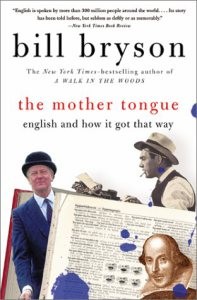 Title: Mother Tongue (
 Title: Made in America (