Category: Literature

How Frankenstein Changed My Life

Posted June 14, 2018 by Michael @ Knowledge Lost in Literature / 2 Comments

Two hundred years ago, a book was published that literally changed my life. It is very rare to say that a book could have such a life changing effect on someone but in my case it is actually true. It happened about nine years, without going into too many details, I was not happy with myself. I was directionless and went through a self-destructive phase. While it was not just literature that saved me, I do have to give credit to my wife as well. Books ignited the spark in me that made everything else click into place. I am a very different person to who I was back then, I suddenly turned into a passionate and voracious reader thanks to Mary Shelley’s Frankenstein.

It all started with when I discovered a little radio show called The Culture Club by Craig Schuftan. This show explored similarities between music and the art world. This peaked my interest and I started reading his book Hey, Nietzsche! Leave Them Kids Alone which looked at the similarities modern rock had with the Romantic period. Looking at bands like My Chemical Romance, Weezer, and The Smashing Pumpkins. The Romantic poets were the rock stars of their time, and their angst felt very similar. I knew I had to read Frankenstein and it all fell into place from there. Reading this classic, I quickly identified with the creature Victor Frankenstein had created. Although his pain was far more real than my angst, I have people who care about me, I was just an outsider.

My feeling of not belonging in this world was similar to what I was reading in this novel. Frankenstein was the first book I picked up because of Hey, Nietzsche! Leave Them Kids Alone and I did that because of one of my favourite Smashing Pumpkin songs, Disarm. In this song Billy Corgan fantasises about cutting his parents limbs off, because he hated them for bring him into the world.

“It’s about chopping off somebody’s arms.. The reason I wrote Disarm was because, I didn’t have the guts to kill my parents, so I thought I’d get back at them through song. And rather then have an angry, angry, angry violent song I’d thought I’d write something beautiful and make them realize what tender feelings I have in my heart, and make them feel really bad for treating me like shit. Disarm’s hard to talk about because people will say to me ‘I listen to that song and I can’t figure out what it’s about.’ It’s like about things that are beyond words. I think you can conjure up images and put together phrases, but it’s a feeling beyond words and for me it has a lot to do with like a sense of loss. Being an adult and looking back and romanticizing a childhood that never happened or went by so quickly in a naive state that you miss it.”  — Billy Corgan on Disarm (RAGE, 1993)

This tenderness that Corgan reflects in Disarm is not dissimilar to the creatures own feeling. One of the most common themes I get while re-reading Frankenstein is this feeling of how society treats people who are different. For the creature, he came into this world and was immediately rejected by his creator. He was also rejected by everyone he encounters. He pleads with Victor Frankenstein to create him a companion; that is all he wants. He came into this world with love in his heart, but was denied it at every turn. Most of my early reading life focused on this idea of an outsider and how the world treated them. Books like American PsychoPerfume by Patrick Suskind and the Dexter Morgan series all deal with these monstrous characters and how the world and their situation has shaped them. I found comfort in the exploration of the outsider in literature. The idea of blaming society for the way I was felt good, but with my new found thirst for literature came a better understanding of myself and the way the world works. Nowadays I like to read transgressive fiction because it is very different to my own life but while writing this article I cannot help but wonder if it was originally because I identified with them more than with a protagonist that gets a happy ending.

Re-reading Frankenstein again I cannot help but reflect on how different each reading experience really is. There are so many different ways to read Frankenstein, commonly there is the idea of science taking things too fast, or the dangers of playing God. Or perhaps Mary Shelley wants to simply say actions have consequences. When I studied Frankenstein in university I knew a little more about Mary Shelley, so I was looking at Frankenstein with some context.

Before Shelley wrote Frankenstein she had given birth to a daughter, two months premature. This daughter only lived a few weeks, a year later she gave birth to William Shelley. After the birth of her son she suffered from postnatal depression. The birth of William happened a few months before the story of Frankenstein was conceived, so it wasn’t too surprising to see William’s name in the novel. William was Victor Frankenstein’s youngest brother, who was strangled to death by the monster. So, either Mary Shelley’s depression manifested an urge to strangle William, or there is something far more complex happening in the novel. Looking at the story arc of William’s death, we know a young woman is accused of the murder. So maybe there is something here to be said about the mother-child relationship, especially with the idea of maternal guilt and thinking about her lost daughter.

Maybe you want to explore this idea of creating life without the need of a woman, or maybe this is just a parody of creationism. Even the subtitle of ‘the Modern Prometheus’ means you can look at the similarities between this novel and Greek mythology. Paradise Lost by John Milton is another piece of literature that is often explored in relation to Frankenstein. I am struck by how many different ways we can look at Frankenstein and as I develop my own skills in analysing literature, I often return to this classic and see what I can find with a re-read. Mary Shelley is a very interesting person to read about, and I have picked up a few biographies on her, including The Monsters: Mary Shelley and the Curse of Frankenstein by Dorothy & Thomas Hoobler and Young Romantics: The Shelleys, Byron and Other Tangled Lives by Daisy Hay (my next one will be Romantic Outlaws: The Extraordinary Lives of Mary Wollstonecraft and Her Daughter Mary Shelley by Charlotte Gordon). I find knowing the context only enhances my enjoyment of a book. I know people read for many different reasons but for me it is all about educating and improving myself. I do read for escapism but I tend to enjoy a novel more if there is some interesting themes to explore.

For someone who has only been a reader since 2009, I feel like I have a lot of literature to catch up on but I still feel the urge to revisit my favourites over and over again. I started off wanting to re-read Frankenstein every year but that quickly faded away, but I still like to revisit the text, it still remains one of my favourites. Did you know there are two different editions of Frankenstein out there? The book was originally published in 1818 but it was then republished in 1831 with revisions made by Mary Shelley. While the 1831 edition is commonly the one that gets published, I like to switch between the two different editions.

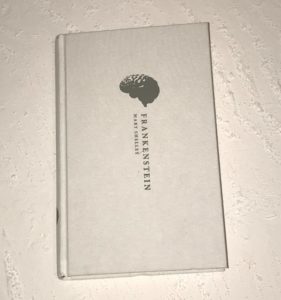
I have lost count of how many copies I own of Frankenstein. I own some beautiful editions including a new hardcover of the 1818 text from Oxford World Classics which I am currently reading. The book means so much I have copies all over the house, and one at work. Plus there is the ebook and audiobook edition I can access from my phone at any time. Literature plays such a huge part of my life, even I have trouble imagining my life without them. Frankenstein played a big part in my own transformation. All I can hope is that people continue to find something in this piece of classic literature. I will be re-reading this for years to come and I hope it continues to make an impact to people over the next two hundred years.

This beautiful edition of the 1818 text of Frankenstein was sent to my by Oxford World Classics

This review was originally published in the literary journal The Literati


Do Reading Statistics Inform My Reading?

Posted May 8, 2018 by Michael @ Knowledge Lost in Literature / 4 Comments

The only advantage to becoming obsessed with reading so late in my life is that I have been able to track all the books I have read. However I often wonder if this is an advantage at times, does tracking my reading have value? When I load up my reading spreadsheet, I see a list of every book I have read since 2009 – all 1020 books. It is pretty impressive, and I do love looking at statistics, my main concern is the simple fact that these stats are starting to inform my reading life too much. I do agree that it is useful to be balanced in my reading but worry that it is dictating all my reading.
I have become obsessed with reading books in translation and in 2017 one of my goals was to read 50% translations. An admirable goal, except the only reason I started reading more books in translation was because I saw that 50% of all books read were from American born authors. Only 5% were from my home country of Australia. I thought it was strange that my reading life was so out of balance and I set out to rectify that. Now the stats are slightly better with only 46% from American authors (20% in 2017).

The main reason I question the stats is because I feel like I am letting the statistics inform my reading choices rather than allowing myself to pick up books I want to read. If I was to be completely ignorant of how many male authors I read verse how many female authors I read (overall 70/30) would I focus on closing the gap. I am not saying that reading diversely is bad, I just wonder how much of my reading choices are based on restoring the balance.

For me, I would love to read to have an even balance between male and female authors, I would love to read less books from America but should this be my primary focus. I have to admit to myself that without knowing about this imbalance I might never have discovered how much I love books in translation. I do believe that being able to see the imbalance has lead me to make better choices, I have started to actively seek out women in translation and I am aware of the imbalance in the publishing world.

In 2018 I decided that my reading goal for the year would be no reading goal. I have thought about removing my statistics so I would not be influenced by it but I do want to have a better balance between male and female authors. In 2017 I managed to achieve 45% female authors and I hope that in 2018 that will be better (I am yet to find a non-binary author to read). I want to use my spreadsheet to keep myself accountable. But do I want to I want to be influenced in any other ways.

Looking at my spreadsheet I see non-fiction makes up only 12% of my reading. I have only re-read 3% and my fascination with Russian literature only equals 3.3% of my reading. 20% of the books I’ve read are from the library and 34% are audiobooks. 70% of all books read are from a new author I have never read before, which means I rarely read another book from an author I really enjoyed. 45% of the books I’ve read are published after 2010 and only 9% are books longer than 500 pages. 15% are books from the 1001 Books you Must Read before you Die list, which means I have a long way to go before achieving my life long goal of reading all the books on this list.

I look at all these statistics and I cannot help but wonder if they are necessary. Sure, it is nice to have reading goals but do the goals and the statistics get in the way of reading what you want to read? When I first got into book blogging and then BookTube, the amount of books I read greatly increased. In 2011 I read 150 books or 41580 pages, and these numbers increased in 2012 and 2013. While it is awesome to be reading so much, I think the problem was I was picking quantity over quality. In fact 50% of all my reading are books under 300 pages. I was a new reader who did not know what I liked so I explored many different genres and read the books I thought I should read.

Reflecting back on this time, I know that being a literary explorer was a good way to discover what I like and do not like but I hate the fact that I have read more YA (3%) than I have read short stories or poetry (1% each) combined. The fact that I have read more pages in fantasy than memoir shocks me because I don’t even like fantasy. I am not saying that reading these genres are wrong, they are just wrong for me. I have explored all the genres and I now know what I like. I am fully aware that these stats will change as I read more and eventually it will be a better reflection of my own reading tastes, I just mourn all that lost reading time.

If I had no idea about all the statistics, how different would my reading be? I wonder this far too often. I have learnt so much on my reading journey and I am pleased to discover new things on the way. There is far too much to read and not enough time to worry about balancing out all the statistics. Will my year of reading with no goals be fruitful? I am not sure but I am sure I will read some good books along the way.

I write this because I am curious to know how many others track their own reading statistics and has that informed your own reading. I do hope that the balance with translated books remains in my reading life but I probably need to focus a little more on the gender balance. Apart from that, I hope that no other stats inform my reading. I want to read what I want, when I want. I want to be able to consume quality over quantity and not be influenced by the hyped books.

Happy reading everyone.

This article was originally published in the literary journal The Literati


A Half Yearly Reflection

Posted July 12, 2017 by Michael @ Knowledge Lost in Literature / 8 Comments

I have been going through an extended period of self-reflection lately, mainly relating to my role in the world of literature. I love books and I constantly want to talk about them. However, I have struggled to find the motivation to do so. I went into the year with the goal of writing an essay a month; this was meant to push me to become a better writer and a better communicator of literature. I was able to produce a few essays and I am happy with them but I have not being able to push myself into producing more content. I really love my blog and I often see it as a place to store my writing, and normally I am unconcerned if I am not producing content but I went into this year with the goal to become a better writer.

I am not writing this as a way to get compliments; I can see that my writing has improved since beginning this blog, I am just reflecting on my situation. For me, I feel like there is much further I need to go before I am happy with my writing, although by the time I get there I might feel different. I never see this as a problem, I think it drives me to be better. One of my biggest challenges is writing momentum. I can sit down to write an essay with plenty of ideas in my head and they come flooding out, but I tend to get to about a thousand words and I have lost all steam. I would love to write longer pieces but it is a challenge. This is an issue I have had for a while and the situation is improving. When I first started blogging I struggled to get further than five hundred words. Most of my writing comes from a single typing frenzy but I still need to edit and clean up my work. I am trying to work on a way to allow myself to continue on a topic and write over multiple sessions but the beauty in writing essays is that I can practise my craft in short sessions.

I have so many ideas that I would like to get down on paper (or in my case on my blog). I would love to start writing my bibliomemoir, which I am still unsure if I should share with the world yet, but I feel like my reading journey is interesting and maybe writing it down would be beneficial for myself. It does not matter what comes of it but I think a project like this could be a good way to practise editing my own work. I have not talked much about my process but I know where my weaknesses are and that is in the editing/revising.

I also have not been writing many book reviews lately either. Not because I did not read anything, but because I want to step further away from them. I think reviews have become the backbone of my blog and while I know I should do more of them, my new focus is on personal essays. I have a list of books I would like to review at some point but I have shifted away from the need to review everything I read. I want to talk about literature, however I want to do it in a way that is less like a review. It may be that I feel restricted by the review format and I just need to approach them differently. If I call it an essay instead of a book review, I might feel like I have more freedom to write about the literature I have been reading.

Since I have been reflecting on my writing goal, I might as well do the same with my reading goals. In a previous post I mentioned that I wanted to push the percentage of books in translation to 50%. I am currently sitting at 53% books in translation (from 24 different countries) after completing 55 books so far. My other major reading goals included reading the five-book collection of Franz Kafka I have from Oxford World’s Classics; so far I have only progressed as far as re-reading The Trial. I also set out a list of books I would like to complete by the end of the year, which I have been making progress on, I just noticed that I have a tendency to be distracted by other books.

Statistics and goals help guide my reading and help me be focused but I have been beginning to wonder if it is more of a hindrance than a guide. Having re-read The Year of Reading Dangerously, I started to change the way I pick my books, I thought it might be better if I have a list of books to read next. I tried this with the book on my nightstand and it seemed to work until I got distracted by my local library, I think I need to return to this format. The idea was to have a collection of ten book on my nightstand and focus on reading those books. So that I am not being distracted by new books, or books on my shelves, instead just picking a small pile of books that I am interested in getting to soon and focus on those books. I know I am always distracted by other books, I just need discipline as well. My hope is to be able to plan my reading a little better.

Another part of me wants to abandon all reading plans and just read what I want to read. After the pleasure I got from re-reading The Trial, I have been picking up other books to re-read. I recently re-read The Sense of an Ending after watching the movie adaptation. The Bell Jar is sitting next to me as we speak waiting for me to pick up again. There are so many books I want to revisit and maybe if I had no goals, I could drift from book to book, just enjoying where my mood takes me, Project 5000 be damned.

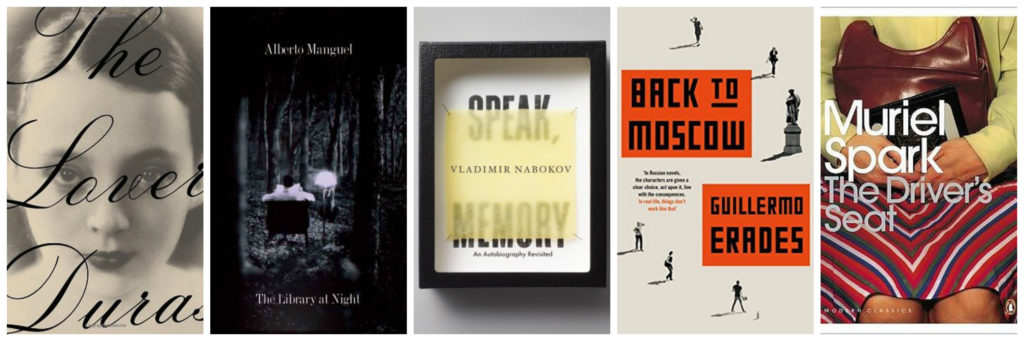
This half of the year has been a great time to discover literature; I fell in love with Marguerite Duras, Muriel Spark, existentialism and books like Back to Moscow. I have had complicated feeling toward Toni Morrison after finally reading one of her books and I cannot stop thinking about a book that mostly bored me. I read some interesting non-fiction, including Nabokov’s Speak, Memory and I disagreed with the winner of the Man Booker International Prize. These are the joys of reading, you can have differing opinions or find joy in reading about unlikely subjects, like people drinking.

Moving into the next half of 2017, I am unsure where my writing or reading will take me. In fact this essay did not help me, it has left me with more questions than answers. In fact I did not even touch on my complex feelings towards booktube. Nevertheless, I hope there will be more content on my blog and more musings about literature in the future. I will leave you with my top five books of the first half of the year.

  1. The Lover by Marguerite Duras (translated by Barbara Bray)
  2. The Library at Night by Alberto Manguel
  3. Speak, Memory by Vladimir Nabokov
  4. Back to Moscow by Guillermo Erades
  5. The Driver’s Seat by Muriel Spark

An Ode to Books about Books

Posted April 4, 2017 by Michael @ Knowledge Lost in Literature / 2 Comments

As a passionate book lover, I am constantly thinking about books and finding ways to share my love with the world. When it comes to social media, Goodreads serves as a preferable substitution for Facebook and I have my blog as a platform to talk more about literature persistently. I even created a BookTube channel as another way to share my passion and meet like-minded people. While creating videos is not my preferred method of communication, it has been a beneficial tool in my personal development. I have even dabbled with the idea of creating a podcast. Suffice to say, I am passionate about literature and I am always looking for other ways to feed this addiction.

Other bibliophiles might also share my love for books about books. There is something so satisfying about reading a book about reading books. I first discovered this joy with The Shadow of the Wind, a wildly popular piece of translated fiction that had me wanting to adopt my own book. Not to mention the desire to gain access to something like the Cemetery of Forgotten Books. A positive for reading popular books is that it allows us the joys of finding other fans with ease but there is something deliciously delightful with finding a piece of literature that friends do not know about. For me, one of the biggest compliments I receive on my blog or BookTube channel is ‘I have never heard of this book before’. While it can be a source of frustration, it is thrilling to know I may have introduced someone to a new book. My frustration comes from those occasions when someone has not heard of a book that I would consider classics but that is a different essay topic.

Take, for example, the wildly entertaining satire, Books by Charlie Hill. The premise is based around a best-selling author whose book is so mediocre that when you read it your brain stops working. A neurologist recruits a grumpy indie bookseller to help her solve the mystery in this Dan Brown-esque dig at popular fiction. This hilarious book sadly never got any real attention, with under a hundred ratings on Goodreads. This is a little sad, especially since it described my idea of a perfect bookstore; “A bookshop full of long-forgotten noir fiction, modernist classics, chapbooks, transgressive experimentation, translated erotica, minimalism, short stories, satires, samizdat, surrealist poetry and smut.”

My love for books about books is not rooted in fiction, I am always on the lookout for a bibliomemoir – a memoir about someone’s reading life. I find the reading journey to be a captivating topic and exploring the way other people approach their own reading is like peeking into their personal book journals. I have read about all the books being read by journalist and politicians. I have read about people setting outlandish reading challenges and others that just challenge themselves to be better people. I am particularly fond of the unknown person (like a struggling author or blogger) who decides that their reading journey is interesting enough to get published.

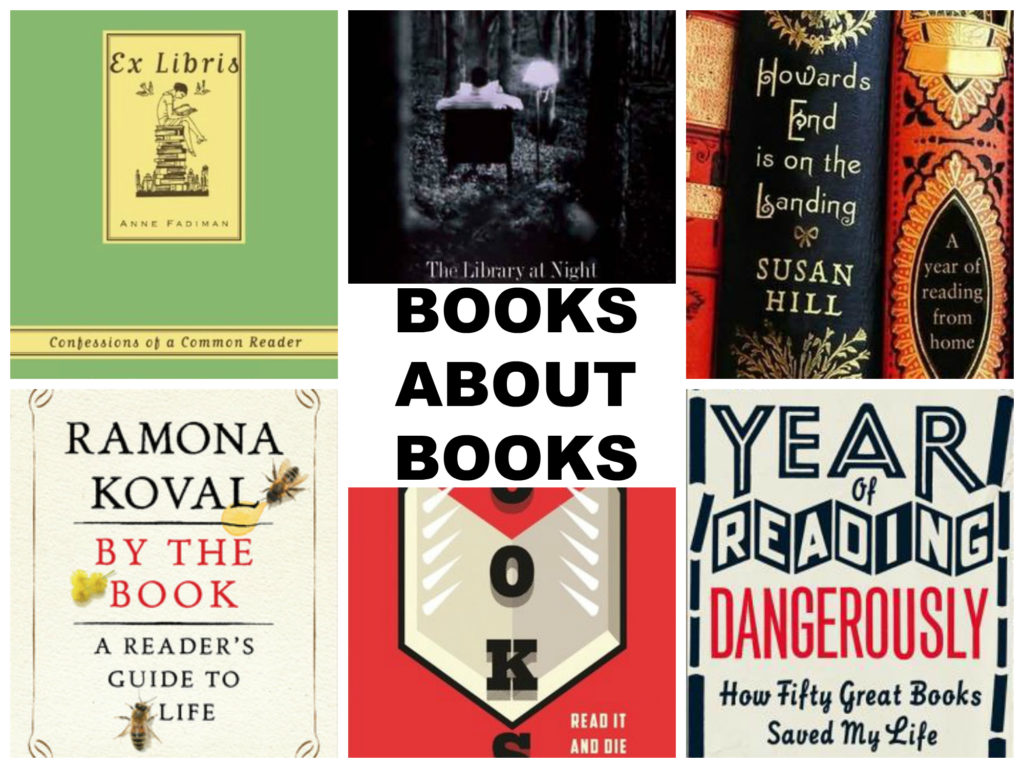
Ramona Koval’s By the Book: A Reader’s Guide to Life was one of my first tastes into the bibliomemoir, and it was a charming account of growing up with books. It served as a literary account of her childhood, in which she shared memories like borrowing Franz Kafka from a library at a very young age and asking her mother to buy her a copy of the Kama Sutra. I keep a spreadsheet of all the books I have read but this does not hold the memories of the books. I have been writing essays about my reading life and literature as a way to preserve those memories. Not to mention I harbor a desire to write like Anne Fadiman; her bibliomemoir/collection of essays has been a constant source of inspiration.

The best bibliomemoirs are the ones that have a theme and that also cover books that interest the reader. I thought The Possessed: Adventures with Russian Books and the People Who Read Them by Elif Batuman would become a favourite of mine but it lacked the personal touch. While the book did cover Batuman’s life and interest in Russian literature, it was missing something. There are two sides of the bibliomemoir scale, a personal reading journey or literary criticism. I like both styles but if a book is lacking one or the other, I find it difficult to enjoy.

The Year of Reading Dangerously: How Fifty Great Books Saved My Life by Andy Miller is an example of a bibliomemoir that really hit the mark. In this memoir, Miller sets himself a challenge; to read all the books he had lied about reading. He created a list, The List of Betterment, which consisted of books he has once lied about reading or felt he should read. The book documents the rekindling of his former reading passion and hits both key factors I look for in a bibliomemoir, the personal journey and criticism. Andy Miller has since gone on to co-host a wonderful bookish podcast, Backlisted which I am currently obsessed with. I have even contemplated the idea of trying to read every book they have covered on the show, but first I should really re-read Andy Miller’s memoir.

I try to read as many bibliomemoirs as I can get my hands on because I often entertain the idea of writing my own. I think I have had an interesting journey and would love to share it with the world. I read the bibliomemoirs to find elements that work, so I can avoid the common slip-ups. Tolstoy and the Purple Chair: My Year of Magical Reading is a popular bibliomemoir but the idea of reading a book a day sounds dreadful. Quality over quantity is always a good rule to live by and I can pick the exact moment when I gave up on that book. It was when she refused to read her son’s favourite book, Watership Down because it was almost 500 pages.

The bibliomemoir does not have to follow the same format to be enjoyable, Alberto Manguel wrote a collection of essays about building a personal library called The Library at Night, which I adore. Susan Hill spent an entire book talking about the random books on her bookshelves in Howards End is on the Landing. I mentioned Anne Fadiman before but her collection of essays in Ex Libris is my definition of the perfect bibliomemoir. It gives glimpses into her life of reading but also talks about those common reader issues. Like the time her and her husband decided, after a few years of marriage, it was time to merge their books. Of course, I object to the idea of only keeping one copy of a book but the essay was enchanting. I am not saying keep all the pretty covers but a book contains memories, not to mention the different introductions or translations.

My most recent bibliomemoir was Books for Living by Will Schwalbe, which I am not particularly fond of but I did like that he dedicated each chapter to a book. For example, the chapter on What I Talk about When I Talk about Running was on the topic of napping. If you have read Haruki Murakami’s running memoir you would know that he shares his fondness for napping as well. When I read Murakiami’s memoir I did it to explore his passion but a passion for napping is something I can get behind. I will continue to dive into the world of the bookish memoir and hope to share some new favourites in the future. I would love to have some recommendations. One day I may have my own bibliomemoir; but in the meantime, I will practice my craft with more essays. Although my wife did suggest I should write a book about books about books, because that would be wonderfully meta.


Organising Your Personal Library

Posted February 14, 2017 by Michael @ Knowledge Lost in Literature / 4 Comments

Recently I have been thinking about building the perfect library; this was due to a collection of essays I was reading called The Library at Night by Alberto Manguel. In this book, Manguel explores the process of building his personal library from an old barn but he also looks at the history of libraries around the world. Each essay is titled ‘The Library as…’ space, power, shadow, and so on. These essays explore different topics, giving you a wealth of information. Take for example ‘The Library as Shadow’, which explores a darker side of library history, from book burning to censorship.
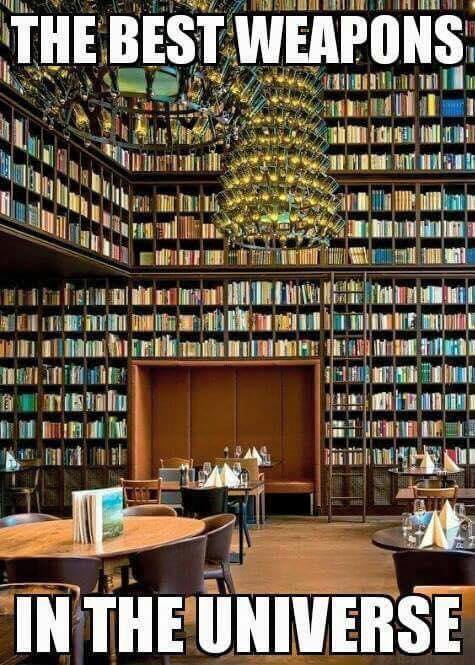
What I am particularly interested in was from the essay ‘The Library as Order’, which focuses on how we would arrange our personal library. It does not matter where or how you house your personal library; every person has their own opinions on that topic. I wanted to explore the concept of how we arrange the books. There are so many ways to arrange books, currently my books are everywhere and there is a certain appeal to this. I have bookshelves around the house and any new books end up wherever it fits. If I need to find a particular book, I can spend hours searching for it. This is not always ideal but there is something about this literary treasure hunt that I enjoy. I often discover books on my shelves that I have forgotten about or I want to dip back into. Looking at a shelf that offers no rhyme or reason can be mesmerising, and who does not enjoy just staring at a bookshelf? While this method works for me now, it is not practical if I have a library, I need to arrange my books differently. In The Library at Night, Alberto Manguel suggests some different ways to organise books;

  • alphabetically
  • by continent or country
  • by colour
  • by date of purchase
  • by date of publication
  • by format
  • by genre
  • by literary period
  • by language
  • according to our reading priorities
  • according to their binding
  • by series

Amidst all of these choices, I have to admit ‘according to our reading priorities’ does sound appealing but I feel like this would continually change. The obvious choice would be to organise alphabetically (by authors last name of course) but there are some draw backs with this. Not only will fiction and non-fiction sit side by side but the idea of Charles Dickens sitting next to Philip K Dick or Jane Austen beside Paul Auster seems odd. Although for those authors that dabble in both fiction and non-fiction, like Aleksandr Solzhenitsyn this system may be preferable.

Sorting by genre seems like a popular choice, and for all intents and purposes the most logical. As someone that reads on a whim, the ability to just head to somewhere like the detective fiction section and pick a gritty hard-boiled novel sounds wonderful. My only problem is the fact that it is often difficult to fit novels neatly into a single genre. Also, with an author like Jonathan Lethem you would have to separate his works, especially with his early books. I like the idea of sorting by genre but I found too many flaws in this system.

Picking an organisation strategy appeared to be much harder than it looked. Organising by colour is aesthetically pleasing but I never considered this as an option; it is just too random. I am playing around with a book-sorting app on my phone, which allowed me to create different shelves for organising. This allowed me to scan my books into the program and play with different ways to organise.

I eventually decided that there was no perfect way to organise a library, you can go into your public library and see evidence of this everywhere. I had to come up with a solution that worked for me. I do not have a library yet, but when I do, I am now sure I know how it will be organised. I have settled on sorting by continents for my fiction, this is because I have a keen interest in books in translation. I have discovered that splitting my fiction into continents will give me the opportunity to see where my strengths and weaknesses lie. If I organise my fiction by continent, I will notice which continents I need to focus on, like South America and Africa. I love reading around the world, I find it both an educational and rewarding experience.

If your reading journey and your library is a personal reflection, then the books that do not appear on your shelves say just as much about you as the books you do have on your shelf. When I became a reader, I quickly started building my book collection to a point where I have shelves and shelves of books everywhere. The problem I face now is the fact that I have only read about half of them. Publishers sent me books because of my blog but I also purchased books that sounded interesting. Now I have evolved as a reader and discovered where my literary tastes lie, there are books that remain on my shelf that are not a reflection of me as a reader. These books do not tell you anything about me because I have no desire to read them. While I know I should cull all books I have no interest in, it is hard to let go of a book that you have never read. What if it is fantastic and I just do not know that yet? There is the problem, but I do feel like I am getting to a point where I can be confident about a book I would not like. So maybe a purge is coming.

Now the problem with sorting the fiction by continents is that there are some countries I have a greater interest in – the literature of France and Russia for example. Do I split them into their own section? I am interested in all post-Soviet literature, so that brings up another question. How do I shelve these books? Russia seems too exclusive; calling them post-Soviet countries just does not sit right with me; Baltic and Slavic countries do not cover all the countries. This is one problem I need to solve, but for now I think this is the best choice for me.

Another issue I found with sorting by continent is that the United Kingdom and the Republic of Ireland fall under Europe but they do not feel the same. There is so much literature from the United Kingdom anyway, I feel like it would require its own shelves. I wonder about North America but honestly, does it matter if Canada and the United States sit together? For me it does not, although this may displease my Canadian friends. There are so many things to consider and this is only a small fraction of the problems I face with sorting my books.

When it comes to non-fiction, it was not difficult; this was always going to be sorted by subject. Philosophy, history, Russian history, books about books, art, and so on. However, that posed some interesting questions as well. Do you include philosophical novels like The Stranger by Albert Camus or Either/Or by Søren Kierkegaard in the philosophical section? My feeling is yes but where do you draw the line? There are novels that are philosophical in nature that I would not include under philosophy, like The Brothers Karamazov by Fyodor Dostoevsky.

I will continue to ponder just how I would organise my dream library, but I wanted to give you plenty to consider. Instead of reviewing The Library at Night by Alberto Manguel, which everyone should read, I preferred to explore what I got out of this essay collection. I have not even touched on any of the other topics in this book; I will leave that for you to discover. Also, I have not even talked about other aspects of setting up a library, like using the Dewey decimal system, or a card catalogue system. Thinking about setting up a dream library is an exciting activity for every bibliophile and we all have different ideas. I loved reading about someone’s journey and it gave me plenty to contemplate. For now, I will continue cataloguing my books using the app BookBuddy and working out how to organise everything. This experiment should also help me discover the gaps in my own library so I can pick better books to purchase.


Understanding my Fascination on Russian Literature

Posted January 31, 2017 by Michael @ Knowledge Lost in Literature / 0 Comments

I am not entirely sure where my interest in Russian literature came from. I think it started with a fascination with the Cold War, which lead to a desire to understand the complex nature of the Soviet Union, both its politics and the people. The first Russian novel I read was Anna Karenina by Leo Tolstoy, however my obsession with Russian literature came soon after. When I first became a reader I was using the 1001 Books You Must Read before You Die list as a guide to work out what to read. While I would love to complete the full list, it has served its purpose, which was to expose me to good literature in all genres, allowing me to find where my literary tastes lie.

My Russian literature obsession grew from my interest in satire, beginning with Super Sad True Love Story by Gary Shteyngart, which is a dystopian tale of globalisation. However under all that, it is an autobiographical novel of a Russian immigrant. I loved discovering the story underneath the plot, and I quickly discovered that Russian literature was a treasure trove for that. Russia has a very complex history; this is often reflected in its literature and makes it a big part of Russian culture.

Just a brief history on Russian literature, which has its roots in Chivalric romance, epics and chronicles on the Russian life. It is here at its roots where we establish the importance of irony and satire in the literature. It was Peter the Great’s efforts to modernise Russia that gave way to Russian literature in the 18th century. While I have not read any of these authors from this time, authors like Antiokh Kantemir and Vasily Trediakovsky were notable contributors to its literature. The 19th century is the golden age for Russian literature with Nikolai Gogol, Fyodor Dostoevsky, Anton Chekov, Ivan Turgenev and Leo Tolstoy creating some of Russia’s greatest pieces of literature. It was also where the literary movement Russian Romanticism was established, which explores metaphysical discontent with society and self, from notable authors like Alexander Pushkin and Mikhail Lermontov. The silver age in the beginning of the 20th century was focused around poetry and the avant-garde. Poets often associated with the silver age include Marina Tsvetaeva and Boris Pasternak.

This was then followed by the Soviet era, which was the rise of Socialist realism, Russian formalism and futurism. While the Soviet era was an extremely complex period for literature, and covers so many different literary styles, it is easier to put all of the work from the Soviet Era together. If you want to break out the soviet era, you could do that by Samizdat, Tamizdat and Gosizdat. Samizdat ‘self-published’ is the distribution of literature illegally published (often by carbon copies of typescripts) and distributed among other Russians. This is similar to a method used in the Tsarist era, and allowed uncensored literature by authors like Mikhail Bulgakov and Aleksandr Solzhenitsyn to reach an audience. Tamizdat ‘over there’ is when a soviet writer has their works published in the West because they could not publish in Russia. Most Soviet authors had to rely on this method to have their works published, most notable example of Tamizdat is Boris Pasternak’s Doctor Zhivago. Gosizdat ‘State publisher’ was the term used for officially sanctioned publications. In all honesty, I cannot think of a single modern classic from the Soviet Era that was published originally by the state. Although the Russian literature magazines where many works were first published would have been state run.

The post-Soviet era covers all literature published after the collapse of the USSR. Although the censorship of the soviet era was officially lifted, writers still approached sensitive subjects in a similar fashion. In part by the political/economic chaos of the post-Soviet era and partly to follow the traditions of great Russian literature. Although authors like Boris Akunin enjoy huge success in popular fiction, writing a historical detective series. This does not include the authors that fled Russia or the Soviet Union and became authors after gaining citizenship elsewhere, such as Ayn Rand, Isaac Asimov, and Vladimir Nabokov.

While there is a rich history of Russian literature, often there are common themes that appear throughout the ages. Most notably is the struggle for stability; Russian history has been a whirlwind of war and tyranny. This struggle often translates as redemption through suffering. This could be a struggle with religion, philosophy, society or even one’s self. That struggle can be seen in novels ranging from the likes of The Brothers Karamazov to Vladimir Sorokin’s 2006 science fiction novel Day of the Oprichnik. Although my wife might agree with Russian literary critic Viktor Shklovsky, who said “Russian literature is devoted to the description of unsuccessful love affairs.”

Authors within Russia often fall into the social class (I don’t think I need to explain the role class plays in Russia) known as the intelligentsia. This class of intellects are tasked to guide or critique society’s culture and politics. This is why Russian literature plays such a huge role in Russian culture, and also explains why literature was so controlled in the Soviet era. Union of Soviet Writers was formed by Stalin to control the field of literature in the USSR. Membership was not mandatory but if an author was not a member, they would have very limited opportunities for publication. Despite their best efforts, thankfully we still have a rich selection of Soviet literature critiquing the culture and politics of the time.

In both Tsarist Russia and the Soviet Union, authors had to be careful of what they said, many were exiled to a labour camp for what they wrote. So literary devices were often deployed to say what needed to be said in a more creative way. Literary devices often found in Russian literature include metaphors, allegories, irony, satire and even propaganda to express the author’s views. Which is why many Russian classics are very philosophical or political in nature. It is the dangerous writing that seems to have stood the test of time.

There is so much to offer in Russian literature, I know I have so much I need to learn and read but I am excited about the prospects. I find it sad when I see “Russian novel” used as shorthand for lengthy or turgid; I never understood that. While War and Peace is often considered a challenging book due to its length, there is a reason why it is considered a masterpiece. I would love to gain some recommendations on Russian literature I should check out. My personal favourites include Crime and Punishment by Fyodor Dostoevsky, The Master and Margarita by Mikhail Bulgakov and for something really weird, Day of the Oprichnik by Vladimir Sorokin.


Down the Non-Fiction Rabbit Hole

Posted November 2, 2016 by Michael @ Knowledge Lost in Literature, My Essays / 6 Comments

The quote by Socrates “The more I learn, the more I learn how little I know” has been on my mind for quite some time. There seems to be no truer statement to describe how I feel at the moment. One of the reasons I spend so much time reading is because I want to learn. Fiction can tell us so much about the world around us, and the experiences faced by different cultures. I am drawn to translated fiction because of what it can teach me about the world. It has taken me some time but I am slowly been drawn to non-fiction as well. Reading recently Secondhand Time by Svetlana Alexievich (translated by Bela Shayevich) and Wild Swans by Jung Chang I discovered just how much about the world I still need to learn.

While Russia is a particular interest of mine, Secondhand Time gave me some insights I did not realise I needed. This is a stunning collection interviews collected by Svetlana Alexievich of people just talking about their personal experience with the collapse of the USSR. I thought I had a decent grasp of the history of the Soviet Union but this book shattered it completely. It is not enough to understand the basic history, life is much more complex and there is so much more to learn. I need to know more about post-Soviet Russia and I plan to learn, starting with The Invention of Russia by Arkady Ostrovsky.

Wild Swans is a biography of three generations of women living in China. Jung Chang tells the story of her grandmother, her mother and then herself, the experiences they all faced in a rapidly changing country. Her grandmother, grew up in a world of foot binding and warlords, while her mother saw the rise of Chairman Mao and communism. This is a story that spans from the Manchu Empire to the Cultural Revolution. It was here I discovered a deeper understanding of communist China; I would never have known about the Great Leap Forward or the Cultural Revolution in such detail without the personal accounts found in this book. If I combine my love for Soviet history, I find myself wondering if I should learn more about communism in other countries. Do I dare to try and compare the differences?

nonfiction2016

There is so much to learn and I feel myself being drawn down the rabbit hole. I have identified three major interests that seem to be the current focus of mine when it comes to non-fiction. This is Russian history, philosophy and books about books. I know this is only the tip of the iceberg and I will be venturing down so many more paths in the future but for now I will start here.

With my love of Russian literature, I feel the need to have a deeper understanding of their history, especially surrounding the politics. Not only will this aid my understanding into the literature I am reading but it will also help me better appreciate the satirical nature that is often found in Russian literature. I am slowly working my way down this rabbit hole with books like Iron Curtain by Anne Applebaum, a look into the way the USSR treated Eastern Europe and Voices from Chernobyl by Svetlana Alexievich (translator: Antonina W. Bouis), an oral history into the nuclear disaster in 1986. Even a book like The Zhivago Affair by Peter Finn and Petra Couvée has been useful; not only does it explore the story of Doctor Zhivago but the impact it had on the world around it.

A new love for philosophy started with At the Existentialist Café by Sarah Bakewell and now I want to know so much more about Jean-Paul Sartre, Simone de Beauvoir, Albert Camus, and Søren Kierkegaard. But I do not plan to just stop at the existentialists, I have so much to learn. My knowledge of philosophy may have come from a novel called Sophie’s World by Jostein Gaarder (translator: Paulette Møller). There is a lot more I could learn from the philosophers, and I have started my journey, with Beyond Good and Evil by Friedrich Nietzsche (translated by R.J. Hollingdale) and The Story of Philosophy by Will Durant.

Finally, my love for literature has drawn me to reading about literature. Not just memoirs and biographies, although you may notice in my reviewing that I find context important. So a memoir or a biography gives me a deeper appreciation of the literature. A memoir like Little Failure gave me a greater understanding about its author Gary Shteyngart and a collection of letters and diary entries called Manuscripts Don’t Burn (translated and edited by J.A.E. Curtis) was a valuable insight into Mikhail Bulgakov. But then there are books about the reading journey that are entertaining to read, while still being a valuable part of my own reading life. I am talking about books like The Year of Reading Dangerously by Andy Miller, 84 Charing Cross Road by Helene Hanff and Howards End is on the Landing by Susan Hill. I can be very particular about books about books, the tone has to be right, their taste in literature and the way they talk about literature is equally important, and so for my money I would recommend Ex Libris by Anne Fadiman as the pinnacle in this genre of non-fiction. My reading journey is far from over, in fact it is only just beginning. Having only spent six years as a reader, I have so far to go. It is all part of my never ending quest to become well read. I will be focusing on reading more non-fiction, starting with these three interests and branching out.

Following the path of knowledge wherever it might take me. I look forward to talk about my journey as I continue and would also appreciate any recommendations.


The Complexities of Being a Book Nerd

Posted September 16, 2016 by Michael @ Knowledge Lost in Literature / 2 Comments

mount-tbrThe life of a book nerd can be a confusing one. I have so many conflicting moments, I find it hard to know what is actually going on inside my own head. Let’s start with a recent bookish existential crisis I had. I have talked about this previously; I worked out that if I was to live for another fifty years, I would only get to around five thousand books. This really stuck with me, I decided to set myself a task. I called it Project 5000, and the goal was to make every book count. Before picking up a book, I think to myself “Is this a book that I would want to include in the 5000?” My goal was not to read anything that I only had a minor interest in and focus on the books that really interested me.

Lately I have been having a completely different train of thought; I have been thinking more about re-reading. While I know I have so many books I want to get to and only have a limited amount of time, the desire to go back to older books directly contradicts my goals behind Project 5000. However, I have grown as a person and a reader, and there are many books that are crying out to be re-read. While watching The Gilmore Girls, I was drawn to a profound quote by Richard Gilmore, “a good book takes a lifetime to read”. This idea has haunted me for a while; the whole idea that great books need to be constantly returned to just feels right. I have read Frankenstein multiple times; I had at one point planned to re-read it every year. While that has not worked out, I still feel drawn to return to it. I would also like to re-read more of my favourites, like Crime and Punishment or The Moon is a Harsh Mistress. It is not just favourites, I would love to dip into the Foundation series again or just see how I feel about The Catcher in the Rye now I have grown as a reader.

I seem to go in cycles for my reading desires, at the moment I want to read philosophy but that will change. One month I could be interested in reading Russian classics and the next I might be craving science fiction or pulp novels. I can never plan out my reading because I never know what I will be interested in reading. I have a huge interest in the Soviet era, philosophy and books in translation, so I do know that my reading may often be linked to one of those interests. That does not make my reading life any easier, there is so much out there to explore.

One major issue I feel I have is the fact that I feel so far behind in my reading journey. There are so many books out there that I should have read already. This is ridiculous, I know I have read so many great books and should be proud of my reading journey. I am cursed with a never ending TBR pile and I have to find ways to manage that.

Currently I am already planning my reading goals for 2017. I know I will continue my journey in having more than 50% of my reading be translations (currently it is 46% for 2016 and trending upwards). I want to read more non-fiction (9 books this year) and more re-reading (only three this year). I do not want to commit to these goals just yet, I have to think on this some more. However I wanted to give you some insights into what goes on in my head and just how complex being book nerd can be.


Can I Make Twilight Sound Interesting?

Posted July 28, 2016 by Michael @ Knowledge Lost in Literature / 2 Comments

twilightI have a keen interest in literary theory and criticism, I often think it is a dying art form. However for me personally, I think it is a very useful tool to develop. While literature teaches us about the world around us, it can help develop empathy and lead you to explore new ideas. Literary criticism and theories can help unpack those ideas and look at commonality in those books we read. If writing is a therapeutic undertaking which allows the author to get ideas out and explore their own mind. Literary criticism is the exploration into understanding those thoughts and unpacking some deeper meaning.

While some people read for escapism, I tend to enjoy a book more if I find something deep. That’s not to say that all novels are meant to be dissected in this way, I believe that you could find deeper meaning in all novels, whether the author meant it or not. Sometimes the author is not aware of the deeper meaning that come out in their writing. I think that trends, symbols, motifs and even opinions (both personal and political) seem to be represented in your writing.

There are many types of literary theory out there and I think that most people interested in criticism tend to focus on the theories that they understand the most. For example, if you have a degree in psychology you might focus on psychoanalysing the text you are reading; trying to understand the characters’ and authors’ psychological makeup.  While someone that has a political interest in socialism, might look at a piece of text through a Marxist lens and explore the class issues that are evident in the writing.

I thought I might try to explain some common literary theories on a very basic level, as a way to understand just how interesting criticism can be. Note that I am not an expert and I am trying to learn more about criticism (that is how I got talked into buddy-reading The Norton Anthology of Theory & Criticism), but I thought this was a topic that needed to be talked about. I am going to use Twilight by Stephanie Meyer as my example, because I want to demonstrate that literary theory can be used on any writing and may even make it more interesting.

Queer theory

Queer theory is the exploration of sexuality and gender identity within a piece of text. From what I can remember there is no queer characters within Twilight; it is a heteronormative novel. However if you look at sexuality within the novel you can come up with a different story. Take for instance the fact that Edward is over a hundred years; is this perpetuating a fantasy of the older more experienced man? What does this say about Belle and her sexuality (not just her sexual identity)?

Feminism (sometimes referred to as Gender studies)

Feminism is a popular lens for critical analysis; in Twilight you can explore a lot on the topic. We are looking at the role of the woman within the text. While there is little descriptions about Belle, what do have makes her out to be a needy woman with no notion of independence or any idea on what she really wants. Although this is done on purpose, to make it easier for female readers to put themselves into her shoes. Ask yourself, how is Belle depicted in her role as a daughter to a single working father, and as a girlfriend. Just to be clear I am not saying Twilight is anti-feminist, I would say it is rather a post-feminist piece of writing (but I will not go into defining post-feminism).

Marxism

I enjoy Marxism when it comes to literary criticism; it looks at the class conflicts. There are three basic classes, all represented in the novel. The Cullen family represent the upper class, the Swans are middle class, while the Blacks are representing the lower class. Look at the Cullen class, they are represented as wealthy, well educated, and the classical representation of all things related to the upper class. Now look at the way Edward Cullen interacts with Belle and Jacob through the Marxist lens. Does their interactions represent an inherent class struggle?

Post-colonialism

Within post-colonialism, you can look at the relationship between the Cullen family and the Blacks. In post-colonialism you need to take into account the historical conflicts of the setting. Since the Cullens are super white (vampires) and the Blacks are Native American, you are able to see this motif play out quite easily. The relationship between white people and the indigenous in western culture is a big issue that is often explored, whether it is obvious or not.

Psychoanalysis

This is the exploration into the conscious and the subconsciousness of not just the characters, but also the author and even the reader. If you think of Twilight as a work of romantic fantasy, what does it say about the characters, the author and even the readers? This would closely parallel Queer theory and feminism in this instance because this is meant to be a romance. So this fantasy of an older, more experienced man plays a big part in understanding the character of Belle.

Intertextuality

While intertextuality is not a literary theory it is useful for criticism and understanding the relationship of a text with the literary world. Intertextuality is simply the ‘interrelationship between texts’, looking at influences and connections with the wider world of literature. In the case of Twilight you can look at the mythology of vampires and werewolves and how they differ to other books on the topic. This is a very simple way to look at Twilight, especially since the vampires in mythology do not match those that are found in this series.

I like to look at the intertextuality between Twilight and Wuthering Height (Belle’s favourite book), especially how the relationship seems to mirror that of Catherine and Heathcliff. To be clear, Wuthering Height is a piece of Romantic literature, which is not to be confused with romance. Both Heathcliff and Edward is a typical Byronic hero, which is described by Lord Macaulay as “a man proud, moody, cynical, with defiance on his brow, and misery in his heart, a scorner of his kind, implacable in revenge, yet capable of deep and strong affection.” The relationship between Catherine and Heathcliff is toxic and is disturbing that Belle would base her idea of love on their relationship. Although Edward is named after another Byronic hero, and that is Mr Rochester from Jane Eyre, which yet again another toxic relationship that could be compared to the one found in Twilight. You could go with intertextuality, for example the fairy tale Cinderella and the connection Twilight has with that story.

There are so many different literary theories that you could use to look at the writing in Twilight and deconstruct it into something deeper. Also while reading critically, you could use other tools to analyse the text, from looking at Stephanie Meyer’s background, the cultural influence and there are many other ways to look at this series. I am still learning about literary theory and criticism, but I am very interested in the way the tools I am learning can transform the text into something deeper. I think using Twilight was a good way to prove the usefulness of literary theory or criticism. I would like to know what literary theories interest you and how you would use it in the context of Twilight.


The Adventures into Krissy Kneen and Incredible Erotic Literature

Posted July 25, 2016 by Michael @ Knowledge Lost in Literature / 4 Comments

The Adventures of Holly White and the Incredible Sex MachineSometimes you come across a novel that sounds so weird that you cannot help but consider reading it. For me, while browsing the shelves of Avid Reader, a delightful indie bookstore in Brisbane, I came across Krissy Kneen’s novel The Adventures of Holly White and the Incredible Sex Machine. The premise was simple, a young woman who wears a True Love Waits ring finds herself joining a sex book club. They dedicate themselves to exploring the so called classics of erotic literature. Upon reading this novel, I found this to be a delicious romp of genre blending and surreal sex. In the vain of Memoirs of a Woman of Pleasure but with a blue glow emanating from her vulva. This fact I discovered early in the novel with the line “She wondered what Jack would think on their wedding night when he lifted her skirt to find her glow-in-the-dark vulva providing subtle illumination of their final act of love”.

One of the joys of this weirdly surreal novel was the way Kneen managed to explore the journey of sexual awakening while also recommending some good erotica to the reader. I compare this book with Memoirs of a Woman of Pleasure (or shall I call it Fanny Hill) simply because it explore this journey into sexual pleasure in a similar way. While one book feels more about the empowering nature of desire and the other a perverted fantasy written by someone stuck in prison.

I will admit my experience into erotica is very limited, from a perverted start into the website literotica to a mild curiosity in this genre. One key difference I have found between modern erotica and the classics is intention. For popular authors like Tiffany Reisz, Sylvia Day and E.L. James, their books intend to explore a fantasy, hoping to titillate the reader in one way or another. While in the case of the classics, it was more about exploring something much deeper. Whether it be a sexual awaking (Memoirs of a Woman of Pleasure), the pleasures of the flesh (A Sport and a Pastime) to just using sex for symbolism.

I still have gaps in my reading for this genre, for example Anaïs Nin or Marquis de Sade. Though I am curious to explore it in greater detail. Thanks to Krissy Kneen and her novel, I now have a list to work from. I was pleased to see James Salter kicking off this wonderful novel and I was eager to write down a list books to read…only to find them listed in the back of the novel as well. In my never ending efforts to be well read, I now have some direction when it comes to Erotica.Erotic literature

While I adore the voyeuristic nature of A Sport and a Pastime, I was pleased to see some transgressive erotica gracing the pages of The Adventures of Holly White and the Incredible Sex Machine. One could argue whether these picks should be considered erotic in nature but they do explore sex in an interesting way. Take for example Lolita, there are some beautifully written erotica writing in the novel but this is countered by the disturbing nature of Humbert Humbert. Dolores’ own sexual awakening will be forever tainted by the predatorily nature of Humbert. This can also be explored in Me and Mr. Booker by Cory Taylor and Alissa Nutting’s novel Tampa which takes on the idea of the fantasy of sleeping with the teacher. However for further exploration into this I would recommend a memoir; Excavation by Wendy C. Ortiz.

Then you have something far more disturbing in nature with Story of the Eye by Georges Bataille, which takes sex to a far more depraved level. While this novel will indeed shock and sicken you, the symbolism to be found is what I found undeniably appealing. With the help of some essays combined with this novel called “The Pornographic Imagination” by Susan Sontag and “The Metaphor of the Eye” by Roland Barthes, Story of the Eye transforms into more than a surreal erotic. As I read it, I was disturbed by the mind of Bataille but now I feel sympathetic to his pain.

I was not surprised to see Henry Miller (Tropic of Cancer) or Joseph Kessel (Belle de Jour) was neglected from the pages, I was expecting Naked Lunch by William S. Burroughs to make an appearance. Sex in Burroughs represents power and could have added an interesting dynamic, though this could be just a projection of my love for surrealism. It is pleasing to read a novel that mirrors fragments from the classics. Kneen not only recommends books to Holly White and the reader, she was able to pay homage to the greats.

While my journey into erotica seems to be focused on the classics, I am all too aware that I have not considered literary erotica. I would like to think that a more literary erotic novel would closely resemble what I am interested in rather than just a fantasy aimed to arouse. I know I need to read Affection and Triptych by Krissy Kneen but I do need to try other authors. More research is needed for me and recommendations as well as I continue down this rabbit hole, who knows I may write more about erotica in the future.