
Category: Literature

Supporting Your Favourite Authors

Posted May 13, 2013 by Michael @ Knowledge Lost in Literature / 0 Comments

How do you support your favourite authors? I just listened to a great podcast of The Readers (my favourite bookish podcast, so check it out) about supporting authors and I thought I would add my thoughts as well. Sure, a lot of authors only want reviews and being a book blogger I get a lot of requests to read books and review them when really my blog is just a way to document my reading journey and talk about my favourite topic, books. I have a review policy which basically says, I’m happy to accept books but there is no guarantee that I’ll read them. If I do read a book, I will write something about it as it is part of documenting my journey but I do try to be constructive and say why the book didn’t work for me but I never go out of my way to be mean. Book reviews are a great way to share thoughts of a book and help support the author but there are so many other ways to do so now.

In a world of social media you can like them on Facebook or follow them on Twitter or if you are a fan of tumbleweeds you can try Google+ (most of my favourite authors are no longer living, so if I follow them that would be a little weird). I’ve had mixed experiences with authors on Twitter; some will just retweet every nice thing said about their book (I know one that will retweet everything, even the bad stuff) and sure that might be good in a way but these authors are not worth following. I follow some great authors that interact with their follows and it can be a great experience (sometimes if you end up not liking the book, they suddenly unfollow you). I had an interesting experience with an author who contacted me to thank me for reading and reviewing his book even though I didn’t like it and while I felt a little bad for not liking it after the thank you I now have more respect for this author for going out of his way to interact with his readers.

There are also book signings and bookish events, you can show your support for an author by going and hear them read or talk about their book. This is a good way to meet the author and get a book signed. I think you learn so much about an author by actually meeting them and see how they interact with the readers and they are also a lot of fun. I remember going to see an author and realised I was wearing a shirt that said “I’d rather be reading Dostoevsky” and this particular author ended up signing my copy of the book with an apology for being neither Russian or dead, which was really amusing and makes that book that much more special (even though I wasn’t a huge fan of it).

But when it comes down to it, the best way to support an author is just reading their books. Not necessarily buying their book, even going to the library (your local library needs support too) is a way to support the author (I believe they still getting royalties from library books). It’s not always about the royalties, sharing their creativity is important as well and in some cases what the authors value the most. If you love the book maybe go buy the book too, just to give them that extra support but remember to support your local indie bookstore whenever possible; they don’t always have the book you are looking for but if you don’t support them they may not be there for long.

So when it comes down to it, I personally feel the best way to support an author is to just read their books and maybe buy them (but never pirate them). A review helps to promote their book as well, but that really comes down to personal preference. Goodreads may not be perfect but I do trust my friends opinions of a book, rather than reading a stranger’s review. I would love to know any other ways we can help support the authors we love or any stories you would like to share that helped change your opinion of an author.
Gatsby and My Hate for Movie Tie-In Covers

Posted May 9, 2013 by Michael @ Knowledge Lost in Literature / 0 Comments

gatsby

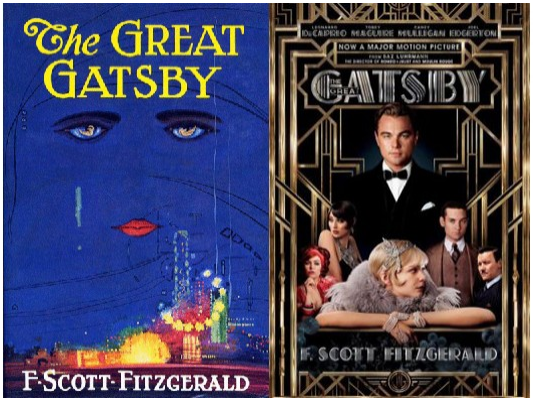
I had a little complaint about book covers changing a few days ago but now I feel the need to comment on something else cover related. Movie tie-in book covers are the worst thing out there, I know they help people recognise the book but they are just so ugly and should never be printed. The New York Times wrote an interesting article called Judging ‘Gatsby’ by Its Cover(s) in which they looked at the iconic Great Gatsby cover with the new movie cover.

Normally books go through different cover changes but when it comes to The Great Gatsby, the original cover is still the most recognised of all its covers. So when you see the movie tie-in cover it is a huge shock; do we really need a cover with Leonardo DiCaprio on it? The article is really interesting because it looks at how the original cover is out selling the movie tie-in and even an independent bookseller who refuses to sell the new cinematic edition. Saying “It’s just God-awful, ‘The Great Gatsby’ is a pillar of American literature, and people don’t want it messed with. We’re selling the classic cover and have no intention of selling the new one.”

There is even a little quote by Ernest Hemingway who called the original cover “garish” and wrote in his memoir A Moveable Feast that he was “embarrassed by the violence, bad taste and slippery look of it.” But that is probably a whole new blog post, maybe two (one to look at the complex relationship of F. Scott Fitzgerald and Hemingway).

I know I hate movie tie-in covers and go out of my way to avoid them at all cost. I know most people hate them, you can read The Week complain about them, even Books on the Nightstand had a conversation about them recently. But I want to know if there are any good movie-tie in covers out there and what you think about them?


Why Change the Book Cover Design?

Posted May 7, 2013 by Michael @ Knowledge Lost in Literature / 8 Comments

covers

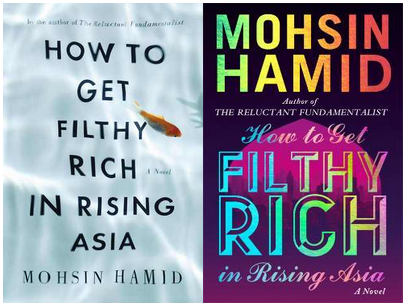
This week, something that really annoyed me was the new paperback book cover for How to Get Filthy Rich in Rising Asia by Mohsin Hamid. The originally cover was gorgeous, nothing too elaborate but it really stood out now the new cover looks too much like it’s trying to be a self-help book. Which I get, it looks almost exactly the same as the famous book on economics Rich Dad, Poor Dad by Robert T. Kiyosaki.  This got me thinking, why do they change the style of book designs, if they have something that works so well?

I’m sure there is a lot to do with marketing strategies and who owns the publishing rights for a book yet I still find myself annoyed. What is more annoying is when you see a book change cover designs halfway through a series. Are they just trying to make sure everyone has to go out and buy all the books again so they all match on the bookshelf? Good marketing strategy but that is just mean to the readers and book collectors out there. I have a series of books which I bought from a book website (which I will leave nameless) and when all the books came they were the same style but they are different heights, so it still looks weird on the book shelf. Sometimes book cover designers do things that really annoy me.

I’m sure there are many people out there that just don’t care that much about different covers or if the book is in hardback or paperback. For me, it is almost like they went out of their way to annoy me; I don’t think I’m OCD but little things like cover design and the different sizes of the books really set me off; especially when it’s on a bookshelf staring and teasing me all day long. How about you? Are there things that annoy you about book designs? Let me know in the comments below.


Understanding Satire

Posted May 5, 2013 by Michael @ Knowledge Lost in Literature / 2 Comments

juvenalI was reading a review the other day, when I saw them say “being a satire, I expected it to be funny” which, at the time, really annoyed me: I wanted to become that guy who replies with “I don’t think you get it”. The truth of the matter is I was someone that thought satire was a form of comedy for a very long time too. I think it wasn’t until someone called 1984 a satirical novel did I actually think “hang on, maybe I need to look up this word”. So I thought instead maybe this could make a good blog post.

First of all, while satire can be funny, humour is not the essential component. The main purpose of satire (in a literary sense) is to offer a constructive social criticism or to shame society into improving. Using wit, irony and sometimes sarcasm to put a spotlight on issues the author feels need to be looked at; normally social, political or religion topics. This is only a brief explanation of my thoughts on satire; I might have missed something because it is a lot more complex than this anyway.

Satirical literature is often divided into two different categories as well; Horatian and Juvenalian (although not mutually exclusive). Horatian satire looks at some social vice through playful, light-hearted humour or wit. Named after the Roman satirist Horace, this form of satire uses wit, exaggeration and self deprecation to indentify stupidity (rather than major issues) within modern society. This is the type of satire more people think of when they think about satirical books; examples of this type of satire within literature can include Adventures of Huckleberry Finn by Mark Twain, The Screwtape Letters by C.S. Lewis, The Giver by Lois Lowry and Gulliver’s Travels by Jonathan Swift.

There is another form of satire named after Roman satirist Juvenal; this is the one that includes books like Fahrenheit 451 by Ray Bradbury, A Clockwork Orange by Anthony Burgess, American Psycho by Bret Easton Ellis, Lord of the Flies by William Golding, Brave New World by Aldous Huxley and 1984 by George Orwell. Juvenalian satire addresses social evil through scorn, fury and ridicule. This form of satire doesn’t often involve humour (though a book like Catch 22 by Joseph Heller would be included) but more a pessimistic, ironic or sarcastic nature towards moral and social indignation.

So, as you can see, there are two very different types of satire within literature, there is a lot more to look at regarding these types of novels. My hope with this post is that people understand the difference between Horatian and Juvenalian satire. Not only should we remember that satire is not always funny but we need to remember that it is not an indication of the satirist persona. Criticising Mark Twain as racist and calling Huckleberry Finn offensive is to miss the point completely. Jonathan Swift was not really suggesting that Ireland can ease their economical troubles by selling their children as food for the rich in A Modest Proposal (1729) and if you read it any other way what would you think of the author? He does say children are a delicious, nourishing and wholesome food, whether stewed, roasted, baked, or boiled; do you really think Swift was proposing cannibalism and infanticide?

I’m a big fan of satire, there are times where it is in bad taste or misses the mark but this is not the fault of the literary genre but the delivery of the message. I personally prefer Juvenalian satire in my literature but when it comes to movies and TV I think maybe a combination of both. I would really love to hear other people’s thoughts on satire; am I missing anything? Is there anything you feel needs to be added? Or what novels do you like in both Horatian and Juvenalian satire.


Books Beside the Bed

Posted March 11, 2013 by Michael @ Knowledge Lost in Literature / 0 Comments

While I’ve noticed people write posts about what they plan to read during the week, I thought I might do something similar. I thought rather than make this a regular theme; it will just be something to help break up all the review posts. I like the idea of a post about the books by my bed because I have so many books I want to read, it could be fun to share what I’m currently reading and hope to read soon.

The Son by Philipp Meyer

I don’t know why I was excited to read this book, I’ve not even read American Rust but when I was offered a review copy I jumped at the chance. So far I’m finding this book to be compelling and can see why people hold Philipp Meyer in such high regard.


What it Was by George Pelecanos

George Pelecanos is best known as a writer for The Wire, I will admit I’ve not watched the show in its entirety but I thought I’ll try one of his books. This has a real 1970’s feel to it and so far I’m really enjoying the pulp style. Apparently this is book five in a series but it reads like a standalone novel.


A Sport and a Pastime by James Salter

I first heard about this book from The First Tuesday Book Club (now known as The Book Club) and thought it might be a short book for the Literary Exploration challenge’s Erotica pick. This is a library book so I will need to get to this book soon.


Ghostman by Roger Hobbs

Another library book, this book was talked about on the Books on the Nightstand podcast and they described the protagonist as a descendant of Lee Child‘s Jack Reacher and Richard Stark‘s Parker. Then the final nail in the coffin was when the blurb called it “Stunningly dark, hugely intelligent and thoroughly addictive”.


Guards! Guards! by Terry Pratchett

A friend of mine lent me these books; while I’m not really a fan of fantasy I did mention I have enjoyed the fantasy/pulp crossover novels. So now I’ve been told to read Guards! Guards! and if I like it, Men at Arms.  Not sure when I’ll get to these books, but they sit beside my bed waiting for me.


Mimi by Lucy Ellmann

I recently receive this book and I don’t know what it is but I feel drawn to it. Mimi does look intriguing but I’m still not sure what to expect. The novel is described as “Sparkling, polemical, irreverent, slippery, and sexy”.

While I have plenty of other books I plan to read these are the books sitting next to my bed hoping to take priority. This is not always the case, I might put some on my TBR bookshelf but they are all calling for some attention. Do you have a pile of books waiting beside your bed? and if so what are they.


2013 Reading Goals

Posted January 3, 2013 by Michael @ Knowledge Lost in Literature / 0 Comments

books4Its 2013 which means time to talk reading plans and goals; for me I have a few planned. Firstly the Literary Exploration reading challenge, in which I plan to read books in 32 different genres. I’m so excited about this challenge and can’t wait to become a more well-rounded reader. I’ve also plan to become a better reader, I’m not sure how I’m going to do this, maybe with the books I read or maybe reading slower to digest the text. While I’m not too sure how to do this I’m determined to make this a year of learning how to read better.
I’m also planning a semi book buying ban for 2013; I say semi because I will still buy books but they would have to be books needed for my book clubs or absolute essentials; for everything else, I will try the library. The idea of the book buying ban is to focus more on the books on my bookshelf and to reduce my TBR list. I will still be accepting ARCs from publishers and via NetGalley but I do plan to be more selective with the books I take.

Finally I start off every year with one simple goal; 100 books, which I did increase to 150 books in August of 2012, simply because I was flying through the books last year. But when I hit 150 books in November I decided I wouldn’t increase my goal again but I would just take the time and read some bigger books and some non-fiction. This was such a liberating feeling because I wasn’t worrying about meeting targets; I was just reading what I wanted, when I wanted.  Which doesn’t really make sense, I had nothing to worry about and I could have read what I wanted at any time during the year.  Also I’ve noticed I’m still reading at the same pace and while they aren’t all larger books or non-fiction I think December turned into my favourite month for reading in 2012; not because of the books, but just because I had no goal and I was doing it for pleasure.

So in 2013 I’m wondering if I should throw this reading goal out the window and just have a year of reading for pleasure. On the down side, I do worry that I won’t read as much as I would like. So my other option is to have a reading goal of 100 books; a nice obtainable reading goal that I don’t really need to put much worry into. I’m not really sure so I thought I would ask my readers on some insight into my reading plans and their reading goals as well.


The Best of 2012 Survey

Posted December 19, 2012 by Michael @ Knowledge Lost in Literature / 0 Comments

I saw this survey over at All The Books I Can Read but it turns out Bree stole this from The Perpetual Page Turner. I thought this was a nice way to reflect on the year, so I wanted to join in on the fun. Most people would know I was a cultural blogger (I’m sorry I’ve neglected it a little) and now blog about my reading journey and random book thoughts. I’ve only started this blog in April and I’ve have some much fun, I can’t wait to share my future thoughts with the readers.

Best In Books 2012

 1. Best Book You Read In 2012? (You can break it down by genre if you want)  

This is a hard question to answer, do I pick my favourite book released in 2012 or overall? I would say Crime and Punishment by Fyodor Dostoyevsky was my all time favourite out of all the books I’ve read this year, with honourable mentions to Angelmaker by Nick Harkaway and Swimming Home by Deborah Levy .

2. Book You Were Excited About & Thought You Were Going To Love More But Didn’t?

It’s not that I didn’t like this book, but I felt that Mr Penumbra’s 24-Hour Bookstore: A Novel by Robin Sloan really lacked the elements needed to make it great.

 3. Most surprising (in a good way!) book of 2012?

I went into Tigers in Red Weather by Liza Klaussmann thinking it would be a generic family drama, but found some very dark elements to it that really pleased me.

 4. Book you recommended to people most in 2012?

I think I recommended Swimming Home by Deborah Levy and Angelmaker by Nick Harkaway a few times but I think my top recommendation was either The Fault in Our Stars by John Green or Gone Girl by Gillian Flynn.

 5. Best series you discovered in 2012?

A little late to the party but The Passage and The Twelve by Justin Cronin, were great reading highlights in 2012 and I’m eagerly waiting the final book in the trilogy.

6. Favourite new authors you discovered in 2012?

I tend not to entrench myself too much but some new authors I’ve discovered that I can’t wait to read some more of their works include; Deborah Levy, Nick Harkaway, Gillian Flynn, Elizabeth Haynes, Jeffrey Eugenides and Michael Chabon.

7. Best book that was out of your comfort zone or was a new genre for you?

I really try to read books in all genres so this question was a little hard for me to answer, but The Colour of Milk by Nell Leyshon was something I wouldn’t normally pick up but ended up loving.

 8. Most thrilling, unputdownable book in 2012?

Gone Girl by Gillian Flynn, I was up to 4am at night wanting to know what will happen next.

 9. Book You Read In 2012 That You Are Most Likely To Re-Read Next Year?

The main one I plan to re-read would be The Artist as Mystic by Yahia Lababidi, there is a lot to it and I want to explore it further.

10. Favourite cover of a book you read in 2012?

The Yellow Birds by Kevin Powers, it really stands out.

11. Most memorable character in 2012?

Peter Brown from Beat the Reaper by Josh Bazell because the autofibulectomy scene has left me traumatised.

 12. Most beautifully written book read in 2012?

Currently the first book that comes to mind would be The Marriage Plot by Jeffrey Eugenides

13. Book that had the greatest impact on you in 2012?

Crime and Punishment by Fyodor Dostoyevsky, The Trial by Franz Kafka and even The Artist as Mystic by Yahia Lababidi

 14. Book you can’t believe you waited UNTIL 2012 to finally read?

Crime and Punishment by Fyodor Dostoyevsky

 15. Favourite Passage/Quote From A Book You Read In 2012?

“A book must be the axe for the frozen sea within us”  by Franz Kafka, discovered while reading The Artist as Mystic by Yahia Lababidi.

 16. Shortest & Longest Book You Read In 2012?

Les Misèrables by Victor Hugo is the longest (followed by 1Q84 by Haruki Murakami) if picture books count for the shortest it would be I Want My Hat Back by Jon Klassen (if not it’s A Life with Books by Julian Barnes).

 17. Book That Had A Scene In It That Had You Reeling And Dying To Talk To Somebody About It?

The Dinner by Herman Koch; luckily it was a book I read for one of my book clubs

18. Favourite Relationship from a Book You Read In 2012 (be it romantic, friendship, etc)?

Wouldn’t that have to be Augustus and Hazel Grace from The Fault in Our Stars by John Green?

19. Favourite Book You Read in 2012 From An Author You Read Previously?

Crime and Punishment by Fyodor Dostoyevsky

20. Best Book You Read That You Read Based SOLELY On A Recommendation From Somebody Else?

From a co-motorator of Literary Exploration; When Gravity Fails by George Alec Effinger and The Carpet Makers by Andreas Eschbach.

Book Blogging/Reading Life

 1. New favourite book blog you discovered in 2012?

Still Life With Books; I know she hates blogging but I always value her opinions on books.

2. Favourite review that you wrote in 2012?

I’m proud of my Crime and Punishment by Fyodor Dostoyevsky review

3. Best discussion you had on your blog?

My Experience with the 1001 Books You Must Read Before You Die List where my favourite blog post that sparked some interesting comments, maybe Confessions of a Reader too.

4. Most thought-provoking review or discussion you read on somebody else’s blog?

I think I would say; go read Still Life With Books for thought provoking reviews.

5. Best event that you participated in (author signings, festivals, virtual events, memes, etc.)?

Can I name drop and say Supernova, where I met Melina Marchetta and John Birmingham as well as got to hang out with people like Rachel Caine and Felicia Day?

6. Best moment of book blogging in 2012?

As a new book blogger my blogging highlights include emails or tweets from authors thanking me for reviews and Publishers interested in having me review some books.

7. Most Popular Post This Year On Your Blog (whether it be by comments or views)?

My ArmchairBEA posts got a lot of activity; Introduction, Best of 2012, Top Tips for Book Blogging and A Positive Experience with Books. It was an amazing experience and I found so many great book bloggers.

8. Post You Wished Got A Little More Love?

Expected some love for He Died with His Eyes Open but didn’t get any.

9. Best bookish discover (book related sites, book stores, etc.)?

The Folio Society, it has so many beautiful books that I would love to own.

10.  Did you complete any reading challenges or goals that you had set for yourself at the beginning of this year?

I started off with my regular 100 book challenge but half way through the year, I increased it to 150. I completed this challenge in November and now taking the time to read some bigger books.

Looking Ahead…

 1. One Book You Didn’t Get to In 2012 but Will Be Your Number 1 Priority in 2013?

 Nothing comes to mine, I feel like I accomplished what I wanted this year. There are some review copies I need to read but I’m sure I’ll get to it.

2. Book You Are Most Anticipating For 2013?

By Blood We Live by Glen Duncan (I hope it’s still scheduled for 2013 and doesn’t get delayed) I love this series and want to see how it ends.

3. One Thing You Hope To Accomplish Or Do In Your Reading/Blogging In 2013?

I hope that the Literary Exploration challenge is a huge success; I plan to complete that as my reading challenge (as well as 100 books). As for my blog, I hope it continues to be entertaining.


Guest Post: Brief Overview of Pulp Fiction – Part 4 (1990’s & On)

Posted December 16, 2012 by Guest Post in Guest Posts, Literature, Pulp / 0 Comments

There are currently many prolific authors working in crime fiction, whose names will not be mentioned, that occasionally find themselves labelled as noir by fans and critics alike and quite simply are not. They write about cops who have problems with their superiors or former military men with vengeance on their mind, they pile up the bodies and solve dark cases but they border on fantasy and as we’ve seen in the previous three parts to this overview true noirs are realistic and bleak with very few happy endings.

After assessing fifty years of noir and hard-boiled writing it becomes quite obvious that the fourth generation, the contemporary American hard-boiled and noir writer are yet to truly find their own unique voice or societal change to rail against.

If you accept that 9/11 changed the world completely in the same way that WWII and the threat of nuclear war did to previous generations we should expect a dramatic increase in distinct creative output from the next wave of authors.

What is clear is that, as with the rise in popularity of dystopian fiction, contemporary hard-boiled and noir authors are looking to their genre heritage and their countries past for settings and places to escape to. They are almost a lost generation, dreaming of a time when things were friendlier, less scary, less connected and invasive, that time when there was still some hope for the American Dream.

I discovered the work of Megan Abbott this year, she’s approximately 3 feet tall and specialises in reworking dark noir stories with a female centred twist. If you saw her on the street she’d probably be the last person you would imagine writing such dark novels. Her debut, Die A Little (2005), is set in 1950s LA and steeped in atmospheric suspense and voyeuristic appeal. She wrote four of these excellent period re-workings and then along came The End of Everything (2011) in which she updated her noir styling’s to teenaged girls in 1980s suburbia to amazing effect. It is a tale of lust, revenge, guilt, and my favourite four noir words; secrets, lies, passions and repressions.

Walter Mosley created the iconic hard-boiled hero Easy Rawlins in Devil in a Blue Dress (1990) and went on to write ten more books about his black private detective in the 1940s, 1950s and 1960s, ending with Blonde Faith (2007). Utilising the style of Chandler and MacDonald Mosley manages to craft top quality hard-boiled mysteries and blend them with analysis of the social inequalities of the time.

George Pelecanos is one of the most famous names from this list, especially for his time writing for the HBO series The Wire. He came to prominence however for his D.C. Quartet, a series of four historical crime novels set in Washington D.C.. He also created two fantastic hard-boiled series featuring first Nick Stefanos in A Firing Offense (1991) and then the pairing of Derek Strange and Terry Quinn with Right as Rain (2001) which has built him a reputation for his gritty depiction of street life and a focus on hard-luck criminals.

James Ellroy, the King of Sinnuendo, the Demon Dog of American crime writing, knows how to write bleak noir filled with hard-boiled characters like nobody working today. His work is generally set in the 1950s and 1960s, featuring densely plotted criminal behaviour from all sides of the law with his tone relentlessly pessimistic. Perhaps his best work (or at the very least the best place to start) is L.A. Confidential (1990) and should be followed up with the first part of his Underworld USA trilogy American Tabloid (1995). But nobody can describe him better than he describes himself:

“Good evening peepers, prowlers, pederasts, panty-sniffers, punks and pimps. I’m James Ellroy, the demon dog, the foul owl with the death growl, the white knight of the far right, and the slick trick with the donkey dick. I’m the author of 16 books, masterpieces all; they precede all my future masterpieces. These books will leave you reamed, steamed and drycleaned, tie-dyed, swept to the side, true-blued, tattooed and bah fongooed. These are books for the whole fuckin’ family, if the name of your family is Manson.”

Another black private investigator, Lew Griffin, got his start in The Long-Legged Fly (1992) by James Sallis, a novel that starts in the 60s and moves through to the 90s and would lead to five more outings. Sallis has his own way of writing these hard-boiled private detectives, they’re complex and often poetic in their structure. He would go on to create another great of modern noir, Drive (2005) about an unnamed stunt driver who also works as a getaway driver for criminals.

Don Winslow might be most widely known for his brilliant and brutal modern noir Savages (2010) but he also created the surfing private detective Boone Daniels in The Dawn Patrol (2008). Winslow is known for his adrenaline-fueled novels and unique prose style, his subject matter is nothing ground breaking but he entertains like nobody else in the genre.

That leaves us with only Dennis Lehane to draw part four to a close. Lehane might just be best known for his psychological thrillers turned in to Oscar bait movies but his six Boston based noir thrillers featuring male/female investigation team Kenzie & Gennaro are some of the best in modern hard-boiled crime writing. Their first outing A Drink Before The War (1994) set a high standard to live up to but he reached incredibly bleak heights with Gone Baby, Gone (1998).

I’ll reserve special mention for another Brit, Philip Kerr, the creator of the Bernie Gunther novels. These books are a fantastic throwback to classic hard-boiled novels. Bernie starts as a private detective in Berlin as Hitler is consolidating his power and witnesses some truly awful things. His first three adventures are collected as Berlin Noir (1989 to 1991) and are well worth your time.

This is a guest post by blahblahblahtobyYou can find him discussing books on Goodreads, discussing movies on Letterboxd, tweeting nonsense as blahblahblahtoby and on his blog blahblahblahgay, feel free to say hi.

There are literally dozens of great authors and great novels that could have been suggested as essential reading for this guide. The writer of the article went through agonising decisions over who to leave out and is more than aware that your favourite author probably hasn’t been mentioned but feel free to start a discussion in the comments.

This post is part of a four post series exploring the history of Hard-Boiled and Noir Fiction, for recommendations check out each post;

The 1930’s – 1940’s

The 1950’s

The 1960’s – 1980’s

The 1990’s – Onwards


Introducing The 2013 Literary Exploration Reading Challenge

Posted December 15, 2012 by Michael @ Knowledge Lost in Literature / 52 Comments

logoAs the year starts to come to a close, we readers start to think about what we would like to read next year and for some of us, we look for the reading challenge that excites us the most. As most people know, Literary Exploration tries to explore all different genres in the hope to become a well-rounded reader and even discover something new. So in 2013 we would like to challenge you to explore further.

Instead of increasing the book club to two books a month we decided we wanted people to read what they wanted to read; but we also want people to explore. So we are challenging everyone to dedicate either 12, 24 or 36 books that you would normally read to different genres. We have compiled a list which hopefully will give you a chance to explore literature a little deeper.

It’s real simple; below you will see an easy (12 books), hard (24 books) or insane (36 books) challenge. Each genre links to the Goodreads genre page if you need some suggestions on what to read. We want you to have some fun and explore; hopefully you might find a new genre that peaks your interest. To sign up either join the Literary Exploration book club on Goodreads and talk about your progress with others involved or for the bloggers out there, if you want to add it as part of your blogging experience simply let us know with a link (to your Literary Exploration Challenge page) in the comments below so our readers can see how you are going.

This is the first year doing this and if all goes well we might expand and make it a yearly challenge. If we do decide to do this on a yearly basis and you feel that there are some genres are either too heavily focused on or not mentioned at all, please let me know. The idea of this challenge is to have a well-balanced list of genres and not focusing on one genre more than any others.

Good luck all who decide to join in. I personally am going to go for the 36 book, insane challenge and I’m really looking forward to it. While there are some genres I’m not looking forward to reading, it’s all part of being a literary explorer. What could be wrong with that?

Read More


Guest Post: Brief Overview of Pulp Fiction – Part 3 (1960’s-1980’s)

Posted December 9, 2012 by Guest Post in Guest Posts, Literature, Pulp / 0 Comments

It’s a terribly clichéd expression to use as a title for this chapter I know but when looking at the evolution of hard-boiled and noir fiction it’s hard not to take in to consideration the fact that socially and politically America was in turmoil like never before.

In part two we acknowledged that the bleak outlook adopted by the second generation of noir authors, such as Jim Thompson, was a reflection of societal fears regarding Communism and nuclear war as they moved away from the prohibition era writing of Hammett and Chandler but as the 60s came around the audience for these books found themselves disconnected from the next generation who had radical ideas for changing the world.

The growth in popularity of television, the baby boomers, the Vietnam war, a President assassinated and that guy Nixon are just some of the major changes in American culture which saw the market for the bleakest noir fiction dwindle in size.

First there was the closure of several paperback original imprints whilst the ones that remained tended to focus on recurring characters rather than taking chances on original pulp work, then there was the splintering of the world of noir as it suddenly became a more diverse place. From the 70s onwards we’ve been treated to books about serial killers, forensics experts, hardened cops working within the departmental structure, and the redemption of the lone wolf. Not to mention females, homosexuals, non-whites and just about everything a writer desperate to stand out from the crowd could think of in between.

As mentioned previously several of the second generation of hard-boiled and noir writers kept writing after the death of the paperback original. Ross MacDonald’s Lew Archer and Mickey Spillane’s Mike Hammer were perfectly suited to repeat adventures throughout the 60s and 70s (Blue Hammer the 18th Archer in ‘76 and Black Alley the final real Hammer in ’96) and sat alongside the newcomers as wisened old heads ready to guide the next generation.

One of the most important names in the history of the genre is Lawrence Block, he got started writing short stories during the heady days of the paperback originals (some of which are collected in the highly enjoyable Lost Weekends and One Night Stands) and had his first novels published in the early 60s. Amongst his mixed bag of early work the superb and disturbing Mona AKA Grifter’s Game (1961) has the distinction of being the first novel republished by the excellent Hard Case Crime imprint. He is a man that appears to have adapted quite readily to the need for recurring protagonists with no fewer than six different series created by him since the mid 60s. The Sins of the Fathers (1976) marks the debut of perhaps his most popular character, Matt Scudder.

Swedish born American Donald Hamilton is someone that isn’t so readily known in the 21st century but his character Matt Helm was created for Gold Medal Books in Death of a Citizen (1960) and ran for 27 books until The Damagers (1993.) Helm is a no-nonsense kind of guy, working as an undercover counter-terrorist agent he narrates his escapades with a detached, dead pan style include the many fights, torture sequences and sexual conquests.

“Donald Hamilton has brought to the spy novel the authentic hard realism of Dashiell Hammett; and his stories are as compelling, and probably as close to the sordid truth of espionage, as any now being told.”

Donald Westlake was an incredibly prolific author in the genre who used many pseudonyms to divide up his different work. His most famous being Richard Stark, creator of the hard-boiled Parker, a ruthless master thief willing to do whatever it takes to get what he wants. Parker first appeared in The Hunter (1962) and went on to star in a further 23 novels until Dirty Money (2008).

The Deep Blue Good-Bye (1964) marked the debut of hard-boiled detective Travis McGee. His creator John D. MacDonald would write one book per year until The Lonely Silver Rain (1985) brought the sequence to a close after 21 adventures. McGee is known for being a misogynist, a character that has dated quite badly and can easily offend some readers. MacDonald has an easygoing approach to the series, his detective lives on a houseboat and would prefer to lounge around drinking to solving crimes, that belies the intricate plotting he uses and misogyny aside this is a great series of third generation hard-boiled fiction.

Robert B. Parker wrote his Ph.D dissertation on Hammett, Chandler and Ross MacDonald and went on to create his own legendary private eye, Spenser in The Godwulf Manuscript (1973). Parker is known for his modern approach to the classics of the genre and including series characters from minority backgrounds as more than just punchbags for his protagonist. Sixkill (2011) was the 40th Spenser outing and was the last novel he finished before his death, making Spenser The Rolling Stones of hard-boiled fiction.

Joseph Hansen is best known for his ground breaking series of crime novels starring his most iconic creation, Dave Brandstetter, an openly gay insurance investigator who still embodied the tough, no-nonsense personality of the classic hardboiled private investigator type of protagonist. His first outing was Fadeout (1970) and he went on to appear in eleven more novels until A Country of Old Men (1991).

James Crumley is a self-declared heir to the Chandler tradition, he defines his own sensibility as conditioned by the disillusionments of the Vietnam War and his vision of justice less clear-cut. His protagonists are environmentalists and sustained by eccentric alliances with criminals and other misfits. Described as the literary offspring of Chandler and Hunter S. Thompson he was another author who found success outside of America long before the Americans took to him. His book The Last Good Kiss (1978) features the alcoholic ex-army officer turned private detective, C.W. Sughrue, as it’s protagonist and has been labelled as the most important crime novel of the last 50 years, influencing much of what will be described as the fourth generation of hard-boiled and noir writing. The Mexican Tree Duck (1993) is the only one of his novels to be acknowledged with an award.

I’ll now break my own rules and mention briefly the British author Derek Raymond. In 1984 he wrote the first book in The Factory Series, He Died With His Eyes Open, a book that seems to have captured both the hard-boiled spirit of Chandler and the blackest, bleakest noir poetics of David Goodis in one wonderful novel. Whilst he wasn’t American he is the closest I have found to true hard-boiled and noir fiction outside of America and deserves to be read by all fans of the genre.

Part four will bring us right up to date with a quick look at some of the shining lights in contemporary American hard-boiled and noir fiction.

This is a guest post by blahblahblahtobyYou can find him discussing books on Goodreads, discussing movies on Letterboxd, tweeting nonsense as blahblahblahtoby and on his blog blahblahblahgay, feel free to say hi.

There are literally dozens of great authors and great novels that could have been suggested as essential reading for this guide. The writer of the article went through agonising decisions over who to leave out and is more than aware that your favourite author probably hasn’t been mentioned but feel free to start a discussion in the comments.

This post is part of a four post series exploring the history of Hard-Boiled and Noir Fiction, for recommendations check out each post;

The 1930’s – 1940’s

The 1950’s

The 1960’s – 1980’s

The 1990’s – Onward