Category: Random

Guest Review: Laura Lamont’s Life in Pictures

Posted November 14, 2013 by jus_de_fruit in Guest Posts, Historical Fiction / 2 Comments

Guest Review: Laura Lamont’s Life in PicturesTitle: Laura Lamont's Life in Pictures (Goodreads)
Author: Emma Straub
Published: Pan Macmillan, 2012
Pages: 256
Genres: Historical Fiction
My Copy: Paperback

Buy: AmazonBook DepositoryKindle (or visit your local Indie bookstore)

I haven’t found much time to read in recent times. This book has been with me for a while, but I’ve now finished reading it. I never felt like this book was a compulsive page-turner, but it was something enjoyable and familiar that I could easily pick up and return to in the rare times of quiet that I can spend reading.

I don’t feel this book ever had any form of climax; as the title suggests, this book is about life. Laura Lamont, originally Elsa Emerson, grows up in Wisconsin, but eventually finds her way to Hollywood and becomes an actress, wins an Oscar, falls in love, has some children. It could be the story of any woman, although most of us probably lack an Oscar. Beyond the backdrop of Hollywood, this story is pretty ordinary. I found it easily to relate to Laura at different stages in her life.

I think this story is really about the roles we play in our lives. Daughter, Sister, Friend, Lover, Wife, Mother, Grandmother.  Life constantly changes us. I think that the acting aspects may have just highlighted these changes more. Laura becomes quite famous, and struggles when she starts to disappear from the public eye. We are constantly changing, becoming different versions of ourselves, to fit the life that happens around us. Sometimes we yearn for the past, other times we look to the future, and there are even moments of contentment where we are happy just where we are in this moment.

I imagine this book would make a great holiday read, or like me, something that is easy to return to when other things are overtaking your life.

This is a guest post by Mary; not only is she my wonderful wife, she is also my editor and helps moderate the Literary Exploration group on Goodreads. Big thanks to her for this post and everything she does to help me with this blog.


Top Ten Tuesday: Covers I Wish Could Be Redesigned

Posted November 12, 2013 by Michael @ Knowledge Lost in Top Ten Tuesday / 8 Comments

toptentuesdayIt’s Tuesday again which means time for another round of Top Ten Tuesday; I like joining in of this meme because I have a set topic to work with. Top Ten Tuesday is a book blogger meme that is hosted by The Broke and the Bookish and this week the theme is: Top Ten Covers I Wish Could Be Redesigned.

13519596

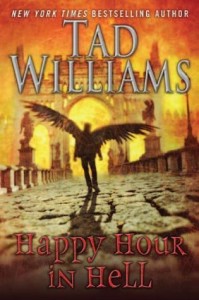
  • Happy Hour in Hell by Tad Williams – it’s tacky and doesn’t seem to match book 1 in the series.
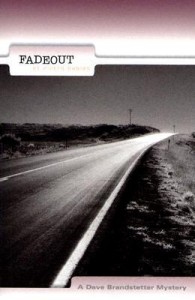
  • Fadeout by Joseph Hansen – great novel; very boring and unappealing cover.
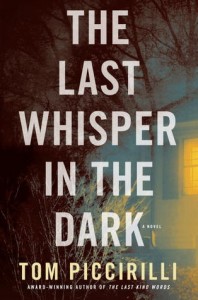
  • The Last Whisper in the Dark by Tom Piccirilli – when you compare it to the first book, it just doesn’t stand out as much.
  • Boy Meets Boy by David Levithan – not a bad cover, I just think it could use with a makeover.
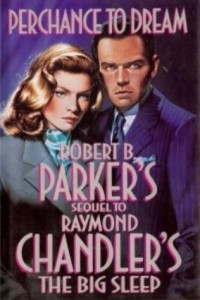
  • Perchance to Dream by Robert B. Parker – even though it was a terrible book, the cover doesn’t seem to match the Philip Marlowe series.
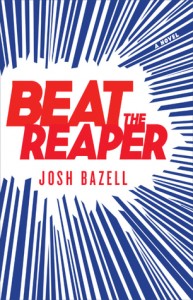
  • Beat the Reaper by Josh Bazell – the original cover is catchy but I don’t feel like it really says anything about the novel.
  • Prodigal Son by Dean Koontz – dull and unimpressive.
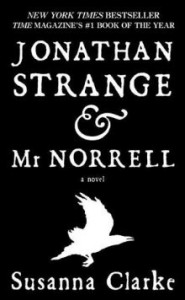
  • Jonathan Strange & Mr Norrell by Susanna Clarke – just feels really plain.
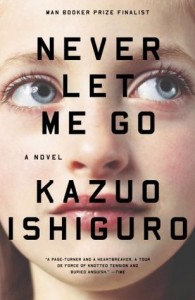
  • Never Let Me Go by Kazuo Ishiguro – that face is just too much.
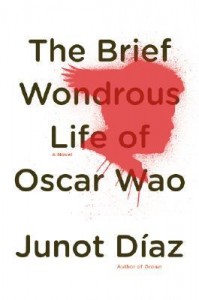
  • The Brief Wondrous Life of Oscar Wao by Junot Díaz – while not so bad, it could be improved.


Top Ten Tuesday: Top Ten Sequels I Can’t Wait To Get My Hands On

Posted November 5, 2013 by Michael @ Knowledge Lost in Top Ten Tuesday / 16 Comments

toptentuesdayIt’s Tuesday again which means time for another round of Top Ten Tuesday; I like joining in of this meme because I have a set topic to work with. Top Ten Tuesday is a book blogger meme that is hosted by The Broke and the Bookish and this week the theme is: Top Ten Sequels I Can’t Wait To Get My Hands On. Rather than going for sequels, I ‘m going to look at the books I’m looking forward to in any series.

  1. By Blood We Live by Glen Duncan (The Last Werewolf trilogy)
  2. Untitled book 4 by Carlos Ruiz Zafón (The Cemetery of Forgotten Book series)
  3. The City of Mirrors by Justin Cronin (The Passage series)
  4. The Severed Streets by Paul Cornell (The London Falling series)
  5. Hollow City by Ransom Riggs (Miss Peregrine series)
  6. Sleeping Late on Judgement Day by Tad Williams (The Bobby Dollar series)

Since I’ve round out of books to mention, here are some books I’m really looking forward to reading that are part of a series and already released;

  1. Maddaddam by Margaret Atwood (Maddaddam trilogy)
  2. Moon Over Soho by Ben Aaronovitch (Peter Grant series)
  3. Death Claims by Joseph Hansen (Dave Brandstetter series)
  4. Countdown City by Ben H. Winters (The Last Policeman series)

Monthly Review – October 2013

Posted October 31, 2013 by Michael @ Knowledge Lost in Monthly Reading / 7 Comments

The Bell JarAs October comes to a close, we have a quick look back at the month of the book club on Goodreads and our book of the month, The Bell Jar.  I don’t know why I put this book off for so long because it was almost perfect. It was nice to experience a novel as good as The Bell Jar for the first time but I’m looking forward to reading it again. There were some interesting conversations about this book over on Goodreads if you’ve missed them.

Next month we will are looking at dysfunctional families by reading The Bone People by Keri Hulme. Followed by a mystery novel to wrap up the year with And Then There Were None by Agatha Christie. If you’re not aware, the book discussion and everything else will be happening over on the Goodreads forums, so feel free to join in there.

For my reading this month I’ve had so much fun reading some great novels and talking books with everyone that listens. I was lucky enough to have a week and a half off work to travel and read so I hope I will feel refreshed soon (still getting over the holidays). Highlights include Barracuda, High Fidelity, Paddle Your Own Canoe, The Year of the Flood and of course The Bell Jar. But I’ve been obsessed with, If on a Winter’s Night a Traveler by Italo Calvino. I’ve spent more time re-reading or reading aloud sections and writing quotes on Tumblr. If this wasn’t a library book I would have highlighted the entire book. It has just been a wonderful experience reading this book for the first time.

Read More


The Bell Jar by Sylvia Plath

Posted October 30, 2013 by Michael @ Knowledge Lost in Book of the Month, Classic / 7 Comments

The Bell Jar by Sylvia PlathTitle: The Bell Jar (Goodreads)
Author: Sylvia Plath
Published: Harper Collins, 1963
Pages: 213
Genres: Classic
My Copy: Audiobook

Buy: AmazonKindle (or visit your local Indie bookstore)

Esther Greenwood is a young woman from Boston who gains an internship at a prominent women’s magazine in New York City. We follow her personal life and her decline into depression, attempting suicide to being committed into an asylum. We see the bad treatment as well as the good, all the way up to her attempt to re-enter the world.

This is the seminal semi-autobiographical novel of Sylvia Plath and I’m so glad that I’ve finally read The Bell Jar. I want to say she is the female version of Charles Bukowski (even though I’ve only read Factotum); there are differences but I feel like the voice and style feel very similar. Originally published under the pseudonym Victoria Lucas to protect identities of characters she took liberties with, but more  the fact it parallels Plath’s own experiences.

A bell jar is an inverted glass jar that is normally air tight used to display objects for observation, normally for scientific curiosity. For Esther the bell jar is a symbol of madness, when gripped with depression she feels like she is stuck in a jar with no real perspective to the outside world. It prevents her from  making any real connections with people and sometimes she feels like she is on display (especially when she was hospitalised and received all those visitors).

What was interesting for me is that to me it never really felt like Esther Greenwood suffered from depression to begin with. I’m not saying she wasn’t really suffering but for me I think the idea was forced on her by everyone else, just because her thoughts were a little macabre and she was a little different. Almost like she was forced into her descent, because she was a little different to the norm.

Esther has an obsession with death; we get that from the very start with her fascination of newspaper headlines about executions, suicide and death. There is also the blood motif  throughout the book; blood normally represents life but the constant bleeding would point towards death. When she starts to think about killing herself she talks about it at great lengths and even practices slashing her own wrists.

I think this is a novel about the regression into madness, the life experiences that normally have a positive on a person’s live, but for Esther these were partly responsible of her descent. Romance, success in education, finding work and marriage proposals tend to upset or disorient her and in the end instead of finding reasons to live she finds how different she is to others and this cements her choice to die.

Then the book looks into the world of treating mental illness, the good and the bad. This is where the book moves into the territory similar to One Flew over the Cuckoo’s Nest, in particular a look at 1950 psychiatric treatments. In this part there seems to be three treatment types used within the book; talking, injections of insulin and then the dreaded electroshock therapy. The treatment is meant to clear the mind entirely and after her first electroshock treatment Esther was unable to think about knives. The treatment was doing more damage than good, especially to her intellect.

I went into this book thinking there might have been some psychological elements but  that this was mainly a novel about feminism. It is to some extent but what I got was so much more; I was really impressed with this novel and really enjoyed the journey it took me. I feel like kicking myself for not reading this sooner. A novel about a protagonist slipping into depression is normally right up my alley but I’m a little perplexed about the ending. Overall this is a masterpiece and well worth reading.


Top Ten Tuesday: Halloween or All Hallows’ Reads Recommendations

Posted October 29, 2013 by Michael @ Knowledge Lost in Top Ten Tuesday / 10 Comments

toptentuesdayIt’s Tuesday again which means time for another round of Top Ten Tuesday; I like joining in of this meme because I have a set topic to work with. Top Ten Tuesday is a book blogger meme that is hosted by The Broke and the Bookish and this week the theme is: Scariest Looking Book Covers. This is a hard topic and I’m not really sure if I can find ten scary covers. Honestly while we all love covers (some are great and some are tacky) I care more about the book itself. So I’m going to go rogue (again) and instead pick ten books I would recommend for Halloween or to give to someone for All Hallows’ Read.

  • The Last Werewolf by Glen Duncan – default gift; it’s dark, gritty, violent and full of sex. It is also a literary take on the whole werewolf genre
  • I am Legend by Richard Matheson – one of the best vampire novels I’ve read
  • The Turn of the Screw by Henry James – classic ghost tale
  • Psycho by Robert Bloch – speaks for itself
  • The Call Of Cthulhu by H.P. Lovecraft – classic monster story
  • The Passage by Justin Cronin – literary zombie novel, a little long but worth reading for fans of the zombie genre
  • House of Leaves by Mark Z. Danielewski – for something really weird and messed up
  • The Strange Case of Dr. Jekyll and Mr. Hyde by Robert Louis Stevenson – do I really need to explain why?
  • The Castle of Otranto by Horace Walpole – for fans of classics or gothic novels
  • Frankenstein by Mary Shelley – because it is the greatest novel of all time! Or because I think everyone should read/own this.

Top Ten Tuesday: Characters I Love

Posted October 22, 2013 by Michael @ Knowledge Lost in Top Ten Tuesday / 19 Comments

toptentuesdayIt’s Tuesday again which means time for another round of Top Ten Tuesday; I like joining in of this meme because I have a set topic to work with. Top Ten Tuesday is a book blogger meme that is hosted by The Broke and the Bookish and this week the theme is: Character Names I Love but that is boring so I’m going with Characters that I love.

10. Bernard Gunther from the Bernard Gunther series
9. James Bond from the James Bond series
8. Matt Scudder in the Matt Scudder series
7. Takeshi Kovacs from Altered Carbon
6. Bobby Dollar from the Bobby Dollar series
5. Dave Brandstetter from the Dave Brandstetter series
4. Harry Dresden from the Dresden Files
3. Dexter Morgan from the Dexter series
2. Alaska from Looking For Alaska
1. Philip Marlowe from the Philip Marlowe series


Top Ten Tuesday: Books I Was “Forced” to Read

Posted October 15, 2013 by Michael @ Knowledge Lost in Top Ten Tuesday / 0 Comments

toptentuesdayIt’s Tuesday again which means time for another round of Top Ten Tuesday; I like joining in of this meme because I have a set topic to work with. Top Ten Tuesday is a book blogger meme that is hosted by The Broke and the Bookish and this week the theme is: Books I Was “Forced” to Read. I don’t like the word “Forced”, but what I’m going to do since this blog is a product of an online bookclub, I’m going to pick ten books (in no particular order) that was picked as a read in the group and I really enjoyed. I’m only picking books I hadn’t read before (so no Lolita, The Fault in our Stars, Night Circus, etc).


Guest Post: The Problem with Literature

Posted October 3, 2013 by Guest Post in Guest Posts, Literature / 0 Comments

Want to be the next Shakespeare? Forget literature. Shakespeare wasn’t trying to write enlightened literary fiction. He was writing the Elizabethan equivalent of daytime television – easily digestible, relatable stories (mostly stolen from elsewhere and given a quick spit and polish to make them look and sound new) that would appeal to an audience of mostly illiterate working-class people. He didn’t care about being a great artist or creating work that would last for centuries. He just wanted to make money.

I think modern literary authors forget that. They want to create art. They want to be taken seriously. God forbid their work be mistaken for trashy pulp fiction. God forbid it be accessible. True art, according to the modern literary author, is by nature elitist. In order to understand it, one must have more sophisticated tastes than the types of people who read mass-produced romances or pulpy sci-fi thrillers. One has to be discerning. Every great literary author wants to be remembered as the next iconic genius.

Except that our last iconic genius wrote exactly the kinds of fiction these aspiring greats treat with such derision. Hamlet, King Lear, Macbeth – these might be timeless classics, but to The Bard, they were how he paid the bills, and to the people who paid to see his plays performed, they were the equivalent of a good popcorn flick. We talk about Shakespeare, Kit Marlowe, Dickens, Conan Doyle as though they were trying to create enduring works of highbrow literature. They weren’t; they were writers working at their trade. It just so happens that they were very good at it, which is why we still enjoy their work today. But they had no lofty aspirations, no desire to be seen as anything more than working writers. Oh, sure, Shakespeare enjoyed the patronage of two successive monarchs. I’m not denying that he was a master wordsmith and a well-regarded one at that. But to the people who crowded into the globe to watch his work play out on stage, he was nothing more than an entertainer. Not an artiste, not a figure of reverence. He wrote theatre for the masses. He was Elizabethan England’s answer to JK Rowling, not Vonnegut.

If Shakespeare were alive today, he’d probably be writing for some wildly successful primetime drama. Dickens and Conan Doyle, were they to stick to the serial formats they preferred, would probably find a home in graphic novels. Byron was something of a poseur, but he wrote his generation’s equivalent of Harlequin romances. Jane Austen, the Bronte sisters? They’d have been penning this summer’s hottest chick lit. And you know what? There’s nothing wrong with that. There’s absolutely nothing wrong with writing things that people will enjoy just because they’re fun. There’s nothing wrong with writing to entertain, to captivate, to thrill. And just because work is engaging and accessible, doesn’t mean it can’t also be challenging, thought-provoking and enduringly popular.

The Bard was a genius at his craft, no doubt about it. I just came home from a fantastically staged production of Macbeth, a play still enjoyed by audiences around the world centuries after Shakespeare’s death. I hope to one day pass on my love of Shakespeare to my children. But I’ll also pass on my love of fantasy novels, detective mysteries, cheesy sci-fi and even the odd paranormal romance. Why not? Fiction is meant to be fun. Sure, it can also be a lot of other things, but if we don’t enjoy reading it on some level, what’s the point?

If you’re writing for an audience of people who think enjoying fiction for its own sake is below them, you’ll never be the next Shakespeare, or the next Marlowe, or the next Dickens or Mark Twain or Agatha Christie or Jane Austen. Hell, you won’t even be the next JK Rowling (and believe me – someday, we’ll talk about her work with the same reverence we reserve for the works of long-dead white men today). Don’t focus on creating literature. Focus on creating great entertainment. Take your readers somewhere new. Give them a means of escaping. Take an old story and make it sing again. Make it fun, for heaven’s sakes, because I can guarantee you that five hundred years from now, we won’t be talking about dry and dusty tomes written by pretentious poseurs with delusions of grandeur. We’ll be talking about what was popular, just like we do now. We’ll be talking about theatre for the masses. We’ll be talking about this generation’s Shakespeares. And if you’re not willing to do what he did – to write for all people, to amuse, to engage, to entertain – then you’ll never be one of them.

Read More