
 I was recently approached by Book Likes to recommend some books for the end of the Summer (Winter here in Australia). For those interested Book Likes is a blog platform designed for book lovers (think Tumblr for books), I use the site to cross post my book reviews (and sometimes some of my other posts. So if you are interested in seeing what I recommend and the other books that made this list check it out here.
Category: Random
Monthly Review – August 2013
 As we come to the end of August, it is time once again to have a look at the month’s reading. This month the book club read the non-fiction sports/travel book Death in the Afternoon by Ernest Hemingway. While I am against bullfighting, this was an interesting dip into a sport I had no idea what was happening. Next month we are reading one of my wife’s favourite books; The Pillars of the Earth by Ken Follett.
I feel very proud of my reading this month; I read some great books and hope this trend continues. Fifteen books read and some of my highlights include Fadeout, Oryx and Crake, The Third Man, The Unknown, Kiss Me First and We Need New Names. There was just so many great books and I feel like I didn’t have any wasted reading time (with the exception of The Suite Life) but the biggest thrill for this month was The Machine by James Smythe a wonderfully dark and complex novel that really deserves more attention.
My Reading Month
- Death in the Afternoon by Ernest Hemingway
- Fables: Legends in Exile by Bill Willingham
- Fadeout by Joseph Hansen
- Kiss Me First by Lottie Moggach
- Miami Blues by Charles Willeford
- Oryx and Crake Margaret Atwood
- Questions of Travel by Michelle de Kretser
- The Bookshop Strikes Back by Ann Patchett
- The Castle of Otranto by Horace Walpole
- The Hot Kid by Elmore Leonard
- The Machine by James Smythe
- The Suite Life by Suzanne Corso
- The Third Man by Graham Greene
- The Unknowns by Gabriel Roth
- Tropic of Cancer by Henry Miller
- We Need New Names by NoViolet Bulawayo
Top Ten Tuesday: Things That Make Your Life as a Book Blogger Easier
 It’s Tuesday again which means time for another round of Top Ten Tuesday; I like joining in of this meme because I have a set topic to work with. Top Ten Tuesday is a book blogger meme that is hosted by The Broke and the Bookish and this week the theme is: Top Ten Things That Make Your Life as a Book Blogger Easier. This is an interesting topic and took me a while to compile a list of then but here you go.
1. Goodreads
As a book blogger I want to be able to look at what is being read by others, what is trending and what people think of the books. I’ve found all the book bloggers I follow are on Goodreads as well and it makes it easier to see what books are trending so you can get onto that book before the public.
2. Twitter
Out of all the social networks, for a book blogger, Twitter is the essential one. I create lists of authors, publishers, readers and book bloggers; this way I always have my finger on the pulse of what is happening in the world of literature. Also follow me @knowledgelost or my blog @litexploration on Twitter (shameless self-promotion).
3. The Library
I know I will never be able to buy all the books I want and this year I went on a semi book buying ban (only allowing myself to buy book club books and essentials). The idea was to reduce the amount of unread books on my shelf but instead it taught me to use the library more.
4. Bloglines
It was a sad day when Google Reader died, bloglines isn’t as good but it was the best replacement I’ve found. As a blogger I want to connect with other bloggers so instead of getting bombarded with emails a RSS reader is a life saver.
5. eReader
I know paperback books are better but as a book blogger I feel I will run out of bookcase space quickly, so an eReader is a great way to store books. I also like the continence of being able to carry a lot of books around at once. An eReader will also be helpful for my next point.
6. NetGalley and Edelweiss
Both a blessing and a curse, NetGalley and Edelweiss are great ways to request digital ARCs to read and review. When I started as a book blogger, I never used these sites but I’ve started to use them more lately; just have to remind myself not to go overboard.
7. The Reading Room
I’m not sure if this is the case with other countries but as an Australian book blogger, The Reading Room has been a great source for physical and digital ARC’s. They have a first in first serve approach and all they ask in return is for you to post the review on their site as well. Similar to Goodreads but useful if you want ARCs.
8. Ultimate Book Blogger Plugin
As a self-hosted WordPress user there are heaps of usefully plugins to make my life easier but as a book blogger the Ultimate Book Blogger Plugin is the biggest time saver. Takes a little extra time creating a post because I fill out the extra details but it auto updates my review list and gave me a whole lot of other useful advantages.
9. Wikipedia
I know it is probably the worst place to go for research but a quick search will give me a whole lot of useful information. I tend to use Wikipedia as a starting point for researching but if I only need a little info, it tends to be the default destination.
10. Bloomsbury Australia
I know it’s weird to have a publisher on a list of “Things That Make Your Life as a Book Blogger” but they have been wonderfully and encouraging. They were one of the first to approach me with an offer of ARCs and seem to be one of the biggest supporters of Australian book bloggers. They deserve to be recognised because they do great work.
I’m sure there are more I could list but there you have it, my top ten. I look forward to see what other people list, maybe I will find some useful tools.
First Steps: Cyberpunk
 First Steps is a new segment that was inspired by the Literary Exploration Reading Challenge. Each week or two, we look at books from different themes, genres or maybe authors and suggest some that are worth trying. Not necessarily all easy to read books but the ones that are worth the time and effort. My goal is to have First Steps guide you to some great books in places you don’t normally venture to.
Cyberpunk is a genre I have found many people struggle with, especially in the Literary Exploration Reading Challenge. I’m not sure if this is a lack of recommendations or they just not sure what this genre is all about. Cyberpunk is a futuristic world that focuses on “high tech and low life[s]” (according to What is cyberpunk? From Cyberpunked: Journal of Science, Technology, & Society 2009). Think post-industrial dystopian worlds with advanced technology and cybernetics; science fiction normally with a touch of thriller, mystery or pulp.
Movie examples would include Blade Runner, Ghost in the Shell, Tron, The Matrix and Surrogates. On TV think Dark Angel or Dollhouse and in video games there are heaps of examples but the best two are; Deus Ex or Watch Dogs. This is a genre that is almost dying out, technology advancement has been accepted by most and often used in science fiction or dystopian novels, but it does leave behind a couple of new sub genres; steampunk and dieselpunk.

This book is big but lots of fun; it follows two protagonists hunting down a virus in the not so distant future. A world where the United States has yielded most of its power to private organizations and entrepreneurs. Everything has been franchised, from armies, highways to even suburbs.
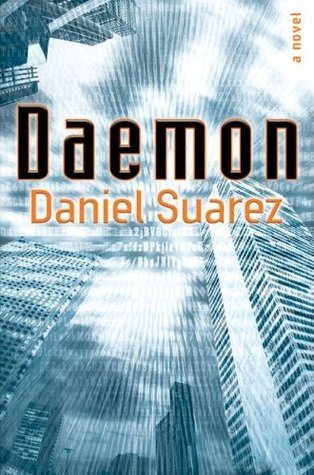 Daemon by Daniel Suarez
Technology controls almost everything in our modern world, from remote entry on our cars and the flight controls of our airplanes to the movements of the entire world economy. But what if some computer designer has been planting a dormant daemon in everything that he creates that will take full control of everything connected to a computer when he dies.
 Altered Carbon by Richard K. Morgan
In the twenty-fifth century, technology has advanced so much that human personalities can be digitally stored on what is known as a Stack. These stacks can be downloaded into new bodies or sleeves, so when you die your stack can be stored indefinitely and you can be resleeved and continue living. Death is impossible, or is it?
 Neuromancer by William Gibson
This is a seminal cyberpunk novel by the legend himself; William Gibson. The first novel to ever win the “Triple crown” in science fiction (winning the Nebula Award, the Philip K. Dick Award, and the Hugo Award). This follows the story of a low-level hustler, hacker and thief in the dystopian underworld of Chiba City, Japan.
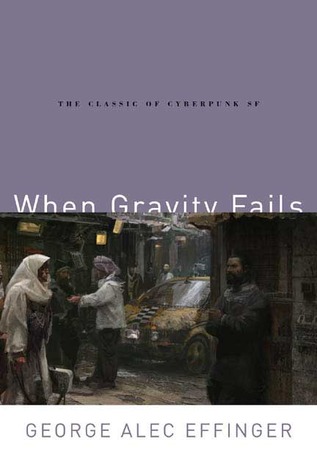 When Gravity Fails by George Alec Effinger
A new kind of killer roams the streets of the Arab ghettos of Budayeen, a madman whose bootlegged personality cartridges range from a sinister James Bond to a sadistic disemboweler named Khan. The unique blend of Middle Eastern culture and religion and cyberpunk noir makes this highly recommended.
Top Ten Tuesday: Books Set in War Times
I think I might be addicted to Top Ten Tuesday, I like joining in and having a set topic to work with. Top Ten Tuesday is a book blogger meme that is hosted by The Broke and the Bookish and this week the theme is: Top Ten Books with X Setting, I’ve decided to look at books set in war times, because it sounds like a different theme. I’ve read some really great novels set in war times and this is a good time to share them with the world.
10. Dog Soldiers by Robert Stone
9. All That I Am by Anna Funder
8. The Yellow Birds by Kevin Powers
7. Painter of Silence by Georgina Harding
6. Maus by Art Spiegelman
5. The People of Forever Are Not Afraid by Shani Boianjiu
4. Billy Lynn’s Long Halftime Walk by Ben Fountain
3. A Constellation of Vital Phenomena by Anthony Marra
2. Slaughterhouse Five by Kurt Vonnegut
1. Catch 22 by Joseph Heller
Live Tweeting Twilight
Top Ten Tuesday: Books I Wish Could Have Had Sequels
I think I might be addicted to Top Ten Tuesday, I like joining in and having a set topic to work with. Top Ten Tuesday is a book blogger meme that is hosted by The Broke and the Bookish and this week the theme is: Top Ten Books I Wish Could Have Had Sequels. This was a little tough but decided to divide the list and tell you five worlds I’d like to return to and then five stories I would like see been continued; these are normally characters I really enjoy reading about and wonder what happened to them after the book (I know, I know they ceased to exist).
Five worlds I would love to return to;
- Super Sad True Love Story by Gary Shteyngart
- Ready Player One by Ernest Cline
- The City & the City by China Miéville
- The Night Circus by Erin Morgenstern
- The Shining Girls by Lauren Beukes
Five stories that I’d like to see continue;
- Gentlemen & Players by Joanne Harris
- The Perks of Being a Wallflower by Stephen Chbosky
- The Marriage Plot by Jeffrey Eugenides
- Looking for Alaska by John Green
- The People of Forever Are Not Afraid by Shani Boianjiu
First Steps: Graphic Novels
First Steps is a new segment that was inspired by the Literary Exploration Reading Challenge. Each week or two we look at what books from different themes, genres or maybe authors and suggest some that are worth trying. Not necessarily all easy to read books but the ones that are worth the time and effort. My goal is to have First Steps guide you to some great books in places you don’t normally venture to.
Graphic Novels is something I have found many people struggle with in the Literary Exploration Reading Challenge; they often don’t know where to start or are just scared to try one. I got the impression that they thought they were more of a guy thing or they were not into superheroes. So I wanted to offer some suggestions that would cover both.
 Jimmy Corrigan, the Smartest Kid on Earth by Chris Ware
This graphic novel follows the story of a lonely and emotionally-impaired “everyman” who is given, at age 36, the opportunity to meet his father for the first time. Jimmy Corrigan is a self-conscious, mother-pleasing, middle-aged man with the angst of a teenage boy. An interesting and emotional story.
 Ghost World by Daniel Clowes
This quasi-autobiographical story follows the adventures of two teenage girls facing the prospects of growing up. The art style of this Graphic novel is amazing, even though it’s mainly in black and white there are shadings of green that come through as well.
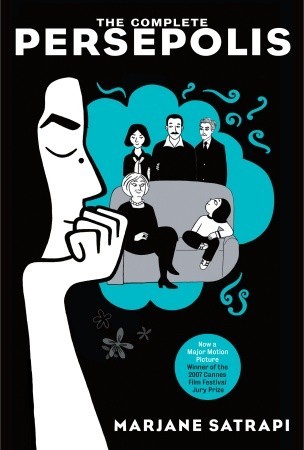 Persepolis by Marjane Satrapi
Persepolis is the autobiography of Satrapi, growing up within a large and loving family in Tehran during the Islamic Revolution. Balancing the plot between her private and public life, in a country plagued by political upheaval.
 Maus by Art Spiegelman
The only graphic novel I know of that has won the Pulitzer Prize. Maus is the complete story of Vladek Spiegelman and his wife, living and surviving in Hitler’s Europe. The Jews are mice and the Nazis are cats, this is a brilliant way to tell this type of story.
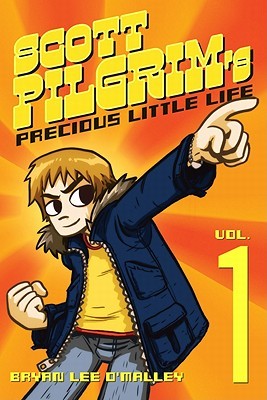 Scott Pilgrim by Bryan Lee O’Malley
I love this series, it follows the story of Scott Pilgrim and how he has to battle his new girlfriend’s seven evil exes. Something he would never have planned on, but love makes you do funny things. While this is six short graphic novels, I highly recommend reading the entire series. Also there is a faithful movie adaptation that is well worth seeing too The only real difference is Michael Cera doesn’t look like Scott Pilgrim.
There are many more great graphic novels out there but I hope I’ve given you a good place to start. Feel free to suggest some more graphic novels and even recommend some to me that I should check out. I’m tempted to do a similar post with more of your superhero type graphic novels but we will see how that goes.
Monthly Review – July 2013
 This month we looked at the satirical novel and read Kurt Vonnegut’s modern classic Cat’s Cradle. This was a lot of fun for me; even though I’ve read the novel, I’m becoming a big fan of Juvenalian satire. While it might have been a little difficult for others, it is always great to go out of our comfort zones and read something great. Next month we are dipping into some non-fiction when we read Death in the Afternoon by Ernest Hemingway, considered one of the best books ever written about bullfighting.
My wife has been away for almost three weeks and in that time I thought I might have gotten a lot of reading done, but sadly this was not the case. I’ve done pretty well for myself but nothing amazing, it seems like a regular month for me; reading wise. The biggest highlight for the month would have to be A Constellation of Vital Phenomena by Anthony Marra but I did hit rock bottom as well and read Twilight by Stephenie Meyer. I would love to know what your highlights or lowlights of the month were and even what you read this month.
My Monthly Reading
- A Constellation of Vital Phenomena by Anthony Marra
- And the Mountains Echoed by Khaled Hosseini
- Consider Phlebas by Iain M. Banks
- Grifter’s Game by Lawrence Block
- Lexicon by Max Barry
- Tampa by Alissa Nutting
- The Amazing Adventures of Kavalier & Clay by Michael Chabon
- The Lost City of Z: A Tale of Deadly Obsession in the Amazon by David Grann
- The Shining Girls by Lauren Beukes
- Twilight by Stephenie Meyer
- You by Austin Grossman
Cat’s Cradle by Kurt Vonnegut
 Title: Cat's Cradle (Goodreads)
Author: Kurt Vonnegut
Published: Dial Press, 1963
Pages: 287
Genres: Science Fiction
My Copy: Personal Copy
Buy: Amazon, Book Depository, Kindle (or visit your local Indie bookstore)
John (Jonah) is an everyman, he tells us about the times he planned to write a book about America and the importance of what they did the day Hiroshima was bombed. He finds himself involved with the children of Felix Hoenikker (a fictional Nobel laureate physicist and known in the book as the father of the atomic bomb). The Hoenikkers lead him to discover a crystal known as Ice-Nine, which they have kept secret and is an alternative structure of water.
Like most of Kurt Vonnegut’s books that I’ve read (with the exception of Breakfast of Champions) Cat’s Cradle is this bizarre journey that isn’t necessarily enjoyable to read but when you finish the book and reflect you start to see the brilliance. I remember with Slaughterhouse-Five when I ended the book I gave it a 2 star rating; it was just plain weird but the book never left my thoughts. I digested what I had read and began to understand and slowly that rating grew and now I think it is a work of genius.
As Cat’s Cradle begins to twist and turn in true Vonnegut style you eventually end up in the bizarre and fictitious island of San Lorenzon. The book continues with more twists until it becomes apparent that Ice-Nine can be a very destructive material. The novel is laced in laced with irony and parody, this is part of Vonnegut’s satirical humour and you have to except that he knows what he is doing and let him take you on this journey.
What I think Kurt Vonnegut and the narrator of Cat’s Cradle is trying to tell us as readers is the discovery of Ice-Nine can truly benefit mankind but then you find a military application for it and everything changes. This is a warning, with the amazing advances in technology without any growth in an ethical awareness human annihilation is a real possibility. Vonnegut was living in the Nuclear age when this book was written, the threats felt real and it was what had most people worried. The confrontation between technology and morality is ever present within this modern classic.
But there is a parallel (but similar) message running through Cat’s Cradle as well. John is often known as Jonah in the novel and you have to think biblical for this one. Jonah is a biblical prophet that goes to Nineveh (after much drama) and tells them of their destruction. The people repent and God takes pity on them and the city is spared. A symbolic message; a cautionary warning to the readers of Jonah’s (aka John) prophetic findings that could lead to the end of the world.
In true Vonnegut form, this book will take you on an interesting ride with no possible way of predicting the outcome. The book satirises science, technology, the arms race and even organised religion in this classic post-modern sci-fi novel. It is always hard to talk about a Vonnegut book or even try to explain his literary style, but if you like a dark comedy, science fiction or satire novel then Kurt Vonnegut is always a good choice. I would recommend starting with Slaughterhouse-Five as that is probably considered his magnum opus. Although I wasn’t a fan of Breakfast of Champions, I feel like I’m a true fan of what Vonnegut does and Cat’s Cradle is a good example of that.