Category: Random

Monthly Review – April 2013

Posted April 30, 2013 by Michael @ Knowledge Lost in Monthly Reading / 0 Comments

As we draw April to a close I have to admit that while I’ve almost caught up on all my book reviews for this blog, I’m feeling like I’m in a reading slump. It’s a new feeling for me that is causing frustration; I recently started a new job which has been mentally draining me so I hope that is the only reason behind this slump. But rather than focus on my frustration, let’s talk about the positives. You might have noticed I’ve been posting a book review up practically every day, this was because I got so far behind in reviews I would read a book and want to talk about it but waited two months for it to go live. While a book review every second day was a great idea I managed to get too far behind and now that I’m almost fully up to date I can go back to what I wanted to do with this blog. While reviews are important part of this blog and my reading journey I want to leave some room for some bookish related posts that aren’t reviews. Maybe some guest posts, my lovely wife has done some great ones in the past and a huge thanks to Mish and Toby for their posts as well. I want to generate some interesting posts that aren’t just reviews; so with any luck this will happen soon (I have an interesting one about satire planned).

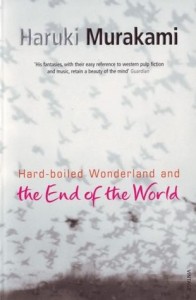
As for this month; the book club focused on Japanese literature and read Hard-Boiled Wonderland and the End of the World by Haruki Murakami which I really enjoyed and you can read my review here. I know many people are Murakami fans but to be honest, the only other novel I’ve read of his was 1Q84 and I didn’t enjoy it. I’m looking forward to what the book club does next month when we read The Strange case of Dr Jekyll and Mr Hyde for our supernatural theme. If you haven’t gotten involved with this book club and are interested in exploring literature with us, then you can do so over on Goodreads.

My reading this month was rather unproductive, I did manage to read ten novels but most of them were in the first half of the month and I think many of them were under 200 pages. My highlights included Burial Rites by Hannah Kent, The Son by Philipp Meyer, Mrs. Dalloway by Virginia Woolf and of course this month book pick for book club. But the book that stood out the most was The Reader by Bernhard Schlink, which I remember enjoying the movie but only remembered what happened as I read through this novel. I think I got sucked into this world that I didn’t want to leave, sadly that only lasted for a day then the book was over;the ups and downs of reading. What was your month of reading like? What were the highlights?

My Monthly Reading


Hard-Boiled Wonderland and the End of the World by Haruki Murakami

Posted April 29, 2013 by Michael @ Knowledge Lost in Book of the Month, Literary Fiction, Magical Realism / 0 Comments

Hard-Boiled Wonderland and the End of the World by Haruki MurakamiTitle: Hard-Boiled Wonderland and the End of the World (Goodreads)
Author: Haruki Murakami
Translator: Alfred Birnbaum
Published: Vintage, 1985
Pages: 400
Genres: Literary Fiction, Magical Realism
My Copy: Personal Copy

Buy: AmazonBook Depository (or visit your local Indie bookstore)

In the future, Tokyo remains the technology powerhouse it is today. With the major advances in technology, data security has become more valuable; problem is all codes can be broken if you know how. The Calcutec is a human data processor/encryption system who has been trained to use his bio-algorithms implant and subconscious for encryption. A new comer to a strange, isolated walled town known as “The End of the World” is assigned a job as a dream reader. As he finds acceptance within the town, his mind begins to fade; or has it only been suppressed?

Hard-Boiled Wonderland and the End of the World tells the story of a split between two parallel narratives from different worlds. The consciousness and the unconscious mind; “Hard-Boiled Wonderland” refers to The Calcutec’s life as an encryption machine while “The End of the World” is his subconscious world. The two stories are told in alternating chapters as the reader slowly discovers the mysteries connecting these two worlds together. Hard-Boiled Wonderland is a homage to Raymond Chandler and hard-boiled fiction, as well as to science fiction and cyberpunk and “The End of the World” has similarities to Franz Kafka’s The Castle.

The major theme within this book is the nature of consciousness; both narratives are constructed around this general idea. While the odd numbered chapters refer to the conscious mind and the even-numbered chapters the subconscious, it is interesting to note they link together with similar themes; for example the song Danny Boy appeared in consecutive chapters. Even characters are shared between consciousnesses; the object of the narrator’s desire, the librarian is a perfect example of this.

Beyond that, the concept of subconscious being able to be controlled or shaped plays out in the entire book. This brings me to another major theme within this novel; the morality of science. The scientific experiments been done on the narrators mind in the attempt to separate the conscious and the subconscious in an attempt create more secure encryptions is an interesting topic. It reminds me a little of Frankenstein when it looks at the dangers of science and its moral implications. The Professor’s experiment killed about twenty people and while he feels remorse for the tragedy he also feels like it was the right choice in the name of progress.

While there are many more themes that would be interesting to explore I wanted to look at character. In both narratives there are no names for any of the characters, each is referred to by their occupation or a general description; from the Narrator, known as The Calcutec, the Librarian, the Old Man, the Professor, the Big Guy and the Chubby Girl. I never really payed too much attention to this while reading the book but referring to a girl as “the Chubby Girl” did bother me; it wasn’t till the very end that I was bothered by the lot. I couldn’t understand why this book was so frustratingly vague and incomplete with character and setting descriptions, I don’t know what the reason behind it would be, except for maybe removing any obstructions that might hinder the understanding of the novel.

Even the narrative is offering a very limited view of what is actually happening but slowly most of the mysteries do become clearer but the entire focus was on the subtext of this book. This wasn’t meant to be about great characters or scenes; this was all about exploring the themes as a way to get Haruki Murakami’s thoughts on the subject across. In a sense, this is what Murakami excels at; if it wasn’t for these well thought out ideas his books would just be odd and weird. This is my second Murakami novel and the first one I’ve actually enjoyed.

I’ve finally discovered what makes Haruki Murakami an author to take notice of; I didn’t find the same thing with 1Q84, I thought it was long winded and repetitive but Hard-Boiled Wonderland and the End of the World really worked for me. I have some issues with the novel, obviously the vagueness was one of the major ones, but overall this was a really interesting journey for me.


Monthly Review – March 2013

Posted March 31, 2013 by Michael @ Knowledge Lost in Monthly Reading / 2 Comments

Happy Easter everyone, hope you are all enjoying the long weekend. I hope everyone has had a wonderful month of reading and had time to fit Lolita into their busy schedule. I’ve noticed a lot of mixed reactions to this book which would mainly be a result of the controversial nature of this book but it really is one of those books that have helped shape twentieth century literature, so well worth checking out. Still a lot of action happening with the reading challenge as well; looks like two hundred books been added this month. For those who don’t know about the reading challenge, there is still time to join in the fun, so check out my introductory post here.

A reminder that next month’s book will Hard-Boiled Wonderland and the End of the World by Haruki Murakami for our Japanese literature theme. I haven’t read much Murakami but expect some great discussion on this book, hopefully with some thoughts to the Magical Realism genre.

Highlights for my month’s reading included Infinite Jest which I’ve finally finished; the beautiful painting of Painter of Silence by Georgina Harding; Lolita; and In a Lonely Place. I would like to mention two other books that really blew me away. First, Pride and Prejudice which I finally got around to reading after putting it off for far too long (also have you seen the Lizzie Bennett Diaries?). Also Tenth of December; while I’m not much of a reader of short stories George Saunders showed me just enough to change my mind. What have you been reading this month and what were the highlights?

My Monthly Reading


Lolita by Vladimir Nabokov

Posted March 30, 2013 by Michael @ Knowledge Lost in Book of the Month, Classic / 9 Comments

Lolita by Vladimir NabokovTitle: Lolita (Goodreads)
Author: Vladimir Nabokov
Published: Penguin, 1955
Pages: 390
Genres: Classic
My Copy: Hardcover

Buy: AmazonBook Depository (or visit your local Indie bookstore)

Lolita is the highly controversial novel of Humbert Humbert, a middle-aged literature professor and his obsession with twelve year-old Dolores Haze. Of whom he becomes a step father as well as being sexually involved. Considered one of the most controversial novels of the twentieth century, Lolita is known not just for the disturbing nature but for the unreliable narration and sophisticated writing style.

Vladimir Nabokov’s masterpiece, Lolita, is one of those books that are worth reading even if it makes you very uncomfortable. The protagonist is the villain who tries so hard to gain the readers sympathy through his sincerity and melancholy. But as the story progress you can even see that he has lost of sympathy for himself and starts referring to himself as maniac who deprived Dolores of her childhood. The novel provides a remarkable perspective into the mind of a man you just want to hate and I will admit it can be a little exciting to watch him go through hell. Nabokov writes a hated character in the hope to knock him around and give him some humility and the reader is left wondering if he will learn from his mistakes.

This has often been described as an erotic novel, even the Great Soviet Encyclopedia called Lolita “an experiment in combining an erotic novel with an instructive novel of manners”. Personally I think of this book as a satirical tragedy with elements of eroticism and remorse. The narrator spends a fair chunk of the book begging the reader to understand that he is not proud of his actions and he is often stricken with guilt at the awareness of robbing Lolita of her childhood. But there is a case to be made at the fact that this is just an exploitation of a weak adult by a corrupt child but this can be problematic and not something I wish to go into great deal about.

The novel as a whole is a very one sided argument, we know how Humbert feels about the entire situation; we hear this to a very sickening degree. He has remorse but his obsession keeps him from ever changing, but one has to wonder what was really going through the mind of Dolores. I have to wonder how she sees the situation or even what she was thinking or feeling throughout the novel. We, as readers, can only surmise since we are forced to absorb Humbert’s feelings.

It is interesting to point out just how two dimensional all the characters are; all except himself and Dolores (Lolita), which he goes into great detail.  It reminds me of life; people tend to describe each other in a two dimensional manner unless we are obsessed with or interested in the person. This technique of writing really added to the realistic feeling of this book.

Lolita was a really awkward and sickening novel to read, there aren’t many books out there that have made me sick to my stomach. Lolita pulls off that feeling that horror novels try to achieve yet often get wrong – that feeling of uneasiness for the reader. This is my second read of this novel, so I knew what to expect and I was able to look past the controversial elements and focus on what this book can offer to the literary world.

Apart from the elements of oppression and an authority figure trying to assert their dominance this book explores tragicomedy, unreliable narration, irony and because Vladimir Nabokov is a Russian it could be a metaphor for totalitarianism. There are many themes you can explore within the novel but the one that will stick in most people’s minds is the lasting damage created by child sexual abuse.

Interestingly enough Vladimir Nabokov is a surrealist often linked to Gogol, Dostoevsky, and Kafka which make you wonder about some of the elements of this book even more. With a love of intricate word play and synesthetic detail Lolita turns into a wry observation of western culture. The novel is full of cleaver word play, double entendres, multilingual puns and in the end when you boil done to why people love it, it is just  a beautifully written novel.

You may not enjoy reading this book but you might enjoy having read it. I have to admit that I enjoyed this book more the second time around; there is great beauty to be found in this book and while content makes this book difficult to get through it is well worth the effort. I remember one of my first blog posts on literature was called “What Would You Read in an Introduction to Fiction Course” where I listed the books I’d include if I was to create an introduction to Fiction course and Lolita was one of my choices. Having now reread this book, it just validates my choice even more, there is so much to explore in this book that it has been put back on my list of books to reread.


What Books Have Been Trending – January-March 2013

Posted March 29, 2013 by Michael @ Knowledge Lost in Book Trends / 0 Comments

It seems to me that 2013 has been off to a great start in the world of literature. I have already managed to read a fair few books released this year and for the most part they have all been wonderful. Most of you will already know how much I enjoy this series, so I hope I do not disappoint. I know I will have missed some books but for the most part this is just the five books that I think have gotten the most buzz each month. I do try to offer a cross section of different genres, so if you feel a book has more buzz then one I’ve picked, chances are that I cut it for already picking something in that genre already.

January

The Wheel of Time series finally comes to an end with A Memory of Light. Brandon Sanderson has been praised for his job in finishing the Robert Jordan series. Now we can finally have the conclusion for this extraordinary saga upon us; fourteen books later.


Gun Machine is the result of Warren Ellis’ reimagining of New York City as a puzzle with the most dangerous pieces of all: GUNS. This blends Ellis’ humour and takes on crime novels with another quirky mystery from this twisted mind known mainly for his graphic novels.


Tenth of December is another collection of short stories from one of the biggest living legends in this medium, George Saunders. The collection sees the return of the thought provoking and satirical style that this man is known for. Deliciously dark while packed with some clever humour.
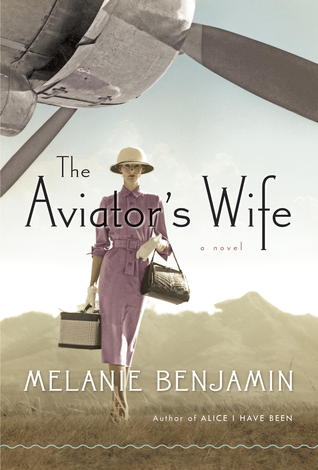
 

The Aviator’s Wife pulls back the curtain on the marriage of one of America’s most extraordinary couples: Charles Lindbergh and Anne Morrow Lindbergh. This is a vividly imagined novel of a complicated marriage—revealing both its dizzying highs and its devastating lows.


Y by Marjorie Celona is the highly acclaimed and exquisitely rendered debut about a wise-beyond-her-years foster child abandoned as a newborn on the doorstep of the local YMCA. The ravishingly beautiful novel offers a deeply affecting look at the choices we make and what it means to be a family, and it marks the debut of a magnificent new voice in contemporary fiction.

February 
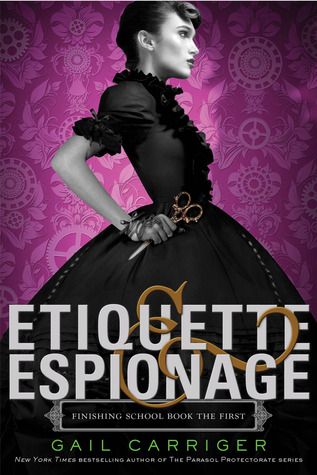
Etiquette & Espionage is the latest book from Gail Carriger and a brand new series. It’s one thing to learn to curtsy properly. It’s quite another to learn to curtsy and throw a knife at the same time. Welcome to the Finishing School series. Fourteen-year-old Sophronia is more interested in dismantling clocks and climbing trees than proper manners–and the family can only hope that company never sees her atrocious curtsy.

Scarlet is the second book in The Lunar Chronicles series by Marissa Meyer. This is not the fairy-tale you remember, but it’s one you won’t forget.  Scarlet Benoit’s grandmother is missing; the police have closed her case. The only person Scarlet can turn to is Wolf, a street fighter she does not trust, but they are drawn to each other.


If you are an Australian, then you would have seen The Rosie Project by Graeme Simsion everywhere you look. A moving and comic novel, sustained by a remarkable narrative voice, takes the reader on an immensely satisfying journey as Don seeks to see more within himself than he ever thought was possible.
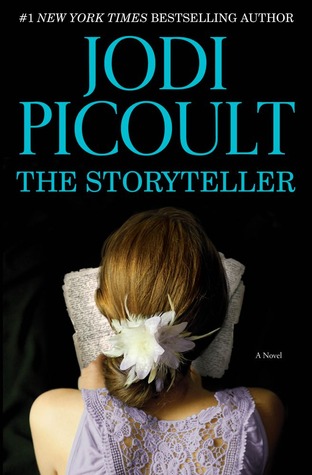
 

The Storyteller sees Sage Singer befriends an old man who is particularly beloved in her community who asks her for a favour: to kill him. What do you do when evil lives next door? Should you offer forgiveness to someone if you aren’t the party who was wronged? And most of all – if Sage even considers his request – is it murder, or justice?


Bestseller Lisa Gardner returns with a heart-thumping thriller about what lurks behind the facade of a perfect family; Touch & Go. Justin and Libby Denbe have it all: a beautiful daughter, a gorgeous house, a great marriage, admired by all. Arriving at the crime scene of their home, investigator Tessa Leoni finds no witnesses, no ransom demands or motive – just a perfect little family, gone.

March

Calculated in Death sees a well-off accountant and a beloved wife and mother, Marta on someone’s hit list. But when Eve and her partner, Peabody, find blood, the lieutenant knows Marta’s murder was the work of a killer who’s trained, but not professional or smart enough to remove all the evidence.


Clockwork Princess has danger and betrayal, secrets and enchantment, and the tangled threads of love and loss intertwine as the Shadowhunters are pushed to the very brink of destruction in the breathtaking conclusion to the Infernal Devices trilogy.
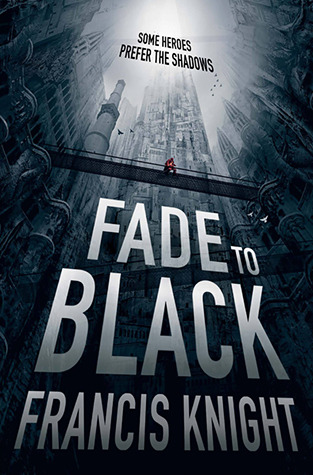
 

Fade to Black by Francis Knight is about the city of Mahala–where streets are built upon streets, buildings upon buildings. A city that the Ministry rules from the sunlit summit, and where the forsaken lurk in the darkness of Under. Because when Rojan stumbles upon the secrets lurking in the depths of the Pit, the fate of Mahala will depend on him using his magic

He makes things disappear. It’s what he does. This time he is tidying up the loose ends after a casino heist goes bad; The loose ends being a million dollars cash. But he only has 48 hours, and there’s a guy out there who wants his head in a bag, if he can find him. They don’t call him the Ghostman for nothing…


How to Get Filthy Rich in Rising Asia is Mohsin Hamid’s spectacular, thought-provoking novel of modern Asia. Fast-paced, vivid and emotionally absorbing, this novel creates two unforgettable characters who find moments of transcendent intimacy in the midst of shattering change.


I know there are many more books that have been trending, I actually started out with fifteen books from each month but thought that would make for a very long post, so I culled. Now is your turn to tell me what books I’ve missed and think deserves to be mentioned and also what do you expect from the next few months coming. I suspect Life After Life by Kate Atkinson, And the Mountains Echoed by Khaled Hosseini and The Ocean at the End of the Lane by Neil Gaiman  will be on everyone’s radar already, but what else?


Monthly Review – February 2013

Posted February 28, 2013 by Michael @ Knowledge Lost in Monthly Reading / 0 Comments

It’s so great to see just how well the reading challenge is going; over 500 books have been read from the group so far. I’m so happy with the response and pleased to see people still had time to read The Fault in our Stars. Plenty of interesting thoughts have come out of this book from the group and while there was some people that didn’t like the book, I’m so glad to see so much great constructive criticism in the threads; this is what we live for. For those who don’t know about the reading challenge, there is still time to join in the fun, so check out my introductory post here.

I’m really impressed with the book club’s efforts this year and as we move into March, I’m looking forward to seeing what people will say about Lolita for our Russian literature theme. In January, I managed to read twenty books but this month I’ve read fifteen, which is not a bad effort and still a number I can be proud of. Five of those books go towards the Literary Exploration Reading Challenge and you can find my own record of the challenge here.

Highlights this month include the epic cyber punk noir novel Altered Carbon and the recently translated German crime blockbuster Snow White Must Die. Also I got to read a modern masterpiece by an author that is quickly become a favourite of mine; Jeffery Eugenides. The Virgin Suicides was his debut novel and it was wonderfully bleak; I can’t recommend it enough. How was February for you and your reading life? Let me know in the comments below.

Monthly Reading

  • Altered Carbon by Richard K. Morgan
  • Casino Royale by Ian Fleming
  • Dirt by David Vann
  • Fool Moon by Jim Butcher
  • Gun Machine by Warren Ellis
  • Heart-Shaped Bruise by Tanya Byrne
  • March Violets by Philip Kerr
  • Occupation Diaries by Raja Shehadeh
  • One for the Books by Joe Queenan
  • Seating Arrangements by Maggie Shipstead
  • Snow White Must Die by Nele Neuhaus
  • The Lions of Al-Rassan by Guy Gavriel Kay
  • The Virgin Suicides by Jeffrey Eugenides
  • Young Philby by Robert Littell
  • Z: A Novel of Zelda Fitzgerald by Therese Anne Fowler

The Fault in our Stars by John Green

Posted February 27, 2013 by Michael @ Knowledge Lost in Book of the Month, Young Adult / 0 Comments

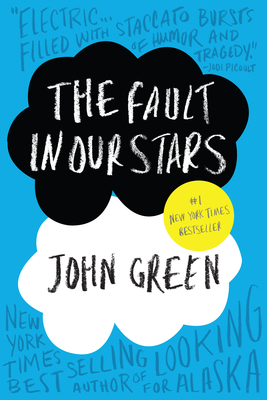
The Fault in our Stars by John GreenTitle: The Fault in our Stars (Goodreads)
Author: John Green
Published: Dutton Books, 2012
Pages: 313
Genres: Young Adult
My Copy: Personal Copy

Buy: AmazonBook Depository (or visit your local Indie bookstore)

Sixteen year old Hazel Grace Lancaster has been dealing with Stage 4 Thyroid cancer since she was 13 years old. Having recently decided to join a support group for children living with cancer she meets Augustus Waters (with osteosarcoma), and the infatuation was instantaneous. Their relationship grows and a common obsession with Peter van Houten’s An Imperial Affliction finds them in Amsterdam trying to track down this obscure author.

There really isn’t much I can say about this book that I haven’t said before. I really like John Green’s books; he writes some great characters and Hazel and Augustus are not exception. This isn’t a typical cancer book, but it is a typical Green book (not that there is anything wrong with that). I do feel like Green have some reoccurring themes in all his books but this one tries hard to break the mould. Obviously since it’s still a John Green book it never will break out, he knows what he likes; his style works really well, so there is nothing too wrong with keeping to it.

This book tends to shift a little into the unrealistic, but I’m sure there are intelligent and witty sixteen year olds that act and talk like these two; I’ve just never met them. I love how Green does a pretty typical YA love story but then finds interesting metaphors and ideas to throw in the mix. Hazel Grace and the reader are left examining life; sickness and health, life and death, what defines them and even the legacy they will leave behind.

The whole concept of ‘death being at your door the entire time’ makes for a very interesting YA novel. I’m pleased to say this is a fine example of what John Green does. I’ve read most of John Green’s novels now and I’m a huge fan of his works; I’m a little sad to think there is only one more novel of his left to read. I would love to know who else can offer intelligent and mostly realistic Young Adult novels for me to read.


The Secret Keeper by Kate Morton

Posted February 3, 2013 by jus_de_fruit in Crime, Guest Posts, Historical Fiction / 8 Comments

The Secret Keeper by Kate MortonTitle: The Secret Keeper (Goodreads)
Author: Kate Morton
Published: Allen & Unwin, 2012
Pages: 592
Genres: Crime, Historical Fiction
My Copy: ARC from Publisher

Buy: AmazonBook Depository (or visit your local Indie bookstore)

There are two categories of good books. The ones that introduce you to worlds that absorb you and you never want to leave and you find yourself slowing down towards the end, so you never have to finish the book. The other is the sort of book that compels you through the pages as fast as possible so you can discover the answer to the question that has been left burning inside you throughout that journey.  The Secret Keeper by Kate Morton falls into the latter of those categories.

I started this book at a time when I wasn’t really feeling the need to read anything. Tired and exhausted after work, it felt like too much energy to even pick up a book. I did eventually, and very quickly I was captured by the mystery in this book.

Like A Lady’s Cyclist Guide to Kashgar, this is a book that covers more than one generation and the stories that link them together. Once again, I am left pondering the lives of my parents and grandparents and how the decisions they made may be influencing me now without me even realizing it. I wonder about the adventures of my own mum before she became a mother, because as her child it’s difficult to imagine her even existing without me as her daughter.

The Secret Keeper tells the story of Laurel Nicolson, who at 16 witnesses her mother commit a violent crime, which is barely spoken of again. As her mother approaches the end of her life fifty year later, suffering with dementia, Laurel realizes this is her last chance to find out the truth of that moment. The story flips between Laurel’s own investigations as well the story as lived by her mother during the war in the 1940s. Slowly, the characters fall into place, the connections become clear and a beautiful story is weaved.

I did predict how it would end before it got there, but I was still filled with uncertainty as to whether I was correct. The story could have taken any number of turns and I raced through the pages to find what the truth of the situation actually was. Kate Morton has done an amazing job with this story and I recommend it to anyone who enjoys mystery, romance and historical fiction.

This is a guest post by Mary; not only is she my wonderful wife, she is also my editor and helps moderate the Literary Exploration group on Goodreads. Big thanks to her for this post and everything she does to help me with this blog.


Monthly Review – January 2013

Posted January 31, 2013 by Michael @ Knowledge Lost in Monthly Reading / 0 Comments

As the first month of 2013 comes to a close, it has been amazing to see how much excitement people are having towards both The Shadow of the Wind and the Literary Exploration Reading Challenge. For those who don’t know about the reading challenge, there is still time to join in the fun, so check out my introductory post here.

I’ve been off to a flying start this year, I’ve read twenty books, a feat I’m not sure how I managed, but I’ve had so much fun doing so. Nine of those books go towards the Literary Exploration Reading Challenge and you can find my own record of the challenge here. I’m thinking about trying to read two books for each genre this year and I’m keeping a record of every book and which genre it best fits into on that page as well, just to see which genres need more attention in my exploring.

Highlights of the month for me include; the highly talked about Wool by Hugh Howey, the bittersweet Big Ray by Michael Kimball and the existential The Unbearable Lightness of Being by Milan Kundera. But the one I really thought deserves high praise is Kazuo Ishiguro’s The Remains of the Day, a novel of great beauty, decorum and love lost. I haven’t reviewed these books yet but keep an eye out, they will come. So what have you been reading this month?

Monthly Reading

  • Big Ray by Michael Kimball
  • Black Vodka: Ten Stories by Deborah Levy
  • Crooked Little Vein by Warren Ellis
  • Gangster Squad: Covert Cops, the Mob, and the Battle for Los Angeles by Paul Lieberman
  • In the Midst of Death by Lawrence Block
  • Outlander by Diana Gabaldon
  • Reading Lolita in Tehran by Azar Nafisi
  • Retribution Falls by Chris Wooding
  • Revenge: Stories by Yoko Ogawa
  • The Big Nowhere by James Ellroy
  • The Dark Winter by David Mark
  • The Mad Scientist’s Daughter by Cassandra Rose Clarke
  • The Pirates! In an Adventure with Scientists by Gideon Defoe
  • The Remains of the Day by Kazuo Ishiguro
  • The Silver Linings Play Book by Matthew Quick
  • The Sins of the Fathers by Lawrence Block
  • The Toe Tag Quintet by Matthew Condon
  • The Unbearable Lightness of Being by Milan Kundera
  • Wool by Hugh Howey

The Shadow of the Wind by Carlos Ruiz Zafón

Posted January 30, 2013 by Michael @ Knowledge Lost in Book of the Month, Crime, Historical Fiction / 0 Comments

The Shadow of the Wind by Carlos Ruiz ZafónTitle: The Shadow of the Wind (Goodreads)
Author: Carlos Ruiz Zafón
Translator: Lucia Graves
Series: Cemetery of Forgotten Books #1
Published: Penguin, 2001
Pages: 487
Genres: Crime, Historical Fiction
My Copy: Personal Copy

Buy: AmazonBook Depository (or visit your local Indie bookstore)

Barcelona, 1945; Spain is still dealing with the aftermaths of the Spanish Civil War. An antiquarian book dealer’s son, Daniel, who is mourning the recent loss of his mother, finds comfort in a book called The Shadow of the Wind by Julián Carax. When he decides to hunt down more books by this mysterious author, he is shocked to find someone is on a mission to destroy every copy of Carax’s books. It is possible that Daniel may in fact have the very last copy of a Julián Carax book.

I think I‘m in love…with The Shadow of the Wind. This book has everything you really want in a story; it’s epic, mysterious, and full of adventure, as well as being haunting and beautifully written. The story is set in post–Spanish Civil War Barcelona, and follows the story of a teenage boy, who adopts a book, from the secret library known as the Cemetery of Forgotten Books. The boy becomes obsessed with this book and tries to track down the obscure author of this book.

This is an epic story of murder, madness, doomed love and secrets; while this book may seem over the top, Carlos Ruiz Zafón shows extraordinary control over the plot and language. The atmosphere in the book is beautifully created; it makes me want to go back to Barcelona. But while there is this beauty in the scenery, there is this underlining gothic feel to the whole book that just works really well for a reader like me.

Though the synopsis doesn’t really give you an exciting representation of this book, I can say this book is addictive and a joy to read. I think I became obsessed with this book. It’s like a cult following, where not just the protagonist that is obsessed but the reader becomes obsessed too. I want to adopt a book now.

This book just has something in it for everyone; it’s a rare find to find a book that can cater to such a wide range of people and I think The Shadow of the Wind did just that. If you enjoy this book check out the rest of the series, I thought the prequel; The Angel’s Game was wonderful and really need to get onto The Prisoner of Heaven in the future. It’s been a long time since I’ve read this book (this is an old review) but when the series completes, I plan to read them all again.