Catfishing, Negative Reviews and Fear of Blogging

Posted November 6, 2014 by Michael @ Knowledge Lost in Literature / 29 Comments

There have been a few news stories about authors behaving badly; that is not to say that some bloggers are probably doing the same. What I am referring to is the article about catfishing and dog poo in the mailbox. This has lead to some bloggers being involved in a review blackout and others too scared to blog at all. It is a sad day when a small group of people ruin it for the rest of us. I am not standing on the side of the bloggers or the author; these articles are one sided and until I have both sides I cannot justify picking a side.

I am a book blogger and therefore I am more likely to side with the bloggers. We do not owe an author anything; we are first and foremost readers and we are allowed to love or hate a book. As bloggers we are just passionate readers that love books so much that we wish to share it. For the most part we review books, some of will offer literary criticism but for the mostly it is just a personal opinion.

My biggest concern is that people are scared to blog and share their passion because of fear. Writing is a passion and I get that authors can get overly protective of their work but by doing this they are trying to squash someone else’s passion. If I was to ever to write a book, I don’t think I would ever want to read the reviews; book tastes vary and not everyone is going to like it.

I have even wondered if my reviews are going to set an author off. I have had some negative reviews (see The Steadfast Reader’s great post on The Necessary Evil of Negative Reviews) and I am not afraid to express my opinion but I am not going to censor myself. For one thing, my opinion is not the typical norm, I’m a small fish in the blogging world and finally my average rating on Goodreads is 3.5. So that means I love most of the books I read and it isn’t too often that I have to write a negative review.

What it all comes down to acceptance of others people’s opinions. I am a big believer of negative reviews, it allows our readers to know what we like and don’t like. As a blogger we don’t owe anything to authors; our readers expect honesty. However I want to remind book bloggers to be respectful and constructive. I would love to know what others think about the current articles going around.


Seconds by Bryan Lee O’Malley

Posted November 5, 2014 by Michael @ Knowledge Lost in Graphic Novel, Magical Realism / 0 Comments

Seconds by Bryan Lee O’MalleyTitle: Seconds (Goodreads)
Author: Bryan Lee O'Malley
Artist: Bryan Lee O'Malley
Published: Ballantine Books, 2014
Pages: 336
Genres: Graphic Novel, Magical Realism
My Copy: Hardcover

Buy: AmazonBook DepositoryKindle (or visit your local Indie bookstore)

Katie is a talented young chef running a successful restaurant. However her dreams are to open her own restaurant, a place where she can have more freedom and creativity. She has found the location for this restaurant has a backer (silent partner) and is working on fulfilling her dream. The problem is, everything is moving so slowly and she is starting to get impatient. What she really needs is a second chance, to fix the mistakes she has made and get her new restaurant on track. For Katie, she has the opportunity; a mysterious girl appeared in the middle of the night with some simple instructions for a second chance.

  1. Write your mistake
  2. Ingest one mushroom
  3. Go to sleep
  4. Wake anew

I’ve been a big fan of Bryan Lee O’Malley’s Scott Pilgrim series so I’ve been looking forward to see what will happen with Seconds. Luckily, the same humour and whimsical adventure is present within this new graphic novel. What I like about O’Malley is the way he takes a look at everyday situations in a fun and comical way. The added magical realism thread really helps explore the issues present within this book.

Seconds is full of existential angst and it explores the idea of making mistakes and he does it in a new and unique way. Unlike the Sliding Doors style where life is explored in two different situations, Bryan Lee O’Malley plays with the idea of correcting mistakes while Katie sleeps. Of course this has some humorous effects; Katie isn’t aware what has changed and this leads into a madcap scenario.

Bryan Lee O’Malley returns as the artist for his own books again and he has an interesting art style. There is an Asian influence in his art work; the big eyes and hair are not the only thing he takes from this comic book style. This influence can be found throughout his graphic novels in the characteristics, style and storytelling. What I like about Seconds is that he took his art style as seen in the Scott Pilgrim series and added colour to it. There are not a lot of colours used; the shading is often very simple and one shade but it works really well. The colour is just used to make the art pop; Bryan Lee O’Malley does great artwork, almost simplistic but it remains very expressive.

I am glad to have more Bryan Lee O’Malley graphic novels to experience but I am also reminded that he had another book before the Scott Pilgrim series that I need to check out. I do have Lost at Sea on my phone thanks to comixology; I just haven’t gotten around to reading it yet. I wouldn’t mind checking out The Wonderful World of Kim Pine as well but I know it is short. Bryan Lee O’Malley has become a favourite of mine and I hope he does something new soon.


Top Ten Tuesday: Books I Want To Re-read

Posted November 4, 2014 by Michael @ Knowledge Lost in Top Ten Tuesday / 22 Comments

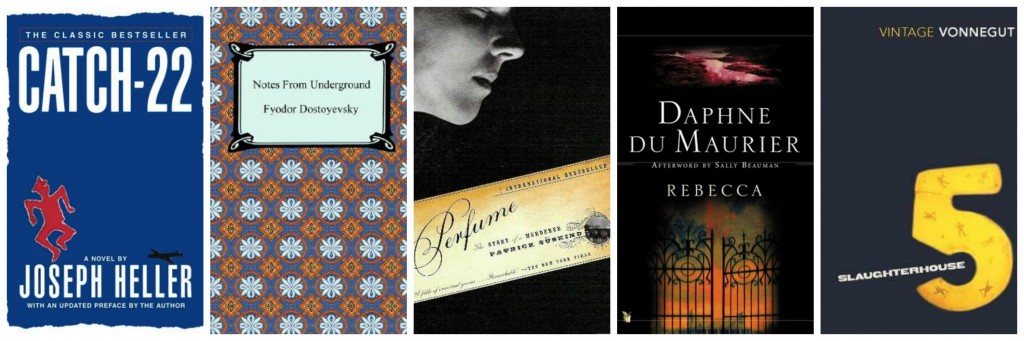
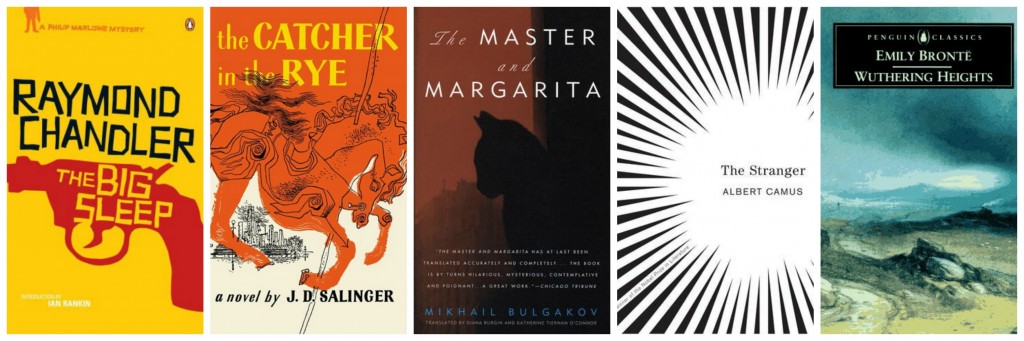
toptentuesdayIt’s Tuesday again which means time for another round of Top Ten Tuesday; I like joining in on this meme because I have a set topic to work with. Top Ten Tuesday is a book blogger meme that is hosted by The Broke and the Bookish and this week the theme is: Books I Want To Re-read. It has been awhile since I’ve participated in this meme but recently I stated that I planned on doing more re-reading next year. So I thought this might be a good chance to pick some books to re-read.

  • Catch-22 by Joseph Heller
  • Notes from the Underground by Fyodor Dostoevsky
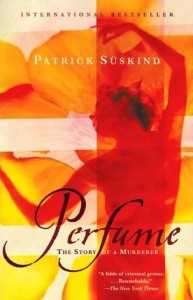
  • Perfume: The Story of a Murderer by Patrick Süskind
  • Rebecca by Daphne du Maurier
  • Slaughterhouse-Five by Kurt Vonnegut

  • The Big Sleep by Raymond Chandler
  • The Catcher in the Rye by J.D. Salinger
  • The Master and Margarita by Mikhail Bulgakov
  • The Outsider by Albert Camus
  • Wuthering Heights by Emily Brontë

German Lit Month & Nonfiction November

Posted November 3, 2014 by Michael @ Knowledge Lost in Bloggers Event / 23 Comments

Now that it is November; that means it is German Literature Month as well as Nonfiction November. While this is a little last minute, I think I’m going to participate in both. I have some books that fit already planned and I’m going to get involved by reading two or three books for each.

Nonfiction November is a chance to get people reading more non-fiction and is hosted by Sophisticated Dorkiness, Regular Rumination, Doing Dewey and I’m Lost in Books. I’ve already planned on reading some non-fiction this month; which include Excavation: A Memoir by Wendy C. Ortiz, Not Drowning, Reading by Andrew Relph and Why I Read: The Serious Pleasure of Books by Wendy Lesser.


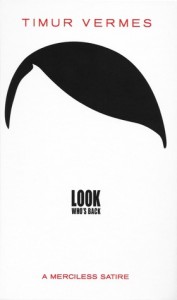
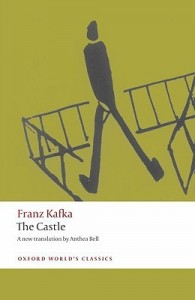
I’ve been focusing on reading more books in translation lately, so what better way to push myself than join in German Literature Month; hosted by Beauty is a Sleeping Cat and Lizzy’s Literary Life. I’ve got Look Who’s Back by Timur Vermes (translator: Jamie Bulloch) planned and I also want to re-read Perfume: The Story of a Murderer by Patrick Süskind (translator: John E. Woods). If I find more time, I wouldn’t mind dipping into some Kafka again and finally read The Castle (translator: Anthea Bell).


The Flamethrowers by Rachel Kushner

Posted November 2, 2014 by Michael @ Knowledge Lost in Contemporary / 0 Comments

The Flamethrowers by Rachel KushnerTitle: The Flamethrowers (Goodreads)
Author: Rachel Kushner
Published: Harvill Secker, 2013
Pages: 383
Genres: Contemporary
My Copy: Library Book

Buy: AmazonBook DepositoryKindle (or visit your local Indie bookstore)

Reno is a young artist from Nevada who moves to New York with the ambitious dream of making it in the art world. In a new city she finds herself as an outsider; lonely and spending her weekends watching the people of the city. She intends to turn her fascination with motorcycles and speed into art, ironically moving to the east to create art about her life in the west. Eventually she finally makes it into the New York art scene only to find that it is full of more posers than artists.

Rachel Kushner’s second novel The Flamethrowers seemed to get a lot of book buzz when it first came out but I don’t know anyone that has read it. I was walking through my library looking at all the random books they have when I came across this one and decided I will try it. This may have been a mistake, it was a tough start; I failed to find something to keep me interested to begin with and that struggle continued throughout the entire novel. In hindsight I probably should have put the book aside and tried again later but it was a library book so I forced myself through it.

I am struggling to work out if the book was the problem or if it was just the wrong time to read it. This is a particular problem, I can see glimpses of morbid beauty throughout this novel and for all intents and purposes this should have been the type of book I would enjoy. However I feel no desire to try and reread this book to find out who was at fault.

I spendta lot of time feeling disconnected from the plot, but I have to wonder if this was intentional. The Flamethrowers is a novel about the unspoken rules of modern society; how we should act in order to fit into the social circles. The need to belong runs high through this book but this is more than just social status. There are insights into art, reputation, sanity, love and life that play a big part in that ultimate class/social struggle.

I felt like this book was constructed along the lines of Midnight Cowboy but set in the world of Andy Warhol. Replace the word prostitute with the word artist and you pretty much get the idea of what to expect from The Flamethrowers. However, this felt more like a social satire on the art world, poking fun at all the poseurs and the art scene. The idea that Reno felt the need to move to New York to pursue her art career places a big part in The Flamethrowers and is what led me to suspect this was a parody.

Weirdly enough, trying to gather my thoughts and understand what happened in the novel in order to write this review gave me more insight than reading the book. The book felt like a constant state of confusion which my brain had to sort out later. There was something there in this novel but sadly I never connected. I would love to find someone who loved this book to understand what I missed.


What I Think About When I’m Not Blogging – October 2014 Wrapup

Posted October 31, 2014 by Michael @ Knowledge Lost in Monthly Reading, What I Think About When I'm Not Blogging / 0 Comments

The Anubis GatesOn the day of writing this (which is not the same as the day posting this) I was ready to abandon this journalling idea all together. I just scheduled my next What I Think About When I’m Not Blogging post for the next day and I thought to myself, “This isn’t a journal entry, this would make a good blog post”. Talking about book projects and challenges is a great bookish blog post and while it has some elements of book journaling it wasn’t the same. I had recently finished writing my review for Ex Libris by Anne Fadiman and I was thinking that this is who I want to emulate. Though I’m not sure I know how to write a personal essay; is it the same as a blog post?

Then while sitting in a room full of salt, I started The Complete Polysyllabic Spree by Nick Hornby (known as The Polysyllabic Spree and Housekeeping vs. the Dirt in the US), which is a collection of articles from his monthly column in The Believer called Stuff I’ve Been Reading. This got me thinking about What I Think About When I’m Not Blogging and how I should go forward. I want to write like Anne Fadiman but I need to start practicing. Nick Hornby mentions in the introduction that he spends a lot of time thinking about how to simplify his writing and I can’t help be feel jealous by this idea; I need to spend more time polishing my own writing to make it sound better.

I am not happy with my writing and I have a feeling I will never be happy with it. My mind races with ideas and thoughts and I struggle to keep up with it. Currently my mind is singing Cosby Sweater by Aussie Hip-Hop band Hilltop Hoods while trying to think about what to write, this is making for some weird typos. Thankfully my wonderful wife is always willing to look over my writing before I post it and make me look good. It isn’t a perfect system, sometimes I want to post something right away but I don’t want to pressure her and other times things get missed and end up in a tweet by Simon and Schuster.

I want to become a better writer and I have finally admitted to myself that I am a writer; I normally refer to myself as just a reader. However I feel the need to document my reading life and while I may never write fiction, I can become a better essayist. The only way I am going to improve is practice and while I feel like my reviews are getting better, I feel like I have been doing myself a disservice lately. I have been so far behind in reviews that I feel like I am playing catch-up. I could write mini reviews and be done with it but that isn’t going to solve any issues either.

Getting back to The Complete Polysyllabic Spree, the reason I mention this books was that Nick Hornby has taken a very simple concept of what he has been reading for the month and builds his essays around that. I am not saying that he is someone I want to write like but I can take that simple idea and start building on that. For example, for this post, I’m combining my monthly wrap up and making it more of an essay. I am hoping I can start with this basic concept and begin to build upon it.

I started What I Think About When I’m Not Blogging because I wanted to journal more and the idea comes from the fact that when I am not reading or blogging, I’m thinking about reading and blogging. I am sure my wife is sick of me being so passionate about literature but she has been great in nurturing my passion and supporting me. Recently I have been having a great time reading, I feel like I have hit this groove and I don’t want it to end. All my free time I want to spend reading but sometimes, I just end up catching up on Cinema Sins or the Climb the Stacks channel.

I have completed seventeen books this month and while I didn’t enjoy some of them, I’m glad to have read them. This month for the Literary Exploration book club I had to read The Anubis Gates by Tim Powers, which was weird and challenging, but I managed to finish it. The only other assigned reading I had to read was for a book club that meets in real life and that book was We Are All Completely Beside Ourselves by Karen Joy Fowler and that was a brilliant but I am still sorting my thoughts on that one.

I had a birthday on the 30th of September and I got a lot of book vouchers for my birthday; I have had a wonderful time buying books and I have already expressed my thoughts about this book buying binge. However, while I have so many new books to read, I have borrowed a few books from the library instead. I know I need to read my books but I was following my reading instincts, which lead me to books like The Unloved by Deborah Levy and E Lockhart’s new novel We Were Liars.

I have found myself exploring the complexities of the mind, not just the psychological but that has been a big part of my reading. Haruki Murakami has reminded me how complicated the mind can be and while reading Colorless Tsukuru Tazaki and His Years of Pilgrimage not only was I converted into a fan but it reminded that I am fascinated by psychoanalysis and should pick up some Freud and learn more about this literary theory.

On the other side of my reading spectrum I have been diving into memoirs, firstly with Ex Libris and then moving onto Tolstoy and the Purple Chair by Nina Sankovitch. I have also mentioned The Complete Polysyllabic Spree already and it has been interesting just to learn about the reading journey. I want to read more books about books; I have another memoir by Wendy Lesser called Why I Read waiting at the library for me to pick up and read next month.

It is a weird situation that I am in; I have so many new books plus plenty on my shelf waiting for me to read but I am using the library so much. I have The Elegance of the Hedgehog and Sylvia Plath’s Ariel to read next month and I am sure there will be more visits to the library. Being able to check what the library has online is not helping reduce my TBR but it helps me to follow my reading interests as they change from day to day. My wife would prefer that I spend more time with what I have and she might be right, however following your heart and reading on a whim is so much better.

I feel like I have so much more to say but I am not sure how people will take this format of blogging so I am going to stop here. I found this an enjoyable experience and I am excited to write more like this and I am going to try and incorporate more of my personal life and thoughts into these in the future. For a first attempt in the new direction, I think this worked well. I am not sure if this will be monthly, weekly or something in between. I will see how things go and I will go from there. However I would love to know what you thought of this; as well as any suggestions or criticism that can help me improve essay writing.

Read More


The Anubis Gates by Tim Powers

Posted October 30, 2014 by Michael @ Knowledge Lost in Fantasy / 0 Comments

The Anubis Gates by Tim PowersTitle: The Anubis Gates (Goodreads)
Author: Tim Powers
Published: Ace, 1983
Pages: 387
Genres: Fantasy
My Copy: Paperback

Buy: AmazonBook Depository (or visit your local Indie bookstore)

When millionaire J. Cochran Darrow finds The Anubis Gates that will make time travel possible, he quickly assembles a team to go back to 1801. He hires Professor Brendan Doyle to give advice about the poet Samuel Taylor Coleridge. Soon a band of misfits are assembled and they are off on an early 19th century London adventure and throughout time.

If you think the plot sounds a little weird, then you are not the only one. I spent a lot of time wondering about the logic behind the locations and people within The Anubis Gates. This was the steampunk pick for the Literary Exploration book club and true to the group’s purpose; this book really challenged my reading choices.  It was an interesting experience, I had no idea what to expect next and there was no way to predict anything.

The cast of characters was strange; I expected to like the book because Samuel Taylor Coleridge and Lord Byron were featured. Unfortunately they didn’t get enough development and that might be for the best but I was interested in finding out what Tim Powers would do with them. This book also featured an Egyptian wizard, werewolf, crazy clown and so much more.

What I found to be the biggest problem with this novel was the fact that Tim Powers took so many of his good ideas and tried to force it all into one novel. There was a lot going on and it was all over the place. There never was enough time to develop scenes or characters and it just felt like everything was condensed to make room for all his ideas. The concept was great, wacky and fun but the execution did not work for me.

Tim Powers is a well-respected fantasy author; his book On Stranger Tides (1987) was the inspiration behind the Monkey Island video games and also turned into the fourth Pirates of the Caribbean film. The Anubis Gates is often considered one of the pioneer sin the steampunk genre (though I am not sure I would class it as steampunk) and also won the Philip K. Dick Award in 1983. Powers seems like an author that you either love or hate. However from my experience, 1980’s science fiction and fantasy are all a bit odd and unusual.

This is such an unusual novel, which makes it extremely difficult to explain and review. I wanted to enjoy this book but for the most part I found myself skimming the pages. There are great concepts and ideas going on in this but the author didn’t want to explore them instead attempting for a fast moving adventure. For me that just made things difficult. I am fascinated by people who love this book, I’d love to know the reasoning. If you love science fiction or fantasy novels, this might work for you; unfortunately it didn’t for me.


Understanding Comics by Scott McCloud

Posted October 29, 2014 by Michael @ Knowledge Lost in Graphic Novel, Non-Fiction / 0 Comments

Understanding Comics by Scott McCloudTitle: Understanding Comics: The Invisible Art (Goodreads)
Author: Scott McCloud
Series: The Comic Books #1
Published: William Morrow, 1993
Pages: 215
Genres: Graphic Novel, Non-Fiction
My Copy: Paperback

Buy: AmazonBook Depository (or visit your local Indie bookstore)

I have been getting into comics lately and I am quickly discovering there is so much about this medium that I do not know. When trying to review a comic or graphic novel, I find it easy to talk about plot but talking about the art is difficult. I picked up Understanding Comics because there is so much to learn and I wanted a better grasp on the art form. And it is art, it might not be as highbrow as artists like Vincent van Gogh, Claude Monet or my personal favourite Michelangelo Merisi da Caravaggio, but it is still art. To exclude comics as an art form would be like removing Andy Warhol, Pablo Picasso, Jackson Pollack or René Magritte from the art world because you ‘don’t get it’.

Now that I have had a little rant about art, let’s talk about comics and Understanding Comics by Scott McCloud. This book is a graphical look into comics as an art form, exploring the history of comics and tries to explain the meaning behind the art. It starts off trying to define what a comic is, which I quickly realised was an impossible feat. McCloud ended saying “Comics are juxtaposed pictorial and other images in a deliberate sequence, intended to convey information and/or produce an aesthetic response in the viewer” but then went on to explain how problematic that definition can be.

A highlight for me was found in chapter two where Scott McCloud explored the vocabulary of comics. The chapter begins with explain René Magritte’s painting The Treachery of Images (1928-29), an artist I am a big fan of. I actually went to the Los Angeles County Museum of Art in the hope to see The Treachery of Images, but it was currently on loan to the Art Institute of Chicago. What I liked about this chapter was how he took the meaning of this painting and expanded on it to help explain comics. He took something easy to explain and built upon that to the more complex ideas.

Reading Understanding Comics makes comics sound like highbrow pieces of art and maybe that is how we should view them. Instead of thinking about comics as a lowbrow medium, it is about time we experience the art and what it can tell us. In this book six major ideas around the art. Idea/purpose, form, idiom/style, structure, craft and surface; explaining how they can all work together to make great pieces.

There is a lot of information within Understanding Comics and I don’t think I have explored it all yet. It has equipped me with some new tools when reading and reviewing comics. The best thing about this book is the way Scott McCloud changes his art style and methods to explore the different ways you can execute the theories behind this book. I am glad he referenced all his work, especially when talking about other artists and how they write comics. The graphical representation of the art theory in the book helped me to understand comics a little better but there is just so much here that I will need to reread this a few times before it sinks in.


All that is Solid Melts into Air by Darragh McKeon

Posted October 28, 2014 by Michael @ Knowledge Lost in Historical Fiction, Literary Fiction / 7 Comments

All that is Solid Melts into Air by Darragh McKeonTitle: All that is Solid Melts into Air (Goodreads)
Author: Darragh McKeon
Published: Viking, 2014
Pages: 391
Genres: Historical Fiction, Literary Fiction
My Copy: Paperback

Buy: AmazonBook Depository (or visit your local Indie bookstore)

All that is Solid Melts into Air tells the story of the Soviet Union in 1986. A nine year-old piano prodigy continuously falling victim to bullies, a surgeon throwing himself into his work to avoid the emotion pain of a failed marriage, a former dissident struggling to free herself from political constraints. Everyday Russians trying to make life work in this repressed state; that was until a disaster in Ukraine changes things.

Most people who know me know that I am a fan of Russian literature and books set in Russia. The Cold War years are of particular interest to me, the social and political unrest makes for a haunting backdrop for great story telling. When I head that All that is Solid Melts into Air was this year’s answer to A Constellation of Vital Phenomena, it was all I needed to buy this book. While reading the book I found out the novel centred around the Chernobyl nuclear accident which just gave that extra element to turn this into a new favourite.

I have never read a novel about the Chernobyl disaster before and I am struggling to think of other books that focus on this historical event. So I was pleased to have a new insight on a situation I hope to never experience. This was a beautiful and haunting tale of Russians living life and the connections they make along the way. However little gems like the controversial idea of implementing safety measure pre-disaster and the Soviet Union’s efforts to cover the accident up really helped make this novel great.

The title is taken from a line in The Communist Manifesto, which is quoted before the novel kicks off. This is an interesting quote to add, not just to give a reference to the title but the implications of what to expect within the novel. As Karl Marx and Friedrich Engels theorise in their political manifesto, “The history of all hitherto existing society is the history of class struggles”.

“All that is solid melts into air, all that is holy is profaned, and man is at last compelled to face with sober senses, his real conditions of life, and his relations with his kind.” – Karl Marx (The Communist Manifesto)

While this is a strong character driven novel, it is not the personal but political transgressions that stood out for me. All that is Solid Melts into Air is set in a time where the Iron Curtain is beginning to collapse; things are drastically changing and then the disaster involving the Chernobyl Power Plant throws the people into civil unrest. While the book focuses on a few characters the overall theme is one of class struggles. The Russian people struggling against the Soviet government; the fear and repression rules stronger than the radioactive atmosphere. An interesting concept considering the communist society that Marx wrote about was nothing like the political government at the time.

I am a little sad to see this gem has remained under the radar; All that is Solid Melts into Air deserves so much more attention. Despite that horrific setting, this is a novel of great beauty with visceral portrayals of both people and places. The struggle the people go through is handled with tender care and empathy. It is hard to believe that Darragh McKeon is a debut author; much like Anthony Marra, I am eagerly awaiting his next novel. All that is Solid Melts into Air is a new favourite and you can expect it to be near the top of my ‘best of 2014’ list.


Archie: The Married Life, Vol. 1 by Michael Uslan

Posted October 26, 2014 by Michael @ Knowledge Lost in Graphic Novel / 0 Comments

Archie: The Married Life, Vol. 1 by Michael UslanTitle: Archie: The Married Life, Vol. 1 (Goodreads)
Author: Michael Uslan
Artist: Norm Breyfogle
Published: Archie Comics, 2011
Pages: 320
Genres: Graphic Novel
My Copy: eBook

Buy: AmazonBook DepositoryKindle (or visit your local Indie bookstore)

When I was young tween, the only real reading I did was Archie comics. We had them in our house all the time; my parents must have thought they were safe enough because no one ever gets any action. There has been news recently about Archie being shot to death in the graphic novel Death of Archie which is the last book in The Married Life series. This news got me curious so I had to pick up the first trade paperback which covers the first six issues of this series.

I have always been on the side of Betty and never could understand why Archie would choose Veronica over her. Archie: The Married Life is split into two different timelines; almost like a Sliding Doors scenario, or, if you are a fan of Broadway, If/Then. This series follows the life of Archie married to Veronica and then Betty. There are some situations that are different in each timeline but mostly follow the same events. Unfortunately nothing much has changed since they were in high school.

Archie: The Married Life does try to look at the normal day-to-day issue facing adults but it holds back too much. For example, Midge finally breaks up with Moose because she is scared of his violent outbursts. This story arch could have gone into some interesting themes of emotional and physical abuse but it treads lightly around the topic. Moose does try and work on his anger issues but there is just so much more they could have done.

My favourite character was always Jughead and I enjoyed it when he hard a love life, luckily this is inserted into this series but not very well. He is getting married. I won’t tell you to who, but the only romance I saw between them was when they shared a milkshake at Pop’s Treat. This brings me to my next issue; why are they still hanging out at Pop’s Treat? I am sure it would be nice to have a place to hang but they could go to a bar or something different every now and then. They are working adults now, but they all still act like teenagers.

I think my biggest problem is the fact that this series is a sugar coated interpretation of what adult and married life would be like. No one has sex; although there was some alluding to an affair between Veronica and Reggie, but nothing happened. The series is still marketed to young tweens and this disappoints me, I thought Archie: The Married Life would have been a more adult look at the Archie world, I was wrong. I don’t even know if I want to continue, I might just read Afterlife with Archie instead.