What I Think About When I’m Not Blogging – 25th October 2014

Posted October 25, 2014 by Michael @ Knowledge Lost in What I Think About When I'm Not Blogging / 5 Comments

reading challengesI have often considered this blog as a book journal that documents my reading life from its conception in 2012. What I Think About When I’m Not Blogging is an attempt to close the gap between book blogging and journaling. This is a (semi)regular stream-of-conscious where I explore all the bookish thoughts I currently have got on my mind.

I have been thinking a lot about book challenges and book projects lately. We are coming to the end of the year and it is about that time to start planning for next year. For the past couple of years, I have committed myself to a 36-book challenge, which included all different genres. This is The Literary Exploration Challenge and while it will be running again next year, I am not sure if I want to be involved. Sure I will be hosting it at the Literary Exploration book club but that does not mean I have to do it again.

Don’t get me wrong; I love the challenge and I think it is a great way to experience genres of different varieties. I just want to commit to something different next year. I have only been reading books since 2009 and in that time I have discovered close to 700 books (680 books according to my spreadsheet). I remember back in 2012 I wrote a post about re-reading and how there are so many books to discover, so I didn’t want to waste too much time re-reading.

Since then, I’ve changed my mind; I know there are millions of books out there that I want to read. I know that I will never get to them all and that does stress me out. However I have changed a lot as a reader and a book blogger and I want to see what I think of books I have read in the past. There are favourites I want to experience again but there are also classics I might not have been ready for. I am curious to see what I will get out of books from my past.

This is not an excuse to write reviews on books I have missed but that is a bonus. Next year I would like to devote some more time to re-reading. I am not sure I would set an amount but ideally I want to re-read at least one book a month. The reason why I don’t want to set an amount or a reading challenge is I want to also spend some time with some reading projects. Sometimes a big book or a complicated book needs that extra time and attention and I would love to leave myself some time to explore them.

So there you have it; this is what I would like to achieve with my reading next year. Have you thought about a reading challenge for next year? Are you going to try something different? I like the idea of reading challenges but I think I will feel more free to read bigger books if I don’t set myself a reading goal or join any reading challenges.


Station Eleven by Emily St John Mandel

Posted October 24, 2014 by Michael @ Knowledge Lost in Literary Fiction, Speculative Fiction / 0 Comments

Station Eleven by Emily St John MandelTitle: Station Eleven (Goodreads)
Author: Emily St John Mandel
Published: Pan Macmillan, 2014
Pages: 333
Genres: Literary Fiction, Speculative Fiction
My Copy: Library Book

Buy: AmazonBook DepositoryKindle (or visit your local Indie bookstore)

Emily St John Mandel’s new novel Station Eleven begins with a performance of King Lear; everything was going smoothly until the lead actor Arthur Leander dies on stage. A new strand of the flu known as the Georgia Flu sweeps the world. It “exploded like a neutron bomb over the surface of the earth” and wiped out 99% of humanity. This all happens in the first 30 pages, the rest of the novel focuses on a group of performers known as The Travelling Symphony, who travel America putting on Shakespeare plays to those surviving colonies.

The post-apocalyptic novel has been a popular topic over the past few years. There are millions of YA novels on the topic and in the world of literary fiction it books like The Road by Cormac McCarthy, The Passage by Justin Cronin and the Maddaddam series by Margaret Atwood dominate. Recently I have read some post-apocalyptic novels that have failed to satisfy me in the way that books like The Road by Cormac McCarthy had in the past. Both California by Edan Lepucki and On Such a Full Sea by Chang-rae Lee had potential but just did not get there. Luckily Emily St John Mandel was there to restore my faith in the literary post-apocalyptic genre.

What I look for in a post-apocalyptic can be difficult to pin point. I want a dark but glittering novel that is both intelligent and audacious. It needs to do something that is different so it will be set apart from others. Station Eleven did this for me; this is not a novel about the aftermath of a global pandemic, this is about the power and importance of art. Not so much the survival of art but the importance it plays on a more personal level.

Mandel wrote a roving novel that follows a group of people struggling with life in a desolate time. This is a stylistic and complex novel told in a non-linear way to explore both the present struggles like the rarity of food and water and the disappearance of all technology. This is an exploration into individuals rather than a collective destiny. Each character has their own story to tell and the non-linear format allows their backstory to be told. They are struggling with memories, loss, nostalgia, solitude and yearning from some stability.

Canadian author Emily St John Mandel is one of those authors that receives high praises for her novels but still manages to fly mostly under-the-radar. I hate to use this term, but with all the praise from other authors she comes across as a ‘writer for writers’. Based on my experience of her writing from Station Eleven this a sad situation, her skills deserve to be realised by the reading public.

I am glad I picked up this novel; I was a little hesitant but I had heard so much about Emily St John Mandel that I just had to find out for myself. To begin with the story of Shakespearian actors was what made this different but I soon found the haunting and complex plot  full of subtleties that worked in the books favour. I am still hesitant of all the new post-apocalyptic novels to come but now I know not to overlook Emily St John Mandel in the future.


Five Must Read Memoirs from Bibliophiles

Posted October 23, 2014 by Michael @ Knowledge Lost in Top 5 / 26 Comments

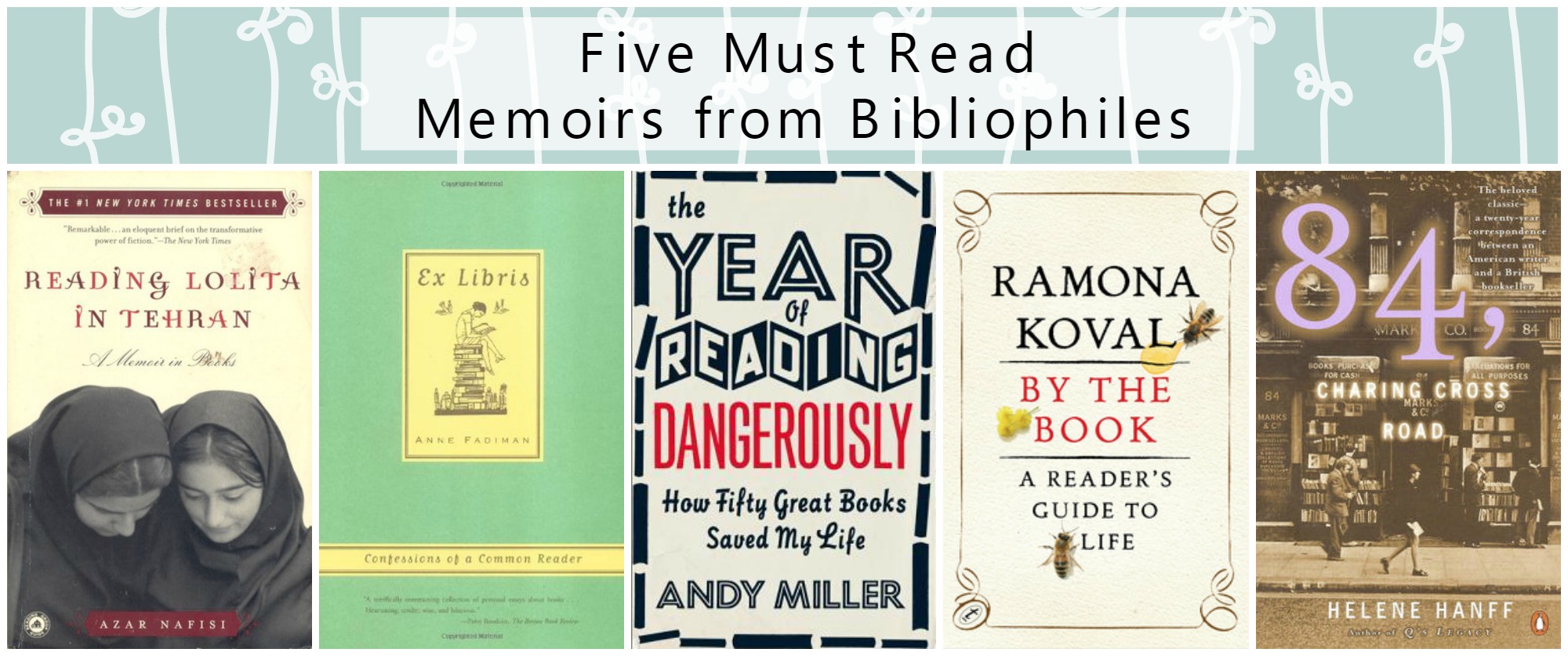
As a book lover, I found that I get a lot of pleasure out of reading books about books. There is something about a book that revolves around other books that really works for me. Judging by the popularity of books like The Shadow of the Wind by Carlos Ruiz Zafón and more recently The Collected Works of AJ Fikry by Gabrielle Zevin I know I am not alone. I made a conscious effort to read more non-fiction this year and I quickly discovered a whole new genre that I enjoy; the bibliophile’s memoir. What could be better (also meta) than reading about someone reading, but be warned, it could also be damaging to your TBR list. So I thought I might offer five memoirs that people should read about reading and the reading life.

Memoirs from Bibliophiles

Read More


You by Caroline Kepnes

Posted October 22, 2014 by Michael @ Knowledge Lost in Thriller / 15 Comments

You by Caroline KepnesTitle: You (Goodreads)
Series: You #1
, 2014
Pages: 422
Buy: AmazonBook DepositoryKindle (or visit your local Indie bookstore)

A smile and a rant about books and Dan Brown from a beautiful woman is all it took. Joe Goldberg has a new obsession. Guinevere Beck is everything he ever wanted; she is smart, witty, and sexy but there is only one problem, she is not his. Beck doesn’t know it yet but Joe is going to do whatever it takes to make this relationship work.

You is a chilling psychological thriller about obsession and relationships. You starts off with a second person perceptive but it becomes apparent that the reader in never intended to be the ‘you’ Joe obsesses over. This unique viewpoint offers a weird and creepy insight into Joe’s obsession and slowly the novel morphs back into a more comfortable first person perspective. This really worked for me; I thought it was a great way to kick off the novel but I suspect this may cause real problems for other readers.

I am hesitant in reviewing this book because I really don’t want to give too much away. For me, this is much more than a thriller, this is much more than a book about obsession. This was a novel about relationships; the way we treat and try to possess others, manipulate others, as well as how much we really reveal to our partners. Sure, this is cranked up to eleven but the concepts are there, just explored in an extreme way.

What I loved about You was the way Caroline Kepnes takes normal relationship behaviours and just push them to their extremes. This allows the reader to look at relationships in a whole new way and explore how we treat others. Joe isn’t the only problem, every person in this novel explores a different behavioural trait and they all work together. While the overall feel for this novel is a psychological thriller, this relationship element is what made it work. The synopsis on the back of You calls it a “perversely romantic thriller” and that is the perfect way to describe this novel.

I know this book won’t be for everyone, there is a lot here that could put people off, however for me it was a perfect combination of thriller and relationship critique. The psychological element worked effectively to drive home some themes throughout the novel. You is one of the best thrillers I have read in a long time, it did something different with the genre and it was executed well. Caroline Kepnes pulled off a difficult task, I am looking forward to see what she comes up with next.


The Dog by Joseph O’Neill

Posted October 21, 2014 by Michael @ Knowledge Lost in Contemporary / 0 Comments

The Dog by Joseph O’NeillTitle: The Dog (Goodreads)
Author: Joseph O'Neill
Published: Harper Collins, 2014
Pages: 256
Genres: Contemporary
My Copy: Paperback

Buy: AmazonBook DepositoryKindle (or visit your local Indie bookstore)

The Dog tells the story of a protagonist known simply as X; after a long-term relationship comes to an end he decides to make a change. Leaving New York, he takes an unusual job in a strange new city. Dubai is undergoing major transformations, the city is transforming into the ultimate futuristic city. Our protagonist finds himself in a different culture working as the “family officer” of the unpredictable and wealthy Batros family.

Right off the bat I can’t help but compare The Dog with Bret Easton Ellis’ book American Psycho and not for the reasons you might think. X might be an unlikeable character but he is no Patrick Bateman; well there are similarities but he isn’t going around killing people. Joseph O’Neill has created a shallow narcissistic character, thrown him into a very different culture and watched what might happen. This turns The Dog into a non-violent Ellis book just set in Dubai.

Can we also talk about the name X, not only does this book take its best ideas from Bret Easton Ellis and American Psycho but the protagonists name reminds me too much of the movie adaptation of J. J. Connolly’s novel Layer Cake. For those who don’t know or haven’t seen the movie, there is a character in that known as XXXX. Two connections to other novels and I am not off to a good start with this novel.

Normally I would love a novel with an unlikeable character stuck in in a culture clash but I kept seeing these similarities and it made it difficult. The book tried to make a humorous satire of the situation, playing on cultural differences and linguistics but I was still stuck. Every now and then I found glimpses of that craftsmanship I have heard about but maybe I should have just read Netherland, since that is the book people rave about.

The Dog was long listed for the Man Booker this year but I was assigned this book for book club. I just want it to be clear that I was not reading this book because of the long listing; in fact I was a little disappointed with this year’s list. I would have loved to enjoy this novel but for the most part it felt too similar to other novels. I felt the need to skim through The Dog rather than enjoying the writing and style.


Beowulf by Anonymous

Posted October 19, 2014 by Michael @ Knowledge Lost in Classic / 0 Comments

Beowulf by AnonymousTitle: Beowulf (Goodreads)
Author: Anonymous
Translator: Michael Alexander
Published: Penguin, 800
Pages: 137
Genres: Classic
My Copy: Paperback

Buy: AmazonBook DepositoryKindle (or visit your local Indie bookstore)

Beowulf is one of the oldest, complete surviving epic poems in existent. There are a few others from the same era that have survived in fragments, so the significance of Beowulf remains in regards to English literature. Written in Old English (or Anglo-Saxon) the manuscript of Beowulf is believed to date back to the 10th century (1,000AD). This is an example of a heroic poem, which can be defined as a text that deals with heroic actions in battle. Beowulf focuses on three great battles, with Grendel, Grendel’s Mother, and a Dragon.

While this is an English poem it is interesting to note that it is not set in England but southern Scandinavia, half in Denmark and the other in Geatland (or Götaland) which is one of three lands of Sweden. Beowulf does incorporate a large amount of Norse and Germanic history and legends, however I don’t have the knowledge to pick up on this within the text, just information I learnt after the reading. I suspect that this information was added into the poem to help pass on the information to Anglo-Saxon people, like a history lesson or as the poet calls it “the treasured repertory” (line 871). It is believed that Beowulf was composed in a time of stability, in a time of some democracy; an early medieval Christian civilisation. One might say this was an age where art and literature were flourishing and often used as methods of education.

Beowulf was no exception. What I got out of this poem was a reflection of the cultural and, to a lesser extent, political views of the time; a civilisation that values courtesy and formality. Chivalry, generosity and thoughtfulness are valued but still have a strong sense of precariousness, ready of imminent attack and war. Strength is still considered important; Beowulf is a warrior willing to fight against enemies both human and demonic. He even travelled to another country to fight a demonic menace. However you have to look to the other warriors as well, who appear as strong and capable as Beowulf but without their faith are rendered useless.

The role of the poet (or bard) is actually depicted in the poem itself several times. The poet is “…a fellow of the king’s” (line 868) which suggests that he is of a high rank. One who knows old and traditional stories, “Whose head was a storehouse of the storied verse, whose tongue gave gold to the language” (line 870). This allows the poem to have a unique perspective on the events that unfolds within Beowulf, a tactic that doesn’t always get explained within modern literature.

It is said that you can interpret this poem as having both Christian and pagan themes; however for me this had a very strong religious message. A battle of good and evil but I suspect this wasn’t a conflict of morality but an inevitable clash between the two. In a Christian context, Beowulf could be compared to Jesus, coming to save our souls from evil. You can even compare it to the story of Cain and Abel which is referenced within the text of Beowulf.

Given that Beowulf is meant to be experienced a spoken word I found myself struggling to read this as a written text. I had a look for the Michael Alexander translation (which was assigned to me for my university course) but was unsuccessful. However I did try to think about the text as if it was a story been spoken and I found it difficult. For me the narrative felt too slow, it lacked suspense and felt a little awkward (possibly the translation). The obscure historical allusions may not have been an issue back in the 800AD but it was for a modern reading.

I was nervous about reading Odyssey by but ended up loving it; I was hoping I would have a similar experience here. I suspected that Beowulf will remain a difficult text. There is some historical context that would be helpful before going into the poem that I just didn’t get. Reading the epic poem as part of a university course did help but for me it wasn’t enough. Medieval literature will remain difficult for me and would rather enjoy something a little more recent, like the 19th century. If you have read Beowulf and have some interesting insights that might help get my head around it, please let me know.


What I Think About When I’m Not Blogging – 18th October 2014

Posted October 18, 2014 by Michael @ Knowledge Lost in What I Think About When I'm Not Blogging / 0 Comments

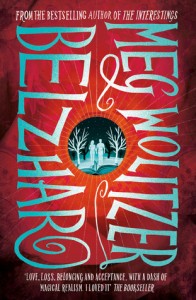
BelzharI am currently reading Belzhar by Meg Wolitzer and part of her English class, Jam has to write a journal and this got me thinking about journaling on the whole. I have always wanted to be able to journal but never really found an ability to do so; the words wouldn’t come out and I was never consistent enough to get any better. However, I am addicted to book blogging, I always want to talk about bookish things and I think I can work with that. I was talking to my wife about journaling. She is great at it; it comes naturally but she has been writing in a journal since she was ten. I do consider my blog here as a book journal that documents my bookish journey so why not expand on that a little bit.

My thought is to make a regular post about what I have been thinking about and my reading journey; a bookish stream of conscious just to see where this takes me. I would like to make this a weekly activity but it might only be semi-regular. I will start and see where I go. This might just fade out but if I make an effort then maybe I will be able to progress into journaling more frequently on and off this blog.

I have been fallen so behind on my book reviewing, it has taken over my book blog. I have thirteen posts to edit and schedule and five book reviews to write. The problem with being so far behind is that I don’t do any blogging outside of book reviewing. I don’t want every post just to be a book review; I want to explore all bookish thoughts and topics that come into my head. This is one of the main reasons to start with a post like this.

I have been lucky enough to be able to read a lot lately; I have been attending salt therapy to help clear up my sinuses and one of the requirements is no electronics in the room. This is giving me an hour a day where a have no distractions and I can read; sometimes I fall asleep but I normally force myself to use the time reading. I have so many books I want to read and salt therapy might be helping my reading life more than my sinuses.

I have worked out that I can get between 50 – 100 pages done in the hour of salt therapy and I’m there six times a week. This isn’t my only reading time but it has put a big boost to the amount of book I get through a week. Depending on the book, I often aim for the 100 pages each hour but if I love the book, I would rather read slower. The good news is I do think the salt therapy is helping; I’m starting to feel healthier. Anyway, maybe I should get back to Belzhar and I will see if this type of blogging takes off. If anything I hope to be able to turn my book blog into more of a book journal and explore more bookish thoughts.


The Circle by Dave Eggers

Posted October 17, 2014 by Michael @ Knowledge Lost in Dystopia / 0 Comments

The Circle by Dave EggersTitle: The Circle (Goodreads)
Author: Dave Eggers
Published: Hamish Hamilton, 2013
Pages: 491
Genres: Dystopia
My Copy: Library Book

Buy: AmazonBook DepositoryKindle (or visit your local Indie bookstore)

If Facebook and Google were to get married, The Circle would be their direct result of their procreation. The Circle takes the social aspects (and lack of privacy) of Facebook and combines it with the innovation of Google to create a dominant social media platform. Their success was a result of TruYou, a tool that requires people to use their real identity to sign up (including their social security number making it impossible for anyone outside of the US to sign up), many web based companies jumped on board with this innovation, wanting direct access to real data. The effect of TruYou saw the end of internet trolling, identity theft and so much more.

Mae Holland is a woman in her early 20’s that has just landed a job with the Circle thanks to her friend Annie. While she has to start in Customer Experience, a place well below her qualifications the idea of working at the Circle was enough for her. The offices (or campus) of the Circle mimic that of Google, and Mae founds that this is the place to work; everyone is friendly and she will be on the fast track to a promotion in no time. However the Circle; while it demands transparency (hiding nothing from the public) in everything they do, their attempt to close the circle (their mission statement) will result in complete control over everything. Secrets Are Lies, Privacy Is Theft.

Let’s face it, Dave Eggers’ The Circle is less of a social satire and more a horrifying prophecy of the direction social media is going. They days where people can be a curator of their lives online are fast ending and every part of our lives will be accessible. This may have some positive effects in life but when one company or person has too much power, human rights tend to take a back seat. Do people see this? Are they aware just how much of their information is being shared or sold? The Circle forces the readers to ask these questions and take a deeper look what is happening online.

The Circle serves more as a motif; even a homage to Dante if you will. Dave Eggers is the Virgil of this story and both Mae and the readers travel deeper into the circles of hell. Mae learns just much of a tyrant the Circle is, while the reader has a look at social media. While I see this as a homage to Inferno, this totalitarian nightmare is obviously influenced by Nineteen Eighty-Four (as most dystopian novel are) more than anything else. Eggers, like Orwell wants to look at society and see the direction we are heading.

The Circle is headed by the “Three Wise Men” each of them with their own ideas for the direction of the company. These three men seem to be modelled after real life innovators; Mark Zuckerberg, Steve Jobs and Julian Assange. I’m not going to go into the effects three big personalities would have on a company, but I’m sure you can imagine. I’m not going to go too much further into the plot or themes but with a company slogan like “All that happens must be known”, I probably don’t need to spell it out.

This is my first Dave Eggers novel and I’ve often heard that this is one of his weaker novels, however I think this was a perfect place to start for me. I found this dystopian satire to be directly influenced by the works of Jonathan Swift and George Orwell. I have no idea what Eggers other novels are like but I’m convinced to read more; even if they are not social satires. I loved how he incorporated pop-culture into the novel but I worry that this will mean it won’t age well, so you might want to pick this one up soon.

I have been reading novels that critique society but the majority have been classics, so it is nice to step into a modern day setting and see how the age of high-tech innovation and technoconsumerism could be harmful. I see some mixed reactions to this novel and I can understand that, my only hope is that people are understanding satire and are not marking it down for that. Of course I am a big fan of satire and will always be preaching about its value within literature. I found The Circle to be a very impressive novel and it did a great job at critiquing society, I hope people will give it a chance but I suspect this book will be a popular pick. I would like to do this one as part of a book club.


Impulse Buying and Reading Gaps

Posted October 16, 2014 by Michael @ Knowledge Lost in Literature / 0 Comments

I don’t think I am the only reader out there that loves stats. I am constantly wondering how books fit into my end of year statistics. I even have a page on my blog where you can look at my stats from the past few years. I have a spreadsheet full of all the books I have read so I can easily create pivot tables and graphs. It seems like book bloggers pay close attention to genres, genders and cultural diversity, which is great, but there is something problematic about this. I am not saying we shouldn’t strive to balance out our reading lives but I recently discovered something interesting about my own reading life.
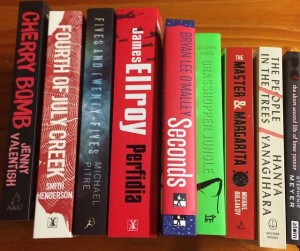
I recently had a book-buying binge and I went into a local indie bookstore and walked out with eight new books. I didn’t look up the authors or read the backs of the books, I just picked books I have heard were good by readers I know and trust. I love the impulse buying part going into a store and just picking up whatever I want. As an experiment try it, see what books you end up with; it reveals a lot about your reading preferences.

Out of the eight books I picked up, two were translations, two female authors, one YA and one graphic novel. I probably can go deeper and looking into where every author was born but I think I’ll stop there. I didn’t even think about diversity or anything like that when I bought the books, I just wanted these books, they were available and I bought them. Two books I bought were ones I’ve read before and plan to read again; I just wanted to make sure I had my own copies of those books.

I agree we should be more diverse in our reading but maybe we should just enjoy reading on impulse rather than closing the gaps. I plan to read more translated novels but maybe a reading challenge is a better way of spreading our literary tastes rather than putting so much pressure on ourselves. I know this is a controversial topic and I am all for diversity, I just want to be free to read what I want when I want, I bought these books and only realised the lack of diversity afterwards.

What do others think? I know there are holes in my reading life but should I be so worried about them? Do you wonder the same thing? Do you worry about the gaps in your reading life and do you have any methods of being stress free?

Note: I’m not saying we shouldn’t be diverse in our reading, I think that is still important. I just think we shouldn’t feel guilty about the books we buy; especially if we don’t pay attention to the author when choosing. 


Difficult Men by Brett Martin

Posted October 14, 2014 by Michael @ Knowledge Lost in Non-Fiction / 0 Comments

Difficult Men by Brett MartinTitle: Difficult Men (Goodreads)
Author: Brett Martin
Published: Faber & Faber, 2013
Pages: 320
Genres: Non-Fiction
My Copy: Paperback

Buy: AmazonBook Depository (or visit your local Indie bookstore)

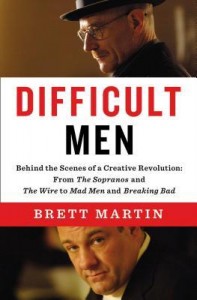
In the Third Golden Age of television (as Brett Martin calls it) things have changed drastically. With the rise of cable television, channels like HBO, Showtime and so on, are able to push the boundaries not afforded to network TV. Shows like The Sopranos, The Wire and Mad Men allowed the writers to offer something more complex or unpredictable. This saw the rise of the difficult men, characters like Tony Soprano (The Sopranos), Walter White (Breaking Bad) and Don Draper (Mad Men) offered a character study never seen before by viewers.

Brett Martin’s book Difficult Men looks at the stories behind some of the greatest shows of our time, mainly focusing on The Sopranos, Breaking Bad, The Wire and Mad Men. This is a deeper look into the evolution of modern story telling. The male protagonist within the Third Golden Age tends to be an enigma; complex, impulsive and so much more real. The type of characters that frustrates you with their mistakes but you can’t help but continuously watching.

The problem with this book is that it makes me want to watch all these shows. I have only gotten through half of The Sopranos and I haven’t found the time to try The Wire or Treme. All these shows look really great but finding time to binge watch them has become a real problem. I love reading about pop-culture and how it changes over the years and Difficult Men gave me everything I wanted. I enjoyed the insider information and the stories behind the stories. I can only hope that this evolution will start to extend toward better female leads. I would like to see the same treatment the Third Golden Age of television has give  to men offered to woman as well.

What I enjoy about these types of shows is not that the men are difficult but the way they tackle real issues and treat the protagonist as a real and flawed human being. They can explore ideas of life and death, love and sexuality, addiction, race and violence and the protagonist often struggles or makes mistakes. They often evolve as characters but it doesn’t mean they grow, there are times when I think Don Draper (Mad Men) or Hank Moody (Californication) have finally grown as a person but there is often slip ups or a spanner thrown into the mix, this makes for compelling television but also feels more real.

A huge section of Difficult Men is devoted to The Sopranos and James Gandolfini which is worth checking out. Gandolfini, in his own right, wasn’t a stereotypical leading man and there was a big exploration into his mental state. Playing the role of Tony Soprano was a very taxing role and what made James Gandolfini great at the job is how he didn’t act the role, he became the character. This ended taking a huge toll on his psychological wellbeing and this raises some interesting thoughts about the effect a role has on the actor.

Fans of television, pop culture or these shows in general will enjoy this book but I think a look into the psychological effect on the people involved will make this something to sit up and take notice. Hollywood is a complex industry and the effects can be damaging; all you have to do is walk down Hollywood Boulevard to see how it effects people. I am a big fan of the ground breaking changes these shows made towards the television industry but I didn’t realise the side effects. Brett Martin did a good job going behind the scenes and getting the back story.