Format: Audiobook

New Moon by Stephenie Meyer

Posted October 28, 2013 by Michael @ Knowledge Lost in Romance, Young Adult / 2 Comments

New Moon by Stephenie MeyerTitle: New Moon (Goodreads)
Author: Stephenie Meyer
Series: Twilight #2
Published: Little Brown and Company, 2006
Pages: 565
Genres: Romance, Young Adult
My Copy: Library Book

Buy: AmazonBook DepositoryKindle (or visit your local Indie bookstore)

The most important thing in Bella Swan’s life is Edward Cullen (eye roll). So much so that college is plan B, but now he is gone, in an effort to keep her safe. But she is not safe, there are vampires out for revenge and since the Cullen’s are no longer around, Bella is their target. In comes Jacob Black; young, handsome and willing to protect Bella.

If you have read my review on Twilight, you must be wondering why I decided to read New Moon. Torture, joining the social commentary or most likely peer pressure. If you follow me on twitter or have read my post on reading Twilight then you know the fun I had with live tweeting the entire book in all its weirdness. This is what happened again with New Moon (see below for a full read of those tweets) and I think this was the only reason why I decided to continue, because truth be told, I hated the books but really enjoyed making sarcastic remarks about them.

Let’s have a quick look at the book. I’m not going to go into deep analysis of New Moon; I would have to read the book closer for that and really I only skimmed it to race through it. This is not to say I didn’t read the book, I am well aware of the plot and the key themes but this book had so much padding that skimming was the only real way to get through it. There was a paragraph dedicated to the voice of Edward Cullen and almost a full chapter where Bella and Alice flew to Europe (nothing else happened on the flight).

Bella is as always so co-dependent that it makes me sick; when Edward left she latched on to Jacob. She tells herself that she is not capable of falling in love again, like a whiny heartbroken teenager that thinks this is the end of her life and yet she is happy to lead Jacob on. There even was a time when it felt like she was going to be co-dependent on Alice; this would have made it more interesting.

Jacob started off as a whiny little lovesick puppy following Bella around everywhere. Then when it was revealed he was a werewolf he turned into a real asshole, too cool to hang out with a girl because he was in a gang. He went from one extreme to another and I just hated Jacob, there was a joke made by one of my Twitter followers of this being character development and it is sad to say this is the extent of development in the entire novel.

Apart from the constant angsty whining (and I normally love angst) this novel never really went anywhere, it was just 500 pages of treading water. The major problems I had with New Moon are (and I’m picking my top couple out of a long list), firstly the lack of consistency. Twilight and New Moon seem to contradict each other in so many ways; in book one Bella got sick at the smell of blood but in New Moon she was bleeding all over the place frequently and never seems to get sick. Then there was the fact that Stephenie Meyer, instead of doing a little research,  ignored any mythology and just made up her own. This really annoyed me, some slight changes in the vampire/werewolf mythology is acceptable if you are going to use it but to make a vampire sparkle so you can spend pages on how much Edward is like diamonds is ridiculous.

I hate to say this but I will probably read Eclipse and Breaking Dawn just to live tweet them, I don’t expect to like the books but I can’t help reading them. Obviously I pay them out but I do try to analyse them to see if there is anything interesting there; wishful thinking. I will need long breaks in between the novels but you can look forward to reading my thoughts in the very distant future. I doubt I will ever like this series but at least I have evidence to back up my claims.

Read More


The Year of the Flood by Margret Atwood

Posted October 24, 2013 by Michael @ Knowledge Lost in Dystopia, Speculative Fiction / 0 Comments

The Year of the Flood by Margret AtwoodTitle: The Year of The Flood (Goodreads)
Author: Margaret Atwood
Series: Maddaddam #2
Narrator: Lorelei King
Published: Bloomsbury, 2009
Pages: 434
Genres: Dystopia, Speculative Fiction
My Copy: Audiobook

Buy: AmazonBook DepositoryKindle (or visit your local Indie bookstore)

The Year of the Flood follows the lives of two characters, Toby and Ren. Toby is a young woman who lost her family and the corporations are to blame. She is forced work in a burger chain you would never want to eat at, that was until she met the Gardeners. Ren grows up working in a sex club called Scales and Tails. She previously dated Jimmy (Snowman) and found herself locked in bio-containment when the pandemic happened.

This is the second book in the Maddaddam trilogy and happens simultaneously to Oryx and Crake (for the most part). While book one jumped between the dystopian corporations-controlled world and after the pandemic, The Year of the Flood is more linear and set mainly in the pre-apocalyptic world. While it isn’t really necessary to read Oryx and Crake first, I think the majority of the world building was done in the first book leaving this one more open to focus on the characters and plot.

I will admit I loved the way Oryx and Crake portrayed the corporations dystopian world I love so much but I think The Year of the Flood was overall a better novel. I liked the characters more and the portrayal of a religious cult was fascinating. Margret Atwood seems to draw a lot on personal religious experiences and then build on that to create this cult. I’ve been in plenty of churches, have met many religious fanatics and it really feels like Atwood has too.

She even took the religious element one step further by adding 14 hymns; even during her book promotions and on the audio book they have performances of these hymns. I think Atwood managed to balance religious fanaticism and hostile corporation practises just right in the novel. Both never felt overpowering and allowed for character and plot development to take the foreground.

The more I read of Atwood the more I am in awe of her brilliance. I remember reading The Handmaids Tale and never really thought too much of it but now I that I know her style and the messages she wants to get across, I feel like I should try that book again. There are some other Atwood books I want to try as well so they might have to come first.

I’m entrenched in the Maddaddam world and looking forward to reading the final novel in the trilogy. Luckily I have the book on my shelf waiting and I probably read it soon. I don’t normally read a series (or the same author) so close together but I was sucked in and needed more from this world. Fans of both post apocalyptic and dystopian novels should check out the Maddaddam trilogy, there are some interesting themes through the first two books and I’m sure it will continue in book three.


The Pillars of the Earth by Ken Follett

Posted September 29, 2013 by Michael @ Knowledge Lost in Book of the Month, Historical Fiction / 0 Comments

The Pillars of the Earth by Ken FollettTitle: The Pillars of the Earth (Goodreads)
Author: Ken Follett
Series: The Pillars of the Earth #1
Published: Pan Macmillan, 1989
Pages: 1088
Genres: Historical Fiction
My Copy: Audiobook

Buy: AmazonBook DepositoryKindle (or visit your local Indie bookstore)

The Pillars of the Earth follows the building of a cathedral in the town of Kingsbridge, England in the middle of the 12th century. Set during the time of King Stephen and the Anarchy, it explores the lives of Tom Builder and his family as he finally gets to achieve his dream of being master builder for a cathedral. There are forces that are working against the completion of this church for reasons of power and greed.

Ken Follett was an author of trashy thrillers before turning his hand to the epic novels. So it is not surprising that the novel attempts to explore themes of intrigue and conspiracy against this historical event. I’ve only ever read one other Follett novel (The Eye of the Needle) and while I thought this was a better book they are very similar.

One of the biggest problems I had with both novels is Ken Follett’s approach to women. In particular his creepy schoolboy approach to breasts, I’m not saying I’m not a fan but the way Follett’s writes about them, reminds me of George R. R. Martin and Haruki Murakami. I don’t know about you but it felt like every woman in Kingsbridge has massive breasts and if they didn’t they will be forever alone. On the plus side they won’t be raped either; but all the large breasted women ended up married and the flat chested ones were left for bigger boobs.

One of the positives of this novel was the cathedral; it was the most interesting character in the whole novel. We get to witness the rise in gothic architecture in the Romanesque age and I found the insights into the architectural evolution were so interesting. This seems to be the most researched part of the novel and I think was the only reason to read this book.

My wife loves this novel and I can see why people will enjoy this novel but considering that her favourite novels include this and Outlander makes me worry. She seems to be interesting in epic novels with incredibly flawed men. I hope she isn’t trying to tell me anything but I can appreciate her passion towards these epics.

Every man in the novel seems overly flawed with the exception of the asexual Prior. I know Follett’s loves sexual frustrated men and he struggled to write Prior Philip’s so he decided to make him completely uninterested in sex. Which is a huge contrast to every other male in the book. At times I had to stop reading this novel out of frustration but managed to power through.

I think if you really love this epic you don’t mind how long this novel is but if not this feels like it could use a good editing. This book sits at over a thousand pages and there is so much padding that could have been cut out to bring this book back down to at least 750. The themes in this novel didn’t feel like they were executed properly; there are many medieval novels that talk about the corruption of the Christian church, abuse of power, greed and gender politics. What The Pillars of the Earth did that felt unique was explore passion and base an entire novel around the construction of this one cathedral. The passion and architecture is the key to this book and really without them it would have just been a thriller written as a historical novel.

While I had a lot of problems with The Pillars of the Earth, I did like parts of this novel and enjoyed raging at the other parts. I can know join in on the cultural conversation for this novel, but maybe I’m too late for this. I read Twilight for the same reason and do enjoy raging in reviews but I can’t say this was a bad read. I respect everyone who loved this book and I’m not saying that because my wife loved it, I just can see what would interest people here.


Kiss Me First by Lottie Moggach

Posted September 16, 2013 by Michael @ Knowledge Lost in Thriller / 5 Comments

Kiss Me First by Lottie MoggachTitle: Kiss Me First (Goodreads)
Author: Lottie Moggach
Narrator: Imogen Church
Published: Picador, 2013
Pages: 352
Genres: Thriller
My Copy: Audiobook

Buy: AmazonBook DepositoryKindle (or visit your local Indie bookstore)

Leila spends most of her life on the Internet, one day she finds a forum called Red Pill, which discusses philosophical ideas. She feels at home on this site and becomes a regular contributor. One day the creator of the site approaches her with a secret project. Tess is looking for a way to end her life without hurting her friends and family. She asks Leila to continue her online life for her so she can slip away from the world unnoticed.

This will be a hard book to review and I will try not to give away any spoilers that aren’t in the book blurb. Written in the style of an online journal, the reader will slowly explore the motivations behind Tess wanting to kill herself, why Leila decides to help and the aftermath that follows. This was a real page-turner and it made me miss forums, but not online journals (I never was good at that) because I have a book blog and it is pretty much an online journal of my reading life.

I love the concept of this book, in a world where we spend most of the time communicating online, what is to say that we are truly communicating with the intended person. Their identity could have been stolen, it could be someone pretending to be someone they are not or someone has taken over their life after they completed suicide. There is no real way to tell that is really happening in the online world.

The Internet is a tricky thing to portray in a novel, with changing technology and new trends, how do you stay relevant. Also do you write the book in text/IM language and use memes and current trends to tell the story? Kiss Me First is not trying to say the Internet and social networking is bad but just using it as a tool to tell this mystery.

I’m always interested in how the Internet is portrayed in a novel and Kiss Me First has managed to get the balance right. A mixture of nostalgia towards dying sites like the online journal or forums, relevance when talking about social networking, and tongue in cheek when talking about never understanding what text/IM language is all about. For some, the narrative might not be the easiest to read but if you have spent time reading online journals at any point of time, you will pick it up pretty easily.

I really enjoyed this novel, the mystery was pretty ordinary but there were some surprises. I preferred the philosophical questions and the way Lottie Moggach explored the online life with such ease. I was surprised to learn that this was a debut novel; it was executed well and offered some interesting thoughts on social networking. Also credit where credit is due, the approach to the internet was handled well; I think it will stand the test of time for a while and not age as fast as some novels. Kiss Me First has been getting a lot of attention lately and it really was a thrilling novel and is sure to entertain the readers, especially if you spend most of your day online.


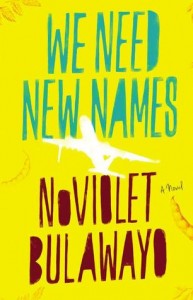
We Need New Names by NoViolet Bulawayo

Posted September 14, 2013 by Michael @ Knowledge Lost in Contemporary / 0 Comments

We Need New Names by NoViolet BulawayoTitle: We Need New Names (Goodreads)
Author: NoViolet Bulawayo
Narrator: Robin Miles
Published: Chatto & Windus, 2013
Pages: 290
Genres: Contemporary
My Copy: Audiobook

Buy: AmazonBook Depository (or visit your local Indie bookstore)

We Need New Names tells the story of Darling and her friends growing up in what they call Paradise in Zimbabwe. This novel explores the struggles faced growing up in this landlocked country, which isn’t all-bad; the kids find ways to manage and even have fun. When Darling got a little older she was sent to America where a whole new set of mischief and adventures began.

Zimbabwean author NoViolet Bulawayo (real name Elizabeth Tshele) does an interesting job of exploring life growing up in Zimbabwe and then learning to live in America. A culture clash, that is not unlike her own story. Darling and her friends seem to make their own fun, from playing made up games like Country Game and stealing guavas. But Zimbabwe is politically unstable and they have suffered because of the white people. There are some interesting insights about life in this country and I really enjoyed learning about Darling’s life.

Then the novel changes drastically and Darling starts her life in America. This might be an improvement in her life style but this doesn’t mean she was not missing her home. The culture clash was the most interesting part of this book, from stealing guavas to survive and making up games to fast food and spending her afternoons with new friends watching redtube. This was a completely different life and story and it was interesting to compare the two and follow Darling’s journey.

At times in the novel I got confused; especially when Darling refers to Shanghai and Budapest, I couldn’t work out how she got to these locations but then worked out these are different sections of Paradise and named after the ethnic groupings. I know, I’m a little slow and a little surprised I didn’t pick up on this right away but Darlings language took me a while to work out and fully understand what she was saying.

While this book is easy to read (once you get to know Darling’s narrative style), this can be hard hitting. The novel is confrontational and will give you some insight into an African life and the struggles facing children in places like Zimbabwe. Struggles you might never have thought of and moving them to a place like America might give them a better chance in life but then you have a whole new set of struggles to understand.

Longlisted for the Man Booker and I was recommend this book by another book blogger (Jennifer from The Relentless Reader), I am really glad I read We Need New Names. The novel took me on an interesting journey and I feel I learnt from it and that is what makes for a great book. I don’t think it will win the Man Booker, but I hope it make the shortlist as well. I wouldn’t call this novel a typical literary prize nomination but a novel that deserves some boost in sales from its nomination.


The Third Man by Graham Greene

Posted August 29, 2013 by Michael @ Knowledge Lost in Classic, Thriller / 0 Comments

The Third Man by Graham GreeneTitle: The Third Man (Goodreads)
Author: Graham Greene
Narrator: Martin Jarvis
Published: Penguin, 1943
Pages: 180
Genres: Classic, Thriller
My Copy: Library Book

Buy: AmazonBook Depository (or visit your local Indie bookstore)

American western writer Rollo Martins arrives in Post-World War II Vienna at the request of his childhood friend, Harry Lime. Lime has a job for him but when Martins arrives, he soon finds out that his friend has died. Convinced that Harry Lime’s death was no accident, Martins starts his own investigation, which leads him on a hunt to find the other witness, The Third Man.

If you are a loyal listener of The Readers or follow Simon Savidge’s blog or twitter you may know he recently lost his grandmother. To pay tribute to the memory of Dorothy Savidge he has asked people to read something by Graham Greene, as he was her favourite author. Greene for Gran (or on twitter #GreeneForGran) was born and I took this as an opportunity to try my first Graham Greene book, as well as join in this beautiful memorial to a fellow book lover.

Now The Third Man is an interesting book; it is actually written in preparation to writing the screenplay to what will become a film noir classic. Graham Greene wrote this novella and then converted it into the screenplay. I’m not sure how or why the original novella ended up being published but I suspect that the huge success of the movie may have had something to do with it. So when reading The Third Man you are basically reading the novelisation of the movie; everything is exactly the same.

This is not necessarily a bad thing, the movie was fantastic but then again I’m a fan of Orson Welles (Citizen Kane is the greatest movie of all time) so I might be biased. Who am I kidding, it’s not bias; The Third Man is a classic film noir movie and if you haven’t seen it then you are missing out. It’s hard to review a novella that is exactly the same as the movie, there may not be any point to reading the book if you can watch the movie but I wanted to see how Graham Greene wrote and I think I’m a fan.

What I found fascinating about the novella was the fact that the entire story is told from the perspective of Major Calloway and not the Rollo Martins. Just a quick side note here Rollo Martins name was changed to Holly Martins in the movie just in case you thought I made a mistake there. So I look back at the movie and try to imagine The Third Man from the perspective of Calloway and it just doesn’t seem right, but it works really well for the book. Just another example of what a novel can do that film can’t and gives the novella something unique that you wouldn’t get from the movie.

This only took me about an hour to read (I read slow) and while it is pretty much the exact same thing as the movie, I’m glad I read it. It gave me a sense of Graham Greene’s style and I know what to expect when I try another book (any suggestions). I loved the movie and I think the book is a great companion for fans of The Third Man. Now I want to rewatch the movie, sounds like a good idea right?


The Amazing Adventures of Kavalier & Clay by Michael Chabon

Posted August 21, 2013 by Michael @ Knowledge Lost in Historical Fiction, Literary Fiction / 0 Comments

The Amazing Adventures of Kavalier & Clay by Michael ChabonTitle: The Amazing Adventures of Kavalier & Clay (Goodreads)
Author: Michael Chabon
Narrator: David Colacci
Published: Fourth Estate, 2000
Pages: 659
Genres: Historical Fiction, Literary Fiction
My Copy: Personal Copy

Buy: AmazonBook Depository (or visit your local Indie bookstore)

The Amazing Adventures of Kavalier & Clay follows the story of two Jewish cousins. Joe Kavalier is an artist that escapes occupied Czech to America where he meets writer Sam Clay. During the golden age of comics Kavalier and Clay become major players in the industry creating many comic book heroes including The Escapist. The superhero is a Nazi-busting saviour who liberates the oppressed around the world.

I’ve read Michael Chabon before and the thing I really enjoyed about his novels is that they are full of intertextual goodness. With The Yiddish Policemen’s Union, it blends his literary style with elements of alternative history and noir. The Amazing Adventures of Kavalier & Clay blends with elements of the comic book genre. This is what impresses me the most with Chabon’s style and makes me keen to read The Telegraph Avenue (which I hope blends elements of music into his style). I wonder if all his books are full of intertextuality and will love to find some other novelists that do this; it really works for me but maybe it’s just my love for literary fiction and the genres he blends with it.

There is so much more going on with the novel. The Escapist is used to play out all Kavalier’s fantasies of being a magician/escape artist but he uses the comic books to spread his propaganda towards the Nazis. Most of this novel is set before World War II in America before the world really knew the extent of what the Third Reich were up to. Michael Chabon is a Jewish novelist and his heritage seems important to him and this comes through in his novel.

This novel deals with so many different literary themes; escape from oppression, coming of age, family and relationships. Just writing that sentence makes me think that Chabon might have over done it but really this book comes together beautifully. I don’t often use the terms like magnum opus and tour de force but having read the novel and people’s impressions of this book, it really seems to fit.

Kavalier and Clay become legends in the comic book world and as the world and industry changes, they are repeatedly asked to change and conform but they never compromise. They had a clear message they wanted to say and they refused to change that message. I’m impressed with everything about this book from the blending of comic books and its culture, Jewish mysticism and world history to the character development, proses and my overall opinion of the novel.

If you’ve never read a Michael Chabon novel then I recommend it; I’m not saying start with this novel but look for one with a theme that interests you. Out of the two I’ve read, I’ve been impressed with them both but I have to say The Amazing Adventures of Kavalier & Clay is masterfully crafted and deserves all the praise it received. I have Telegraph Avenue on the shelf and I’m interested in trying Wonder Boys soon as well. The Escapist was made into a comic by Dark Horse Comics but I think it was part of a promotion for this book. Also the film rights for the book have been sold but with the luck it’s been having I’m doubtful it will ever be made.


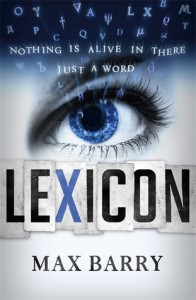
Lexicon by Max Barry

Posted August 12, 2013 by Michael @ Knowledge Lost in Thriller / 0 Comments

Lexicon by Max BarryTitle: Lexicon (Goodreads)
Author: Max Barry
Narrator: Heather Corrigan, Zach Appelman
Published: Hachette, 2013
Pages: 384
My Copy: Personal Copy

Buy: AmazonBook DepositoryKindle (or visit your local Indie bookstore)

They are an ancient secret society known only as the Poets; words are their weapons and the art of manipulation is their game. When one young woman breaks the rules for love, things start to unravel. Street-wise runaway Emily Ruff finds herself as a new recruit, training in a facility disguised as an exclusive school outside of Arlington, Virginia. She learns to use language to manipulate minds. While an innocent man is ambushed in an airport bathroom; they claim he is the key to winning a secret war that rages on. Lexicon is a fast paced thriller that explores the power of language and coercion.

I’ve been meaning to read a Max Barry novel for a while now; they all seem to be corporate or in the case of Jennifer Government marketing satires but never got around to trying them. Then Lexicon was released and it seems to tick a few of my boxes to make me sit up and take notice of it. While this has been getting a bit of buzz in America (well done fellow Australian, Max Barry) I just knew I had to read this one. I wasn’t trying to jump on the bandwagon it just seemed like my type of book and I had an opportunity to read it, so I took it.

While this is obviously a fast paced thriller (as I think most of Barry’s books) I can see where the idea a satire comes into play with his works. In Lexicon we look at modern ideas on privacy, identity and information and using an old idea that language is power we can see how Max Barry is toying with the idea that all those things we hold sacred can be manipulated and lost.  This is where the corporate satire comes into play; even in Lexicon, privacy, identity and data-collection are all important and need to be protected and Barry plays with the readers fears to suck them into his thrilling world.

Not only is this a thrilling and addictive read, I really enjoy the way the two different stories are weaved together. You get the story of Emily as she discovers this secret society and learns to coerce through the power of language and then you get the other plot thread and discover what happened in Broken Hill. I love the way this was done and it’s nothing new but it worked really well for a book like this one.

The problem with reviewing a book like Lexicon is there are so many things I want to say about the book but I think anything I do say will possibly be a spoiler. Max Barry really knows how to mix satire into a thriller and produce an altogether addictive read. I hate to do this normally but in an effort to give people an idea what this novel is like; Rebecca Schinsky (from Bookriot) says this about the Lexicon;

“Imagine X-Men plus The Magicians with a side of Nick Harkaway”

Which is a good way to describe the book; the X-Men idea really works as a way to describe the training facility disguised as an exclusive school that Emily is training at. I’ve not read The Magicians but it’s been on my TBR for a while but I tend to avoid fantasy that but I love the Nick Harkaway shout out. Angelmaker was my favourite book of 2012, it is also an addictive thriller with some literary merit and I think this is definitely the case with Lexicon. I know this seems like a glowing review, I did really enjoy it and highly recommend it but it does have flaws but honestly I didn’t care, I was immersed and wanted to know what happens next.


Twilight by Stephenie Meyer

Posted August 9, 2013 by Michael @ Knowledge Lost in Romance / 0 Comments

Twilight by Stephenie MeyerTitle: Twilight (Goodreads)
Author: Stephenie Meyer
Series: Twilight #1
Published: Little Brown and Company, 2005
Pages: 434
Genres: Romance, Young Adult
My Copy: Library Book

Buy: Book Depository (or visit your local Indie bookstore)

I don’t think I need to tell people what this book is about; rather I need to explain my actions,which I have done in a blog post called Reading Twilight, where you can read what made me pick this book up and just how crazy I was. Also you can read my live tweeting of the book which was the only way I was able to get through the story without rage quitting.

Twilight is an escapist book, plain and simple; I don’t fit in the demographic of this book so I’m reading it and looking at how this would translate in real life and not the fantasy.  I want to take the time and look at the book as well as the difference between reality and the fantasy. I might be a little harsh  and I’m not trying to make anyone that enjoys this book and the fantasy feel bad; this is just how I see the book.

First of all let’s look at Isabella Swan; the everywoman of the book but this is assuming that women are post-feminist, co-dependent, quick to fall in love women that are full of angst or have a morbid obsession with death. I’ve been told that women do fantasise about the post-feminist lifestyle but in reality most of them don’t want to be stuck in the kitchen. The little descriptions we do have about Bella has been made out to be a needy woman with no notion of independence and what she really wants; I hated her from the start. Apparently the lack of descriptions about Belle is so that female readers can put themselves in her shoes and live out this fantasy but really do people even like Bella, let alone be in her shoes?

Then you have the love interest, Edward Cullen who I tend to associate with Mr Rochester (whose name is also Edward) since I know there is this link to the Brontë sisters that tries to be made but really comparing the two feels futile, the only links I see have to do with sexuality and proto/post-feminism. I get the sense that Edward Cullen is supposed to be this Byronic hero but all I see is the type of man  woman need to run away from; a jealous, controlling asshole that stalks his girlfriend. Now the Byronic hero is as Lord Macaulay describes it “a man proud, moody, cynical, with defiance on his brow, and misery in his heart, a scorner of his kind, implacable in revenge, yet capable of deep and strong affection.” While there are similarities between Edward Cullen and the Byronic hero (to me anyway) he doesn’t really fit the mould.

Someone told me that the blood in Twilight is a metaphor of adolescent sexuality which is interesting and explains why Stephenie Meyer went to all that effort in explaining why Belle got nauseous at the sight and smell of blood. This brings up another fantasy; the older more experienced man. While I don’t really want to compare this book to other novels (I’m sorry Brontë’s and the whole Romantic era) but this is almost like a polar opposite to Tampa. One explores the fantasy of a younger partner; getting them before they have been tainted by the world which is problematic because that person ends up being the one to corrupt and break that young man. Twilight looks at the older partner; but not in the same in-depth way. this plays out the fantasy and it’s up to the reader to look for the problems with a naive woman dating an older man (hint reverse the roles in Tampa or read Lolita). I’m not saying it doesn’t work, because it does work; I’m just looking at Twilight critically and wanted to look at fantasy verses reality.

I’m sure there are positive themes within this novel that you can explore like, sacrifices you make for the one you love, true love conquers all and even overcoming the bad within you to be a better person or vampire. I think those themes are in the book but for me they feel problematic, firstly Edward continues to tell Bella that she should run away but they never do and I got frustrated with them repeating the same conversation over and over and never making the sacrifice for the good of the other. Then I don’t believe this is a good example of true love, they hardly knew each other and they were madly in love, they never sacrifice for the good of the other and they are co-dependant, jealous, stalkers; to me this is not true love, this is a teenage relationship or something creepy. Finally overcoming the bad within to be a better person, the only example of that is the vampires eat animals rather than humans.

I’m going to overlook the obvious problem with the vampire mythology because it’s been done to death but I want to leave you with one thought (which you can answer in the comments if you like). Stephenie Meyer obviously has an interest in the romantic era and the Brontë sisters but is Twilight reflecting the ideas made by the romantic poets or has it missed the point completely? As you can see I didn’t like this book at all and I read it too fast to try and pull any more critical thoughts from the novel, but I think I have enough ammunition against Twilight. I hope I didn’t offend the people that enjoy this book, it’s escapism and I’m reading it critically so that might be my problem.

Read More


Consider Phlebas by Iain M. Banks

Posted July 28, 2013 by Michael @ Knowledge Lost in Science Fiction / 0 Comments

Consider Phlebas by Iain M. BanksTitle: Consider Phlebas (Goodreads)
Author: Iain M. Banks
Series: Culture #1
Narrator: Peter Kenny
Published: Orbit, 1987
Pages: 471
Genres: Science Fiction
My Copy: Personal Copy

Buy: AmazonBook DepositoryKindle (or visit your local Indie bookstore)

The Culture war rages across the galaxy. Billions have died, and just as many are doomed. Planets, moons and even stars are at risk of destruction. The Idirans fought for their faith and the Culture for their moral right to exist. For Horza and his crew land, they are stuck somewhere in the middle of this conflict. Both the Culture and the Idirans are after one thing, but when Horza finds, it his motley crew of unpredictable mercenaries, human and machine may have sealed their own destruction.

Prolific author Iain Banks is known for his literary novels but when he writes his seminal space opera series he uses the pseudonym Iain M. Banks. Sadly Banks lost his battle with cancer on the 9th of June 2013. I realised that I’ve never read anything by this author and since I had Consider Phlebas, I thought this was the place to start; Book One in the Culture series.

I will admit I haven’t read much space opera in the past and I feel like I’ve gone off Science Fiction, well the modern ones at least. I love the old Sci-Fi novels of the 1950’s-1970’s; they blend these futuristic stories with some really interesting philosophical ideas and I miss that type of stuff. When I started reading Consider Phlebas I thought just maybe this will be the series that returns me to those awesome philosophical sci-fi novels. There was some slight philosophical ideas in the novel but that got drowned out by the fast paced plot.

The Culture is a post-scarcity society. A symbiotic society of artificial intelligences (AIs) (Minds and drones), humanoids and other alien species all sharing equal status. We know what aliens and humanoids are but let me quickly explain Minds; these are powerful and intelligent AIs so advance they are self-aware. Almost like a futuristic Skynet but with designs to be treated as equals with the rest of the universe. The Idirans are a major galactic race; they have all the control and want to supress everyone else. They are a deeply religious group who believe in a ‘rational’ God who wants a better existence for his creation. Now that we have explained both sides of the war, feel free to draw the symbolism out of it. Example: The Idirans are Americans, or the Church in medieval times and the Culture are anyone that stands against them. It really is up to you on how you want to interpret this.

The thing I often find hard about these type of Science Fiction and Fantasy novels, is you have to spend so much time trying to work out who each race is and if they represent something relevant to our own history. Once you spent all your time working that out, then you have to write it all down because there are so many you need to reference back to as you go along. Having done that, now you have a slightly better chance at understanding just what the hell is going on with the books. Some people pick this up really easily and just fly through these books fully understanding or just thinking of them as race a, race b and so on. I can’t do that, I want to pull interesting information out of a book and I know that there can be a lot of symbolism in these novels but there is a lot of work involved with working that out before you can even start to read the book.

I feel like I have hit the wall with Science Fiction (I’m not talking about dystopian or post-apocalyptic novels but the Sci-Fi set in space) and maybe I need to read a classic just to get myself out of this rut. As a literary explorer I try these newer Sci-Fi novels in the hopes to find a new and interesting author but most of the time it’s in vain. Don’t get me wrong, once I worked out my own analogy for The Idirans and The Culture I was able to enjoy this book but it feels like too much work. I like working for it while reading but in the cases like Consider Phlebas I think all the work needs to be done before you really start to get into the book and that just doesn’t really appeal to me. Now I’ve worked out a basic idea of this world, I might continue the series. The imagery and the pacing of this book is great and I think Iain M Banks did a great job with it, but I think I might try an Iain Banks book instead; did someone say The Wasp Factory?