Format: eBook

Death in the Afternoon by Ernest Hemingway

Posted August 30, 2013 by Michael @ Knowledge Lost in Non-Fiction / 0 Comments

Death in the Afternoon by Ernest HemingwayTitle: Death in the Afternoon (Goodreads)
Author: Ernest Hemingway
Published: Scribner, 1932
Pages: 416
Genres: Non-Fiction
My Copy: eBook

Buy: AmazonBook Depository (or visit your local Indie bookstore)

Death in the Afternoon is a non-fiction book by Ernest Hemingway that explores the ceremony and traditions of Spanish bullfighting. Looking at the history and the culture behind bullfighting, the book also explores the dangers and fears being faced. Still considered one of the best books ever written about bullfighting, Death in the Afternoon explores the sport by one of its aficionados.

This is an interesting book, not something I would read normally but I did enjoy it. While I am morally opposed to bullfighting I didn’t have any really knowledge of the sport and culture behind it. So I went into this book with an open mind and a little hesitant. I had never had a good experience with Hemingway in the past; granted I’ve only read one of his novels (The Old Man and the Sea) but it was enough to never go back. I know this is not a good reason not to return but I have to admit I did enjoy the writing styles.

Ernest Hemingway has a very descriptive writing style which makes for some interesting insights; but sometimes too much. I get the impression that he is using humour in some of his writing but it’s so obscure that it either goes over my head or is just downright weird. I know Hemingway was a rather unusual man and had an interesting life but he isn’t someone that I think I will ever understand or connect with in any way. While I’m against bullfighting, Hemingway seems to be an advocate towards it and often wants it to be more violent and deadly.

You have to understand that Ernest Hemingway is an arrogant, sexist, pompous ass and it often comes through in his writing, so you have to take everything he says with a huge grain of salt. I found myself disagreeing with him all too often but still interested in what he was saying. I went into this book knowing that Hemingway and I weren’t going to get along at times, which was lucky because I was ready to throw out any of his opinions that didn’t align with mine. I did find it interesting how he kept using bullfighting as a metaphor for art and Spain; I don’t know if I agree with this but he seemed was be determined to make this point.

While I’m still opposed to bullfighting, I now have a whole lot more information about the topic; possibly too much. Hemingway’s writing style was enough to make me willing to try something else of his (if I find something good) and this was an interesting and different reading experience. I don’t read enough non-fiction, let alone travel or sports writing so this was a book way out of left field. I’m determined to read more non-fiction now and I hope that I manage to get through at least one a month. Also interesting to see how this review turned out; I’m never know how to approach a non-fiction review and I think I did alright here.


Grifter’s Game by Lawrence Block

Posted August 7, 2013 by Michael @ Knowledge Lost in Pulp / 0 Comments

Grifter’s Game by Lawrence BlockTitle: Grifter’s Game (Goodreads)
Author: Lawrence Block
Series: Hard Case Crime #1
Published: Hard Case Crime, 1961
Pages: 205
Genres: Pulp
My Copy: Personal Copy

Buy: AmazonBook DepositoryKindle (or visit your local Indie bookstore)

Leonard K. Blake is a conman hiding out in Atlantic City, but of course that’s not his real name, nor is it David Gavilan or Joe Marlin. He has a knack for telling a story and knows exactly what people want to hear in order to take advantage of them. Then he meets Mona, a blonde bombshell, bored wife to a millionaire. He can make a lot of money from this woman but when he steals a suitcase full of heroin from a train station that belongs to her husband things change. A brick of pure heroin will either make him rich or dead and so could Mona.

Originally released in 1961 under the name Mona and later released as Sweet Slow Death, Lawrence Block’s novel Grifter’s Game (the title he originally wanted to use) is the first book in the now popular Hard Case Crime series. This is a gritty noir at its best, something Block is known for and something readers come to expect from this imprint. A fast paced narrative that will keep the reader on its toes right to the end.

I’m not going to lie to you, while reading this book I have to think back on my past and all the dumb things I’ve done and I thought to myself, I might have been a pretty good grifter if I was born back then. Honestly I knew how to lie and manipulate, not something I’m proud of and not something I ever want to do again. So this book hit a little close to home with me and reminded me of the past I would rather leave behind; something that makes this a difficult book for me to read.

The more I read Lawrence Block, the more I like his style which is good because he has published a lot of books, most in different series so it’s always nice to read a standalone. From the snappy dialogue to the plotting, Block has really crafted his style that could rival some of the greats from the golden age of pulp. He really knows how to write both noir and hard-boiled novels that remain gritty and fresh, after so many books I’m not sure how he manages to do this.

Grifter’s Game is probably not the best novel to start with if you’ve never read Lawrence Block, but is definitely one worth trying. He really captured how I would picture an immoral, unsympathetic lowlife and somehow manages to still get the read to care about what happens. This was the perfect book to launch the Hard Case Crime imprint with.  It has everything you want in a pulp; plot, fast pacing, complex characters, gritty prose, great dialogue and the shocking end.


The Last Whisper in the Dark by Tom Piccirilli

Posted July 7, 2013 by Michael @ Knowledge Lost in Thriller / 3 Comments

The Last Whisper in the Dark by Tom PiccirilliTitle: The Last Whisper in the Dark (Goodreads)
Author: Tom Piccirilli
Series: Terrier Rand #2
Published: Bantam Press, 2013
Pages: 336
Genres: Thriller
My Copy: ARC from Netgalley

Buy: AmazonBook Depository (or visit your local Indie bookstore)

Prodigal thief Terrier Rand has been sucked back into the life he so desperately wanted to escape. He finds himself this time helping his old friend’s wife, Kimmy discover just what has changed with Chud since the night a car heist went horribly wrong. These people don’t take kindly to the questions Terry is asking but before he can find that truth, a curvy femme fatale takes him on a walk on the wild side, estranged relatives pull him into their horror film empire, and his sister is heading for disaster.

I first discovered Tom Piccirilli from an Amazon email recommending me The Last Kind Words (book one of the Terrier Rand series) based on my enjoyment of Drive by James Sallis. Based on that email I did some research of the book and ending up buying it (not from Amazon). Although the two books are vastly different I really enjoyed The Last Kind Words and was so pleased to see Terrier Rand return for another novel.

Terrier Rand grew up in a household of thieves and grifters; from a very young age Terry had been engaging in theft. He left his family and life of crime to go straight but in The Last Kind Words, which happened five years later, he had been dragged back in when his brother was claiming to be innocent of one of the victims of his killing spree. His brother was only days away from execution and asked Terry to look into that one murder. Collie has pleaded guilty for all the other murders but the police won’t listen when he claims he is innocent of this one murder. Collie doesn’t want the real killer to remain on the loose and even though Terry hates his brother and what he did, he finds himself investigating.

Now Terrier finds himself sucked into the family drama all over again, this time it’s his old friend Chud (as well as his wife Kimmy) and his sister Dale that he has to look after. No matter what he does, Terry just can’t seem to escape his family; though he may love them, they will always suck him back into a life he urgently wants to escape. So Terry is constantly in a battle between escaping and helping the people he loves; Dale his younger sister who he wants to keep away from the world of crime and Kimmy, his former fiancée and his daughter, who he wants to keep safe as well and if his old friend Chud is mixed up in something he might have to try and save him as well.

This is not a crime thriller; this is a book of family drama and different dilemmas that come with them. While the thriller genre plays out really well and you can even see Tom Piccirilli’s noir back ground come through within this book. I love this series simply because of the unique characters and the drama that comes with looking after those who are close to you. Piccirilli does a wonderful job of writing crime fiction and blending it with character development and drama, something that is often lacking in this genre and he just shows the world how it can be done well and he does it with ease and style.

The Last Whisper in the Dark continues the story of Terrier Rand really well, those characters have a way of sticking with you and it was so great to return to them and see what happens next. You have to read The Last Kind Words before trying this book out but I highly recommend them both if you are looking for something with more character and emotions in a crime thriller. I will admit I haven’t read anything else Tom Piccirilli has written which I feel bad about but maybe I will get a chance to do so sometime soon. I hear great things about his noir fiction and in particular The Cold Spot, so that is already on my radar.


TransAtlantic by Colum McCann

Posted June 7, 2013 by Michael @ Knowledge Lost in Historical Fiction, Literary Fiction / 0 Comments

TransAtlantic by Colum McCannTitle: TransAtlantic (Goodreads)
Author: Colum McCann
Published: Bloomsbury, 2013
Pages: 320
Genres: Historical Fiction, Literary Fiction
My Copy: ARC from Netgalley

Buy: AmazonBook DepositoryKindle (or visit your local Indie bookstore)

The National Book Award-winning author of Let the Great World Spin by Colum McCann comes an astonishing new novel, TransAtlantic. Through a series of narratives that span 150 years and two continents comes this magnificent and somewhat ambitious novel. From the first TransAtlantic flight from Newfoundland to the west of Ireland to the American senator crossing the ocean in search for lasting peace in Ireland, this is part fiction part historical literary achievement.

I’ve often struggled with the novels that are made up from a collection of short stories as well as the ones that blend fact and fiction. A Visit from the Goon Squad was a widely talked about book for having a chapter dedicated to a different person but I didn’t think much of it, while The Imperfectionists did the same thing a whole lot better. Now we have TransAtlantic, which I’m not sure if it was the fact that I read this while flying but this really stands out about the rest. Then you have these novels that draw a lot from history.  A Treacherous Likeness was a disaster; Z: The Novel of Zelda Fitzgerald I thought missed too much of her later years; Burial Rites was the exception but only because it was such an obscure historical event I didn’t know about it. Yet TransAtlantic seems to be standing out above these novels as well.

The first chapter looks at the incredible story of the first flight across the Atlantic in 1919, an epic feat in human history by all accounts. I felt like Colum McCann handled this so masterfully that I wasn’t concerned about the historical facts, I was absorbed in the tension facing these two men as they battle against the odds to make it.

Yet this isn’t just about the history of flight across the Atlantic Ocean, this focuses a lot on Ireland. McCann is an Irish born author so you expect to see Irish history within this book but he is also coming from a journalist background and it really shows. This novel takes a look at slavery and conflict within Ireland making this an interesting look at the significance of TransAtlantic flight.

Colum McCann weaves a tapestry of rich and powerful short stories that lavish us with this literary piece. From the get go I felt drawn into the novel, the short sentences seem to keep me reading at such a fast pace. While I had to get off one plane and board another half way through this book, I was so sucked in I felt like asking the pilot to take the long way just so it wouldn’t interrupt my reading.

Key historical figures within TransAtlantic include Frederick Douglass, John Alcock and Teddy Brown and George Mitchell. The novel both encouraged me to learn more about these people and while giving me a new insight of both TransAtlantic flight and historical events within Ireland. On reflection I can pinpoint exactly what worked well and what didn’t, the different elements of this novel all seemed to work together to hide whatever flaws I was looking for.

TransAtlantic was both an addictive read and a stunning piece of literary fiction. While it wasn’t perfect, I’m not sure how to fault this book, I picked the right book for the right time and it was an enjoyable experience. I’ve not read Colum McCann before, in fact I hadn’t heard of him, but you can be sure I’ll be tracking more of his novels down.


Invitation to a Beheading by Vladimir Nabokov

Posted May 19, 2013 by Michael @ Knowledge Lost in Classic / 0 Comments

Invitation to a Beheading by Vladimir NabokovTitle: Invitation to a Beheading (Goodreads)
Author: Vladimir Nabokov
Published: Vintage, 1936
Pages: 240
Genres: Classic
My Copy: Personal Copy

Buy: AmazonBook Depository (or visit your local Indie bookstore)

In this bizarre and irrational world, Cincinnatus has been convicted and condemned to death by beheading for gnostical turpitude, an imaginary crime with no definition.  Cincinnatus spends his remaining days in prison where he is visited by the chimerical jailers, an executioner who masquerades as a prisoner, and his in-laws. When Cincinnatus is finally brought out to be executed, he simply wills his executioners out of existence: they disappear, along with the whole world they inhabit.

There is no denying that Invitation to a Beheading is a weird novel; often compared with Franz Kafka’s The Castle, it is important to know that Vladimir Nabokov had not read any German novels, let alone Kafka when writing this. The reason this is important is to avoid trying to compare the two novels; sure they have similarities but they are still also vastly different. Originally published as a serial, with the title Sovremennye Zapiski (Contemporary Notes), Nabokov has stated while Lolita holds his greatest affection, this novel holds his greatest esteem.

While people call this Kafkaesque, the impossible and dreamlike world reminds me more of Haruki Murakami’s style. From the very start the reader understands there is something not right about this world, this reminded me of Hard-Boiled Wonderland and the End of the World. I got the feeling that this wasn’t reality but a world constructed in Cincinnatus’ mind based on his fears, doubts, and insecurities. Cincinnatus’ enemy is the society he’s created and the people of that society act according to ridiculous rules that have been set. We never know what gnostical turpitude is and this will probably remind people of Kafka’s The Trial. Cincinnatus is rebelling against the construction of this reality and the rules the people of this society observe and perhaps this is what makes him a criminal.

Maybe gnostical turpitude is the crime of being different from all the other people in this reality. Maybe Cincinnatus is being oppress for his ideas and his nature. Maybe he is so different from everyone around him; he has an internal depth that the others lack. A lot like Lolita, Vladimir Nabokov has a way about his writing that just leaves you with so many questions that you need to think through, this whole reality and society leaves me perplexed. Though this is the point; life isn’t simple and being an outsider sometimes feels like you are Cincinnatus in a bizarre reality.

While this book primarily looks at society and oppression it also looks at human connection. Cincinnatus desires to connect with his wife Marthe, despite her unfaithfulness and lack of concern for him. The one thing he craves the most is to make a connection and she felt like the logical choice; also the fact that he loved her helped. He begs her to come alone and reveal her true self to him but there is always something that interferes with the communicating.

While this was a very odd book, Vladimir Nabokov is just a brilliant writer and that really makes up for the weirdness. Also the weird and bizarre act as motifs within the narrative and without the symbolism and meaning it would just be trippy book. Nabokov does a good job of weaving his messages and ideas while entertaining the reader in unexpected ways. Most people only ever read  Lolita by Vladimir Nabokov and I think that means they miss out on his brilliance, I hope to read more; currently on my To Be Read list is Mary, Pnin and Pale Fire. Are there any others I should add?


Nothing Lasts Forever by Roderick Thorp

Posted April 22, 2013 by Michael @ Knowledge Lost in Thriller / 0 Comments

Nothing Lasts Forever by Roderick ThorpTitle: Nothing Lasts Forever (Goodreads)
Author: Roderick Thorp
Series: Die Hard #1
Published: Graymalkin Media, 1979
Pages: 246
Genres: Thriller
My Copy: ARC from Netgalley

Buy: AmazonBook Depository (or visit your local Indie bookstore)

Retired NYPD Detective Joe Leland visits his daughter in Los Angeles on Christmas Eve to spend the holiday period with her. He meets her at her place of work, the 40-story office that houses the headquarters of the Klaxon Oil Corporation. Only to find the building been taken by a group of Cold War-era German terrorists. Lead by Anton “Little Tony” Gruber, their plans are to steal documents that will publicly expose the Klaxon Corporation. With the help of LAPD Sergeant Al Powell, Leland must fight the terrorist one by one to save the hostages, and more importantly his daughter and grandchildren.

Nothing Lasts Forever by Roderick Thorp was re-released in December 2012 after being out of print for 20 years and if you haven’t guessed it by now, this is the novel Die Hard is based on. My biggest issue with the book was it was very similar to the classic movie (which I’ve seen so many times), yet it was missing all the one liners and humour. Most of the most iconic scenes do come from the book, including crawling around the elevator shafts, C4 down the elevator shaft, jumping off the roof with a fire hose and the gun tapped to his back. I’m surprised just how faithful to the book the movie does seem but then when you expect him to say “Now I have a machine gun, Ho Ho Ho” or something similar Leland says something similar but different and it just doesn’t feel right.

The similarities seem to be so numerous that it is almost pointless to read the book, especially if you know the movie back to front. The major differences between the book and the movie (not including names and slight character changes) include that Terrorist were really out to expose the company rather than  robbing them and the ending was less Hollywood in the end. I feel this is one of the rare cases where the movie outshines the book, even if it is similar overall the movie was amazing and the book was fading away into obscurity (up till the rerelease). McClane is a far better character than Leland but interesting enough the book seems to focus a lot more on the complexity of the protagonist’s mind in regards to family, guilt and his alcoholism but I felt it didn’t work too well.

The book does feel like it’s aged too much, the political views on terrorism seem so dated, but if you read this book as just an action novel you probably can overlook this and even forgive it. I never was able to do this, I just felt like their responses to the hostile takeover felt wrong and somewhat amateurish. This is obviously to make sure Leland had to remain the single man that can save the 72 hostages but part of me was a little annoyed by that. One man taking on the world makes for a great story but I’m always bothered by that and while it’s entertaining in a book I feel like I question it more than I would with a movie.

Nothing Lasts Forever is a little darker than Die Hard but there is no real competition when comparing the two. Die Hard is a classic action film and spawned some great (and terrible) sequels. The book was interesting to explore but really there are more books out there that deserve the time; stick to the film. Interestingly enough, Nothing Lasts Forever was intended as a sequel to the 1966 film The Detective starring Frank Sinatra, then as a follow up to Commando (1985) starring Arnold Schwarzenegger. Both actors declined the role; after being rewritten, the script turned into a standalone film which has become one of the greatest Action movies of all time.


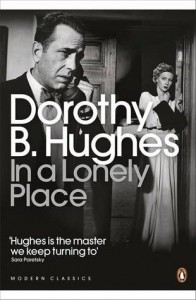
In A Lonely Place by Dorothy B. Hughes

Posted April 16, 2013 by Michael @ Knowledge Lost in Pulp / 0 Comments

In A Lonely Place by Dorothy B. HughesTitle: In A Lonely Place (Goodreads)
Author: Dorothy B. Hughes
Published: Penguin, 1947
Pages: 186
Genres: Pulp
My Copy: Personal Copy

Buy: AmazonBook Depository (or visit your local Indie bookstore)

Post World War II Los Angeles, the place you go to find the great American dream, but a stranger is preying on young women. Ex-airman, Dix Steele offers to help his detective friend solve the case and catch the serial killer in the hopes it will help him with the crime novel he is writing. Along the way he meets the luscious Laurel Gray—the femme fatale. The queen of noir, Dorothy B. Hughes blends psychological suspense with conventional hard-boiled and noir styles to give us In a Lonely Place.

Dorothy B. Hughes is known for her crime novels, 14 books primarily in the hard-boiled and noir genre and In a Lonely Place would be her most recognisable. This could be because of the Nicholas Ray adaptation starring Humphrey Bogart and Gloria Grahame or because of the psychological elements she brings to the genre. A lot of people will compare this novel with Patricia Highsmith’s The Talented Mr Ripley and while they are very similar I can’t help but thinking of the works of Jim Thompson as well. This might be because they all share the same influences Kafka, but more importantly Fyodor Dostoyevsky.

In a Lonely Place starts off like a typical noir novel and immediately the reader suspects there is something not quite right with Dix Steele. Could it be the fact that he is pretending to write a crime novel to sponge off his friends and family? Or the fact that he is a cynical misogynist? Maybe, but if you look a little closer at the writing you will find the answer. This is told in the first person but not by Dix Steele himself, like this person is with him at all times and sees everything Dix does. This sets up the psychological portrait of a woman-hating serial killer that really makes this novel work.

Towards the end of the book when Laurel Grey and the detective’s wife discover that Steele himself is the murderer, it comes as no great surprise. The book builds up like this big great reveal but there are so many elements throughout the book that give it away. I don’t think it was ever meant as a twist, just a way for Dix to find out himself. But through the whole book I was waiting and waiting for it to happen, I never really thought it would happen so late in the story.

The movie In a Lonely Place is vastly different to the book; for one thing Dix Steele is a successful screenwriter not a conman pretending to be a crime writer. Also true to Hollywood form, during the whole film everyone suspects Steele to be the killer but he turns out innocent. He still was a cynical vet but he never really had a chip on his shoulder towards the opposite sex, it felt like it was towards everyone. Also femme fatale Laurel Gray really wasn’t sassy or strong minded in the movie which was the biggest disappointment of them all.

Dorothy B. Hughes wanted to expose the misogyny of American society at that time with this book and she did a great job. The end result is this dark psychological tale that the movie adaptation butchered. Problem is I’ve seen the movie many times before finally reading the book, so it took me a long time to really get going. Both stories are worth checking out but trying to connect the film to the book doesn’t really do either of them any justice.

In a Lonely Place is worth reading; it’s nice to read a woman’s take on the noir genre. This really is a male dominated genre but women like Dorothy B. Hughes, Patricia Highsmith and Megan Abbott prove they can write noir just as well. The thing I loved most about this novel was that the influences of Fyodor Dostoyevsky’s Crime and Punishment were written all over this and yet Hughes made it her own. Make sure you check this novel out if you are a fan of hard-boiled, noir or even psychological thrillers.


Without Warning by John Birmingham

Posted April 3, 2013 by Michael @ Knowledge Lost in Thriller / 0 Comments

Without Warning by John BirminghamTitle: Without Warning (Goodreads)
Author: John Birmingham
Series: The Disappearance #1
Published: Del Rey, 2008
Pages: 560
Genres: Thriller
My Copy: Personal Copy

Buy: AmazonBook Depository (or visit your local Indie bookstore)

On the eve of Operation Iraqi Freedom, 14 March 2003 and in a time of uncertainty and financial crisis, a wave of energy has fallen over America. The United States as we know it is gone. The soldiers are left to fight a war without command, the line of succession go so far back that it falls to the governments in Pearl Harbor, Guantánamo Bay, and a very isolated corner of the north east. What will the world be like now the last superpower has disappeared?

Without Warning is the first book in the disappearance series by John Birmingham and is an alternate history/political thriller/action novel that tries to look at what the world would be like if America just disappears. But does it work? For me, I think the book just follows all the clichés found in a thriller and while it tries to do something completely different. The blending of Alternative history just never seemed to work.

Don’t get me wrong; I think John Birmingham is a great writer with some interesting ideas, but I guess mainstream novels don’t work for me. While I do try, and have, enjoyed novels like this. I tend to think there is something missing. The book felt very Americanised, even trying to imitate people like Tom Clancy and if you are into that type of book, I’m sure you would enjoy Without Warning.

I tried really hard to get into this novel, but with so main false starts and the forcing myself to finish this novel, I just never enjoyed it. I was tempted not to review this novel because I’m not sure if I have anything constructive to say, but in the interest of showing my full reading journey I forced myself.

Without Warning did have a lot of pop culture references which I do enjoy and the idea of losing the last super power was well thought out, but in the end this just wasn’t a book for me. I remember reading Tom Clancy when I was a young and enjoying it but I don’t think I would now. Maybe this is a book for a younger me and for people that just want pure escapism into a world of action.


The Pirates! In an Adventure with Scientists by Gideon Defoe

Posted March 16, 2013 by Michael @ Knowledge Lost in Childrens, Humour / 0 Comments

The Pirates! In an Adventure with Scientists by Gideon DefoeTitle: The Pirates! In an Adventure with Scientists (Goodreads)
Author: Gideon Defoe
Series: The Pirates! #1
Published: Pantheon, 2004
Pages: 144
Genres: Childrens, Humour
My Copy: Personal Copy

Buy: AmazonBook Depository (or visit your local Indie bookstore)

The Pirates! In an Adventure with Scientists follows the story of the Pirate captain and his unorthodox crew. On their adventures they meet Charles Darwin and his highly trained and sophisticated “man-panzee” Mister Bobo. Darwin has been banished from London by a rival scientist and manages to convince the Pirate captain to help defeat his enemies.

While this book and the rest of the series is not aimed at children, it comes as a real surprise that the stop animation movie adaption was. I’ve not seen the movie but I can’t imagine a cannon ball ripping through a woman’s head would make for good movie viewing. Having said that I wouldn’t mind seeing that, the humour would be well worth seeing. The humour really relies on clichés and irony, while will make for a very entertaining experience. While the book has the humour there is a visual aspect to some of the jokes that really would work better in a movie.

I think book really reads more like a script for a movie and while it isn’t laid out that way I can’t help but thing that a movie adaptation was the main goal of the author. I know of people who have seen the movie and then went on to enjoy the books and I think that might be the order required. I can’t help think the humour was a cross between Monty Python and Wallace and Gromit, yet again why I think the movie would work better.

While the rest of the book falls into the realms of cliché, this book is all about the humour and nothing else. I would have liked a better plot and better characters but clearly this wasn’t the focus at all. I’m really not sure if I want to continue with this series but for a bit of light reading I might return, but I have so many other books I want to read so I doubt I’ll be back anytime soon.


The Age Atomic by Adam Christopher

Posted March 11, 2013 by Michael @ Knowledge Lost in Science Fiction, Thriller / 0 Comments

The Age Atomic by Adam ChristopherTitle: The Age Atomic (Goodreads)
Author: Adam Christopher
Series: Empire State #2
Published: Angry Robot, 2013
Pages: 416
Genres: Science Fiction, Thriller
My Copy: ARC from Netgalley

Buy: AmazonBook Depository (or visit your local Indie bookstore)

The Empire State is dying due to the fissure connecting this reality to New York disappearing. The populace is in a panic, demanding the return of prohibition and rationing of energy. Meanwhile in 1954 New York there has been a dynamic political change. A new group called Atoms for Peace are preparing a robot army for a trans-dimensional invasion. Their goal: total conquest – or destruction – of the Empire State.

Private Investigator Rad Bradley is back in the sequel to Empire State. This time the twisted parallel prohibition-era New York City is falling apart and a robot army are planning to invade. Adam Christopher spent a lot of time building this amazing inter-dimensional city with some wacky atomic age technology and doppelgangers; in Empire State he has this brilliant tech noir story happening which I really enjoyed. But then we get to The Age Atomic and all noir elements have gone and the plot just feels like a generic atomic age thriller.

The world building he has done to give up this trans-dimensional New York is great and Rad Bradley is a wonderful character, so I can understand why he would want to stay in this world. I just think I was expecting another neo-noir type novel but was left we a pretty average science fiction thriller. The term ‘killing your darlings’ is often used and I’m wondering if Christopher should have just used the same world and created new characters. The return of Rad Bradley (an obvious homage to Ray Bradbury) just meant I expected more hard-boiled adventures from him.

I love this world but I’m very disappointed with the way this book turned out, I think Adam Christopher has the skills and tools to write great alternative reality or neo-noir novels but for me I think the genre switch left me dissatisfied. I recommend you read Empire State and if you are planning to continue to series, be warned, it’s not the same. I’m pleased to see that Adam Christopher added his writing and editing soundtrack again. This book could have been better, I will have to check out WorldBuilder again and see what other people have done with this world, since that is the most interesting part of the whole book.