
Format: Paperback

The Master and Margarita by Mikhail Bulgakov

Posted March 10, 2015 by Michael @ Knowledge Lost in Classic, Magical Realism / 2 Comments

The Master and Margarita by Mikhail BulgakovTitle: The Master and Margarita (Goodreads)
, 1967
Pages: 403
Buy: AmazonBook Depository (or visit your local Indie bookstore)

When I first read The Master and Margarita by Mikhail Bulgakov back in 2012 I had no idea how to review it. Now that I have re-read the book, I am still at a loss. The Master and Margarita is often considered as one of the best novels of the 20th century by critics and cited as the top example of Soviet satire. Like most of Mikhail Bulgakov’s bibliography, this author never saw the effect that this novel had on the world; it was written between 1928 and 1940 but was first published in 1967, long after his death.

One of the things I love about Russian literature is the social commentary and satirical nature found in a lot of their books. During the Soviet era there was a lot written about the political state of the country but these were often heavily censored before publication. There was a distribution practise happening at the time call called samizdat, which is when individuals reproduced censored publications and passed them out to readers. The term samizdat comes from the Russian words, sam which roughly means “self” and izdat “publishing house”, so possibly the first use of self-publishing. If it wasn’t for this underground practice we may never have the uncensored editions of Russian classics like Doctor Zhivago by Boris Pasternak, the majority of Aleksandr Solzhenitsyn books and of course The Master and Margarita.

The novel starts out with Berlioz and Bezdomny talking at the Patriarch ponds when a mysterious professor appears and strikes up a conversation. This professor is actually Satan and he was talking to them about the existence of God, the idea being if God doesn’t exist, can Satan?. Russia at the time was an atheist state, in fact communism and religion often do not go hand in hand. During the Stalinist era the Soviet government tried to suppress all forms of religious expression. Bulgakov’s commentary on religion and the government is an interesting one and while there are other interpretations of the novel this was what I took away from the novel this time round.

The ideas of censorship of religion continues with the Master’s book about Pontius Pilate, which was rejected and he was accused of pilatism. Though pilatism is found throughout the book The Master and Margarita as well, Pilate is not only in the Master’s novel but appears in Satan’s stories as well as dreams. The Master has poured his heart and soul into it his novel and having rejected sent him into a tailspin. This satirisation of censorship and religion plays though out the entire novel.

The idea of pilatism is an interesting one since in Christianity Pontius Pilate is the seen as the one that sentenced Jesus (referred to by his Hebrew name Yeshua Ha-Nozri in this novel) to die on the cross. Pilate becomes a symbol of humanity’s evil within religion and The Master and Margarita but you can argue that it is possible that he was a victim of society. Pilate’s ruling on Yeshua Ha-Nozri was due to pressure from the people and the high priests, he literally (and symbolically) washed his hands of the situation. I got the impression that Mikhail Bulgakov was comparing this idea of pilatism with the soviet government at the time. Human nature is apparently evil but it is also very influential of society, and what does that say about the atheist state?

There is so much going on within this novel and I would love to talk about the influences of Goethe’s tragic play Faust on the book. However I think I would need to re-read Faust to be able to compare it with The Master and Margarita. I would have also liked to explore the constant changes on narration, from an omniscient observer to the characters within the book but not sure what else to say about that. I re-read this book as part of a buddy read, my first buddy read in fact and I had a lot of fun doing this but I think I wasn’t a good reading partner. This time I read the Hugh Aplin translation of The Master and Margarita and I think I enjoyed it more than the Pevear/Volokhonsky translation I read last time. This may have been because I got more out of the book or maybe there is something about Richard Pevear and Larissa Volokhonsky translations I didn’t like, I tend to avoid their translations.

I hope I have made a coherent review, I focused mainly on censorship and religion because this book is weird and all over the place so I needed to stick to one topic to make sense of what I have read. I do plan to re-read The Master and Margarita sometime in my life, I might even try a different translation again (any suggestions?). I got so much out of this book this time around and has really made me appreciate the value of re-reading. I ended my last review of this book telling people to ‘just read it’ and I think that sentiment still stands.
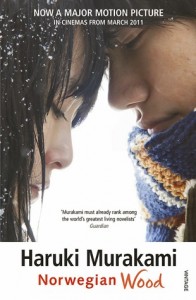

Norwegian Wood by Haruki Murakami

Posted March 8, 2015 by Michael @ Knowledge Lost in Contemporary / 10 Comments

Norwegian Wood by Haruki MurakamiTitle: Norwegian Wood (Goodreads)
Author: Haruki Murakami
Translator: Jay Rubin
Published: Vintage, 1987
Pages: 389
Genres: Contemporary
My Copy: Library Book

Buy: AmazonBook Depository (or visit your local Indie bookstore)

Having just arrived in Hamburg, Germany, 37 year old Toru Watanabe hears an orchestral cover of The Beatles’ song “Norwegian Wood” which reminds him of his college years. In high school his best friend, Kizuki completed suicide and Watanabe moved to Tokyo for college in the hopes to escape the pain. One day he was reunited with Kizuki’s girlfriend Naoko and they sought solitude in each other’s company. However this relationship wasn’t the right solution for Naoko and she left for a secluded mountain sanatorium near Kyoto.

Norwegian Wood is often referred to as the best starting point when diving into the works of Haruki Murakami, mainly because this is one of the few books that don’t have a magical realism thread to it. This is a good place to start but what I find fascinating is the way Murakami uses magical realism to explore ideas of the mind. Colorless Tsukuru Tazaki and His Years of Pilgrimage and Norwegian Wood don’t have that same fantastical style but they still follow similar themes. Colorless Tsukuru Tazaki looks at the psychological impacts of losing friendships, while this novel looks at ideas of memory. From what I have read so far, Murakami’s other books do similar things but the use of magical realism allows him to dive into the mind and explore it as a fantastical world.

I have heard Norwegian Wood described as a coming of age story so many times, but I find it difficult to classify this book as such; for the simple fact that Toru Watanabe is 37 years on at the start of the novel, even though the majority of the novel is set during his college years. I think this is more a reflection on life and love, a novel that explores ideas of memory and nostalgia through themes like loss, depression and sexuality. This leads me to wonder just how reliable Watanabe really is and if there is a ‘rose coloured glasses’ perception happening in the novel. However the way this novel comes together and deals with memory (especially at the end) works so well and I can understand why Norwegian Wood is a Haruki Murakami favourite for many people.

One thing that really stuck with me with Norwegian Wood is the way Murakami developed characters. I found most characters to be complex and well rounded, they all had a unique personality and it was such a joy to read something with such great character development. A favourite of mine was Midori, who reminds me a lot of my wife; a confident and sure character who is at times insecure but has a great interest in talking about sex with others. She was the highlight of the whole novel and I always looked forward to her turning up within the story.

Before I knew who Haruki Murakami was, I saw the 2010 Japanese movie adaptation and thankfully I forgot most of the story. While images and plot points did come back to me as I read the novel, I was glad I didn’t have that outside influence but now I do need to re-watch the movie. Norwegian Wood is a great starting place if you have never read Haruki Murakami before. Apparently Murakami isn’t too happy that this is the novel that people will read or recognise him by, but it really is one of his stand out books. I have so many more Murakami books to read and I am really looking forward to diving into them all.


An Untamed State by Roxane Gay

Posted March 4, 2015 by Michael @ Knowledge Lost in Contemporary / 2 Comments

An Untamed State by Roxane GayTitle: An Untamed State (Goodreads)
Author: Roxane Gay
Published: Little Brown and Company, 2014
Pages: 384
Genres: Contemporary
My Copy: Library Book

Buy: AmazonBook Depository (or visit your local Indie bookstore)

Mireille Duval Jameson thinks of life as a fairy tale, that was until a trip home to visit her parents sees her kidnapped in broad daylight. Her father is a wealthy man living in Port-au-Prince, Haiti and her captives are none too pleased with him. An Untamed State is a brutal, unflinching debut that deals with poverty, corruption and the damaging effects of being held captive.

“Once upon a time, my life was a fairy tale and then I was stolen from everything I’ve ever loved. There was no happily ever after. After days of dying, I was dead.” 

Roxane Gay had a fantastic year in 2014, her collection of essays Bad Feminist received a lot of praise in the bookish community and her debut novel also released in the same year was a stunning success. An Untamed State was not released in Australia until recently and I was finally able to see why this book was hyped so much. While this was a fast paced thriller that flowed quickly, the brutal nature of this novel made it difficult to read. I felt myself picking up pace multiple times only to hit a brutal gang rape or abusive part that tripped me up and brought my reading to a slower speed. This is a very difficult book to read but I still think it is an important novel.

An Untamed State is hard hitting and deals with some very complex issue; the type of issues that need to be talked about. I was a little put off by the over-representation of violence but I wonder if we can talk about this issues without getting a feeling of just how devastating torture, rape and kidnapping can be on a person? Not only are we reading about the psychological damage done to Mireille’s life and family, An Untamed State deals with the issues facing a country like Haiti. The crippling poverty of the country, while a few live in luxury and the corruption of the government also play a major part in this novel.

The book is told in two parts; the first half deals with the kidnapping and the unspeakable things that happen to Mireille while held captive waiting for her father to pay the ransom. Then the second half deals with the aftermath. This allows the reader to look at the damage; from post-traumatic stress to the psychological impact on Mireille. An Untamed State was dedicated to women everywhere and it was interesting that such a brutal book would have that inscription. Although it is time we had a conversation about rape and its damage; I think this novel does this successfully.

An Untamed State may be an unflinching and brutal novel but it is a powerful literary debut that deals with some important issues. I am hesitant to recommend this book or even praise it, however it does need to be discussed. You are in for an uncomfortable journey and Roxane Gay will not hold back. I think this will make for an interesting book club selection but I think that could either make for a fascinating discussion or kill the book club completely.


Acceptance by Jeff VanderMeer

Posted February 22, 2015 by Michael @ Knowledge Lost in Horror, Science Fiction / 4 Comments

Acceptance by Jeff VanderMeerTitle: Acceptance (Goodreads)
Author: Jeff VanderMeer
Series: Southern Reach Trilogy #3
Published: Fourth Estate, 2014
Pages: 341
Genres: Horror, Science Fiction
My Copy: Library Book

Buy: AmazonBook DepositoryKindle (or visit your local Indie bookstore)

Acceptance is the final instalment of the Southern Reach trilogy. It is winter in Area X and a new team is about to embark on a new expedition. The plan is to press deeper into the area and explore unexplored terrain. Will they finally find out the secrets behind Area X? What will Southern Reach do? And what is with this lighthouse?

Yet once again I am stuck trying to work out just what to say about this book, much like the other two novels in the series. I really don’t know what I can say without giving spoilers but I also have committed myself to write some kind of review with everything I read. Area X is a mysterious ecosystem; it is an environment that is untouched or corrupted by humans and yet Southern Reach is determined to discover the secrets behind this mystery.

Within Annihilation the readers are introduced to Area X and we are allowed to explore this new world, but there were so many questions being raised without many answers given. I loved this about Annihilation; I was thrilled by everything in this novel and I knew I had to read the series to find out the answers. Authority explored the mystery behind the governing organisation Southern Reach; while I didn’t enjoy the book as much I was interested in find out more about bureaucracy.

After both Annihilation and Authority, there were still a lot of questions to be answered and Acceptance felt more like a novel to tie everything up. There is a new expedition and there is still some excitement to be found in the final instalment, but for me it was a letdown. I got my answers, but I wasn’t satisfied and in the end I just felt like everything wrapped up too neatly.

The Southern Reach trilogy is a thrilling science fiction series that plays with ideas of environment and bureaucracy. The world that Jeff VanderMeer has created is immersive and wonderfully crafted. These books are short and don’t take long to read. While I had my issues here, I am still glad to have worked my way through this trilogy and am interested in trying to more of Jeff VanderMeer’s novels.


Among Others by Jo Walton

Posted February 3, 2015 by Michael @ Knowledge Lost in Fantasy / 4 Comments

Among Others by Jo WaltonTitle: Among Others (Goodreads)
Author: Jo Walton
Published: Tor, 2011
Pages: 304
Genres: Fantasy
My Copy: Library Book

Buy: AmazonBook DepositoryKindle (or visit your local Indie bookstore)

After tragically losing her sister, Mori has to learn to deal with this great loss. She fled to her estranged father who then put her into a well-respected all-girls boarding school. Mori is left alone trying to deal with grief, a new school and her own teenage angst. Among Others is written in a series of diary entries exploring Mori’s coming of age.

While I found it extremely difficult to give a plot overview of this book, it might be easier to just say this is a book about book with a fantasy element to it. The tragic loss of a twin sister would be a difficult subject to write about and Jo Walton has combined some auto-biographical elements within the novel. Mori feels lost and she turns to books to bring her comfort and escapism, she is a fan of science fiction novels and slowly she begins to find the therapeutic value to reading.

Being set in 1979 allows the book to explore the older science fiction novels that I love without going into some of the modern stuff. What I loved about sci-fi novels of the 60s and 70s is there were strong psychological and sociological themes throughout the narratives. I found great joy when books like The Moon is a Harsh Mistress, The Man in the High Castle and Slaughterhouse-Five were mentioned. There was something about reading a fantasy novel about reading science fiction that really tickled my fancy.

The fantasy elements were only a very small fragment of the book and I began to question if this really was a fantasy novel. I would call this book magical realism but the mention of fairies, elves, etc. probably does make it a fantasy novel. These fantastical elements played an interesting part in the book, and I began to question that this world actually existed. However for Mori, it existed and it was her way to hold onto her sister and deal with her death. She treated this world almost like a secret that was for her only and it allowed her to deal with her loss. When she held on to this world too tightly she feels whole again but she also can see how damaging it will become.

This was a fascinating look at grief and since it was a book about the joys of books and reading, I was hooked. It was a bit of a slow burn but I enjoyed the slow pacing and journey. About half way through, I felt myself losing a little interest but then Mori joined a book club and I was right back in. Among Others is a quiet and tender book about life, loss and most importantly books which makes it well worth reading.


Tender Is the Night by F. Scott Fitzgerald

Posted January 30, 2015 by Michael @ Knowledge Lost in Book of the Month, Classic / 2 Comments

Tender Is the Night by F. Scott FitzgeraldTitle: Tender Is the Night (Goodreads)
Author: F. Scott Fitzgerald
Published: Vintage, 1933
Pages: 344
Genres: Classic
My Copy: Paperback

Buy: AmazonBook DepositoryKindle (or visit your local Indie bookstore)

Rosemary is a young movie scarlet on vacation in the French Rivera, with her mother. It is there that she meets the handsome psychologist Dick Diver and falls madly in love with him. The only problem is Dick is married and his wife, Nicole, a sophisticated socialite is just as lovable. While this magnetic couple draw in admirers and bask in the social spotlight, things are not as perfect as they seem. Tender is the Night is an exploration into a degenerating marriage and the differences between what people project publicly verses what is really happening under the surface.

In 1932 Zelda Fitzgerald was hospitalised for schizophrenia, although there have been huge debates since as to whether she should have been diagnosed with bi-polar disorder (if it was classified back then) instead. While Zelda was being treated at the Phipps Clinic at Johns Hopkins Hospital in Baltimore, she had a burst of creativity. Over six weeks she wrote her only novel Save Me the Waltz which was published the same year. The novel was semi-autobiographical and when F. Scott Fitzgerald read it he was furious that she shared so much of their personal life within the book. Even though Scott shares a lot of their lives in his own novels, the anger may have to do with the fact he planned to use the material for his next novel Tender is the Night. It is hard to tell how much of Scott’s novel is based on real life and how much is just written in anger towards his wife, I will have to read Save Me the Waltz to make up my own mind.

While Nicole Diver is heavily based on Zelda Fitzgerald, it is up to the reader to make up their mind about Dick and if F. Scott Fitzgerald based this character on himself. I personally think there is a lot of Scott in this character and he wants to portray himself as the handsome, intelligent husband that is devoted to his wife, looking after her through her mental illness. However this is where it gets a bit passive aggressive; Tender is the Night chronicles the downward spiral of Dick Diver’s life. As the novel progresses you begin to see just how this lifestyle and his marriage effects Dick to the point where he is nothing but a shell of his former self.

There are some interesting themes worth exploring within this novel; for me I was mostly interested in the ideas of appearance and reading about F. Scott Fitzgerald’s thoughts about being married. There is such beauty within the writing, but then there is so much sadness to be found as well. I found this to be a heart-breaking novel and the fact that this is based so much on his own marriage just makes things worse. I’m planning to read Save Me the Waltz very soon, just so I can compare the two novels.


Perfume: The Story of a Murderer by Patrick Süskind

Posted January 28, 2015 by Michael @ Knowledge Lost in Historical Fiction / 6 Comments

Perfume: The Story of a Murderer by Patrick SüskindTitle: Perfume: The Story of a Murderer (Goodreads)
Author: Patrick Süskind
Translator: John E. Woods
Published: Penguin, 1985
Pages: 263
Genres: Historical Fiction
My Copy: Library Book

Buy: AmazonBook DepositoryKindle (or visit your local Indie bookstore)

At birth Jean-Baptiste Grenouille was tossed aside into a pile of fish guts in the slums of eighteenth-century Paris. His mother believed he would be a still born, just like all the others and quickly got rid of him to continue working. From birth Jean-Baptiste was a little different; born without a scent but grows into a man with an absolute sense of smell. He quickly found work as a perfumer, learning the trade. He wanted to capture the scents of the world, but more importantly the one that intoxicated him; the scent of a beautiful young virgin woman.

When first published in German in 1985, Perfume: The Story of a Murderer (Das Parfum: Die Geschichte eines Mörders) was a literary sensation for author Patrick Süskind. Two years later it was translated into English by John E. Woods, who went on to win the PEN Translation Prize for his work with this book. The original cover (which sadly isn’t used now) was from the painting Nymphe et satyre by Antoine Watteau 1715-16, which in English translates to Nymphs and Satyr. The novel was the inspiration for Nirvana’s Scentless Apprentice, Rammstein’s Du riechst so gut, Red Head Girl by Air and so on.

The point I am trying to make is that this book was a huge success that went on to inspire many. This is actually a re-read for me and I first read this almost five years ago and found myself being completely captivated but the book. When I first reviewed the novel, I said that “I love an anti-hero and Jean-Baptiste Grenouille didn’t disappoint as the cold hearted, scent obsessed protagonist.” Which is true, but this time I wanted to look at the novel a little more in-depth.

Firstly, I found it interesting the way women where portrayed within this book. At birth and childhood, women are represented as carers but his mother, wet-nurses and the nuns all reject Jean-Baptiste Grenouille. Then when he grew into a man, the role of the woman changed from carer to the object of desire. However, for Jean-Baptiste, the idea of acceptance by a woman remained strong throughout his life, but he remained alone, which made him feel undesirable.

I had been thinking about Perfume since first reading the novel and I came to the conclusion that scent worked as a metaphor for lust in this book. A lust that Jean-Baptiste had towards young virgins; which is so typical and boring but I was interested in the way Süskind used smell to explore this idea of lust. While this still rung true for me the second time around, I also began to look at smell as a representation for class; the higher the social standing the better you smell.

Both ideas seem to come together at the end, when Jean-Baptiste releases the fragrance everyone smells the same; become equals. When it comes to theme of lust, everyone is over come with desire and the scent makes everyone attracted to each other. No one has to feel the way Jean-Baptiste felt, rejected from birth. However this scene left me curious, if everyone becomes desirable and equal; why is everyone straight in this scene. There is no mention of any same sex coupling and I felt a little perplexed by this; it is not like everyone is straight or no mention that the scent only attracts you to the opposite sex.

It is an interesting experience re-reading a book, I don’t often do it but I am starting to see the appeal. First time around, I really focused on the plot and when I picked up Perfume again all that came flooding back which allowed me to explore themes and ideas within the book. I was able to take what I thought previously and dive deeper into the novel which I found so much more rewarding. I think I have converted myself into a re-reader; I have already started reading The Master and Margarita again.


All the Birds, Singing by Evie Wyld

Posted January 24, 2015 by Michael @ Knowledge Lost in Contemporary / 22 Comments

All the Birds, Singing by Evie WyldTitle: All the Birds, Singing (Goodreads)
Author: Evie Wyld
Published: Random House, 2013
Pages: 240
Genres: Contemporary
My Copy: Library Book

Buy: AmazonBook DepositoryKindle (or visit your local Indie bookstore)

Jake Whyte lives on an old farm on a small British island, tucked away from the world with her disobedient collie named Dog. However when her flock of sheep start dying from mysterious and horrific circumstances, Jake has to engage with the rest of the island in order to find out what is happening. All the Birds, Singing is about running and hiding from the past and dealing with isolation and loneliness.

The novel is told in alternating perspectives from the protagonist. One follows everything that happens after finding one of her sheep dead from mysterious circumstances. The other works backwards from that point and explores Jake’s past and why she is running away from it. It is a unique way to tell the story but it also serves as a metaphor for the way Jack is trying to distance herself from her past. However, while reading the novel, she also realise how much the past effects and stays with her, no matter how hard she tries to escape it.

It feels like Evie Wyld has an interest in the outsider and exploring a disconnection from a place/society. There is a struggle between Jake’s need to make a connection with her need to isolate herself from the world; this is what really captivated me about this book. Wyld was born in Australia and now lives in England and I am curious if this theme is something she has struggled with herself. I have heard her first novel After the Fire, A Still Small Voice deals with similar themes but I don’t think I will know for sure until her planned graphic memoir is released later this year.

All the Birds, Singing is a beautifully lyrical and atmospheric novel that deals with some pretty heavy themes. I put this novel off for so long, mainly because it won the Miles Franklin literary award and it was getting far too much attention. However it was picked for my book club in the middle of 2014 but because I was in America while this was happening I missed the chance to read and discuss the novel. I finally decided to pick up the book and I was blown away, so much so that I am giving it away (open internationally) as part of the Australia Day Book Giveaway Blog Hop.

a Rafflecopter giveaway


The Thousand Autumns of Jacob de Zoet by David Mitchell

Posted January 17, 2015 by Michael @ Knowledge Lost in Historical Fiction / 10 Comments

The Thousand Autumns of Jacob de Zoet by David MitchellTitle: The Thousand Autumns of Jacob de Zoet (Goodreads)
Author: David Mitchell
Published: Sceptre, 2010
Pages: 469
Genres: Historical Fiction
My Copy: Library Book

Buy: AmazonBook DepositoryKindle (or visit your local Indie bookstore)

The Thousand Autumns of Jacob de Zoet tells the story of the Dutch East India Company’s trading post off of Nagasaki in 1977. Japan has been cut off from the rest of the world and the only outside influence was a small man-made island known as Dejima. Originally built by Portuguese traders, this island was walled off and used by the Dutch as a trading post from 1641 until 1853. This novel follows the story of Jacob de Zoet, a young clerk who has been sent to Dejima to uncover any evidence of corruption form the previous Chief Resident of this trading post.

My first attempt with David Mitchell was Cloud Atlas which probably was a terrible starting point; I had a lot of problems with the fragmented storyline. I know that Cloud Atlas was an experimental piece of post-modern fiction but for me it felt like a writing exercise to see what genres he was able to write in. With a little push, I was convinced to try The Thousand Autumns of Jacob de Zoet, which is a straight forward historical fiction novel that would allow me to discover Mitchell as a writer but try anything experimental again. I think if I read this book first, I would have gained an appreciation for this author and been more willing to see what he can do when he played around with genres.

This novel can be broken into two parts. The first half of the book establishes the world; we learn about the history of the Dutch East India Company, Japan and the island of Dejima. Mitchell spends a lot of time building characters and painting beautiful scenery. This is a nice slow-paced section that just explores the history and the culture clash between Japan and the Dutch; it also allows the reader to meet some of the characters. Then the book changes tone completely and everything becomes fast paced and thrilling which I won’t get into as this is where the bulk of the plot happens and I am not willing to give spoilers.

While this book does deal with the culture clash, it also looks at love and the human condition.  Jacob de Zoet falls in love with a Japanese midwife, Orito and the plot does focuses a lot around this affection. Orito was a great heroine in this book. She pushes to learn how to be a midwife, in a time and place where the term midwife would have been unheard of. She is this strong willed and intelligent woman that just stole the show for me. I did struggle a little with Jacob de Zoet, he was this incorruptible man working on a trading post full of corruption. He just felt so good and kind, almost to the point of being fake. His prudishness and piety sometimes rubbed me the wrong way; as most people know. I do like characters that are deeply flawed so Jacob came across as too perfect. Having said that, I think this (somewhat) perfect protagonist was utilised well within the novel and helped Mitchell explore the themes around the human condition.

One thing I was curious about that I felt wasn’t explored enough was the language barrier between the Japanese and the Dutch. There was a great deal of exploration with the differences in cultures and how they clashed but when it came to language it was brushed over. There is so much there that was mentioned that I wanted more information about, for example when it came to the translators. The translators had the power to translate Japanese to Dutch and the opportunities for corruption was mentioned briefly and I would have loved to see these ideas explored more.

David Mitchell seems to have a keen interest in Japanese culture and the human condition, I felt like The Thousand Autumns of Jacob de Zoet was able to explore these topics far better than I think Cloud Atlas did. I am not trying to rip apart Cloud Atlas (I may re-read it one day), I just felt the emotions and character development were missing from that novel. The Thousand Autumns of Jacob de Zoet has given me the confidence to try more books by David Mitchell and I am not sure what I will look at next but I am curious. If anyone wants to recommend me another Mitchell book, maybe something with a flawed character, please let me know.


Cherry Bomb by Jenny Valentish

Posted January 10, 2015 by Michael @ Knowledge Lost in Contemporary / 0 Comments

Cherry Bomb by Jenny ValentishTitle: Cherry Bomb (Goodreads)
Author: Jenny Valentish
Published: Allen & Unwin, 2014
Pages: 384
Genres: Contemporary
My Copy: Paperback

Buy: Book Depository (or visit your local Indie bookstore)

Nina and Rose Dall have always dreamed of being rock stars. Influenced by her aunty Alannah Dall, a pop sensation in the 1980’s, Nina along with her cousin started a punk band known as The Bain-Maries until being signed and renamed The Dolls. Cherry Bomb tells the story of The Dolls rise to fame and the wild ride they faced while navigating the Australian music scene.

Cherry Bomb is told much like a memoir, where Nina Dall is recounting the career of The Dolls. This allowed Jenny Valentish the ability to write a coming of age story that mixes a “rise to fame” journey with a social commentary of the music industry. Before writing her debut novel, Valenstish worked as a music publicist and journalist with her time spent as a columnist for NME and an editor for Triple J’s magazine Jmag. This knowledge on the music industry allowed her to write a social commentary that focuses on the way woman are treated within the industry.

I picked up this book thinking it was a contemporary and fun read, which it mainly was; I was pleasantly surprised to find the social criticism. Cherry Bomb has shades of The Love Song of Jonny Valentine by Teddy Wayne and High Fidelity by Nick Hornby throughout the novel but for the most part it felt fresh. I was particularly fascinated by the playlist in the back on the book and would love to see a Spotify (Jenny Valentish does have a Cherry Bomb playlist, but it is different to The Doll’s playlist in the back of the book) playlist just so I can list to all those songs.

While this might be something different from what I normally read, I do try to explore all kinds of literature so hopefully people aren’t too surprised to see me read this one. However I will mention that I picked up this novel because the blurbs for the book were all done by Australian musicians, instead of other authors and I thought that was a unique concept and made me feel that Jenny Valentish may have captured the music industry correctly. Cherry Bomb is an entertaining read full of sex, drugs and rock and roll and I look forward to reading Valentish’s next novel.

EDIT: The good people from Allen and Ulwin have already created the Cherry Bomb Spotify playlist.