Format: Paperback

Winter’s Bone by Daniel Woodrell

Posted June 15, 2013 by Michael @ Knowledge Lost in Crime / 15 Comments

Winter’s Bone by Daniel WoodrellTitle: Winter's Bone (Goodreads)
Author: Daniel Woodrell
Published: Back Bay Books, 2006
Pages: 193
Genres: Crime
My Copy: Library Book

Buy: AmazonBook Depository (or visit your local Indie bookstore)

Ree Dolly’s father has just skipped bail for Crystal meth charges. They will lose their house if he doesn’t show for his next court date. With two little brothers depending on her, Ree knows she must find and bring back her father dead or alive. But life in the Ozarks is harsh and she learns quickly that asking questions could be fatal.

I really wanted to read something dark and gritty like The Devil All the Time by Donald Ray Pollock and I was recommended Winter’s Bone. Daniel Woodrell describes this style as country noir and that was enough to sell me on the book, I knew nothing about the novel except there was an adaptation recently starring Jennifer Lawrence but I’ve still not seen it. The novel takes place just outside a fictional town in Missouri Ozarks where the Dolly’s have been known to be involved in the manufacturing of methamphetamine. This bleak landscape full of terrifying people makes for a dark southern novel that should satisfy most noir fans.

The plot is pretty straight forward but the continual helplessness of 16 year old Ree Dolly’s situation is what makes this book deliciously bleak. As many noir fans know, the dark and unforgiving landscape mixed with the bleakness of the plot can only strengthen a novel like this. For such a simple story line, I was presently surprised just how well Daniel Woodrell executed this novel; blurring the lines of morality and motivating the protagonist to protect her two unruly brothers and her catatonic mother from the bail bondsman and the sins of her father.

The rest of the world seems to have a negative opinion of Ree and her family, some often hostile and violent. While I understand why people hate the Dolly’s because of the meth they are selling to their community, I found it interesting to experience this from Ree’s perspective. I use to live across the road from a meth lab and while I didn’t know about it, the reactions of the people when they hear this story is really interesting, my experience was the increase in police patrols seemed to be a positive. So while we don’t know just how innocent Ree is and how involved she was in her father’s entrepreneurial ventures, I was more interested in the stigma that came with her name.

I’m not sure if we can call Ree the hero of this novel, most of the time she is just walking around and getting assaulted  but she isn’t a villain or anti-hero either. So I have to wonder what role does she play in this novel. She was strong, stubborn and takes a lot of physical punishment without complaining, so this is more of a survival story.

I’m sure this book might be considered as controversial in the Ozarks; I don’t think Daniel Woodrell is suggesting these people are all like the people in his book but I have to wonder if maybe he was a little too harsh. I accept this harshness as part of the country noir style and not a true representation of the people of Missouri so I hope they do as well.

I was really surprised how well this simple little story worked with all the dark and noirish themes. Granted it wasn’t as dark or as enjoyable as The Devil All the Time but it was still worth reading. If people have recommendations of novels that are like The Devil All the Time I would love to hear them (or I could just reread that novel). I was impressed with Daniel Woodrell and will venture to read some more of his novels. Country Noir is a great style and I am fast becoming a fan of the style.
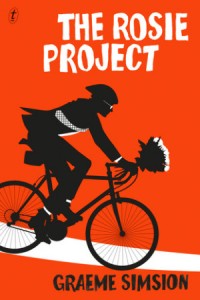

The Rosie Project by Graeme Simsion

Posted June 11, 2013 by Michael @ Knowledge Lost in Romance / 0 Comments

The Rosie Project by Graeme SimsionTitle: The Rosie Project (Goodreads)
Author: Graeme Simsion
Published: Text, 2013
Pages: 329
Genres: Romance
My Copy: Library Book

Buy: AmazonBook Depository (or visit your local Indie bookstore)

Don Tillman is a highly successful Professor of Genetics, but he is also a very socially awkward single man that believes the solution to all his problems is a wife.  He embarks upon a search to find this wife; The Wife Project is a carefully designed questionnaire to find the perfect match for him. In comes Rosie, not a match, but Don finds himself helping her on search for her biological father.

Chick lit always seems to have a quirky woman looking for love, because apparently the message is that strong independent women are incomplete until they have a partner. That is probably a rant for another day but I have to wonder why Nick Hornsby and Graeme Simsion’s The Rosie Project does not fit into this genre? All the same characteristics are there, the only thing different is the role reversal. My wife jokingly calls the genre dick lit but I don’t know why there is a gender bias in a genre. I thought Seating Arrangements would be considered chick lit but because it had a male protagonist people dismiss it as something different. Not really important but I thought it odd that just because the main character is the wrong gender it doesn’t fall under the same category, which is one of the many problems with trying to categorise books into genres.

Now let’s get back to The Rosie Project; this was an entertaining and quick read that just has too many problems with it. This over hyped book’s major flaw is the portrayal of Asperger’s; much like Addition, a mental health issue (or in this case a pervasive developmental disorder) is the quirky personality. Because underplaying a mental health issue is the answer to making a character quirky; why can’t people just be quirky without having to point fingers? Misrepresenting mental health seems to be the go to move for writers of books, TV and movies and it really isn’t helping people understand these issues. Also while I’m on the topic, why does socially awkward, introverted or quirky have to be considered as problems, why can’t we just be happy for people to be different without having to stick a label on it?

The other major issue I had with The Rosie Project was its predictability; you knew exactly what was going to happen from chapter to chapter and how the book would end. There were no surprises, nothing interesting, just a generic plot. So we have an unpredictable, generic and stereotypical plot; does that leave you with any good points? Not really, just that it was entertaining and there was some decent comedy but in the end I was glad to be done with the book. Remember that old Jack Nicholson movie As Good As It Gets? I have to wonder if this is just a modernisation of that movie, there were so many similarities. I also found a lot of similarities to Addition so I’m not sure if there is anything original left in this book.

For those that don’t mind something so formulaic and predictable, this book is entertaining and you don’t really need to pay attention. I ended up skim reading most of this book and I still felt like I didn’t miss anything, because I guessed what would happen before I read it. I know this book has gotten a lot of buzz lately and I’m still that bitter and cynical old man but I really don’t get it; I don’t see what was so appealing.

Good on Graeme Simsion for taking the world by storm with this novel, the buzz in Australia has started to die down but now the hype is starting around the world. I see it was one of the books been heavily advertised at BEA from Australia (the other being Burial Rites). For that I’m glad it’s doing well, it is nice to see Australian books getting talked about all around the world. Much like The Book Thief, I don’t see why there is so much buzz but I’m still happy when an Australian author reaches the international stage. I’m sure there will be a romantic comedy coming from Hollywood soon, so maybe that is a good reason to read The Rosie Project.


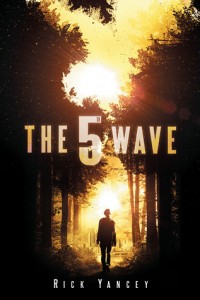
The 5th Wave by Rick Yancey

Posted June 9, 2013 by Michael @ Knowledge Lost in Young Adult / 0 Comments

The 5th Wave by Rick YanceyTitle: The 5th Wave (Goodreads)
Author: Rick Yancey
Series: The Fifth Wave #1
, 2013
Pages: 460
Genres: Science Fiction, Young Adult
My Copy: Personal Copy

Buy: AmazonBook Depository (or visit your local Indie bookstore)

The 1st Wave took out half a million people.
The 2nd Wave put that number to shame.
The 3rd Wave lasted a little longer, twelve weeks… four billion dead.
In the 4th Wave, you can’t trust that people are still people. 
And the 5th Wave? No one knows. But it’s coming.

The aliens have landed; with each wave there are less saviours. Cassie is on the run, not just from the visitors but from everyone else as well. The 4th wave has destroyed all trust and the only people she knows she can trust were her Father and brother. That was until she met Evan Walker.

I’ve said it before; I’ve never really gotten into the whole Young Adult craze; but I keep trying. Alien invasion, I might try some of that. The 5th Wave is your typical run of the mill Young Adult post apocalyptic novel, but the whole time I spent reading this I wondered if this book was written for young adults. This leads me to question if any of the more recent books are written for teenagers. In this growing genre it seems that the average age of a YA reader is not a teenager.

Skynet, X-Wings, Close Encounters, they are all references I don’t expect young adults to make. I do hope they know what Star Wars and Star Trek are or even who Terminator and Darth Vader are, but sometimes I wonder about that too. This feels like they are trying to go for the nostalgic readers much like Ready Player One did but I’m not sure it worked as well here.

This was a really quick read for me, I think I knocked it out in a few hours, so I don’t want to criticise the entertainment factor but there was a lot in the book that I just didn’t like. Children being trained up in combat? Sure, the kids today wouldn’t have read Enders Game but if you are catering for the nostalgic reader try not hiding the fact that you are pretty much stealing huge ideas from other books. I know Hunger Games was a big hit and it is pretty awesome to have a kick ass heroine but I felt like Cassie was too much of a Katniss photocopy and there wasn’t much that was original about her. While we are at it, please stop with the love triangles, it’s very rare to find one that is done in an interesting and unique way; why are they in every YA book?

To me the characters in this book were very underdeveloped, Cassie in particular which is annoying when she is the main protagonist. I liked Evan in parts but I did think that some depth to all the characters would have helped boost my enjoyment. Then there is the plot; it was predictable and never surprising. Entertaining, yes, but there has to be something more to a book, I want to be both entertained and left with thoughts of the book rolling around in my head for days afterwards.

For me it felt like Rick Yancey read all the popular dystopian/post apocalyptic young adult novels then went and watched all those 1980 Science Fiction movies from his childhood and just mashed them all together. Taking his favourite parts from each plot and using it in his own piece and guess what? It’s a triology.

I was entertained, I was nostalgic and it was a fun book to read but now that I’ve had a little vent, I can say I really want something different from this genre. Alien Invasion, yes this is something I don’t think has been done, unless you count The Host (which I don’t). I do like that this novel is a little dark and raw but it really held back in my opinion.

There isn’t enough nostalgia for my taste and the language, sexual references and violence make me wonder just how old you need to be for YA? 15? I’m sure kids will think this is just as fun as sneaking into watch a movie for over 18 year olds but to call this the “Young Adult novel of the year” I feel maybe stretching it a little too far. But what do I know; I’m just that crazy bitter old man that reviews books on the Internet.


The Hunter by Julia Leigh

Posted May 28, 2013 by Michael @ Knowledge Lost in Contemporary / 0 Comments

The Hunter by Julia LeighTitle: The Hunter (Goodreads)
Author: Julia Leigh
Published: Penguin, 1999
Pages: 188
Genres: Contemporary
My Copy: Personal Copy

Buy: AmazonBook Depository (or visit your local Indie bookstore)

Under an assumed identity of Martin David, Naturalist, M arrives to hunt down the last Tasmanian tiger rumoured to exist within Tasmania. On the edge of the wilderness, he will soon slip into an untouched world of silence and stillness. Hunting the last thylacine, an animal extinct since the 1930’s, but a sighting has been reported.

Julia Leigh, born in 1970 in Sydney, Australia, has received critical acclaim even though she has had a very small writing career so far. The Hunter in 1999; a novella in 2008, Disquiet; and then she wrote and directed the 2011 movie Sleeping Beauty (not to be confused with the fairy tale). I tend to think that most of her acclaim came from people expecting great things from her after she was selected to be the protégé of Pulitzer and Nobel Prize winning author Toni Morrison in 2002 as part of the Rolex Mentor and Protégé Arts international philanthropic programme.

The Hunter is an interesting novel because it follows a post colonial narrative which is unheard of for an Australian novel. When it comes to Australian adventure novels, most of the time characters just get lost in the wilderness not go hunting dangerous animals.  This leads to an interesting portrayal of the thylacine, which I will look at later. The Hunter may be a stripped back quest narrative but it feels very American and masculine for an Australian female author. American in a sense that the hunt narrative could be compared to Moby Dick, Old Man and the Sea and even The Bear, comparisons which she has acknowledged. Masculine in the way she gives approaches this novel with detachment, contempt and control over the death hunt subject matter. You could compare the paired back minimalist prose to something found in hard-boiled fiction, but not quite.

M is the archetype of a hunter, a figure that inhabits the story rather than one the lives in its world. There are not too many details of this character, but he seems to have similar characteristics as the hero in a spaghetti western. Ruthless, cold, calculating and inhuman but never unethical; though the lack of character development is an important part of this book. It forces the reader to keep him at arm’s length so we can study him. It’s almost like Julia Leigh has been taking active steps so that we never warm to him.

He is never a role model or anti-hero; he is just a faceless man in pursuit of the last remaining thylacine. What does the thylacine represent in this book? Imagination, hope for the future, guilt of the past, living in harmony with nature or a biotech ghost in a Tasmanian gothic novel? It’s up to the reader to decide, but while we are on the subject of the thylacine, does this animal both represents the Australian wildlife, an animal going extinct to raise global awareness as a form of Ecocriticism or is it supposed to be an animal that could harm or kill the hunter? These are the questions that I believe Julia Leigh wants us to ask as readers.

Julia Leigh setups a situation where the reader has to reason with their imagination and emotions in order to get the reader to think about what the author might be saying. I really like how you can read The Hunter as an adventure, a Tasmanian gothic or as ecocriticism. No matter which way you read this you are not wrong. I thought of this more as a western; just with the way the protagonist was portrayed and the people drinking in the bar reminded me of those rednecks drinking in a saloon in those spaghetti western films. I’m interested to see how people read this book and just see what they got out of it.


The Imperfectionists by Tom Rachman

Posted May 24, 2013 by Michael @ Knowledge Lost in Contemporary / 0 Comments

The Imperfectionists by Tom RachmanTitle: The Imperfectionists (Goodreads)
, 2010
Pages: 277
Buy: AmazonBook Depository (or visit your local Indie bookstore)

With the war on terror in Afghanistan and Iraq, climate change, the economy and constant tragedies and crime, a newspaper has plenty of material to fill its columns. But for the staff of this international paper based in Rome, the real stories are not the ones on the front page but the ones that happen in their own life. The Imperfectionists is a quirky novel about the people that write and read this newspaper.

My first thought of this novel was, this is going to be the newspaper equivalent of A Visit from the Goon Squad and in some parts it is, but I actually enjoyed this book. Don’t get me wrong, A Visit from the Goon Squad has some positives to it and a lot of people enjoyed it, but for me I just think it was over hyped and you get to know a character and then the novel moves onto something different. This is a problem with The Imperfectionist as well but I got this sense that each little story came to a relatively decent close; this is tiny little stories to give you a small insight into each life. These stories don’t really make up an overall plot; that happens between each chapter when you learn a little more about the overall rise of this paper.

This novel mainly focuses on the newspaper industry, founded in the late fifties, in a time where the paper is still the primary source of news for most people. This novel tracks the changing time and the effect it has on the people that work for this paper. Television and the twenty four hour news channels had a huge effect on the newspaper industry but this paper managed to stay in business and now with the information age and the internet they are really struggling to remain relevant. This newspaper refused to create a website and insisted on sticking to the old ways and this turns out to be their downfall.

Each member of the staff that show up in the chapters of the book have their own issues to deal with as well; love, relationships, parenthood and normal everyday life. The thing I enjoyed about this book was each character was unique and handled life differently but then all of them had their own issues to deal with that were more important than the problems facing the newspaper they worked for. Sure they worried about their jobs but life has its own challenges and these are what are explored with the newspaper industry decays.

This works like a collection of short stories, each have their own plot but then in between  each one there it the main plot which follows the newspaper from conception to where it is today. I really liked the way this was done; it felt like each story wasn’t irrelevant to the overall plot. Their names pop up and you have a sense of understanding that person enough to know just how they may feel. Each little story is different, but they are told in the same third person style so they seem to tie together really well.

There are some problems with this novel as well, sometimes you want more from a character you like and sometimes I found myself getting bored. As an overall novel I did end up enjoying it; I found myself racing through this book and that is rare for me when it comes to short stories. I don’t know much about author Tom Rachman; I know his has written another short story but not another novel. I would be interested to see how he goes with a follow up novel and see how he approaches it. The Imperfectionist was enjoyable but I don’t think I would recommend it to anyone, unless they want something similar to of A Visit from the Goon Squad.


The Yearning by Kate Belle

Posted May 23, 2013 by Michael @ Knowledge Lost in Contemporary / 0 Comments

The Yearning by Kate BelleTitle: The Yearning (Goodreads)
Author: Kate Belle
Published: Simon & Schuster, 2013
Pages: 323
Genres: Contemporary
My Copy: ARC from Publisher

Buy: Book Depository (or visit your local Indie bookstore)

In 1978, in a small country town, a fifteen year old girl’s world is changed with the newly arrived substitute teacher. Solomon Andrews is inspiring, charismatic, charming and beautiful and she wanted him more than anything else in the world. While he was aware of this shy girl interests he thought it was a harmless high school girl crush; that was until the erotic love letters started coming. He knew he should resist but her sensual words stirred him. First love feels like a great love, a forbidden love.

Kate Belle’s The Yearning is not erotic fiction and it’s not really a romance; this is a book that is hard to put into a genre. Well, in a sense you could categorise this book as romance but it’s a dark romance, a one sided romance; I don’t think there is a genre called ‘disturbing obsessions’ or ‘infatuations’ so how can you put this into a genre? I know, I know, genres are annoying and we should get rid of them all, and just have fiction and non-fiction but as a quick way to identify books, I do like to label a book.

I went into this book thinking it sounded a little like Me and Mr. Booker by Cory Taylor but thought maybe there might be similarities to Lolita by Vladimir Nabokov, The Reader by Bernhard Schlink (also books I’ve not read yet; An Education by Lynn Barber, What Was She Thinking? by Zoë Heller and Tampa by Alissa Nutting) but this book managed to surprise me in the direction Kate Belle took with The Yearning.

A rather daring novel, which I felt there was a sense of predictability within the plot; it was exquisite in parts but also awkwardly erotic and sexy in the approach. Fifteen year old Eve’s desires for her new next door neighbour Solomon Andrews starts off as a simple crush but as her obsession with the sexy teacher grows, so does the yearning till it reaches a dangerous level. To me I like to think this is a look at the intensity of a high school crush and the ignorance towards understanding what true love is; in high school you think every crush really is your soul mate.

Then you get the point of view from Solomon Andrews, who is not as despicable as Humbert Humbert; while he comes across as a hebephile, I get the feeling maybe he is just a pansexual and will take whatever he can get. Without going into much thought into the psyche of Solomon I will say he is weak and should know better, he lets his desire to get laid and the feeling of being desired get the better of him. Highlighting the dangers of giving into your desires and also the problems with falling for someone that is bound to break your heart and have a negative impact on your life.

This novel then takes a surprising turn, something similar to The Reader; it shoots forward twenty years. Now Eve’s is about to marry Max even though that yearning for Solomon has remained and her heart still belongs to him. This marriage is very problematic and she never tries; the relationship as husband and wife is a disaster, the sex is not satisfying, she pressures him into children and the list goes on and on. The downfall of the marriage and the link with her yearning for Solomon is clear to Eve from the start and soon became evident to Max as well.

Now I like uncomfortable novels and I really liked how Kate Belle approached The Yearning with the dark romance and desires. I also liked how she created Solomon as a character you end up having a love/hate relationship with, leaving the reader unsure how they should feel about him; obviously you are meant to hate him but you can’t help feeling other emotions towards him. This only get the book so far for me anyway; I got to about the middle of this book, when Max showed up before it went downhill. The first half was new, somewhat exciting and sexy in all its awkwardness but the second half was a real let down. Sure I like how her yearning for Solomon affected her future relationships but I got a sense that this has all be done before. It just felt so predictable and I was no longer surprised. Many people might be alright with this but for me it felt like the book started off strong and then hit a wall.

I really liked elements of The Yearning and ended up hating others, so this leaves me a little confused with my overall opinion of the book as a whole. Much like the genre, I’m not sure just how to rate it, so I’m going to be neutral and give it two and half stars. This book has gotten a lot of positive reviews, so I think this just shows how bitter and cynical I am to give this book a middle of the road rating. If this book sounds like it will interest you, check it out; don’t let me put you off.


Mrs Dalloway by Virginia Woolf

Posted May 21, 2013 by Michael @ Knowledge Lost in Classic / 0 Comments

Mrs Dalloway by Virginia WoolfTitle: Mrs Dalloway (Goodreads)
Author: Virginia Woolf
Published: Oxford World's Classics, 1925
Pages: 185
Genres: Classic
My Copy: Personal Copy

Buy: AmazonBook Depository (or visit your local Indie bookstore)

Clarissa Dalloway goes around London preparing to host a party that evening. It’s a nice day and she finds herself being reminded of her youth in the Bourton and wondering about her life and her choice of husband; marrying the reliable Richard Dalloway instead of the mysterious and challenging Peter Walsh, as she never had the option to be with Sally Seton. These conflicts have been reintroduced when Peter pays her a visit.

The novel begins with Clarissa’s point of view and follows her perspective closely, travelling forwards and back in time and in and out of her mind to construct an image of her life. Clarissa is bubbly and lively, caring a great deal about what people think of her, but she is also self-reflective. She is often questioning life and constantly wondering whether happiness is truly possible. Though she is happy with her marriage to Richard she feels both great joy and dread towards her life and struggles to strike a balance between her desire for privacy and her need to connect with others.

Her husband Richard Dalloway is a member of the conservative government and plans to write a history of The Brutons, a great military family. He is a loving husband and father and devoted to social reform while appreciating English tradition. Peter Walsh is a close friend of Clarissa, once desperately in love with her. When she rejected his proposal, he moved to India; though frequently having romantic problems with women throughout the novel he is currently in love with a married woman in India. A socialist and highly critical of people, he is conflicted about everything in his life. Then there is Sally Sutton, a close friend of Clarissa in their youth, she was a wild handsome woman who would say anything. They were sexually attracted to each other as teenagers. Sally now lives in Manchester where she is married and is known as Lady Rosseter.

This is primarily a novel about life and relationships, with Clarissa reflecting on her life and wondering if she has made the right choices when it comes to marriage. There are so other themes that play a big part within this novel as well; some of these include disillusionment towards the British Empire, fear of death, oppression and balancing life between the need to keep up appearances and having some privacy. I won’t go into these themes in any detail, for the simple reason that I feel that Virginia Woolf leaves it very open to interpretation and it is up to the individual reader to make of it what they will.

For me, the major theme that came out was the struggle Clarissa had with trying to play the good hostess by drawing people together through her parties and her introverted nature. I saw Clarissa as an introvert, though she has a bubbly personality, she is often feels shrouded within her own reflective soul and thinks the ultimate human mystery is how she can exist in one room. She likes the idea of being independent and able to spend time to reflect but she is also aware of the inevitable loneliness that comes with a life of self reflection. If you understood something completely different from this novel, please let me know how you read this book in the comments below.

Now that I’ve looked at the themes of this novel, I want to have a quick look at some of the motifs and symbols used in Mrs Dalloway. The most important of them is time, which is so important to the structure, themes and characters of this novel that Virginia Woolf almost called it The Hours. Time keeps order to this novel; with all the thoughts, memories, and encounters within Mrs Dalloway, it becomes a vital element to the book. Also the old woman in the window across from house symbolises the life Clarissa desires; a private life with time to reflect. You also have things like the flowers with all their colour, varieties and beauty being a motif for emotions, Shakespeare and poetry representing these emotions as well and water suggesting the possibility of death.

Virginia Woolf can be a difficult author to read and requires a lot of thought but as I’ve now discovered with Mrs Dalloway, it is worth the effort. I remember reading To the Lighthouse and really struggling, but when I was told it was about sex, I thought I really missed the point. It’s a novel I plan to revisit again but as I mentioned in this review, I think Woolf writes her novels in such a way that you can interpret it anyway you want.

I don’t know if I would call myself a Virginia Woolf fan now, but I was really impressed reading and studying Mrs Dalloway. I will admit that that I’m planning to read A Room of One’s Own and reread To the Lighthouse. Maybe after that I might call myself a fan but I would recommend reading Virginia Woolf for all serious literature readers and studiers and anyone that needs to increase their pretentious levels. For me, Mrs Dalloway was both an interesting book and an interesting endeavour into improving my critical reading skills.


Crooked Letter Crooked Letter by Tom Franklin

Posted May 20, 2013 by Michael @ Knowledge Lost in Crime / 0 Comments

Crooked Letter Crooked Letter by Tom FranklinTitle: Crooked Letter Crooked Letter (Goodreads)
Author: Tom Franklin
Published: Pan Macmillan, 2010
Pages: 318
Genres: Crime
My Copy: Library Book

Buy: AmazonBook Depository (or visit your local Indie bookstore)

When another girl disappears, suspicion falls on the suspect of a twenty year old missing persons case. Larry has been living a solitary life never being able to escape the whispers of suspicion, now another girl disappears, it is starting all over again. Old boyhood friend Salas is now in law enforcement and this new case forces both men to confront the past that they have buried for so long.

Tom Franklin lived in a small southern town in Alabama, and while struggling to make it as an author he went through multiple manual labour jobs and once worked for the city morgue. In 1997 he got his first break when his short story collection, Poachers was named Best First Book of Fiction by Esquire. Since then he has been having great success with southern crime novels, winning a few awards, including the Edgar Award (for Poachers, a short story found in the book of the same name) and The Crime Writers’ Association’s Gold Dagger (awarded for best crime novel of the year) for Crooked Letter Crooked Letter.

This novel has been compared to the works of Harper Lee, Flannery O’Connor, Elmore Leonard and Cormac McCarthy, so I went in to this novel expecting a good southern crime novel and this is what I got. Except there was a little more in this novel, while you have the elements you expect, I never expected the book to explore the idea of being misunderstood and isolation. From the beginning of the novel Larry is shot and yet he is sympathetic towards his mystery attacker. He even forgave him because “all monsters were misunderstood”.

The idea that Larry thinks of himself as a monster brings up some interesting concepts, which I really want to explore but that would lead to some spoilers. He even owns an old monster mask which is hugely symbolic when it comes to the concept of being a monster living within society. This mask plays a big role throughout the novel and what it represents within each scene it shows up in only served to increase my enjoyment in exploring Crooked Letter Crooked Letter.

The relationship between Larry and Salas is an interesting one; they were childhood friends living in Mississippi in 1970. Larry comes from a working class family while Salas is an African American, I was expecting a lot to do with racism around their friendship, being a southern novel but Franklin went a whole different route.  Instead he explored their changing relationship from kids to adults, with the pressure of the world and the suspicion placed on Larry. This was unexpected and it added a really interesting look into the two characters relationship.

M-I-crooked letter-crooked letter-I-crooked letter-crooked letter-I-humpback-humpback-I 

The title of this novel references an old American children’s song used to learn how to spell Mississippi and I’ve never heard of it. Being an Australian, it is odd that we were taught how to spell Mississippi as children as well; we were never expected to spell other American states so it seems weird. Though I was taught differently and I’ve found out my wife learnt it a different way to that too. Not really important to the novel except knowing where the book is set but it a interesting thought to have about the ways we learnt to spell this word.

This is a relatively morbid novel but I honestly was hoping for something as dark as The Devil All the Time by Donald Ray Pollock (seriously I need more like this novel) but as far as melancholic books, this one is worth check out. Not only does it have some interesting themes that I think are worth exploring, I found the prose lyrical and in parts stunning. It is not without its flaws and I don’t want to go into those, for fear of spoilers but I still think highly of Crooked Letter Crooked Letter by Tom Franklin; he seems to draw a lot from Cormac McCarthy’s style, so check it out.


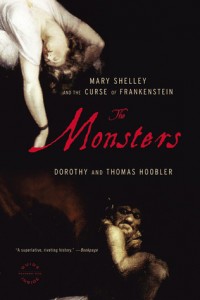
The Monsters by Dorothy and Thomas Hoobler

Posted May 18, 2013 by Michael @ Knowledge Lost in Non-Fiction / 2 Comments

The Monsters by Dorothy and Thomas HooblerTitle: The Monsters (Goodreads)
Author: Dorothy Hoobler, Thomas Hoobler
Published: Back Bay Books, 2006
Pages: 400
Genres: Non-Fiction
My Copy: Personal Copy

Buy: AmazonBook Depository (or visit your local Indie bookstore)

It was a dark and stormy night on the shores of Lake Geneva, 1816. You’ve heard the story beforbe; Lord Byron challenges his friends to see who can come up with the best ghost story. Among the people include Percy Bysshe Shelley, his lover Mary Wollstonecraft Godwin, Mary’s stepsister Claire Claremont and Byron’s physician, John William Polidori. Two novels were born that very night; Mary Wollstonecraft Shelley’s (née Godwin) Frankenstein and John William Polidori’s The Vampyre. The evening begat a curse, too. Within a few years of Frankenstein’s publication, nearly all of those involved met untimely deaths.

First of all I want to point out that authors of this book Dorothy and Thomas Hoobler don’t actually believe this was a curse. Well at least I hope they don’t, this is a little gimmick to help sell the book and I think they just wanted to explore the interesting fact that they did all die young. This book is purely a biography on Mary Shelley that focuses on the night in 1816 and the novel Frankenstein. I was hoping for something about struggling to write something as great as Frankenstein or how the novel has been destroyed by pop culture.

The book starts out with the life of William Godwin and Mary Wollstonecraft, the famous philosopher and feminist parents of Mary Wollstonecraft Shelley. The two had very different personalities and they seemed like a very odd couple but I think they really complemented each other. Sure, they had their problems but nothing like their daughter.

This brings us to the bulk of the book, Mary Shelley and the young romantics. These were the original rock stars and their lives, no soap opera will ever come close to the drama and complexity as the real lives of the romantics. I picked up this book to learn about these poets after reading A Treacherous Likeness and I wanted to know more about them. This was a very accessible biography, which focuses primarily on Mary Shelley but it gives you a great insight into her life. I don’t pretend to fully understand the Romantics, they are way to complex but I feel I have a better knowledge into their lives.

My interest in the Romantics has gotten stronger thanks to The Monsters by Dorothy and Thomas Hoobler. I have a few other books I plan to finish off in on the topic and I doubt I’ll stop there. I love the quotes and the referencing in this biography; I’ve often found that I wonder about the source of information in biographies that don’t reference so it was so handy to have that reference.

While this book does primary focus on Mary, it was nice to learn a little more of Percy Bysshe Shelley, Lord Byron, Claire Claremont and John William Polidori. I didn’t previously know the story of the original publication of The Vampyre; I found it fascinating and heart breaking for John William Polidori. It is always great to find new stories about these amazing talented people.

One thing I liked about this biography, especially after reading A Treacherous Likeness, is the fact that it didn’t try to sway the reader’s opinions; it stuck to facts and left it to the readers to make up their own mind. This was a refreshing change from the opinionated A Treacherous Likeness and I really enjoyed the experience of learning more about these poets. I’m sure there are better biographies on Mary Shelley out there but The Monsters is worth checking out as well.


The Great Gatsby by F. Scott Fitzgerald

Posted May 17, 2013 by Michael @ Knowledge Lost in Classic / 0 Comments

The Great Gatsby by F. Scott FitzgeraldTitle: The Great Gatsby (Goodreads)
Author: F. Scott Fitzgerald
Published: Scribner, 1925
Pages: 180
Genres: Classic
My Copy: Paperback

Buy: AmazonBook Depository (or visit your local Indie bookstore)

Nick Carraway moves in next door to the young and mysterious millionaire, Jay Gatsby. Nick is soon following the dramas of Gatsby’s quixotic passion for Daisy Buchanan. Often hailed as the “Great American Novel”, F Scott Fitzgerald’s magnum opus is a portrait of the Jazz Age and the great American dream.

We all know the story, we’ve either been forced to read it in school or we’ve seen the movie, I wanted to reread this in the lead up the terrifying new adaptation by Baz Luhrmann. I remember reading it when I first started become a serious reader and I thought I would look at what I originally wrote and try and dissect and expand on it now that I think I’ve improved in reading critically.

First of all “One of the most interesting aspects of The Great Gatsby is the Point of View”, while this has probably been covered many times by people I will just cover this off again. Carraway tells the story of a group of destructive personalities but first you have to understand Nick before trying to understand the others.

Without going into anything controversial by claiming Nick Carraway was bisexual and in love with Jay Gatsby, let’s just say he idolised him. A Yale graduate, World War I veteran and relatively well off (inherited money), Carraway moves in next door to the charismatic and much talked about Jay Gatsby. But this leads to the question of just what is the relationship between Nick and Gatsby; is Jay using Carraway to get closer to Daisy? I think there friendship was real, Nick envied the person Jay was and he in return grew fond of Carraway.

The book does a decent job at shedding light on the egotistical, desire driven tendencies of human nature.” While this is true I think to expand on this you really need to look at what F Scott Fitzgerald was trying to do with this book, and to do that we must first look at the colour scheme (weird I know). There are two primary colours that play an essential role in this book. Firstly, green, the light over the river on the East Egg dock. The representation of Gatsby’s hopes and dreams, the green light represents the American dream. This would be considered objectification, that Gatsby believes that his American dream is to have Daisy.

The other major colour in this book is Gold or Yellow, the symbol of wealth and beauty. I think Yellow and Gold play as much of a significant role as the green light. This is true American goal; wealth and beauty, to be able to live without a care in the world. This is what I think Fitzgerald was trying to show us; like I said in my original review of this novel, these people are egotistical and desire driven and I think the author wanted us to see that. The problem with a carefree life is the fact that you don’t care about anything other than yourself and you don’t realise just how destructive that can be.

Carraway starts out starry eyed towards high society but slowly becomes more and more uncomfortable with the unrestrained materialism and lack of morality that comes with it.” I think that Carraway found himself sucked into high society and captivated by the presence of Gatsby. While in some respects he remains an outsider, he tries desperately to fit in and pursue the idea of the American Dream. The Great Gatsby tries to highlight the decline of this so called American dream, which originally was about discovery, uniqueness, and the pursuit of happiness but in the 1920s it seemed to decline and represent easy money and a social of leisure.

F. Scott Fitzgerald paints a unique literary picture of the time and life style, with interesting, snooty and slightly annoying characters.” I will admit that I sigh every time I read this sentence. Why was I the type of person that wanted likeable characters? Just because I hate these people, doesn’t mean that the book isn’t great and that they don’t have anything significant to teach. These people are supposed to be unlikeable, Fitzgerald isn’t trying to show us how great high society is; he wants to point out the flaws and what he sees as the decline of the American dream.

Everyone seems so self-absorbed and never think of each other; which helped drive the story beautifully.” We can probably argue if this really is the great American novel or even the great Jazz age novel. I know a lot of people hated this novel but I think there is so much this book can teach us and it’s less than 200 pages. F Scott Fitzgerald did a brilliant job of layering everything on top of each other that I feel the need to read this book again (already) just to see what I might pull out of it this time.

Someday I would like to do a post about motifs because there are so many recurring themes in the book, I think this would be a perfect novel to explore the idea of what a motif is. I read all the reviews from people that hate this book and I feel like I want to use that dreaded saying, “I don’t think you got what this book is trying to do”. But I hope this helps understand what this book really is about; while pointing out what you think I got wrong.

I reread this novel in anticipation of the new adaptation, which I’m scared about; I remember the old movie and think it failed to capture the true essence of this novel. This leads to two questions I want to ask the readers; “Is The Great Gatsby unfilmable?” and “Was Gatsby truly great?”.  I know my answers, so I’ll be interested to see what others think. I’m surprised how much fun I had dissecting my original thoughts and expanding on them.