Format: Paperback

Ghostman by Roger Hobbs

Posted April 20, 2013 by Michael @ Knowledge Lost in Thriller / 0 Comments

Ghostman by Roger HobbsTitle: Ghostman (Goodreads)
Series: Ghostman #1
, 2012
Pages: 336
Buy: AmazonBook Depository (or visit your local Indie bookstore)

When a casino heist goes bad, there are a lot of loose ends to tidy up. Loose ends like a million dollars and only 48 hours to find it. The Ghostman is sent into find the money and make sure the crime isn’t connected back to his employer. Only problem is he is in the Wolf’s territory now and he wants the Ghostman’s head in a bag; if they can find him.

First of all, this is a pretty stereotypical heist novel, with all the normal thriller elements that you expect, the double crosses, the cops, the clearly laid out plan, it is all there in this book. So why did I enjoy this book more than I should have? The Ghostman, let’s just call him Jack Delton as that is the name he uses the most in the novel, is nothing really special. There isn’t much character development; he continues to remain an enigma the entire time. Yet there is something about him that I liked; he has the ability to hide in plain sight, to blend in and he is pretty much a grifter sent in to clean up the mess. He is also a pretentious book worm; he admits to reading a lot in the book and has a soft spot for Homer and epic Greek poetry. These elements of his character, and the fact he knows how to handle himself when things get rough, really come together to make a character I enjoyed reading about.

All other characters in the book were completely underdeveloped and just felt like backdrops that got in the way of Jack Delton’s tasks. But then again, you do need conflict and twists and turns to drive a story like this; there was nothing too shocking about the plot, I would have loved a good twist or maybe a darker narrative but all in all, Ghostman was a lot of fun to read.

This is Roger Hobbs’s debut novel and he is only 24 years old which makes you wonder; where did he learn all the skills to pull off a casino heist and cover it up? The detail put into the different ways of doing things was incredibly detailed, so much so that you can’t help but think this is the voice of experience. My main problem was that I felt like sometimes the author was dumbing down the information too much; I think he wanted to make sure every reader knew what was happening but the information felt over done.

Delton spends all this time tying up all the loose ends from the heist, that at times I thought things were going to end up incredibly neat and, to an extent, it did, but I was glad to see not everything goes to plan. I thought maybe Delton had a complex plan to get himself out of mess but instead he decided to live by the motto “Flectere si nequeo superos, Acheronta movebo” If I cannot move Heaven, I will raise Hell. Simple but effective, but then again that’s the book in a nutshell.

I still don’t have no idea what really made this book so enjoyable; there really isn’t much in the novel that was special, it all felt like it was done before. In the end I was just sucked into the story and enjoyed the ride; it is a good heist novel and I think it will give most thriller writers a run for their money. Sure it was predictable and nonsensical but sometimes you just need some light entertaining junk to read. It is still worth checking out, even if it is just to see what Roger Hobb can do and then spend some time trying to work out how he researched this book.


A Sport and A Pastime by James Salter

Posted April 19, 2013 by Michael @ Knowledge Lost in Erotica / 0 Comments

A Sport and A Pastime by James SalterTitle: A Sport and a Pastime (Goodreads)
Author: James Salter
Published: Farrar, Straus and Giroux, 1967
Pages: 200
Genres: Erotica
My Copy: Library Book

Buy: AmazonBook Depository (or visit your local Indie bookstore)

1950’s France, an American middle-class college drop-out Philip Dean begins a love with a young French girl. But this sad, tender story of their erotic affair has been captured by a witness, a self-consciously unreliable narrator. This narrator freely admits that some of the observations are his own fantasy of the couple making A Sport and A Pastime an intensely carnal account of this affair and in part a feverish dream.

James Salter’s writing in this book is really interesting; he creates this wonderful imagery with the scenery, the colours, the smells and when it comes to the erotic side of this story this continues in a way that never felt crude or overdone. Sure the descriptions might feel really tame for our generation but there is a real lyrical way about the whole book that really worked for me. I will admit that I’ve not heard of James Salter before but I’m very impressed with his style that I would be curious to read more.

The relationship with Philip Dean and the French girl, Anne-Marie, is just wonderfully portrayed; there is no sense of love between the two, only raw passion. Anne-Marie has a healthy sexual appetite and she wasn’t afraid to tell him what she wanted which I find a little rare, especially considering the year this was written. While she feels like she is dominating at time, there are other times she feel really submissive and I think Salter did a wonderful job in getting that balance right.

The unreliable narrator was tricky to get used to; a friend of Philip’s from Yale, he was on holidays enjoying regional France but he seemed rather obsessed with this affair.  You never quite know what is real and what is made up in his head, sometimes he will tell you but most of the time you are left wondering. It would be weird having a narrator standing beside the bed while you have sex so you have to assume that most of the sex is either his own fantasy or word of mouth.

I do like the way James Salter used this narrator to create this almost dreamlike story and I expect there is a lot more in the novel worth exploring. With a reread or two, I’m sure you will discover some interesting elements. I think Salter was trying to explore the emotions behind sex but sometimes that feels a little ambiguous; the tenderness, thrill, passion all come out rather clear but at times I thought there was an element of boredom and selfishness that was also coming out, just not as well.

A Sport and A Pastime is a wonderfully lyrical novel worth sinking your teeth into, the short sentences really give it a poetic feel throughout the whole book. I wasn’t sure what I was expecting but I am glad I gave it a try. I have to wonder why James Salter never had commercial success, was it because he was a misogynist? His style reminds me a bit Steinbeck and Hemingway and yet he isn’t as popular as the two. I’m not sure if I would read much more in the erotic genre but I will have to check out some Henry Miller or Anaïs Nin in the future.


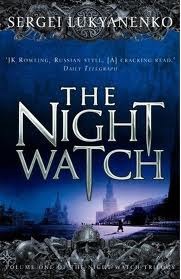
The Night Watch by Sergei Lukyanenko

Posted April 13, 2013 by Michael @ Knowledge Lost in Fantasy / 0 Comments

The Night Watch by Sergei LukyanenkoTitle: The Night Watch (Goodreads)
Author: Sergei Lukyanenko
Translator: Andrew Bromfield
Series: Watch #1
Published: Arrow, 1998
Pages: 576
Genres: Fantasy
My Copy: Library Book

Buy: AmazonBook Depository (or visit your local Indie bookstore)

Walking the streets of Moscow with the rest of the population are the Others, possessors of supernatural powers capable of entering the Twilight, a shadowy parallel that few know exists. Each Other owes allegiance to the Light or Dark side, The Night Watch follows Anton, a young Other of the Light, who must patrol the streets protecting ordinary people from the vampires and magicians of the Dark.

I’ve been trying more and more fantasy (in my quest to be a literary explorer) and with the success of some recent urban fantasy and The Lions of Al-Rassan, I thought I might try some Russian fantasy. This novel revolves around a confrontation between two opposing supernatural groups; the Night Watch, an organisation that polices the actions of the Dark Others, and the Day Watch, who police the Light Others. Now to help wrap your head around the novel, I first must explain just what are the Others; these are humans that while they live into the real world they can step into the Twilight (the supernatural world). Why do the Watch need to help police these two sides? The balance between Light and Dark must be kept at all times.

I thought my love of Russian literature would help me through this novel but in the end there was no saving this one. While the premise was excellent and the whole battle between good and evil in a police procedural type urban fantasy novel can really work (see The Dirty Streets of Heaven) but not in this book. Straight off the bat the whole book took a very long time to build momentum, I think I was a quarter of the way through the book when I started to enjoy it then Bam! a completely new story. Turns out these are three completely independent stories and each one of them was a very slow burn that ended too quickly. My major problem with the entire book that I had to spend so much time building the story then finally getting sucked into the plot only to have it end too soon.

There were so many interesting elements worth exploring, I would have liked to see more of the Post-Soviet Russia that this book (like most modern Russian literature) hints at but regrettably never really explored. Russia has this amazingly rich history that has sparked so many great novels and authors and I truly think Sergei Lukyanenko could be one of them with some work. Like Dostoyevsky, Lukyanenko tries to inject the novel with philosophical ideas on morality and this could have really worked in his favour had he stuck with one story right through to the end.

Personally I think Sergei Lukyanenko did not do himself any favours by dividing this book into three short tales; none of them really stood out and I really think the first of the three had the most potential if he explored it in greater detail and developed a more complex plot. The tension between Anton and Kostya Saushkin could have made for some really interesting philosophical discussion on morality, evil and the effects it has on the world around you. Plus the sexual tension between the two didn’t hurt either but that is when this short story ended abruptly. I felt disappointed at the miss opportunity.

The Night Watch really didn’t work for me; there was so much it could have done but I feel it shot itself in the foot when anything complex started to surface. On the front of the cover was a blurb that said “J.K. Rowling Russian style” which feels like a marketing ploy that I doubt it did itself any favours; it does not make me want to read the Harry Potter series. The second book in the pentalogy of Watches is called Day Watch which intrigues me but because it is broken into little stories as well, I think I will give it a miss. The Night Watch has left me with the need to explore some more of Sergei Lukyanenko’s novels but this is his most recent series, which makes me worry that he has not perfected his craft.


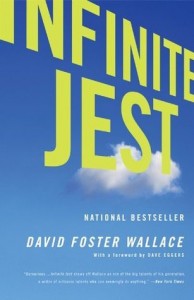
Infinite Jest by David Foster Wallace

Posted April 12, 2013 by Michael @ Knowledge Lost in Literary Fiction / 0 Comments

Infinite Jest by David Foster WallaceTitle: Infinite Jest (Goodreads)
Author: David Foster Wallace
Published: Back Bay Books, 1996
Pages: 1079
Genres: Literary Fiction
My Copy: Personal Copy

Buy: AmazonBook Depository (or visit your local Indie bookstore)

In the not so distant future, the residents of a Boston halfway house for recovering addicts and the students of the Enfield Tennis Academy both search for the master copy of a bizarre movie that is so entertaining the viewers die in a state of catatonic bliss. That movie is called Infinite Jest and it is said that anyone who watches it will lose all desire to do anything but watch it. This semi-parodic novel questions what entertainment is and why it dominates our lives.

I’m not going to lie, this book is both lengthy and difficult to read but in the end it is worth the effort. You will need three bookmarks for this book, one for where you are up to, another for the endnotes and the third for the timeline that sits around page 80. You do need to read the endnotes, this book relies heavily on them; they include definitions, side thoughts, in depth details and even a filmology. You will also need to know the timeline because David Foster Wallace likes to jump around a bit, so it helps to keep up. This is where it gets tricky; in the book’s future each year has a corporate sponsorship, so you have Year of the Whopper, Year of the Tucks Medicated Pad, Year of the Trial-Size Dove Bar and so on. It helps to know in what order the years are in so you can piece it all together. While all this might help you keep track of what’s going on there is still the fact that this book is piled with subplot after subplot and you will have to keep track of more characters than A Game of Thrones novel. You will need to keep notes and it might even be a good idea to get a study guide because this book will take you on a very interesting ride.

As I said before, this book is not easy; I took my time with it and slowly chipped away at this book for two months but I still think I’ve missed a lot. While there are some tangents that happen in the endnotes, this book jumps around so much that sometimes you get lost and have to go back. There shouldn’t be any shame in doing this as Wallace’s writing voice is a postmodern mixture of high- and low-brow linguistic traits which is very difficult to become familiar with. He also uses juxtaposes, colloquialisms and polysyllabic and highly esoteric words so you will need to spend some time researching.

Now that I’ve talked about the difficulties of reading the book, I should probably talk about my thoughts on it. Infinite Jest starts off rather dense, you really need to push through the first few hundred pages before things start to make any real sense. So why is this book considered a masterpiece, magnum opus or anything else it has been referred to? It’s not to read; rather it is a book that will challenge us, to rattle us out of complacency. For me I think David Foster Wallace has the ability to take something like substance addiction, recovery programs, depression, abuse, death, relationships, popular entertainment and even tennis and look at it in a very careful way. The way Wallace explores each topic may make you feel uncomfortable and it is confronting but you do gain a deeper understanding.  Yet the book doesn’t remain dry and depressing; Wallace has a very unique way of using humour to basically satirise the issues without making fun of them.

This book is a parody and comment on American culture, yet this is also a semi-autobiographical novel of the issues facing the author. Creating this funny but bitter sweet novel that I found difficult not to associate with the life of David Foster Wallace; his depression that lead to his suicide.  There is a lot going on in this novel and to go through all the major themes within this novel would probably turn this review into something too long to read so if you want to talk about themes I’ll leave that for the comments. So just a brief overview; the main character Hal Incandenza is an intelligent tennis prodigy dealing with the intense pressure put on him to succeed in a junior Tennis Academy, dealing with a drug addiction and the ongoing strain (both physical and emotional) to reach his full potential. While that is an understated summary, all the subplots makes it hard to cover, this is just the basis of the book.

Addiction and depression would be the two major themes in the most brutally confronting depiction of the struggles I’ve ever read. No other book has given me the insight like this one. I feel like the depiction of depression is often wrong in books and movies; depression is a complex thing, it’s not a state, it’s an overall feeling that can’t be shaked. One of the characters in the book; Kate tried to commit suicide because “[she] just didn’t want to feel this way anymore” and “[she’d] rather feel nothing than this”. This tragically honest view on depression really opened my eyes on the state of mind and the struggles that people dealing with depression go through, and for this only, Infinite Jest was worth reading.

The futuristic America created in Infinite Jest feels very much like western society now, just with the increased corporate involvement but that is the way the world is heading. I am reminded of dystopian classics with his satire of society and the social/cultural commentary. It really covers a lot of interesting topics and, while it is difficult, well worth reading.

This is one of those books I plan to re-read once I have a degree in Literature behind me; while I got a lot out of this novel, I am hit with the feeling that I’ve only scratched the surface. This is rather impressive novel overall, never have I seen a novel with over 60% of Goodreads users rating the book five stars and for good reason, the book covers a lot of topics and does it really well. Blending serious topics with an awkward sense of humour is balanced perfectly, and I highly recommend reading Infinite Jest; even if it is only to increase your pretentious levels.


The Virgin Suicides by Jeffrey Eugenides

Posted April 9, 2013 by Michael @ Knowledge Lost in Literary Fiction / 0 Comments

The Virgin Suicides by Jeffrey EugenidesTitle: The Virgin Suicides (Goodreads)
Author: Jeffrey Eugenides
Published: Bloomsbury, 1993
Pages: 249
Genres: Literary Fiction
My Copy: Personal Copy

Buy: AmazonBook Depository (or visit your local Indie bookstore)

The town of Grosse Pointe, Michigan are fascinated by the death of 13-year-old Cecilia Lisbon and then eventually her four older sisters. All five suicides have been the subject of much confusion as everyone tries to piece together an explanation for these acts. The girls seemed so normal and twenty years later their enigmatic personalities are still the subject of much speculation as the boys recall their adolescence and infatuations with the Lisbon girls.

The Virgin Suicides is told by an anonymous narrator in the first person plural as he and a group of men recall their obsession over the Lisbon girls. This is an interesting way of showing the story because you never really find out their motivations and all you can really do is speculate based on the evidence these boys have collected. At times I think the girls suffered from depression, being in an overly protective home and being avoided at school. While their parents were overly protective, there is never really any signs of abuse and they are just trying to raise the girls up in a way they thing is right. Then at school it never seems like the girls have any friends and just stick together; there is no indication that any of the other girls in school talked to them and all the boys seemed too obsessed with them that they never really socialise with the girls either. Does this mean they suffer from depression? I don’t know but being treated like a prisoner at home and a leper at school would be difficult.

Cecilia (13), Lux (14), Bonnie (15), Mary (16), and Therese (17) all have their own personalities and this never comes through in this book. The idea of the boys worshipping them all without really knowing how to tell them apart is an interesting concept. High School infatuation really doesn’t give way to really understanding the girls and that was one of the major problems the girls had. As they reflect on what happened they refer to themselves as the “custodians of the girls’ lives” but none of them really took anytime to truly know them when they were alive; they just piece together based on their memories and the evidence they took from their house. To me this is the key to this whole book; they can never really know what the girls felt because they were too scared to find out and the parents kept them on a tight leash.

I love this book, it’s deliciously bleak and Jeffrey Eugenides is just a wonderful writer. I’m surprised how well thought out and polished this is for a debut novel; it outshines a lot of other books.  Eugenides is fast becoming a favourite of mine; I adored The Marriage Plot and now only have his most talked about novel, Middlesex to read. I love the combination of darkness and elegance in this book, mix that with this thought provoking concept you really do get a sense of why Eugenides is such a great author.

While the subject matter of suicide is difficult to approach, I think Jeffrey Eugenides did a masterful job at showing just how devastating it is for everyone around. He adds that intrigue that never quite goes away and then he also questions the town’s people and even the reader into what we can do to recognise this pain and maybe help prevent it. No matter how many clues you search for in this book, can you really know the true motivation behind the girl’s suicides? This is what makes this book so great; it doesn’t give you the full answer but leaves you with some many options. I think this is the point, there normally isn’t one clear answer to why someone would take their own lives; it is collection of little things the build up until they can’t take it anymore.

I’ve not seen the movie adaptation of this book and quite frankly I’m a little scared. I don’t know how it would work as a film. I know it could probably convey the heartbreaking concept of this book but the beauty of this book would be almost impossible to translate onto the screen.

It is a weird concept to think of a book about suicide as beautiful or gorgeous but I can’t think of any other way to describe it. Sure the subject matter is dark (which I love anyway) but the way Jeffrey Eugenides approaches it is first class. There is no finger pointing and no reason to play the blame game, it focuses solely on the Lisbon Girls and just how much the town didn’t know about them. A haunting read but never really going too dark, the balance between tragedy and understanding is just perfect.


Occupation Diaries by Raja Shehadeh

Posted April 8, 2013 by Michael @ Knowledge Lost in Non-Fiction / 0 Comments

Occupation Diaries by Raja ShehadehTitle: Occupation Diaries (Goodreads)
Author: Raja Shehadeh
Published: Profile, 2012
Pages: 212
Genres: Non-Fiction
My Copy: Personal Copy

Buy: AmazonBook Depository (or visit your local Indie bookstore)

Raja Shehadeh’s Occupation Diaries gives an insight of a Palestinian who chronicles for the two years in Israel leading up to the Palestinian bid for UN statehood in September 2011. This diary shows a fierce and lyrical portrait of a life lived under siege, balancing the memories, as well as the everyday reality of living under occupation in Palestine. It is often the smallest details of daily life that tell us the most.

I have to admit I don’t know much about the tension between the Israelis and Palestinians so it was interesting to read one person’s perspective. But this is very one sided and while it was an interesting book I was left with more questions than I started with. To be honest I spent most time wondering what Raja Shehadeh wasn’t telling us and concerned that maybe he is stretching the truth. It is a diary that seems to focus on the little things and I never felt like it really explored the issue at all; just a collection of small stories.

There is no real joy in this book; sometimes you get a glimpse but then it fades fast. I know this is an occupied state but the feeling of hopelessness without any optimism really made this book difficult to connect with. This was no easy read, even though the writing was beautiful and it wasn’t overly complex, it was just the anger and one sidedness of this whole thing made it a hard read for me.

Shehadeh is very passionate within this book but the bleakness of the whole situation really didn’t work for me. I know this is a very complex issue but the simplification of the whole thing within this book makes it a difficult read. I love the writing and really want to read some of this author’s works of fiction but I just never connected with this type of non-fiction. Too one sided, too many unanswered questions and I spent too much time wondering if this was real or not.


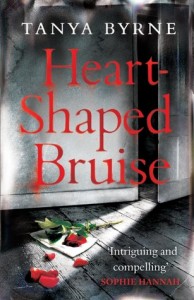
Heart Shaped Bruise by Tanya Byrne

Posted April 7, 2013 by Michael @ Knowledge Lost in Young Adult / 0 Comments

Heart Shaped Bruise by Tanya ByrneTitle: Heart Shaped Bruise (Goodreads)
Author: Tanya Byrne
Published: Headline, 2012
Pages: 336
Genres: Young Adult
My Copy: Personal Copy

Buy: AmazonBook Depository (or visit your local Indie bookstore)

Emily Koll is awaiting trial at the Archway Young Offenders Institution, and she is going to tell her side of the story. They say she’s evil, they always thought there was something wrong with her, but  she is just broken. Heart Shaped Bruise is Emily Koll finally telling people what really was going through her mind.

This novel is told like a diary, which explores her life in the institution with the other girls and her sessions with her therapist. Slowly you begin to uncover just what happened to Emily Koll and why she constantly considers herself broken. You know from the beginning that she found out her father was a notorious gangster at the same time she found out that he had broken in and stabbed a police officer. Her father was then stabbed by Juliet but he didn’t die and is now in prison. Emily blames Juliet for breaking her and taking everything away from her, but you don’t know how she took out her revenge.

My main problem with this novel was that everything felt so superficial, she hated Juliet and wanted revenge but that was the extent of it. The book could have gone into the psychological aspects of Emily but it just skimmed the surface all the way through. There was the physiologist that could have helped explore this more but she was so annoying and only talked in questions. Nothing really happened in the form of recovery and nothing interesting happened.

I didn’t really care what she did, knowing that she got her revenge was all I needed and by the time this is revealed I’m left thinking “Is that it?”. I wasted two nights reading this book and I could have reread Crime and Punishment and enjoyed how it should be done. I could even read something like the Dexter series, since even that knows how to explore the interesting elements of being a sociopath.

This might be considered a New Adult novel since the protagonist is 18 at the time, but if you want to read a YA series that plays with the idea of a young sociopath and does it a hell of all more better, try Dan Wells’ John Cleaver series. The first book is called I Am Not A Serial Killer and the series explores a teenage boy with a very dark side.

Heart Shaped Bruise sounds like my type of book and I was hoping for something like the Dan Wells series minus the paranormal elements but I was sadly disappointed with it. It could have done so much with the story but ended up doing nothing interesting at all. I still live in hopes of a great YA novel with a teenage sociopath that doesn’t turn into a paranormal novel, but I’m losing hope fast. Skip this book, read something else, I don’t think it’s worth the effort.


Seating Arrangements by Maggie Shipstead

Posted April 6, 2013 by Michael @ Knowledge Lost in Chick Lit / 12 Comments

Seating Arrangements by Maggie ShipsteadTitle: Seating Arrangements (Goodreads)
Author: Maggie Shipstead
Published: Knopf Doubleday, 2012
Pages: 302
Genres: Chick Lit
My Copy: Paperback

Buy: AmazonBook DepositoryKindle (or visit your local Indie bookstore)

Winn Van Meter and his family head for a retreat on the New England island of Waskeke. While this is normally a haven of relaxation for Winn, now it’s overshadowed by the preparation of his daughter’s wedding. A weekend with his family and his daughter’s bridesmaids only days before the big event is never a recipe for the calmness or solitude he is accustomed to in this house.

Part social satire, part chick lit, this is surprisingly intelligent and humorous in between the relationship drama of the family and the women staying with them. I know many people will argue with me about this been classed as a chick lit novel (I know my wife did) but for me it very much is one. This genre normally explores the issues with modern womanhood in a light-hearted and humorous way, exploring the relationships, whether being romantic, family or friends. Seating Arrangements ticks all these books but as my wife tells me the protagonist has to be a woman; in this book, it is narrated by a man but the whole focus of the book is the relationships of his wife and his two daughters so in my opinion I think this book can still be classed as chick lit.

This book is very much character driven; from the family rivalry, past relationships and plenty of gin soaked shenanigans. I would have liked to learn more about Winn’s life; I feel like it is often glossed over and focusing too much on the women in the house. Winn’s wife Biddy is spending all her time organising the perfect wedding, his daughter Daphne pregnant and the bride-to-be is enjoying being treated like a princess leading up to her special day. Then there is Winn’s younger daughter Livia suffering from a heartbreak and also the target for the seduction from the best man, bridesmaid Agatha and reckless flirt who Winn lusts after, plus many other secondary characters that sometimes just feel like filler subplots.

Seating Arrangements borders on the cliché too many times throughout this book; it’s only the social satire elements that seem to help recover the story. I think without these elements this would just turn into a very generic chick lit novel, so I’m pleased to have read something witty and intelligent as well. I will admit there are some elements that could have been explored a little more, but most of them seem to be done perfectly. The heartbreak of Livia wasn’t explored enough for my liking and while I get that she discovered that she no longer loves Teddy, it never felt like a real resolution for that subplot. The relationship between Winn and Agatha is one of the best in the book, it hints at lust and scandal exploring the concept of fidelity, desire and even rejection. It offered a little relief from the overly cuteness of most of the relationships.

Maggie Shipstead manages to explore all different relationship types as well as New England society. Parts of this book really didn’t work for me and I was in constant fear of falling too much into the realm of the cliché but I’m surprised with the way this book turned out. Personally I would like a bit more scandal but in the end this was a light read with some very intelligent aspects that are worth exploring. For lovers of light reading, the satirical elements can be easily overlooked or missed but for people looking for them, you will be delighted with what you find within this book.


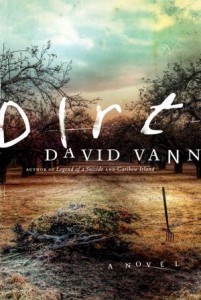
Dirt by David Vann

Posted April 4, 2013 by Michael @ Knowledge Lost in Contemporary / 0 Comments

Dirt by David VannTitle: Dirt (Goodreads)
Author: David Vann
Published: Harper Collins, 2012
Pages: 260
Genres: Contemporary
My Copy: Library Book

Buy: AmazonBook DepositoryKindle (or visit your local Indie bookstore)

Galen is a 22 year old who is still living with his emotionally dependant mother instead of going off to college or living life. He has no idea who his father is.  His grandmother is losing her memory which is leaving his mother and him living on the family trust, old money which his aunt Helen wants. With a keen interest in Buddhism, Galen wishes to free himself from the corporeal but he is trapped by his dysfunctional family and his fleshly desires weigh him down.

Dirt is not an easy book to read, portraying a violently dysfunctional family, with no likeable characters. While Galen tries so hard to live a different lifestyle, it is clear that he has a lot more meditation to do. His constant desire for his boldly flirtatious 17 year old cousin, Jennifer, often leads him into trouble. Giving into his fleshly desires leads to the catalyst of this novel.

Because his grandmother is losing her memory, aunt Helen and her daughter work to try and get as much money out of her as possible. Without a care for anyone but themselves they are both physically and emotionally violent towards Galen and his mother. The grandmother will never remember and they can continue to manipulate her to write more checks for them.

Galen’s mother is so emotionally dependant that, despite having the money, she has constantly told her son they can’t afford to send him to college and she needs his help to run the walnut orchard. Yet there is a part of her that hates her son, even physically scared of him. So when she catches Galen having sex with Jennifer she found her way out. Telling him that he was going to report him to the police for statutory rape, that way she can live her life and pretend she doesn’t have a son.

This is the part that didn’t feel right to me; while the sex scenes between Galen and Jennifer were disturbing and is probably what everyone dislikes about this novel, it’s the conflicting message of his mother that really annoyed me. She came across as dependent of her son and scared to be alone, but when she has the chance to send him to prison she took it. I know he was wrong and he probably should pay for his actions, but to me it felt like she just turned against him and was so full of hate toward her son all of a sudden. Maybe it was seeing Galen with another woman that set her off, knowing that he was no longer hers and he was now a man but I never really felt that came across well enough. It was missing the motivations behind her actions, but this may also be the unreliable first person narrator.

This is dark and disturbing with senses of incest, so this might not be a book for everyone. I really like David Vann and I was physically disturbed by the dysfunctionality of this family. There is a real sense of hopelessness with each character, while the first person narrative didn’t give much opportunity to explore this, it did give an overall picture. Galen is a creepy sociopath and while he tries to better himself, he is always a victim of his own actions. I liked this book but I fully support why people don’t; you really have to be prepared to handle the violence and madness of Dirt.


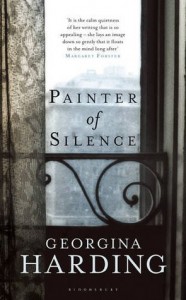
Painter of Silence by Georgina Harding

Posted April 2, 2013 by Michael @ Knowledge Lost in Historical Fiction / 0 Comments

Painter of Silence by Georgina HardingTitle: Painter of Silence (Goodreads)
Author: Georgina Harding
Published: Bloomsbury, 2012
Pages: 312
Genres: Historical Fiction
My Copy: ARC from Publisher

Buy: AmazonBook Depository (or visit your local Indie bookstore)

Post World War II Romania is under the brutal Stalinist regime; an unnamed man wakes up in hospital deaf, mute and unable to communicate. A young nurse, Safta, recognises him and brings him a pencil and paper so he can draw. Slowly and painstakingly, memories appear on the page, not just his memories but Safta’s too as they grew up together. But his world has remained the same size and Safta’s has expanded to embrace languages and society.

Communist Romania wouldn’t be the easiest place to live and author Georgina Harding builds this wonderfully artistic scene with real beauty but also despair and hopelessness. This took a little time to become accustomed with; the overuse of similes really made for a rough start in reading this book. It really felt like the word ‘like’ appeared on every second line, but when I started to get further into the novel I did find myself being swept away in this artistic world.

The unnamed name protagonist (who we eventually find out is Augustin) slowly pieces together his world through his art and we as readers are on this journey with him. Finding out. as he has, that he is the son of the Safta’s family cook and the special bond the two formed growing up together. I do not think Augustin is a mute, he just doesn’t speak, but this does not mean that he cannot communicate; each detailed drawing he produces proves this.

There was something unnatural about the plot that really didn’t sit well with me; the whole book Augustin communicates via drawings yet there is this feeling like you find out more about this character than you possibly can via a drawing. Is this pure speculation from the author? Or is there something I am missing? While it wasn’t a big concern, that really did end up bothering me about this book. I just felt like that whole part of the book was a little contrived, yet it really did not effect my enjoyment of the book as this was an afterthought.

This book was really well written, I do not like to use the word Readable but I think that does cover my thoughts on the style. I really liked the way this book ended up feeling like a piece of art with all the little details and yet it still managed to capture the mental and physical burdens of the characters living in this post-war town. I found myself drifting into the story as it floats along and I had to pull myself out so I could pay more attention; it’s a rare feeling and if I wasn’t trying to read critically I would have happily floated through this novel.

While the fact that this book wasn’t linear it never really got confusing, you get little memories and slowly it starts to reveal the bigger picture. While this could get frustrating I never felt as though this was the case with Painter of Silence. Sure, I could talk about how some parts of this novel felt forced and artificial, but I will be honest, none of that ended up bothering me.

You can try to pick apart this novel as much as you like but you will still be left with this beautiful piece of art. I really did enjoy the experience of reading Painter of Silence by Georgina Harding; it is one of those novels that will stick with you and you cannot help but remember its fond memories. It’s a lyrical journey worth taking, even if it is a little unrealistic; just enjoy the ride.